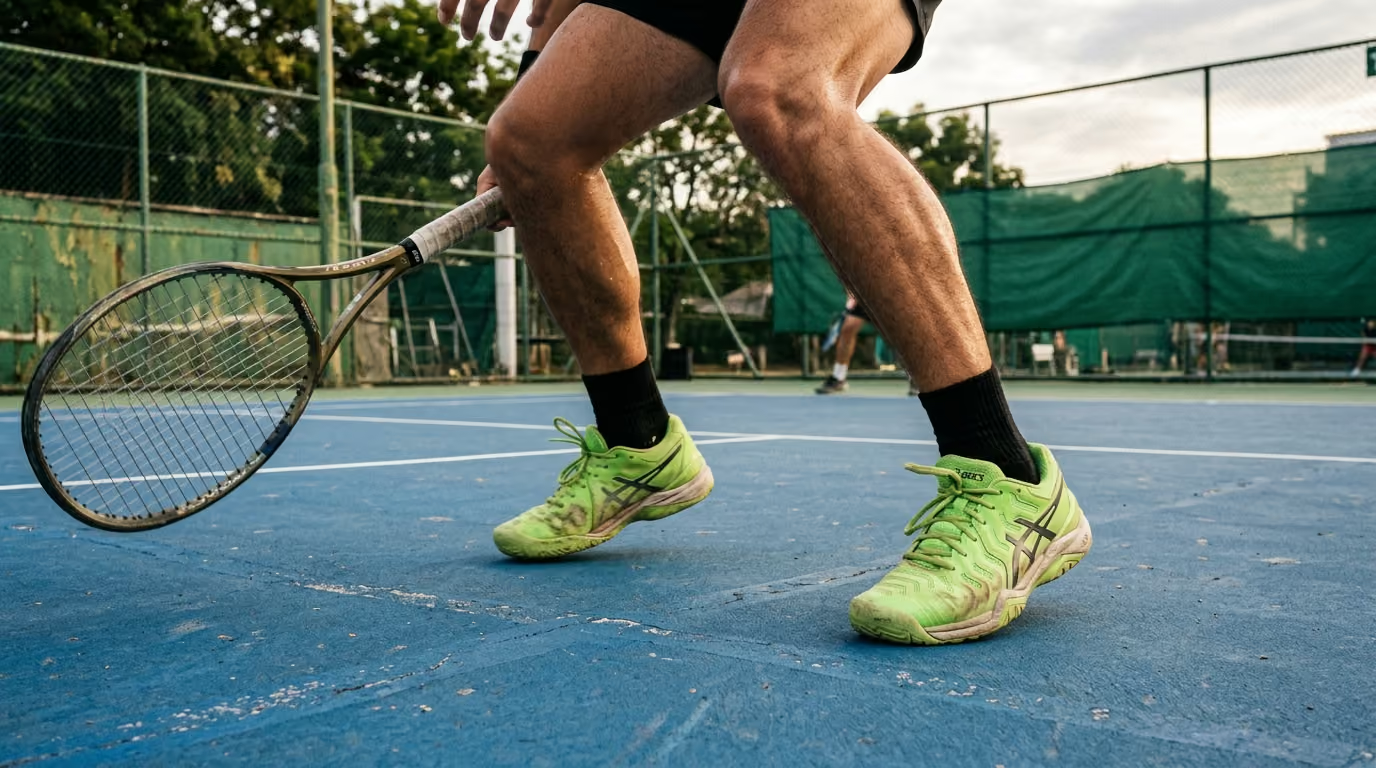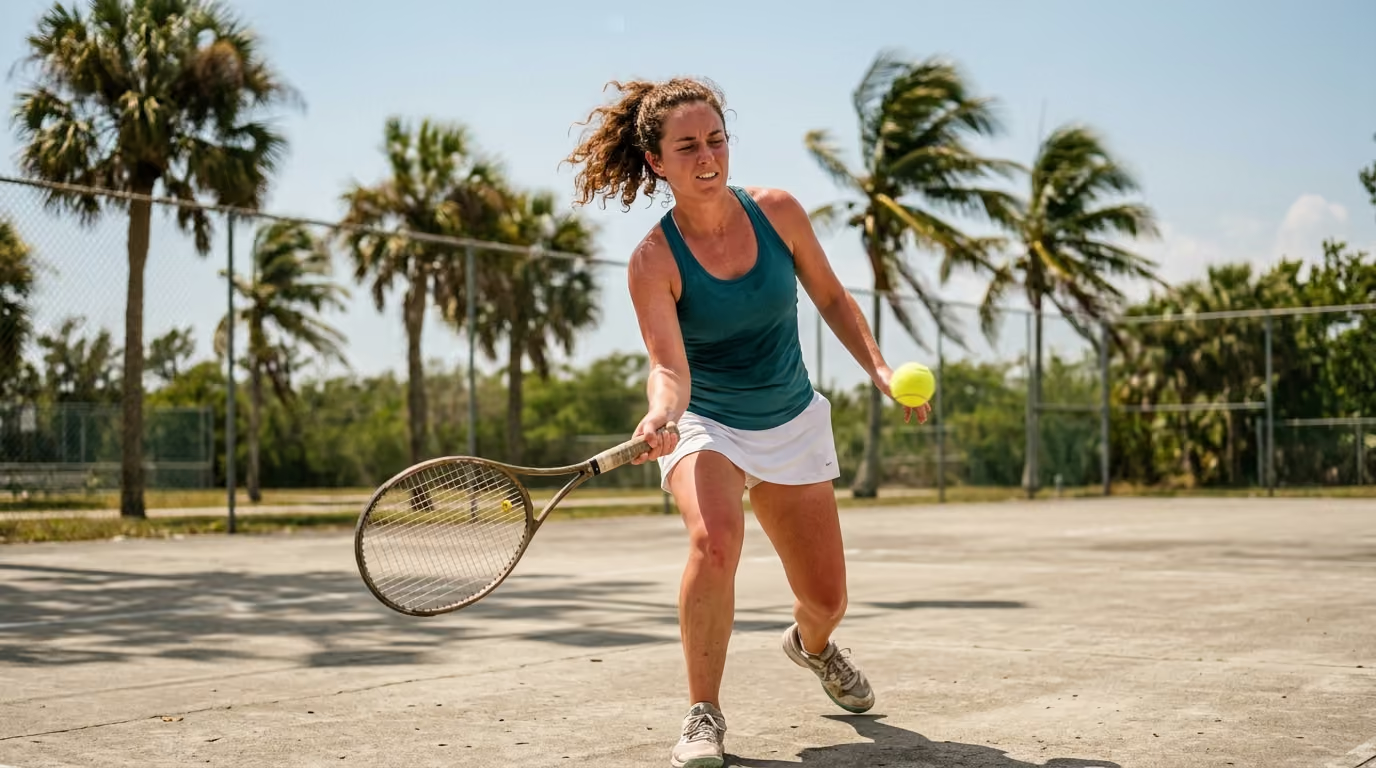

Racquet sports players will master challenging conditions by adjusting their footwork, shortening their swing paths, and increasing their tactical margins.




Many racquet sports players struggle to perform when conditions are not perfect. You might have searched online for how to play in high winds, how to handle blinding sunlight, or how high humidity affects ball bounce. The direct answer is that success in challenging environments relies on adjusting your footwork, shortening your swing paths, and increasing your tactical margins rather than fighting the elements. By accepting these conditions and adapting your court position, you can maintain high performance in any weather.
To play well in tough conditions, you must first understand the physical forces at play. According to aerodynamic studies in sports engineering, air density has a massive effect on ball flight. High temperatures lower air density, which means the ball encounters less aerodynamic drag. This causes the ball to fly faster and deeper through the court.
Conversely, cold air is much denser, which slows the ball down and reduces its bounce height. Humidity also plays an interesting role that surprises many players. Moist air is actually less dense than dry air because water vapor molecules are lighter than nitrogen and oxygen molecules. However, high humidity also softens the felt on tennis balls and padel balls. This extra moisture increases ball weight and drag, which often offsets the lower air density.
The physics of ball rotation also changes based on the air temperature. In warm, thin air, your topspin shots will bounce higher and wilder. In cold, thick air, slices stay much lower to the ground and cut through the court. This means you must adjust your technical expectations based on the thermometer.
Physiologically, your body must work much harder in extreme temperatures. High heat increases your heart rate and sweat rate, which quickly drains your energy. Cold temperatures can stiffen your muscles, which reduces reaction time and increases joint load. Understanding these scientific principles allows you to make smart, logical adjustments on the court instead of getting frustrated.
Wind is perhaps the most difficult variable to manage because it changes constantly. To succeed in windy weather, you must first change your mindset regarding your technique. You cannot hit the ball with your usual full, clean swing.
Instead, you should shorten your backswing significantly. A shorter backswing reduces the time your racquet travels to meet the ball. This gives you a better chance to make clean contact even if the ball moves unexpectedly at the last second. In our experience, trying to hit winners in high winds is a recipe for unforced errors.
Your footwork must also change when the wind is blowing. You need to use many small adjustment steps rather than taking one or two large strides. These small steps allow you to adapt to sudden changes in the ball's path. Keep your knees bent and your center of gravity low, which helps you stay balanced on unstable ground.
The direction of the wind dictates your tactical approach. When playing against the wind, you must hit the ball harder and deeper to prevent it from landing short. You can use less spin and more drive to cut through the air.
When playing with the wind at your back, you must do the exact opposite. The wind will naturally carry your ball deep, so you must use heavy topspin to pull the ball down into the court. You should also shorten your target areas, aiming well inside the baseline to avoid hitting long.
Crosswinds require a different strategy. If the wind is blowing from left to right, you should aim your shots toward the left side of the court. Let the wind carry the ball back toward the center of your target area. Always hit crosscourt shots rather than down-the-line shots in a crosswind, as crosscourt angles offer a much larger safety margin.
To manage high winds, you must also pay attention to your court positioning. When the wind is blowing hard from behind your opponent, expect their shots to push you deep. Stand a few feet further back than your normal position to avoid getting jammed. When the wind is blowing toward your opponent, stand closer to the net or baseline to catch their short, wind-blocked returns.
Bright sunlight can be a major distraction and a physical hazard on outdoor courts. The sun affects your vision during overhead shots, serves, and high lobs. To manage this challenge, you must adjust both your physical setup and your court tactics.
First, use proper gear to protect your eyes and face. A dark polarized visor or a high-quality sports cap can block direct overhead glare. Sunglasses designed for racquet sports can improve contrast, which helps you track the ball against a bright blue sky.
When serving directly into the sun, you may need to adjust your ball toss. Try shifting your toss slightly to the right or left of its usual position to keep the sun out of your direct line of sight. You can also use a lower toss, which reduces the time you have to stare upward into the light.
If your opponent hits a high lob into the sun, do not try to hit a powerful overhead smash. Instead, let the ball bounce first if the rules and court positioning allow it. Letting the ball bounce gives you time to move out of the direct sun glare.
If you must hit the ball out of the air, use your non-racquet hand to shield your eyes. Hold your free hand up to block the sun while tracking the ball through your fingers. If you still cannot see the ball clearly, hit a safe, deep slice overhead rather than a high-risk power shot.
You should also use the court shadows to your tactical advantage. Some courts have high walls or trees that cast long shadows across one side of the playing area. When moving from bright sunlight into deep shadow, your eyes take a moment to adjust. Try to hit the ball into these high-contrast zones to make tracking difficult for your opponent.
Finally, communicate with your partner if you are playing doubles. Let them know if you are completely blinded by the sun on a specific side of the court. They can help cover high lobs or overheads when you are struggling to see the ball.
Playing in extreme heat and humidity requires a systematic approach to energy conservation. In these conditions, your body spends a massive amount of energy trying to cool itself down. To maintain your performance, you must adapt your physical output and pacing.
You should deliberately shorten your rallies whenever possible. Focus on hitting deep, aggressive shots early in the point to force errors rather than engaging in long, grueling baseline exchanges. Use drop shots and volleys to finish points quickly, which saves your cardiovascular energy for later in the match.
During changeovers, take full advantage of every second of rest. Sit in the shade, drape a cold towel around your neck, and use a handheld fan if one is available. Lowering your core temperature during breaks is essential for maintaining focus and athletic longevity.
Hydration must be proactive rather than reactive. If you wait until you feel thirsty to drink water, you are already dehydrated. Drink water and electrolyte solutions in small, frequent sips throughout your session. Our guide on court performance resources offers great insights into physical preparation for demanding conditions.
Sweat management is also a critical technical factor in high humidity. Wet hands can cause your racquet or paddle to slip, which ruins your control. Use high-absorption overgrips, change them between sets, and wear wristbands to stop sweat from running down your arms. Keep a dry towel near the court and dry your hands and face before every point if necessary.
You should also monitor your breathing during hot matches. High humidity makes the air feel thick and heavy, which can lead to shallow breathing. Force yourself to take deep, slow diaphragmatic breaths between points to maximize oxygen intake. This simple breathing adjustment helps keep your heart rate under control during long games.
Lastly, adapt your movement style to conserve energy. Avoid unnecessary running or pacing between points. Walk slowly back to your position and take your time before serving or receiving to let your heart rate settle.
Transitioning from outdoor courts to indoor facilities requires a distinct shift in your tactical perspective. Indoor environments eliminate wind and sun, but they introduce unique acoustic and visual challenges. The ball often feels faster indoors because there is no wind resistance to slow it down.
Acoustics play a massive role in how we perceive the speed and spin of the ball. Indoor courts echo, which can make shots sound much louder and faster than they actually are. This loud sound can trigger a panic response, causing you to rush your swings.
To counter this acoustic distortion, rely on your eyes rather than your ears. Focus on the early ball flight and the rotation of the ball as it leaves your opponent's racquet. Keep your backswing short and compact, as the ball will arrive faster than it does on a windy outdoor court.
Ceiling height is another crucial factor when playing indoors. If the ceiling is low, you must adjust your lobbing strategy. Instead of hitting high, defensive lobs, use driving lobs with topspin that clear your opponent but stay below the rafters.
Lighting can also vary wildly between indoor venues. Some courts have bright LED lights, while others have dim, uneven metal halide bulbs. Give yourself at least fifteen minutes to warm up on an indoor court to let your eyes adjust to the specific lighting patterns.
Furthermore, indoor air currents can sometimes exist due to large ventilation systems. These systems can create subtle drafts that affect light balls like those used in pickleball. Pay attention to how the ball moves near large vents or fans along the walls.
Finally, indoor court surfaces tend to stay very consistent. However, they do not have the natural give of outdoor clay or the grittiness of weathered asphalt. This means your footing will feel much more rigid, which requires strong leg mechanics to absorb shock.
This section provides a practical framework for applying these adjustments during your next match or practice session. You do not need expensive gear to handle tough environments; you simply need a structured plan.
First, increase your step frequency. Take four or five small adjustment steps as you approach the ball rather than coasting on big strides. This keeps you balanced and ready to move in any direction if the ball takes a bad bounce.
Second, widen your stance at contact. A wider base of support makes you much more stable in high winds or on slippery clay courts. Keep your knees deeply bent, which lowers your center of gravity and helps you react quickly.
Third, always move forward through the ball. In tough conditions, it is tempting to lean back and play defensively. However, leaning back reduces your control and causes your shots to sail long. Force yourself to transfer your weight forward on every strike.
To maintain this active footwork throughout a long match, you must build proper conditioning. Utilizing targeted exercises from our mobility and movement resources can help you stay agile on the court.
In perfect conditions, you might aim your shots within two feet of the lines. In challenging conditions, you must double that margin of error. Aim your shots four to five feet inside the baseline and sidelines. This extra cushion ensures that a sudden gust of wind or an unexpected bounce will not push your ball out of bounds.
Use spin as your primary tool for ball control. Topspin creates aerodynamic downward force, which helps keep the ball in court even when you hit it hard. Slice can be used to keep the ball low and force your opponent to lift their shots in windy weather.
When you are struggling with your timing, target the middle of the court. Hitting deep to the center of the court reduces the angles your opponent can play and gives you the largest possible margin of safety. It also forces your opponent to generate their own pace, which is very difficult to do in poor conditions.
You should also adapt your serve targets based on the wind. If a strong crosswind is blowing, serve wide to use the wind to pull the ball away from your opponent. If the wind is blowing against you, use a body serve to jam your opponent before they can adjust their feet.
While wind, sun, and temperature affect all racquet sports, the specific impact varies depending on the court, ball, and paddle design. Here is how these challenges differ across tennis, pickleball, and padel.
Tennis is played on a large court with a heavy, pressurized felt ball. Because of the court size and ball weight, wind has room to move the ball significantly over long distances. Tennis players must be prepared to adjust their court positioning constantly.
If you are playing with a strong wind behind you, stand further back behind the baseline than usual. This extra space gives you time to handle deep, wind-blown balls. If you are playing against the wind, stand closer to the baseline to take the ball early before it dies in the air.
Tennis players must also pay close attention to string tension in different temperatures. Heat makes tennis strings looser and more elastic, which increases power but reduces control. Cold temperatures make strings stiff and tight, which reduces power and increases the shock sent to your arm.
To balance this effect, many players carry two racquets strung at different tensions. However, if you only have one racquet, you can adapt by adjusting your swing speed. Swing faster and with more spin in the heat, and use a smoother, more controlled swing in the cold.
Pickleball uses a light, hollow plastic ball with holes, which makes it incredibly sensitive to wind. Even a light breeze can push a pickleball completely off course. Because of this, wind completely alters the dynamic of the kitchen line.
When playing in high winds, the third shot drop becomes much harder to execute. You may need to use a driving third shot instead to keep the ball low and fast. This prevents the wind from carrying your soft drop shot high into the air, which would allow your opponent to smash it.
Lobbing is highly risky in windy pickleball matches. A gust of wind can easily blow a plastic ball out of the small court. Focus on soft, controlled dinks and keep your paddles low to the ground to handle unexpected bounces. You can find more useful advice on our pickleball articles page.
Pickleball players also face unique challenges with court surfaces. Many outdoor pickleball courts are converted tennis courts, which can have different paint textures. In high humidity, these painted lines can become very slippery, requiring extra caution during lateral movements.
Padel is played on a smaller court enclosed by glass walls and metal mesh. This unique environment creates specific challenges when weather conditions change. The glass walls react strongly to temperature and humidity.
In cold or wet weather, the glass becomes cold and damp. When a padel ball hits wet glass, it slides downward instead of bouncing upward. This requires players to bend their knees much lower and prepare for a very low, fast bounce off the wall.
In hot weather, the ball becomes highly pressurized and bouncy, and the glass walls become warm. This causes the ball to bounce much higher and further off the back wall. Padel players must adjust by positioning themselves further forward to catch these high bounces before they escape.
Wind also affects padel by entering the open top of the court. High winds can make overheads extremely difficult because the ball moves while you are trying to track it against the sky. Focus on using safe, controlled overheads like the bandeja or vibora rather than trying to smash the ball out of the court. To master these adjustments, visit our padel articles page.
Additionally, the metal mesh on padel courts can produce highly unpredictable bounces in high winds. If the wind pushes the ball into the side mesh, be prepared for a completely random rebound. Keep your knees bent and your racquet low to react to these sudden changes in direction.
Many recreational players struggle in tough conditions because they make predictable mental and physical errors. Identifying these mistakes is the first step toward correcting them.
The most common mistake is trying to play the exact same way regardless of the weather. Many players refuse to shorten their swings when the wind is blowing or when the court is fast. They continue to take massive, loopy backswings, which leads to mistimed hits and frame balls.
If you do not adapt your stroke mechanics, you will constantly feel rushed and frustrated. Accept that your game will look different in bad weather. Focus on clean, centered ball contact rather than style or power.
Another aspect of this mistake is refusing to change your shot selection. For example, trying to hit line-drive winners into a strong headwind is highly inefficient. You must accept that a deep, heavy spin shot is a much better choice in these conditions.
Another major error is letting environmental factors ruin your mental focus. Players often waste valuable energy complaining about the wind, the sun glare, or the heat. This emotional distraction quickly leads to poor decision-making and unforced errors.
Remember that your opponent has to play in the exact same conditions. The player who accepts the environment first and stops complaining has a massive mental advantage. Treat the challenging weather as a tactical puzzle to solve rather than a personal insult.
When you feel your frustration rising, take a deep breath and focus on your footwork. Directing your energy into physical adjustments helps clear your mind of negative thoughts. Focus on what you can control, such as your step frequency and your court positioning.
Playing in extreme conditions does not just affect your performance during the match. It also has a major impact on your physical recovery, muscular fatigue, and joint health.
When you play in high heat or on windy courts, your body is under much greater physical stress. High winds force you to take thousands of extra micro-steps to stay balanced, which places an intense load on your calves, ankles, and feet. This extra movement can lead to severe muscle soreness and joint stiffness the following day.
I remember finishing a tough two hour padel match on a cold Tuesday night and waking up the next morning feeling like my lower back was locked in concrete. For a long time, I just accepted this as the price of playing hard in my forties. But once I started spending just ten minutes on targeted hip mobility before heading to the club, the stiffness almost completely vanished. It taught me that we do not have to accept pain as a default state of healthy aging.
By preparing your body with a solid warm-up, you protect your joints from the sudden movements required in bad weather. Cold weather requires a much longer warm-up to increase blood flow to your muscles and tendons. If you skip this step, you run a much higher risk of strains and sprains.
Post-match recovery is equally important when dealing with extreme conditions. Rehydrating with water and essential minerals helps restore your fluid balance and prevents cramping. Spend some time stretching your calves, hips, and lower back to release the tension built up from extra footwork. For more tips on keeping your joints moving well as you age, explore our healthy aging and athletic longevity resources.
You should also pay attention to your skin and eye health. Extended exposure to intense sunlight can cause sunburn and long-term UV damage to your eyes. Always apply broad-spectrum sunscreen before playing outdoors, and wear UV-blocking sunglasses to protect your vision.
Finally, give your body extra rest after playing in extreme heat or cold. Your cardiovascular and nervous systems need time to recover from the added stress of thermal regulation. Taking an extra rest day or engaging in light active recovery will help maintain your long-term performance.
While physical fatigue and mild muscle soreness are normal after playing in tough conditions, some signs indicate a more serious issue. You must be able to recognize when your body needs professional medical attention.
If you experience symptoms of heat illness, such as dizziness, confusion, nausea, or a sudden lack of sweating in hot weather, stop playing immediately. These are signs of heat exhaustion or heat stroke, which require urgent medical care. Do not try to push through these feelings, as they can quickly become life-threatening.
You should also consult a qualified healthcare provider if you experience sharp, sudden pain in your joints or tendons during a match. Dull muscle soreness usually fades with rest, but sharp pain that worsens with movement can indicate a ligament sprain or muscle tear. Catching these injuries early is essential for preventing long-term damage and protecting your athletic longevity.
If you have a chronic condition like asthma or cardiovascular disease, talk to your doctor before playing in extreme cold, high heat, or poor air quality. A medical professional can help you design a safe plan for staying active in various climates. To learn more about staying safe and healthy on the court, read our injury prevention resources.
To help you apply these principles, here is a practical checklist you can use before your next match or practice session.
Follow Evercourts for practical insights on tennis, pickleball and padel performance, movement, recovery and healthy ageing. Stay connected for new articles, research-led guidance and ideas to help you play well and keep playing for years.


Read practical guidance for better movement, smarter preparation and a game that keeps working for you.
explore the Blog