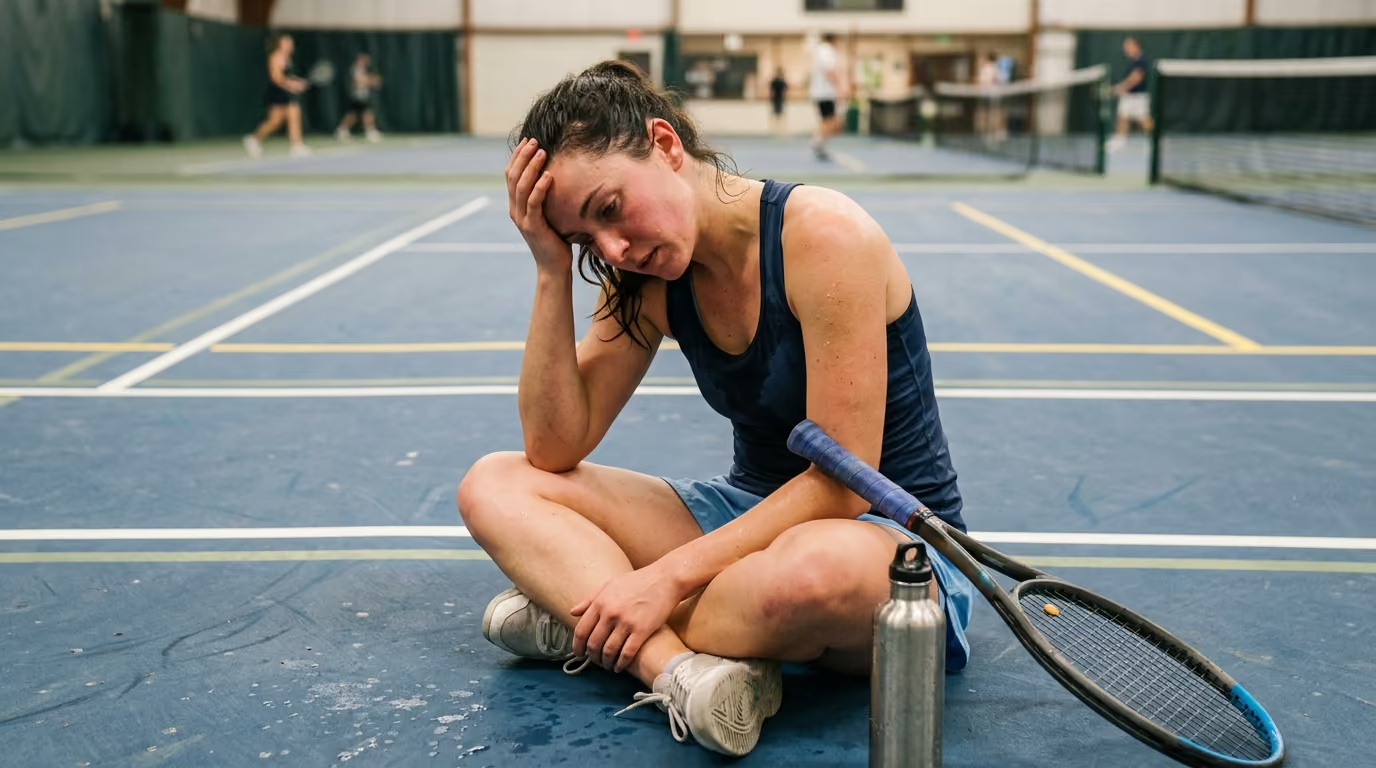

Court athletes can effectively mitigate injury risks by understanding how different forms of fatigue impact their movement, reactions, and decision-making.




Managing fatigue on the court is not a test of personal toughness, but a structured process of risk management. True safety lies in recognizing when your physical and cognitive capacities fall below the demands of active play. This guide provides a detailed look at how different forms of exhaustion affect your movement, reactions, and decision-making during racquet sports.
To play safely under fatigue, court athletes must monitor physical movement quality, mental reaction speed, and hydration levels throughout a session. When coordination deteriorates or decision-making slows, players should modify their intensity, extend their rest intervals, or stop playing altogether. This proactive approach prevents movement errors that put joints at risk while preserving long-term performance.
Fatigue is a multi-layered physiological state that affects both your body and mind. To manage it effectively, we must look beyond simple muscle soreness and examine how different biological systems fail under pressure.
Peripheral fatigue refers to a reduced capacity in specific muscle groups to repeatedly generate force. On the court, this looks like weaker lateral push-offs, sluggish recovery steps, and a reduced ability to brake suddenly.
A systematic review of match-related fatigue in basketball analyzed forty-four different studies on court athletes. The research demonstrated that vertical jumping and linear sprinting performance declined significantly by the end of a match. Furthermore, some of these performance impairments persisted for twenty-four to forty-eight hours after play.
This means your muscles remain structurally compromised long after you walk off the court. When local muscles are exhausted, they cannot absorb the force of impact, passing that stress directly to your joints and ligaments.
Neuromuscular fatigue occurs when the communication between your nervous system and your muscles begins to degrade. It alters joint alignment, muscle activation timing, and overall coordination during complex movements.
This is particularly dangerous during repeated accelerations, sudden deceleration, single-leg landings, and lateral cutting maneuvers. Research focusing on fatigue-induced knee injury mechanics reported significant changes in knee and hip alignment during landing tasks when athletes were tired. Specifically, researchers observed a decrease in knee flexion angles alongside an increase in knee abduction.
Central fatigue refers to a reduction in neural drive from the brain itself. The motor cortex simply stops sending strong, rapid signals to the active muscle groups. When central fatigue sets in, your brain struggles to coordinate the protective muscle contractions needed to stabilize your ankles and knees.
Mental fatigue is a state of reduced cognitive efficiency resulting from sustained mental effort, stress, or long matches. A systematic review published in the field of sports medicine analyzed how mental fatigue affects overall athletic performance.
The researchers found that mental fatigue was associated with poorer sport-specific reaction times, with a standardized effect size of approximately 0.496. It also resulted in poorer technical performance and worse decision-making, showing effect sizes of 0.613 and 0.671 respectively.
Importantly, the review reported very low heterogeneity for the decision-making data. This indicates that the negative effect of mental tiredness on split-second decisions is highly consistent across various sports.
Perceived fatigue is your subjective assessment of your energy levels, effort, and readiness. Tracking your session rating of perceived exertion is a reliable way to monitor cumulative training load. When your subjective rating of effort rises faster than normal, it serves as an early warning of systemic exhaustion.
The physical toll of fatigue shows up in predictable joint patterns. A systematic review of global court-sport injury patterns reported that ankle injuries occurred most frequently, appearing in twelve of twenty-eight reviewed studies. Knee injuries were also highly prevalent, appearing in seven of twenty-eight studies.
When your lower limb stabilizers tire, your body struggles to control lateral ankle inversion and knee valgus. This increases the mechanical load on the anterior cruciate ligament, or ACL, and the lateral ankle ligaments.
Research shows that fatigue-induced loading changes, such as increased internal hip rotation and knee abduction, are significantly worse during unanticipated movements. Because racquet sports require constant, unpredictable reactions, mental and neuromuscular fatigue combine to create high-risk movement patterns.
To play safely, you must learn to balance your physical capacity against the changing demands of the game. We can view this relationship through a simple, practical monitoring framework.
Injury risk rises when the demands of a training session exceed your current physical, technical, or environmental capacity. Fatigue actively lowers your baseline capacity, while factors like speed, heat, and complex decision-making raise the demand.
A technical drill that is safe when you are fresh can become highly hazardous after an hour of play. Your ability to absorb landing forces and control knee alignment drops as the session continues.
You can use a simple, four-domain screen to assess your readiness on the court. This screen does not require complex equipment and can be performed during any changeover.
To make real-time decisions, use a simple traffic-light classification during your matches or training sessions. This helps you decide whether to continue, adjust, or stop.
Your movement mechanics are stable, your reactions are sharp, and you feel no unusual joint discomfort. Your rest intervals allow you to fully recover before the next point.
You show signs of minor technical breakdown, such as landing heavily or taking extra steps to change direction. You feel moderate muscle fatigue but have no sharp pain or cognitive issues.
Modify your play by reducing your sprint speed, avoiding high-risk dives, and focusing on controlled baseline rallies. Increase your rest intervals between games to help recover your coordination. Use injury prevention resources to guide your modifications.
You experience localized joint pain, a sensation of your joint giving way, or a popping feeling followed by swelling. You also stop for systemic symptoms like dizziness, confusion, or loss of balance.
If you show these signs, end the session immediately. Continuing to play through red-light symptoms significantly increases the risk of a severe musculoskeletal injury.
Rest intervals should be treated as a tool to preserve movement quality, not just as a break from running. When your repetition quality declines, increase your rest times to allow your nervous system to reset.
According to guidelines from the National Athletic Trainers' Association, planned hydration and cooling breaks are essential during high-heat conditions. During warm weather, set a timer for a four-minute break every thirty minutes of continuous play.
Proper fluid intake is critical for maintaining blood volume, cognitive performance, and muscle function. Sports medicine policies recommend drinking approximately seven to eight milliliters of fluid per kilogram of body weight about two hours before your session.
During play, aim to consume approximately three milliliters of fluid per kilogram of body weight every fifteen to twenty minutes. However, you should treat these numbers as general starting points.
Your actual fluid needs depend on your sweat rate, body size, local climate, and physical fitness. Avoid excessive overdrinking, as consuming too much plain water without electrolytes can lead to hyponatremia. Ensure your hydration strategy balances fluid replacement with electrolyte intake, particularly during long matches.
While all racquet sports demand quick lateral movements, each sport imposes unique mechanical stresses on your body. Understanding these differences helps you tailor your fatigue-management strategies.
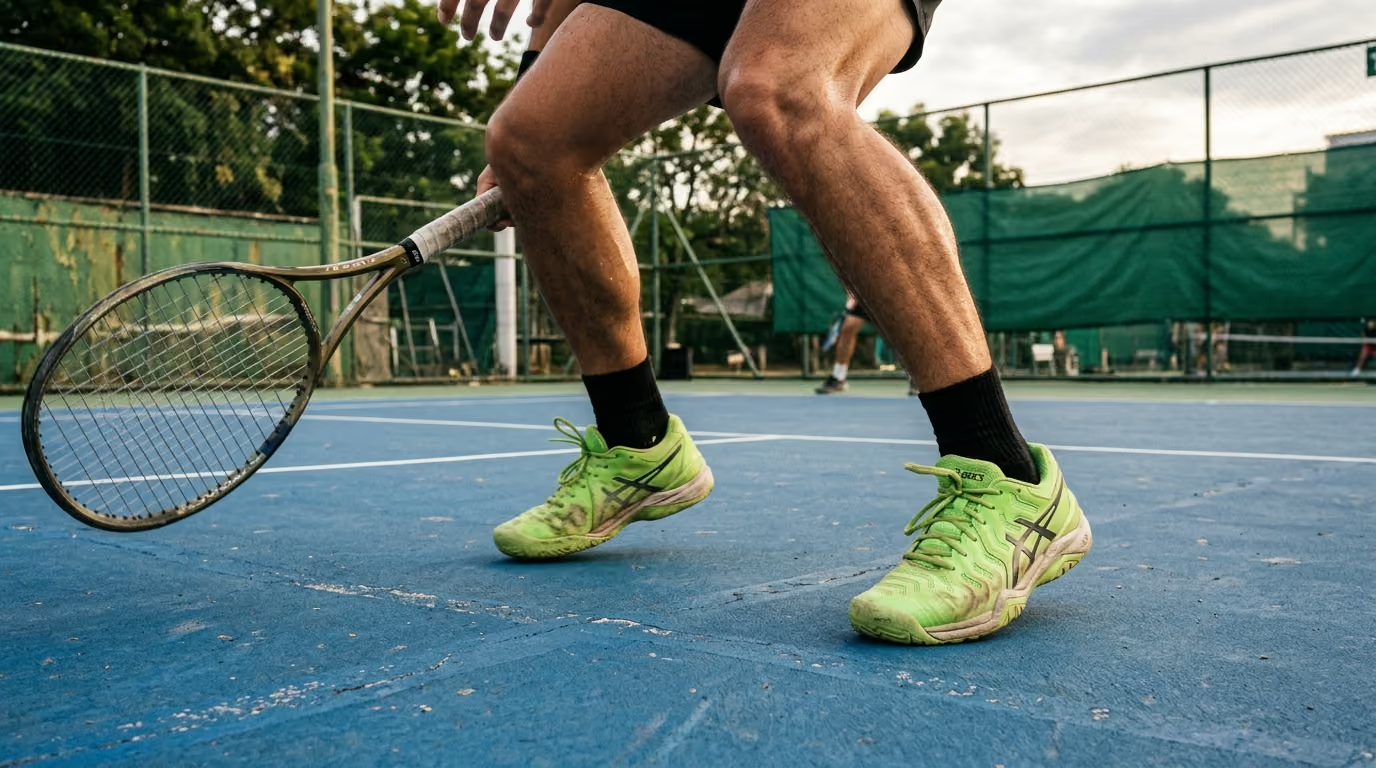
Tennis is played on a large court, requiring wide lateral sprints, deep lunges, and high-velocity eccentric braking. As you tire, your step length often shortens, forcing you to reach for the ball rather than moving your feet into an optimal hitting position.
This reaching motion increases the mechanical leverage on your lower back and shoulder joints. The repetitive eccentric loading during hard stops on hard court surfaces places a heavy burden on your patellar tendon.
Under fatigue, your ability to control this eccentric load drops, leading to micro-tears in the tendon tissue. To protect your joints, review our detailed mobility and movement guides for tennis-specific footwork.
Pickleball is played on a much smaller court, which reduces the total distance you need to sprint. However, the game demands rapid, repetitive reflex volleys and constant, low-center-of-gravity crouching near the kitchen line.
As pickleball players fatigue, they often stop bending their knees and hips, choosing instead to round their lower back to reach low ball trajectories. This repetitive lumbar flexion under fatigue can lead to acute back spasms and disc strain.
Furthermore, the quick, reactive reflex volleys at the kitchen line require high-speed wrist and elbow stabilization. When your forearm muscles tire, the shock of ball impact travels directly to your elbow tendons, contributing to epicondylitis.
Padel combines a small, enclosed court with constant overhead play and rapid transitions off the rebound walls. The continuous overhead smashing requires excellent shoulder mobility and core stability.
I remember finishing a tough two hour padel match on a cold Tuesday night and waking up the next morning feeling like my lower back was locked in concrete. For a long time, I just accepted this as the price of playing hard in my forties.
But once I started spending just ten minutes on targeted hip mobility before heading to the club, the stiffness almost completely vanished. It taught me that we do not have to accept pain as a default state of aging.
When you get tired in padel, your shoulder rotation slows down, forcing you to arch your lower back excessively to hit overheads. This compensation puts immense pressure on your facet joints and lumbar discs. For more advice on managing these demands, examine our player health articles.
Many players hold onto outdated ideas about conditioning and endurance. These misconceptions can lead to poor decision-making on the court and increase the risk of injury.
Players often assume that if their strokes look acceptable, fatigue is not affecting their safety. However, neuromuscular compensations can occur before your stroke mechanics visibly break down.
Your brain may subtly alter your joint angles to maintain ball control, increasing the internal stress on your ligaments. These silent changes are highly pronounced during unexpected or rapid movements.
It is a mistake to think that fatigue always causes less knee and hip flexion in every athlete. While many studies report stiffer landings, some drop-landing research shows that certain athletes land with a more flexed, protective posture when tired.
Fatigue does not produce one identical movement response in everyone. You must monitor your own specific movement deviations rather than looking for a single, universal sign.
Many recreational players believe they only need to stop when they feel sharp, localized pain. However, systemic signs like dizziness, nausea, loss of coordination, or mental confusion are serious warning signs.
These symptoms can indicate heat illness or dangerous cardiovascular strain. Pushing through these markers can lead to severe exertional illness.
While drinking fluids is essential for temperature regulation and fluid balance, it does not stop muscle tissue damage or central nervous system fatigue.
Your muscles still experience mechanical strain and inflammation from long matches, regardless of your hydration status. Hydration is only one part of a complete recovery plan.
Many athletes believe that simply building better cardiovascular endurance will prevent fatigue-related injuries. While fitness improves your overall capacity, it does not protect you from sudden increases in your weekly playing time.
Even highly fit players are susceptible to injuries when their training volume spikes too quickly. Consistent load management is always required.
Believing that a fixed rest interval works for everyone is a common mistake. Rest needs vary based on age, fitness levels, local humidity, and previous injury history.
An older player returning to play in high heat will require significantly longer breaks than a younger player in cooler conditions. You must adjust your rest times based on your individual recovery rate.
Athletes often dismiss mental fatigue, assuming that if their legs feel fine, they are safe to play. However, cognitive exhaustion slows your ability to read the ball and anticipate your opponent's moves.
This delay forces you to make sudden, awkward movements to reach the ball, putting sudden stress on your joints. Mental fatigue is just as critical to manage as physical tiredness.
Continuing a high-intensity drill after your movement quality has collapsed is a common coaching error. Practicing landing or cutting patterns while highly fatigued simply trains your brain to accept poor movement habits.
It is far better to shorten a drill or reduce its speed to maintain clean, safe mechanics. Quality of movement should always take priority over total volume.
To prevent injuries over the course of a season, you must distinguish between immediate, acute fatigue and long-term, accumulated fatigue.
Acute fatigue occurs during a single match or training session. It can be managed with court-side breaks, proper hydration, and real-time modifications.
Accumulated fatigue, however, builds up over several days or weeks of hard play. A systematic review on basketball recovery times showed that muscle damage markers can remain elevated for thirteen to seventy-two hours after a competitive match.
Systemic inflammation can persist for forty-eight hours, while subjective muscle soreness often peaks between twenty-four and forty-eight hours. If you step onto the court with residual fatigue, your baseline capacity is already compromised, making you more vulnerable to acute movement errors.
The International Olympic Committee, or IOC, consensus statement on athletic load highlights the relationship between training volume and injury risk. Injury risk increases when your acute workload, which is your current week's playing volume, is significantly higher than your chronic workload, which is your average playing volume over the past month.
Sudden workload spikes can happen when you play in a multi-match weekend tournament after several weeks of minimal physical activity. This imbalance between your body's current tolerance and the sudden physical demand is a primary driver of overuse injuries. You can explore scientific recovery strategies to help navigate these high-demand periods.
While high fatigue increases your risk on the court, you must occasionally expose your body to fatigue during training to build endurance. The key is to manage this exposure carefully:
While self-monitoring is helpful, you must recognize when an injury requires professional medical care rather than simple rest.
You should schedule an evaluation with a physical therapist or sports medicine physician if you experience any of the following symptoms:
Seek immediate medical attention if you experience systemic symptoms during or after play in hot conditions:
The following five case patterns show how fatigue-related risks typically play out on the court and how to handle them.
A competitive court athlete is performing high-intensity jumping and hitting drills at the end of a long training session. The coach notices that the player is landing with stiff knees, making loud, heavy contact with the court surface, and letting their knees collapse inward.
A tennis player known for their quick movement begins reacting slowly to their opponent's shots during the third set of a match. They are physically capable of running fast once they start, but they are late to anticipate the ball trajectory, make poor tactical decisions, and hit several routine groundstrokes off-balance.
A recreational player is competing in an all-day pickleball tournament, playing five matches in a short period. By the fourth match, their vertical jump height has dropped, their lower back feels tight, and they are struggling to maintain a low crouch at the kitchen line.
During a hot, humid outdoor padel match, a player begins to feel dizzy, slightly nauseous, and complains of muscle cramps in their calves. Their partner notices that they are moving slowly and struggling to track the ball off the back wall.
A recreational player who has not played tennis in two months signs up for a weekend clinic involving six hours of high-intensity play over two days. By Sunday afternoon, they feel severe soreness in their Achilles tendons and patellar tendons.
Yes, athletes returning from injuries like an ACL reconstruction or a severe ankle sprain show different biomechanical responses to fatigue. A systematic review of landing mechanics after ACL surgery found that fatigue did not affect every athlete in the same way.
Some players showed greater movement compensations on their injured side, while others loaded their healthy leg more. Because of these differences, you should get a professional movement assessment and clear clinical clearance before returning to full-intensity play.
Competitive players often minimize their fatigue because they want to keep playing or avoid showing weakness. In these situations, do not rely on the player's self-report. Instead, focus on objective, observable markers:
Yes, youth athletes have unique risk profiles because their bones and tendons are still growing. Research in youth sports shows that overuse injuries are closely linked to sudden spikes in training volume.
Young players should not be managed using adult training models. Their school schedules, sleep quality, and physical growth stages must be considered when planning their playing time. To learn more about managing these training loads, visit our main athletic resources index.
Follow Evercourts for practical insights on tennis, pickleball and padel performance, movement, recovery and healthy ageing. Stay connected for new articles, research-led guidance and ideas to help you play well and keep playing for years.


Read practical guidance for better movement, smarter preparation and a game that keeps working for you.
explore the Blog