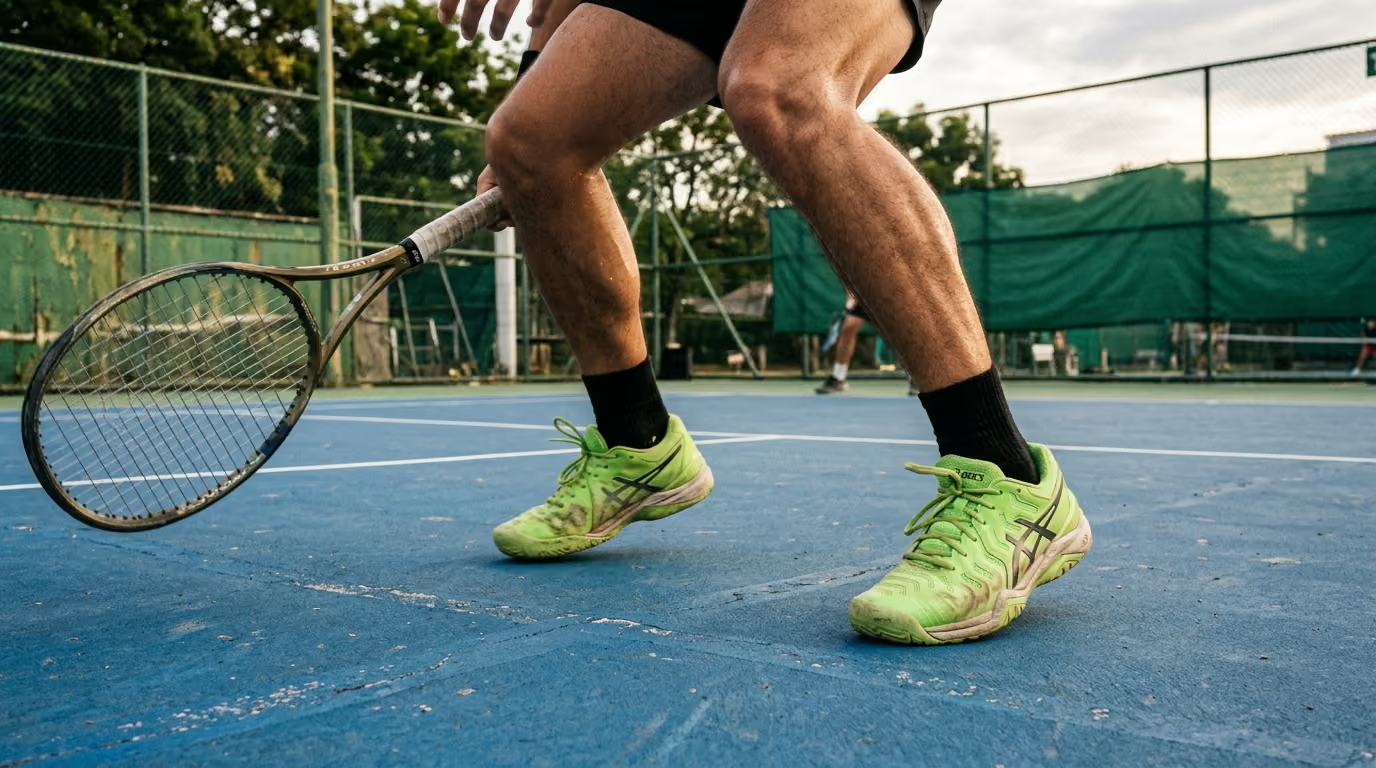
Adult racquet players can effectively manage everyday stiffness by prioritizing gradual physical preparation, sensible load management, and targeted strength work.




To manage everyday court stiffness, players should focus on gradual physical preparation, sensible load management, and targeted strength work rather than aggressive stretching. By adjusting court variables and building movement capacity between sessions, you can maintain consistent play and support long-term athletic longevity. This pragmatic approach allows you to stay active, perform better, and enjoy your time on the court without fear-based restrictions.
Many adult racquet players assume that stiffness is an inevitable sign of joint deterioration. They often believe they must stretch aggressively before a match or stop playing entirely to protect their limbs. In reality, stiffness is a highly manageable movement signal rather than an automatic red flag. This guide provides an evidence-based framework to help you navigate everyday physical limitations, prepare your body for play, and build a resilient movement foundation.
Stiffness is a subjective sensation of resistance, tension, or heaviness during movement. It often appears after periods of inactivity, such as sitting at a desk or waking up in the morning. Many players mistake this sensation for permanent structural damage or tissue shortening. However, physical feelings of stiffness do not always correspond to actual structural changes in your joints.
I remember finishing a tough two hour padel match on a cold Tuesday night and waking up the next morning feeling like my lower back was locked in concrete. For a long time, I just accepted this as the price of playing hard in my forties. But once I started spending just ten minutes on targeted hip mobility before heading to the club, the stiffness almost completely vanished. It taught me that we do not have to accept pain as a default state of aging.
To manage these sensations effectively, players must distinguish between different patterns of physical restriction.
This is a mild restriction that is highly noticeable during your first few steps out of bed or during the first games of a match. It typically eases as you begin to move, raise your body temperature, and lubricate your joints.
This discomfort appears several hours after play or the following morning. It is a normal physiological response to physical effort and mechanical loading.
This sensation increases when you suddenly raise your playing volume, match intensity, or weekly session frequency. It indicates that the current court demands have temporarily exceeded your tissues' recovery capacity.
This is a chronic, non-resolving restriction that does not improve with simple movement modifications or gentle warm-ups. It remains constant across several days or weeks regardless of your rest levels.
Understanding these patterns helps you make smarter decisions on the court. Start-up stiffness simply requires a more patient warm-up, whereas load-sensitive stiffness requires you to adjust your weekly playing schedule. Reframing these sensations as movement signals keeps you in control of your athletic journey.
To manage stiffness, players must understand how joint movement actually works. Many of us use terms like flexibility, range of motion, and mobility interchangeably, but they represent very different physical qualities.
This refers to the absolute physical distance a joint or body segment can travel. It is determined by your skeletal structure, joint capsules, and surrounding soft tissues.
This is the passive extensibility of your muscles and connective tissues. You demonstrate passive flexibility when you use gravity or an external strap to stretch a muscle without active muscle contraction.
This is your ability to actively access and control a joint range of motion. It requires neuromuscular control, joint space, and active muscle strength throughout the entire movement.
This represents your overall physical ability to repeatedly tolerate specific court movements without fatigue or irritation. It is the sum of your strength, endurance, balance, and coordination.
Many recreational players focus solely on increasing passive flexibility through static stretching. However, systematic reviews show that routine static stretching before exercise does not reduce overall injury rates. Static stretching can temporarily increase passive range of motion, but it does not prepare your neuromuscular system for the explosive, multi-directional demands of a racquet sport.
For players managing diagnosed joint conditions, the scientific consensus strongly favors active movement. National guidelines from the American College of Rheumatology and the Arthritis Foundation strongly recommend exercise for knee, hip, and hand osteoarthritis. Similarly, the National Institute for Health and Care Excellence, known as NICE, recommends tailored therapeutic exercise as a primary management tool.
According to NICE clinical guidelines, starting a new therapeutic exercise program may initially cause mild, temporary discomfort. This is a normal response as your tissues adapt to new loads. Over time, consistent physical activity and strength training lead to significant improvements in pain, stiffness, and overall joint function.
To maintain athletic longevity, players must manage a simple physical balance. Symptoms and joint irritation become much more likely when your court demands repeatedly exceed your current movement capacity.
Your capacity is not a fixed number. It fluctuates based on your muscular strength, tissue tolerance, cardiorespiratory fitness, sleep quality, and recovery status. Your demands include your weekly playing volume, match intensity, court surface, footwear, and the specific physical movements required during play.
This model explains why you might feel perfectly fine during a relaxed, ninety-minute social hitting session but experience severe stiffness after a forty-five-minute competitive match. In a social hit, the movement demands are highly predictable and controlled. In a competitive match, you must constantly perform rapid decelerations, deep lunges, and sudden changes of direction under pressure.
This dynamic is especially clear during sudden workload changes, often called the "weekend spike." Consider a player who normally hits once a week for an hour but suddenly enters a weekend tournament with three competitive matches. This represents a massive spike in physical demand that far exceeds their usual baseline capacity.
The resulting stiffness is not a sign of sudden joint degeneration. It is simply a logical consequence of a temporary capacity deficit. To prevent this, players should aim to build a robust foundation of active physical tolerance through systematic strength and conditioning methods.
Load management is the process of adjusting the volume, intensity, and frequency of your physical activities. It ensures you can train consistently while giving your body adequate time to recover and adapt. Consistent load management is far more effective for long-term health than chasing immediate relief with massage guns, foam rollers, or heat creams.
To manage your load effectively, you must track several key variables across your training week:
Sports scientists often use the acute-to-chronic workload ratio to compare a player's recent training load to their historical average. A systematic review of this ratio found a small-to-moderate association between elevated ratios and injury risk, though the findings varied significantly across different sports and studies.
For recreational court athletes, you do not need complex mathematical equations. A practical "recent load versus usual load" comparison is highly effective. If you plan to increase your weekly playing time, do so gradually. Avoid doubling your court hours in a single week, and ensure you include lower-load recovery days after your hardest matches.
Managing these variables allows your connective tissues to adapt to the physical demands of play. Muscles, tendons, and joint capsules respond positively to progressive, structured loading. When you manage your physical load intelligently, your tissues naturally build higher capacity, which reduces the severity of everyday stiffness.
To manage physical stiffness on a weekly basis, players should adopt a structured "Prepare, Play, and Review" cycle. This systematic approach ensures you gather accurate data about your body and make sensible adjustments on the court.
Before you step onto the court, perform a brief mental and physical check. Ask yourself what areas feel stiff today, review your recent playing load, and identify the specific movements today's match will require.
If your shoulder feels restricted before serving, do not try to force it into extreme ranges with aggressive stretching. Instead, acknowledge the restriction and plan a longer, more progressive warm-up.
During your match, pay close attention to how your body moves. Monitor whether your start-up stiffness begins to clear or if it starts to limit your movement speed.
Watch for guarded movement patterns, such as a shortened stride, a visible limp, or an inability to turn your shoulders fully. If you notice these changes, use the practical modification ladder to keep playing safely:
Your management strategy does not end when you walk off the court. Track how your body responds later that evening and the following morning.
Ask yourself if your stiffness returned to its usual baseline within twenty-four hours. If your stiffness persists or worsens, your body is telling you that the match demands exceeded your current capacity. Use this information to adjust your upcoming training sessions by lowering the volume, increasing recovery time, or focusing on injury prevention strategies.
A structured warm-up acts as a progressive transition from rest to the high-intensity demands of racquet sports. It raises your core temperature, improves joint lubrication, and prepares your nervous system for rapid reactions.
According to guidelines from the American College of Sports Medicine, a proper warm-up should include at least five to ten minutes of low- to moderate-intensity cardiorespiratory and muscular-endurance activity. For court sports, we can structure this into five highly specific, practical stages.
Spend three to five minutes raising your core body temperature and heart rate. You can use easy jogging, side-stepping, low-intensity skipping, or gentle court movement. The goal is to produce a light sweat and increase blood flow to your working muscles.
Perform controlled, active movements to gently mobilize your major joint segments. Focus on ankle rocks, gentle calf raises, hip hinges, slow trunk rotations, and wide shoulder circles. Focus on active control rather than forcing your joints into deep or painful ranges.
Prepare your lower limbs for the physical impact of landing and decelerating. Perform ten controlled split-stance lunges, ten mini-squats, and ten lateral side-steps in each direction. This activates your quadriceps, glutes, and calves, which helps support your knees and hips.
Perform slow, controlled shadow swings without a ball. Rehearse your forehands, backhands, volleys, and low defensive reaches. Gradually increase the speed of your movements to prepare your shoulders, upper back, and wrists for racquet contact.
Step onto the court and begin with cooperative, short-court hitting. Keep your feet moving, strike the ball gently, and gradually back up to the baseline. Slowly increase your rally pace, court coverage, and serving volume over several minutes before starting competitive play.
This five-stage sequence is supported by modern sports science. A 2025 study on adult recreational tennis players examined the Tennis 10+ structured warm-up and cool-down program. The researchers found that players who consistently used the structured program experienced a significant decrease in overuse injuries at the twelve-month mark.
However, the study also revealed that high compliance did not reduce overall, acute injury rates across the entire study period. This is a critical distinction. A warm-up is excellent for preparing your body, improving movement comfort, and reducing long-term overuse issues, but it cannot eliminate all injury risks.
While all racquet sports share similar movement patterns, each sport places unique physical demands on your body. Understanding these differences allows you to tailor your mobility and recovery strategies.
Tennis is played on a large court, requiring long sprints, high-velocity decelerations, and deep lateral lunges. The high-velocity serve also places extreme stress on the shoulder, thoracic spine, and lower back.
According to research on racquet sport injuries, recreational tennis players experience a high rate of lower-extremity overuse injuries. Because of this, tennis players must focus heavily on ankle and calf mobility to support rapid deceleration. Ensuring your hips can rotate fully also helps protect your lower back from twisting stress during powerful groundstrokes.
Pickleball is played on a smaller court, which reduces long sprints but increases the need for rapid, low-profile movements. Players must spend significant time in a deep squatting stance near the kitchen line, leading to stiffness in the knees, lower back, and Achilles tendons.
To manage pickleball-specific stiffness, focus on building active calf endurance and lower-body strength. This helps you maintain a low, balanced athletic stance without placing excessive pressure on your knees or lower back during long dinking rallies.
Padel features constant multi-directional movement, overhead play, and rapid rotations off the glass walls. The synthetic turf surface can also place unique rotational demands on your knees and hips.
Padel players frequently experience stiffness in the thoracic spine and shoulders due to the high volume of overhead smash variations. To stay comfortable, padel athletes should prioritize rotational mobility through the mid-back and ensure their shoulder blades move freely. This reduces the need to hyperextend the lower back when reaching for high, defensive lobs.
Many well-meaning players make common errors that actually increase their physical stiffness and limit their performance. Identifying these mistakes is the first step toward building a more effective routine.
Holding long, intense passive stretches right before a match can temporarily reduce your muscle power and reaction times. Furthermore, scientific evidence shows that routine static stretching does not reduce overall exercise-related injury rates.
Replace pre-match static stretches with dynamic, active movements. Save your gentle stretching for a separate evening session or use it as a relaxing cool-down after play.
If a joint feels stiff, forcing it into a deep, painful stretch can cause protective muscle guarding. This makes your body feel even tighter as it attempts to protect the irritated joint.
Always work within a comfortable, pain-free range of motion. Focus on smooth, controlled movements that build active strength and coordination over time.
Forcing your way through a match when you are limping, favoring one leg, or unable to swing normally is highly risky. This creates major physical compensations that overload other joints and tissues.
If you cannot maintain normal, symmetrical movement patterns on the court, use the modification ladder to reduce match demands. If your movement remains altered, stop the session and focus on recovery.
Feeling stiff after a hard match does not mean you have caused structural damage to your joints. Pain and stiffness are complex protective responses managed by your nervous system.
Do not catastrophize everyday physical sensations. Instead, treat stiffness as a simple indicator that your recent playing load was slightly higher than your current capacity.
Strength training is one of the most effective ways to manage joint stiffness and improve your overall movement quality. Stronger muscles act as shock absorbers, distributing the high-impact forces of court sports away from your joints and connective tissues.
Clinical research supports this approach for joint health. A systematic review on resistance training for knee osteoarthritis found that consistent strength work led to substantial improvements in joint pain and physical function.
The review analyzed studies involving approximately twenty-four total sessions spread over eight to twelve weeks. Interestingly, the researchers did not find one single "perfect" set, repetition, or intensity scheme. This means you do not need to follow a highly complex or extreme lifting program to see great results.
To build a reliable strength routine, focus on basic, functional movement patterns:
To balance your schedule, aim for two non-consecutive strength and conditioning sessions each week. Combine this with your normal matches, and ensure you include at least one complete rest day. This simple, consistent habit is a cornerstone of healthy aging and athletic longevity.
While everyday start-up or post-session stiffness is highly manageable, some symptoms require a professional medical evaluation. Knowing when to see a healthcare provider keeps you safe and ensures you receive the correct treatment.
According to clinical guidelines from the National Health Service and the American Academy of Orthopaedic Surgeons, players should seek prompt medical advice if they experience any of the following warning signs:
If you experience these symptoms, avoid self-directed mobility exercises. Consult a qualified physical therapist, sports physician, or orthopedic specialist to obtain a clear diagnosis and a structured, safe recovery plan. For general inquiries or to connect with our editorial team, visit our contact page for more information.
By applying these practical principles, you can confidently manage everyday physical limitations, improve your movement on the court, and continue playing the racquet sports you love for years to come.
Follow Evercourts for practical insights on tennis, pickleball and padel performance, movement, recovery and healthy ageing. Stay connected for new articles, research-led guidance and ideas to help you play well and keep playing for years.


Read practical guidance for better movement, smarter preparation and a game that keeps working for you.
explore the Blog