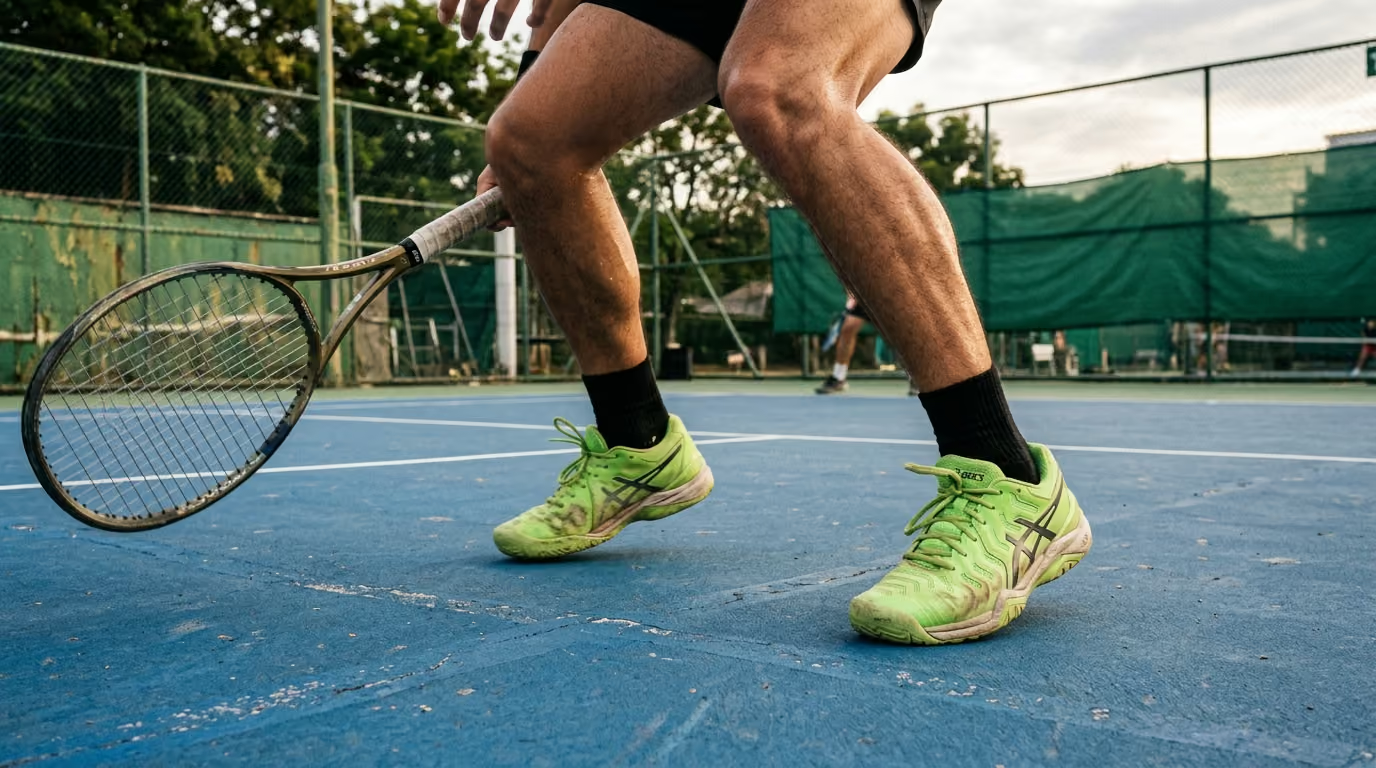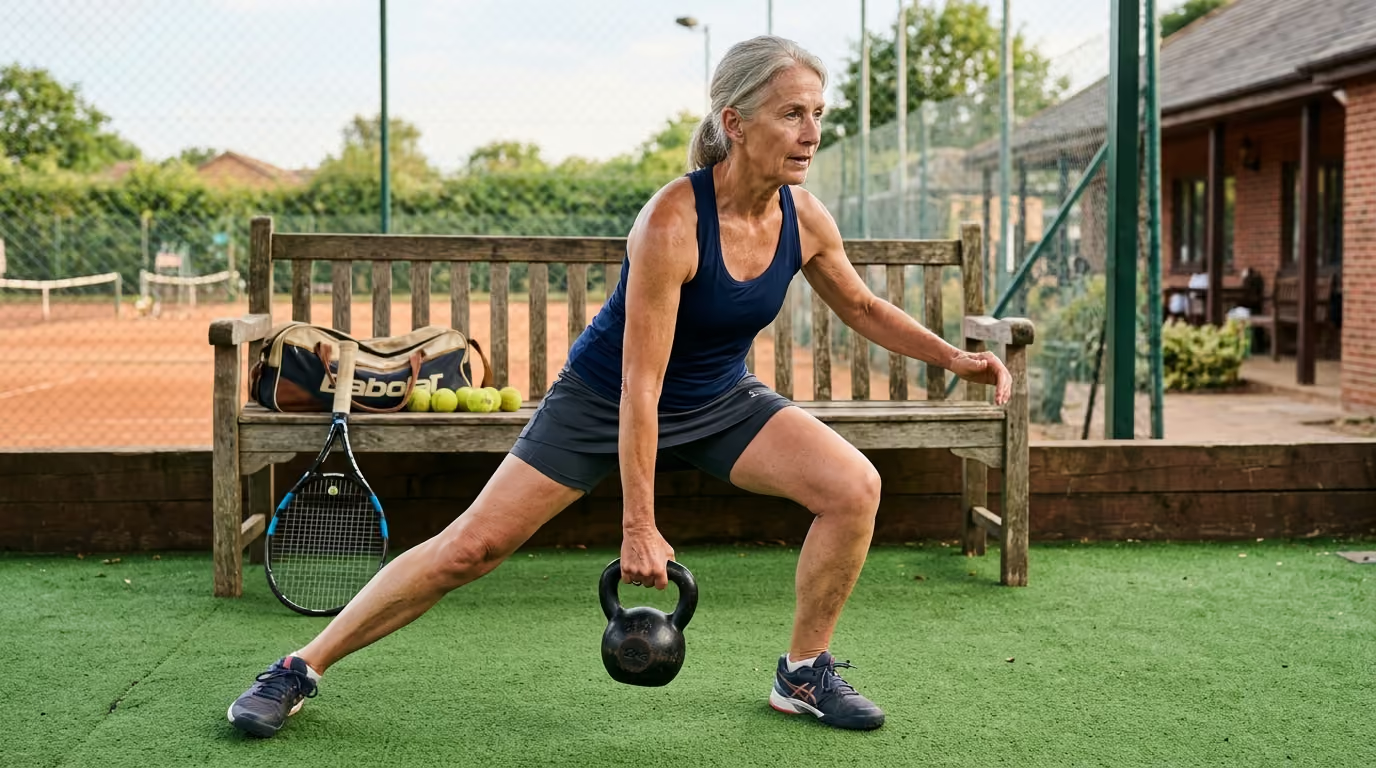

While many players assume declining racquet sport performance is inevitable with age, the actual cause is often a preventable loss of muscle strength and power.




Imagine preparing to sprint toward a short angle on the court. Your eyes track the ball perfectly. Your brain calculates the exact trajectory and path to take. Yet, when you try to push off, your feet feel slightly heavy and slow. You reach the ball on the second bounce, wishing you had just a fraction more speed.
While many players assume this decline is an unavoidable part of getting older, the underlying cause is often a gradual loss of muscle strength and power.
Preserving muscle mass, strength, and power is essential for maintaining on-court mobility and ensuring long-term athletic independence. To play racquet sports safely for years, players must focus on progressive resistance training and adequate dietary protein rather than complex bodybuilding routines. This physical foundation provides the necessary braking force, balance, and quickness required for the unique demands of tennis, pickleball, and padel.
This comprehensive resource outlines how you can maintain your physical capabilities and secure your longevity on the court. It is designed specifically for court athletes who want to understand the physical demands of their sport. We will focus on practical solutions that support healthy aging and long-term play. Reviewing these principles will help you build a durable body that can handle the physical challenges of your favorite racquet sports.
To understand why physical decline happens, we must distinguish between several related but distinct terms. These variables are related but they are not interchangeable. A player may retain considerable muscle mass yet have poor strength or balance. Conversely, another player may improve functional performance on the court without showing a large measurable increase in muscle mass.
First, muscle mass or lean mass refers to the overall quantity of skeletal muscle in your body. Second, muscle strength is the maximum force a muscle group can produce during a single effort. Third, muscle power is the ability to produce that force quickly. Finally, physical performance represents your ability to use that strength and power in functional tasks.
Muscle quality is another essential concept. It describes the force or function produced relative to the actual size of the muscle.
A useful way to conceptualize this on the court is with a simple equation:
Court performance = force capacity × rate of force production × movement skill × energy availability × recovery
This formula is a conceptual model rather than a strict mathematical clinical calculation. It shows why measuring body weight or muscle size alone does not tell the whole story. You need both the raw material of muscle tissue and the neural ability to activate it quickly.
Sarcopenia is an age-associated clinical condition involving the deterioration of muscle strength, quantity, and overall physical performance. Sarcopenia is recognized as an important contributor to functional decline and loss of independence in older adults.
According to the European Working Group on Sarcopenia in Older People, known as EWGSOP2, the assessment process places muscle strength at the center. Low muscle strength is considered the primary indicator of probable sarcopenia.
The condition is confirmed when low strength is accompanied by low muscle quantity or quality. Severe sarcopenia is diagnosed when a player exhibits low strength, low muscle quantity, and poor physical performance.
Clinical screening tools use specific reference thresholds to identify these issues. These include a handgrip strength below 27 kilograms for men or 16 kilograms for women. Another common test is the five-times-sit-to-stand assessment. Taking more than 15 seconds to complete this test indicates potential weakness.
While these clinical thresholds are helpful for screening, they are not athletic targets. A recreational player may easily pass a basic sarcopenia screening yet still lack the power and balance needed to compete safely.
Dynapenia describes the age-related loss of muscle strength that occurs independently of muscle mass loss. This distinction is vital because your strength and power can decline much faster than your actual muscle size.
Muscle mass and strength typically peak between the ages of 30 and 35. After this peak, muscle power and performance decline gradually. This decline often accelerates after age 65 in women and age 70 in men.
Research estimates that adults lose approximately 3% to 8% of their muscle mass per decade after age 30. This rate of loss increases significantly once a player reaches age 60. The primary driver of this strength loss is often a decrease in the size and recruitment of fast-twitch muscle fibers. These fibers are responsible for rapid, explosive movements.
Power serves as your physical emergency reserve on the court. Many movements in racquet sports are strictly time-constrained. You might have enough maximal strength to stand up slowly from a deep squat. However, you may lack the power to push off quickly and change direction.
For racquet-sport athletes, power is what allows you to take a fast first step. It helps you brake before changing direction. It enables you to recover from a wide lunge or split-step. Without adequate power, your strokes will break down late in a match.
Power training must be individualized and technically controlled. It should be scaled to your joint health and coordination. You do not need to perform high-impact jumping exercises to train power safely.
Tennis, pickleball, and padel are outstanding activities for healthy aging. They combine aerobic endurance with multi-directional movement, balance challenges, and social interaction. However, playing the sport itself is rarely enough to maintain a balanced physical base.
A typical match requires short bursts of maximum effort followed by brief periods of active recovery. According to reviews of tennis physical demands, the sport requires speed, agility, strength, power, and metabolic conditioning. A player must repeatedly perform short accelerations and lateral shuffles. You must execute sudden decelerations, rotational groundstrokes, and single-leg reaches. These movements put tremendous stress on your muscles, tendons, and joints.
If you only play your sport without general physical preparation, you may develop significant imbalances. For instance, a player may have excellent aerobic fitness but lack the eccentric strength to stop safely. This lack of braking power puts excessive stress on the knees and lower back. Similarly, weak hip stabilizers can lead to poor lateral control and balance errors. Without structural strength, your body will eventually struggle to handle the high forces of competitive play.
The health benefits of racquet sports are well-documented in scientific literature. A major cohort study published in JAMA Network Open analyzed over 272,000 older adults. The researchers found that regular participation in racquet sports was associated with a lower risk of mortality compared to non-participation. Specifically, engaging in 7.5 to 15 MET-hours per week of racquet sports was linked to a 16% reduction in all-cause mortality.
An earlier study published in the British Journal of Sports Medicine also showed impressive associations. It reported that racquet-sport participation was associated with a 47% lower risk of all-cause mortality. It was also linked to a 56% lower risk of cardiovascular mortality during the study period.
However, we must interpret these findings carefully. These are observational studies, which show associations rather than direct cause-and-effect relationships. People who play racquet sports regularly may also possess higher incomes, better healthcare access, or healthier baseline lifestyles. Nevertheless, the data highlights the profound value of staying active on the court. To sustain this activity, you must proactively protect the physical machinery that allows you to play.
To preserve your muscle and strength without turning your life into a bodybuilding routine, you need a structured framework. To build a strong physical foundation, players can utilize targeted strength and conditioning resources. The following six principles are designed to maximize your on-court efficiency while protecting your joint health.
Bodybuilders train individual muscles to maximize visual symmetry. Court athletes must train movement patterns to improve coordination and force transfer. Your training should revolve around eight key patterns.
These include squats and hinges. You should also perform lunges, pushes, and pulls. Finally, include loaded carries, core rotations, and calf work.
The squat and sit-to-stand pattern builds quad and glute strength. The hip hinge targets the posterior chain including the hamstrings and lower back. The lunge and step pattern mimics lateral and forward court movement.
Pushing and pulling patterns protect the shoulders and support torso rotation. Carries build grip strength and trunk stability. Rotation and anti-rotation help you produce and resist twisting forces. Finally, calf and foot function supports ankle stability and power production.
By focusing on these patterns, you build functional strength that directly transfers to your game.
According to research summarized by the National Institute on Aging, resistance training is highly effective for maintaining muscle mass. It improves physical mobility and increases your healthy, active years of life. To achieve these benefits, you must challenge your muscles over time.
This does not mean you must continually lift extremely heavy weights. Progression can take many different forms.
You can increase the number of repetitions you perform with a given weight. You can improve your control during the lowering phase of an exercise. You can increase your range of motion or move to a more challenging single-leg variation.
The key is to apply a consistent stimulus that forces your neuromuscular system to adapt. Active older players should aim for two to three resistance sessions per week as recommended by the PROT-AGE Study Group.
Racquet sports require you to stop and change direction constantly. This braking action relies heavily on eccentric muscle actions, where the muscle lengthens under load. If you lack eccentric strength, you will struggle to decelerate quickly and safely.
You can train this capacity by slowing down the lowering phase of your exercises. For example, take three to four seconds to lower yourself during a squat. Perform slow step-downs from a low box to build knee stability.
Ensure your calf raises include a controlled, deliberate descent to protect your Achilles tendons. This focused training prepares your tissues for the high-impact braking forces experienced on the court. Developing structural resilience is key, and players should consult dedicated injury prevention resources to guide their progression.
Power declines faster than strength as we age, making power training highly important. However, you do not need to perform high-impact plyometric jumping to maintain power. Instead, you can perform familiar exercises with explosive intent.
When standing up from a chair, push through your feet as quickly as possible. Perform light medicine-ball chest passes against a wall with maximum speed. Utilise rapid step-ups onto a low, stable platform while maintaining perfect balance.
The goal is to teach your brain to recruit your fast-twitch muscle fibers quickly. Keep the movements controlled and technically sound. If an exercise causes joint pain, scale it back immediately to a lower-impact version.
Balance is not a passive quality that you either have or do not have. It is an active skill that relies on vision, inner ear inputs, joint position sense, and foot strength. On-court balance requires you to maintain control while your eyes track a moving ball.
You can practice this by incorporating balance drills into your weekly routine. Try standing on one leg while performing slow head turns from side to side. Practice split-stance weight shifts, moving your center of gravity forward and backward.
Perform lateral stepping drills where you step quickly to the side and hold your balance for two seconds. An umbrella review of clinical trials showed that balance and multicomponent exercise reduced fall rates by 23% to 34% in older adults. This balance foundation keeps you upright and agile during fast rallies.
Playing racquet sports provides an excellent cardiovascular workout. However, relying solely on court play for conditioning can lead to excessive fatigue. You should complement your matches with low-impact aerobic activities like brisk walking, cycling, or swimming.
These activities build your aerobic base without placing high-impact stress on your joints. A strong aerobic system supports recovery between intensive rallies and matches. It also helps clear metabolic waste products from your muscles during rest periods.
Keep your supplementary conditioning sessions at a moderate, sustainable intensity. Your resistance training should support your play, not leave you too exhausted to compete.
While tennis, pickleball, and padel share many similarities, they place distinct physical demands on your body. Understanding these differences allows you to tailor your preparation appropriately. For more specialized articles on court movement, you can search our Evercourts blog.
Tennis is played on a large court, which requires significant linear sprinting and deep lunging. Players must cover wide distances, leading to massive eccentric braking forces in the corners. The serve is a complex, high-velocity overhead movement that requires exceptional shoulder, trunk, and hip power.
Because of the court size, tennis players need high levels of deceleration capacity and rotational strength. Your strength program should place a high emphasis on lateral lunges and single-leg stability. You must also build robust core rotation to power your groundstrokes from the baseline.
Pickleball is played on a much smaller court, which reduces the need for long-distance sprinting. However, the game features rapid, short-court rallies that demand exceptional hand-eye coordination and reaction time. Players spend a significant amount of time in a low, crouched position near the non-volley zone, or kitchen line.
This sustained low posture requires excellent isometric endurance in your quadriceps and glutes. Additionally, pickleball requires frequent, rapid lateral shuffling and quick forward steps to reach drop shots. Your training should focus on lateral step-ups, squat endurance, and ankle mobility. Maintaining low-body stability allows you to stay balanced during quick, hand-speed exchanges.
Padel is played in an enclosed court, which introduces complex ball rebounds off the glass walls. This requires players to rotate rapidly and change direction in very tight spaces. Padel also features a very high volume of overhead strokes, such as the bandeja and vibora.
These strokes require repetitive overhead reaching and scapular control to protect the rotator cuff. Furthermore, players must constantly drop into deep, multi-directional lunges to play balls low off the glass. Your physical preparation should prioritize multi-planar mobility and shoulder stability. Rotational strength and thoracic spine mobility are critical for handling the constant twisting and turning.
No strength program can succeed without the proper nutritional building blocks. To preserve muscle mass and support recovery, you must provide your body with adequate nutrients. Proper nutrition and hydration form the cornerstone of tissue repair, which is explained further in our recovery science resources.
Protein provides the essential amino acids your body needs to repair and maintain muscle tissue. As we age, our bodies become less efficient at processing dietary protein. This phenomenon is known as age-related anabolic resistance.
To counteract this, active older adults require higher daily protein intakes than younger individuals. The PROT-AGE Study Group recommends that adults over 65 consume at least 1.0 to 1.2 grams of protein per kilogram of body weight daily. For active older individuals who exercise regularly, they advise at least 1.2 grams per kilogram daily.
The European Society for Clinical Nutrition and Metabolism (ESPEN) provides similar guidelines. They recommend 1.2 to 1.5 grams of protein per kilogram for active older adults or those managing chronic illness. For a 75-kilogram player, this equates to roughly 90 to 112 grams of protein per day. These guidelines may need to be adjusted if you have underlying kidney or liver conditions.
Consuming your daily protein in a single large meal is not highly efficient. Your body can only use a limited amount of protein for muscle repair at one time. A more effective approach is to distribute your protein intake evenly throughout the day.
Aim to consume 25 to 40 grams of high-quality protein at breakfast, lunch, and dinner. If needed, add a protein-rich snack between meals to meet your total daily target.
Excellent protein sources include wild-caught fish, eggs, Greek yogurt, poultry, lean beef, tofu, and legumes. Consuming a portion of protein within a few hours of your strength sessions can also support recovery. However, meeting your total daily protein target is far more important than exact nutrient timing.
It is important to understand that protein consumption alone will not build muscle or strength. A systematic review published in Nutrients analyzed the effects of protein supplementation in older adults. The researchers found that greater protein intake improved lean mass only when paired with resistance exercise.
Protein supplementation without mechanical loading did not provide the same functional benefits. Mechanical tension from resistance training is the primary trigger for muscle preservation. Protein acts as the raw material that allows your body to rebuild after that training stimulus. A protein shake cannot compensate for a sedentary lifestyle or an inadequate training program.
Some older athletes unintentionally consume too few total calories. This can happen due to a naturally reduced appetite, weight-loss diets, or a fear of gaining body fat. However, chronic under-fueling makes it incredibly difficult to maintain muscle mass and recover from matches.
If your body does not receive enough energy from food, it may break down muscle tissue for fuel. Ensure you eat enough overall calories to support your active lifestyle. Include healthy carbohydrates like oats, brown rice, fruits, and sweet potatoes to fuel your on-court performance. Incorporate healthy fats from avocados, nuts, seeds, and olive oil to support joint and hormone health.
Creatine monohydrate is one of the most thoroughly researched dietary supplements in sports nutrition. According to the International Society of Sports Nutrition (ISSN), creatine supplementation can support muscle mass and strength. For older adults, creatine may help preserve muscle function when combined with resistance training.
It works by increasing the availability of phosphocreatine, which is used for short, explosive efforts. This can help you maintain power during repeated sprints on the court. A typical protocol involves taking 3 to 5 grams of creatine monohydrate daily.
Creatine is not mandatory, and you should always prioritize real food first. If you have pre-existing kidney conditions, consult your doctor before starting creatine.
To protect your health and longevity, you must avoid several common training mistakes. These errors can lead to unnecessary fatigue, structural injuries, or poor performance.
Many players believe that playing tennis, pickleball, or padel three times a week is all they need. While court play provides great cardiovascular exercise, it does not offer a balanced, progressive resistance stimulus. Racquet sports involve highly repetitive, asymmetrical movements.
You rotate in one dominant direction and swing with one dominant arm. Without a structured strength program, these repetitive forces can lead to significant muscle imbalances. A balanced gym program ensures both sides of your body remain strong and resilient.
Many players get discouraged if they do not see visible changes in muscle size after training. However, functional performance and strength can improve dramatically without a visible increase in muscle mass. These initial gains are driven by neural adaptations, such as better motor unit recruitment and synchronization.
Your brain becomes more efficient at signaling your existing muscles to contract. Focus on functional markers, such as how easily you can rise from a low lunge or climb stairs. Your performance on the court is far more important than the reading on a body-composition scale.
Some athletes avoid power training because they believe it requires high-impact jumping or bounding. While plyometrics can build power, they can also place excessive stress on arthritic joints. Fortunately, you can train power safely using low-impact methods.
Moving a light weight with maximum speed during a squat or leg press is highly effective. Using medicine balls for rapid throwing and catching drills builds upper-body power without joint impact. Focus on rapid force production, and select exercises that match your current joint health.
Many fitness influencers advocate training to complete muscular failure on every set. For recreational racquet athletes, this approach is often counterproductive. Training to failure creates excessive muscle soreness and prolongs your recovery time.
It can leave you too fatigued to play your sport effectively later in the week. Instead, finish your strength sets with one to three technically sound repetitions left in reserve. This approach provides a strong stimulus for muscle growth while keeping your recovery manageable.
Many players spend hours performing passive static stretching to prevent injuries. While flexibility has its place, passive stretching alone does not improve active control or stability. To move safely on the court, you need strength through your entire range of motion.
Focus on dynamic mobility exercises that actively challenge your balance and strength. Exercises like split squats and controlled lateral lunges build strength in lengthened positions. This active mobility is what protects your joints when you are forced to stretch for a wide ball.
Preserving muscle mass does more than just improve your court speed. It also plays a vital role in how your body recovers from intense physical exertion. Muscle tissue acts as a mechanical buffer, absorbing the high forces of jumping, landing, and stopping.
When your muscles are strong, they shield your joints, ligaments, and tendons from excessive wear and tear. This protection reduces the risk of developing chronic tendon issues or joint inflammation. By focusing on movement quality, players can reference mobility and movement resources to design an efficient routine.
Furthermore, larger and stronger muscles serve as a metabolic sink for glycogen storage. This allows your body to store more energy for demanding matches and recover that energy quickly afterward. A well-conditioned muscular system is also highly efficient at clearing metabolic waste products.
This efficiency translates to less muscle soreness and stiffness in the days following a tough match. As you build strength, you will find that you can play longer without experiencing systemic fatigue. This metabolic and structural resilience is key to maintaining a consistent playing schedule as you age.
Every player has a unique physical history, and generic programs may not fit every individual. To train safely, you must adapt your strength work to manage specific physical limitations.
Osteoarthritis is a common joint condition characterized by the wear of protective cartilage. Many players believe they should avoid strength training to protect their arthritic joints. In reality, strengthening the surrounding muscles is one of the best ways to reduce arthritis pain.
For example, strong quadriceps help absorb impact forces, reducing stress on an arthritic knee. To train safely, choose low-impact exercises and avoid movements that cause sharp joint pain. Utilise a limited range of motion if a deep squat aggravates your symptoms.
Monitor your joint response for 24 hours after each training session. If you experience increased swelling or persistent pain, reduce the exercise intensity or volume.
Osteoporosis is characterized by a decrease in bone mineral density, which increases fracture risk. If you have osteoporosis, strength and balance training are critical for preventing falls. However, you must avoid movements that place excessive, uncontrolled stress on your spine.
Avoid exercises that require deep spinal flexion, heavy twisting under load, or high-impact jumping. Instead, focus on upright, loaded carries, controlled leg presses, and stable balance drills. Keep your feet firmly planted on the ground to minimize the risk of losing your balance. Always coordinate your training program with your healthcare provider to ensure safety.
The repetitive overhead actions of tennis, padel, and pickleball can irritate the shoulder joints. If you have a history of rotator cuff issues, avoid excessive overhead pressing in the gym. Instead, focus on exercises that improve scapular stability and upper-back strength.
Incorporate chest-supported rows, face pulls, and cable external rotations into your routine. These exercises help balance the repetitive internal rotation forces of your racquet strokes. When reintroducing overhead serves, progress your volume very slowly over several weeks. This gradual progression allows your shoulder tendons to adapt to the high-velocity forces.
Sarcopenic obesity occurs when a player has high body fat combined with low muscle mass and strength. Players with this condition are often at high risk for physical limitations and joint pain. If you fall into this category, avoid aggressive, low-calorie dieting without exercise.
Severe calorie restriction can cause you to lose valuable muscle mass along with body fat. Instead, focus on a high-protein diet paired with consistent progressive resistance training. This combination helps preserve your muscle tissue while you gradually reduce your body fat. Focus on improving your physical performance and strength rather than solely losing weight.
Returning to the court after a long illness, injury, or winter break requires extreme caution. Your technical skill and timing may remain intact, but your physical tissues will have deconditioned. Do not jump immediately back into high-intensity competitive match play.
Instead, follow a structured, phased return-to-play progression. Start by rebuilding your baseline fitness with consistent walking and light resistance training. Next, introduce shadow swings and controlled, short-court rallies to test your joint response.
Gradually add lateral movement and moderate-intensity point play over several sessions. Only resume unrestricted competitive matches once your body handles these practice sessions without pain.
To see how these principles apply in real life, let us examine three common player profiles.
Arthur is a 62-year-old tennis player who has played competitive singles for thirty years. His stroke mechanics are excellent, but he notices he is reaching fewer wide balls. He feels sluggish when changing direction and takes longer to recover between intensive points.
Instead of playing more tennis, Arthur needs to focus on his physical foundation. His primary training priorities should be lower-body eccentric strength and short-step power. We introduced two weekly strength sessions focusing on split squats, hip hinges, and calf raises.
We also added a brief, low-impact power block featuring fast sit-to-stands and light lateral push-offs. Within eight weeks, Arthur reported feeling more responsive on the court. He could brake more comfortably in the corners and recover back to the center of the court faster.
Sarah is a 58-year-old player who has lifted weights consistently for fifteen years. She can perform heavy barbell squats and deadlifts with impressive technique. However, she feels clumsy and off-balance when scrambling for short balls in pickleball.
She frequently trips during lateral transitions and feels unstable after deep lunges. Sarah’s case illustrates why bilateral gym strength does not automatically transfer to court performance. She has plenty of raw force capacity, but she struggles to express it in single-leg, dynamic patterns.
We shifted her training focus from heavy, bilateral lifts to single-leg and multi-directional movements. We replaced her standard squats with split squats, lateral lunges, and single-leg balance hinges. We also added balance drills that required her to track a moving target while standing on one leg. This targeted adjustment helped Sarah bridge the gap between her gym strength and her court movement.
Thomas is a 74-year-old player who enjoys playing doubles three times a week. He has mild knee arthritis and avoids deep lunges or running for wide shots. His primary goal is to continue playing with his friends and maintain his independence at home.
Thomas does not need a high-intensity, athletic power program. Instead, his training should focus on preserving his functional mobility and joint health. His program features supported sit-to-stands, low step-ups, and balance work near a wall for safety.
We also incorporated controlled calf raises to support his ankles and feet. These exercises help Thomas maintain the strength needed to move safely around his half of the court. They also ensure he can easily perform daily tasks like rising from a low chair or climbing stairs.
Creating a sustainable training schedule requires balancing your court time with your gym sessions. The following template is a general guide for a healthy, active recreational player. You should adjust this schedule based on your current physical capacity, match schedule, and recovery needs.
Modify this template if you experience unusual fatigue, joint soreness, or high life stress. Your strength training should act as a supporting partner to your court play, not a competitor.
While physical conditioning can prevent many issues, some situations require professional clinical care. You should not attempt to train through pain that is sharp, persistent, or worsening over time. Consult a qualified physical therapist, sports physician, or orthopedic specialist if you experience any of the following warning signs:
A qualified professional can identify the underlying cause of your symptoms and design a safe rehabilitation program. They can help you modify your exercises to protect healing tissues while maintaining your overall fitness. Working with a professional ensures you can address physical limitations safely and return to the court with confidence.
To ensure your long-term athletic success, you must balance performance goals with careful health monitoring. You can access more specialized guidance through our healthy aging and athletic longevity resources.
You should revisit this guide whenever you experience changes in your physical performance or recovery. Check back if you notice you are losing a step on court, feeling unusually sore after matches, or returning from a long break. Reviewing these core principles will help you realign your training, nutrition, and recovery strategies.
By consistently applying these research-backed guidelines, you can protect your physical capacity and keep playing for years. To learn more about athletic longevity and player health, review our online resources or get in touch with our team. Our goal is to help you stay strong, move well, and continue enjoying the sports you love for a lifetime.
Follow Evercourts for practical insights on tennis, pickleball and padel performance, movement, recovery and healthy ageing. Stay connected for new articles, research-led guidance and ideas to help you play well and keep playing for years.


Read practical guidance for better movement, smarter preparation and a game that keeps working for you.
explore the Blog