You will learn how to select essential racquet sports equipment based on rules, safety, and reliability to optimize performance and prevent injuries.




You step onto the court for your first tournament match of the season. Your opponent is warming up, and the air is thick with humidity. On your third warm-up swing, your primary strings snap with a loud pop. You reach into your bag, only to realize your backup racquet is strung at a completely different tension. This scenario is common, frustrating, and entirely avoidable.
Selecting competition equipment requires a systematic risk-management approach based on rules, safety, and reliability. Players should prioritize court-appropriate footwear, matched backup gear, and personal hydration before investing in aesthetic accessories. The ideal tournament bag contains only items that prevent game-ending failures or keep you safe under varied match conditions.
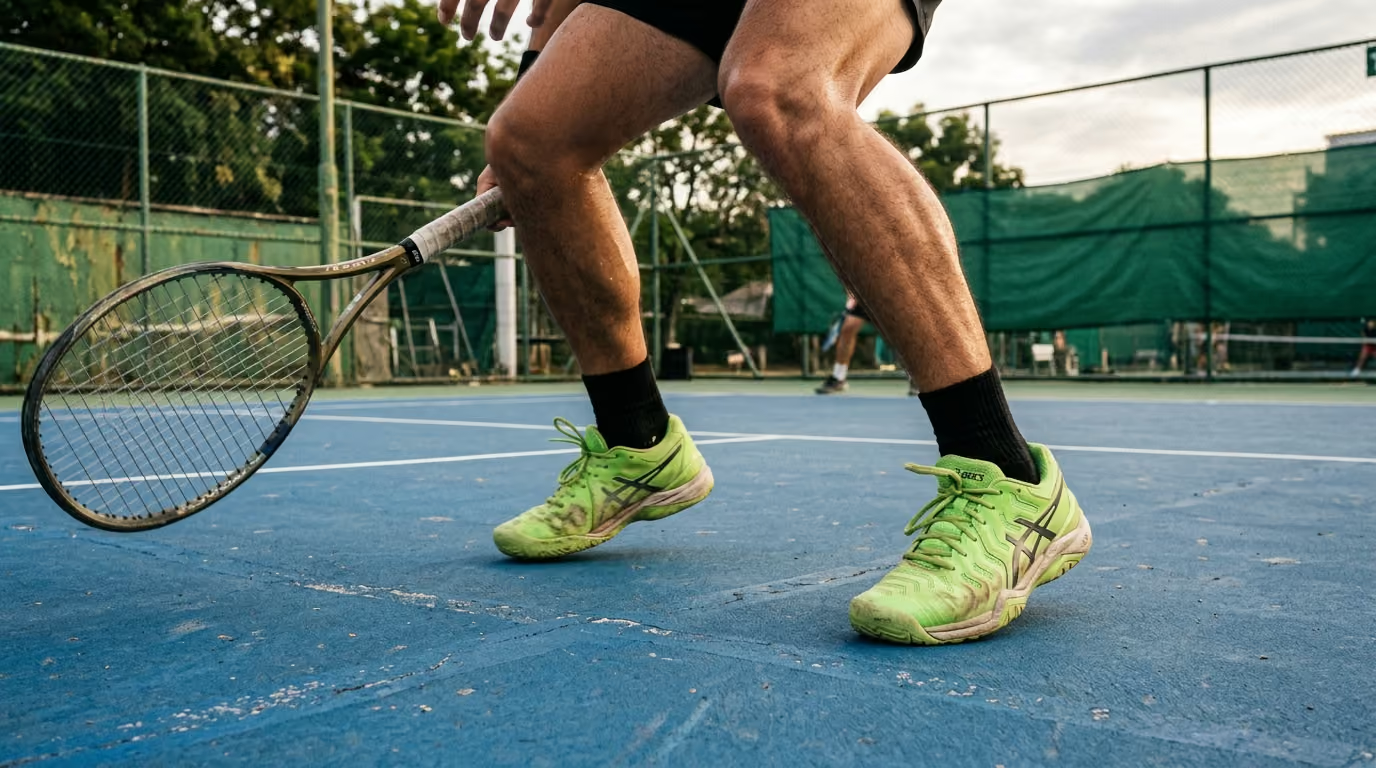
Lateral movements in racquet sports create vertical forces up to three times your body weight. According to sports biomechanics research, these sudden changes of direction also generate extreme shear forces across the ankle joint. Running shoes are designed for linear, forward movement. They feature high heel stacks and soft, rounded edges, which can cause the ankle to roll during sudden sideways stops.
Court shoes feature flat outsoles, stiff lateral outriggers, and low profiles to keep your center of gravity close to the ground. These design features distribute lateral forces evenly across your foot. This structural support reduces the risk of lateral ankle sprains. It also minimizes the micro-trauma experienced by your knees and lower back during hard stops.
Different court surfaces require specialized tread designs to manage these forces safely. Clay courts require a deep herringbone pattern. This pattern allows loose clay granules to pass through the sole, which provides controlled sliding and secure recovery. Using a clay shoe on a hard court can cause premature wear and dangerous slipping.
Hard courts require durable rubber compounds with multi-directional tread patterns to maximize friction on abrasive acrylic. Grass courts demand micro-pimples on the outsole to prevent slipping on damp turf blades. Using the wrong shoe for a specific court surface increases injury risk. It also reduces your lateral movement speed and overall court coverage.
Every sport has a governing body that regulates equipment to ensure fair play and safety. The International Tennis Federation, also known as the ITF, maintains strict rules on court equipment and ball classification. The ITF Rules of Tennis state that players must wear accepted tennis attire. Shoes must not damage the court surface. Specific venues like Wimbledon impose even tighter guidelines, requiring nearly all-white apparel.
The Badminton World Federation, or BWF, governs shuttlecock specifications and clothing. BWF regulations state that clothing includes socks, headbands, wristbands, and medical supports. If these items feature large, non-compliant logos, players can face fines or disqualification.
The World Squash Federation, or WSF, mandates non-marking soles on all squash courts. The WSF also requires junior players and doubles competitors to wear certified protective eyewear.
For USA Pickleball and the International Federation of Padel, paddle and racket specifications are tightly controlled. Using an unapproved paddle with a textured surface that exceeds roughness limits can lead to disqualification. For more on managing your tournament setup, you can read our guide on competition and court lifestyle resources.
To keep your bag organized, divide your equipment into three distinct tiers. This approach helps you focus on what keeps you on the court safely. It prevents you from cluttering your bag with unnecessary gadgets.
These are items whose absence makes competition illegal, unsafe, or physically impossible:
These items reduce the consequences of common on-court failures:
These items improve comfort but are not universally necessary:
To determine if an item belongs in your competition bag, apply the failure consequence test. This test helps you separate real needs from impulse purchases. Ask yourself these five simple questions:
A broken string scores highly because you cannot play without strings. A color-coordinated bandana scores low because its absence has zero impact on match outcome. Use this test to keep your bag light and purposeful.
Selecting the right shoe is the most consequential equipment decision you will make. Never buy court shoes based on aesthetic appearance alone. Your feet must feel secure and comfortable under maximum athletic load. To protect your joints, look for shoes that match your specific foot shape.
Always try on new court shoes in the afternoon. Your feet naturally swell during the day, which mimics court conditions. Wear the exact socks you plan to use during competition. This practice ensures your fit remains accurate when you play. For more insight into protecting your feet and joints, read about our healthy aging and athletic longevity resources.
Perform the toe slide test when trying on shoes. Lunge forward aggressively on a hard surface. If your toes slide forward and strike the front of the shoe, the fit is too short. This issue can cause bruised toenails and painful blisters during long matches.
Check the heel counter for lateral support. The shoe should hold your heel firmly in place without slipping. If your heel lifts when you walk, the shoe will not provide sufficient lateral stability. This lack of support can lead to ankle inversion injuries.
When to replace your shoes is a critical decision. Do not wait for holes to appear in the upper mesh. Replace your shoes when the outsole tread is smooth in high-wear areas. You should also replace them when the midsole foam feels flat, hard, or uneven. For help avoiding common movement issues, refer to our injury prevention resources.
Your clothing must solve four basic problems on match day. It must permit unrestricted movement, manage sweat, maintain body temperature, and comply with tournament rules. Selecting fabrics that perform under pressure is essential for tournament success.
In hot climates, lightweight synthetic fabrics are superior to cotton. Cotton fibers hold sweat, which makes the garment heavy and causes skin chafing. Polyester and nylon blends pull moisture away from your skin to speed up evaporation.
The ITF heat guidance states that players can lose up to four liters of sweat per hour. Sweat-saturated shirts can weigh over a pound, which increases fatigue. Carrying spare shirts and changing them during set breaks helps regulate your body temperature.
Cold weather demands lightweight, breathable layers. Avoid thick cotton hoodies that restrict your shoulder rotation. Use technical half-zips that you can easily remove as your body warms up.
Always ensure your undergarments match the color requirements of the tournament. At strict venues, even visible compression shorts must be a specific color. Check the event dress code weeks before your match to avoid last-minute shopping.
Your racquet or paddle is the direct connection to your sport. Choosing the correct setup requires an understanding of weight, balance, and tension. Avoid using gear that is too heavy for your current strength level.
Racquet weight affects your swing speed and stability. Heavy racquets absorb more shock, which protects your arm from tendonitis. Light racquets allow faster reactions at the net but require more physical effort to generate depth. Finding a balance that suits your style is key. To find the right balance for your style, check our articles on better play.
Strings lose tension even when your racquet is sitting in your bag. This process is called tension creep. If you play with a racquet that has not been restrung in six months, your control will suffer. Restring your racquet regularly to maintain a consistent ball response.
Overgrips are the cheapest performance upgrade available. A fresh, tacky overgrip prevents your racquet from twisting in your hand. This extra traction reduces the need to squeeze the handle tightly, which helps prevent forearm fatigue.
Keep a dedicated grip kit in your bag. This kit should include several familiar overgrips, finishing tape, and a small pair of scissors. It should also contain a dry towel and a permitted sweat-management powder.
Protective eyewear is highly recommended in fast-paced court environments. In squash, a ball can travel over one hundred miles per hour in a confined space. Certified protective eyewear features polycarbonate lenses that can withstand high-velocity impacts.
Ensure your eyewear meets the ASTM F803 safety standard. Ordinary prescription glasses do not provide the same impact protection. They can shatter upon impact, which can cause severe eye injuries.
Joint braces should only be used under medical guidance. A brace can support a weak joint, but it can also alter your natural movement pattern. This mechanical shift can place unexpected stress on other joints, which can lead to secondary injuries.
Sunscreen is a safety requirement for all outdoor matches. Use a non-greasy, water-resistant formula with a high SPF rating. Avoid putting sunscreen on your forehead, as sweat can carry it into your eyes and blur your vision. Use a technical visor or hat to protect your face from the sun instead.
According to consensus recommendations from the International Olympic Committee, athletes should prepare for matches by drinking about six milliliters of fluid per kilogram of body weight every two to three hours before exercise. This ensures you start the match fully hydrated.
Do not rely on plain water alone for long matches in hot weather. Sweat contains essential minerals like sodium, potassium, and chloride. Drinking excessive plain water without electrolytes can lead to hyponatremia, which is a dangerous drop in blood sodium levels.
Keep a cooling towel in an iced cooler during hot matches. Placing an iced towel around your neck during changeovers stimulates thermoreceptors. This cooling sensation lowers your perceived exertion and helps control your heart rate.
Learn to recognize the early warning signs of heat illness. These signs include light-headedness, headaches, dizziness, and unsteady legs. If you experience these symptoms, stop playing immediately and seek a cool environment. To learn more about staying safe in extreme heat, read our player health articles.
While all racquet sports share similarities, each has unique equipment demands. Understanding these differences prevents you from buying unnecessary gear. It also ensures you are fully prepared for the specific challenges of your sport.
Tennis requires high-durability footwear due to the abrasive nature of hard courts. Players must carry matched backup racquets because high-tension strings break frequently. The large court area requires significant running, which makes thermal clothing and sweat management highly important. You can find detailed strategies for the court in our tennis articles.
Pickleball paddles must be on the USA Pickleball approved list to be legal for tournament play. Paddle surface roughness is strictly regulated to prevent excessive spin generation. Court shoes must provide excellent lateral support on outdoor asphalt surfaces, which wear out outsoles quickly. Learn more about paddle selection and gear in our pickleball articles.
Padel rackets do not have strings, but they feature wrist lanyards. International Federation of Padel rules make the wrist strap mandatory for safety. Padel shoes need deep pivot points to handle the artificial turf and sand mixture. For more padel tips, visit our padel articles.
Many players make the mistake of playing court sports in running shoes. Running shoes lack the lateral stability needed for quick sideways stops. This error often leads to ankle sprains and poor court traction. Always choose shoes designed specifically for court movement.
Another frequent error is trying new gear for the first time during a match. Never wear brand-new shoes or use a newly strung racquet without testing them in practice first. Unfamiliar gear can cause painful blisters or ruin your swing timing.
Some players assume that general sport rules apply at every club. Always check the specific tournament dress code before you arrive. A garment can be legal under national rules but still violate a local club's dress code.
Carrying too many balls or shuttles is another common mistake. Most tournaments provide new balls for every match. Carrying extra balls in your bag only adds unnecessary weight and clutter.
Worn-out court shoes fail to absorb vertical impact forces. This shock travels up your shins to your knees and lower back. Over time, this repetitive stress leads to chronic tendonitis and joint fatigue.
Slippery, worn grips force you to grip the handle much harder than necessary. This constant muscle contraction fatigues your forearm and wrist. A fresh, tacky overgrip allows you to relax your arm, which helps prevent injuries like tennis elbow.
Wet socks hold moisture against your skin, which softens the tissue and causes blisters. Changing your socks during a match prevents this moisture buildup. This simple practice keeps your feet dry and protects your movement mechanics.
Saturated clothing can cause rapid cooling during rest periods. This sudden drop in temperature can lead to muscle tightness and cramping. Putting on a dry shirt during long breaks keeps your muscles warm and ready to move.
If you experience persistent joint pain that does not go away after three days of rest, consult a qualified healthcare provider. Do not try to solve structural pain by buying different shoes or braces. A professional can identify the root cause of your discomfort.
If you suffer from chronic blisters despite wearing high-quality socks, see a podiatrist. You may need custom orthotics to correct your gait. A podiatrist can also help you choose the right shoe last for your foot shape.
If you experience signs of heat illness like dizziness, confusion, or nausea during play, seek immediate medical attention. Do not attempt to push through these symptoms. Heat illness is a serious medical condition that requires professional care.
Before starting a new training program or purchasing heavy orthopedic supports, consult a physical therapist. They can evaluate your movement patterns and recommend safe exercises. This professional guidance ensures you can enjoy your sport for years to come.
To help you apply these principles, look at these four common player profiles. Match your personal playing style to the case that fits your current needs.
Before you leave for your next tournament, perform this quick equipment audit. This systematic check ensures you have everything you need to play legally and safely.
Revisit this guide before your first tournament of each season, or when you begin playing on a new court surface. It is also wise to review these principles if you experience persistent blisters, joint discomfort, or grip slipping during matches. Proper gear selection keeps you on the court and performing at your best for years to come. If you have questions about equipment or need further guidance, feel free to contact us.
Follow Evercourts for practical insights on tennis, pickleball and padel performance, movement, recovery and healthy ageing. Stay connected for new articles, research-led guidance and ideas to help you play well and keep playing for years.


Read practical guidance for better movement, smarter preparation and a game that keeps working for you.
explore the Blog