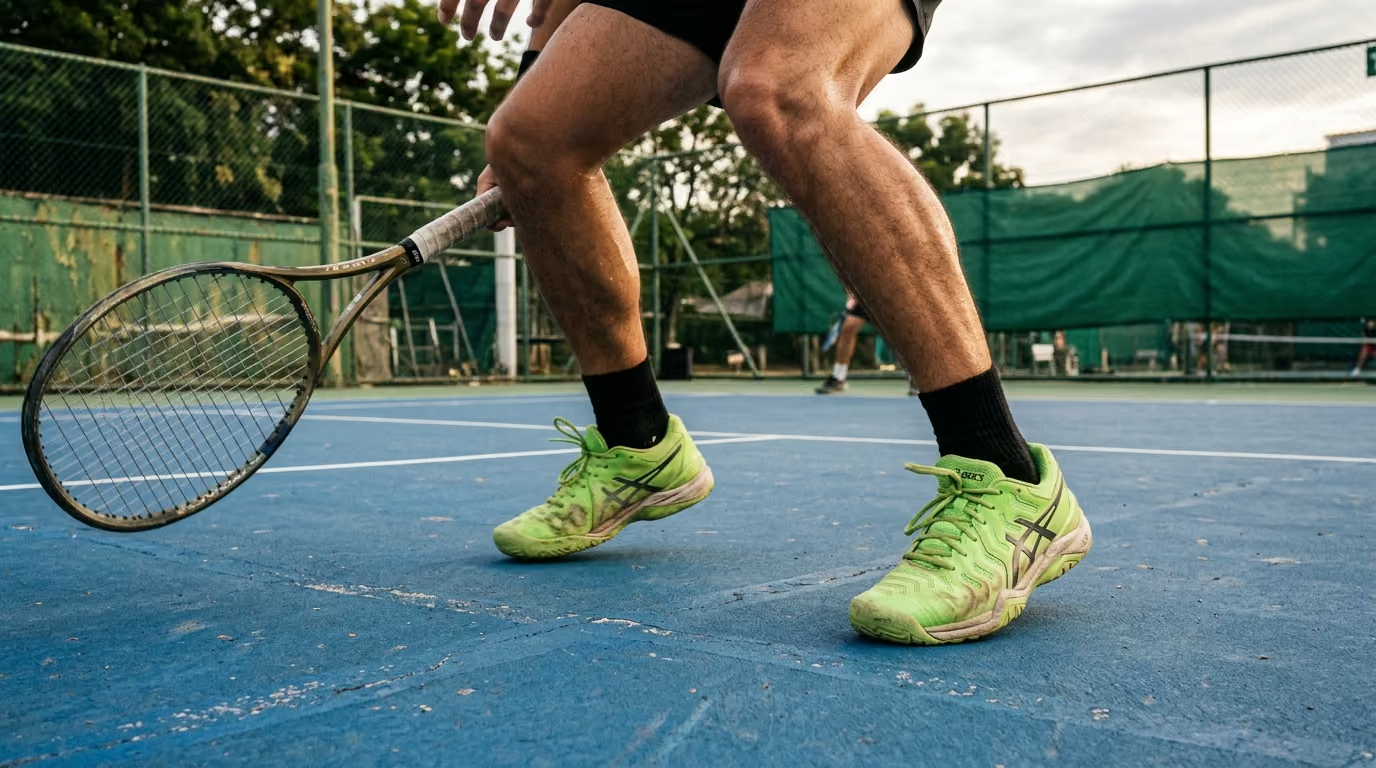
Players can extend their time on the court by selecting racquet sports equipment that reduces physical demand and preserves joint health for healthy aging.




An equipment setup for athletic longevity is not a magic solution to replace physical fitness. It is also not about chasing the latest marketing specifications or buying the most expensive gear. Instead, it is a deliberate system designed to manage your physical workload and adapt to your changing biological capacity over time. Selecting the right equipment requires matching your gear to your joint comfort, movement mechanics, and recovery rate. By choosing tools that minimize unnecessary joint stress, you can maintain your presence on the court for decades.
To support healthy aging on the court, select equipment that reduces physical demand while preserving your control over the ball or paddle. This means using the heaviest racquet or paddle you can comfortably swing without fatigue, lowering string tension to soften impact, and wearing sport-specific shoes that offer stable lateral support. By prioritizing joint comfort over extreme performance claims, you protect your body and extend your playing years.
As we age, our tendons, muscles, and joints undergo natural structural changes. Tendons become less elastic, joint cartilage thins, and recovery times between intensive playing sessions naturally lengthen. If you play with equipment designed for twenty-year-old competitive athletes, you may subject your body to unnecessary micro-trauma. Proper equipment design acts as a buffer, absorbing a portion of the repetitive force generated during every strike and foot strike.
A thoughtful equipment setup helps you maintain a comfortable safety margin on the court. This safety margin is the gap between the mechanical loads your tissues can tolerate and the actual forces generated during play. When your racquet is too stiff or your shoes lack lateral support, this margin narrows significantly. Over several months of play, a narrow safety margin often leads to chronic tendon irritation or joint soreness.
Remaining active is one of the most effective strategies for maintaining cardiovascular health and physical balance. According to the Centers for Disease Control and Prevention, older adults should engage in weekly aerobic, strength, and balance activities. Regular participation in court sports offers a highly social and engaging way to meet these exercise recommendations. However, you can only reap these longevity benefits if your joints remain comfortable enough to play consistently.
To guide your selection process, we have developed a comprehensive list of healthy aging and athletic longevity resources to help you understand your body. By aligning your physical capacity with the demands of your sport, you protect your joint health. This balance ensures you can continue to enjoy the game without experiencing frequent, avoidable physical setbacks.
The weight of your racquet or paddle is one of the most influential factors in forearm and shoulder comfort. Many players assume that a lighter frame is always safer because it requires less effort to pick up. However, physics tells a more complicated story about racquet mass and impact stability. When a lightweight racquet collides with a heavy, fast-moving ball, the racquet experiences a significant amount of twist and vibration.
To counteract this twisting force, you must squeeze the handle much harder at the moment of impact. This constant, high-intensity squeezing places a continuous strain on the wrist extensor muscles in your forearm. Over time, this excessive gripping can lead to micro-tears in the tendons around your elbow. Conversely, a slightly heavier racquet possesses more natural momentum, which allows it to plow through the ball with minimal twisting.
To select the right frame weight, you must also understand swingweight and balance. Swingweight refers to how heavy the racquet feels when you are actually moving it through the air. A frame with a head-heavy balance point may feel light when held stationary, but it requires substantial muscular effort to accelerate and slow down during a stroke. This added effort can fatigue your rotator cuff muscles, which can compromise your hitting technique.
A highly effective selection rule is to play with the heaviest frame that you can swing comfortably without losing head speed. The ideal weight allows you to maintain a relaxed grip throughout your entire practice session. When testing a new racquet, observe whether your forearm muscles feel tense or fatigued after thirty minutes. If you find yourself squeezing the handle tightly to keep the frame stable, you may need to adjust the mass or balance.
To explore how different frame designs can support your health, refer to our guide on preventing common court injuries through proper gear setup.
The string bed of a racquet is the only part of the equipment that makes direct contact with the ball. Consequently, the elasticity of your strings plays a primary role in determining how much impact shock travels into your hand. High string tension creates a firm, stiff hitting surface that offers precise ball control but transmits high peak forces. Lowering your string tension allows the strings to deflect more upon impact, which lengthens the contact time and softens the blow.
A controlled biomechanical study examined the relationship between string tension and elbow loading during backhand strokes. The researchers measured average peak elbow acceleration across three different string tensions. At a lower tension of 200 Newtons, the peak elbow acceleration was approximately 5.58 meters per second squared. When tension was increased to 222 Newtons, the acceleration rose to 6.83 meters per second squared, and reached 7.45 meters per second squared at 245 Newtons.
This data demonstrates that lower string tension directly reduces the physical force transmitted to your elbow. If you currently experience elbow soreness, dropping your tension by three to five pounds is an easy first step. This minor adjustment can immediately make your racquet feel more forgiving on off-center hits. You will get more depth on your shots without needing to swing your arm faster or harder.
In addition to tension, the material of your strings is highly important for managing impact forces. Clinical guidelines recommend that aging players use multifilament nylon or natural gut strings instead of stiff polyester. Polyester strings are designed for professional players who swing with immense speed to generate heavy topspin. For recreational players with moderate swing speeds, stiff polyester strings can act like a rigid board, sending harsh vibrations directly into the forearm.
The size of your racquet or paddle grip determines how your hand interacts with the handle. If your grip size is too small, your fingers will wrap too far around the handle, leaving a gap. This small diameter forces you to squeeze the handle tightly to prevent it from twisting in your palm. This continuous muscular contraction increases the workload on your wrist extensor and flexor muscles, which can lead to tendon irritation.
Biomechanical studies have confirmed that grip diameter directly influences the force required to control a racquet. An optimal grip diameter allows the muscles of your hand and forearm to operate at their most efficient length. When you use a grip that fits your hand anatomy, you can hold the racquet securely with minimal effort. This relaxed hold reduces the cumulative physical fatigue that builds up in your forearm during a long match.
To measure your grip size, you can use the traditional palmar crease method. Hold your hand open with your fingers extended and close together. Use a ruler to measure the distance from the bottom lateral crease in your palm to the tip of your ring finger. This measurement provides a helpful starting point, but you must also account for comfort and finger mobility. If you suffer from hand arthritis or reduced joint flexibility, a slightly larger grip may feel more comfortable.
An overgrip is a thin, cushioned tape that wrap around your existing grip to make minor adjustments. Overgrips are highly useful because they allow you to experiment with grip thickness without buying a new racquet. They also increase the tackiness of your handle, which keeps the frame from slipping when your hands sweat. Replace your overgrip regularly, as worn tape forces you to squeeze harder to maintain control of your racquet.
Many recreational players step onto the court wearing standard running shoes, which is a significant safety mistake. Running shoes are engineered specifically for forward movement, featuring high heel stacks and soft cushioning designed for straight-line strides. They do not possess the lateral support required to handle the sudden stops, side-to-side cuts, and diagonal lunges of racquet sports. Using running shoes on a court can cause your ankle to roll outward during a quick change of direction.
Dedicated court shoes are built close to the ground to lower your center of gravity and improve stability. They feature a wide, rigid outsole platform and a reinforced heel counter to lock your foot securely in place. The lateral side of the shoe is wrapped in durable rubber or plastic to prevent the upper material from stretching. These structural features work together to keep your foot stable on top of the sole, protecting your ankles and knees.
Traction is another critical element of shoe safety that requires careful balance. Biomechanical research shows that excessive friction between your shoe and the court surface can overload your lower joints. If your shoe grips the court too aggressively, your foot may stick when you attempt to pivot. This sudden braking can transmit high torsional forces up through your ankle, knee, and hip joints.
To maintain joint health, look for a court shoe that offers predictable, controlled traction on your primary playing surface. The tread should allow for a tiny amount of natural slide or release when you decelerate quickly. Check the outsoles of your shoes regularly for signs of uneven wear or smooth patches. Worn tread can cause unexpected slipping, which can lead to groin strains or sudden falls.
For more information on selecting footwear that matches your movement style, check our resources on improving court mobility and movement.
The surface you play on plays a major role in the overall wear and tear your joints experience. Hard courts, which are typically made of painted concrete or asphalt, are highly demanding because they do not absorb impact. Every time you plant your foot on a hard court, a sharp shock wave travels up through your legs and spine. If you play on hard courts, you must rely on high-quality shoe cushioning to absorb these vertical forces.
In contrast, clay and synthetic sand surfaces are much more forgiving on the human body. Research indicates that clay courts are associated with lower injury rates than hard courts. The loose particles on a clay court allow your foot to slide smoothly into a stop, which reduces peak braking forces. This gentle deceleration protects your knees and lower back from the harsh jarring common to hard courts.
While clay courts offer excellent joint protection, sliding is a distinct physical skill that requires practice and confidence. If you lack lower-body strength or balance, you may find the slippery surface unpredictable or intimidating. A sudden, uncontrolled slide can lead to a fall or muscle strain if your core is not engaged. It is important to adjust your footwork, taking smaller adjustment steps to maintain your balance on slippery courts.
The type of ball or shuttle you use also influences the physical demands of your matches. Cold, worn, or wet tennis balls become heavy and stiff, which increases the impact shock transmitted to your arm. Replacing your balls regularly ensures they bounce consistently and compress easily upon impact. If you want to make rallies more manageable, consider using lower-compression balls to slow the pace of play.
Our guide to court performance resources offers detailed strategies for adjusting your play to different surfaces.
As we age, our reaction time and depth perception naturally change, making protective equipment an important consideration. Eye injuries are a serious risk in racquet sports due to fast-moving balls, paddles, and close-range exchanges. The American Society for Testing and Materials has established strict standards for sports eyewear. Specifically, ASTM F3164-24 outlines the requirements for eye protectors used in racquet sports like tennis, pickleball, and squash.
Certified eye protectors are constructed with impact-resistant polycarbonate lenses that will not shatter upon collision. These glasses are highly recommended for double players, who frequently engage in fast volley exchanges at the net. Wearing eye protection also gives you the confidence to track the ball closely without fear of injury. Choose a lightweight pair with an anti-fog coating so your vision remains perfectly clear throughout your match.
Other forms of protective gear can help you manage minor joint issues and improve your confidence on court. Soft knee sleeves provide warm compression that can reduce mild joint stiffness and enhance your spatial awareness. An ankle brace can offer valuable stability if you have a history of ligament sprains. However, you should not use braces to mask persistent pain or to justify playing through an active injury.
If you are recovering from an injury or looking to design an off-court physical routine, consider reviewing our targeted strength and conditioning guides. A strong body is the ultimate foundation for any protective equipment system.
Tennis is characterized by a large court, high ball speeds, and heavy rotational demands. Because tennis balls are heavy and pressurized, the impact forces transmitted to your shoulder and elbow are substantial. Tennis players must pay close attention to frame weight, string tension, and string material to protect their upper limbs. The movement patterns in tennis involve long, high-velocity sprints followed by aggressive sliding or braking steps.
Pickleball is played on a much smaller court, which reduces the need for long-distance sprinting. However, the sport requires constant, rapid lateral steps and sudden stops near the non-volley zone line. Because the paddle is solid and the ball is lightweight plastic, the impact forces are generally lower than in tennis. However, the short handle of a pickleball paddle can transmit direct vibration to your wrist if you mishit the ball.
Padel is played in an enclosed glass court, combining elements of tennis and squash. Padel paddles are thick, solid, and made of foam or carbon, featuring holes instead of strings. The ball is slightly softer than a tennis ball, but the game involves frequent overhead lunges and wall rebounds. Padel players need court shoes with specific grip patterns designed for synthetic turf surfaces containing fine sand.
Many players leave the same polyester strings in their racquets for months or even years. Over time, strings lose their elasticity and tension, turning into a dead, stiff board. This stiff bed fails to absorb impact energy, transferring painful shock waves directly into your wrist and elbow. If you play twice a week, you should replace your strings at least four times a year.
Using old running shoes on court is a major contributor to ankle sprains and knee instability. The soft foam of a running shoe degrades quickly when subjected to lateral cutting movements. Without structural support, your foot will slide off the footbed, causing your joint mechanics to break down. Invest in a dedicated, high-quality court shoe and replace them once the lateral edges begin to soften.
It is a common misconception that ultra-light racquets are universally safer for older players. A racquet that is too light cannot stabilize itself when colliding with a hard-hit ball. This lack of stability causes the frame to twist, forcing you to grip the handle with excessive muscle force. Squeezing the grip tightly to compensate for a light frame is a fast track to chronic forearm irritation.
Many players believe that experiencing physical pain is a normal, inevitable part of growing older. They buy compression sleeves, take pain relievers, and continue playing through worsening discomfort. This approach can turn minor tendon irritation into chronic, structural damage that requires months of rest. Equipment changes should be used to support your body, not to hide pain that requires clinical care.
The equipment you use during a match directly influences how your body feels the next morning. When your gear is poorly fitted, your muscles must work twice as hard to stabilize your joints. This elevated workload leads to deep muscular fatigue and micro-tears in your tendon fibers. This micro-trauma can leave you feeling stiff, sore, and unable to train consistently.
By optimizing your equipment, you reduce the physical cost of every hour you spend on the court. A flexible frame, soft strings, and cushioned shoes act as a protective barrier for your musculoskeletal system. They absorb a portion of the repetitive force that would otherwise be processed by your joints. This reduction in physical stress allows you to recover quickly, so you can return to the court sooner.
To optimize your post-match routine, we recommend studying our recovery science guidelines. Understanding how to balance your playing volume with active recovery is key to long-term athletic success. Equipment is a powerful tool, but it works best when combined with rest, nutrition, and mobility work.
Write down your current equipment specifications, including your racquet weight, string tension, grip size, and shoe model. Note how long you can play before you begin to feel joint stiffness or muscular fatigue. This record will serve as your starting point, helping you measure the impact of any changes.
Pinpoint the specific area of your body that feels uncomfortable or fatigued after play. For example, if you struggle with forearm tightness, your focus should be on your racquet, strings, and grip. If your knees or lower back feel sore, your attention should turn to your footwear and court surface.
Avoid changing your racquet, strings, and shoes all in the same week. If you make multiple changes simultaneously, you will not know which adjustment resolved your discomfort. Start by making the easiest, most cost-effective change first, such as lowering your string tension or adding an overgrip.
A new equipment setup might feel excellent during a gentle, ten-minute warm-up. To truly evaluate its performance, you must test it late in a normal match when your muscles are tired. Pay attention to whether you can maintain a relaxed grip and balanced footwork during defensive plays.
If your joint comfort improves and you feel less fatigued the next morning, keep the new setup. If a change causes you to lose ball control or forces you to swing harder, try a different adjustment. The goal is to build an equipment system that allows you to play naturally with minimal effort.
While adjusting your equipment can resolve minor discomfort, it is not a substitute for professional medical care. If you experience persistent, sharp, or worsening pain, you should consult a qualified physiotherapist or sports medicine physician. Pain is your body's alarm system, indicating that a tissue has been overloaded beyond its current capacity. Continuing to play through pain, even with modified equipment, can turn a simple strain into a chronic condition.
You should seek professional medical evaluation immediately if you experience any of the following warning signs:
A physical therapist can help you identify the root causes of your discomfort, which often involve muscle weaknesses or movement compensations. They can design a customized rehabilitation program to strengthen your joints and improve your court biomechanics. Once your physical capacity is restored, your optimized equipment will be even more effective at keeping you healthy and active.
Indoor court shoes are designed for wood or clean synthetic surfaces, featuring non-marking, highly sticky rubber outsoles. Clay courts require a specific herringbone tread pattern that allows the clay to disperse, providing a controlled slide. Using indoor shoes on clay can cause the tread to clog, leading to unexpected slipping and an increased risk of injury.
A simple guide is to hold your racquet with a normal forehand grip. There should be enough space between the tips of your fingers and the base of your palm to fit the index finger of your opposite hand. If your fingers touch your palm, the grip is too small, and if there is a large gap, the grip is too large.
Lowering your string tension will increase the trampoline effect, which naturally sends the ball deeper into the court. However, this change is rarely extreme if you adjust your tension by just three to five pounds. Most players adapt quickly, enjoying the extra depth and comfort without experiencing a significant drop in their control.
The life of a court shoe depends on your playing frequency, body weight, and court surface. As a general rule, active players should replace their court shoes every six to twelve months. Even if the upper material looks perfect, the internal cushioning foam and lateral support structures degrade over time, offering less protection.
Follow Evercourts for practical insights on tennis, pickleball and padel performance, movement, recovery and healthy ageing. Stay connected for new articles, research-led guidance and ideas to help you play well and keep playing for years.


Read practical guidance for better movement, smarter preparation and a game that keeps working for you.
explore the Blog