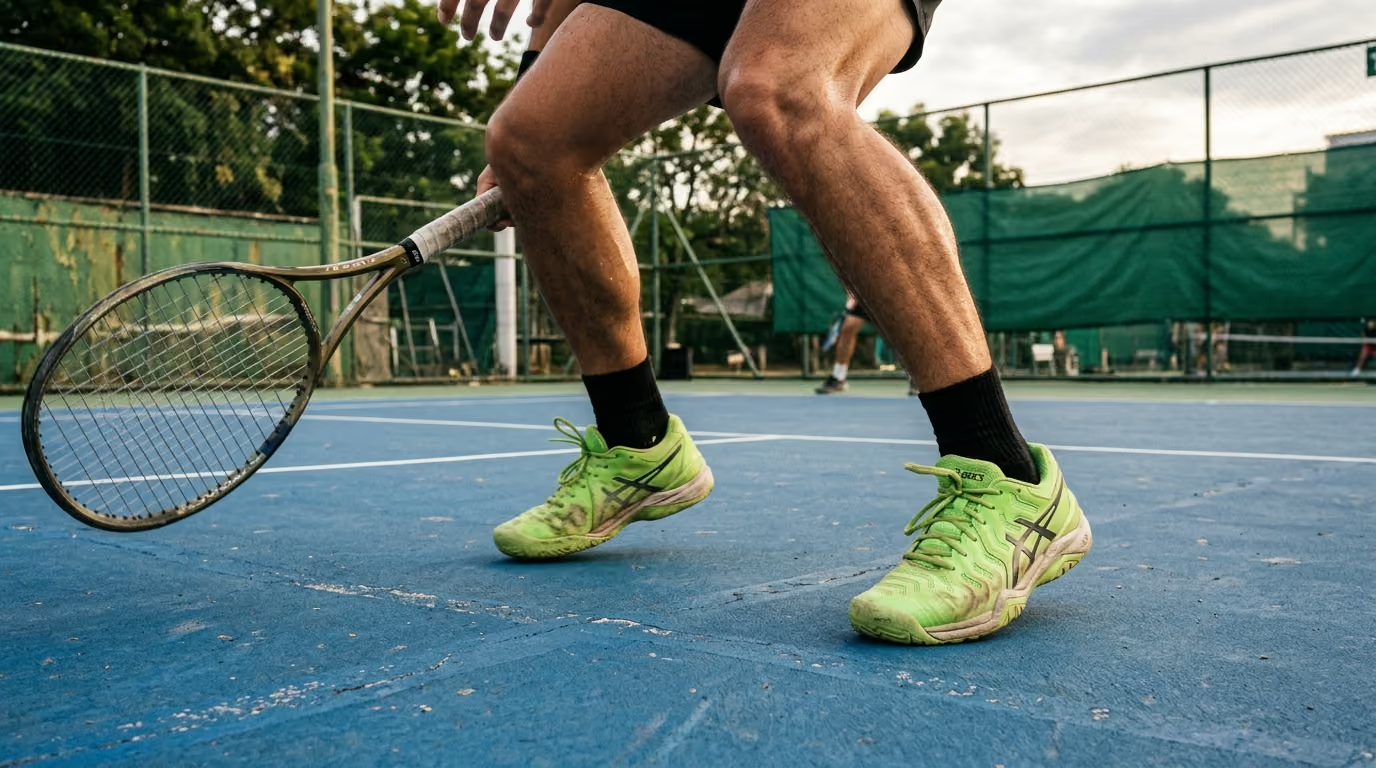
While many players overlook equipment care, proper racquet sports equipment maintenance is crucial for consistent performance and injury prevention throughout the season.




It is a warm afternoon, and you are serving for the match. Suddenly, your foot slips on a routine recovery step, your racquet grip twists in your hand, and the ball sails wide. This moment is not a sudden drop in your personal skill. It is a mechanical failure of your equipment system.
Maintaining racquet sports equipment is a systematic process of scheduled inspections, thorough drying, and timely replacements. Keeping your gear in optimal condition ensures consistent court performance and reduces unnecessary physical stress. By treating your shoes, strings, grips, and bags as an interconnected performance system, you can prevent avoidable match-day failures.
Your equipment is the only buffer between your body and the hard court surface. In sports medicine literature, equipment variables are closely linked to joint loading and soft tissue injuries. Research indicates that tennis racquet stiffness, court surface, footwear, and string tension are key variables that influence overuse injuries in both the upper and lower extremities.
When your equipment degrades, your body must compensate. For example, a shoe midsole that has lost its cushioning force-absorptive capacity increases the impact load on your ankles, knees, and lower back. This compensation can lead to patellar tendinopathy or plantar fasciitis over a long season. Using worn out gear directly threatens your healthy aging and athletic longevity.
In the upper extremities, string tension and grip quality dictate how much shock travels up your arm. When strings lose their elasticity, they require more effort from your forearm muscles to produce ball speed. This fatigue increases the load on the tendons, which often contributes to lateral epicondylitis, commonly known as tennis elbow. Consistent maintenance acts as a primary tool for injury prevention on the court.
To keep your gear functioning as a unified system, you should implement a recurring inspection cycle. This framework ensures you catch minor wear before it causes a match-day failure. The cycle is divided into five distinct stages, each serving a specific performance objective.
Before leaving for any practice session or competitive match, run through a quick technical audit. Check your shoe outsoles for smooth spots that could cause a slip. Inspect your racquet grip to ensure it is dry and wrapped tightly around the handle. Look closely at your string bed to check for misplaced, frayed, or notched strings that might break during play.
Ensure your bag contains the appropriate ball type for your scheduled court surface. Confirm you have packed clean socks, a dry towel, and any necessary weather-specific apparel. This step should take less than two minutes. It protects you from arriving at the court with compromised or missing gear.
The maintenance process immediately after your session is critical. Never leave damp clothing, sweaty wristbands, or wet towels sealed inside your racquet bag. Remove your court shoes from enclosed compartments so they can begin to air dry. Wipe away visible court dust, clay, or sweat from your racquet frame using a soft cloth.
Check your strings for deep notches or shifting that indicates tension loss. Inspect your overgrip for tears or areas where sweat has saturated the material. Separate the balls used during the match from your fresh, unopened cans. Open your bag compartments fully when you return home to allow total ventilation.
Once a week during your active season, perform a more methodical examination of all equipment. Use a soft, damp brush to remove dry clay or court grit from your shoe outsoles and uppers. Inspect your shoes for uneven wear patterns that suggest biomechanical imbalances or structural breakdown. Wash all apparel, headbands, and wristbands according to their fabric care labels.
Empty every compartment of your gear bag to remove accumulated debris. Inspect the bag zippers, structural stitching, and thermal linings for damage. Examine your racquet bumper guards and grommet strips for cracks or sharp edges that could cut your strings. Note any needed grip or string replacements in a simple notebook to track your wear patterns.
A monthly audit is a performance-based assessment rather than a simple visual check. Verify if your racquet still produces a crisp sound and predictable ball response on impact. Determine if your grip allows you to hold the handle with a relaxed hand without any slipping. Assess whether your shoes still provide reliable traction during fast lateral movements.
Confirm that your practice balls are bouncing consistently and have not lost their internal pressure. Check if your backup equipment is still fully functional and ready for immediate deployment. This audit helps you identify gradual material degradation that you might miss during daily inspections. It prevents you from playing with gear that has slowly declined in performance.
Prior to any major tournament or league play, your focus should be on stability and redundancy. Avoid introducing untested shoes, different string models, or unfamiliar grip thicknesses during an event week. Prepare your primary setup and build a dedicated emergency kit with spare accessories. Confirm that your backup racquets are strung to the exact same specifications as your primary frame.
Replace worn overgrips a few days before the event so they can settle and feel familiar. Pack multiple dry shirts, extra socks, and clean towels in separate waterproof dry bags. Identify the contact details of a local stringing service near the tournament venue. Label each of your racquets with the string type, tension, and the date it was last strung.
Your footwear is your most important safety component on the court. Court shoes must manage intense lateral forces, rapid deceleration, and constant pivoting. Understanding how to inspect, dry, and rotate your shoes will protect your joints and improve your mobility and movement.
A shoe can look clean on the outside while being structurally dead. You must distinguish between cosmetic wear, such as dirty uppers, and functional wear. Outsole wear is the loss of court-specific tread patterns, which directly reduces your traction. Midsole fatigue occurs when the internal foam compresses, losing its cushioning capability and leaving your joints exposed to high impact forces.
Upper failure involves the stretching or tearing of the synthetic materials on the lateral side, which reduces ankle support. Heel counter failure occurs when the plastic cup around your heel softens, allowing your foot to slide inside the shoe. Fit deterioration makes the shoe feel sloppy or loose even when the laces are pulled tight. Surface mismatch occurs when you use a hard-court outsole on a clay court, which leads to unpredictable slipping.
Perform a quick shoe check before putting them on for your warm-up. Flex the shoe to see if the midsole still resists twisting, as a completely soft shoe offers poor stability. Squeeze the heel counter to verify that it remains stiff and supportive. Look at the high-wear areas, such as the big toe area and the medial side of the forefoot.
Check the lace eyelets for tears and replace frayed laces immediately. If you experience new soreness in your shins, knees, or feet after play, your shoes may be fatigued. Do not wait for the outsole to wear down to the midsole foam before replacing them.
Proper cleaning extends the lifespan of technical court shoes. Use a dry nylon brush to remove loose clay, sand, or dirt after every session. If the shoes require washing, use a soft cloth dipped in a mild soap and water solution. Never submerge your shoes in water or clean them in a washing machine, as this can degrade the specialized adhesives.
Do not use direct heat sources like radiators, hair dryers, or direct sunlight to dry your shoes. High temperatures can warp the synthetic uppers, shrink the midsoles, and melt the glue. Instead, remove the insoles, loosen the laces, pull the tongue forward, and air-dry them at room temperature. Squeezing crumpled newspaper into the toe box will help absorb internal moisture quickly.
If you play more than three times a week, you should rotate between two pairs of court shoes. This rotation allows the compressed midsole foam of each pair to fully decompress and recover its shape. It also ensures that the internal lining dries completely, preventing the buildup of bacteria and unpleasant odors.
Replace your shoes based on your actual playing hours rather than the calendar. A reliable guideline is to replace your footwear every fifty to seventy-five hours of intense court use. If you notice smooth patches on the outsole or feel a loss of lateral support, retire the shoes immediately.
Many players keep wearing shoes simply because the upper fabric is free of rips and holes. However, the internal polyurethane or EVA foam in the midsole degrades steadily with every step. This deterioration reduces the shoe's shock absorption, forcing your body to absorb more impact. If you notice increased joint stiffness after play, your visually perfect shoes may have lost their protective qualities.
Your racquet or paddle is your primary tool for ball control. Strings lose tension over time, while frames can suffer structural damage from court impacts. Keeping this area in peak condition is vital for your strength and conditioning profile.
Strings are highly elastic materials that begin losing tension the moment they are pulled on a stringing machine. This drop in tension occurs even when the racquet is sitting unused in your closet. As strings lose tension, the string bed deflects more upon ball impact, creating a trampoline effect. This change increases ball launch speed while reducing your control, forcing you to alter your swing mechanics.
Fraying is a common sign of wear in multifilament and natural gut strings, indicating that the protective outer wrap is breaking down. Polyester strings do not show fraying; instead, they develop deep notches where the main and cross strings intersect. Once polyester strings are notched, they lock into place, losing their ability to snap back and generate spin. This state is often referred to as a "dead" string bed, which feels stiff and harsh on your arm.
A damaged racquet frame can crack under the force of a high-speed ball impact. Inspect your frame regularly for hairline cracks, especially around the grommet holes and the throat area. Check the bumper guard on the head of the racquet to ensure it is not worn down to the graphite. If the bumper guard is worn through, the court surface will scrape the frame directly, causing structural damage.
Examine the individual plastic grommets that guide the strings through the frame. Cracked or missing grommets can expose the string to the sharp edge of the graphite, causing premature breakage. If you hear an unusual buzzing sound or feel a strange vibration on impact, inspect the frame immediately. Never continue playing with a cracked frame, as it cannot be repaired and will perform unpredictably.
Extreme temperatures are highly damaging to both racquet frames and strings. Never leave your tennis racquets or paddles in the trunk of a car on a hot summer day or a freezing winter night. High heat softens the synthetic resins in graphite frames, which can lead to warping under string tension. Cold temperatures make strings brittle, causing them to snap easily upon off-center hits.
Natural gut strings are exceptionally sensitive to moisture, as water weakens the organic collagen fibers. If you use natural gut, avoid playing in light rain or on wet courts, and store your racquets in sealed plastic bags. Polyester and nylon strings are more water-resistant, but their tension still drops faster when exposed to high humidity. Utilizing a racquet bag with a thermal lining provides excellent protection against these environmental shifts.
A classic guideline suggests restringing your racquet as many times per year as you play per week. For example, if you play three times a week, you should restring your racquet at least three times a year. However, this rule is a bare minimum that does not account for players who use polyester strings or hit with high spin. A more precise approach is to restring when you notice a significant loss of control or a dull sound.
To maintain consistent play, carry at least one backup racquet that is identical to your primary frame. String both frames with the same string model and tension to ensure a seamless transition if a string breaks. Professional tournament players often carry multiple matched racquets to handle string failures and changing weather conditions. For recreational players, having at least two playable frames is a practical way to avoid match-day disruption.
Your grip is your only physical connection to the racquet. A worn or slippery grip affects your ball control and can lead to wrist or elbow strain. Keeping this interface fresh is essential for maintaining your court performance.
When your grip loses its tackiness, it begins to slip in your hand during off-center hits. To prevent this rotation, you will naturally squeeze the handle much harder than necessary. This constant, excessive tension in your hand muscles quickly fatigues your forearm tendons. Over time, this extra stress can lead to painful overuse injuries like tennis elbow.
A fresh, tacky grip allows you to hold the racquet with a relaxed hand, improving your touch and power. Overgrips also absorb sweat, keeping your hands dry and preventing blisters. Base grips, which are wrapped directly around the graphite handle, provide the fundamental bevel definition of your racquet. If the base grip becomes compressed, the handle will feel rounder, making it harder to find your grip alignments.
Check your grip before every session to evaluate its tackiness and compression. Replace your overgrip immediately if the surface feels slick, shiny, or dry to the touch. Look for physical wear such as fraying, tearing, or areas where the grip has unraveled. If the overgrip has absorbed so much sweat that it feels heavy and damp even after drying, it is time for a change.
Replace your base grip every few months, or whenever you can no longer feel the handle bevels clearly. If you use multiple overgrips to increase handle size, make sure they are wrapped smoothly without any overlaps. Keep a supply of spare overgrips, finishing tape, and a small pair of scissors in your bag. This preparation allows you to install a fresh grip during a changeover in a match.
The octagonal shape of a racquet handle helps you identify your grip positions without looking at your hand. Over time, sweat can seep through the overgrip and soften the adhesive on your base grip. This moisture can cause the base grip to shift or slip, smoothing out the sharp bevels of the handle. If your handle begins to feel round, remove all grips and inspect the bare graphite or plastic pallet.
Ensure the handle surface is clean and dry before applying a new base grip. Wrap the base grip with firm, even tension to prevent any overlapping ridges from forming. A well-wrapped grip provides a solid foundation that keeps your hand secure and your shots precise.
The condition of your balls and the environment of your racquet bag are often overlooked. However, both have a significant impact on your court performance and the lifespan of your gear.
Standard tennis balls are designed to meet strict International Tennis Federation (ITF) specifications for weight, size, and bounce. Pressurized balls contain a gas-filled core that provides their bounce, but this pressure leaks out slowly over time. Once you open a pressurized can, the balls will lose their bounce within a few weeks, even if they are never used. Pressureless balls rely on a thick rubber core for bounce, making them highly durable but heavier on impact.
Using flat balls reduces the pace of the game and forces you to swing harder to clear the net. This extra effort can strain your shoulder and elbow joints over a long session. To maintain consistency, use fresh pressurized balls for competitive matches and reserve older balls for practice drills.
The ITF approves different ball types for specific court surfaces to optimize playability. Type 1 balls are slightly harder and faster, making them ideal for slow clay courts. Type 2 balls are the standard specification, designed for medium-paced hard courts. Type 3 balls are larger and slower, helping players maintain control on very fast grass or hard court surfaces.
If you play at altitudes above 1,219 meters, or 4,000 feet, you must use specialized high-altitude balls. Standard pressurized balls bounce too high in the thin mountain air, making control extremely difficult. High-altitude balls have a lower internal pressure or a larger diameter to normalize their flight characteristics. Ensure you choose the correct ball type for your local playing environment to keep your training productive.
A racquet bag is more than a simple storage container; it acts as a microclimate for your equipment. If you leave damp clothes, wet towels, and sweaty wristbands inside a sealed bag, the relative humidity inside rises quickly. This moist air can weaken natural gut strings, ruin grip adhesives, and encourage mold growth on your shoes. It can also cause the metal zippers and hardware on your bag to rust and seize.
To prevent this damage, treat your bag as an active ventilation system. Use a bag with dedicated, ventilated compartments for your shoes and wet apparel. A separate, waterproof wet bag is an excellent way to keep damp items isolated from your racquets. Always open all bag zippers when you return home to allow fresh air to circulate through the compartments.
Develop a habit of performing a complete bag cleanup at the end of every week. Empty all pockets and shake out court debris, clay dust, sand, and loose fuzz. Wipe down the interior linings with a damp cloth and mild disinfectant to eliminate odors. Check the function of all zippers and apply a small amount of zipper lubricant if they feel sticky.
Replenish your supply of extra overgrips, vibration dampeners, sunscreen, athletic tape, and first aid supplies. Ensure your water bottles are washed, dried, and stored with their lids off to prevent mold. Organizing your bag weekly ensures you are never surprised by missing or damaged gear on match day.
While the general principles of gear care apply to all court athletes, tennis, pickleball, and padel present unique equipment demands.
In tennis, string maintenance is a major consideration because of the high impact forces and spin demands. If you use polyester strings, you must replace them before they break, as they lose their elasticity and go dead after about ten to fifteen hours of play. Tennis players must also match their outsoles carefully to the court surface. A herringbone tread pattern is required to slide safely on clay, while a modified herringbone design provides the necessary grip on hard courts.
If you transition between surfaces, keep separate pairs of shoes to maintain traction and prevent slips. Tennis players should also monitor their racquet string bed for notch wear. When the notches in your strings exceed half the string's diameter, the string bed is highly vulnerable to breaking on an off-center hit.
Pickleball paddles do not use strings, but their composite faces and edge guards require careful attention. The textured face of a pickleball paddle provides the friction needed to generate spin on the ball. Over months of play, this grit wears down from repeated contact with the ball, reducing your ability to hit effective spin shots. You can check for wear by running your fingers over the sweet spot and comparing the texture to the edge of the paddle.
Pickleball paddles also suffer from edge guard separation due to accidental scrapes against the court surface. If the edge guard becomes loose, it can rattle on impact, absorbing energy and deadening your shots. Inspect the edge guard regularly and use specialized paddle tape to secure any loose sections. Additionally, pickleball balls are made of hard plastic that can crack in cold weather, so inspect them frequently during winter sessions. If you want to stay updated on paddle care and court strategy, check our dedicated pickleball articles section.
Padel racquets, or palas, are constructed with an EVA or foam core surrounded by a carbon fiber frame. This foam core is highly sensitive to temperature variations and will degrade over a season of play. In hot weather, the foam core softens, reducing the racquet's power and altering its response on impact. In cold conditions, the foam hardens, making the racquet feel stiff and increasing the shock transmitted to your arm.
Padel players must protect their racquets from impacts with the glass walls and metal mesh of the court. Use a protective adhesive strip along the top of the frame to prevent structural cracks during low defensive shots. Padel balls look similar to tennis balls, but they are pressurized to a lower level to match the smaller court dimensions. Avoid using tennis balls on a padel court, as their higher pressure makes the game too fast and increases the risk of frame damage. For more insights into pala care, visit our collection of padel articles.
Many players only replace their strings or shoes once a year on a specific date. However, equipment degradation is driven by playing hours, court temperature, and swing speed, not the calendar. A player who hits with heavy spin four times a week will wear out strings and shoes much faster than a weekend player. Base your maintenance on actual wear indicators like slick outsoles, notched strings, and lost grip tackiness.
Placing wet court shoes on a heater or using a hair dryer is a common shortcut that damages the shoe's structure. The high, direct heat can melt the adhesive glues that hold the outsole to the upper. It also causes the synthetic leather materials to dry out, shrink, and crack, ruining the shoe's fit and stability. Always air-dry your shoes at room temperature with the insoles removed.
Some players put used tennis balls back into their original metal can and seal the plastic lid, hoping it will preserve their pressure. However, standard plastic lids cannot hold pressure and will not prevent the gas from leaking out of the balls. Once a pressurized can is opened, the balls will continue to lose pressure regardless of how they are stored. Keep your fresh match balls separate from your older practice stock to avoid confusion.
If you are experiencing a drop in performance or physical discomfort, do not change your racquet, strings, tension, and shoes all at once. This approach makes it impossible to identify which piece of gear was causing the issue. If the new setup feels strange, you will not know which variable to adjust. Change only one component at a time, such as your string tension, and play with it for a few sessions before making another adjustment.
Your physical recovery is directly affected by the condition of your sports equipment. When you play with worn out gear, your muscles and joints must work harder to perform the same movements. This extra workload increases muscle fatigue and delays your recovery time between sessions. Ensuring your gear is well-maintained is a simple way to support your recovery science routine.
A shoe with a worn out midsole cannot absorb the impact forces of a hard landing, transferring that shock directly up your leg. This extra vibration stresses your tendons and joints, leading to increased muscle soreness and joint stiffness the next day. Similarly, a dead string bed or a slippery grip forces your forearm muscles to remain tense throughout your swing. This constant tension prevents your muscles from relaxing, leading to lingering fatigue and an increased risk of tendonitis. By keeping your gear fresh, you minimize physical stress and help your body recover faster.
While basic equipment maintenance can be handled at home, some situations require the expertise of a professional. If you notice a deep, structural crack in your racquet frame, do not attempt to glue or repair it yourself. Take the racquet to an experienced stringer or customizer who can evaluate its safety and structural integrity. A certified master racquet technician can also help you match the weight and balance of multiple frames.
Similarly, if you experience persistent joint pain, tendon soreness, or unusual muscle fatigue despite playing with fresh gear, consult a qualified healthcare provider. A physiotherapist or sports medicine physician can analyze your movement patterns and identify any biomechanical imbalances. They can also recommend specific stretching and strengthening exercises to support your court movement. Do not ignore chronic physical discomfort, as playing through pain can lead to serious, long-term injuries.
To keep your gear in peak condition, use a simple log to track your maintenance activities. Record the condition of your equipment rather than relying on memory. This practice helps you identify personalized replacement intervals that fit your playing style.
Review this maintenance checklist at the start of every season, before entering a tournament, or whenever you purchase new equipment. Taking a few minutes to inspect your gear ensures your court time remains safe, consistent, and highly enjoyable.
Maintaining your racquet sports gear is a simple investment that pays major dividends in physical comfort and performance.
Follow Evercourts for practical insights on tennis, pickleball and padel performance, movement, recovery and healthy ageing. Stay connected for new articles, research-led guidance and ideas to help you play well and keep playing for years.


Read practical guidance for better movement, smarter preparation and a game that keeps working for you.
explore the Blog