
When you're sorting through your sports bag for injury prevention tools, understanding the science behind each item helps you make informed choices.




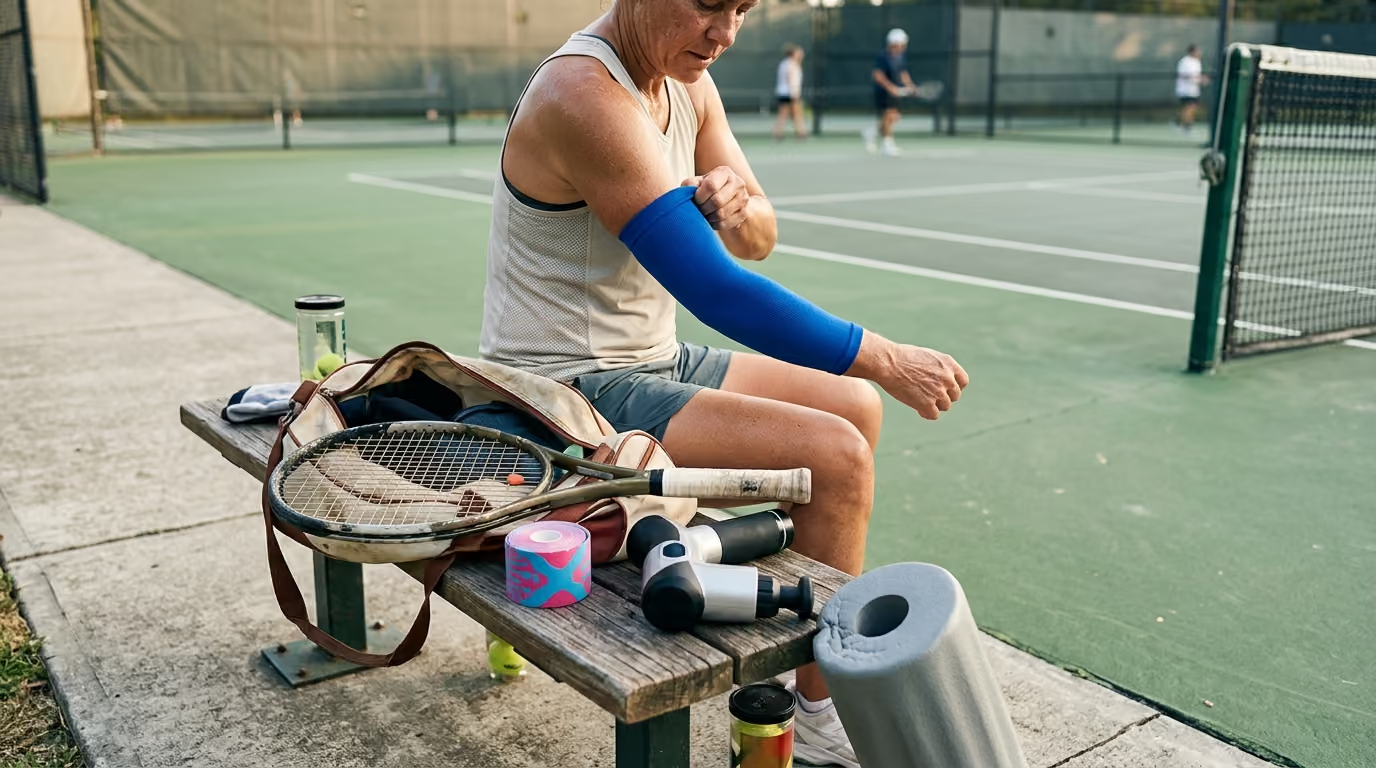
You open your sports bag on a Saturday morning. Inside lies an assortment of recovery gear and supportive equipment. You have a roll of kinesiology tape, a compression sleeve, a heavy foam roller, and a handheld massage gun. Many recreational court players carry a similar array of items. Over time, it is easy to accumulate these products in the hope of protecting your joints.
However, many players struggle to distinguish between tools that actually protect tissue and tools that simply soothe sore muscles. Having a clear framework helps you avoid spending money on ineffective gadgets. It ensures you direct your energy toward strategies that support athletic longevity.
The most reliable injury prevention strategies on the court are systematic load management, progressive strength training, and structured balance work. Passive tools like braces, taping, and percussion devices can manage localized symptoms and provide temporary mechanical support. However, they do not build long-term tissue capacity or serve as a replacement for active physical conditioning.
To understand how to protect your body, you must first understand what the research says about these tools. Sports medicine literature makes a clear distinction between passive applications and active training. Active training refers to movements that force your muscles and nervous system to adapt. Passive tools are external applications that you wear or apply to your skin.
A systematic review published in the American Journal of Sports Medicine examined the relationship between stretching and sports injuries. The researchers analyzed multiple clinical trials to see if stretching before or after activity reduced injury rates. The review found that stretching was not significantly associated with a reduction in total sports injuries. The authors reported an odds ratio of 0.93, which indicates no meaningful preventive effect. They concluded that evidence is insufficient to endorse routine stretching as a standalone prevention program.
In contrast, active interventions show much stronger results in clinical literature. A meta-analysis of 3,581 athletes examined the effectiveness of ankle braces and balance training. The researchers found that athletes who wore ankle braces had a 64 percent lower risk of ankle sprains. Meanwhile, those who performed structured balance training experienced a 46 percent lower risk of injury. These findings indicate that both mechanical support and active coordination training can successfully reduce joint trauma.
A separate meta-analysis of injury prevention programs involving 4,959 field athletes supported these findings. It reported a 36 percent reduction in ankle injuries for those using structured warm-up programs. Programs that focused exclusively on balance and coordination training produced a 42 percent reduction in injuries. While much of this data comes from sports like soccer and basketball, the cutting movements are highly relevant to court sports.
Epidemiological data from racquet sports shows where injuries actually occur. A comprehensive review of tennis injuries found that the lower extremities are the most common site of issues, followed by the upper extremities and the trunk. The study highlighted that injury patterns vary based on play volume, court surface, and player age. In badminton, research indicates an injury incidence of one to four injuries per 1000 hours of play. Lower-body issues accounted for 41 percent to 92 percent of those injuries, with overuse conditions representing up to 74 percent of the total.
Before purchasing a new brace, tape, or massage tool, you should run it through a screening process. This keeps you from relying on marketing claims that promise immediate results. Use these five questions to analyze any injury-prevention tool.
You must identify the exact issue you want to resolve. An ankle sprain, lateral elbow pain, and general muscle soreness are different physical challenges. A tool that helps manage tendon irritation in your elbow will not protect your knee during a lateral lunge. You cannot use a single recovery device to address every ache across your body.
Primary prevention means trying to prevent an injury that you have never experienced before. Secondary prevention means trying to stop a previous injury from returning. This distinction is critical because some tools are highly effective for secondary prevention but unnecessary for primary prevention. For example, ankle bracing has moderate to strong evidence for preventing recurrent sprains, but the evidence for preventing a first-time sprain is much weaker.
Managing exposure means modifying your playing time, match intensity, and rest periods. Building capacity means using exercise to make your muscles, tendons, and bones stronger and more resilient. Modulating symptoms means temporarily reducing pain, stiffness, or perceived muscle fatigue. Most passive tools only change your symptoms. They do not increase the physical capacity of your tissues or reduce your court exposure.
An increase in joint flexibility is not the same as a reduction in court injuries. A reduction in muscle soreness does not mean your tendon has regained its structural strength. Many commercial tools are marketed as injury-preventive because they improve short-term range of motion. However, research on foam rolling shows that while it consistently improves joint mobility, it has no proven link to lower injury rates.
Much of the data on sports tools comes from high-impact team sports. Running, jumping, and landing in soccer or basketball create different joint loads than the repetitive lateral movements of racquet sports. While general athletic data is helpful, you must translate the findings to the specific demands of your sport. You should not assume a tool that works for a marathon runner will work the same way for a court player.
To protect your body over many seasons, you should organize your efforts by their effectiveness. Placing too much focus on passive tools can distract you from high-yield habits. This three-tiered hierarchy organizes preventive strategies from the most important to the least important.
The most common cause of tissue failure on the court is a sudden spike in playing volume. When you return to play after a long break, your tendons and muscles need time to adapt. The American Academy of Orthopaedic Surgeons recommends adding new activities slowly. You should not increase your total playing time by more than ten percent per week.
A practical workload management plan should track several variables:
You should balance your playing time with adequate sleep, nutrition, and rest days. When you feel persistent fatigue or joint stiffness, you should reduce your weekly court hours. Modifying your court exposure is the most reliable way to keep your tissues healthy.
Building physical capacity is the foundation of athletic longevity. Your muscles and tendons act as shock absorbers when you sprint, stop, and change directions. If your muscles lack the strength to absorb these forces, the stress transfers to your joints and ligaments. A balanced conditioning program should address the unique demands of court play.
To build these areas, you can consult specialized strength and conditioning guidance designed for court players. Your program should include eccentric loading exercises, which strengthen muscles as they lengthen. This type of training is highly effective for preparing tendons to handle the rapid braking forces of court sports.
Once you have built a foundation of strength, you must train your nervous system to coordinate your movements. Neuromuscular training teaches your body to maintain joint alignment during dynamic court play. This training improves your balance, proprioception, and landing mechanics.
You can perform simple balance exercises without any specialized equipment:
As your coordination improves, you can add unpredictable tasks. You can catch a tennis ball while balancing on one leg, or practice rapid split-steps on the court. The goal is to make your balance reactions fast and automatic.
How you prepare for a match has a direct impact on how your body moves and feels. Many players still rely on outdated pre-match routines. Understanding the difference between dynamic preparation and static stretching will help you prepare more effectively.
A dynamic warm-up prepares your cardiovascular system, muscles, and joints for the physical demands of play. The American Academy of Orthopaedic Surgeons recommends warming up to increase blood flow and loosen your joints. A good warm-up should last between five and ten minutes. It should start with low-intensity movements and progress to sport-specific actions.
The United States Tennis Association recommends a structured progression for court players:
This process prepares your nervous system for explosive movements. It allows you to reach deep lunging positions on the court with less stiffness.
Static stretching involves holding a muscle in an elongated position for thirty seconds or more. While many players believe static stretching prevents injuries, the scientific evidence does not support this claim. As noted in the American Journal of Sports Medicine review, routine stretching does not lower overall injury rates.
Static stretching before explosive play can temporarily reduce a muscle's ability to produce force. If you stretch your calves statically right before a match, you may notice a slight decrease in your vertical jump or sprint speed. This occurs because static stretching temporarily reduces the stiffness of your muscle-tendon unit, making it less spring-like.
However, static stretching is still useful for other goals. If you have a specific joint limitation, post-match stretching can help you maintain your range of motion. It can also help soothe muscle tightness after a demanding session. If you choose to perform static stretches, you should save them for your post-match cooldown.
Ankle injuries are incredibly common in court sports due to rapid lateral cuts and sudden stops. Many players wonder if they should wear support devices to protect their ankles. The answer depends heavily on your injury history.
If you have a history of repeated ankle sprains, wearing a supportive brace during play is highly sensible. The clinical data shows a significant 63 percent reduction in recurrent sprains for players who use braces. This is because a previous sprain can stretch your lateral ligaments, leaving your joint structurally less stable.
For these players, a brace provides physical limits that prevent the ankle from rolling outward. The brace also provides sensory feedback to your skin, helping your brain detect when your ankle is in a vulnerable position. The American Academy of Orthopaedic Surgeons supports using braces for secondary prevention during high-intensity play.
While a brace can physically limit extreme joint movement, it does not improve your intrinsic balance. An ankle-sprain consensus statement analyzed eight clinical trials and found that braces did not improve proprioceptive acuity. This means a brace will not teach your muscles to react faster when you lose your balance.
Relying entirely on a brace can also lead to a false sense of security. A brace cannot compensate for weak calf muscles, poor landing mechanics, or worn-out court shoes. If you use a brace, you should still perform regular balance and coordination training. This ensures your ankle remains strong and functional when you are not wearing the brace.
Athletic taping is another common way to support your joints. Traditional white athletic tape is rigid and designed to restrict joint movement. It can be useful for temporary support, but it quickly loses its stiffness as you sweat and move on the court.
Kinesiology tape is elastic and designed to stretch with your skin. While it does not provide mechanical joint restriction, it can help manage your symptoms. A systematic review of eleven trials found that kinesiology tape improved pain and grip strength in people with lateral elbow tendinopathy. The elastic tape stimulates sensory receptors in your skin, which can alter how your brain perceives pain.
However, taping has several practical pitfalls:
Lateral epicondylitis, commonly known as tennis elbow, is a frequent overuse injury that affects racquet players. It is caused by repetitive stress on the tendons that extend your wrist. Many players turn to forearm counterforce braces to manage this discomfort.
A counterforce brace is a strap that you wear around your forearm, about two inches below your elbow. The strap features a small pad that you position over your extensor muscles. When you tighten the strap, it compresses the muscle belly.
According to the American Academy of Orthopaedic Surgeons, this compression acts as a temporary anchor point. It redistributes the tension generated by your wrist muscles, reducing the force that reaches the painful tendon insertion at your elbow. This mechanical change can make gripping and hitting significantly more comfortable.
While a counterforce brace is excellent for symptom management, it does not heal the underlying tendon. It is a load-distribution tool, not a cure. If you use a brace to continue playing without addressing why your elbow hurts, the tendon tissue may continue to degrade.
A comprehensive plan for managing elbow discomfort should address multiple factors:
You can explore more injury prevention resources to learn how equipment modifications can ease joint stress. A brace should be treated as a temporary aid while you actively restore your forearm strength.
Self-myofascial release tools have become incredibly popular in racquet sports. Players use foam rollers and massage guns before, during, and after matches. Understanding how these tools affect your muscles will help you use them more effectively.
Foam rolling uses your body weight to apply pressure to your muscles. A systematic review and meta-analysis confirmed that foam rolling increases short-term joint range of motion. The researchers reported a large overall effect size of 0.76. The review also noted that foam rolling can reduce muscle soreness after intense exercise without harming your athletic performance.
However, foam rolling does not physically break up scar tissue or permanently lengthen your muscles. The physical pressure of the roller does not generate enough force to remodel dense fascial tissue. Instead, the pressure sends sensory signals to your central nervous system. Your brain responds by lowering muscle tone and reducing the sensation of tightness.
Massage guns use rapid pulses to target deep muscle tissue. A systematic review reported that percussion devices can improve short-term range of motion and perceived muscle recovery. However, the review stated that massage guns are not recommended for improving strength, balance, agility, or explosive performance.
Another clinical study examined the effects of a five-minute massage gun application to the calves. The researchers found no meaningful changes in ankle range of motion, muscle endurance, or isometric strength. These findings suggest that while percussion therapy can make your muscles feel more relaxed, it does not boost physical performance.
If you enjoy using a massage gun, you can include it as an optional comfort tool in your routine. However, you should avoid using it over several sensitive areas:
The recovery market is filled with advanced products that promise to speed up muscle healing. From compression sleeves to cold water baths, players are constantly looking for a recovery edge. Let us examine what the science says about these popular strategies.
Compression socks, sleeves, and tights are designed to improve blood flow and reduce muscle oscillation during movement. A meta-analysis reported that wearing compression garments after exercise can moderately reduce muscle soreness. It can also support the recovery of muscle strength and power after intense sessions.
Another review found that wearing compression garments for twenty-four hours after eccentric exercise reduced muscle soreness. However, the garments had no effect on markers of muscle inflammation. This suggests that compression is a helpful comfort aid, but it does not physically speed up tissue repair.
If your legs feel heavy or sore after long matches, using compression socks can be a practical way to manage your discomfort. You can read more about recovery protocols on our court performance updates page.
Cold therapy is commonly used to reduce pain and swelling after hard matches. Many players use ice packs, cold baths, or cryotherapy chambers to speed up their recovery. The cold temperature constricts blood vessels, which reduces localized inflammation and numbs painful nerve endings.
However, a comprehensive review of cryotherapy literature found very little evidence that it improves long-term strength recovery. The researchers noted that cold therapy can actually delay muscle adaptation if used too frequently. Because inflammation is a necessary part of the muscle-building process, constantly suppressing it can slow down your progress.
You should use cold therapy primarily for managing acute pain or severe swelling after a joint sprain. For routine post-match soreness, active recovery like light walking or cycling is often more beneficial.
Balance boards, foam pads, and wobble boards are often marketed as essential tools for ankle stability. These devices challenge your coordination by creating an unstable surface beneath your feet. While balance training is highly effective, you do not need highly complex or unstable equipment to get results.
In fact, training on extremely unstable surfaces can sometimes be counterproductive for court players. Court sports require you to push off and land on a flat, solid surface. Training on a highly unstable board can teach your nervous system to react to wobble patterns that do not exist on the court.
For the best results, you should focus on single-leg exercises performed on a flat, stable floor. You can increase the difficulty by closing your eyes, turning your head, or catching a ball. Save unstable boards for the later stages of supervised physical therapy.
While all racquet sports require lateral movement and hand-eye coordination, each sport places unique physical demands on your body. Understanding these differences allows you to tailor your prevention strategy to your specific game.
Tennis is played on a large court, which requires longer sprints, deeper lunges, and more explosive changes of direction. The serving motion is highly demanding, placing repetitive rotational and overhead forces on your shoulder and spine.
Because of these demands, tennis players should focus on:
If you are a tennis player, you can find tailored advice on our athletic longevity resources page. Your prevention plan should prioritize shoulder health and trunk rotational capacity.
Pickleball is played on a smaller court, which reduces long-distance sprinting but increases the frequency of rapid, short-step movements. The game requires constant dinking at the kitchen line, forcing players to remain in a sustained squat position.
Pickleball players should prioritize:
Because pickleball attracts many older players, managing tendon health and joint comfort is particularly important. A simple routine of calf raises and squats can significantly improve your comfort on the court.
Padel is played in an enclosed court with glass walls, creating a fast-paced game with unpredictable rebounds. The sport involves frequent overhead shots like the bandeja and vibora, which are hit with spin rather than downward power.
Padel players should focus on:
Understanding these sport-specific demands keeps you from wasting time on irrelevant exercises. It allows you to build a preparation routine that addresses your actual court movements.
To get the most out of your training and recovery tools, you must use them at the right times. This structured timeline shows you how to integrate these strategies into a standard playing day.
Begin with five minutes of light foam rolling on your calves, quadriceps, and upper back. Focus on areas that feel stiff, but avoid rolling to the point of intense pain. This neurological stimulus will help ease muscle tension and improve your short-term mobility.
Follow your rolling with a ten-minute dynamic warm-up. Perform light jogging, side-shuffling, leg swings, and arm circles. Finish with shadow swings and practice rallies to prepare your nervous system for the speed of play.
If you have a history of ankle sprains or lateral elbow pain, wear your supportive brace or tape during play. Ensure your brace fits snugly but does not pinch your skin or restrict your circulation. If you feel sudden, sharp pain during play, stop immediately rather than tightening your brace to mask the discomfort.
Perform five minutes of low-intensity walking to help your heart rate return to normal. Follow this with gentle static stretching for your calves, hamstrings, hip flexors, and shoulders. Hold each stretch for twenty to thirty seconds, breathing deeply and avoiding any bouncing movements.
Schedule two to three strength and conditioning sessions each week to build your tissue capacity. If you feel localized muscle soreness, you can use a handheld massage gun or compression garments to manage your discomfort. Ensure you get adequate sleep and rest days to allow your muscles and tendons to rebuild.
Even well-meaning players can make errors when using recovery and prevention tools. Recognizing these common pitfalls will help you keep your training safe and effective.
A common mistake is wearing a brace to play through an active, worsening injury. If your elbow or knee hurts, the pain is a signal that your tissue has reached its limit. Using a counterforce strap or knee sleeve to mask this pain allows you to continue overloading the joint. Over time, this can turn a mild tendon strain into a chronic, degenerative condition.
Some players believe that spending twenty minutes rolling on a foam roller is a complete warm-up. While foam rolling can make your muscles feel looser, it does not raise your core temperature or prepare your nervous system for explosive movement. You should always follow soft-tissue work with active, dynamic movements before stepping onto the court.
When players feel tightness in their Achilles tendon or elbow, their first instinct is often to stretch the area forcefully. However, healthy tendons do not like aggressive, prolonged stretching, especially when they are already irritated. Forceful stretching can compress the tendon against the bone, worsening your symptoms. Focus on gentle, pain-free movement instead.
Using a massage gun or compression sleeve can make your sore legs feel much better. However, a reduction in muscle soreness does not mean your tissues have fully recovered their structural strength. If you play a demanding match while your muscles are still structurally fatigued, you may increase your risk of a strain. Always base your play decisions on your actual strength and coordination, not just how loose you feel.
Understanding how recovery tools affect your physiology helps you use them more effectively. Most commercial gadgets work through your nervous system rather than physically changing your muscle tissue.
When you use a foam roller, massage gun, or compression sleeve, the pressure stimulates sensory nerves in your skin and muscles. These nerves send signals to your brain, which downregulates your sympathetic nervous system. This "fight-or-flight" response shifts toward a parasympathetic, relaxed state.
This neurological shift has several positive effects on your body:
However, these passive tools do not build new muscle fibers, strengthen tendons, or improve your cardiovascular endurance. They are helpful comfort aids that can support your recovery process, but they cannot compensate for a lack of physical conditioning. To build lasting athletic longevity, you must combine these comfort tools with progressive strength training.
You can learn more about how to structure your recovery days by exploring our specialized recovery science resources. Balancing passive comfort with active rest is the best way to keep your body healthy.
While self-management tools are excellent for routine soreness, you should not use them to manage serious injuries. Attempting to self-treat a significant injury can delay your recovery and lead to chronic joint issues. You should seek a professional clinical assessment if you experience any of the following warning signs.
If you notice any of these warning signs, you should stop playing and consult a qualified healthcare provider. They can perform a physical examination, order imaging if necessary, and design a structured rehabilitation plan. Using a brace, tape, or massage gun to override these symptoms can lead to more severe tissue damage.
You should review this guide whenever you prepare to change your court routine. Revisit these principles when you are returning to play after a long break, preparing for a competitive tournament, or recovering from a mild injury. Checking your routine against the prevention hierarchy ensures your habits support your long-term health on the court.
Keeping your physical preparation active, structured, and evidence-guided is the most reliable way to enjoy your sport. Focus on building tissue capacity, managing your play volume, and using passive tools as helpful comfort aids. This balanced approach will help you move well, play better, and enjoy racquet sports for many seasons to come.
Follow Evercourts for practical insights on tennis, pickleball and padel performance, movement, recovery and healthy ageing. Stay connected for new articles, research-led guidance and ideas to help you play well and keep playing for years.


Read practical guidance for better movement, smarter preparation and a game that keeps working for you.
explore the Blog