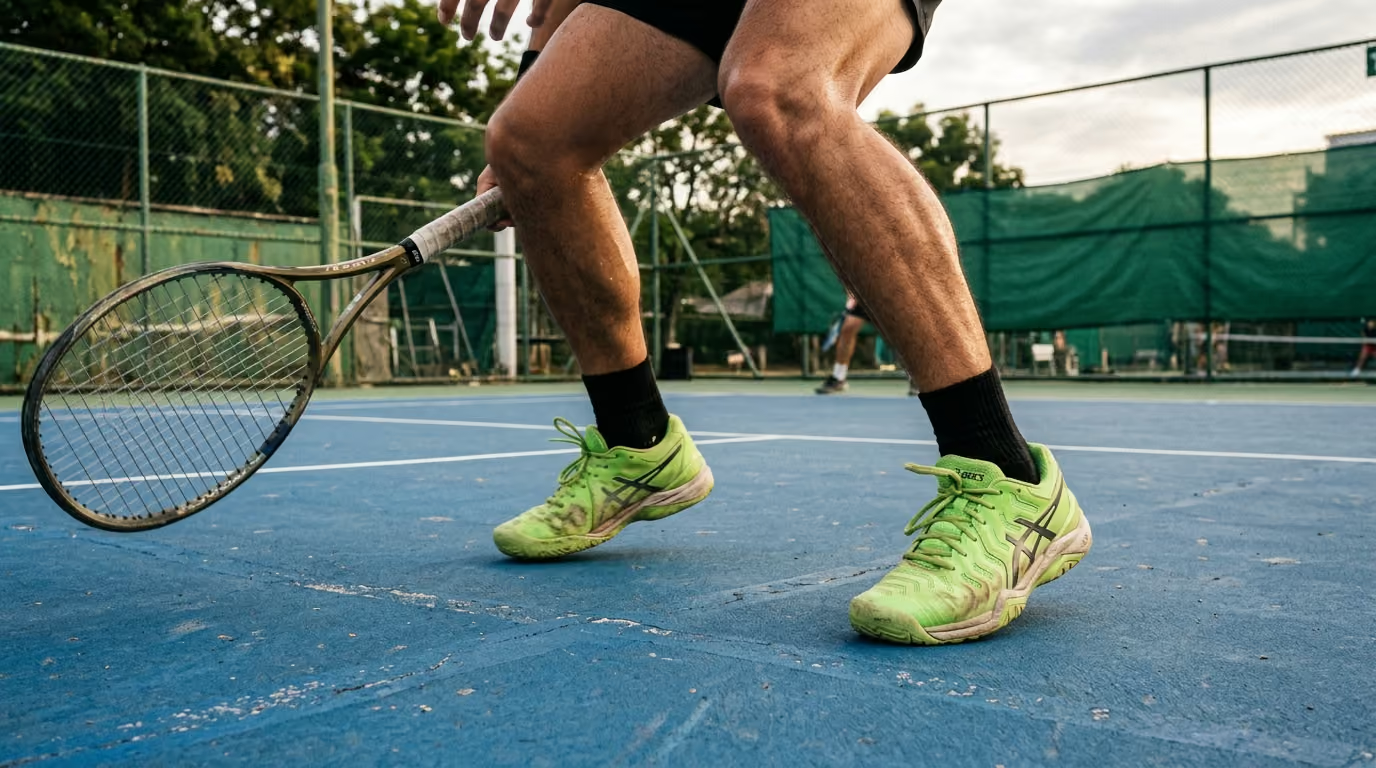
When playing racquet sports, gradual aches and pains often signal an overuse injury, which is a mismatch between physical stress and your body's capacity.




An overuse injury is not a sudden tear or a dramatic fall on the court. Instead, it is a gradual mismatch between the stress placed on your body and your tissues' current ability to tolerate that stress. Managing these issues successfully requires tracking your weekly playing volume, adjusting your movement habits, and progressively building your physical capacity rather than relying on total rest.
At Evercourts, we believe that staying active should not feel like an uphill battle against your own joints. You do not need to abandon the sports you love when you feel minor physical stiffness. By understanding how your muscles and tendons adapt to movement, you can make informed decisions about your play. This proactive approach helps you maintain your capacity floor and enjoy the court for many years to come.
Tendinopathy is a common form of overuse that affects many court athletes. For many years, people believed that tendon pain was caused solely by active inflammation. Modern research indicates that tendinopathy is actually a structural response to repeated loading that exceeds current capacity. When a tendon is loaded beyond its limit, the internal fibers can experience microscopic changes.
Current clinical guidance highlights progressive mechanical loading as the gold standard for tendon management. Complete rest often reduces your pain temporarily. However, prolonged inactivity also decreases the tendon's ability to tolerate future stress. Graded, progressive loading helps rebuild the tendon's structural strength and resilience over time.
It is also important to view overuse through the lens of the kinetic chain. An overuse issue in the elbow often stems from poor force transfer through the legs and torso. Research on tennis upper-limb injuries concludes that overuse issues do not arise from a single, isolated variable. Instead, they result from a complex interaction of playing volume, movement patterns, and physical recovery.
Sports scientists often track training stress using the acute-to-chronic workload ratio. This metric compares your current weekly playing volume to your average volume over the previous month. Research indicates that sudden spikes in this ratio are associated with an increased risk of tissue irritation. However, these ratios should serve as general guidelines rather than rigid rules.
A 2026 review found only a small-to-moderate association between higher workload ratios and injury risk. This highlights the high degree of variation in how individual players tolerate workload shifts. Factors like sleep, nutritional status, and playing history all affect your capacity to handle a sudden training spike. Therefore, load monitoring should be treated as a tool for self-awareness rather than an exact predictor of injury.
Understanding how different body regions respond to the unique demands of racquet sports is the first step in managing physical strain. Each area of the body has its own tolerance threshold and recovery timeline.
Lateral elbow irritation is often linked to repetitive loading of the wrist extensor muscles. These muscles control your wrist position when you strike the ball. The extensor carpi radialis brevis is particularly sensitive to rapid, repetitive acceleration. Overuse can occur when playing frequency increases too quickly or when you transition to a heavier racquet.
Several factors can contribute to lateral elbow issues on the court. These include repeated forceful gripping, hitting the ball late, or using strings that are too stiff. A sudden change in string tension can also alter the impact forces traveling up your arm. Relying heavily on the arm rather than the trunk to generate power increases elbow stress.
Players often try to resolve this issue by simply changing their grip size. While grip size can play a role, the scientific evidence does not support a single, universal cause. Instead, elbow health is influenced by your total weekly playing volume, your stroke mechanics, and your physical preparation. Monitoring your total hits per week is often more useful than focusing on a single piece of equipment.
The medial side of the elbow faces different mechanical forces on the court. This area is subjected to high valgus stress during overhead motions and serves. The muscles that flex your wrist and pronate your forearm work hard to stabilize the joint. If you increase your serving volume too quickly, these medial tissues can become overloaded.
Players often notice this pattern as stiffness or soreness after a heavy serving session. It is particularly common when players practice serves in isolation without a gradual warm-up. Ensuring that your upper body has adequate time to adapt to these specific forces is key. Progressive strengthening of the forearm flexors can also help protect this region.
Using a two-handed backhand can sometimes reduce the stress on the dominant medial elbow. The non-dominant arm helps absorb the force of the impact. If you play singles, the mechanical load on the medial elbow is generally higher than in doubles. This is due to the increased frequency of high-force groundstrokes.
Shoulder symptoms in racquet sports often stem from the cumulative demands of overhead movements. The rotator cuff must work constantly to accelerate, decelerate, and stabilize the arm. Research indicates that prolonged exposure to play can fatigue these stabilizing muscles. When fatigue sets in, the shoulder joint can lose its optimal tracking.
Scapular control and thoracic mobility also play major roles in shoulder health. If your mid-back is stiff, your shoulder must work harder to reach overhead. Exercise programs that focus on neck, thoracic, and scapular strengthening are highly effective. Developing both raw strength and repeated-effort capacity is essential for court longevity.
A common error is focusing solely on stretching the front of the shoulder. While flexibility is important, it does not build the dynamic control needed for high-speed overheads. Your training should prioritize building the endurance of the muscles that control the shoulder blade. This helps maintain proper joint alignment even during long matches.
The deceleration phase of the serve places the highest eccentric demand on the rotator cuff. If you have not prepared these muscles for this rapid braking action, they can become irritated. This is why incorporating slow, controlled eccentric strengthening exercises is so beneficial. It prepares the shoulder for the high forces of match play.
Wrist issues often develop from repetitive gripping and rapid racquet acceleration. Badminton, tennis, and padel all place high demands on the small muscles of the hand and forearm. When players get tired, their wrist technique often deteriorates. This can lead to late contact points and excessive defensive wrist flicks.
A common pattern involves mild soreness that appears after play and disappears by the next morning. If the volume of play remains too high, this discomfort can become more persistent. It may eventually affect your grip strength and your ability to control the racquet head. Monitoring how your wrist feels the morning after play is a simple way to track tolerance.
Using a grip that is too small can cause you to squeeze the handle too tightly. This excess muscle tension can travel up the arm and irritate the tendons. Regularly replacing your overgrip is a simple way to maintain a secure hold without excess squeezing. This small adjustment can significantly reduce wrist fatigue during long sessions.
Court sports require a constant combination of rotation, extension, and lateral bending. Your lower back absorbs substantial rotational forces during groundstrokes and overhead serves. If your trunk muscles tire late in a match, the mechanical stress shifts to your spinal joints. This can lead to persistent stiffness or localized soreness.
It is a mistake to assume that simple core weakness is always the cause of back pain. Often, the issue is a lack of rotational endurance under fatigue. Improving your hip and thoracic mobility can also relieve stress on your lower back. When your hips move freely, your lumbar spine does not have to rotate excessively.
The serve requires a significant amount of lumbar extension, particularly during the trophy position. If you lack the ability to arch through your upper back, your lower back must compensate. This repeated hyperextension can lead to localized joint irritation. Focusing on thoracic extension exercises can help distribute this movement more evenly.
Groin and hip discomfort often arise from repeated lateral lunging and open-stance hitting. These movements place significant demands on the adductor muscles and hip stabilizers. Abrupt deceleration on hard courts can also stress the groin region. If you notice a guarded stride during lateral movement, your hips may be reaching their limit.
Managing this region involves monitoring your tolerance for wide-court movements. If deep lunging starts to cause a dull ache, it is wise to adjust your positioning. Taking shorter, more controlled steps can help reduce the peak load on your hips. Maintaining general hip strength through basic resistance training is also beneficial.
The adductor longus is the muscle most commonly associated with groin strain in court sports. This muscle works hard to stabilize the pelvis during lateral changes of direction. Incorporating lateral lunges and lateral band walks into your warm-up can prepare these tissues for court demands. This help ensures your hips are ready for explosive movements.
Your knees act as the primary shock absorbers during split steps and lunges. The patellar tendon is particularly sensitive to rapid deceleration and deep bending under load. Biomechanical studies show that high vertical forces during lunges can stress the knee joint. If you introduce jump smashes or rapid direction changes too quickly, the knee can become irritated.
A successful recovery model for patellar tendon issues involves a structured progression. You begin with static holds to build tolerance. Then, you transition to slow, heavy lifting. Finally, you reintroduce elastic movements like jumping and sport-specific deceleration. This ensures the tendon is prepared for the high-velocity demands of match play.
Deceleration on hard courts places a high eccentric demand on the quadriceps. If these muscles lack the endurance to absorb this force, the knee joint takes the impact. This can lead to joint soreness or a dull ache under the kneecap. Building lower body strength is a reliable way to protect your knees from this repeated stress.
The Achilles tendon and calf muscles generate the power needed for explosive push-offs. In court sports, these tissues undergo rapid stretch-shortening cycles with every step. Achilles overuse often presents as stiffness first thing in the morning. It can also cause a dull ache during the first few minutes of a match.
Clinical guidelines recommend progressive tendon-loading exercises as a primary approach for Achilles issues. These exercises should include both calf raises with straight knees and bent knees. Strengthening the calf muscles helps distribute forces away from the tendon itself. Ensuring you have adequate single-leg endurance is vital for safe court coverage.
A sudden return to hard-court play after an extended break is a common trigger for Achilles irritation. The hard surface transmits higher forces through your heel, requiring the calf to work harder. Progression should always be gradual, starting with short hitting sessions on softer surfaces if available.
Ankle injuries are common in racquet sports due to the constant lateral movement and rapid braking. While acute ankle sprains are a different category, overuse issues can develop in the surrounding tendons. Repetitive strain on the peroneal tendons on the outside of the ankle can cause localized soreness. This is especially true if you are playing on a hard court with worn-out shoes.
Monitoring your foot comfort after changes in court surfaces or shoe models is essential. Restricting ankle motion through too-tight bracing can sometimes shift the stress up to your calf muscles. Maintaining a balance of strength, mobility, and proper footwear is the best way to support your lower joints.
The plantar fascia can also become irritated from the repeated impact of jumping and split steps. This often presents as heel pain during your first steps in the morning. Stretching the calf muscles and rolling the arch of the foot can offer temporary relief. However, long-term management requires building the load capacity of the foot and ankle complex.
To apply these concepts on the court, you must first define load accurately. Load is not just the number of hours you spend playing. It includes the intensity of your matches, the number of serves you hit, and how many explosive lunges you perform. A high-intensity singles match places a different demand on your body than a social doubles game.
Tracking these variables allows you to make sensible adjustments before minor aches turn into injuries. For instance, if you are experiencing early signs of elbow strain, you do not need to stop playing entirely. You can reduce your weekly match play and substitute a lower-intensity technical session. To help you structure this process, we offer proactive injury prevention resources designed for active players.
The first step in managing your workload is conducting a simple load audit. This audit helps you identify the specific factors that may be contributing to your discomfort. By asking four basic questions, you can pinpoint where adjustments are needed. This systematic approach takes the guesswork out of training modifications.
Look back at the past two weeks. Did you change your racquet strings, buy new shoes, or play on a harder court surface? Have you recently increased your weekly playing hours or added extra training sessions? Identifying these changes is the first step in understanding tissue strain.
Identify which part of your body is feeling the strain. This helps you understand which specific movements are contributing to the issue. For example, repeated overhead serves place direct stress on the shoulder and medial elbow. Conversely, deep lunging on the court targets the knee and Achilles tendon.
Pay close attention to how your body feels at different times. Do you feel fine during play but stiff the next morning? If soreness persists for more than 24 hours, your current workload may be too high. A normal recovery response should see symptoms resolve before your next scheduled session.
Avoid the temptation to adopt a complete rest approach. Identify which activities you can still perform without provoking your symptoms. You can often maintain your fitness through cycling, light footwork drills, or targeted strength work. This keeps your body active while the irritated tissue recovers.
A common mistake among adult players is scheduling high-stress sessions on consecutive days. For example, playing hard singles on Monday, doing heavy leg training on Tuesday, and playing competitive matches on Wednesday leaves little time for tissue recovery. A better approach is to alternate your high-intensity days with lower-stress activities.
You can dedicate one day to intense tactical play, followed by a day of light technical work. This allows your tissues to recover while you continue to improve your skills. Spacing out your hardest physical efforts helps prevent cumulative fatigue. It also ensures you can maintain high performance during your competitive sessions.
Using a simple rating of perceived exertion can help you track session intensity. Multiply your rating on a scale of one to ten by the duration of the session in minutes. This gives you a single number representing the overall load of that session. Comparing these numbers over the week can help you identify sudden spikes in your training stress.
Your physical capacity has a floor and a ceiling. The floor represents what your body can easily tolerate on a daily basis. The ceiling represents the maximum demand placed on your body during a highly competitive match. Overuse issues often occur when players train only for their average demands and are unprepared for the peak moments.
To prevent this mismatch, your physical preparation should gradually build toward those peak demands. This means incorporating controlled, high-intensity movements into your training before you face them in a tournament. Step-by-step physical preparation is key to supporting your long-term healthy aging and athletic longevity.
Preparing for the ceiling requires a slow, progressive increase in movement complexity. If your matches involve rapid changes of direction, your training must include lateral agility work. Simply running in a straight line will not prepare your joints for these specific forces. Building this capacity under controlled conditions is the safest way to prepare for competition.
If you have taken time off due to physical irritation, you should use a graded ladder to return to play. This step-by-step approach ensures your tissues have time to adapt to increasing demands. Skipping steps often leads to a recurrence of your symptoms.
The mechanical demands of racquet sports vary significantly depending on the court size, the equipment used, and the style of play. Understanding these differences helps you tailor your training to your specific sport. It also allows you to recognize which parts of your body are at the highest risk of overload.
Tennis features a heavy racquet, a yellow ball that requires significant force to propel, and a large court. This combination requires long swing pathways and high rotational forces through the torso. The serve is a unique movement that places extreme demands on the shoulder, elbow, and lower back.
Tennis players are more prone to upper-limb overuse issues due to these high-force, high-velocity strokes. The lateral movement demands are also significant, requiring strong deceleration capabilities. Hard-court tennis is particularly demanding on the lower joints, including the knees and Achilles tendons.
The long rallies in tennis require a high level of cardiovascular endurance. As you fatigue, your stroke mechanics often break down, which can increase the stress on your elbow and shoulder. This is why building rotational endurance through your trunk is so important for tennis players. It helps protect your upper limbs from taking too much force late in a match.
Pickleball is played on a smaller court with a lighter, solid paddle and a plastic ball. While the upper-limb impact forces are lower than in tennis, the game requires a high volume of quick steps. Players must constantly perform low lunges to reach short shots near the kitchen line.
This repeated low positioning places unique demands on the knees, lower back, and Achilles tendons. Because the rallies can be rapid, the wrist is often used to make quick, defensive reactions. This can lead to localized forearm and wrist strain if playing volume increases too rapidly.
The quick reactions required in pickleball can also place a high demand on the ankle stabilizers. Players must make rapid, short-step adjustments to stay in position. Strengthening the calf muscles and ankles is a key priority for pickleball players. This physical preparation helps support the rapid footwork needed during fast rallies.
Padel is played in an enclosed glass court, combining elements of tennis and squash. The solid, heavy padel racquet requires short, controlled strokes. The presence of the back glass means rallies are often long, requiring constant short-step adjustments and rapid changes of direction.
Padel involves a very high volume of overhead strokes, such as the bandeja and the vibora. These shots require repeated rotational stability from the shoulder and upper back. The constant deceleration and redirection on synthetic turf can also place high demands on the calves and Achilles tendons.
The solid frame of the padel racquet transmits significant vibration to the arm upon impact. This can increase the stress on the lateral elbow, especially during off-center hits. Choosing a racquet with good vibration dampening can help reduce this mechanical strain. Padel players should also focus on maintaining strong forearm muscles to absorb these impact forces.
Examining current sports medicine literature reveals clear patterns in how injuries are distributed across different court sports. This data helps us understand which regions are most vulnerable to repeated stress.
A major review of tennis injuries highlights a wide variation in reported injury rates. The authors note that there is a shortage of long-term studies that track specific risk factors. This means we must be cautious when claiming that a single factor, like grip size, causes injury.
Another review focused on upper-limb injuries found that they account for 28 percent of injuries in male players and 23 percent in female players. The shoulder was identified as the most common site of upper-limb issues. Most of these injuries were chronic in nature, developing over a long period of play.
A recent 2025 study of competitive players reported that overuse injuries were more common in highly specialized players. Specifically, the frequency of overuse issues rose from 13.9 percent in low-specialization players to 30.1 percent in highly specialized players. The study also showed that each additional hour of weekly training was associated with an increase in overuse risk.
Badminton research reveals a different distribution of physical demands. A systematic review and meta-analysis found that lower-limb injuries accounted for over 52 percent of all injuries. Ankle sprains were the most common issue identified in this category.
Overuse injuries represented between 25 percent and 74 percent of the total cases across various badminton studies. Interestingly, amateur players often experience more training-related injuries than professional players. This highlights the importance of structured progression, as recreational players may add extra games or drills without monitoring their physical response.
This difference in injury distribution between tennis and badminton highlights the unique demands of each sport. Tennis players require significant upper-body preparation to handle the high forces of strokes. Badminton players, on the other hand, require a heavy emphasis on lower-body agility and footwork.
Recreational players often fall into predictable patterns when trying to manage physical irritation. These mistakes can delay recovery and lead to longer periods away from the court. Recognizing these pitfalls early is essential for maintaining your physical resilience.
Many players believe that the best response to pain is to stop all physical activity. While complete rest can lower your immediate discomfort, it also reduces your tissue tolerance. When you return to the court, your muscles and tendons are less prepared for the demands of play.
A more effective approach is to modify your activity rather than stopping completely. This involves reducing the specific movements that cause pain while maintaining your overall fitness. This active recovery helps keep your tissues strong and resilient.
Complete rest can also lead to a loss of cardiovascular fitness and muscular coordination. This can make you more susceptible to injury when you finally return to play. Maintaining some level of low-load, pain-free movement is almost always better for long-term recovery.
Another common error is assuming that stretching will prevent overuse issues. While flexibility is useful, it does not build the strength or the endurance your tissues need. Tendons and muscles require progressive loading to handle the high forces of competitive play.
Substituting structured strength work with simple stretching can leave you unprepared. Your training should prioritize building the capacity of your muscles to absorb impact. Focusing on active strengthening rather than passive stretching supports better court performance.
Stretching an already irritated tendon can sometimes worsen your symptoms. This is because stretching can place a compressive load on the tendon insertion point. A better approach is to focus on slow, controlled resistance training within a comfortable range of motion. This active work helps build the structural strength the tissue needs to recover.
Understanding how your body recovers from training is critical for long-term health. When you play, your tissues experience micro-stress that triggers a natural adaptation process. This process allows your muscles and tendons to grow stronger over time. However, this adaptation requires adequate recovery windows to occur successfully.
Every time you step onto the court, your tissues experience microscopic stress. In response, your body initiates a process to rebuild and strengthen those tissues. This adaptation occurs during your recovery periods, not during the match itself.
Tendons, in particular, require adequate time to synthesize new collagen after a heavy session. Research suggests that this process can take 48 to 72 hours. If you play hard on consecutive days, you may disrupt this healing cycle. Refer to our recovery science resources to learn more about optimizing this process.
If you do not allow sufficient time for this collagen synthesis, the tendon structure can slowly degrade. This is how chronic tendinopathy develops over months of repeated play. Ensuring you have at least one or two days of low-load activity between intense sessions is a simple way to support tendon health.
Your body's ability to recover is also influenced by systemic factors like sleep, nutrition, and daily stress. High levels of mental fatigue can reduce your coordination and increase your perceived effort on the court. Ensuring you get adequate sleep is one of the most effective ways to support tissue health.
When your systemic recovery is compromised, your physical capacity floor drops. This makes you more susceptible to overuse patterns even at normal playing volumes. Adjusting your playing intensity during busy or stressful weeks is a sensible strategy.
Dehydration can also affect the elasticity of your tendons and muscles. This can make them more prone to irritation during rapid, explosive movements. Ensuring you are well-hydrated before, during, and after play is a simple but often overlooked aspect of recovery.
Building a resilient body is the best way to support your physical longevity on the court. A targeted strength program should focus on the areas that absorb the most stress during play. By strengthening these key regions, you can improve your movement efficiency and reduce tissue strain.
To protect your shoulder, you should focus on building endurance in the rotator cuff and upper back. Exercises like band pull-aparts, face pulls, and external rotations help stabilize the joint. Strengthening the muscles that control your shoulder blade is also critical.
This physical preparation ensures that your shoulder can handle the repetitive acceleration of serves. It also helps you maintain proper stroke mechanics late in a match. Incorporating structured court-specific strength and conditioning is a powerful way to support your physical longevity.
Adding row variations to your program is another excellent way to build upper-back strength. These exercises help balance the repetitive forward acceleration of hitting a ball. Maintaining this muscular balance around the shoulder joint is key for long-term performance.
Building capacity in your calves and Achilles tendons requires a mix of slow, heavy loading and quick movements. Straight-leg calf raises target the gastrocnemius muscle, while bent-knee raises target the soleus. Both muscles contribute to your push-off power and deceleration capacity.
You should aim to perform these exercises through a full range of motion. Gradually increasing the resistance helps build tendon stiffness, which improves your efficiency on the court. Consistent calf training is particularly important for players returning from a period of inactivity.
Adding a short pause at the bottom of each calf raise can help reduce the use of momentum. This ensures that the muscle and tendon are doing the work of lifting the weight. This controlled, deliberate movement is highly effective for building structural tissue strength.
Knee health relies on the strength of your quadriceps, hamstrings, and gluteal muscles. Controlled lunges and squats help prepare the joints for the deep bending required on the court. To protect the patellar tendon, you can use a stepped progression that starts with static isometric holds.
Once you tolerate static holds, you can transition to slow, weighted lunges. Finally, you can add explosive movements like low-level jumps or rapid split steps. This progression ensures your knees can absorb the high forces of sudden stops.
Strengthening your gluteal muscles is also important for controlling knee alignment during lateral movements. Exercises like side planks with leg lifts and lateral band walks help build this lateral stability. When your hips are strong, they can prevent your knees from collapsing inward during lunges.
Analyzing realistic court scenarios can help you apply load management to your own training. These examples illustrate how sudden changes in volume or movement patterns can trigger tissue irritation. They also show how small, practical adjustments can help you return to play safely.
An adult player who normally plays once a week enters a weekend tournament. They play three matches over two days. By the second day, they notice persistent soreness in their dominant elbow and a loss of grip strength.
The sudden spike in weekly playing hours is a clear example of a load-capacity mismatch. Their forearm muscles were not prepared for the repetitive gripping and high impact of multiple consecutive matches. To manage this, the player should temporarily reduce their match play and focus on submaximal hitting drills.
They should also review their equipment, ensuring their racquet strings are not too stiff. Reintroducing match play should be done gradually, starting with short, friendly sets. This allows the forearm muscles to slowly rebuild the endurance needed for tournament play.
A recreational player returns to the court after a three-month winter break. They immediately play a two-hour session of fast-paced singles, including repeated lunges and jump smashes. The next morning, their calves are extremely stiff, and their Achilles tendons ache.
Their current physical capacity floor was well below the demands of high-speed badminton movement. A better approach would have been to start with shorter, 45-minute sessions of light drilling. They should focus on progressive calf raises before reintroducing maximum-effort jumping.
Allowing several days of rest between these early sessions is also essential. This gives the Achilles tendon adequate time to recover and adapt to the return of impact forces. This gradual approach is key to avoiding chronic tendon irritation.
A competitive player decides to improve their serve by adding a weekly session of 100 serves. They maintain their normal match schedule and strength training. Within three weeks, they develop a deep ache in the front of their shoulder that persists the morning after practice.
Adding a high volume of overhead repetitions without adjusting their other training created an overload on the rotator cuff. To resolve this, they should reduce the volume of serves per session and focus on technical shadow work. They can gradually rebuild serving volume as their shoulder endurance improves.
Incorporating targeted rotator cuff and upper-back strengthening into their routine can also help. This ensures that the shoulder has the physical capacity to handle the increased load of serving. This balanced approach protects the joint while allowing the player to work on their skills.
A player who can perform heavy squats in the gym develops anterior knee pain during lateral split steps. They assume their knees are strong enough because of their gym metrics. However, they are experiencing a specific deficit in absorbing rapid, elastic impact forces.
Gym strength does not automatically translate to dynamic court-speed deceleration capacity. The player needs to transition from slow gym lifts to low-level plyometric drills. This progressive step-up helps the patellar tendon adapt to the fast stretch-shortening demands of play.
Adding split-step drills and rapid lateral shifts to their warm-up can also help. These movements prepare the nervous system and the knees for the specific forces of match play. This bridge between gym strength and court movement is essential for joint health.
While load management is highly effective for minor aches, some symptoms require medical evaluation. Knowing when to see a qualified healthcare provider is essential for your safety. It helps you avoid turning a manageable issue into a long-term physical limitation.
To help you manage your physical response to play, you can use a simple traffic-light model. This system guides your decision-making and helps you identify when professional care is needed.
Yes, you can often continue playing if the soreness is mild and disappears within 24 hours. The key is to monitor whether the discomfort is progressive. If the pain begins earlier in your sessions or requires you to alter your technique, you should reduce your weekly volume.
Stiff strings, such as polyester, transmit more impact shock to your hand and forearm. If you have recently changed to a stiffer string or increased your tension, it may increase elbow stress. Switching to a softer multifilament string or lowering your tension can help reduce impact forces.
Yes, different surfaces alter the mechanical demands on your body. Hard courts offer high traction but transmit substantial impact forces to your knees and ankles. Clay, grass, and synthetic turf allow for some sliding, which can reduce joint impact but may require different stability.
Mild stiffness can occur as a natural response to physical effort, but it should not last for days. If you find that your stiffness persists between sessions, it suggests your recovery is incomplete. Adjusting your weekly schedule to allow for more rest days can help manage this pattern.
Follow Evercourts for practical insights on tennis, pickleball and padel performance, movement, recovery and healthy ageing. Stay connected for new articles, research-led guidance and ideas to help you play well and keep playing for years.


Read practical guidance for better movement, smarter preparation and a game that keeps working for you.
explore the Blog