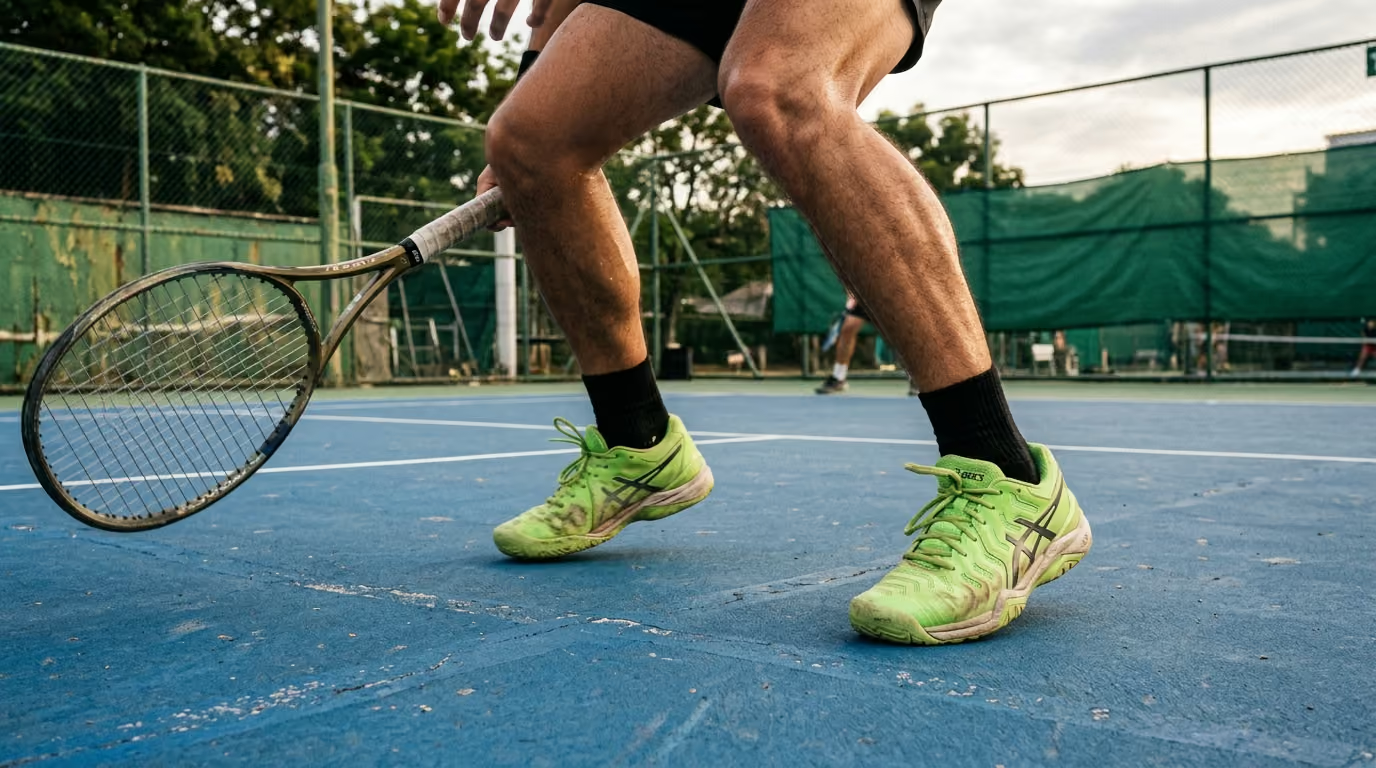
Chronic sleep of seven hours or less per night is associated with a 1.7 times higher risk of injury for racquet sports players, making systematic recovery essential.




Many court sports players view recovery as an afterthought. They might perform a few hasty static stretches after a match or grab an occasional sports drink when the weather is warm. In some cases, players assume that expensive massage gadgets or trendy supplements can make up for a lack of sleep.
True recovery is not a collection of isolated products or quick fixes. Instead, recovery is a systematic load-management process. It is the structured method of restoring your physical, mental, and metabolic readiness before your next training session or match. When you manage this process correctly, you protect your joints and tissues from the repetitive stress of court play.
This guide provides a comprehensive framework for managing physical workloads, sleep, hydration, nutrition, and active rest. By focusing on practical habits, you can keep playing tennis, pickleball, or padel for many years to come.
Recovery is a systematic load-management process that balances physical stress with planned rest, hydration, nutrition, and sleep. It is not a quick fix or a trendy biohacking routine. Instead, it is the foundation that keeps your joints and tissues capable of tolerating the explosive demands of court play.
When you play a racquet sport, your body experiences significant physical stress. This stress is necessary to stimulate athletic adaptation and improve your fitness. However, if you do not allow your tissues enough time to repair, this stress accumulates. Over time, unresolved fatigue decreases your coordination, alters your movement mechanics, and increases your risk of injury.
To prevent injuries, you must treat recovery as a proactive strategy. It requires planning your playing schedule, optimizing your sleep, and fueling your body consistently. This approach ensures that you return to the court with adequate physical readiness for every session.
Current sports science research emphasizes that injury prevention is closely linked to how we manage physical workloads. The International Olympic Committee published a consensus statement on load in sport and injury risk. This consensus highlights that rapid increases in training volume or intensity are strongly associated with higher injury rates.
When you increase your playing time too quickly, your tendons, muscles, and joints cannot adapt fast enough. Recovery acts as the buffer that helps your tissues tolerate these changes in workload. Without adequate recovery, minor tissue micro-damage accumulates into painful overuse conditions.
Research shows a clear relationship between sleep duration and musculoskeletal injury risk. A study published in Current Sports Medicine Reports examined sleep and injury risk in young athletes. The researchers found that chronic sleep of seven hours or less per night was associated with a 1.7 times higher risk of injury.
However, the science is more nuanced than many popular media outlets suggest. The same review reported that a single night of poor sleep did not consistently increase injury risk. Instead, the researchers observed a lag of approximately 14 days of sleep loss before injury risk began to rise. This indicates that chronic sleep debt, rather than an isolated late night, is the primary concern for court athletes.
Different racquet sports place unique demands on the body, leading to distinct injury profiles. A sports-clinic study of tennis, squash, and badminton players found that lower-limb injuries predominated across all three sports. In tennis, common issues included lateral epicondylitis, patellofemoral pain, and lumbar disc problems.
A large analysis of emergency-department data estimated over 300,000 racquet and paddle sports injuries over a ten-year period. The highest percentage of sprains, strains, and lower-extremity injuries occurred among athletes aged 18 to 40. This highlights that younger, competitive players are highly susceptible to acute soft-tissue injuries from sudden movements.
To design an effective recovery plan, you must understand the distinction between different types of physical issues.
By understanding these categories, you can use the latest recovery science resources to address the specific type of stress your body is experiencing.
An effective recovery routine relies on a simple framework for monitoring your physical readiness. You can use a basic daily check to assess your current state before you step onto the court.
Think of this check as a coaching framework:
> Readiness = sleep + fueling + hydration + tissue tolerance - accumulated load - unresolved symptoms
This is not a mathematical equation. Rather, it is a tool to help you evaluate your physical preparation. No single recovery behavior can compensate for chronic sleep loss, inadequate nutrition, or persistent joint pain.
Managing your recovery starts during your on-court sessions, not just after they end. Competitive tennis matches have a work-to-rest ratio ranging from 1:2 to 1:5. The average point duration is often around six seconds. This structure means that rest intervals are a critical variable in your training.
Using your between-point recovery time wisely helps lower your acute cardiovascular strain. It restores your attention, helps you make better tactical decisions, and reduces rushed technical execution. During practice drills, your coach should prescribe rest intervals deliberately based on your training goals.
When you are practicing high-intensity movements, the duration of your rest intervals matters.
Many players assume that walking or jogging between drills is always superior to standing still. However, systematic reviews of repeated-sprint research show mixed results. In running-based studies, passive recovery generally produced lower physiological stress and less performance decline than active recovery.
If your goal is to repeat high-quality explosive movements, standing or sitting during your rest breaks may be preferable. Save active recovery, such as gentle walking, for the end of your training session.
To prevent overuse injuries, avoid stacking high-load days consecutively. A high-load day might include a long singles match, repeated serving practice, or heavy strength training. Balance these sessions with low-load days that focus on mobility, easy cycling, or technical hitting at a reduced intensity.
For recreational players preparing for a weekend tournament, sudden increases in playing volume are a major risk factor. If you normally play once a week, playing four matches in two days is a significant training-load error. To prepare safely, gradually increase your playing volume over four weeks prior to the event.
While all racquet sports require agility and hand-eye coordination, each sport places unique mechanical demands on your body. Understanding these differences allows you to tailor your recovery strategies to your specific sport. You can find more targeted guidance in our comprehensive injury prevention resources to match your daily playing routine.
Tennis is played on a large court, which requires long sprints, sliding movements, and sudden changes of direction. The ground reaction forces on hard courts are substantial, placing high stress on your knees, hips, and lower back. Tennis players also perform high-volume serving, which subjects the dominant shoulder and rotator cuff to repetitive eccentric loading.
Your recovery after tennis should prioritize restoring lower-limb tissue tolerance and rehydrating after long matches. Because tennis matches can last several hours, carbohydrate replenishment is essential to restore muscle glycogen.
Pickleball is played on a much smaller court, which reduces the need for long-distance sprinting. However, the game requires rapid reaction times, quick split steps, and constant low lunging near the kitchen line. This upright, compressed stance places unique stress on the Achilles tendons, patellar tendons, and lower back.
Pickleball players also experience high paddle-contact repetitions. This constant hitting can lead to elbow tendon issues, such as lateral epicondylitis. Recovery for pickleball should focus on lower-leg mobility, ankle flexibility, and wrist tendon health.
Padel is played in an enclosed glass court, combining elements of tennis and squash. The game features continuous, fast-paced rallies with frequent transitions off the glass walls. Padel requires a high volume of overhead smash strokes, which can place significant stress on the shoulder joint and thoracic spine.
The court surfaces are typically synthetic turf with sand, which can feel heavy and damp during evening sessions. I remember finishing a tough two hour padel match on a cold Tuesday night and waking up the next morning feeling like my lower back was locked in concrete. For a long time, I just accepted this as the price of playing hard in my forties. But once I started spending just ten minutes on targeted hip mobility before heading to the club, the stiffness almost completely vanished. It taught me that we do not have to accept pain as a default state of athletic longevity.
After a padel session, spend time on thoracic spine extension, shoulder internal rotation mobility, and hip flexor stretches. This helps counteract the rounded, defensive posture often required during fast wall play.
Many players make simple errors in their recovery routines that can lead to chronic fatigue or injury. Recognizing these common pitfalls is the first step toward building a smarter training plan.
One common error is replacing a rest day with a high-impact alternative activity. For example, a player with sore Achilles tendons might decide to skip tennis and go for a hard five-mile run instead. While they are not playing tennis, they are still subjecting the same lower-limb tissues to repetitive high impact.
True active recovery should use low-impact movements that do not reproduce the mechanical stress of your sport. Excellent options include swimming, stationary cycling, or gentle pool walking. If an activity causes discomfort or worsens your existing joint stiffness, it is not serving as recovery.
Many players invest in expensive massage guns, compression garments, or nutritional supplements while ignoring their basic sleep and dietary needs. No device can compensate for chronic sleep restriction or inadequate daily calorie intake. These tools may offer temporary relief from muscle soreness, but they do not repair damaged tissues.
Focus on establishing a consistent bedtime routine, eating balanced meals, and staying hydrated first. Once these foundational habits are in place, you can use passive recovery tools as optional additions to your routine.
Another common misconception is that you can make up for a week of poor sleep by sleeping in on the weekend. While extra sleep on your rest days is helpful, it does not erase the injury risk accumulated during the week.
A consistent sleep schedule is far more beneficial for athletic longevity. Aim to maintain similar wake and bedtimes throughout the week, even during tournaments or busy travel schedules.
To understand why recovery is so important, it helps to examine how the body repairs itself on a cellular level. When you play racquet sports, you cause tiny microscopic tears in your muscle fibers and connective tissues. This is a normal part of the training process.
During rest, your body initiates an inflammatory response to clear away damaged cells and rebuild stronger tissue. However, this repair process requires adequate energy, nutrients, and time. If you step back onto the court before this process is complete, you disrupt the healing cycle.
A practical way to structure your recovery nutrition and rest is the 4R framework. This system ensures your body has the raw materials it needs to rebuild joint and muscle tissues.
You can learn more about applying these principles to your daily routine by reading our articles on athletic longevity strategies.
Your joints are cushioned by cartilage, which relies on synovial fluid for lubrication and nutrient delivery. Synovial fluid is composed primarily of water. When you are dehydrated, your joint lubrication can decrease, leading to increased friction and wear on your joint surfaces.
Dehydration also reduces your blood volume, making it harder for your cardiovascular system to deliver oxygen and nutrients to recovering muscles. To maintain joint health, you must stay hydrated before, during, and after your matches.
To optimize your hydration, avoid both extremes: arriving at the court dehydrated or drinking excessive amounts of plain water.
For recreational players with a longer break before their next session, simply drinking water to satisfy thirst and eating normal meals is usually sufficient.
Carbohydrates are essential for replenishing glycogen, which fuels the energy demands of your immune system and tissue repair. If you are training heavily, a daily carbohydrate intake of several grams per kilogram of body weight is appropriate.
Protein is equally important for rebuilding muscle tissue and supporting tendon remodeling. Rather than consuming a massive amount of protein in a single post-match shake, distribute your protein intake evenly throughout the day.
Practical recovery food options include:
By focusing on these nutrient-dense options, you provide your body with the sustained energy needed for long-term tissue maintenance.
While a structured recovery routine can manage minor muscle soreness and mild fatigue, it is not a substitute for medical care. You must be able to recognize the signs that indicate your symptoms require professional assessment.
If you experience any of the following red flags, stop playing immediately and consult a qualified healthcare provider:
A physical therapist or sports medicine physician can help you identify the root cause of your symptoms. They can also design a targeted strength and conditioning program to address any muscle imbalances or movement limitations.
Sports drinks are not mandatory for every playing session. If you are playing a light singles match or a doubles game lasting under an hour, plain water is usually sufficient. However, sports drinks containing carbohydrates and electrolytes are highly beneficial for matches lasting over 75 minutes, sessions in hot or humid weather, or when you have multiple matches scheduled in a single day.
Foam rolling is a useful passive recovery tool that can help reduce the perception of muscle tightness and improve temporary joint range of motion. It does not structurally lengthen your muscles or speed up tissue healing, but it can make your legs and back feel more comfortable after a demanding match. For best results, use gentle pressure for 1 to 2 minutes per muscle group, focusing on your calves, quadriceps, and upper back.
While an isolated night of poor sleep will not dramatically increase your injury risk, chronic sleep loss is a significant risk factor. Signs of chronic sleep debt include persistent daytime fatigue, relying on high amounts of caffeine to stay alert, declining coordination or footwork on the court, increased irritability, and taking longer to recover from normal muscle soreness. If you notice these signs, prioritize extending your nightly sleep opportunity by 30 to 60 minutes.
In our experience, static stretching is best saved for after your matches or during your dedicated mobility sessions. Performing long, static stretches immediately before playing can temporarily reduce muscle power and reactive strength. Instead, use a dynamic warm-up containing light jogging, side shuffles, leg swings, and shadow swings to prepare your muscles and joints for the court.
Follow Evercourts for practical insights on tennis, pickleball and padel performance, movement, recovery and healthy ageing. Stay connected for new articles, research-led guidance and ideas to help you play well and keep playing for years.


Read practical guidance for better movement, smarter preparation and a game that keeps working for you.
explore the Blog