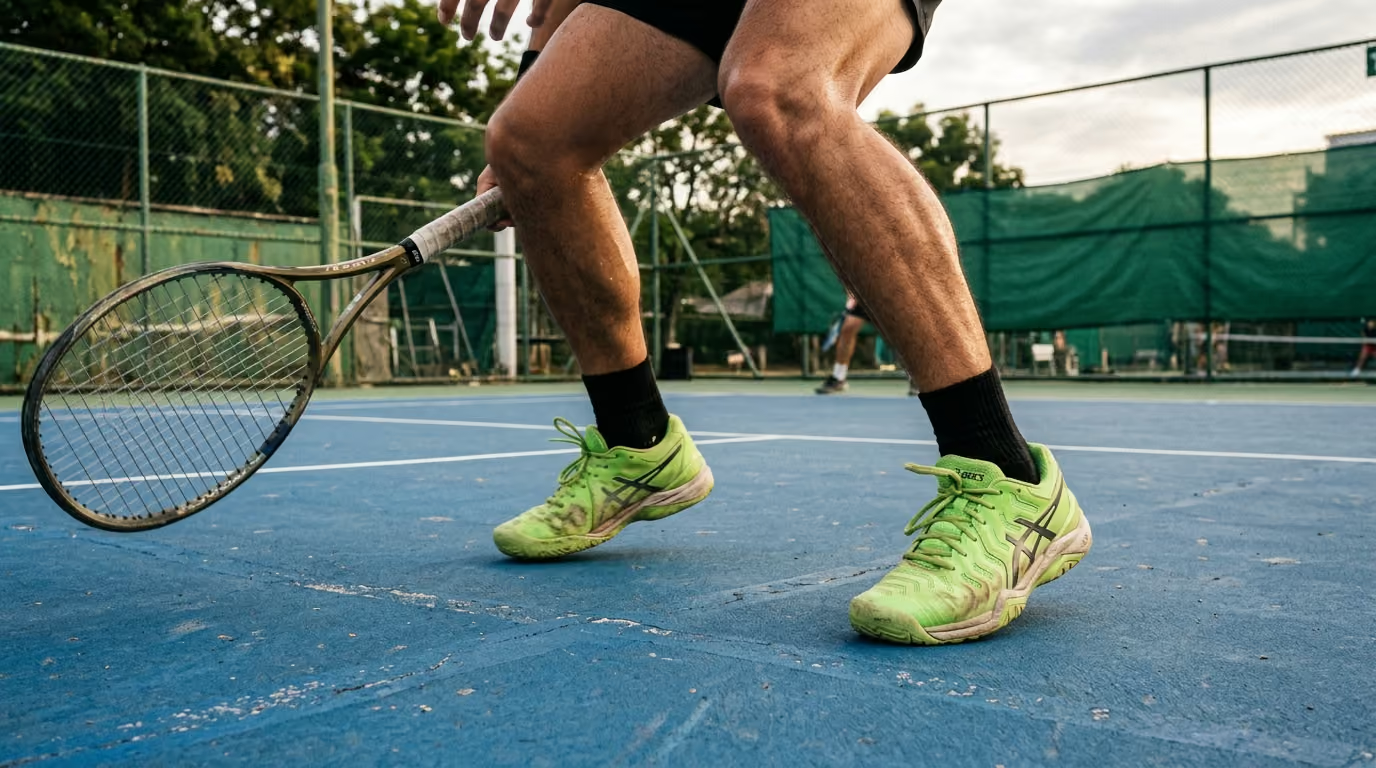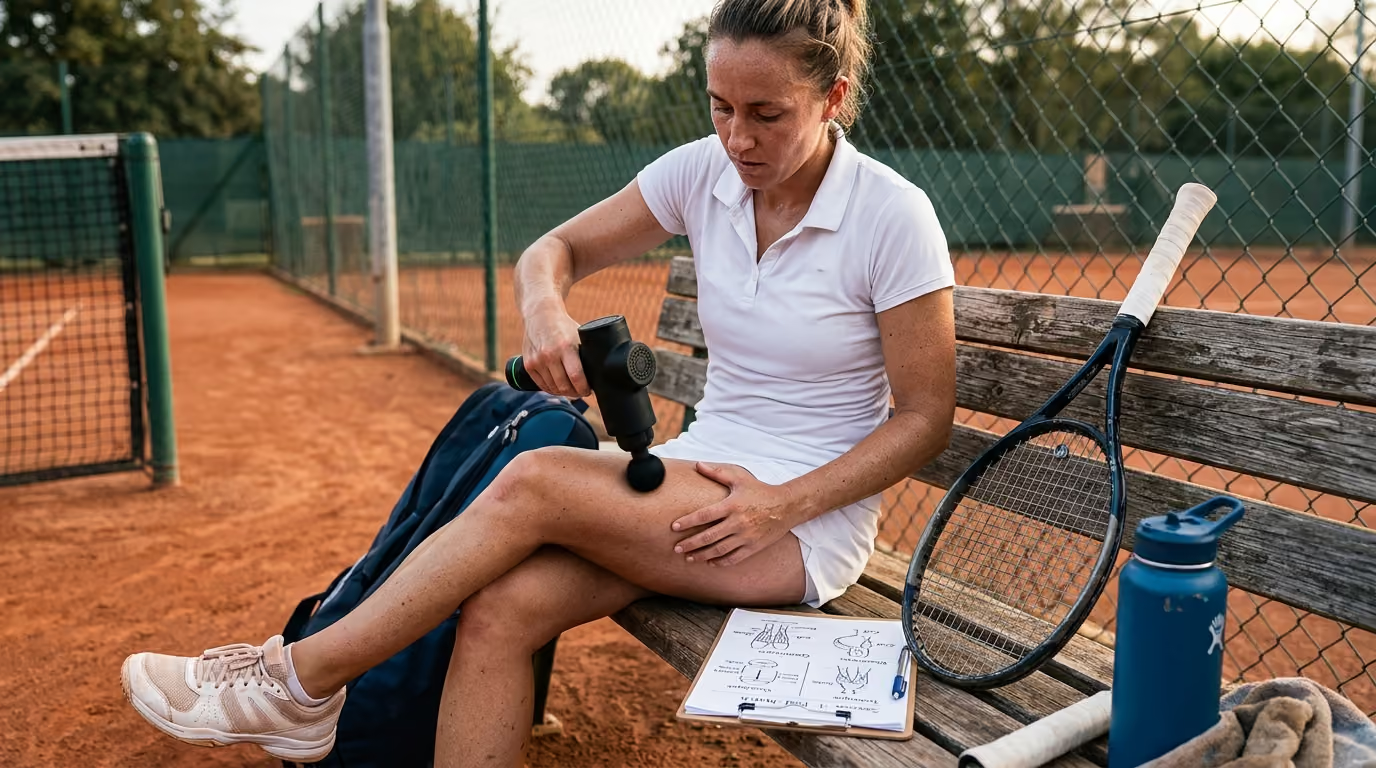

Court-sport players gain a practical reference for classifying recovery methods, allowing them to effectively match specific fatigue symptoms with targeted interventions.




Many court-sport players treat recovery as a collection of random treatments. They might drink a protein shake after one match, use a massage gun after another, or sit in a cold bath when their legs feel heavy. This unstructured approach often leads to poor results. It is easy to spend time and money on popular tools while neglecting the physical systems that actually require attention.
Effective court-sport recovery requires identifying your primary physical or mental fatigue symptom and applying a targeted intervention. Rather than treating all tiredness with the same tool, players should match their specific problem, like muscle soreness, depleted glycogen, or poor sleep, to a validated recovery protocol. This structured approach prevents wasted effort and keeps you performing at your best on the court.
To make recovery practical, we must view it as a multidimensional decision process. It includes biological, psychological, and social components rather than a single measurable state. By classifying your primary fatigue symptom first, you can select the most effective, least burdensome intervention for that specific day.
By organizing your post-match routine around these specific categories, you avoid common mistakes. You will no longer try to solve a hydration deficit with a massage gun. You will not rely on expensive supplements to fix a chronic sleep shortage. For players who want to explore these concepts further, we offer several structured recovery science resources to help guide your weekly routine.
Delayed-onset muscle soreness is a highly common perceptual symptom. It typically follows unfamiliar, strenuous, or eccentric exercise on the court. However, current research shows that feeling sore is not the same as losing physical performance.
A comprehensive review of protein supplementation found no consistent relationship between muscle soreness and the recovery of actual muscle function. You might feel highly sore while retaining your normal sprint speed and jump height. Conversely, you could feel no soreness at all while your neuromuscular system remains deeply fatigued.
Because of this discrepancy, subjective soreness should not be your only guide. Players should monitor their overall movement quality and skill performance alongside how their muscles feel. If you rely only on soreness, you might return to intense play before your joints and nervous system are ready.
Cold-water immersion is one of the most thoroughly studied strategies for short-term soreness relief. A systematic review and meta-analysis confirmed that cold-water immersion is superior to active recovery or warm baths for reducing muscle soreness. It helps athletes feel more comfortable and ready to play in the days following heavy competition.
A widely cited protocol involves immersing yourself in water temperature of 10 to 15 degrees Celsius. The session should last for 10 to 15 minutes and occur within one hour of finishing your match. This cold exposure helps constrict blood vessels, reduces localized swelling, and numbs sore pain receptors.
However, cold baths are not a universal cure. The research indicates that while cold water excels at reducing perceived pain, it is generally similar to other recovery methods for restoring pure muscular power and joint flexibility. It is an excellent tool when you need to feel better quickly, but it does not instantly rebuild depleted muscle fuel.
Compression garments offer a highly practical alternative when cold baths are unavailable. A tennis recovery study combined cold-water immersion, full-body compression garments, and sleep-hygiene education. The researchers found that combining cold-water and compression led to faster reductions in post-session heart rates and lactate levels.
The combination also helped players maintain their lower-body power and increased their comfortable playing time. While the statistical results were not identical across every single measure, the trend was clear. Compression garments help reduce the sensation of heavy legs after multiple matches.
Compression works by applying external pressure to the limbs. This pressure supports venous blood return and limits the buildup of interstitial fluid. It is a low-effort option that is particularly useful during travel.
Massage and foam rolling are excellent for reducing physical tension, but we must not confuse them with actual tissue repair. A systematic review of recovery methods found that foam rolling had a very large positive effect on self-reported muscle soreness. It helps down-regulate the nervous system and makes stiff muscles feel more pliable.
However, foam rolling does not restore depleted muscle glycogen. It will not rehydrate your cells or repair micro-tears in muscle fibers. Use these manual techniques for sensory comfort and relaxation rather than expecting them to solve metabolic fatigue.
Active recovery involves low-intensity cycling, walking, or light pool movement. The primary benefit of active recovery is that it increases blood flow and tissue temperature without adding training stress. It helps clear metabolic waste products and subjectively reduces joint stiffness.
The scientific evidence for active recovery is mixed. Some studies show no significant difference between active recovery and passive rest for restoring sprint speed or power. However, many players prefer active movement because it keeps their joints from locking up. It is best used as a brief, structured movement session rather than a prolonged workout.
Applying these strategies requires a logical timeline. Your recovery routine should begin the moment you shake hands at the net. The hours immediately following a match represent a critical window for physical restoration.
During the first thirty minutes after play, your focus should be on gentle transition. Walk slowly, drink fluids containing electrolytes, and perform light mobility work. This transition helps your heart rate return to baseline and prevents blood from pooling in your lower extremities.
Between thirty minutes and two hours post-match, address nutrition and soreness. If your muscles are highly sore and you must play again tomorrow, use cold-water immersion or compression. Consume a meal high in digestible carbohydrates and quality protein to kickstart the refueling process.
In the evening, prioritize sleep preparation and mental relaxation. Keep your environment cool and dark to support deep sleep. If you feel stiff, spend ten minutes on gentle stretching or foam rolling before bed.
In our experience, matching your daily recovery routine to your specific schedule makes a profound difference. I remember finishing a tough two hour padel match on a cold Tuesday night and waking up the next morning feeling like my lower back was locked in concrete. For a long time, I just accepted this as the price of playing hard in my forties. But once I started spending just ten minutes on targeted hip mobility before heading to the club, the stiffness almost completely vanished. It taught me that we do not have to accept pain as a default state of aging.
This personal realization led our team to prioritize targeted pre-match and post-match movement. By dedicating a small window to mobility, we can keep our joints moving freely for years. If you want to build a similar routine, you can explore our targeted movement and mobility routines designed for court athletes.
While all court sports require agility and endurance, each sport places unique demands on the body. Understanding these differences allows you to customize your recovery protocol. A tennis player, a pickleball player, and a padel player should not use identical routines.
Tennis matches are highly unpredictable in duration. A match can last anywhere from one hour to over three hours, requiring sustained aerobic and anaerobic energy. The large court size forces players to sprint over longer distances, leading to significant glycogen depletion.
The physical strain in tennis involves deep lateral lunges and explosive changes of direction. This movement profile places high eccentric loads on the quadriceps, glutes, and lower back. Additionally, the repetitive serving motion puts immense stress on the dominant shoulder and rotator cuff.
Tennis players must prioritize aggressive carbohydrate replenishment to restore depleted muscle fuel. Their recovery routine should also focus on restoring shoulder internal rotation and relieving lower-back tightness. Cold baths are highly beneficial for tennis players due to the large muscle mass utilized during long matches.
Pickleball is played on a much smaller court, which changes the physical demands. The matches are shorter but highly explosive, featuring rapid reaction times and continuous volleying. The movement is characterized by short, abrupt steps and constant deceleration.
Pickleball players spend a large portion of the game in a low, semi-squat position at the non-volley zone line. This constant hinge posture places a continuous load on the lower back, patellar tendons, and calves. The quick, short steps also put significant stress on the Achilles tendons and plantar fascia.
For pickleball recovery, lower-body decompression and calf mobility are critical. Players should use foam rollers on their calves and lacrosse balls on the arches of their feet. Because the physical footprint is smaller, pickleball players should focus on joint hygiene and tendon health. To prevent chronic issues in these areas, players can implement our court-sport injury prevention protocols to protect their lower limbs.
Padel is played in an enclosed glass cage on a synthetic turf surface topped with sand. The presence of walls means rallies are long and require constant spatial adjustments. Players must frequently twist, bend, and transition from defense to offense.
The physical load in padel is highly rotational. Players must constantly rotate their torsos to hit balls rebounding off the glass. Padel also features a very high volume of overhead smash attempts, which places stress on the shoulder, thoracic spine, and abdominal muscles.
Padel recovery should focus heavily on thoracic spine mobility and shoulder care. Rotational stretches, such as the open-book stretch, help release tension in the mid-back. Because of the synthetic turf surface, lower-body joint impact is high, making compression garments highly useful for reducing knee and ankle stiffness.
Restoring your energy stores is a precise chemical process. It requires replacing what was lost during play and providing the building blocks for tissue repair. This process is governed by specific nutritional windows and ratios.
During intense court play, your muscles rely heavily on stored carbohydrates called glycogen. If you play again within twenty-four hours, restoring these stores quickly is vital. The International Society of Sports Nutrition recommends specific targets for rapid refueling.
If your recovery window is less than four hours, aim to consume 1.2 grams of carbohydrate per kilogram of body mass per hour. For a 70-kilogram player, this equals roughly 84 grams of carbohydrate per hour. This rapid intake quickly stimulates glycogen synthesis in depleted muscle cells.
If you prefer, you can use an alternative strategy. Consume 0.8 grams of carbohydrate per kilogram of body mass per hour combined with 0.2 to 0.4 grams of protein. Adding protein helps accelerate glycogen storage when your total carbohydrate intake is slightly lower. This combination also supports muscle tissue repair simultaneously.
Post-exercise protein intake is essential for repairing muscle damage. The International Olympic Committee sports-nutrition consensus statement recommends consuming 15 to 25 grams of high-quality protein after training. This amount is sufficient to stimulate muscle protein synthesis and support long-term bone health.
For longer recovery periods of eight to twenty-four hours, consistency is key. Try to consume roughly 0.25 grams of protein per kilogram of body mass every three to four hours. For a 70-kilogram player, this translates to about 17.5 grams of protein per meal.
Keep in mind that protein is not a quick fix for muscle soreness. While protein is critical for muscle repair, studies show it does not instantly reduce the pain of sore muscles. Consuming protein is about structural recovery and long-term athletic longevity rather than immediate pain relief.
Dehydration of more than two percent of your body mass can impair your court performance. It reduces your coordination, slows your reaction times, and increases your cardiovascular strain. Rehydration should be a systematic part of your post-match routine.
To rehydrate accurately, weigh yourself before and after your matches. For every kilogram of body mass lost, you should consume 1.2 to 1.5 liters of fluid. This volume ensures that you fully replace both sweat loss and ongoing urinary losses.
Additionally, do not rely on plain water alone if you have sweated heavily. Your body needs sodium to hold onto the fluids you drink. Consuming sodium-rich foods or electrolyte beverages helps prevent cramping and ensures proper fluid balance in your cells.
Sleep is the single most powerful recovery tool available to athletes. While high-tech devices are popular, none can match the systemic restoration that occurs during deep sleep. Sleep should be treated as a non-negotiable part of your training schedule.
Research on sleep extension in athletes shows remarkable performance benefits. In a famous study of collegiate basketball players, researchers extended the players' sleep over several weeks. The athletes aimed for ten hours of sleep opportunity each night.
The results of this sleep extension were highly significant. The players improved their timed sprint speed over the length of the court. Their free-throw accuracy increased by nine percent, and their three-point shooting accuracy also rose by nine percent.
A similar study on tennis players showed that seven days of sleep extension improved serving accuracy. The players also reported better mood, less daytime sleepiness, and lower ratings of overall fatigue. These findings demonstrate that sleep directly enhances fine motor control and athletic accuracy.
To maximize your sleep quality, follow a simple hierarchy of habits. Begin by prioritizing sleep opportunity. Ensure you are spending enough total hours in bed, especially during tournament weeks or periods of heavy training.
Second, protect your sleep regularity. Try to go to bed and wake up at the same time every day, even on weekends. Research indicates that inconsistent sleep schedules can negatively affect coordination and reaction times on the court.
Third, use strategic naps to supplement your night-time sleep. A twenty to ninety-minute nap in the early afternoon can restore mental alertness and physical performance. Keep naps under ninety minutes to avoid feeling groggy or interfering with your evening sleep.
Finally, maintain excellent sleep hygiene. Keep your bedroom cool, dark, and quiet to encourage deep sleep stages. Avoid using digital screens for at least thirty minutes before bed, as blue light can delay the release of melatonin.
Court sports are mentally demanding. They require constant decision-making, rapid anticipation, and emotional control under pressure. This cognitive load can produce mental fatigue, which is distinct from physical tiredness.
Mental fatigue does not reduce your raw muscular strength, but it does impair your performance. When you are mentally drained, your reaction times slow down, your focus wanders, and your tactical decisions become less accurate. You might feel physically capable of running, but your brain cannot coordinate your movements as quickly.
Traditional physical recovery tools, like cold baths or compression sleeves, do not resolve mental exhaustion. To recover psychologically, you must use strategies that target the nervous system. These tools help reduce emotional arousal and restore your cognitive resources.
Several simple techniques can help clear mental fatigue after a demanding match. Controlled respiration, such as slow nasal breathing, helps shift your nervous system out of a stressed state. Spending just five minutes breathing deeply can lower your heart rate and reduce tension.
Progressive muscle relaxation is another highly effective tool. This practice involves systematically tensing and releasing different muscle groups from head to toe. It helps you recognize where you are holding physical tension and teaches your body to let it go.
Mindfulness and quiet digital breaks are also highly beneficial. Setting your phone aside and sitting quietly without distractions allows your brain to recover from constant stimulation. While mindfulness is not a magical cure, it is a highly useful, low-risk tool for managing competitive anxiety.
Additionally, structured post-match debriefing can help reduce mental stress. Instead of endlessly analyzing your mistakes in your head, write them down or discuss them briefly with a coach or partner. This cognitive off-loading helps close the mental loops that keep your mind racing after a tough loss.
Many players make simple errors that limit the effectiveness of their recovery. These pitfalls usually stem from misunderstanding how different recovery tools work. By identifying these mistakes, you can save time and get better results.
The most common mistake is relying on expensive gadgets while ignoring nutrition and sleep. A massage gun or a pair of recovery boots cannot replace a six-hour sleep deficit. These tools are secondary additions, not foundational requirements. Always secure your sleep and food before buying expensive equipment.
Another error is assuming that muscle soreness always equals physical damage. You might feel highly sore after playing on clay for the first time, but your actual strength may be completely normal. Do not automatically skip training just because your muscles feel stiff. Use a progressive warm-up to test your actual capabilities.
Using anti-inflammatory treatments too frequently can actually slow your progress. If your goal is to build strength or aerobic fitness, your body needs a certain amount of inflammation to signal growth. Using cold baths after every single workout can blunt this signal. Save cold-water immersion for tournament weekends or periods when short-term readiness is your highest priority.
Drinking large volumes of plain water after heavy sweating is a common mistake. If you sweat heavily, you lose both water and crucial minerals like sodium. Drinking only plain water dilutes your remaining electrolytes, which can lead to cramping and frequent urination. Always include a source of sodium or a light snack with your recovery fluids.
Adopting a classified recovery system is not just about playing well tomorrow. It is also about preserving your joints, tendons, and muscles so you can play for decades. Consistent recovery habits protect your body from the wear and tear of repetitive court play.
Tendons and ligaments have a much slower blood supply than muscles, meaning they take longer to adapt and heal. In racquet sports, the Achilles tendon, patellar tendon, and rotator cuff are highly vulnerable to overuse. If you do not allow these tissues sufficient time to remodel, they can slowly degrade.
By systematically addressing sleep, nutrition, and joint mobility, you support healthy tissue remodeling. Deep sleep triggers the release of growth hormone, which is essential for repairing connective tissues. Proper hydration keeps your joint cartilage lubricated, reducing friction during explosive movements.
Ultimately, these small recovery decisions add up to athletic longevity. You do not have to accept chronic joint stiffness as an inevitable part of aging. If you want to keep playing at a high level, you can access our resources on athletic longevity and healthy aging to design a sustainable, long-term plan.
While physical soreness and fatigue are normal parts of court sports, some symptoms require expert attention. Recovery methods are designed for healthy, tired tissues. They should never be used to mask symptoms of an actual injury.
You should consult a qualified healthcare provider if you experience any of the following warning signs:
If you experience any of these symptoms, stop playing and seek a professional evaluation. A physical therapist or sports physician can help diagnose the issue and create a safe rehabilitation plan. Always prioritize your long-term health over a single recreational match.
If your primary goal is to build muscle size and raw strength, you should generally avoid cold baths immediately after lifting weights. The cold temperature constricts blood vessels and reduces the natural inflammatory response, which is the signal your body uses to build new muscle tissue. However, if you are in the middle of a multi-day tournament and need to reduce soreness to play another match tomorrow, using cold water is highly defensible. Always prioritize your immediate performance needs over long-term strength adaptations during competitive periods.
Active recovery can be done on the court, provided you maintain a very low intensity. A gentle ten-minute hit with no lateral sprinting is a great way to keep your joints moving. However, many players find it easier to control their effort off-court, such as on a stationary bike or during a light walk. The key is to keep your heart rate low and avoid any explosive, sudden movements. If your active recovery session leaves you feeling more tired than when you started, the intensity was too high.
If you are playing for under an hour in a cool indoor environment, plain water is usually sufficient for hydration. Your body has ample stored electrolytes to handle short, moderate sessions. However, if you are playing in high heat, sweating heavily, or have a history of muscle cramps, adding electrolytes can be highly beneficial even during shorter sessions. For matches lasting longer than ninety minutes, using electrolytes and carbohydrates becomes increasingly important to sustain your energy and focus.
The window for rapid glycogen replenishment is most critical during the first two to four hours after your match. During this time, your muscle cells are highly sensitive to insulin, allowing them to absorb glucose and rebuild glycogen stores much faster than usual. If you do not plan to play again for forty-eight hours, you do not need to rush this process; simply eating your normal meals across the day will restore your energy stores naturally. Save the aggressive, immediate refueling protocols for days when you have back-to-back matches or multiple training sessions.
Follow Evercourts for practical insights on tennis, pickleball and padel performance, movement, recovery and healthy ageing. Stay connected for new articles, research-led guidance and ideas to help you play well and keep playing for years.


Read practical guidance for better movement, smarter preparation and a game that keeps working for you.
explore the Blog