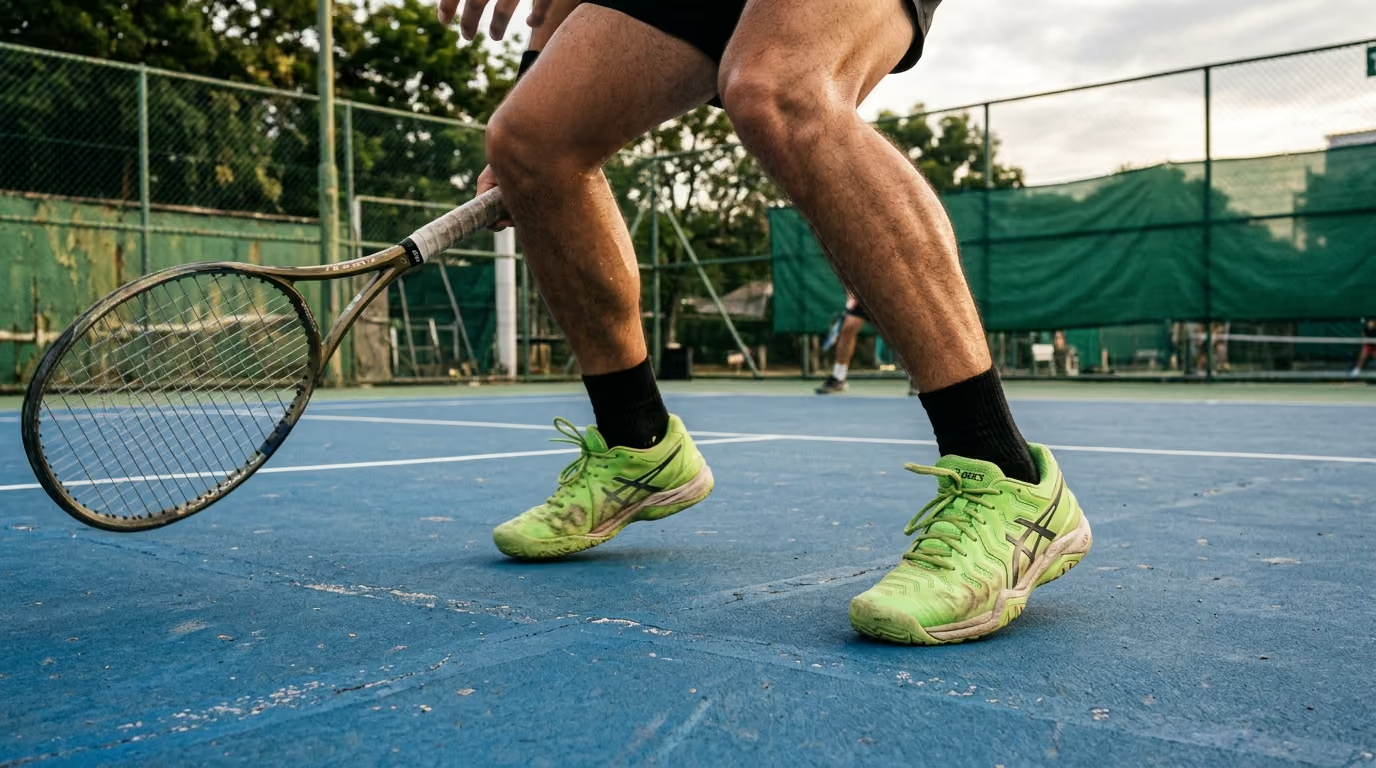
This evidence-based guide will teach you how to effectively recover from racquet sports using practical strategies tailored to your budget and lifestyle.




Many court athletes finish a long session and immediately look for a quick fix for their aching legs and stiff backs. You might wonder if buying an expensive massage gun or sitting in an ice bath is the best way to return to the court tomorrow.
If you want to recover quickly and play racquet sports for years to come, the answer does not lie in costly gadgets. True physical recovery depends on a solid foundation of sleep extension, structured training volume, proper nutrition, and low-intensity movement. While specialized devices can provide temporary comfort, they are optional additions to these fundamental lifestyle habits.
To maintain your physical capabilities over time, it helps to understand how different recovery tools actually work. This guide compares the most common recovery strategies using current sports science, helping you build a practical routine that fits your budget and lifestyle.
Court sports require a unique mix of physical and mental systems. Unlike steady-state running or cycling, sports like tennis, pickleball, and padel demand constant change of direction. You must accelerate quickly, decelerate sharply, lunge, jump, and rotate your torso.
Every overhead smash, low volley, and lateral recovery step places high demands on your muscles and tendons. The sudden braking forces required to stop and change direction cause microscopic tears in your muscle fibers. This tissue damage leads to delayed onset muscle soreness, which often peaks two days after a hard match.
The physical strain is only one part of the equation. According to the 2018 consensus statement on recovery and performance in sport, high-intensity athletic play also causes central nervous system fatigue. This mental fatigue affects your reaction time, spatial awareness, and tactical decision-making.
For mature players, managing this total load is a core requirement for athletic longevity. If you do not allow your nervous system and muscles to recover, your movement quality will decline. This decline increases your risk of falls, joint strains, and chronic tendon irritation over time.
When planning your post-match routine, it is helpful to look at recovery as a pyramid. At the broad base are the foundational habits that yield the greatest benefits. As you move up the pyramid, the methods become more specialized, expensive, and individual.
To help visualize this, we can categorize recovery methods into four distinct tiers:
Many players make the mistake of using Tier Four tools while ignoring Tier One. Spending hundreds of dollars on compression boots will not save you from the physical effects of chronic sleep deprivation. To support healthy athletic longevity, always focus your time and energy on the base of the pyramid. You can read more about these foundational strategies in our guide to healthy aging and athletic longevity resources.
Sleep is the ultimate recovery behavior for racquet sports players. During deep sleep, your body releases growth hormone, which repairs damaged muscle fibers and strengthens tendons. At the same time, your brain processes motor skills, helping you store muscle memory from your practice sessions.
Because court sports require rapid visual processing and split-second tactical decisions, your brain is highly sensitive to sleep loss. Research on sleep interventions in athletes shows that extending your sleep can measurably improve both physical and cognitive performance. If you habitually sleep seven hours a night, aiming for an extra 45 to 110 minutes of sleep can make a significant difference on the court.
Napping is another effective tool to restore alertness and performance. A 20 to 90-minute nap in the early afternoon can counteract the physical deficits of a poor night of sleep. However, be careful with longer naps, as they can cause temporary grogginess before a match.
To optimize your sleep quality and duration, try these practical steps:
If you are dealing with chronic sleep issues like apnea or persistent insomnia, seek medical advice rather than relying on fitness supplements. No recovery device can replace the restorative power of natural, high-quality sleep.
Complete rest is not always the best way to recover from a hard match. Staying completely sedentary can cause your muscles to tighten and your joints to feel stiff the next morning. Gentle, low-intensity movement is often much more effective for restoring normal range of motion.
I remember finishing a tough two hour padel match on a cold Tuesday night and waking up the next morning feeling like my lower back was locked in concrete. For a long time, I just accepted this as the price of playing hard in my forties. But once I started spending just ten minutes on targeted hip mobility before heading to the club, the stiffness almost completely vanished. It taught me that we do not have to accept pain as a default state of aging.
Easy walking is one of the most practical active recovery options available. A relaxed, 15-minute walk increases blood circulation to your lower limbs without adding the high joint impact of running or playing. This increased blood flow helps flush out metabolic waste products and delivers fresh nutrients to your recovering tissues.
Active recovery should always be kept at a highly conversational intensity. If you are breathing heavily or feeling muscle fatigue during the activity, you are no longer recovering. Treat these sessions as gentle movement, not as an extra workout. You can find more detailed movement strategies in our library of recovery science resources.
After a high-volume match, you might notice that your hips feel tight and your shoulder rotation feels restricted. Targeted mobility work can help restore comfortable joint motion and prepare you for your next session. It is important to separate gentle mobility drills from aggressive, painful stretching.
Foam rolling is a popular self-massage tool that can temporarily reduce muscle stiffness and increase range of motion. Systematic reviews show that foam rolling for 90 to 120 seconds per muscle group is generally effective for flexibility. Unlike long-duration static stretching, foam rolling does not cause a decline in athletic power before play.
Professional massage is another highly valued recovery option. Research suggests that massage is one of the most effective tools for reducing subjective muscle soreness and mental fatigue. However, while massage can make you feel more comfortable, it has inconsistent effects on restoring objective muscle strength.
When using these tissue manipulation techniques, keep these guidelines in mind:
Remember that a temporary increase in joint range of motion is not a permanent cure for structural issues. If you are always tight, the issue may be a lack of underlying strength rather than a need for more rolling. For a deeper look at targeted exercises, check out our mobility and movement resources.
Compression garments and cold-water immersion are popular tools among tournament players who need to back up their performance on consecutive days. Both methods can help manage soreness, but they work through very different physiological mechanisms.
Compression socks and tights apply external pressure to your limbs, which assists with venous blood return to your heart. Meta-analyses show modest benefits of compression for strength recovery and reduced soreness between 2 and 24 hours after exercise. These garments are especially useful during long travel days after a tournament, as they help prevent leg swelling.
Cold-water immersion involves sitting in water that is 10 to 15 degrees Celsius for 10 to 15 minutes. This cold exposure constricts your blood vessels, reduces local inflammation, and numbs painful nerve endings. While cold plunges are excellent for reducing perceived muscle soreness, they do not automatically speed up the recovery of your explosive jumping or sprinting power.
In fact, immediate cold-water immersion can actually block the signals that tell your muscles to grow stronger after a workout. If your primary goal is to build long-term strength and muscle mass, you should avoid using ice baths immediately after your strength training sessions. Reserve cold exposure for times when immediate pain relief and short-term recovery are your top priorities, such as during a multi-day tournament.
Physical recovery cannot occur while your nervous system remains in a highly stimulated state. High-intensity competition triggers your sympathetic nervous system, commonly known as the fight-or-flight response. To begin the healing process, you must shift your body into a parasympathetic state, which is responsible for rest and digestion.
Quiet rest, deep breathing, and brief mindfulness practices can help facilitate this shift. A study on athletes found that just 15 minutes of guided mindfulness or quiet relaxation after hard training led to rapid parasympathetic reactivation, lowering heart rate and respiratory rate. These practices help quiet the mental buzz that often makes it hard to sleep after an evening match.
A simple post-match down-regulation routine can be highly effective:
This simple, cost-free practice can be done in the locker room or at home. It is a highly efficient way to begin your physical and mental recovery before you even sit down for a post-match meal.
The sports recovery industry is filled with high-priced gadgets, from inflatable recovery boots to personal infrared saunas and percussion massage guns. While these products can be highly appealing, scientific reviews often show that their benefits are mixed or limited.
Many of these devices provide a pleasant sensory experience but do not outperform simple, low-cost alternatives. For example, a standard foam roller can provide similar range-of-motion benefits to an expensive percussion massage gun. A short, easy walk and a warm bath can stimulate circulation just as effectively as a set of compression boots.
If you are considering investing in a high-end recovery device, ask yourself these five questions:
For the vast majority of recreational court players, investing in professional movement coaching, structured strength training, and high-quality court shoes will yield a much better return on investment than a collection of expensive recovery gadgets. You can read more about selecting appropriate health and fitness priorities in our player health articles.
The ideal recovery strategy is not identical for all court athletes. The physical demands of tennis, pickleball, and padel differ in subtle but important ways, requiring customized recovery priorities.
Tennis players often play long matches on hard surfaces, leading to high joint impact and eccentric leg fatigue. The large court dimensions require long, high-speed sprints and deep lateral lunges. Tennis recovery should prioritize lower-body strength preservation, thoracic rotation mobility for serving, and knee joint health.
Padel is played in a smaller, enclosed court, which means players face rapid, continuous changes of direction. The frequent overhead play places a high demand on the shoulder complex and the upper back. The constant crouched defensive positions can lead to lower back stiffness, making hip and lumbar mobility a top priority.
Pickleball is played on a smaller court, which reduces the need for long sprints but increases the demand for rapid reflex volleys and quick lateral steps. Injury data shows that pickleball injuries disproportionately affect players aged 60 to 79. In this age group, slips, trips, falls, and wrist fractures are particularly common. Pickleball players should focus on ankle stability, single-leg balance, reactive footwork, and wearing supportive court-specific footwear.
It is crucial to distinguish normal post-exercise soreness from a structural injury. While muscle soreness should gradually fade over two to three days, an injury requires professional medical care. You should consult a qualified healthcare provider if you experience any of the following warning signs:
Using passive recovery tools to mask persistent pain so you can keep playing is a dangerous habit. This approach can turn a minor, easily treatable strain into a chronic, long-term issue that keeps you off the court for months.
To help you apply these principles, here is a practical checklist of recovery actions you can implement this week:
For more information about our independent editorial platform and our commitment to research-led guidance, visit our about page. If you have specific questions or would like to get in touch with our team, you can reach out via our contact page.
Follow Evercourts for practical insights on tennis, pickleball and padel performance, movement, recovery and healthy ageing. Stay connected for new articles, research-led guidance and ideas to help you play well and keep playing for years.


Read practical guidance for better movement, smarter preparation and a game that keeps working for you.
explore the Blog