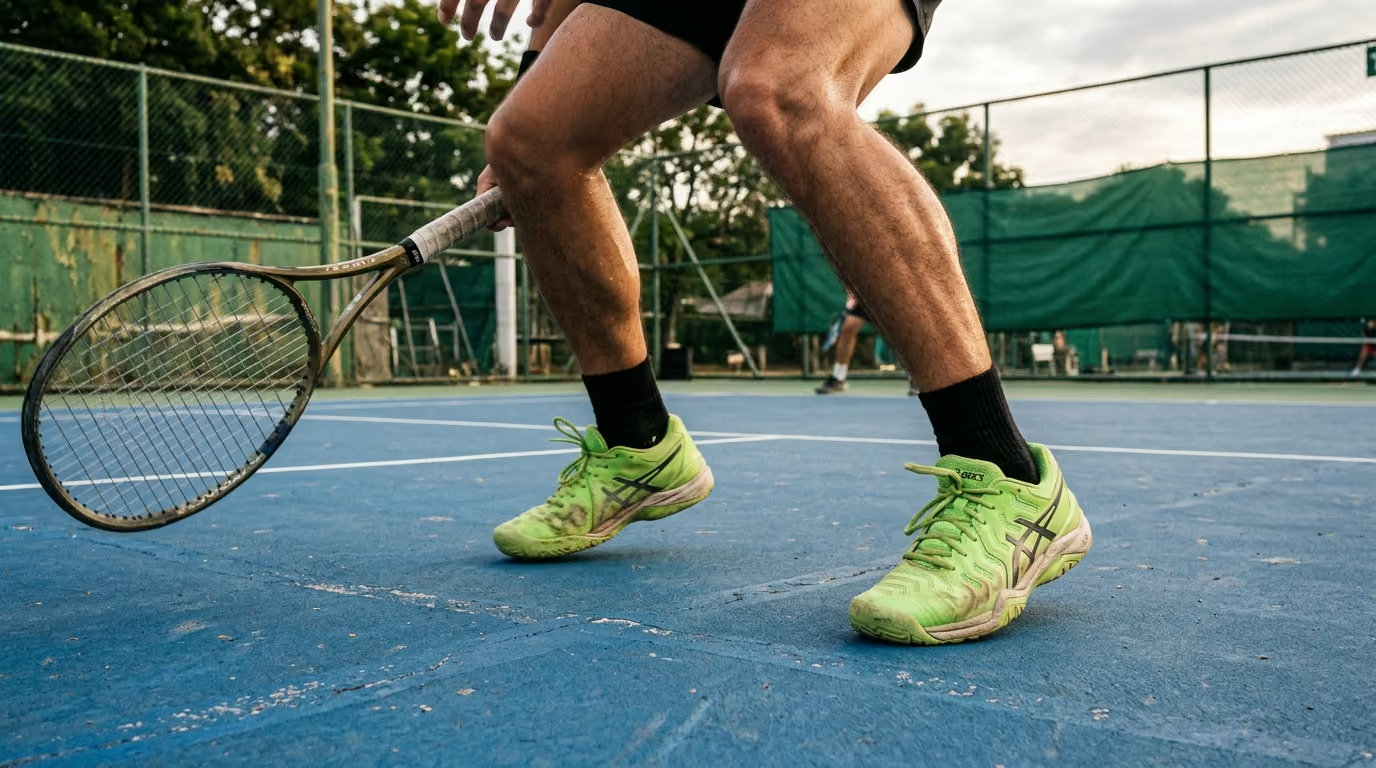
Racquet sports athletes can achieve optimal physical restoration and sustained peak performance by implementing a personalized recovery system.




Many competitive court players believe that the best way to recover from a grueling match is to do absolutely nothing. They lie on the couch, monitor their wearable devices, and wait for muscle stiffness to disappear. This passive approach often delays recovery, stiffens joints, and reduces your movement quality on the court.
Effective recovery for court athletes requires planned, low-intensity movement rather than total physical stillness. By strategically managing your training volume and choosing active recovery sessions, you can clear metabolic waste, maintain joint mobility, and return to competitive play faster. This guide outlines how to build a personalized recovery system that supports your physical capabilities and helps you play for years to come.
Understanding how to balance court time with physiological restoration is essential for athletic longevity. Whether you are preparing for a weekend singles tournament, managing a busy league schedule, or navigating age-related physical changes, a structured recovery plan is your most valuable asset.
To design an effective recovery plan, you must understand the difference between active recovery, passive rest, and complete inactivity. Active recovery refers to low-intensity, low-cost movement that promotes circulation and joint range of motion without adding physical stress. Passive rest includes activities like sleep and quiet relaxation. Complete inactivity is the total absence of physical movement, which is necessary during acute illness or severe injury.
For normal post-match soreness, active recovery is generally superior to lying still. Low-intensity movement increases blood flow to fatigued muscles. This process delivers oxygen and nutrients to damaged tissues while removing metabolic waste products. According to a systematic review published in 2022, active recovery protocols are associated with reduced muscle soreness, better strength preservation, and lower inflammatory markers after exercise-induced muscle damage.
I remember finishing a tough two hour padel match on a cold Tuesday night and waking up the next morning feeling like my lower back was locked in concrete. For a long time, I just accepted this as the price of playing hard in my forties. But once I started spending just ten minutes on targeted hip mobility before heading to the club, the stiffness almost completely vanished. It taught me that we do not have to accept pain as a default state of aging.
Scientific research shows that complete inactivity can lead to joint stiffness and muscle tightness. However, the evidence regarding physical therapies is highly varied. While some studies suggest benefits for localized soreness, an umbrella review in sports medicine highlighted that many physical recovery tools show mixed or low-quality evidence. Therefore, active movement remains the most reliable, low-cost method to restore movement quality.
Understanding where you sit on the fatigue spectrum is essential. Sports scientists categorize physical fatigue into three distinct phases:
By treating recovery as an active input, you can stay within the functional overreaching phase. This allows you to stimulate physical adaptation without crossing into chronic exhaustion.
To plan your recovery, you must first measure the physical demands of your play. Sport science divides these demands into external load and internal load. Managing both is crucial to prevent chronic fatigue and support long-term athletic longevity.
External load is the objective work you perform on the court. You can track external load by monitoring specific match variables. These variables include:
Internal load is the physical and psychological stress your body experiences as a result of that external work. Two players can complete the exact same match but experience vastly different internal loads. A mature player returning from a knee injury will carry a much higher internal load than a highly conditioned teenager. You can track your internal load by monitoring daily subjective markers:
When your internal load consistently outpaces your recovery capacity, you develop a recovery debt. This debt is the accumulated gap between the physical stress you encounter and the recovery window you allow.
A recovery debt often manifests as deteriorating sleep, persistent muscle soreness, and a decline in coordination. Monitoring these trends over several days is far more valuable than focusing on a single high-effort day.
A sudden increase in playing volume is one of the most common causes of soft-tissue injuries. To avoid these spikes, you can use a sports science concept known as the acute to chronic workload ratio. This ratio compares your recent physical work to your historical capacity.
Your acute workload is the total volume of play completed during the past seven days. This includes all matches, practice sessions, and gym workouts. Your chronic workload is your average weekly volume over the past twenty-eight days. This represents your baseline physical fitness and tissue tolerance.
To calculate your ratio, divide your acute workload by your chronic workload. For example, if you averaged 4 hours of play per week for the last month, your chronic workload is 4. If you play 6 hours this week, your acute workload is 6. Dividing 6 by 4 gives you a ratio of 1.5.
Sports medicine research indicates that keeping your ratio between 0.8 and 1.3 generally minimizes injury risk. A ratio of 1.5 or higher represents a rapid spike in training volume.
This sudden increase can overload your tendons and muscles before they have time to adapt. While this ratio is a helpful guide, it should not replace clinical judgment or how your joints actually feel.
Using this ratio helps you plan your tournament schedule. If you know you have a high-volume weekend tournament coming up, you must gradually build your chronic workload in the preceding weeks.
Trying to play a six-match tournament after weeks of minimal court time creates a severe workload spike. This spike is a primary trigger for tendon irritation and muscle strains.
Active recovery sessions should be designed to restore movement quality without adding to your physiological debt. These sessions should feel easy and leave you more mobile than when you started. If a recovery session causes cardiovascular fatigue or muscle burning, it is too intense.
You can learn more about these methods by reading our recovery science resources. The goal is to choose movements that support circulation and joint lubrication.
This routine is designed for the immediate period after a competitive match. It helps transition your nervous system from a high-stress state to a restful state.
Use this protocol the morning after a demanding match to address joint stiffness and restore soft-tissue pliability.
Applying recovery concepts to real-world competitive play requires careful scheduling. Different playing scenarios present unique physical challenges. Below are three common case patterns with practical recovery schedules.
In this scenario, a player faces four matches over three days. The primary physical risks include rapid glycogen depletion, compressed recovery windows, and accumulating lower-body stiffness.
This player is a recreational athlete who plays competitive matches twice a week. They have good baseline fitness but experience joint stiffness and need longer recovery times after high-intensity play.
This pattern is for players undergoing a multi-week training phase to prepare for a major competitive season.
To protect your joints during these training blocks, consider incorporating injury prevention resources into your weekly schedule.
While all racquet sports share common physical demands, each sport places unique stresses on your body. You must tailor your recovery to the specific movement patterns of your chosen game.
Tennis involves long rallies, heavy rotational forces on the spine, and explosive decelerations. The service motion places immense stress on the shoulder, elbow, and abdominal muscles. Playing on hard courts increases the impact forces on your knees, hips, and lower back.
If you play tennis, prioritize thoracic spine mobility, hip flexor flexibility, and rotator cuff stability. You can find detailed advice on managing these demands in our collection of tennis articles.
Pickleball is characterized by rapid, short-distance reactions and a high volume of shallow lunges. The game requires constant wrist and forearm activity to control the paddle during fast exchanges near the net.
This repetitive gripping and hitting can lead to lateral epicondylitis, commonly known as tennis elbow. Pickleball players should focus on forearm stretching, wrist extensor strengthening, and calf mobility to support the achilles tendon. To explore more about this sport, browse our pickleball articles.
Padel matches are fast-paced and require frequent overhead actions, jumping, and explosive changes of direction off the glass walls. The sport places substantial eccentric stress on the calves and Achilles tendons due to the frequent vertical jumping.
Padel players must prioritize shoulder upward rotation, calf flexibility, and ankle stability in their recovery plans. For targeted strategies, refer to our dedicated padel articles.
Many players fall victim to common recovery misconceptions. These errors can slow your progress and increase your physical fatigue.
A major pitfall is letting a wearable device dictate your daily physical activity. Fitness trackers use heart rate variability and sleep data to generate a daily readiness score. While these scores can show helpful long-term trends, they are not absolute truths.
If your tracker shows a perfect readiness score but your shoulder feels painful, you must prioritize your physical sensations. Never override localized pain or joint stiffness to satisfy an algorithm.
Another frequent error is mistaking active recovery for a high-intensity workout. Some players plan a recovery session but end up running at a high heart rate or lifting heavy weights.
This extra work adds to your physical fatigue and increases your recovery debt. If a recovery session causes you to sweat heavily, it is no longer serving its primary purpose.
Finally, many athletes rely on passive recovery tools while ignoring their lifestyle foundations. Massage guns, compression boots, ice baths, and foam rollers can temporarily reduce muscle soreness.
However, scientific evidence indicates these tools have a minimal impact on deep muscle repair. They cannot compensate for poor sleep, inadequate nutrition, or chronic overplaying.
Prioritize sleep, hydration, and progressive load management before investing in expensive recovery products.
No recovery plan can succeed without a strong foundation of sleep and nutrition. These two elements are the primary drivers of tissue repair, hormonal balance, and central nervous system restoration.
Sleep is the most powerful recovery tool available to athletes. During deep sleep, your body releases growth hormone, which stimulates muscle growth and tissue repair. Expert guidelines from sleep and sports medicine consensus groups recommend that healthy adults obtain seven to nine hours of sleep per night.
For athletes undergoing intense training, this requirement may increase. It is important to distinguish between sleep opportunity and actual time asleep. If you are in bed for eight hours but lie awake for two, your actual sleep time is only six hours.
To optimize your sleep, maintain a consistent wake time, keep your bedroom cool and dark, and limit caffeine intake in the afternoon. If you experience a night of poor sleep, you do not need to panic.
One poor night has a minimal impact on physical performance. However, consecutive nights of restricted sleep will reduce your coordination, slow your reaction times, and increase your susceptibility to injury.
To support athletic longevity, your diet must provide sufficient energy, carbohydrates, and protein. If you are interested in nutrition for active lifestyles, you can find helpful guidance in our healthy aging and athletic longevity resources.
Carbohydrates are your body's primary fuel source during high-intensity racquet sports. After a long match, your muscle glycogen stores are significantly depleted.
The International Society of Sports Nutrition recommends consuming approximately 1.2 grams of carbohydrates per kilogram of body weight per hour for rapid glycogen restoration. If you have another match within twenty-four hours, prioritizing quick carbohydrate intake is essential.
Protein is required to repair the microscopic muscle damage caused by intense movement. The International Society of Sports Nutrition recommends a daily protein intake of 1.4 to 2.0 grams per kilogram of body weight for active individuals.
Rather than consuming all your protein at dinner, distribute it evenly throughout the day. Consuming twenty to forty grams of high-quality protein every three to four hours optimizes muscle protein synthesis.
Playing racquet sports in hot and humid environments creates significant cardiovascular and thermal stress. Dehydration reduces your blood volume, which forces your heart to work harder to pump blood to your working muscles and skin.
To manage hydration, track your fluid loss. Weigh yourself before and after a match. For every kilogram of body weight lost during play, consume approximately 1.5 liters of fluid to fully restore hydration.
When playing in high heat, your sweat contains substantial amounts of sodium. Replace this lost sodium by drinking electrolyte beverages rather than plain water. This practice helps prevent hyponatremia, a dangerous condition caused by excessively low blood sodium levels.
Competing in tournaments often requires traveling to new locations. Travel fatigue and jet lag are distinct physical issues that require different management strategies.
Travel fatigue is the general physical and mental exhaustion caused by the logistics of travel, such as sitting in cramped spaces, carrying heavy luggage, and experiencing disrupted schedules. You can minimize travel fatigue by staying hydrated during your journey, moving your limbs periodically, and packing familiar foods.
Jet lag is a circadian rhythm disruption caused by rapidly crossing multiple time zones. It can cause daytime fatigue, sleep disturbances, gastrointestinal issues, and reduced physical coordination. To manage jet lag, use timed light exposure to shift your internal clock.
If you travel east, seek bright morning light and avoid evening light. If you travel west, seek evening light and avoid early morning light.
You may also consider the cautious, individualized use of melatonin under the guidance of a medical professional.
When you arrive at a new destination, make your first court session short and low-intensity. Do not test your maximal speed, serving velocity, or lifting capacity while experiencing travel fatigue. Use your initial session to restore joint mobility, practice basic footwork, and adapt to the local court conditions.
A common mistake among aging court players is abandoning strength training during busy competitive periods. They believe that saving all their energy for the court is the best way to prevent injuries. However, chronic deconditioning actually increases your vulnerability to joint pain and tendon issues.
The American College of Sports Medicine recommends that adults perform resistance training for all major muscle groups two to three days per week. For court athletes, strength training maintains the muscular capacity required to decelerate your body and protect your joints.
The goal during a busy playing season is strategic deloading, not complete deconditioning.
During weeks with heavy match play, reduce your strength training volume by fifty percent. Keep the physical intensity moderately high, but perform fewer sets and repetitions. Focus on exercises that target your core, hips, calves, and rotator cuff muscles.
During the off-season or periods of lower match volume, you can gradually increase your strength training weight and volume to rebuild your physical capacity.
Maintaining your strength is especially important for masters athletes. Research on older competitors indicates that systematic resistance training preserves muscle mass, bone density, and tendon stiffness.
Age-related declines in athletic performance are often accelerated by sedentary behavior rather than biological aging alone. By keeping a small, consistent dose of strength training in your weekly routine, you support your athletic longevity and remain physically prepared for the demands of court sports.
A recovery plan is designed to manage normal exercise-induced fatigue and muscle soreness. It is not a tool to self-treat clinical injuries. You must be able to recognize the red flags that indicate a need for professional medical evaluation.
Consult a qualified healthcare professional, such as a physical therapist, sports physician, or orthopedic specialist, if you experience any of the following symptoms:
Working with a healthcare professional who understands the specific movement demands of tennis, pickleball, and padel is highly beneficial. They can help you identify underlying movement compensations, design a targeted rehabilitation plan, and guide your safe return to competitive play.
Developing a personalized recovery plan is an investment in your physical capabilities and your enjoyment of racquet sports. By treating recovery as a planned input, you can play consistently, perform at your best, and enjoy the game for years to come.
Follow Evercourts for practical insights on tennis, pickleball and padel performance, movement, recovery and healthy ageing. Stay connected for new articles, research-led guidance and ideas to help you play well and keep playing for years.


Read practical guidance for better movement, smarter preparation and a game that keeps working for you.
explore the Blog