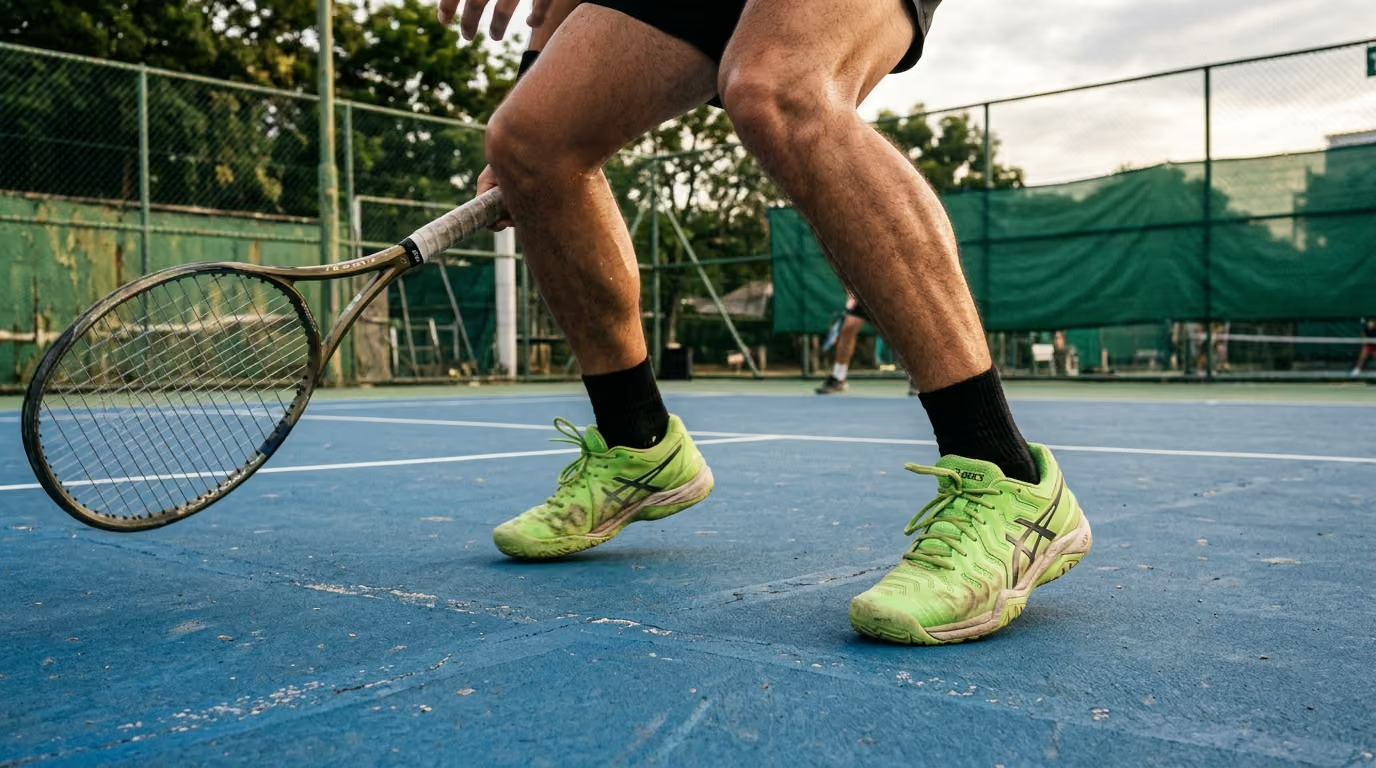
While many believe recovery supplements are essential for racquet sports, an evidence-based approach prioritizes whole foods and hydration before targeted supplements.




Recovery supplements are concentrated dietary products designed to support physical restoration after intense exercise. They are not magic solutions that can replace adequate sleep, balanced nutrition, and progressive training. For racquet sports players, an evidence-based recovery strategy prioritizes whole foods and structured hydration before considering targeted, third-party-tested supplements to address specific physiological gaps.
In the fast-moving market of sports nutrition, it is easy to confuse marketing claims with established physiological facts. Players are often inundated with advertisements for powders, pills, and drinks that promise to erase fatigue. Understanding what these products can and cannot do is essential for protecting both your wallet and your health. This comprehensive guide evaluates recovery supplements through a scientific lens, helping you make informed decisions for your training and long-term athletic longevity.
To build an effective recovery routine, we must first look at how clinical research evaluates these products. The scientific consensus is clear. The International Olympic Committee suggests completing a comprehensive nutritional assessment before using any supplement. This organization emphasizes that player health should always take priority over potential performance benefits.
The most useful distinction you can make is between recovery support and performance enhancement. A product may help restore fluid balance, carbohydrate stores, or protein intake without directly improving your next match. Conversely, another product, such as caffeine or creatine, may primarily affect your performance capacity rather than muscle repair.
For racquet-sport athletes, recovery is a complex challenge. Sports like tennis, pickleball, and padel combine repeated high-intensity efforts, long match durations, and heat exposure. They also require intense technical concentration, heavy eccentric loading, and sometimes short intervals between matches.
To determine if a supplement is worth your time, evaluate it against these five questions:
Scientific research warns us that recovery is not a single biological process. True recovery refers to the restoration of several distinct systems. These include fluid balance and plasma volume, carbohydrate stores, muscle protein turnover, neuromuscular performance, perceived fatigue, sleep, joint tolerance, and cognitive alertness.
A product that reduces soreness is not necessarily restoring muscle function. A product that improves a laboratory marker like creatine kinase is not necessarily improving your next-match performance. For instance, recent reviews of tart cherry research illustrate this exact problem. Favorable effects are more common for perceived soreness than for strength or power, and findings vary widely based on population, protocol, and timing.
Hydration is one of the most critical aspects of court performance. Tennis and other racquet sports involve long matches, repeated changeovers, outdoor heat, protective clothing, and substantial sweat losses. Without a structured plan, dehydration can quickly impair your reaction time, footwork, and decision-making.
A tennis nutrition review recommends consuming approximately 200 milliliters of fluid at each changeover in mild-to-moderate temperatures below 27 degrees Celsius. In hotter conditions, your intake must increase. The United States Tennis Association provides a broader practical range of 4 to 16 ounces at each changeover, which equates to roughly 32 to 60 ounces per hour.
These figures are not universal prescriptions. Your individual sweat rate, body size, humidity, court surface, match intensity, and access to shade all influence your fluid requirements.
After substantial sweat loss, your recovery plan must focus on replacing both water and lost sodium. Tennis recovery guidance recommends replacing 1 to 1.5 liters of sodium-containing fluid for each kilogram of body mass lost. Sodium improves the retention of ingested fluid, supporting a more complete restoration of fluid balance compared with plain water.
You can use a simple field method to estimate your fluid needs. Weigh yourself before and after selected training sessions. Account for any fluid you consumed and urine you produced during the session. Use this result to estimate your average sweat loss.
When choosing hydration products, match the product to the specific problem:
Use a sodium-containing fluid. This helps retain water in your system and prevents hyponatremia.
Choose a drink that contains both fluid and carbohydrates. This maintains energy levels and hydration simultaneously.
Water and normal meals are usually sufficient. There is no need for specialized sports drinks in low-demand situations.
If you are eating a balanced meal shortly after playing, a specialized recovery drink adds little value. The sodium and water from your food will naturally rehydrate your body.
An electrolyte tablet provides sodium but little or no carbohydrate. If you use tablets, you may still need food or another carbohydrate source to replenish your energy. Overusing highly concentrated sports drinks can produce gastrointestinal discomfort, while drinking excessive plain water during prolonged exercise can dilute your blood sodium to dangerous levels. Hydration should always be based on actual sweat loss rather than a generic slogan to drink as much as possible.
While all racquet sports share some physical demands, each sport has distinct movement patterns and durations. These differences change how you should approach your post-match recovery and supplement choices.
Tennis matches have no time limit and can easily last over two hours. The sport features long, high-intensity rallies on large courts, demanding high cardiovascular output and significant glycogen depletion. Tennis players require substantial carbohydrate restoration to recover. Because of the long durations in outdoor environments, tennis players also face the highest risk of severe dehydration and electrolyte imbalance.
Padel is played on a smaller, enclosed court, which changes the physical demands. The game requires explosive, multi-directional acceleration, frequent overhead motions, and constant rotational force. The hard concrete or glass walls require rapid deceleration and reactive footwork. This movement pattern places immense eccentric load on the lower body and calf muscles. Padel players often benefit from targeted mobility and movement resources to manage localized muscle tightness.
Pickleball is played on a smaller court, which generally results in lower peak cardiovascular strain per rally. However, tournament play often involves playing four to six matches in a single day. This creates a unique cumulative fatigue. Pickleball players spend a large amount of time in a low, bent-over athletic stance, leading to high isometric stress on the quadriceps and lower back.
For pickleball players, the recovery challenge is logistical. You must maintain energy and focus across several hours of intermittent play. Fast-digesting sports foods, such as carbohydrate gels or electrolyte tablets, are highly useful between matches. They provide quick energy without causing the stomach fullness that can hinder your movement on court.
If you choose to use supplements, it is wise to focus on products with strong scientific backing. The International Society of Sports Nutrition classifies several ingredients as highly effective for training adaptation and recovery.
This is one of the most thoroughly researched supplements in sports nutrition. It increases high-intensity exercise capacity and supports muscle adaptations during training. Creatine is highly relevant to racquet sports because repeated accelerations, jumps, lunges, and high-intensity rallies involve intermittent bursts of power. Research from the National Institutes of Health confirms that creatine is helpful for repeated short bursts of intense activity, though it has little value for long-distance endurance exercise.
Some players avoid creatine because they fear weight gain. Creatine can cause modest body-mass increases through water retention. This can be either acceptable or inconvenient depending on your movement demands and fitness level. If you decide to use creatine, a standard protocol is 3 to 5 grams daily to maintain muscle stores. This should be viewed as a daily habit to support training adaptation rather than an acute treatment to relieve soreness immediately after a match.
Caffeine is primarily a performance and alertness aid rather than a recovery supplement. It can improve exercise performance, endurance, and reaction times. The International Society of Sports Nutrition identifies 3 to 6 milligrams of caffeine per kilogram of body mass as an effective range. Higher doses do not provide additional benefit and often increase adverse effects.
The National Institutes of Health lists insomnia, restlessness, nausea, and rapid heart rate as common side effects of excessive caffeine. For racquet sports, caffeine is useful when your primary problem is mental fatigue, perceived exertion, or late-match concentration. However, it can be highly counterproductive if you are sensitive to stimulants, already sleep-deprived, or competing late in the evening. A stimulant that helps you get through an evening match but delays your sleep will ultimately worsen your recovery over the following days.
After intense court sessions, combining carbohydrates and protein is highly effective for recovery. The International Society of Sports Nutrition recommends consuming approximately 1 gram of carbohydrate per kilogram of body mass and 0.5 grams of protein per kilogram of body mass after intense exercise. This should be followed by a balanced, high-carbohydrate meal within two hours.
Sufficient daily protein is essential for tissue repair and training adaptation. A daily intake of 1.4 to 2.0 grams of protein per kilogram of body mass is a useful target for active individuals. To learn more about meeting these requirements through convenient options, read our recovery science resources.
Protein powders are highly convenient, especially when a player has no appetite after a late-night match. A simple whey or plant-based protein shake can help you reach your daily protein target. However, a precisely timed shake cannot compensate for inadequate daily food intake. Focus on your total daily nutrition first, then use sports foods to fill the gaps.
To help you calculate your basic daily nutrient needs, follow these steps:
Divide your weight in pounds by 2.2. For example, a 165-pound player weighs 75 kilograms.
Multiply your weight in kilograms by 1.4 and 2.0. A 75-kilogram player needs between 105 and 150 grams of protein per day.
Multiply your weight in kilograms by 1.0. A 75-kilogram player should target 75 grams of carbohydrates immediately after a highly demanding session.
Multiply your weight in kilograms by 0.5. A 75-kilogram player should target roughly 37.5 grams of protein alongside their carbohydrates.
Many players turn to natural anti-inflammatory supplements to manage post-match soreness and joint discomfort. Delayed-onset muscle soreness commonly develops 24 to 72 hours after unfamiliar or highly demanding exercise. While uncomfortable, soreness is a poor measure of actual tissue damage, and reducing soreness does not automatically mean your muscles have recovered their strength.
Tart cherry products are widely marketed for soreness and inflammation. A 2021 systematic review and meta-analysis found a small reduction in muscle soreness after tart cherry consumption. The study reported a small effect size of -0.44. The researchers noted small reductions in selected inflammatory markers, such as C-reactive protein, but found no significant effect on creatine kinase.
More recent evidence remains highly mixed. A 2026 review reported that favorable findings for tart cherry are more common for subjective soreness and perceptual outcomes. In contrast, findings for objective strength and power recovery are highly variable and condition-dependent. Another recent meta-analysis characterized the overall evidence for tart cherry as heterogeneous and low-to-moderate certainty.
Curcumin, the active compound in turmeric, also has plausible anti-inflammatory mechanisms. Some meta-analyses report reductions in muscle soreness and creatine kinase. However, these studies are heavily influenced by the specific formulation, the dosage, and the presence of absorption-enhancing ingredients like black pepper extract. Favorable findings are often observed in sedentary individuals undertaking acute exercise, which may not generalize to well-trained racquet-sport athletes.
Before using anti-inflammatory supplements, consider the role of natural inflammation. Acute inflammation is a vital signal that triggers your body to adapt, rebuild, and grow stronger. Broadly suppressing this inflammation with high doses of antioxidants or anti-inflammatory supplements can blunt these positive training adaptations.
Instead of relying on high-dose supplements, a stronger practical approach is to obtain antioxidants naturally. Eating a diet rich in fruits, vegetables, legumes, nuts, and seeds provides these compounds in balanced amounts. This supports healthy aging and athletic longevity without disrupting your body's natural recovery processes.
High-quality sleep is the most powerful recovery tool available to athletes. No supplement can compensate for chronic sleep deprivation. When evaluating sleep-related supplements, we must first look at why you might be struggling to rest.
Common sleep disruptors include insufficient time allocated to sleep, irregular competition schedules, and travel. Excessive late-day caffeine, pre-match anxiety, and physical pain also play major roles. Before adding a supplement, establish a consistent sleep schedule and reduce late-day stimulant use. Keep your sleeping environment cool, dark, and quiet.
The National Institutes of Health provides detailed fact sheets covering the safety and efficacy of common sleep aids.
Magnesium is involved in muscle relaxation and nervous system regulation. While a deficiency can impair sleep, supplementing with magnesium is unlikely to improve sleep quality if your dietary intake is already adequate.
This hormone can help regulate your sleep-wake cycle, making it useful for managing jet lag or sudden schedule changes. However, it does not improve overall sleep quality or recovery for athletes on a normal schedule.
A deficiency in Vitamin D is associated with poor sleep quality and impaired muscle recovery. Correcting a verified deficiency under medical supervision can support overall health, but taking megadoses will not provide extra benefits.
When it comes to joint comfort, collagen and gelatin are popular choices. Some research suggests that consuming 10 to 15 grams of collagen or gelatin alongside 50 milligrams of Vitamin C roughly 40 to 60 minutes before exercise may support tendon health. This protocol is thought to increase collagen synthesis in connective tissues, making it a useful tool during rehabilitation.
However, we must distinguish between symptom relief, structural changes in cartilage, and active injury prevention. There is no strong evidence that collagen supplements can prevent joint injuries or reverse existing joint degeneration on their own. If you suffer from persistent joint pain or swelling, explore our injury prevention resources to learn about proper training load management and physical conditioning.
Many players make simple, avoidable mistakes when incorporating supplements into their recovery routines. These errors can waste money and, in some cases, slow down physical progress.
No pill or powder can replace the restorative power of a solid night of sleep and balanced meals. A player who sleeps five hours a night and eats poorly will not find recovery in a tub of amino acids.
Many popular recovery drinks contain dozens of ingredients. These proprietary blends often contain tiny, ineffective doses of each ingredient. It is also difficult to identify which ingredient is causing a beneficial effect or an adverse reaction.
As discussed, suppressing all inflammation can hinder your body's natural adaptation to exercise. Unless you are in the middle of a multi-day tournament where immediate comfort is the priority, allow your body to process the stress of play naturally.
Caffeine remains in your system for several hours. Consuming pre-workout drinks before an evening match is a highly common cause of post-match insomnia, which directly ruins your recovery.
I remember finishing a tough two hour padel match on a cold Tuesday night and waking up the next morning feeling like my lower back was locked in concrete. For a long time, I just accepted this as the price of playing hard in my forties. But once I started spending just ten minutes on targeted hip mobility before heading to the club, the stiffness almost completely vanished. It taught me that we do not have to accept pain as a default state of aging. Supplements cannot substitute for daily movement preparation and functional strength.
To help you build a safer, more effective routine, use this practical supplement checklist before making a purchase:
Dietary supplements are not regulated as strictly as prescription medications. In many regions, manufacturers do not have to prove a product is safe or effective before selling it. This lack of oversight creates a significant risk of contamination and mislabeling.
The United States Anti-Doping Agency warns that dietary supplements are not risk-free. Some products contain hidden ingredients that are not listed on the label. The Food and Drug Administration has identified more than a thousand products marketed as supplements that contain hidden drugs and chemicals. These contaminants include prescription-drug ingredients, banned substances, and untested active chemicals.
The FDA has also issued warnings about products containing DMAA, a powerful stimulant. DMAA can elevate blood pressure, leading to cardiovascular problems such as shortness of breath, chest tightness, and even heart attacks.
Highly risky product categories include:
Competitive athletes must understand the concept of strict liability. Under anti-doping regulations, you are solely responsible for any substance found in your body, regardless of how it got there. A contaminated supplement is not an acceptable excuse for a positive drug test.
To minimize your risk, only purchase products that have been tested by an independent third-party certification program. The United States Anti-Doping Agency identifies NSF Certified for Sport as a highly reliable program for reducing supplement-related risks. Other recognized certification bodies include Informed Choice and Cologne List.
Always verify that the exact product, flavor, and lot number are listed on the certifier's database. Do not assume that a brand is safe simply because one of its other products is certified. Keep your purchase records and the original container in case you ever need to verify the batch history.
While minor muscle soreness is a normal part of training, certain physical symptoms require professional attention. Self-treating persistent pain or chronic fatigue with recovery supplements can delay proper diagnosis and worsen your condition.
You should consult a qualified healthcare provider, such as a sports physician or physical therapist, if you experience any of the following warning signs:
If a knee, ankle, or shoulder feels unstable, catches, or locks during movement, this indicates a potential structural issue that supplements cannot fix.
Swelling that lasts for more than 48 hours after a match is a sign of localized tissue stress or injury.
Dull muscle soreness is common, but sharp pain or tingling sensations that radiate down your limbs require professional medical assessment.
Feeling constantly exhausted despite adequate sleep, rest, and nutrition can indicate a nutrient deficiency, hormonal imbalance, or an underlying medical condition.
If you experience chest tightness, rapid or irregular heartbeats, severe dizziness, or persistent gastrointestinal distress after taking a supplement, stop using it immediately and seek medical advice.
Your primary healthcare provider can perform blood tests to check for specific nutrient deficiencies, such as low iron or Vitamin D. Correcting a diagnosed deficiency under medical supervision is far more effective than self-prescribing random supplements. If you need assistance with training design, physical conditioning, or injury rehabilitation, explore our strength and conditioning resources for evidence-based guidance.
Yes, creatine is safe and effective for healthy adults of all playing levels. It supports the short, explosive movements required in pickleball, such as quick lunges and rapid directional changes. However, if you only play casually once a week, you can easily meet your recovery needs through balanced daily meals without needing to supplement.
Electrolyte tablets are excellent for replacing lost sodium without adding extra calories or carbohydrates. They are ideal for short, sweaty practices or if you plan to eat a full meal soon after playing. Traditional sports drinks are better suited for long, intense matches where you need both hydration and fast-acting carbohydrates to maintain your energy levels.
No supplement can prevent tennis elbow on its own. Tennis elbow is typically an overuse injury caused by repetitive wrist extension, poor technique, or sudden increases in training volume. While collagen may support tendon rehabilitation when paired with targeted loading exercises, the most effective prevention strategies are proper technique, progressive training, and regular forearm strengthening.
It is generally best to avoid high-dose antioxidant supplements, such as Vitamin C and E pills, immediately after training. These high doses can blunt the natural oxidative stress that signals your muscles to adapt and grow stronger. Instead, focus on rehydrating and eating antioxidant-rich whole foods, like berries, leafy greens, and nuts, which support recovery naturally.
Follow Evercourts for practical insights on tennis, pickleball and padel performance, movement, recovery and healthy ageing. Stay connected for new articles, research-led guidance and ideas to help you play well and keep playing for years.


Read practical guidance for better movement, smarter preparation and a game that keeps working for you.
explore the Blog