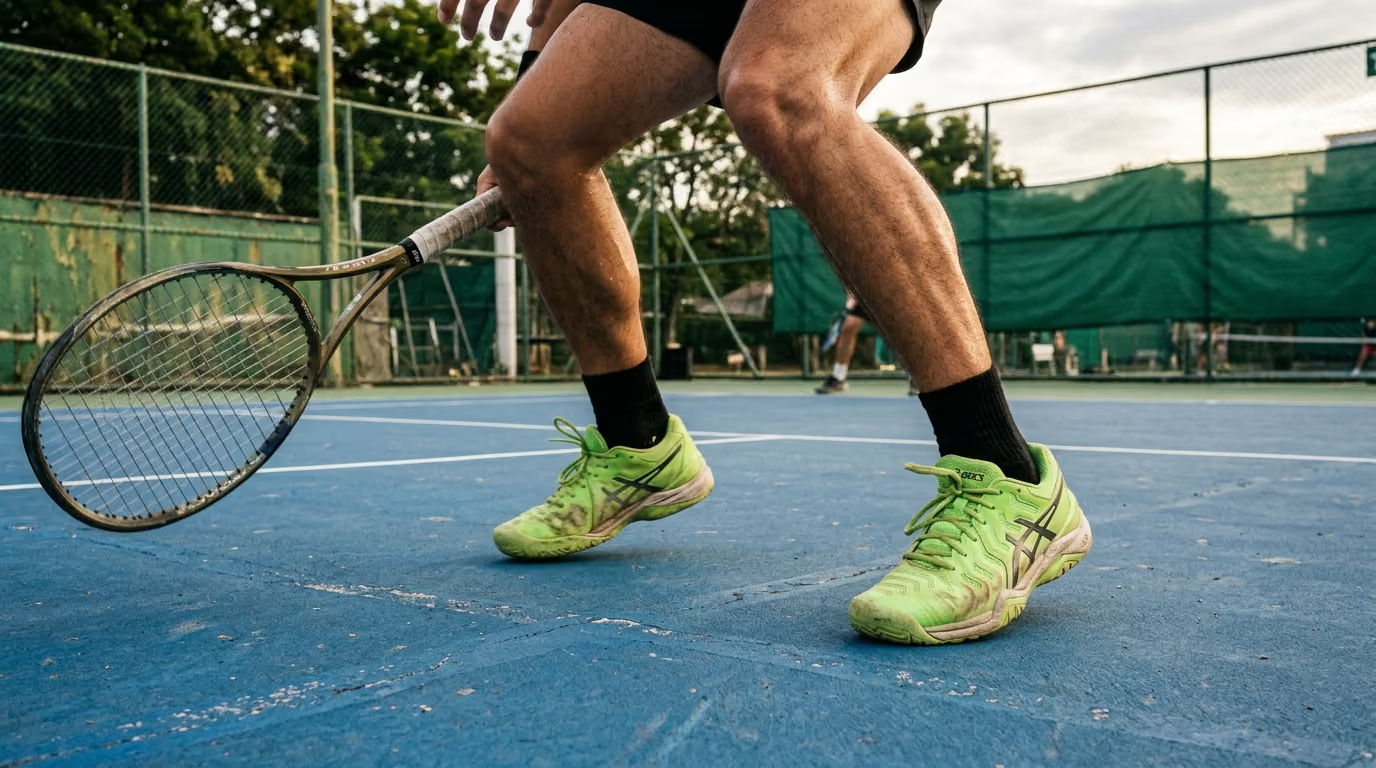
Repeat-sprint conditioning relies on structured bursts and clean movement rather than exhausting runs to build long-term speed for tennis, pickleball, and padel.




Repeat-sprint training for court sports is not about running until you collapse. It is not a test of mental toughness designed to push your lungs to their absolute limit. Instead, it is a structured method of developing your body's ability to produce and repeat short, explosive movements with clean technique. This resource provides a comprehensive guide to building this capability safely, ensuring you can play tennis, pickleball, or padel with confidence and longevity.
By understanding how to structure your training, you can improve your on-court agility without overstressing your knees, hips, and lower back. We will look at how to balance intensity, manage recovery intervals, and adapt your conditioning to your specific racquet sport. The goal of our team at the Evercourts platform is to help you maintain your physical capabilities so you can stay competitive on the court for years to come.
Repeat-sprint ability is the physical capacity to execute successive short, high-intensity accelerations with brief, incomplete recovery periods while maintaining athletic movement quality. For tennis, pickleball, and padel players, this capacity is far more critical than straight-line top speed because court matches are defined by sudden, short bursts of directional changes rather than long sprints. Focusing on this specific quality allows mature players to protect their joints, maintain coordinated movement under pressure, and secure their long-term participation on the court.
To understand why this matters, we must look at how court sports are played. A typical point in tennis, pickleball, or padel involves several quick steps to reach the ball, a balanced stroke, and a rapid recovery back to a central position. These sequences rarely last longer than ten seconds, but they occur repeatedly over the course of a multi-set match. If your body cannot recover quickly between these mini-sprints, your movement quality will decline as the match progresses.
Traditional cardiovascular training, such as long-distance jogging, builds a strong aerobic base but does not prepare your muscles and joints for these sudden changes of pace. Jogging involves low-intensity, repetitive, linear steps. In contrast, court play requires rapid force production, heavy braking forces, and lateral stability. Repeat-sprint training bridges this gap by conditioning both your cardiovascular system and your skeletal tissues to handle the unique stress of match play.
A longevity-based approach does not treat this training as a race to see how much fatigue you can accumulate. Instead, the focus is on building a physical reserve. When you have a high level of repeat-sprint capacity, standard court movements feel less demanding. This keeps your heart rate lower, prevents technical breakdown, and reduces the risk of making awkward steps when you are tired.
Current sports science shows that repeat-sprint ability relies on a combination of aerobic and anaerobic energy systems. During the first few seconds of a sprint, your muscles rely on stored energy sources, primarily phosphocreatine. As you repeat these efforts with short rest intervals, your aerobic system must work rapidly to restore these energy reserves. Research from the American College of Sports Medicine suggests that high-intensity intervals are highly effective for improving both aerobic capacity and muscular power.
However, the limiting factor for older or recreational players is rarely cardiovascular fitness alone. In our experience, tissue tolerance and joint mechanics are the true bottlenecks. While your heart and lungs may feel ready for another sprint, your Achilles tendons, patellar tendons, and plantar fascia may be close to their loading limits. Sports science refers to this distinction as the difference between metabolic conditioning and movement quality conditioning.
A safe training program must respect the concept of progressive sprint exposure. This means gradually increasing the volume and speed of your fast movements over several weeks. This gradual exposure allows your tendons and bones to adapt to the high impact forces of acceleration and deceleration. If you increase this exposure too quickly, you risk developing chronic overuse conditions such as tendinopathy or joint inflammation.
Deceleration is another key area of scientific focus. Stopping quickly places an immense eccentric load on your quadriceps and calf muscles. Eccentric contractions occur when a muscle lengthens under tension, which happens every time you plant your foot to brake. Studies show that eccentric loading is highly effective for building strength, but it also causes significant muscle soreness and requires longer recovery times. Therefore, your training must treat deceleration as a distinct skill that requires its own gradual progression.
While all three sports require quick lateral movements and rapid reactions, their specific court dimensions and rules create distinct physical profiles. Understanding these differences allows you to tailor your repeat-sprint training to the exact demands of your chosen sport.
Tennis is played on a large court, which requires longer sprint distances than pickleball or padel. A systematic review of tennis match play shows that international male players run an average of 9.6 meters per point, while international female players cover approximately 8.2 meters. Over the course of a best-of-three match, a player can easily cover over a thousand meters of high-intensity movement.
These distances mean tennis players must be prepared for longer acceleration phases. You must often sprint diagonally to reach a deep groundstroke or run forward to catch a drop shot. The larger court also means you must slide or brake from higher speeds, which increases the stress on your hips and knees. Tennis training should therefore include slightly longer sprint distances and a greater emphasis on wide-angle deceleration.
When I first started playing pickleball, I noticed how many people skipped warming up entirely. They would jump straight out of their cars and right up to the kitchen line. I tried doing that and immediately pulled a calf muscle.
Pickleball requires just as much explosive lateral movement as tennis, just in a tighter space. Since then, I always spend five minutes doing dynamic lunges and ankle rolls. It changes everything about how confident I feel pushing off the baseline.
Because the pickleball court is smaller, you rarely perform long sprints. Instead, the sport is dominated by rapid lateral shuffles, quick split-steps, and deep, low lunges at the non-volley zone line. Injury data highlights the importance of preparing your body for these movements. A recent analysis of emergency-department data estimated that pickleball injuries increased from 1,313 cases in 2014 to 24,461 cases in 2023. Most of these injuries affected players aged 60 to 79, with fractures, strains, and sprains being highly common.
Another study of older pickleball players found that over 32% of participants reported an injury during the previous year. Lower-extremity issues represented nearly 58% of these injuries, with muscle and tendon strains being the most frequent complaint. These statistics show that pickleball players must prioritize ankle stability, calf strength, and knee control. Your sprint training should focus on low-amplitude, high-frequency steps and controlled, deep lunging movements rather than high-speed running.
Padel is played in a smaller, glass-enclosed court, which creates a highly dynamic and unpredictable environment. Because the ball can rebound off the back and side walls, you must constantly adjust your body position. This requires frequent turning, backpedaling, and diagonal repositioning.
A systematic review of padel physical demands concluded that high action velocity and sudden changes of direction represent significant injury risks, especially for untrained players. The presence of the walls means you cannot simply run in straight lines. You must learn to decelerate while turning your hips, tracking the ball as it bounces off the glass, and then reaccelerating to make a play. Padel conditioning must emphasize rotational hip strength, core stability, and the ability to brake while moving backward or diagonally.
To build repeat-sprint ability without overloading your joints, we recommend using a structured five-layer model. This framework ensures you build a solid physical foundation before attempting high-speed, high-fatigue training.
Before you perform any fast running, you must ensure your body can handle basic movement. This layer is about building baseline strength and joint mobility. You should be able to walk, climb stairs, and perform simple bodyweight exercises without pain.
We recommend focusing on calf strength, hip mobility, and single-leg balance. Your feet and ankles must be strong enough to absorb the impact of the court. If you lack this baseline capacity, your body will transfer the stress of sprinting up to your knees and lower back. For more guidance on establishing this baseline, consult our healthy aging and athletic longevity resources.
At this stage, you practice court movement patterns at slow and moderate speeds. The goal is to develop clean movement habits. You will practice the split-step, lateral shuffling, and crossover steps without the pressure of a ball or a ticking clock.
Focus on maintaining a low center of gravity and landing with quiet, controlled foot strikes. Practice the "step-and-stick" drill, where you take a quick lateral step and hold your balance on one leg for two seconds. This teaches your muscles to stabilize your joints during deceleration.
Once you can move cleanly at moderate speeds, you can begin to add short bursts of acceleration. Start with very short distances, such as three to five meters. Your effort should be submaximal, around 70% to 80% of your maximum speed.
Focus on pushing off the ground with your back leg and driving your body forward. Keep your head up and your posture stable. Do not worry about stopping quickly yet. Simply let yourself coast to a gentle stop at the end of each sprint.
This layer combines the acceleration of the previous phase with controlled braking. You will accelerate for three to five meters, then lower your hips and take two or three short, chopping steps to come to a complete stop.
Begin with straight-line stopping. Once you can brake smoothly without your knees caving inward, progress to lateral and diagonal braking. This stage teaches your body to absorb force safely, preparing you for the sudden changes of direction required during a rally.
This is the final stage, where you combine all the previous elements into a structured interval format. You will perform repeated short sprints with controlled rest periods.
The primary rule of this layer is that movement quality must dictate your training volume. If you find your posture collapsing, your steps becoming heavy and noisy, or your balance wavering, you have reached your limit for the day. Pushing through severe fatigue will not improve your fitness. It will only teach your body poor movement mechanics and increase your risk of injury.
To get the most out of your repeat-sprint sessions, you must understand how to adjust your training variables. By manipulating these factors, you can target specific physical adaptations while managing joint stress.
In a longevity-based program, intensity is measured by movement quality and perceived effort, not just speed. You do not need to run at 100% of your absolute physical limit. Running at 85% to 90% of your maximum effort provides an excellent training stimulus while keeping you in control of your movement.
You can use the Rated Perceived Exertion scale, which runs from 1 to 10. Your sprint efforts should sit around an 8 or 9. At this intensity, you are moving fast, but you still have enough control to adjust your footwork if you lose your footing.
Keep your sprint repetitions short. For pure acceleration and movement quality, efforts of three to six seconds are ideal. This duration matches the natural length of most court rallies.
If you are training for tennis, you can occasionally extend some repetitions to eight or ten seconds to simulate longer baseline rallies. Avoid intervals longer than fifteen seconds during sprint training. Longer repetitions create excessive metabolic fatigue, which causes your running form to break down.
The ratio of work to rest is critical for managing fatigue. For longevity training, we recommend a conservative approach. Use a work-to-rest ratio of 1:4 or 1:5.
For example, if you sprint for five seconds, you should rest for twenty-five seconds before the next effort. This generous recovery allows your muscles to restore their energy systems, ensuring each sprint is performed with high quality. As your fitness improves, you can gradually reduce the rest to a 1:3 ratio, but only if your movement quality remains excellent.
Passive standing recovery can sometimes lead to blood pooling in your legs, which can cause dizziness. Instead, use active recovery. Walk slowly, perform gentle shoulder rolls, or take deep diaphragmatic breaths during your rest intervals.
Beginners should start with a small volume of work. A great starting point is one set of four to six repetitions. This takes less than five minutes to complete but provides a meaningful stimulus for your heart and muscles.
Over several weeks, you can progress to two or three sets, with two to three minutes of rest between sets. If you are an advanced player, you might perform up to eight repetitions per set. Always stop the session if you notice a significant drop in your sprint speed or if your foot strikes become loud and heavy.
Do not jump straight into complex, reactive drills. Start with preplanned linear sprints. Once those feel comfortable, add preplanned lateral and diagonal movements.
The final step is reactive training, where you accelerate in response to a visual cue from a partner or coach. This simulates real match play, where you must react to the bounce of the ball. However, reactive drills should only be performed when you are fresh and free from fatigue.
The court surface you train on has a major impact on joint stress. Hard courts provide excellent traction but offer no impact absorption. Clay courts and artificial grass allow for a degree of sliding, which can reduce the peak rotational force on your knees, though they require specific sliding skills.
Ensure your footwear is designed for court sports. Running shoes have thick heels and lack lateral support, which increases the risk of rolling your ankle during a lateral sprint. Always wear dedicated tennis, pickleball, or padel shoes that offer a low profile and strong lateral reinforcement.
Here are four sample training sessions designed for different skill levels and physical needs. Always perform a general warm-up of five to ten minutes before starting these sessions. This should include walking, gentle side steps, and dynamic leg swings.
This program is designed for players returning to court sports after a layoff, or those who want a gentle entry into sprint conditioning. The focus is on coordination and tissue exposure rather than high cardiovascular stress.
This session is ideal for active players who want to improve their match endurance and movement speed. It introduces short deceleration challenges.
For competitive players who want to build maximum on-court stamina and reactive speed. This program uses a tighter work-to-rest ratio and reactive elements.
If you have joint limitations, such as mild knee osteoarthritis or a history of back issues, you can still train the same metabolic systems. This option uses low-impact tools to build cardiovascular capacity while sparing your joints.
Sprinting is a highly demanding activity, and your body requires adequate rest to adapt and grow stronger. This is particularly true as we get older, as our tissues require slightly more time to recover from high-intensity training.
To structure your training week effectively, we recommend separating your high-intensity days with at least 48 hours of lower-intensity activity or rest. Here is a practical weekly template:
This structure ensures you are fresh for your sprint session and your matches. It prevents the accumulation of chronic fatigue, which is a major driver of overuse injuries. For more information on recovery strategies, visit our recovery science protocols.
Strength training is also essential for supporting your sprint program. To accelerate and decelerate safely, you need strong quadriceps, hamstrings, and gluteal muscles. Additionally, your calves and soleus muscles must be highly resilient to protect your Achilles tendons. High-velocity power training has been shown to be highly beneficial for older adults, helping to preserve muscle mass, bone density, and functional independence.
Proper nutrition and hydration also play a critical role in recovery. According to nutrition guidelines, active adults over 50 should aim for 1.0 to 1.2 grams of protein per kilogram of body weight daily. During periods of heavy training, this requirement can increase to 1.5 grams per kilogram to support muscle repair. For hydration, try to drink two cups of water in the hour before your session, and take small sips every fifteen minutes during exercise.
Finally, you must monitor your recovery daily. Pay attention to how your joints and muscles feel when you wake up. Mild, general muscle soreness is normal after a hard session. However, sharp joint pain, localized tendon tenderness, or morning stiffness that lasts longer than an hour are signs that you need to reduce your training volume or intensity.
When players decide to improve their conditioning, they often fall into several predictable traps. Recognizing these mistakes can save you from unnecessary fatigue and injury.
While progressive sprint training is an excellent tool for healthy aging, you must listen to your body and recognize when to seek professional medical advice. If you experience any of the following warning signs, stop training immediately and consult a qualified healthcare provider:
For older adults or those with pre-existing cardiovascular conditions, it is highly recommended to obtain medical clearance before starting any high-intensity interval program. A physical therapist can also perform a personalized assessment of your movement mechanics, helping you identify and correct any strength imbalances before they lead to an injury. To read more about how to navigate court injuries and maintain physical resilience, check out our player health guidelines.
If you have knee osteoarthritis, you must carefully manage high-impact forces. We recommend starting with the low-impact alternatives described in this guide, such as stationary cycling or weighted sled pushes. These activities allow you to train your cardiovascular system without the high impact of hard-court braking. If you want to perform court work, focus on slow-motion shadow steps and limit your speed to 60% of your maximum, gradually testing your knee's tolerance over several weeks.
Sliding is an excellent way to decelerate because it spreads the braking force over a longer duration, reducing the peak impact on your knees and hips. However, sliding requires a high level of coordination and specific court surfaces. If you train on clay or artificial grass, you can integrate gentle sliding into your deceleration work. Do not attempt to slide on dry hard courts unless you have advanced training and dedicated footwear, as the sudden grip can place extreme torsional stress on your ankles and knees.
During periods when you are playing competitive matches multiple times a week, you should significantly reduce your dedicated sprint training. Your matches already provide a high level of high-intensity movement exposure. In these weeks, focus your off-court time on low-intensity mobility, strength maintenance, and recovery. Reintroduce structured repeat-sprint sessions during your off-season or during weeks when you have no competitive matches.
Mild calf tightness is a common response to the eccentric demands of deceleration. Treat this with light movement, such as easy walking, gentle ankle circles, and slow, static calf stretches. Avoid aggressive stretching or returning to high-intensity sprinting while the muscles feel tight and tender. If the tightness is accompanied by sharp pain or swelling, or if it does not improve after a few days of rest, consult a physiotherapist to rule out a muscle strain.
Follow Evercourts for practical insights on tennis, pickleball and padel performance, movement, recovery and healthy ageing. Stay connected for new articles, research-led guidance and ideas to help you play well and keep playing for years.


Read practical guidance for better movement, smarter preparation and a game that keeps working for you.
explore the Blog