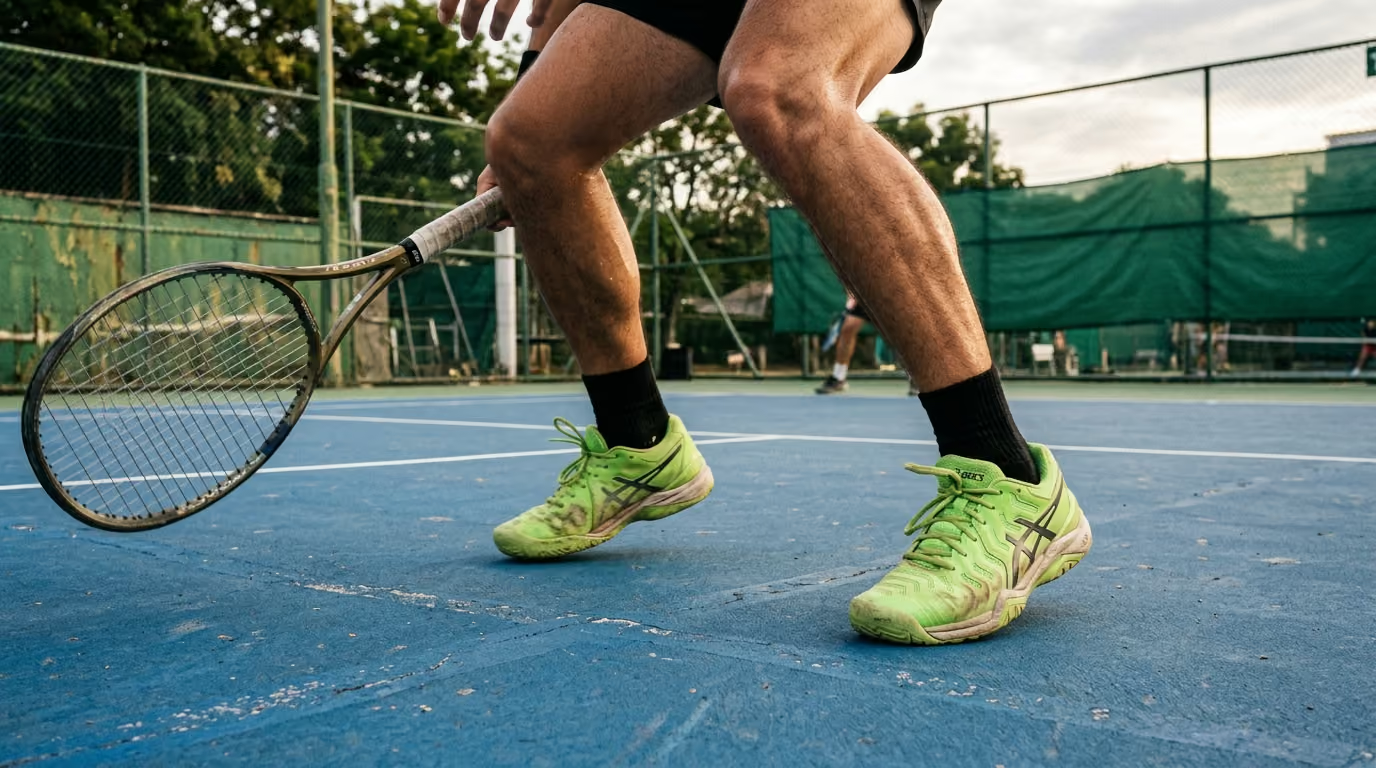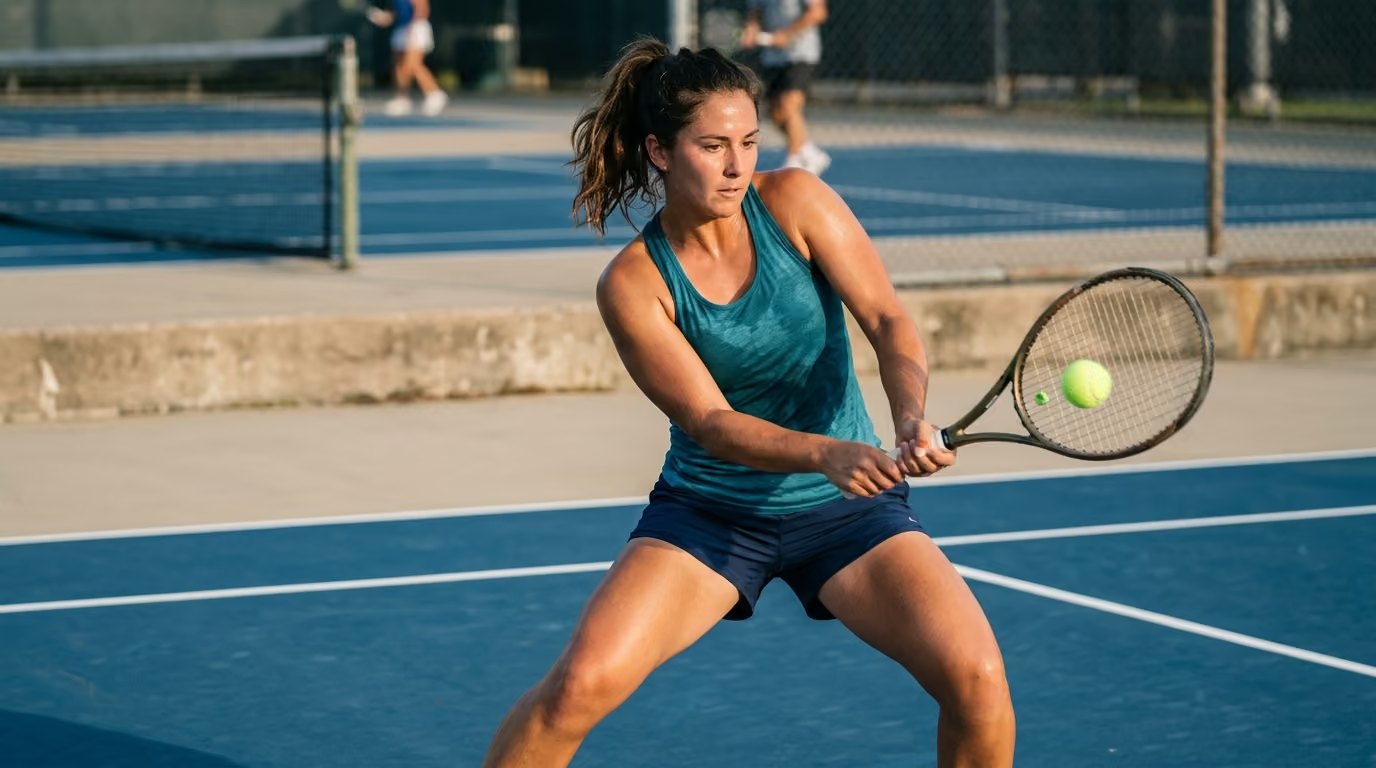

Players of tennis, pickleball, and padel can effectively prevent rotational injuries by understanding and implementing whole-body mechanics in their game.




Many court players believe that power comes from a stronger arm or a faster wrist. However, focusing on the arm during high-velocity swings actually limits your potential and increases physical strain. True court longevity relies on transferring force through the entire body rather than relying on isolated limb strength.
To prevent rotational injuries, distribute swing forces across your legs and hips. You should also involve your trunk and shoulders. Avoid forcing your elbow or shoulder to work in isolation. This balanced approach helps protect your joints so you can play without pain.
Racquet and paddle sports are whole-body tasks. Every stroke begins when your feet push against the court surface. This action generates ground reaction force. The energy then travels through your ankles, knees, hips, and pelvis. From there, it passes through your trunk, scapula, shoulder, elbow, and wrist before reaching the ball. This continuous sequence is known as the kinetic chain.
In tennis, research highlights the importance of this transfer. The leg, hip, and trunk segments produce approximately 51% of total kinetic energy during a serve. These same proximal segments contribute about 54% of the total force. The shoulder is not the primary engine of the swing. Instead, it serves as a crucial transition point. It converts translational energy from the moving body into rotational energy.
When one link in this chain fails, stress shifts to other tissues. For example, restricted hip mobility often forces the lower back to twist excessively. Poor trunk timing can force your shoulder to accelerate the racket prematurely. These compensations often lead to overuse injuries in the upper limb. You can read more about these movement patterns in our comprehensive injury prevention resources.
Our physical preparation relies on the capacity-load-coordination model. Load represents the physical volume of your strokes and lateral movements. Capacity is the ability of your muscles and tendons to tolerate that mechanical stress. Coordination involves timing and sequencing to transfer energy smoothly. Finally, recovery determines how well tissues rebuild between your playing sessions.
A critical review published in 2022 notes that isolated strength deficits do not consistently predict future injuries. Some observed imbalances may actually be the result of playing sport rather than the cause of an injury. Rather than relying on simple screening tests, current clinical consensus recommends looking at overall load management and progressive training.
Tennis requires repetitive, high-velocity overhead movements and deep lateral adjustments. The serve combines a powerful leg drive, hip rotation, and rapid shoulder internal rotation. It also involves intense elbow extension and landing on a single leg. An open-stance forehand requires your hips and trunk to rotate forcefully against a planted foot. This action puts high torsional demands on the knee, hip, and lumbar spine.
According to a technical analysis by the United States Tennis Association, technical errors significantly alter joint stress. Insufficient knee bend during the serve increases shoulder load by 23% for the same ball velocity. It also increases elbow load by 27%. These findings show that failing to use your legs forces your arm to work much harder. Over time, this leads to chronic tendon issues.
High ranges of motion during overhead swings are linked to several common shoulder conditions. These include labral tears, internal impingement, and glenohumeral internal rotation deficits. Tennis players must build sufficient rotational tolerance to protect these sensitive structures.
Pickleball features shorter court dimensions and a lighter paddle, but the physical demands remain high. Players perform frequent compact groundstrokes, rapid volleys, and sudden lateral transitions. The game requires you to maintain a low, athletic crouch for extended periods. This posture places continuous isometric strain on your lower back, hips, and thighs.
The injury profile in pickleball is heavily influenced by player demographics. An analysis of emergency department data from 2012 to 2021 estimated 53,649 weighted injuries. Older players represented 83% of those cases. Slips, trips, falls, and dives made up 64.3% of the injury mechanisms. Older players also had higher odds of fractures and fall-related injuries.
Rotational injury prevention in pickleball must therefore go hand in hand with balance training. Players need trunk control to maintain stability during quick dinks and off-balance reaches. If you want to study these patterns further, read our dedicated pickleball articles.
Padel combines elements of tennis and squash within a glass-walled court. The game features long rallies, rapid defensive turns, and frequent overhead actions. Players must master the bandeja, the vibora, and the smash. The presence of the walls means you must often react to late, awkward bounces that force you to swing from unusual angles.
A biomechanical review of padel describes a highly demanding loading phase. This phase combines spinal hyperextension, eccentric lengthening of the abdominal muscles, and trunk twisting. This specific combination can stress the lumbar spine and anterior trunk. It is especially challenging if you lack thoracic spine or hip mobility.
Epidemiological studies indicate that elbow injuries are the most common upper-limb issue in padel. These problems frequently involve the tendons of the extensor carpi radialis brevis. The knee, shoulder, and lower back are also common injury sites. Padel injury incidence is reported at approximately 3 injuries per 1,000 training hours. For more on court strategies, view our padel articles.
The hips and pelvis form the foundation of all rotational strokes. They rotate the pelvis over your lower limbs and transfer force upward. They also position your trunk for optimal ball contact. During defensive play, your hips must absorb substantial force as you decelerate.
To protect your upper body, you need sufficient hip mobility. Specifically, you require adequate hip extension and internal rotation. In tennis research, greater hip-extension range of motion is associated with reduced low-back-injury risk. This association suggests that mobile hips shield the lumbar spine from excessive stress.
The thoracic spine is designed to rotate and extend. It allows your upper body to turn relative to your pelvis. This separation creates elastic energy, which helps accelerate the racket or paddle. It also helps position your shoulder blade for safe overhead reaching.
If your thoracic spine is stiff, your body will seek motion elsewhere. Typically, it will force the lumbar spine to twist or the shoulder to over-reach. Both of these compensations increase injury risk. Maintaining thoracic mobility is essential for safe, natural rotation.
The lumbar spine is built for stability rather than large rotational ranges. It must transmit forces between the lower and upper body while resisting excessive shear. Potentially harmful patterns include repeated extension and rotation under fatigue. This occurs frequently during serves and high overheads.
The goal is not to keep the lower back completely rigid. Instead, you want to distribute motion evenly across your hips and thoracic spine. This coordination prevents any single lumbar segment from absorbing too much stress.
The shoulder blade, or scapula, provides the base for your arm movement. It must rotate upward and tilt backward as you reach for high balls. This movement keeps the ball of your shoulder joint centered in its socket.
The shoulder muscles must also decelerate your arm after contact. The rotator cuff works eccentrically to slow down your swing. Strong, durable rotator cuff muscles are essential for preventing impingement and labral wear.
The elbow and wrist are the final links in the kinetic chain. They are relatively small joints that must transfer immense force. Many players suffer from lateral epicondylitis, commonly called tennis elbow. This issue often stems from late ball contact, excessive grip tension, or poor proximal rotation.
To protect these distal joints, focus on timing and whole-body rotation. Do not rely on wrist snaps to generate power. Instead, let your larger hip and trunk muscles do the heavy lifting.
To apply these scientific principles during play, modify your technical habits. Focus on early preparation as the ball approaches. Turn your shoulders and hips together as a single unit. This early turn ensures you do not have to rush your swing using only your arm.
Keep your knees slightly bent to engage your legs. This athletic posture allows you to use ground reaction forces. When hitting a groundstroke, step into the ball and rotate from the ground up. This technique reduces the physical demand on your shoulder joint.
Avoid leaning backward excessively during overhead strokes. If a ball is deep, use your footwork to get behind it. This adjustment allows you to hit the ball in front of your body. It also prevents dangerous lumbar hyperextension under force.
Commit to a smooth and complete follow-through on every stroke. Let your body naturally decelerate your racket or paddle. Stopping your swing abruptly puts extreme eccentric stress on your elbow and shoulder. A full finish allows these forces to dissipate safely over a longer distance.
Structure your practice sessions to avoid excessive fatigue. Do not hit dozens of maximal-effort serves or overheads in a row. Instead, mix these high-intensity strokes with lower-impact drills. This approach maintains your movement quality and protects your tissues from sudden overload.
To prepare your body for rotational play, follow a structured physical preparation program. This framework transitions from movement preparation to foundational strength, before progressing to power and sport-specific integration. If you want a structured routine, read our strength and conditioning guidelines.
Do not begin your sessions with passive, static stretching. Instead, prepare your body with a dynamic warm-up. This routine should match the movements you will perform on the court.
This phase builds the muscular capacity required to produce and absorb rotational forces. Focus on compound movements that challenge multiple joints simultaneously.
Once you have built a strong foundation, transition to training for power. These movements teach your body to produce force quickly and absorb it safely.
The final phase integrates your strength and power into sport-specific movement patterns. This stage prepares your tissues for the chaotic demands of real play.
Many injuries occur when players increase their training volume too quickly. To protect your body, monitor your playing time and intensity. Avoid sudden spikes in play after a period of rest.
Track your session load by multiplying your playing time by your perceived effort. Use a scale from one to ten to rate how hard you worked. If a two-hour session felt like a seven, your load score is fourteen. Monitor this number weekly to ensure your overall training volume rises gradually.
Pay close attention to high-risk exposures. Keep track of the number of serves, smashes, and high-velocity groundstrokes you hit. A high volume of these rotational strokes increases stress on your shoulder, elbow, and lower back.
Avoid scheduling consecutive high-intensity days on the court. If you play a tough singles match on Monday, focus on light drilling or mobility on Tuesday. This variation allows your muscles and tendons to recover before you stress them again.
Monitor your daily physical readiness. Note any persistent joint stiffness, unusual muscle fatigue, or changes in your sleep quality. If you feel excessively sore or tired, reduce your training volume or intensity for a few days.
When returning to play after a break, rebuild your capacity gradually. Follow a staged return plan to safely prepare your tissues for competition.
This progressive transition allows your body to adapt. It is much safer than jumping straight back into competitive play.
Many players believe that static stretching is the key to preventing injuries. While stretching can temporarily improve your range of motion, it does not build strength. Your body needs active control to decelerate fast rotational movements. Replace long static holds with dynamic mobility and eccentric strength work.
Focusing too much on the chest and front shoulder muscles is a common error. This imbalance can pull your shoulders forward and limit your thoracic mobility. To balance this, prioritize exercises for your upper back, glutes, and hamstrings. A strong posterior chain provides the support your spine needs during powerful swings.
Many athletes perform hundreds of sit-ups to strengthen their core. However, crunches only train your abs to flex your spine forward. On the court, your trunk must resist unwanted twisting and transfer force instead. Focus on anti-rotation and anti-extension exercises like planks and Pallof presses instead.
When elbow pain develops, players often focus exclusively on the forearm. They use elbow straps and perform forearm curls without addressing the root cause. Often, elbow pain is a symptom of poor hip rotation or a weak shoulder blade. Address the entire kinetic chain to find lasting relief.
No single fitness test can predict whether you will get injured. Some players rely on screening scores and ignore basic load management. Use screens to find movement limitations, but focus your energy on progressive conditioning and proper recovery.
High-velocity rotational strokes put significant strain on your muscles, tendons, and fascia. The rotator cuff, abdominal wall, and hip rotators work hard to decelerate your body during every swing. Without proper recovery, these tissues can develop microtears and chronic irritation.
When these stabilizer muscles fatigue, your kinetic chain timing suffers. This fatigue forces your joints to absorb more impact, increasing your risk of injury. Prioritizing physical recovery helps maintain your movement quality and joint health. If you want to study recovery strategies, view our athletic longevity plans.
Ensure you get seven to nine hours of quality sleep each night. Sleep is when your body releases growth hormones to repair damaged muscle fibers. Keep your bedroom cool, dark, and free of screens to improve your sleep quality.
Hydrate well before, during, and after your matches. Dehydrated muscles and tendons are less elastic and more prone to strain. Drink water consistently throughout the day, and use electrolytes during long sessions in hot weather.
Consider using active recovery strategies between your intense matches. Light walking, swimming, or gentle cycling increases blood flow to tired tissues. This gentle movement helps clear metabolic waste and reduces muscle stiffness.
You can also use a foam roller to address tight spots in your glutes, upper back, and calves. Spend two minutes on each area, breathing deeply as you roll. Avoid rolling directly over your lower back or bony joints.
While mild muscle soreness is a normal part of training, you should not ignore pain. Knowing when to seek professional help is essential for protecting your joints. If you experience any of the following warning signs, consult a qualified physical therapist or sports medicine physician.
Early professional evaluation can prevent minor issues from becoming chronic problems. A physical therapist can help identify your movement limitations and design a safe recovery plan.
A competitive player increased their serving practice to prepare for a tournament. Soon after, they developed sharp pain in the front of their dominant shoulder. A movement analysis revealed they were using very little knee bend and hip rotation during their serve. This lack of leg drive forced their shoulder to work excessively to generate ball speed.
The player adjusted their preparation by reducing their weekly serve volume by half. They also incorporated lateral lunges and thoracic mobility exercises into their routine. On the court, their coach focused on improving their knee bend and trunk rotation. These changes reduced the stress on their shoulder, and their pain resolved within six weeks.
An active padel player competed in weekend tournaments and practiced three times a week. They did no strength training and rarely took rest days. Over time, they developed persistent stiffness in their lower back and pain in their dominant elbow. This pattern is common in padel, where long rallies and repetitive overheads stress the joints.
The player began a program focused on rotator cuff strength and forearm endurance. They also added core exercises like Pallof presses to protect their lower back. To manage their training load, they committed to one full day of rest each week. These simple adjustments allowed them to return to competitive play without stiffness.
A retired adult took up pickleball and quickly began playing four mornings a week. They had not participated in regular exercise for several years. During a fast volley exchange, they tripped while rushing backward and fell, fracturing their wrist. This incident matches data showing that falls are a primary cause of injury for older pickleball players.
The player worked with a physical therapist to rebuild their wrist strength and mobility. Their rehab program also included single-leg balance work, lateral shuffling, and deceleration drills. They returned to the court with better balance, appropriate footwear, and a safer approach to emergency movements.
A seasoned tennis player possessed excellent stroke mechanics and a strong fitness routine. However, during a busy summer tournament block, they developed lower back soreness. Despite their good technique, the high volume of matches on consecutive days exceeded what their tissues could tolerate.
The player learned that good technique alone cannot protect against sheer volume. They adjusted their schedule to avoid playing tournaments on back-to-back weekends. They also focused on sleep, hydration, and active recovery during tournament play. These small lifestyle adjustments resolved their back soreness and improved their court performance.
Managing your training volume and physical preparation is the best way to enjoy your sport. By protecting your joints and moving efficiently, you can continue playing tennis, pickleball, or padel for years to come. For more helpful guides on court life, visit About Evercourts.
Follow Evercourts for practical insights on tennis, pickleball and padel performance, movement, recovery and healthy ageing. Stay connected for new articles, research-led guidance and ideas to help you play well and keep playing for years.


Read practical guidance for better movement, smarter preparation and a game that keeps working for you.
explore the Blog