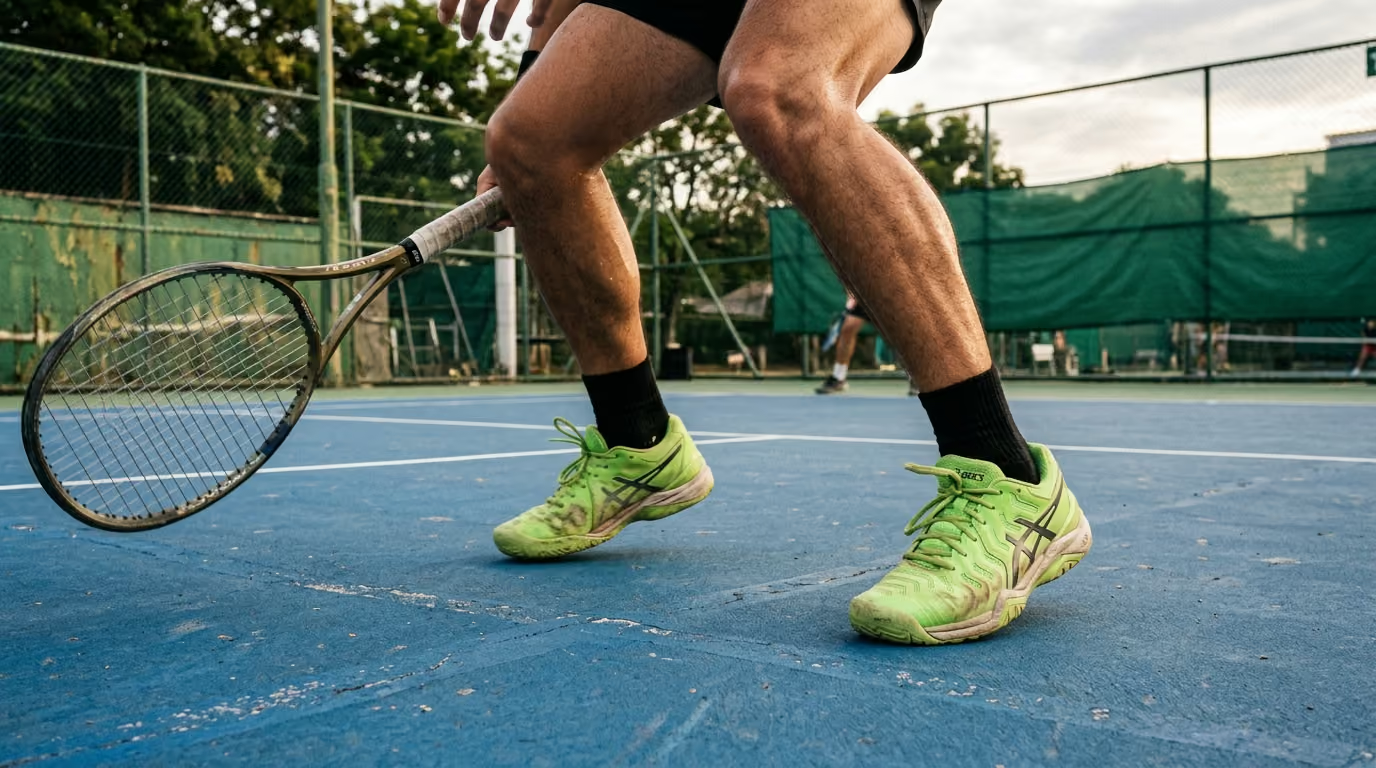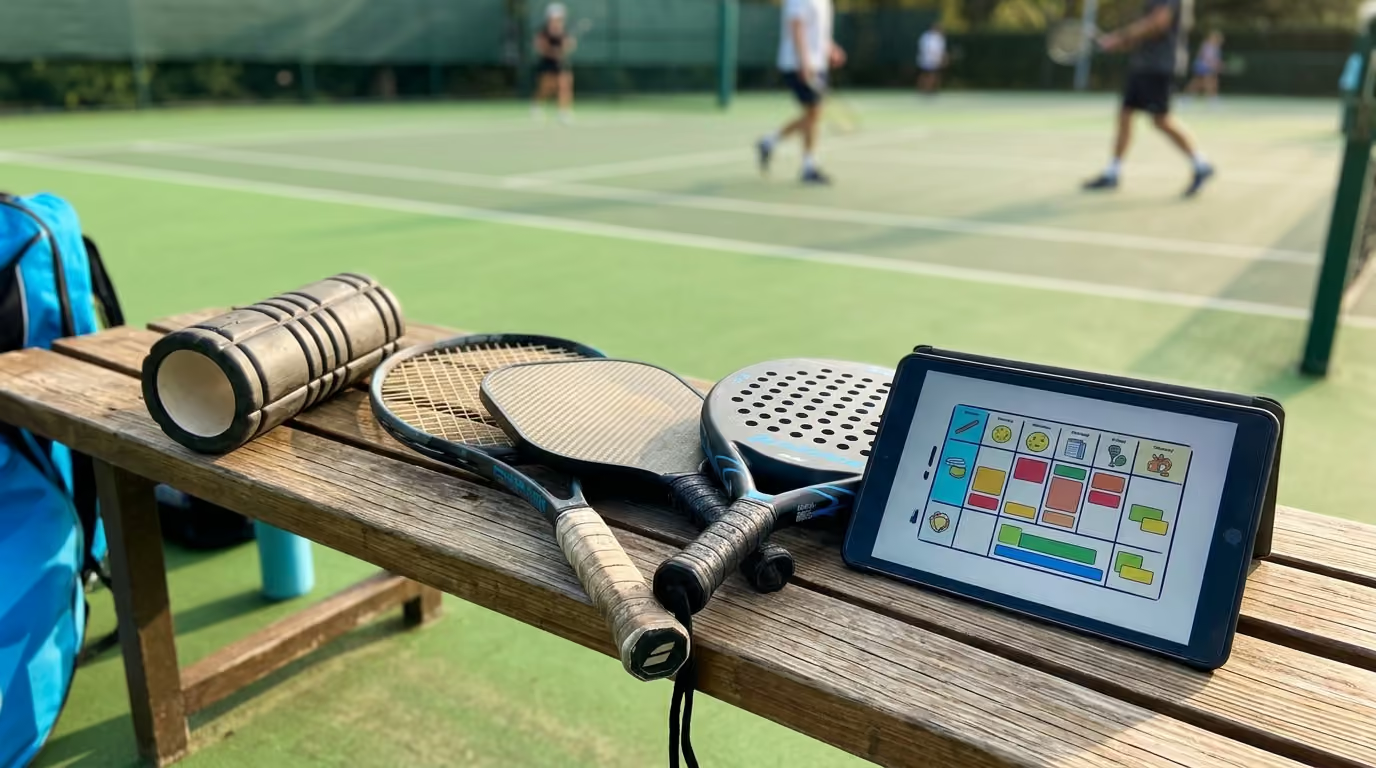

A sustainable racquet sports season results from a systematic blueprint for balancing physical strain and physical restoration over a calendar year.




Seasonal recovery planning is a systematic blueprint for balancing physical strain and physical restoration over a calendar year. It is not a passive schedule of resting only when you feel broken, nor is it a complex suite of expensive therapy gadgets designed to bypass basic physiological limits. Instead, it is an active strategy that balances loading, training, and resting so you can maintain athletic longevity.
To build a sustainable racquet sports season, players must structure their year into progressive phases of preparation, competition, maintenance, active recovery, and transition. This organized approach ensures that training volume and intensity drop before accumulated physical stress leads to overuse injuries or performance declines. By scheduling lighter periods proactively, you protect your body and ensure you can play for years to come.
A sustainable season is not a sequence of uninterrupted hard weeks. It is a planned alternation of loading, competition, maintenance, recovery, and transition. This structured approach, known as periodization, divides the training year into larger cycles.
Macrocycles represent the entire year or season. Mesocycles are blocks of training lasting three to six weeks. Microcycles are weekly schedules that dictate daily physical demands.
Periodization ensures that training stress is progressively applied to the body. It schedules easier periods before fatigue, pain, or injury forces an involuntary break. The practical objective is not to eliminate fatigue.
Appropriate fatigue is a necessary part of physical training. The goal is to prevent accumulated fatigue from exceeding your capacity to recover. Training should therefore be adjusted according to several factors. These include external load, internal response, training history, injury history, age, physical capacity, sleep, stress, and sport-specific demands.
External load is the work performed by the athlete rather than the physiological response to that work. It represents the measurable quantities of physical activity. For racquet sports, external load includes the number of weekly sessions and their duration. It also includes the number of matches, games, sets, or points played.
You should also track sport-specific quantities. These include the number of serves, overheads, smashes, volleys, or high-intensity strokes. The physical actions of running, sprinting, and lateral movement contribute to this load. Strength-training volume and tournament travel density are also key components.
The interval tennis return-to-play literature specifically recommends tracking these sport-specific quantities. You should not treat all court time as equivalent. A light technical practice does not impose the same external load as a highly competitive singles match.
Internal load is your physiological or perceptual response to the external workload. It reflects how your body actually feels and adapts to the physical demands. Common internal-load measures include muscle soreness, perceived fatigue, sleep quality, mood, and stress.
You can also track pain, stiffness, and your general readiness to train. A simple way to measure internal load is the session rating of perceived exertion. This is known as session-RPE.
To calculate your daily training load, multiply session intensity by session duration. Use a 1 to 10 scale for intensity, where 1 is extremely easy and 10 is maximal effort. A 90-minute session rated 7 out of 10 produces 630 arbitrary units. A 60-minute session rated 3 out of 10 produces 180 units.
These values allow you to compare different types of sessions. They help you identify changes in training stress over time. They are not direct measures of injury risk, but they highlight sudden spikes in overall physical demand.
Acute load is your most recent training burden. It is often represented by your total training load over the current week. Chronic load is the rolling average of your preceding three to six weeks of training.
Chronic load represents the workload to which your body has recently adapted. A player who has consistently played three moderate court sessions per week is prepared for that baseline. If that same player suddenly enters a tournament with five intense matches in a week, the acute load will spike far above the chronic load.
The acute-to-chronic workload ratio compares these two measures. This ratio is calculated by dividing your acute weekly load by your chronic rolling average. A ratio near 1.0 means your current week is similar to your recent average.
A ratio above 1.0 means you are doing more work than usual. A ratio below 1.0 means you are performing less work than your recent baseline. Literature from various sports describes 0.8 to 1.3 as a general sweet spot.
Ratios of 1.5 or higher are often viewed as potential danger zones. However, these thresholds were derived primarily from team sports like rugby and soccer. They should be treated as warning signals rather than universal laws.
Even so, research in high-performance tennis indicates that abrupt workload increases are risky. Spikes of at least 1.3 in junior players and 1.5 in adult players are strong predictors of injury.
Training monotony refers to repeatedly exposing the same tissues and energy systems to similar stress without variation. This can occur even when your total weekly hours appear reasonable. In racquet sports, monotony often happens when you perform the same hard movements too frequently.
Examples include serving hard on consecutive days or repeating overhead smashes when your shoulder is sore. Playing long social sessions that contain repeated lunges can also cause monotony. Your body needs variation to adapt and heal.
A well-structured season should vary total volume, stroke intensity, movement density, and recovery demand. You should also vary your conditioning modes and strength-training emphasis. This variation prevents localized tissue fatigue and supports healthy joint function.
Current research highlights that racquet sports demand a highly coordinated physical response. The literature shows that injury risk is closely linked to how we manage training volume and physiological stress. Understanding these scientific findings helps us design better programs.
High-performance tennis combines repetitive high-load strokes with abrupt directional changes. A systematic review of tennis injury epidemiology reports a junior injury incidence of approximately 2.1 to 3.5 injuries per 1,000 hours. For adult players, estimates range from 1.25 to 56.6 injuries per 1,000 hours.
This wide range reflects substantial variation in player populations and study methods. The seasonal prevalence of injuries is also significant. Research shows a seasonal prevalence of 46% to 54% in juniors and 30% to 54% in professionals.
Lower-limb trauma represents approximately 48% to 56% of these injuries. Lumbar spine problems represent 12% to 39%, while shoulder overuse syndromes are also highly prominent. These statistics highlight the need for a training plan that protects the entire kinetic chain.
The tennis stroke is a full-body action. A tennis return-to-play review reported that 54% of stroke power is generated from the legs. Up to 21% is transferred through the shoulder.
If a player has insufficient knee flexion, the physical demand on the shoulder and elbow increases. This shows that arm pain is often caused by deficits in the legs or hips. Your preparation model must develop lower-body contribution, trunk transfer, and shoulder deceleration.
You should not isolate the arm during training or recovery. A weakness in any part of this chain can cause overload elsewhere. Managing the entire body's workload is essential for joint health.
Pickleball presents a distinct combination of rapid lateral play, falls, overexertion, and a high proportion of older participants. A national emergency-department analysis estimated 100,704 pickleball-related injuries from 2014 through 2023. Annual injury estimates increased dramatically from 1,313 in 2014 to 24,461 in 2023.
The analysis found that 73.8% of these estimated injuries occurred in people aged 60 to 79 years. Falls represented 51.3% of estimated injuries, while overexertion represented 42.3%. Fractures made up 26.4% of the diagnoses, and strains or sprains accounted for 24.0%.
A separate national survey of 1,758 players found a 12-month all-complaint injury prevalence of 68.5%. The time-loss injury prevalence was 40.8%, and the ongoing pain prevalence was 35.9%. This survey defined injuries broadly to include general physical discomfort.
The most frequently reported body regions in the survey were the knee at 29.1% and the leg or foot at 26.9%. The shoulder accounted for 22.2%, the back for 19.9%, and the elbow for 18.4%. Overuse or chronic conditions, including tendinopathy, accounted for 35.3% of the most serious reported injuries.
Joint or ligament sprains made up 23.8%, and muscle strains accounted for 20.7%. Playing pickleball at least three times weekly was associated with higher odds of injury compared to playing less often. The odds ratio for frequent players was 1.45.
Less than five years of playing experience was also linked to higher injury rates, with an odds ratio of 1.50. This research indicates that pickleball is not automatically low-risk. The rapid growth of the sport requires careful physical preparation and systematic recovery.
Padel is a high-intensity intermittent sport with significant cardiovascular and neuromuscular demands. The scientific literature identifies high action velocity and sudden changes of direction as major injury factors. This is particularly true for untrained or unprepared players.
A scoping review of padel injuries reported that the elbow was the most frequent injury location. The shoulder and low back were the next most common areas, while the knee was the most affected lower-limb region. Tendon, joint, and muscle structures were the most frequently injured tissues in these studies.
Padel players must track repeated wall retrievals, rapid starts, and rotational hitting. Overheads and smashes also add significant repetition to the shoulder and elbow. The padel evidence base is currently less mature than the tennis literature.
A 2022 review included 19 studies but noted substantial heterogeneity among them. This means we cannot yet draw strong, universal conclusions about exact injury mechanisms. Coaches and players should therefore use personalized monitoring and gradual progression rather than importing rigid team-sport rules.
A sustainable year is built on five distinct phases. Each phase has a specific purpose, structure, and physical focus. This system helps you manage training volume and intensity throughout the year.
The primary purpose of the preparation phase is to develop the physical and technical capacity needed for upcoming play. You must build your body's tolerance to court stress before you begin playing matches. Key goals include establishing a consistent training rhythm and building lower-body strength.
You should also develop trunk control, pelvic stability, and shoulder capacity. This phase is the ideal time to reintroduce serving, overheads, smashes, and high-intensity changes of direction. You should also focus on improving your cardiorespiratory fitness and aerobic capacity.
The preparation phase should prepare the entire kinetic chain for the specific movements of your sport. This period should begin with manageable playing frequency and moderate intensity. Do not jump straight into competitive matches.
A practical progression sequence contains four steps. First, focus on re-entry by using low court volume, technical rhythm, mobility, and general strength. Second, build capacity by increasing your strength, movement volume, and controlled serving.
Third, introduce specific preparation with more directional changes, point construction, and match-like efforts. Fourth, use competition rehearsal with short simulations and tournament scheduling practice.
The tennis literature describes four-week ramp-up strategies as highly effective. These strategies can reduce injury incidence by up to 21% in reviewed evidence. You should adapt this progressive ramp-up to your individual fitness level.
The competition phase converts your physical preparation into court performance. The primary stressor is now the match, tournament, or league schedule. The key challenge is that matches are not fully controllable.
Match duration, intensity, weather, court surfaces, and emotional stress can all vary. The competition phase should therefore use a minimum-effective-dose training model. This model focuses on maintaining your physical qualities with the least amount of extra work.
You should preserve your speed, power, and strength through brief, focused sessions. Avoid adding hard physical conditioning immediately after a demanding match. Schedule technical practice according to your current recovery state.
Treat travel, changed routines, and disrupted sleep as additional stressors. A competition week should avoid stacking high-intensity court exposure, heavy lifting, and travel without rest. You must track match density, which is different from total weekly hours.
A player may tolerate a single long match but struggle with multiple matches played on consecutive days. Track the number of matches, sets, games, and serves you perform. Adjust your training volume down if your competitive schedule becomes unusually dense.
The maintenance phase is used when competitions are frequent and there is no time for a complete development block. The goal is to preserve the physical qualities you built during the preparation phase. If you neglect these qualities, they will decline during a long competitive season.
Focus on maintaining maximal strength, eccentric braking ability, and rotator-cuff capacity. You should also maintain trunk rotation strength, elastic power, and sport-specific movement confidence. Maintenance sessions should be short and strategically scheduled.
You may only need one or two brief strength sessions per week to preserve your physical qualities. A common mistake is trying to maintain your full preparation program while adding competitive matches. This turns competition into an extra layer of stress rather than the primary focus.
Instead, matches should replace some of your high-intensity conditioning. Technical sessions should become shorter and more targeted. Strength sessions should reduce total volume before important matches.
Recovery sessions must become a planned part of your training week. You should monitor your daily physical readiness to make appropriate adjustments. Track your sleep quality, muscle soreness, general fatigue, and joint stiffness.
If you notice warning signs, do not necessarily cancel training. Instead, change the physical dose. You can reduce ball volume, remove serves, or replace live points with controlled, stationary drills.
The recovery phase restores your body after a tournament, competition block, or period of high physical stress. Recovery should be based on the size and type of stress you experienced. It should not be based on a fixed number of calendar days.
A short singles match, a five-set tennis match, and a long padel tournament require different recovery periods. They produce different combinations of muscular, joint, and psychological fatigue.
Immediate recovery occurs in the first hours after play. Focus on rehydration, appropriate nutrition, gentle movement, and sleep preparation. Short-term recovery occurs over the next one to three days.
Use easy aerobic activity, mobility drills, light technical hitting, and low-load strength work. Monitor your muscle soreness, joint stiffness, and sleep quality during this time. Extended recovery is needed after a demanding tournament or a long season.
You may need a reduced week of training rather than just one easy day. A study of professional tennis players found that subjective recovery did not always track actual tissue load. This means you may feel recovered while your joints and tendons still carry local stress.
Use cooling strategies, massage, and compression to reduce training-induced soreness if helpful. Remember that these tools do not replace proper load management. The most effective recovery intervention is reducing your next physical exposure.
The transition phase separates one playing season from the next. It provides physical and psychological relief from the demands of competition. You should not stop all physical activity, but the type and volume of stress must change.
Replace competitive court play with low-impact aerobic activities like walking, cycling, or swimming. Reduce repetitive serving, smashing, and overhead movements. Maintain general strength with low-volume, non-provocative exercises.
Use this phase to address persistent movement restrictions and joint stiffness. Assess and correct shoulder internal rotation deficits, scapular movement, and core stability. Transition is also the ideal time to review your equipment, technique, and seasonal schedule.
If you tolerated chronic pain or minor symptoms during the season, obtain a professional medical review now. Do not wait until the next preparation block begins to address these issues. Enter your next season with a healthy, balanced body.
While the five-phase framework applies to all racquet sports, the specific physical demands differ. You must adapt your recovery planning to the unique stress profile of your sport.
Tennis requires repeated high-load strokes, serving, rapid braking, and abrupt directional changes. The dominant injury category is lower-limb trauma, followed by lumbar spine problems and shoulder overuse. A tennis plan must distinguish between running load, serving volume, and groundstroke repetition.
The serve is a highly demanding movement that puts immense stress on the shoulder, core, and lower back. Track your total serves, first serves, and the amount of serving you do when fatigued. Do not increase your serving volume too quickly during the preparation phase.
Ensure your program includes exercises to maintain hip rotation and shoulder internal rotation. These qualities are often lost during periods of heavy play. Our team has found that maintaining lower-limb strength and ankle mobility is crucial for managing court movement.
For more strategies on preserving your joints, you can check our resources on injury prevention.
Pickleball involves rapid, short-distance movements, frequent lunging, and a high volume of quick reactions. The research shows a substantial burden of falls and overexertion, especially among players aged 60 and older. Your seasonal plan should place a strong emphasis on balance, deceleration, and fall prevention.
Include exercises that develop calf, quadriceps, and hip strength to support safe lunging mechanics. Reaction skills and controlled stopping should be trained during the preparation phase. Do not assume pickleball is physically easy because the court is smaller.
The high volume of quick reactions can lead to significant overuse injuries in the knee, shoulder, and elbow. Track your session duration and the number of consecutive days you play. Avoid playing multiple long sessions without recovery days.
If you are a frequent player, keep a close eye on tendinopathy symptoms in your elbow or Achilles tendon. You can find more detailed articles on managing these demands in our pickleball articles.
Padel is characterized by high-intensity intermittent play, rapid actions, and sudden changes of direction. The court walls add a unique physical demand, requiring quick turning, low retrievals, and rotational hitting. Overheads and smashes are performed frequently, putting significant stress on the elbow and shoulder.
A padel recovery plan must track rotational volume, smash repetition, and lateral acceleration. The elbow is the most common injury site, often due to high action velocity and poor forearm endurance. Ensure your maintenance program includes forearm strengthening and shoulder blade stability work.
Unfamiliar wall play can create unusual physical loads for newer players. Do not increase your match play and tournament density simultaneously. Allow your joints and connective tissues time to adapt to the sport's rapid changes of direction.
To learn more about optimizing your physical preparation for this sport, read our guide on padel performance.
A monitoring system must be simple enough that you actually use it. It should provide clear data to help you make daily and weekly training decisions. Use a simple pen-and-paper log or a digital spreadsheet to track your metrics.
Every day, take two minutes to record your physical metrics. Track your court duration in minutes and your session-RPE on a 1 to 10 scale. Classify the session as a match, technical practice, or physical conditioning.
Record any sport-specific volumes, such as the estimated number of serves or overheads. Note your daily sleep quality on a 1 to 5 scale, where 1 is very poor and 5 is excellent. Rate your muscle soreness and joint stiffness from 1 to 5.
If you have localized pain, write down its location and severity. Finally, record your general fatigue and readiness to train. The workload literature recommends measuring these training loads regularly to identify long-term patterns across your season.
At the end of each week, analyze your daily data to spot trends. Calculate your total court minutes and your total session-RPE load. Count the number of matches you played and the number of consecutive hard days you completed.
Calculate your acute weekly load and compare it to your three-to-six-week rolling average. Ask yourself if your workload rose too abruptly this week. Determine if match load replaced your training volume or was simply added on top of it.
Check if your sleep quality has been declining or if muscle soreness is persisting. Note if any pain has become more constant or has migrated to a different joint. This weekly review helps you decide if you need to adjust your upcoming schedule.
Use a simple traffic-light model to guide your daily and weekly training decisions based on your data. This system helps you respond to warning signs before they become major problems.
When in amber status, reduce your training volume. Remove highly repetitive strokes like hard serves or smashes. Replace live point play with controlled, low-impact drills, or substitute court time with light mobility work.
If you hit red status, stop the provocative activity immediately. Do not try to play through these symptoms. Seek a professional medical assessment to determine the cause of your issues.
Many court athletes make predictable errors when managing their recovery. Recognizing these mistakes is the first step toward building a sustainable playing routine.
Two hours of light technical hitting with a partner is not the same as two hours of competitive tournament singles. The physical demand, joint stress, and recovery requirements are entirely different. Workload management must account for movement density, stroke intensity, and mental pressure.
If you only track your total hours, you may miss sudden spikes in physical stress. Track your intensity alongside your duration to get an accurate picture of your workload. This prevents unexpected fatigue from disrupting your playing schedule.
When a league season or tournament month begins, players often keep their entire practice and gym routine. They simply add competitive matches on top of their existing schedule. This creates an immediate, dangerous spike in acute training load.
Matches must replace some of your regular technical practice and conditioning. Reduce your non-essential court volume during competitive periods. Keep your gym sessions short and focused on preserving physical qualities rather than building new capacity.
Using ice baths, massage, compression garments, or pain relievers can help reduce temporary soreness. However, feeling less sore does not mean your tendons, ligaments, and muscles have fully recovered their physical capacity. Professional tennis research shows that cooling strategies reduce soreness, but subjective recovery does not always match objective tissue status.
Do not use recovery techniques simply to mask pain so you can perform more hard training. Masking symptoms can lead to severe overuse injuries over time. Give your connective tissues the actual rest and progressive loading they need to adapt.
After an injury or a long break, players often return straight to competitive matches. This sudden jump in physical demand frequently causes re-injury. Your body needs a gradual, criteria-based progression to safely tolerate court forces.
Start with controlled, pain-free movements before adding speed and unpredictable lateral steps. Progress to light technical hitting before reintroducing serving and maximum-effort strokes. Only return to competitive match play when you have demonstrated the physical capacity to tolerate full training.
To play racquet sports for many years, you must protect your body's structural tissues. Seasonal planning is essential for supporting the natural adaptation and healing of these structures.
Tendons and joint cartilage have a limited blood supply compared to muscles. This means they adapt and heal much slower than muscle tissue. If you increase your playing volume too quickly, your muscles may feel fine, but your tendons can easily become overloaded.
This mismatch is a primary cause of Achilles tendinopathy, patellar tendinopathy, and tennis elbow. A structured preparation phase gives these slow-adapting tissues the time they need to grow stronger. Scheduled transition and recovery weeks prevent micro-damage from accumulating into chronic joint issues.
Our team believes that prioritizing consistent sleep and progressive loading does more for your joint longevity than any quick-fix recovery tool. During my own court journey, I used to think a tough conditioning block was the only way to improve my court endurance. Then I started tracking my sleep.
I noticed that on days I slept less than six hours, my reaction time at the net was noticeably sluggish, and I felt gassed by the second set. Prioritizing consistent rest did more for my late match stamina than any extra sprints ever did. Recovery is the true foundation of performance.
Healthy aging is about maintaining your physical capabilities so you can continue playing the sports you love. As we age, our tissues naturally lose some elasticity and recovery capacity. A well-designed seasonal plan accounts for this by incorporating longer recovery periods and structured maintenance.
It helps you preserve crucial muscle mass, joint mobility, and balance. By avoiding chronic overuse injuries, you ensure that your playing career is long and fulfilling. For further guidance on maintaining your physical capabilities as you age, explore our resource on healthy aging and athletic longevity.
You can also browse our general recovery science section for more evidence-based articles.
While seasonal planning helps manage normal training stress, some symptoms require expert guidance. You must know how to identify the signs that indicate a need for professional medical care.
Consult a qualified healthcare provider if you experience any of the following symptoms:
A physical therapist or sports medicine physician can perform a comprehensive evaluation. They can identify specific movement restrictions, strength imbalances, or tissue injuries. A professional can help you build a personalized recovery plan and guide your return to the court.
Do not ignore persistent symptoms or try to self-treat chronic pain. Early intervention is key to protecting your joints and ensuring your athletic longevity. If you need to contact us or find more resources on player health, visit our contact page or read our dedicated tennis resources.
Playing multiple sports increases your training monotony and total joint stress. You must track your combined court hours, matches, and physical intensity in a single log. Avoid playing different racquet sports on consecutive days without planned recovery. Ensure your preparation phase addresses the physical demands of all the sports you play.
Older players often require longer recovery periods between high-intensity sessions. You should place a greater emphasis on the preparation and maintenance phases. Focus on balance training, calf strength, and joint mobility to prevent falls and overexertion. Keep your weekly match density manageable and avoid playing multiple long sessions on consecutive days.
Do not try to make up for missed training by doubling your workload when you return. This sudden increase in training volume is a common cause of injury. Instead, re-enter your plan at a lower physical dose. Use a brief preparation phase to rebuild your court tolerance before returning to competitive match play.
Changing playing surfaces, such as moving from clay to hard courts, alters the physical stress on your joints. Hard courts increase the impact forces on your knees, hips, and lower back. Clay or turf courts require different sliding and braking mechanics. Allow your body a week to adapt to a new surface by reducing your playing intensity and volume.
Follow Evercourts for practical insights on tennis, pickleball and padel performance, movement, recovery and healthy ageing. Stay connected for new articles, research-led guidance and ideas to help you play well and keep playing for years.


Read practical guidance for better movement, smarter preparation and a game that keeps working for you.
explore the Blog