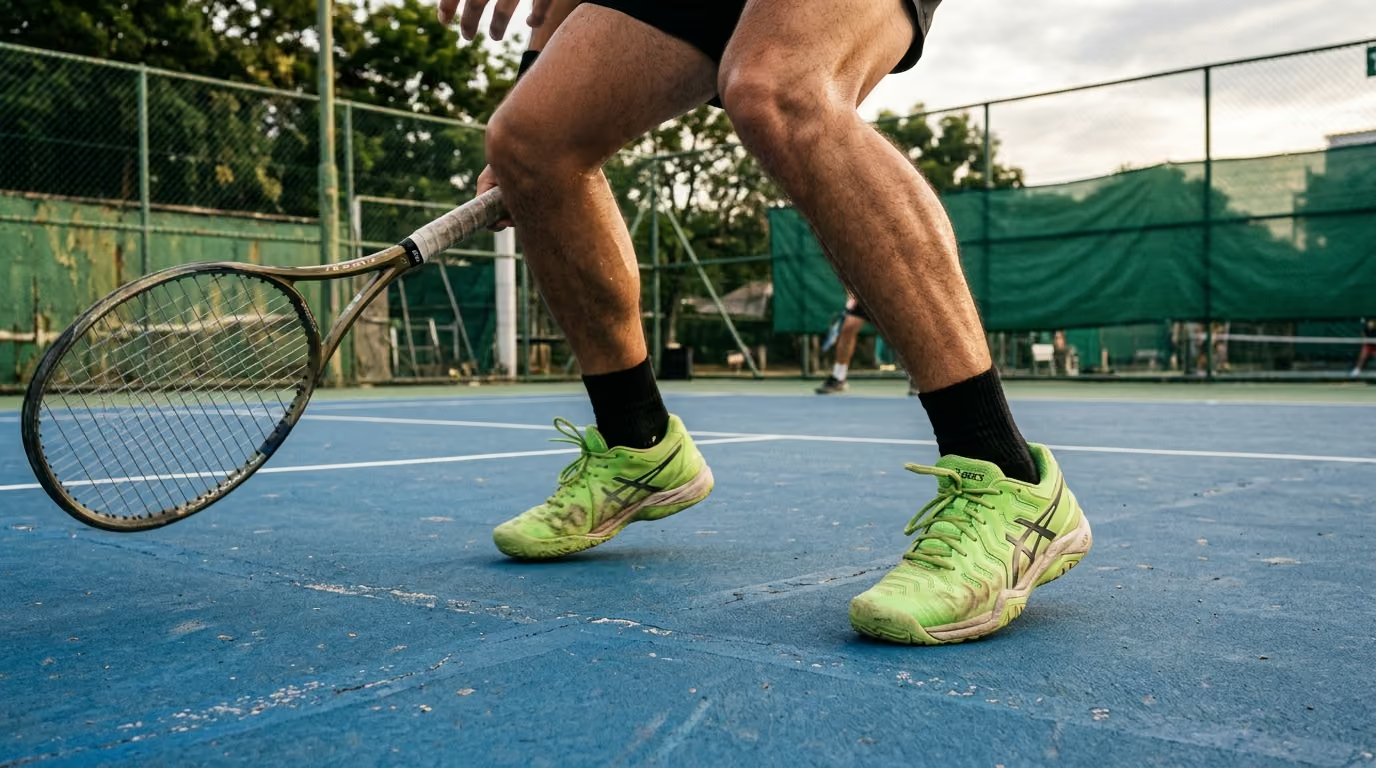
Racquet sports players can make informed decisions about playing by evaluating physical symptoms and managing training loads to preserve athletic longevity.




Determining physical readiness for the court is not a matter of testing your pain tolerance or proving your dedication. True readiness is a measured calculation of your body's capacity to handle the explosive, multi-directional demands of racquet sports without compromising your athletic longevity. This comprehensive guide outlines a structured, evidence-based approach to evaluating physical symptoms, managing training loads, and making smart decisions before you step onto the court.
Deciding whether to play on any given day requires balancing your current physical capacity against the specific demands of your planned session. Instead of a simple choice between playing normally and resting, you should choose to play as planned, modify the activity, replace it with rehabilitation, or skip the session entirely based on your movement quality. This systematic approach preserves your long-term athletic longevity while keeping you active on the court.
To make informed decisions about playing, you must understand how training load affects your body. Researchers categorize physical training stress into two primary types: external load and internal load. External load represents the work you perform on the court, which includes variables like play duration, total distance run, the number of accelerations, and the volume of strokes hit. Internal load measures how your cardiovascular and nervous systems respond to that external work. This response is typically tracked through heart rate monitoring and your subjective rating of perceived exertion.
A simple and highly validated tool for monitoring this relationship is session perceived exertion. You can calculate this by multiplying the total duration of your court session in minutes by your rating of perceived exertion on a scale from one to ten. For example, a demanding 75-minute singles match rated at an intensity of 7 out of 10 results in a session load score of 525 units. Conversely, a relaxed 45-minute technical practice session rated at an intensity of 3 out of 10 yields a session load of 135 units. Tracking these scores helps you compare different sessions and recognize patterns of accumulated stress over time.
According to the International Olympic Committee consensus on training load and injury risk, managing physical stress requires analyzing both acute and chronic patterns. Acute load refers to the cumulative stress of your training over the past week, while chronic load represents your historical capacity developed over the previous month. When your acute training load suddenly spikes far beyond your established chronic training patterns, your tissues may struggle to adapt. The consensus notes that poor load management is a major factor in tissue irritation, though it cautions that no single metric can perfectly predict when an athlete will enter a maladaptive state.
The relationship between sleep, performance, and physical risk is another critical element of readiness. Inadequate sleep consistently impairs physical strength, aerobic endurance, motor control, and cognitive decision-making. Research published in sports medicine reviews shows that chronic sleep restriction, defined as sleeping seven hours or less for several consecutive weeks, can correlate with higher musculoskeletal injury rates. However, systematic reviews of adult athletic populations indicate that a single poor night of sleep does not automatically guarantee an injury on the court. Instead, sleep loss should be treated as a warning to reduce training intensity and pay closer attention to coordination. Understanding these recovery factors is vital for recovery science and performance.
Making an accurate play decision requires distinguishing between benign muscle soreness and localized structural pain. Delayed onset muscle soreness is a normal physiological response to strenuous or unfamiliar exercise. This type of soreness is typically diffuse, symmetrical, and felt deep within the muscle bellies used during your previous session. It is often most noticeable when you first begin to move in the morning, but it generally diminishes during a progressive, low-intensity warm-up.
Structural pain, however, presents distinct characteristics that require immediate caution. This pain is usually unilateral, meaning it occurs on only one side of the body, and is concentrated in a specific joint, tendon, or ligament. It is often described as sharp, catching, burning, or electric rather than a dull, heavy ache. Structural pain rarely improves with movement, and it typically intensifies as you continue to perform repetitive strokes or change direction. If you notice localized swelling, visible bruising, joint instability, or numbness, you are dealing with a structural issue rather than simple muscle soreness.
To evaluate these symptoms, you must focus on physical function rather than a simple pain score. A mild discomfort rated as a three out of ten may be manageable if you can perform all sport-specific movements with perfect technique. However, if that same mild discomfort causes you to limp, protect a joint, or alter your swing path, your function is compromised. Altering your natural biomechanics to protect an irritated structure places excessive stress on other parts of your body.
I remember finishing a tough two hour padel match on a cold Tuesday night and waking up the next morning feeling like my lower back was locked in concrete. For a long time, I just accepted this as the price of playing hard in my forties. But once I started spending just ten minutes on targeted hip mobility before heading to the club, the stiffness almost completely vanished. It taught me that we do not have to accept pain as a default state of aging. Paying attention to these subtle functional limitations is the cornerstone of injury prevention on the court.
Making an objective decision before a match requires a structured evaluation process. This systematic framework prevents emotion or competitive drive from overriding physical warning signs.
The first step of the framework is a strict safety gate. You must immediately stop and seek professional medical guidance if you exhibit any red-flag symptoms. These critical warning signs include a suspected concussion, chest pain, unexplained shortness of breath, severe dizziness, joint instability, or an inability to bear weight on a limb.
If you experience a head impact or a collision on the court, do not attempt to clear yourself using a physical warm-up. United Kingdom grassroots concussion guidance lists a worsening headache, confusion, memory loss, repeated vomiting, and progressive neck pain as urgent clinical concerns. According to the Centers for Disease Control and Prevention guidelines, returning to play after a head injury requires a supervised, multi-stage progression. Each stage must take at least 24 hours, and you must return to the previous resting stage if any symptoms reappear during physical exertion.
If you pass the initial safety screen, determine the primary source of your physical limitation. Classifying your concern helps you select the correct adjustment strategy rather than relying on a simple guess. Identify whether your main challenge is localized joint pain, systemic illness, generalized fatigue, significant sleep loss, or high mental stress. For example, a highly stressed player may have the physical capacity to hit balls but lacks the mental focus needed for competitive match play.
Evaluate the specific physical requirements of your scheduled session against your current recovery state. Note whether you are playing a high-intensity singles match or a controlled, low-impact doubles social game. Analyze the court surface, the weather conditions, and the expected volume of serving or explosive lateral movement. Ask yourself if reducing the length or intensity of the session by thirty percent would still make it valuable. If the session is only useful at absolute maximum effort, you must adopt a highly conservative approach.
If you decide to head to the court, use your warm-up as a functional diagnostic tool rather than a test of physical toughness. Begin with easy walking or stationary cycling to increase your core body temperature and blood flow. Move into gentle, non-ballistic mobility exercises that target your major joint systems. Perform low-intensity shadow swings without a ball to check your muscle activation and joint tracking.
Gradually progress to cooperative hitting from the mid-court area, focusing on smooth rhythm and clean ball contact. Pay close attention to how your body responds as you add controlled footwork and light lateral movement. Stop the warm-up immediately if your localized discomfort increases, your timing deteriorates, or you find yourself holding back to protect an area. A successful warm-up should feel smooth, fluid, and completely free of protective compensation patterns.
To simplify your daily decisions, you can organize your physical status into a straightforward traffic-light system. This system provides clear action steps based on your current readiness, physical symptoms, and movement quality.
You are in the green zone when you are free of localized joint pain and can move with normal speed and symmetry. Your physical fatigue should feel entirely proportionate to your recent training volume, and you should feel mentally prepared to focus. In this zone, you can complete your planned session at full intensity without any modifications. Continue to monitor how your body responds during and after play to track your physical progress.
The yellow zone indicates that your physical readiness is reduced, but you do not exhibit any major clinical warning signs. This state is appropriate when you are dealing with generalized muscle soreness, mild sleep loss, high mental fatigue, or minor, stable joint stiffness. In this zone, you should adapt your court work to reduce mechanical stress while maintaining your physical routine. Excellent yellow-zone modifications include:
You enter the orange zone when active court play is unlikely to be productive, but complete physical rest is unnecessary. This is the ideal time to focus on active recovery, targeted mobility exercises, and physical therapy drills. Instead of stepping onto the court, spend your dedicated session time performing low-impact cardiovascular work like walking or easy cycling. You can also use this time for tactical study, video analysis, or targeted strength work that does not irritate your symptomatic tissues. This approach keeps you connected to your sport while giving your body the space it needs to repair.
The red zone requires you to skip the session completely and focus entirely on recovery or professional medical evaluation. This zone is triggered by severe focal pain, signs of systemic illness like a fever, visible joint swelling, or an inability to move normally. Choosing to skip a session in the red zone is a deliberate, highly productive training action. It prevents a minor, manageable tissue irritation from developing into a chronic injury that could sideline you for months.
While all racquet sports share common movement patterns, each discipline places unique mechanical stresses on your body. Understanding these differences helps you tailor your readiness decisions to the specific physical demands of your sport.
Tennis requires covering a large court area, which subjects your lower limbs to repetitive, high-velocity acceleration and deceleration forces. The heavy weight of a tennis racket, combined with a long lever arm, generates substantial torque on the dominant shoulder, elbow, and wrist. The service motion is particularly demanding, requiring a complex combination of lumbar extension, thoracic rotation, and rapid glenohumeral acceleration.
If you are a tennis player with lower back or shoulder irritation, you must be extremely cautious about playing through discomfort. The high rotational forces of a groundstroke can easily aggravate an abdominal wall strain or lumbar facet joint irritation. If you must modify a tennis session, transition from singles to doubles, or agree to play points without using a traditional overhand serve.
Pickleball is played on a much smaller court, which reduces your total running distance and aerobic cardiovascular demands. However, the game features incredibly fast reaction times and constant, short-distance lateral adjustments. Players must spend significant time in a deep, bent-knee posture at the non-volley zone line, which places continuous static load on the quadriceps and patellar tendons.
The short, flicking motions of a light pickleball paddle can place high eccentric stress on the wrist extensors and the medial elbow. If you are a pickleball player experiencing knee or Achilles tendon discomfort, the sudden lunges required to return low dinks can quickly worsen your symptoms. To modify a pickleball session, focus on controlled, cooperative dinking drills rather than competitive matches that force you to sprint for deep lobs.
Padel matches are played in an enclosed glass cage, creating a highly dynamic environment with rapid ball rebounds and continuous physical movement. The sport requires constant rotational adjustments, as you must frequently turn your hips and torso to play balls bouncing off the walls. Padel is also characterized by a high volume of overhead strokes, such as the bandeja and the vibora, which are hit with a relatively heavy, solid paddle.
These repetitive overhead motions place exceptional demands on your dominant shoulder joint and the rotators of your upper back. If you are a padel player recovering from shoulder stiffness or hip restrictions, the constant twisting and overhead hitting can easily provoke a flare-up. To modify a padel session, focus on low-intensity defensive drills, and practice using soft lobs instead of hitting powerful smash shots.
Recreational and competitive players alike frequently fall into common decision-making traps that can lead to preventable setbacks. Recognizing these behavioral patterns is the first step toward building a healthier relationship with your sport.
Many players mistakenly believe that if they were able to finish a match, their physical tissues must have tolerated the workload safely. During competitive play, your body releases adrenaline, cortisol, and endorphins, which act as powerful natural pain relievers. These hormones temporarily dull your perception of pain and tissue irritation, allowing you to run and swing without immediately feeling the damage. It is only hours later, once your nervous system has fully calmed down, that you feel the true extent of the inflammation and muscle damage. Never use your physical state during the final game of a match as proof that your movement was safe.
Using over-the-counter anti-inflammatory medications or pain relievers specifically to get through a scheduled match is a highly risky practice. These medications alter your central pain processing, which effectively silences your body's natural warning system. Without the feedback of discomfort, you are highly likely to exceed your tissues' current capacity and cause structural damage. Furthermore, masking symptoms prevents you from making natural biomechanical adjustments, which can lead to severe compensatory injuries in neighboring joints. If you cannot complete your warm-up comfortably without medication, you belong in the orange or red zone.
Many players view court sports through a binary lens, believing they must either play a high-intensity competitive match or stay home on the couch. This rigid mindset ignores the massive value of the yellow and orange zones for physical preservation and skill development. Skipping a match to perform a thirty-minute mobility session or a light technical practice is not a sign of weakness. It is a highly strategic, professional approach to physical training that keeps you moving well for decades. Embracing the middle ground of physical modification is the key to maintaining your consistency on the court.
Consistently ignoring your body's recovery signals can have profound consequences for your physical health, movement quality, and longevity in your sport. When you step onto the court in a state of chronic under-recovery, your physical tissues pay a steep biological price.
Every strenuous court session causes microscopic damage to your muscle fibers, tendons, and joint cartilage. With adequate rest, nutrition, and sleep, your body repairs these micro-tears, making your tissues stronger and more resilient than before. However, if you load these structures again before the repair process is complete, the micro-trauma begins to accumulate. Over time, this repetitive loading leads to chronic tendinopathy, localized cartilage wear, and persistent joint capsule inflammation. What began as a minor tendon irritation can easily develop into a long-term degenerative issue that requires months of medical care.
When a muscle group or joint is sore, weak, or restricted, your central nervous system automatically adapts to protect the irritated structure. To keep performing, your brain alters your movement patterns, shifting the physical load to neighboring joints and muscles. For example, if you are playing with a stiff, restricted right hip, your body will twist excessively through your lower back to generate rotational power on your forehand. This compensatory movement pattern can quickly overload your lumbar spine, resulting in a secondary, often more severe injury. Protecting a minor ache today often leads to a major joint issue somewhere else tomorrow.
Under-recovery also has a systemic effect on your central nervous system, which coordinates all complex physical movements on the court. Central fatigue reduces your reaction speed, impairs your spatial awareness, and degrades your motor control. In a fast-paced racquet sport, a millisecond delay in your split-step or a minor error in your landing posture can be the difference between a clean recovery and a severe ligament sprain. When your nervous system is tired, your ability to absorb the high-impact forces of the court is severely compromised, greatly increasing your risk of acute injuries. Managing your daily readiness is essential to maintaining the quality of your player health over time.
While self-management and physical modifications are effective for minor fatigue and soreness, you must recognize when an issue requires professional medical care. Consulting a qualified physical therapist, sports physician, or orthopedic specialist can help you address underlying structural issues before they become chronic limitations.
You should seek professional medical evaluation if you experience any of the following symptoms:
A physical therapist can perform a thorough biomechanical assessment, identify specific muscle imbalances, and design a customized rehabilitation program to help you return to sport safely. Seeking early professional care is a proactive step that protects your physical capacity and supports your long-term court performance.
To decide whether to play with mild illness symptoms, you can use the classic neck rule as a general self-management heuristic. If your symptoms are located entirely above your neck, such as a mild runny nose, sneezing, or a slight sore throat, light to moderate modified play is usually acceptable. However, if your symptoms are below your neck, such as chest congestion, a deep cough, body aches, or a fever, you should skip your session entirely. Systemic symptoms indicate that your immune system is actively fighting an infection, and subjecting your body to strenuous physical training can prolong your recovery time or lead to more severe health complications.
If you begin a match feeling comfortable but develop localized pain after fifteen minutes of play, you should stop the session immediately. Pain that emerges only after your muscles have fully warmed up is a clear sign that your tissues cannot tolerate the mechanical stress of the current physical workload. Continuing to play through this warning signal will likely worsen the tissue irritation and significantly increase your recovery time. Step off the court, apply gentle movement, and evaluate the response of the symptom over the next twenty-four hours before deciding on your next session.
Mental fatigue significantly increases your rate of perceived exertion, which makes any physical effort on the court feel much harder than normal. It also impairs your cognitive decision-making, visual tracking, and emotional regulation, which can lead to frustration and poor shot selection. If you are mentally exhausted but physically healthy, avoid playing high-stakes competitive matches where the psychological pressure is high. Instead, transition to a relaxed, social hit or a low-pressure drilling session where you can focus on simple movement rhythms without the stress of keeping score.
Follow Evercourts for practical insights on tennis, pickleball and padel performance, movement, recovery and healthy ageing. Stay connected for new articles, research-led guidance and ideas to help you play well and keep playing for years.


Read practical guidance for better movement, smarter preparation and a game that keeps working for you.
explore the Blog