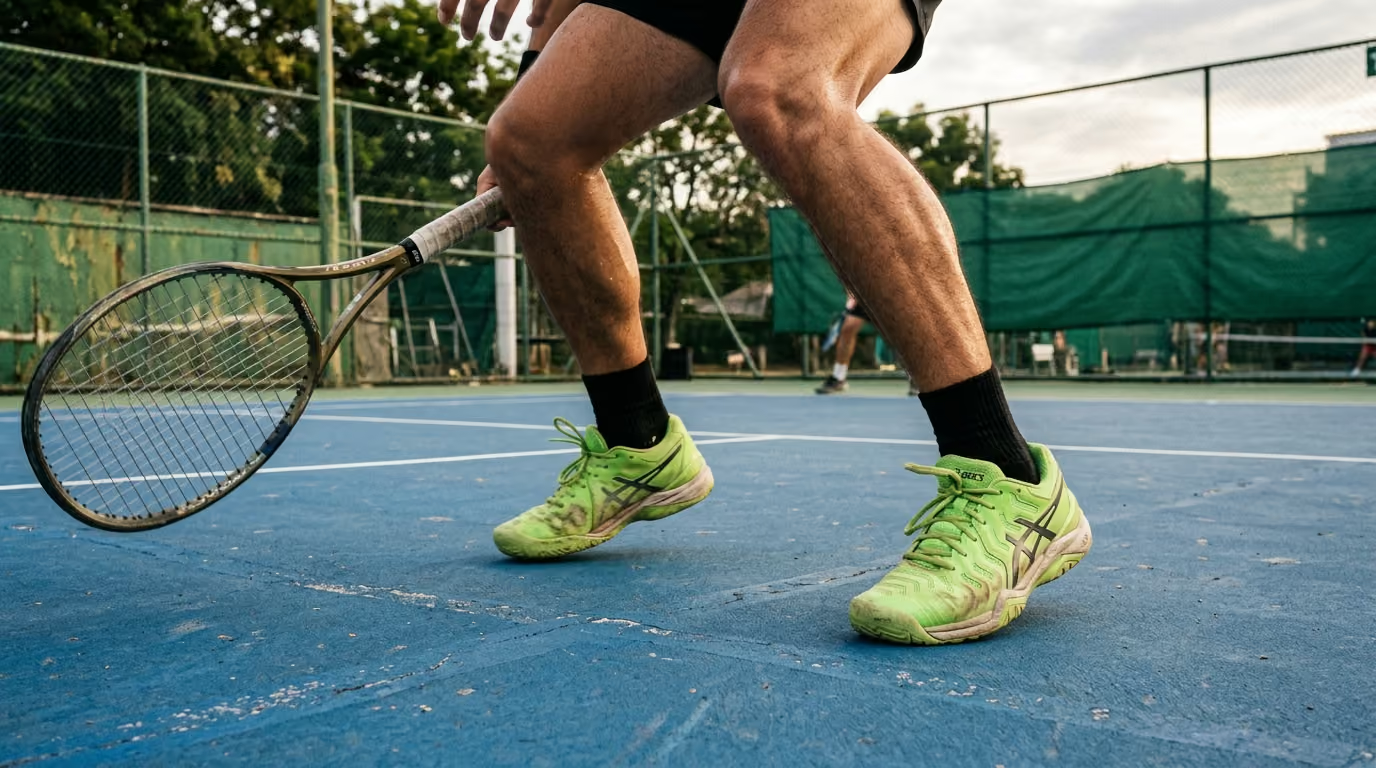
A resilient upper body for racquet sports is achieved by understanding the shoulder as an integrated movement system involving the arm, shoulder blade, and upper back.




You stand at the baseline, toss the ball, and raise your arm to serve, but a familiar pinch in your shoulder stops your swing. Or perhaps you finish a hard two-hour match and spend the next two days struggling to lift your arm to reach a high cupboard. Many players accept this stiffness as a normal part of playing court sports as they grow older. However, a restricted shoulder is often the result of movement imbalances that you can address with the right approach.
To play racquet sports comfortably, you must treat your shoulder as an integrated movement system comprising the arm joint, the shoulder blade, and the upper back. True shoulder mobility is not just about stretching your arm overhead. It requires balancing your available joint range with precise, dynamic control of your shoulder blade under the high forces of play.
To build a resilient upper body, you must first understand that the shoulder does not function in isolation. The shoulder is a complex, multi-joint system that coordinates movement across several key areas of your body. This system includes the ball-and-socket joint, the shoulder blade, the upper spine, the rib cage, and the surrounding muscles. It also relies on the transfer of energy from your legs, pelvis, and trunk.
When you swing a racquet or paddle, your body utilizes a kinetic chain to generate force. The legs and trunk produce the bulk of this power, which then travels upward through your shoulder. The shoulder blade acts as a vital link in this chain, transferring force from your torso to your arm and hand. If any part of this system is stiff or weak, the arm joint must work harder to compensate, which can lead to overload.
We can break down this interconnected system into several distinct components:
Active mobility is the range of motion you can control using your own muscle strength. Passive mobility is the range available when an external force, such as a partner or a stretching strap, moves your joint. Many court players possess plenty of passive mobility but lack the active control and tissue capacity to use that range safely during a fast-paced game.
In our experience, focusing solely on stretching the arm joint without training the shoulder blade muscles is a common mistake. If your upper back is stiff, your shoulder blade cannot position itself correctly. This limitation forces the ball-and-socket joint to undergo excessive strain to reach the ball. Improving your movement patterns through targeted mobility and movement resources can help distribute these forces more evenly across your entire upper body.
Many players are told to keep their shoulder blades pulled permanently down and back during exercise and play. While this instruction aims to prevent shrugging, it ignores the natural, dynamic ways your shoulder blade must move. To allow your arm to move freely overhead, your shoulder blade must perform several coordinated actions.
The shoulder blade moves in three dimensions over the curved surface of your rib cage. Its principal movements include:
These movements do not occur in isolation. When you raise your arm, your shoulder blade must simultaneously rotate upward, tilt posteriorly, and rotate externally. If your shoulder blade cannot perform these movements dynamically, your arm bone will strike the bony arch above it, causing irritation.
Forcing your shoulder blades to stay pinned back and down limits this natural rhythm. A stiff shoulder blade cannot support the high-velocity movements required in racquet sports. Instead of holding your shoulders rigid, you should focus on developing fluid, coordinated control through a full range of motion.
The tennis serve is one of the most demanding overhead movements in all of sports. It provides an excellent model for understanding how the entire shoulder system must function under load. We can divide the serving motion into five distinct phases: wind-up, early cocking, late cocking, acceleration, and follow-through.
During the wind-up phase, the movement begins in your lower body as you bend your knees and align your torso. In the early cocking phase, your arm raises and your shoulder blade retracts to prepare for the swing. The late cocking phase is highly demanding, as your arm reaches maximal backward rotation. Here, the shoulder blade must tilt backward and rotate externally to support the extreme range of motion of your upper arm.
The acceleration phase requires a rapid release of stored elastic energy. Your shoulder rotates internally at high speed, which is a major contributor to racket velocity at impact. During this phase, the shoulder blade rotates upward and tilts forward to help you reach the optimal contact point.
The follow-through phase is just as important as the hitting phase. After impact, your arm must decelerate safely as it crosses your body. The shoulder blade must rotate downward and tilt backward to absorb the remaining forces. If your muscles cannot control this deceleration, the passive structures of your joint will take the brunt of the impact.
To help visualize this relationship, our team uses a simple framework: mobility creates the available movement; scapular control organizes it; strength and endurance make it repeatable; the kinetic chain distributes the load. When you improve each of these areas, your overhead strokes will feel smoother and more powerful. Working on your technique and structural support is a cornerstone of court performance resources designed for long-term play.
To perform well on the court, you need specific types of mobility that match the demands of your sport. These demands include overhead elevation, shoulder rotation, and thoracic spine mobility. Let us examine how each of these components contributes to your overall movement on the court.
Overhead elevation is the foundation of the serve and the overhead smash. Reaching straight overhead requires a combination of arm joint movement, shoulder blade upward rotation, and upper back extension. If your upper back is stiff and cannot arch backward, your shoulder blade cannot tilt posteriorly. This forces your shoulder joint to overextend, which can cause discomfort over time.
Shoulder rotation is another critical component. During the late cocking phase of a serve, your arm must rotate externally to a high degree. Studies show that competitive racquet players often adapt to this demand by gaining external rotation range in their dominant arm. At the same time, they frequently lose internal rotation range on that same side.
This loss of internal rotation is known as an internal rotation deficit. It is a common adaptation that is not always a cause for concern. If your total rotational arc, which is internal rotation plus external rotation, remains equal on both sides, the change is likely a benign adaptation to your sport. However, if your total rotational arc is significantly reduced on your dominant side, it may indicate a genuine mobility restriction that requires attention.
Finally, your thoracic spine must rotate and extend freely. When you turn your body to hit a forehand or backhand, much of that rotation should come from your middle and upper back. If your thoracic spine is stiff, you may compensate by rotating your lower back or overworking your shoulder joint. Maintaining spinal mobility is essential for protecting your shoulder and improving your court movement.
Scientific research provides valuable insights into why racquet players develop shoulder issues and how we can prevent them. A 2025 systematic review and meta-analysis of tennis-serve injury risk examined 29 studies and identified 130 potential risk factors. This comprehensive analysis concluded that dominant-shoulder rotational strength, internal-rotation range of motion, weekly tennis volume, age, body mass, and height are major risk factors associated with shoulder injuries.
The review also found moderate evidence that greater age, height, body mass, and weekly playing volume increase injury risk among tennis players. The studies looked at players between the ages of 11 and 46 years, with an average age of 21 years. This highlights the importance of managing your weekly playing hours, especially as you grow older or if you carry more body mass.
Another systematic review of overhead sports found moderate evidence linking shoulder rotational strength, scapular dyskinesis, and the use of shoulder-prevention programs with injury risk. Interestingly, the review found moderate or no association for several other proposed factors, including basic shoulder rotational range of motion. This suggests that having strong, well-coordinated muscles is often more important than simply having loose joints.
Research also supports the effectiveness of targeted exercise programs. A systematic review of shoulder-prevention programs found two studies reporting reduced injury odds after players completed regular strengthening and flexibility routines. These studies reported impressive injury reduction rates, with odds ratios of 0.72 and 0.22. Additionally, one study reported a hazard ratio of 0.36 after players performed posterior-capsule stretching, indicating a lower rate of new injuries over time.
A larger meta-analysis published in the British Journal of Sports Medicine confirmed these findings. It reported a pooled relative risk of 0.73, favoring exercise interventions for the prevention of shoulder injuries in athletes. This means that athletes who follow a structured exercise program reduce their risk of shoulder injury by about 27 percent. The study noted that programs focusing on the whole body were just as effective as those focusing only on the shoulder.
Finally, we must consider the role of workload. A study of competitive adolescent tennis players found that sudden spikes in training, match play, and fitness volume were directly associated with higher rates of shoulder complaints. To understand this relationship, we can use a conceptual risk equation: Risk is approximately equal to exposure multiplied by intensity and fatigue, divided by your physical capacity. If you increase your playing time suddenly without building your physical capacity first, your risk of injury rises. Managing this balance is a core principle of injury prevention resources for court athletes.
You may have heard the term "scapular dyskinesis" used to describe a shoulder blade that does not move normally. This condition can involve winging, where the inner edge of the shoulder blade sticks out, or early shrugging during arm movement. While it sounds alarming, scientific research has changed how we view this movement pattern.
The Bern Consensus Statement, a major gathering of shoulder specialists, cautions against screening healthy athletes for scapular dyskinesis. Research shows that visible shoulder blade asymmetry is present in about 53 percent of healthy, pain-free people. It is even more common in overhead athletes, appearing in roughly 61 percent of healthy players.
Because of these findings, we should not treat a visible asymmetry as a disease or a guarantee of future injury. Often, these differences are normal adaptations that help your body handle the repetitive demands of your sport. A shoulder blade asymmetry only becomes clinically meaningful when it is accompanied by other specific signs.
These signs include pain during sport-specific movements, a noticeable loss of strength or joint range, or a history of shoulder injuries. For example, a 2023 case-control study compared elite tennis players with and without shoulder impingement during a flat first serve. The study found that players with impingement demonstrated greater scapular internal rotation at key points of the serve compared to pain-free players.
This research indicates that how your shoulder blade moves is important, but it must be assessed in the context of your symptoms and performance. If you have no pain and your shoulder functions well, a slightly asymmetrical shoulder blade may simply be your body's unique way of playing. If you are experiencing symptoms, addressing these movement patterns through guided exercise can be highly beneficial.
Before starting any training program, it is helpful to assess your current shoulder mobility, strength, and movement patterns. You can use this simple five-step assessment framework to identify areas that may need attention.
By going through these steps, you can gather valuable information about your body. This allows you to tailor your training to your specific needs, focusing on areas of weakness or stiffness. If you want to read more about maintaining your body for court sports, you can find helpful articles on our court health blog.
Once you have assessed your movement, you can begin a structured training program to improve your shoulder mobility and scapular control. We recommend progressing through five distinct phases to safely build tissue tolerance and movement capacity.
The goal of this phase is to reduce stiffness and restore a comfortable movement window. Focus on gentle, pain-free exercises that prepare your joints for more active work.
In this phase, you will train the muscles that support and move your shoulder blade, such as the serratus anterior and the lower trapezius.
Now that your shoulder blades are moving better, you can focus on building strength and endurance in your rotator cuff muscles.
These exercises teach your upper body, trunk, and lower limbs to work together, mimicking the demands of actual play.
When returning to full play after a break or injury, you must gradually reintroduce high-speed serving.
Following a structured progression like this helps protect your tissues from sudden overload. For more guidance on building overall body resilience, explore our strength and conditioning resources designed specifically for court athletes.
While the basic anatomy of the shoulder is the same for everyone, the demands placed on it vary depending on your sport of choice. Understanding these differences can help you tailor your preparation and recovery.
Tennis players face unique challenges due to the high-velocity serve. The serve requires a massive range of motion in late cocking and places extreme deceleration demands on the posterior shoulder during follow-through. Tennis players must possess excellent eccentric strength in their external rotators to slow down the racket safely.
Padel players must handle a high volume of overhead movements, such as the bandeja and the vibora, which are often played from a lower contact point than a tennis serve. Because padel matches are fast and involve rapid changes of direction, the shoulder blade must adapt to constant, unpredictable movements.
I remember finishing a tough two hour padel match on a cold Tuesday night and waking up the next morning feeling like my lower back and shoulder were locked in concrete. For a long time, I just accepted this as the price of playing hard in my forties. But once I started spending just ten minutes on targeted hip mobility and scapular control exercises before heading to the club, the stiffness almost completely vanished. It taught me that we do not have to accept stiffness as a default state of healthy aging.
Pickleball players, on the other hand, rarely hit high-velocity serves from overhead, but they face a different set of demands. The game involves rapid, short swings, quick volleys at the kitchen line, and sudden transitions from low defensive dinks to quick overhead put-aways. Pickleball players need excellent endurance in their shoulder blade stabilizers and rotator cuff to maintain quick paddle transitions without fatiguing. This kind of training supports healthy aging and athletic longevity for players who want to stay on the court for years to come.
Many court players make simple errors when trying to improve their shoulder health. Recognizing these mistakes can save you time and prevent unnecessary irritation.
Proper shoulder blade control and rotator cuff strength have a direct impact on your recovery time and tissue health. When your shoulder blade moves correctly, it distributes the forces of play across a larger area of your upper body. This reduces local muscle fatigue and prevents the overload of sensitive tendons.
If your shoulder muscles are weak or fatigued, your body will compensate by using other structures, which can lead to next-day soreness and stiffness. Building endurance in your shoulder blade stabilizers ensures that your movement patterns remain efficient even at the end of a long match. This proactive approach supports your recovery and helps you return to the court feeling fresh.
To help you apply these concepts to your own playing life, let us look at five common case patterns that we often see in racquet sports players.
This pattern is common in long-term tennis or padel players. They notice that they cannot reach as far behind their back or scratch their upper spine with their dominant hand. Upon assessment, we find a significant reduction in dominant-arm internal rotation and a reduced total rotational arc compared to the non-dominant side.
For these players, the priority is to restore a comfortable, pain-free range of motion. We avoid aggressive, painful stretching, which can irritate the joint capsule. Instead, we focus on gentle posterior-shoulder mobility exercises, thoracic spine extension, and low-load rotator cuff strengthening. This helps restore a healthy balance to the joint without provoking symptoms.
This player has excellent flexibility and can easily reach a deep, classic trophy position during their serve. However, they struggle with accuracy, their serve speed is inconsistent, and they often feel a vague ache in the front of their shoulder after playing. When we test their movement, we see that they have abundant passive mobility but poor active control of their shoulder blade.
For this pattern, stretching is the last thing they need. The focus must be entirely on active control, rotator cuff endurance, and eccentric deceleration. Exercises like the push-up-plus, wall slides, and band rotations at 90 degrees help them build the muscular support needed to stabilize their flexible joints.
A recreational player is told by a coach or playing partner that their shoulder blade "wings out" or looks uneven during their warm-up. The player has no pain, plays three times a week without issue, and feels strong.
As the Bern Consensus Statement highlights, visible asymmetry is very common in healthy athletes and should not be treated as a medical issue. In this case, the best approach is to continue playing and monitor for any changes. There is no need for intensive corrective programs unless the player develops pain, weakness, or a sudden drop in performance.
This often happens to competitive junior players or enthusiastic recreational players. They sign up for a weekend tournament, play four matches in three days, and also attend extra practice sessions. Within a week, they develop a dull ache in their shoulder that does not go away with rest.
In this scenario, the issue is not many mechanical flaws, but rather a sudden spike in workload that exceeded their tissue capacity. The key intervention is to temporarily manage their playing volume, allow the tissues to recover, and then gradually reintroduce serving and high-velocity overheads. It serves as a reminder that proper load management is just as important as good technique.
This player experiences a sharp pinch or ache in the top or front of their shoulder at the very end of their backswing, just before they accelerate. When we look at their movement, we notice that they struggle to get their shoulder blade into a posterior tilt, causing their arm bone to compress the soft tissues under the collarbone.
To help this player, we look at the entire kinetic chain. We often find that a stiff thoracic spine or limited hip rotation is preventing them from turning their body fully. By improving their upper back mobility and teaching them to use their legs to rotate, we can reduce the demand on the shoulder joint and make the late cocking position comfortable again.
While many minor shoulder aches and stiffness can be managed with rest and gentle exercise, some symptoms require professional evaluation. It is important to know when to seek help from a qualified physical therapist or sports medicine specialist.
You should consult a healthcare professional if you experience any of the following warning signs:
A professional can perform a detailed physical examination, rule out more serious structural issues, and provide you with a personalized recovery plan. Addressing these signs early can help you avoid longer breaks from the sports you love.
You should bookmark and return to this guide whenever you plan to increase your playing volume, such as before a tournament or the start of a new season. It is also useful to review these exercises if you begin to feel mild stiffness or fatigue in your shoulder after a long match. By maintaining a consistent routine of shoulder mobility and scapular control, you can support your athletic longevity and continue playing tennis, pickleball, or padel for years to come.
Follow Evercourts for practical insights on tennis, pickleball and padel performance, movement, recovery and healthy ageing. Stay connected for new articles, research-led guidance and ideas to help you play well and keep playing for years.


Read practical guidance for better movement, smarter preparation and a game that keeps working for you.
explore the Blog