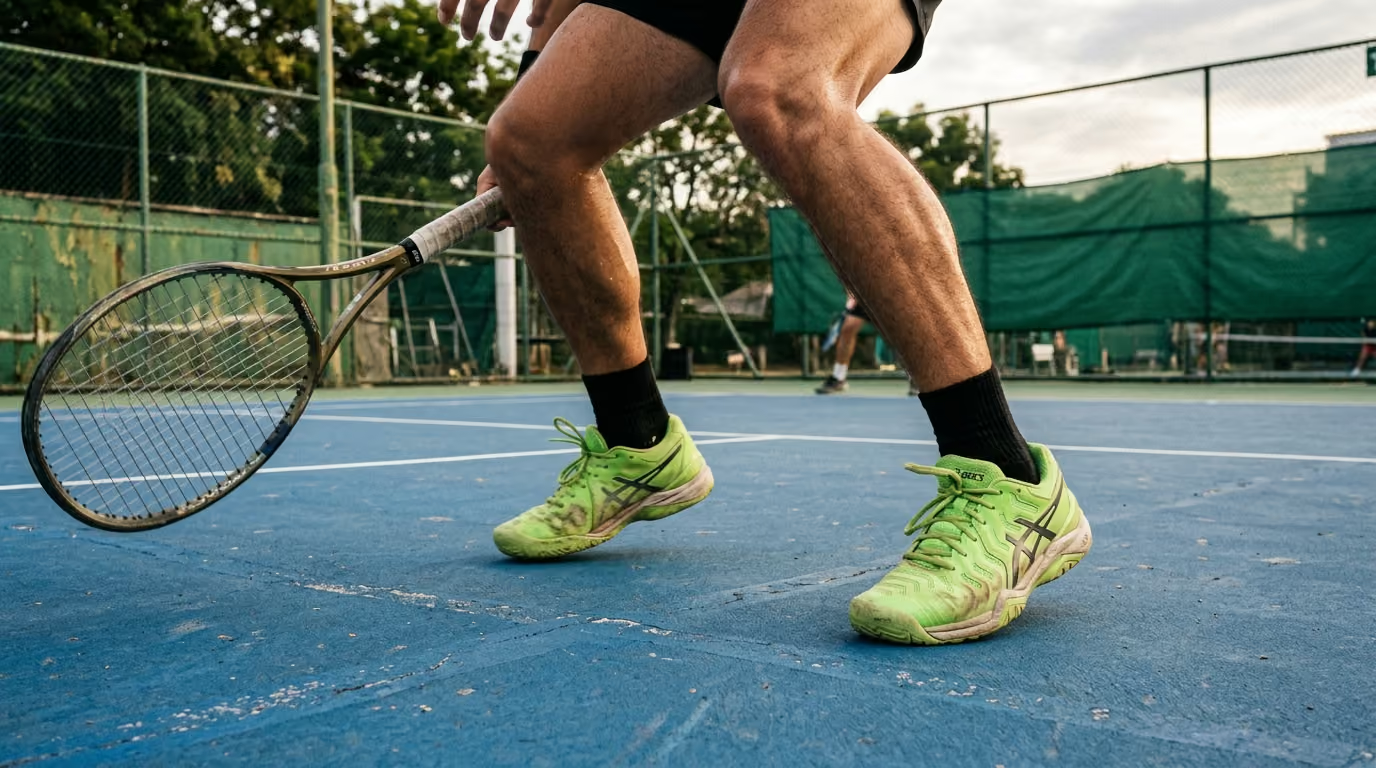
When players need to recover from intense matches, they can still refine their skills and tactical understanding through intelligently designed practice sessions.




We often assume that recovery requires staying off the court completely. However, smarter practice design allows you to reduce physical strain while continuing to build tactical awareness and technical precision. By adjusting court geometry, scoring rules, and rest intervals, you can maintain high performance without overworking your body. This approach shifts the focus from mindless running to deliberate decision-making, which supports long-term athletic longevity.
We do not have to choose between playing hard and staying healthy. Many players fall into a cycle of playing until they hurt, resting until they feel better, and then repeating the mistake. This cycle is frustrating and unnecessary. We can design sessions that target specific skills while protecting our joints and energy levels. This guide shows you how to structure your practice for maximum learning and minimum wear.
Our goal is not simply to make practice easier. We want to change the type of stress you experience on the court. We want to reduce high-risk movement and excessive repetition. At the same time, we want to preserve meaningful perception, decision-making, and stroke quality.
To design better practices, we must understand how our bodies respond to work. We can split training load into several distinct categories. Understanding these categories helps us target the exact areas that need rest. It also helps us keep our minds sharp while our muscles recover.
External load is the physical work you perform during a session. On a tennis court, this includes the total time you spend playing. It includes the number of points, games, and rallies you play. It also includes the number of serves you hit and the explosive changes of direction you make.
The International Olympic Committee (IOC) consensus on load management defines external load as the observable work performed by an athlete. This can include training hours, distance covered, and the number of games played. In racquet sports, total minutes on court do not tell the whole story. Two one-hour sessions can place very different demands on your body.
A relaxed hitting session from the baseline is relatively gentle. A highly competitive singles match with constant sprinting is incredibly taxing. We must look beyond the clock to measure our external load accurately.
Internal load is your body's physiological and psychological response to the external work. It tells us how hard your system is working to keep up. We can measure this using heart rate or breathing difficulty. We can also measure it using subjective tools, such as a session rating of perceived exertion.
The IOC identifies subjective measures as highly reliable tools for monitoring training stress. These measures capture your response to physical work, mental stress, sleep quality, and environmental factors. Your joints might feel stiff, or your concentration might slip. These are clear signs of high internal load, even if the session was short.
Acute load refers to the stress of your most recent sessions. This usually means the work you completed in the current week. Chronic load describes your longer-term training history. It represents your established capacity to handle work over several weeks or months.
The relationship between these two loads is critical for preventing injury. A demanding practice is easy to handle if you have built a strong chronic base. However, that same session can cause issues if your training volume has suddenly spiked. The IOC recommends monitoring both loads while considering your health history and age.
Mechanical load is the physical stress placed on your bones, joints, and tendons. In court sports, this stress comes from repeated braking, lateral shuffling, and deep lunging. It also comes from hard-court impact and explosive overhead swings. A session can feel cardiovascularly easy while remaining highly demanding on your joints.
Technical load refers to the specific coordination demands of your strokes. It includes the repetition of a particular shot and the speed of incoming balls. Hitting a high volume of heavy topspin groundstrokes requires great muscle endurance. When we modify practice, we can reduce mechanical stress while keeping technical engagement high.
Cognitive load is the mental energy required to play. It includes reading your opponent's body language and selecting targets. It also involves choosing when to attack and managing the pressure of the score. You must constantly anticipate where the ball will land.
A lower-impact session can retain substantial cognitive value. We can reduce physical running while keeping your mind fully engaged. This keeps your tactical skills sharp even when your body needs a break. We can consult recovery science resources to understand how to balance mental engagement with physical rest.
These two adjustments serve different purposes. Lower-volume practice means reducing the total minutes, games, or repetitions in a session. You might play at your normal speed but stop much sooner than usual. This is ideal when you feel generally fatigued but have no joint pain.
Lower-intensity practice means reducing ball speed, explosive movement, and competitive pressure. You might play for an hour but avoid hard sprints and deep lunges. This is useful when you are recovering from minor joint or muscle soreness. Understanding this distinction helps us apply the right remedy at the right time.
As we age, our training needs change. The World Health Organization (WHO) recommends that older adults accumulate 150 to 300 minutes of moderate-intensity aerobic activity per week. Alternatively, they can perform 75 to 150 minutes of vigorous activity. The WHO also highlights the importance of strength and balance training on two or more days per week.
These guidelines support a balanced approach to athletic longevity. Racquet sports offer excellent cardiovascular and social benefits, but they should not be your only form of exercise. A complete program should include dedicated strength, balance, and mobility work. You can check our healthy aging and athletic longevity guides for more details on balancing these demands.
Tennis is generally a safe sport for recreational players, but injuries do happen. Sports medicine literature indicates that recreational tennis players experience about 3.0 injuries per 1,000 hours of play. The prevalence of injury can reach over 50 injuries per 100 players. These statistics depend heavily on the player's age, technique, and frequency of play.
Overuse injuries are common in tennis due to the repetitive nature of the strokes. The shoulder, elbow, and lower back absorb significant force during serves and groundstrokes. Hard-court surfaces also place high stress on the knees and ankles. Smarter practice design helps mitigate these risks by controlling repetition.
Pickleball is played on a smaller court, which leads some to believe it is inherently low-risk. However, research shows that court size does not predict injury rates. A study of older pickleball players found that over 32 percent reported an injury during the previous year. Lower-extremity injuries accounted for nearly 58 percent of these cases.
Muscle and tendon strains made up over 61 percent of the reported pickleball injuries. The study identified weekly playing hours as a significant predictor of injury. This highlight the need for smart volume control. Playing multiple hours every day without adequate rest is a primary risk factor.
Older court players face unique risks that deserve careful attention. Emergency department data show that pickleball players aged 60 to 79 have increased odds of wrist and hand fractures. These injuries often occur during falls, slips, or trips on the court.
Older players are nearly three times as likely as younger players to sustain injuries from falls. The combination of backward movement and rapid changes of direction can challenge balance. Practice design must address balance and fall prevention. We can create drills that build stability without forcing players into dangerous, uncontrolled movements.
We can modify court sessions by adjusting five primary variables. We should adjust these variables individually to keep tracking simple. Changing everything at once makes it hard to see what is working.
We can structure drills in three ways: blocked, semi-random, or fully random.
Blocked drills repeat a single skill from a predictable feed. For example, you might hit twelve consecutive cross-court forehands. This setup is perfect when returning from a break or managing minor discomfort. It requires very little movement and keeps decision-making simple.
The main drawback of blocked practice is that it does not transfer perfectly to match play. Motor-learning research shows that players perform well during blocked drills but retain less over time. However, it remains a valuable tool for low-stress technical adjustments.
Semi-random drills introduce controlled variation. You might hit two cross-court shots and then one down the line. The feeder might alternate between a deep ball and a short ball with advance warning. This format keeps your mind engaged while controlling your movement patterns.
Semi-random structures are highly effective for lower-load days. They provide a realistic technical challenge without requiring maximal physical effort. You can prepare early and move smoothly because you anticipate the incoming ball.
Random drills replicate the chaos of a real match. You must react to unpredictable ball speed, spin, and depth. Research shows that random practice produces better long-term skill retention and transfer. This benefit can be especially useful for older adults building functional movement skills.
However, maximum randomness is not always ideal for a recovery session. Unpredictable balls force you into sudden stops, awkward lunges, and emergency reaches. On low-load days, use structured progressions. Start with blocked hitting, move to semi-random patterns, and finish with controlled game-play.
Scoring rules dictate the emotional and physical intensity of play. We can manipulate scoring to protect our bodies without losing our competitive drive.
Instead of playing a full three-set match, choose shorter formats. You can play a single set to four games or use a tie-break scoring system. You can also play timed matches with mandatory rest intervals.
Shorter games prevent you from playing through fatigue. Many injuries occur at the end of a long session when muscles are tired. Limiting the match length ensures your technique remains clean.
Cooperative scoring turns your opponent into a partner. You can award points when the pair reaches a ten-ball rally. You can also score points for hitting designated target zones.
This shift changes the physical demands of the game. Instead of sprinting to hit winners, you focus on depth, height, and control. It keeps the session engaging while eliminating high-impact defensive movements.
If you are playing with a stronger partner, use handicap rules to balance the court. The stronger player can be restricted to hitting cross-court only. They can also be asked to play at 70 percent of their normal pace.
This design prevents the recovering player from being forced into emergency defense. It allows them to practice clean technique from a stable position. The stronger player still gets a great workout by focusing on precision and placement.
We can use court boundaries to design safe movement patterns. Changing the shape of the playing area directly impacts the physical load on your joints. Use our injury prevention resources to explore how court modifications protect vulnerable tissues.
Playing on half of the court reduces lateral movement. You can practice straight down the line or use the cross-court diagonal. This setup is excellent for players managing knee or hip sensitivity.
A narrow court limits wide-ball chasing. It allows you to focus on your footwork spacing and contact point. You get plenty of hitting repetitions with very little running.
Short-court play involves hitting inside the service line or kitchen area. This reduces long-distance running but increases reaction demands. It also forces you to hit low balls and make frequent small adjustments.
Short-court play is not automatically low impact. The constant bending and quick reflex volleys can stress the knees and lower back. Use this format cautiously if you are managing joint stiffness.
You can use cones to mark out "safe zones" on the court. For example, agree that no drop shots are allowed during the session. You can also agree that balls landing deep in the corners are considered out.
These rules allow you to let difficult balls go without feeling like you are losing. You stay within a comfortable movement range. This preserves your hitting rhythm while protecting your body from sudden deceleration.
Rest is a powerful training tool that is often ignored. We must adjust our rest intervals when we notice signs of physical or mental fatigue.
Instead of playing continuous games, introduce structured recovery. You can work for two minutes and rest for one minute. You can also take a 90-second break after every four rallies.
This structure prevents the accumulation of deep physical fatigue. It keeps your heart rate in a comfortable zone and allows your muscles to clear lactate. It also keeps your mind sharp for the next block of work.
During rest intervals, choose the recovery style that fits your needs. Passive rest involves sitting down, hydrating, and focusing on deep breathing. This is best when you need to lower your heart rate quickly.
Active recovery involves gentle walking or light stretching. This helps keep your muscles warm and prevents joint stiffness. Choose the method that allows you to start the next block with clean movement mechanics.
Your partner has a massive influence on your physical load. Choosing the right player can make or break a recovery session.
For a lower-load session, look for a partner who can control the ball. They should be able to hit predictable shots at a moderate pace. They should also respect your physical boundaries and avoid targeting your weak spots.
A good partner communicates clearly and enjoys cooperative drills. They are happy to keep the ball in play rather than trying to win every point. This support allows you to focus on your recovery goals.
Matching with a highly inconsistent player can increase your physical stress. You must constantly adjust to erratic depths, heights, and angles. This forces you to make sudden movements to save the ball.
In contrast, a highly skilled player can make your job much easier. They can place the ball exactly where you need it to practice specific movements. Do not assume that playing with a weaker player is always the safer choice.
We can combine these variables to build specific practice templates. These case patterns help you address common recovery scenarios on the court. Refer to our mobility and movement training sections to see how these routines integrate with daily physical preparation.
This pattern is designed for players who feel tired but have no specific joint pain. The goal is to keep your skills sharp while keeping your heart rate low.
This session keeps you connected to the ball without causing physical exhaustion. It provides high-quality repetitions while protecting your energy reserves.
This pattern is for players managing minor knee, ankle, or hip sensitivity. It minimizes braking, lunging, and sudden changes of direction.
This design reduces the mechanical shear stress on your lower joints. It allows you to hit plenty of balls while avoiding high-risk defensive movements.
This pattern supports players recovering from shoulder, elbow, or wrist strain. It reduces high-force impacts and repetitive overhead movements.
This template allows your upper body to heal while you work on court positioning. You can build excellent touch and tactical awareness without stressing sensitive tendons.
Use this pattern when you are returning to the court after several weeks off. It helps you rebuild your physical capacity without overloading your system.
This progressive return is much safer than jumping straight into a competitive match. It allows your muscles and joints to readapt to court demands gradually.
This session is perfect when you want to learn tactically but need to rest your body.
This layout sharpens your decision-making speed and court vision. It proves that you can improve your game without running a single hard sprint.
The following structured lists outline the practical steps you can take to adapt your court sessions. These guidelines help you select the right adjustments based on your specific physical needs.
While all racquet sports share common elements, they place different demands on your body. Understanding these differences helps us design smarter practices for each sport. You can check our specific tennis articles, pickleball articles, and padel articles for deeper insights.
Tennis is played on a large court, which increases running distances. It features high ball speeds and heavy impacts. Serving in tennis requires a complex, high-force overhead motion that can stress the shoulder and spine.
To lower the impact in tennis, we must focus on court coverage. Playing doubles is an excellent way to reduce physical running. We can also use half-court singles drills to practice baseline strokes without covering the wide alleys. Reducing the number of full-force serves during practice is also critical for shoulder health.
Pickleball features a smaller court, which reduces sprinting distances. However, the game requires rapid reactions and frequent low-ball contacts. The "kitchen" line forces players into deep, repetitive squats and lunges.
The light weight of a pickleball paddle reduces joint torque, but the hard ball can cause wrist and elbow strain if struck off-center. To design low-impact pickleball sessions, we should limit the time spent in deep knee flexion at the kitchen. We can also use cooperative dinking drills that emphasize touch over explosive movement. Fall prevention is key, so avoid chasing deep lob shots backward.
Padel is played in an enclosed glass cage, which leads to long, tactical rallies. The court surface is typically artificial turf with sand, which can offer a softer feel than hard tennis courts. However, the constant rebounds off the glass require quick turns and awkward spatial adjustments.
The game features a high volume of overhead shots, such as the bandeja and vibora. These shots can place repetitive stress on the shoulder and elbow. To make padel practice smarter, we can use drills that focus on defensive positioning off the glass. We can also limit the number of overhead smashes and focus on controlled lobs to rebuild positional dominance.
When players try to modify their training, they often make simple errors. These mistakes can prevent recovery and lead to frustration.
Many players think that cutting a session from 90 minutes to 30 minutes is enough. However, they still play at maximum intensity during those 30 minutes. They sprint, lunge, and dive for every ball.
This approach does not protect your joints or nervous system. High-intensity movements carry the same risk of acute injury, even in a short session. If your joints need a break, you must reduce the intensity of your movements, not just the duration of your play.
We often assume that playing on a smaller court, like in pickleball, is automatically low-impact. This belief can lead to overplaying and overuse injuries.
As the research shows, pickleball has high injury rates among older players. The small court size does not protect you if you are playing multiple hours every day. The quick reactions, sudden stops, and deep squats require smart management, regardless of court size.
Many players only modify their sessions after they feel pain or stiffness. This reactive approach means you are already managing an injury.
Smarter practice design should be proactive. If you have played three days in a row, make the fourth day a planned low-load session. Do not wait for your body to force you to rest. Use planned recovery sessions to stay ahead of fatigue.
While random practice is great for skill retention, it is not always best for a tired player. Random drills require sudden, unpredictable movements that can challenge your balance.
When you need a lower-impact day, do not hesitate to use blocked or semi-random drills. These structures are predictable and safe. They allow you to get high-quality technical work without exposing your joints to unexpected forces.
Smarter practice design does not end when you step off the court. How you manage your recovery between sessions determines your long-term success.
I remember finishing a tough two hour padel match on a cold Tuesday night and waking up the next morning feeling like my lower back was locked in concrete. For a long time, I just accepted this as the price of playing hard in my forties. But once I started spending just ten minutes on targeted hip mobility before heading to the club, the stiffness almost completely vanished. It taught me that we do not have to accept pain as a default state of aging. In our experience, active recovery days that keep you moving gently are far superior to absolute rest.
Your muscles, tendons, and ligaments need time to adapt to training stress. High-impact sessions cause micro-damage to these tissues, which is a normal part of the training process. Your body repairs this damage during rest, making your tissues stronger.
If you do not allow enough time for recovery, these tissues can become irritated. This irritation can lead to chronic conditions like tendinopathy or muscle strains. Modified practice sessions allow you to maintain blood flow to these tissues without overloading them, which can support the healing process.
Playing court sports requires high levels of coordination, focus, and reaction speed. This places a significant demand on your central nervous system. When you are neurologically fatigued, your reaction times slow down, and your movement quality declines.
Smarter practice designs with longer rest intervals and lower competitive stress allow your nervous system to recover. This mental break helps you maintain high-quality movement patterns when you return to normal training. It also helps prevent the mental burnout that can come from constant competitive pressure.
While modifying your practice can help manage minor fatigue and stiffness, it is not a substitute for medical care. You must know the warning signs that indicate a need for professional evaluation.
If you experience any of the following symptoms, stop playing and consult a qualified healthcare provider:
If you find that you must modify every single session to avoid pain, it is time to seek professional guidance. A physiotherapist or sports medicine physician can help diagnose the underlying issue. They can provide a targeted rehabilitation program to rebuild your capacity.
Do not ignore persistent symptoms or try to push through them. Addressing minor issues early can prevent them from becoming chronic, career-limiting injuries. Our goal is to keep playing the sports we love for years to come.
Smarter practice design is a practical method of preserving the training stimulus that matters while removing the physical stress that does not. By making small, deliberate adjustments to your court sessions, you can continue to enjoy high-quality play, develop your tactical skills, and protect your body for long-term athletic longevity.
Follow Evercourts for practical insights on tennis, pickleball and padel performance, movement, recovery and healthy ageing. Stay connected for new articles, research-led guidance and ideas to help you play well and keep playing for years.


Read practical guidance for better movement, smarter preparation and a game that keeps working for you.
explore the Blog