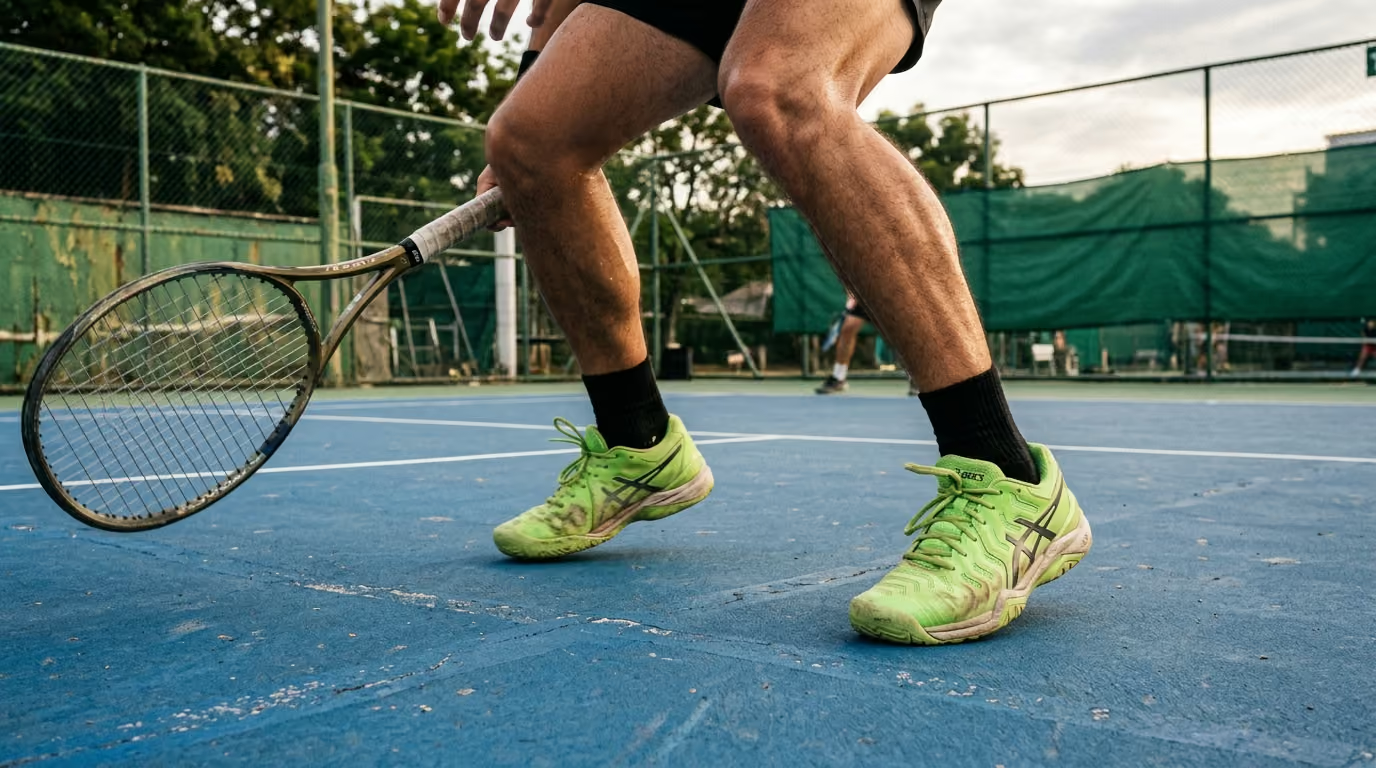
Players maintain their connection to racquet sports through various avenues like spectatorship, mentoring, and volunteering, even when competitive play is not possible.




Standing outside the court gates, keys in hand, you might watch a fast-paced match you would usually be playing. A nagging tendon issue or a demanding work schedule often forces dedicated players to step back from their regular competitive schedule. Remaining connected to racquet sports does not require constant competitive play. You can maintain a deep relationship with your sport by shifting your involvement toward spectatorship, mentoring, volunteering, and structured social participation. This transition helps preserve your athletic identity and community connections even during periods of lower physical volume.
A racquet sport relationship is far broader than match play. It includes playing, watching, learning, teaching, officiating, organizing, volunteering, mentoring, and contributing to the court community. Players often experience changes in match frequency due to injury, career demands, family care, or healthy aging. This shift does not mean your connection to the sport must end. It is helpful to view engagement as a broad spectrum rather than a simple choice between competing and quitting.
Recent participation data highlights the size of the racquet sports community. In 2024, tennis participation in the United States reached 25.7 million players, representing an increase of 1.9 million from 2023. The United States Tennis Association (USTA) reported that one in twelve Americans played tennis in 2024. Core players, defined as those who play at least ten times per year, reached thirteen million.
Furthermore, the USTA reported that tennis participation increased by another 1.6 million in 2025, reaching 27.3 million players. Retention rates increased by five percent, and players returning after a break of at least one year rose by nine percent. First-time and returning players accounted for 6.3 million participants. Total play occasions reached 575 million, which represents a nine percent increase.
These numbers show a vast population of players whose engagement level varies. The sport commitment model helps explain why people stay involved. This model identifies enjoyment, personal investment, and involvement opportunities as key factors. It also highlights the influence of social constraints and social support. Research on adult tennis found that personal investment, enjoyment, involvement opportunities, and social support are significant predictors of commitment.
Importantly, commitment predicts participation frequency and purchase behavior. According to research summarized by the International Tennis Federation (ITF) Coaching Review, enjoyment is the strongest predictor of commitment across all demographic categories. If competitive play becomes too stressful or physically demanding, alternative activities can help preserve that enjoyment. Club systems and court communities positively influence players' relationships with coaches and keep them involved.
Spectatorship also offers measurable social benefits. A study of sports spectatorship found that watching sports significantly and positively affects subjective wellbeing. This pathway functions through social interaction and emotional experience. A multicountry study in Australia and the United States found a positive association between live spectating and overall life satisfaction.
That study also found that stronger team identification was associated with emotional support from fellow fans. Additionally, research on three United Kingdom racket-sport events showed that spectators perceived significant improvements in subjective wellbeing after attending. The frequency of attendance and feeling inspired to be active were positively associated with these wellbeing improvements. A recent scoping review found that over seventy percent of reviewed articles reported a positive relationship between social capital and hedonic wellbeing.
These studies do not suggest that watching sports is a direct medical cure. Instead, they show that spectatorship is a valid pathway for maintaining life satisfaction and community connection. Understanding these scientific principles allows players to transition from a match-centered identity to a court-centered lifestyle.
To help players organize their involvement, we can utilize a structured five-lane model. This framework categorizes court connection into clear areas of focus. It helps players maintain their presence at the club without needing to compete in matches.
This lane focus is on Play. This includes low-pressure hitting, practice drills, casual doubles, and instructional clinics. The goal is to preserve technique, movement, and relationships without the stress of tournament scores. By focusing on developmental play rather than outcomes, players can enjoy the physical benefits of court time.
This lane focus is on Watching. This includes attending professional tournaments, local club matches, collegiate events, and studying video replays. It keeps the mind sharp and connected to the strategic developments of the game. Watching high-level play can inspire tactical changes in your own game.
This lane focus is on Teaching. This includes informal peer mentoring, helping beginners learn court etiquette, and guiding junior players. Sharing your strategic knowledge keeps you technically engaged with the sport. It also provides a sense of contribution that is independent of personal winning percentages.
This lane focus is on Serving. This includes volunteering for tournament administration, helping with facility upkeep, or training as an official. It provides a structured way to support the infrastructure of your local club. This service ensures that matches can occur safely and fairly for all participants.
This lane focus is on Socializing. This includes organizing post-play gatherings, coordinate team communications, and attending club social events. Social capital is a key driver of long-term athletic longevity. Staying socially connected ensures that you do not feel isolated when your playing volume decreases.
The Connection Portfolio Model helps you assess your current engagement. You can build a balanced portfolio by answering four simple questions. This model reduces your dependence on any single form of participation.
Ask yourself: how do I still move or hit on the court? Examples include casual hitting sessions, low-impact clinics, or adaptive play. Maintaining some physical touch with the racquet preserves hand-eye coordination. It also supports your cardiovascular health without overstressing your joints.
Ask yourself: how do I still learn about the game? Examples include watching high-level tactics, analyzing professional matches, or taking coaching education courses. Studying tennis strategy keeps your analytical mind engaged. It also helps you understand the nuances of court positioning and shot selection.
Ask yourself: who do I connect with in the tennis community? Examples include coordinating club communications, attending social nights, and supporting team matches. Maintaining these friendships prevents the feeling of isolation that often follows an injury. It keeps you connected to the unique culture of your club.
Ask yourself: what do I give back to the sport? Examples include volunteering at local events, mentoring newer players, or training as an umpire. Giving back builds a positive sense of purpose. It shifts your focus from personal achievement to community development.
A Transition Matrix can guide your involvement based on your physical capacity and schedule. Below are practical pathways based on common player situations. These suggestions help players find suitable connection routes.
Suitable routes include match spectating, tactical analysis, team logistics support, and tournament desk volunteering. These activities keep the player integrated with their team during recovery. They prevent the psychological distance that often occurs during rehabilitation.
Focus on social doubles, coaching education, local officiating, and club leadership. This transition allows players to remain active on the court without the physical strain of singles matches. It preserves their status in the club through administrative or educational roles.
Prioritize one weekly social session, select live streams, and participate in online club forums. This approach fits into a busy schedule without requiring weekend-long tournament commitments. It keeps the player connected with minimal time investment.
Look for beginner round robins, volunteer orientation sessions, and open social events. These entry points do not require pre-existing partners. They offer a welcoming environment to build new social connections.
Select low-pressure clinics, light hitting groups, and supportive doubles formats. This gradual return helps rebuild physical capacity and technical confidence. It avoids the risk of early re-injury from premature competitive pressure.
Utilize modified court formats, supportive adaptive programs, coaching, and spectating. Modified formats, such as short-court play, reduce physical demands. This allows players to enjoy racquet sports throughout their healthy aging journey.
Transition to mentoring advanced juniors, officiating, and community event leadership. This role leverages their deep strategic knowledge and technical skills. It provides a highly respected pathway that does not depend on personal physical performance.
Utilize public courts, community tennis associations, volunteering, and free local spectating. Many community programs offer free court access and equipment loans. Volunteering at events can also provide free access to matches and coaching resources.
A common misconception is that watching sport is merely passive consumption. For a racquet sport player, spectatorship can preserve the strategic and emotional elements of the game. It allows you to analyze patterns of play, anticipate shots, and enjoy the physical mastery of the athletes. This active engagement keeps your mind sharp and connected to the competitive cycle.
Active spectatorship involves several pathways. Live attendance at local or professional matches provides immediate physical connection to the court. Broadcast viewing of tournaments keeps you connected to the global sport calendar. Analytical viewing involves studying specific movement patterns, court positioning, and tactical decisions.
Social viewing involves watching matches with friends, teammates, or a fan community. In our experience, watching matches with a peer group creates excellent opportunities for tactical discussion. You can discuss serve-plus-one strategies, return positioning, and defensive court coverage. This sharing of ideas turns watching into a collaborative learning experience.
To make spectatorship active, you can build specific court routines. Try keeping a pattern notebook during matches. Note where players place their serves on critical points. Observe how doubles partners communicate and cover the middle of the court.
You can also volunteer to coordinate viewing groups at your local club. Organizing a watch party for a major final helps bring the community together. Attending high school or collegiate matches is another excellent way to support local athletes. These routines turn watching into a shared, intellectually stimulating court practice.
Coaching and mentoring allow you to remain close to the technical side of your sport. This role can range from formal certified coaching to informal peer mentoring. Sharing your experience helps build the next generation of players. It also provides a deep sense of contribution and personal satisfaction.
Peer mentoring is especially valuable for experienced players who want to reduce match volume. You can act as a hitting partner for developing players. You can also guide them through their first tournament experiences. This support helps them manage competitive anxiety and understand court etiquette.
However, it is important to distinguish between coaching and casual advice. Giving technical advice requires an understanding of modern mechanics and injury prevention. The ITF Coaching Review notes that inadequate coach knowledge of injury prevention is a common barrier. Offering incorrect advice can lead to partner injuries or technical habits that are hard to correct.
Furthermore, any role involving minors requires strict adherence to safeguarding policies. In the United States, the USTA Safe Play program combines education, background screening, and conduct policies. Anyone with regular contact or authority over minor athletes must complete Safe Play requirements.
This includes volunteer coaches, officials, tournament personnel, and program organizers. The approval process includes acknowledging the official policy and completing U.S. Center for SafeSport training. Additionally, it requires completing a thorough background check application.
The ITF safeguarding policy also instructs individuals to challenge unsafe conduct and report concerns. If a child is in immediate danger, concerns must be reported to the local police. Understanding these rules is a critical responsibility for any player stepping into a mentoring role. It ensures that the court remains a safe environment for all participants.
Volunteering is a powerful way to maintain a structured presence at your facility. It provides opportunities to interact with different generations and playing levels. It also helps you understand how events operate and builds relationships with local organizers. This structured involvement can replace the routine of regular league matches.
The USTA identifies many volunteer opportunities within community programs. You can support tournament operations, act as a tennis ambassador, or serve on local committees. Supporting community tennis associations and public facilities helps ensure that courts remain accessible to everyone.
You can visualize your service through a structured volunteer ladder. This model offers clear steps from low-commitment helper to organizational leader.
Officiating offers another excellent bridge between competition and service. Certified officials are integral to matches at local, community, and professional levels. They carry the responsibility for ensuring fair play and sportsmanship.
The USTA officiating certification pathway is structured and clear. It begins with introductory officiating courses and rules training. Candidates must complete roving umpire courses, Safe Play compliance, and a vision screening.
Finally, candidates complete on-court training and shadow experienced officials. This pathway offers a structured second career within your sport. It allows you to stay close to the competitive action without the physical demands of playing.
Social support is a primary driver of athletic commitment. However, club environments are not automatically inclusive. Some facilities focus heavily on competitive ratings, which can create barriers for newcomers or returning players.
A retention study of adult league players reported that rigid rating systems can cause issues. Some players believed the system did not sufficiently reward personal development. Others struggled with social integration when transitioning to new teams.
In some cases, players even tried to manipulate the rating system to gain a competitive advantage. This research highlights the need for low-barrier, rating-free social structures. Clubs should design environments where players can enjoy the sport without defending a rating.
To learn more about the benefits of community-centered play, you can read our resources on court life. These guides show how cooperative formats help maintain engagement. They offer practical advice for building a supportive club environment.
Useful social formats include rotating doubles, where partners change after a set number of games. Round robins allow players of different skill levels to mix naturally. Stay-and-play sessions combine light instruction with social hour afterwards.
Welcome hosts can greet new participants and introduce them to appropriate groups. Providing social events that do not depend on alcohol also helps create an inclusive environment. These structures build social capital and ensure long-term court connection.
The way players stay connected beyond match play varies depending on their specific sport. Tennis, pickleball, and padel each have distinct communities, spaces, and structures. Understanding these differences helps you find the right pathway.
Tennis possesses a highly structured system of community tennis associations, clubs, and governing bodies. This provides deep pathways for formal volunteering, officiating, and structured junior development. To read more about managing your tennis journey, check out our section on tennis development.
Because tennis courts are large, players are physically separated during play. This physical distance makes structured off-court social hours particularly important for building community.
Pickleball is characterized by high social density and low barriers to entry. The open-play rotation system allows players to drop in without arranging a specific foursome. This structure makes it easy for injured or low-volume players to sit by the courts and socialize.
To read about maintaining physical capacity for the short court, view our articles on pickleball longevity and health.
While pickleball is highly social, its formal officiating and volunteer pathways are still developing. Players must often self-organize to run tournaments or manage community courts. This informal environment offers excellent opportunities to create custom social formats.
Padel is highly social and typically centered around commercial club structures. Because padel matches require exactly four players, a low-volume player can easily act as a match organizer. Organizing matches, coordinate club ladders, and hosting social events are natural ways to stay connected.
To find resources on padel lifestyle, visit our section on padel community lifestyle.
The close physical quarters of padel courts make post-match socializing a standard part of the club culture. This proximity supports social interaction throughout your athletic journey.
Transitioning to a lower volume of competitive play can present specific challenges. One common error is overcommitting to volunteer roles. Players often try to replace their competitive match play with excessive administrative work.
This can lead to burnout and frustration. It is essential to set clear boundaries on your volunteer hours and responsibilities. Agree on your duties in advance and communicate your availability clearly to club organizers.
Another mistake is assuming that playing experience automatically makes someone a qualified coach. While playing skills are valuable, they do not guarantee teaching capability. Effective coaching requires knowledge of modern biomechanics, communication strategies, and injury prevention.
The ITF Coaching Review highlights that a lack of injury-prevention knowledge is a major barrier in community coaching. Uncertified coaches might accidentally give outdated advice that could lead to injury. If you want to coach, seek out formal certification and education programs.
Finally, some players struggle with an identity transition. They may link their self-worth entirely to their rating or competitive results. Seeing yourself as a mentor, supporter, or organizer is a positive redesign of your athletic life. This perspective shift helps maintain self-esteem and connection to the community.
Managing your physical load is a key aspect of healthy aging and athletic longevity. High-intensity competitive matches place significant eccentric loads on your joints, tendons, and muscles. Shifting some of your court volume to coaching, spectating, or volunteering allows these tissues to recover.
Our team has spent decades studying how recreational athletes manage their physical limits. I remember finishing a tough two hour padel match on a cold Tuesday night and waking up the next morning feeling like my lower back was locked in concrete. For a long time, I just accepted this as the price of playing hard in my forties.
But once I started spending just ten minutes on targeted hip mobility before heading to the club, the stiffness was significantly reduced. It taught me that we do not have to accept physical limitation as a default state of healthy aging. Instead, managing our physical load and integrating active recovery helps us preserve our long-term court lifestyle.
By replacing one weekly competitive match with a mentoring or officiating session, you reduce systemic fatigue. This balance supports joint health and helps prevent chronic overuse injuries. To learn more about optimizing your physical preparation, check out our resource on mobility and movement. These techniques help you stay active on and off the court for years to come.
While adjusting your participation volume is a smart strategy, it cannot replace professional medical care. If you are experiencing persistent pain, you should consult a qualified healthcare provider. This ensures that you do not turn a minor strain into a chronic injury.
Some physical symptoms require immediate clinical evaluation. These include localized swelling that does not subside within a few days. Sharp, stabbing pain during normal daily movements is another warning sign.
Joint instability, persistent numbness, or a feeling that a joint is catching also require professional attention. A medical professional can provide a precise diagnosis and design a safe rehabilitation program. Once cleared, you can safely utilize the five-lane framework to transition back to active play.
To learn more about athletic longevity and injury prevention, you can visit our healthy aging and athletic longevity resources. These materials help you navigate physical challenges while staying connected to your sport.
To see how these concepts function in real life, we can look at several common player profiles. These case studies show how players successfully adjusted their involvement. They demonstrate that a court-centered lifestyle is achievable for everyone.
Sarah is a dedicated 4.0 tennis player who competes in multiple local leagues. After developing a severe case of tennis elbow, her physician advised her to stop playing for twelve weeks.
Initially, Sarah felt isolated and worried about losing her connection to her teammates. To stay involved, she decided to apply the five-lane framework. She attended her team's weekly matches to support them from the sideline.
During the matches, she kept a tactical notebook to analyze their opponents' doubles positioning. She also took over the administrative logistics for the team, including schedule coordination and court bookings.
To prepare for her return, she completed the USTA Safe Play education courses online. Once her elbow healed, she gradually returned to the court through low-intensity hitting sessions. By staying active in the community, Sarah maintained her social connections and returned to play with high motivation.
Marcus competed in regional tournaments for over thirty years. As he entered his fifties, the physical demands of travel and intense singles play began to affect his knees.
He decided to stop playing formal competitive matches but did not want to leave the sport. Marcus built a new connection portfolio focused on contribution and officiating.
He enrolled in the USTA officiating certification pathway and completed the introductory courses. Within six months, Marcus was working as a certified roving umpire at local junior events.
He also began mentoring two promising junior players at his home club, sharing tactical advice and match preparation strategies. Marcus found that officiating and mentoring provided a strong sense of purpose. He remained a respected, active member of the court community without the joint strain of competitive singles.
Elena is a mother of two young children who works a demanding full-time job. She found it impossible to commit to a regular league schedule with fixed match times.
Instead of quitting, Elena adjusted her participation intensity. She joined a weekly social doubles group that did not require a season-long commitment.
She also began volunteering at her children's junior weekend clinics, helping the coaches manage court logistics. On weekends, she organized casual, non-alcoholic social hours for families at her local public park.
Elena also stayed connected by watching professional tournaments online with a group chat of former college teammates. This balanced portfolio allowed Elena to enjoy the sport on her own terms. It kept her connected to the court during a busy phase of life.
David returned to tennis after taking a five-year break due to career changes. He felt anxious about his physical fitness and technical consistency.
Instead of immediately joining a competitive ladder, David's club recommended a low-pressure pathway. He started by attending a weekly cardio tennis clinic to rebuild his footwork.
He also attended local collegiate matches as a spectator to study modern baseline strategy. To meet other players, he volunteered to assist with the club's annual charity tournament.
This gradual exposure allowed David to rebuild his confidence without physical setback. Within a year, he was playing regular social doubles and felt fully integrated into the club community.
When to Revisit this Resource: Revisit this guide whenever you face a change in your physical capacity, schedule, or competitive goals. It can help you redesign your connection portfolio during recovery from injury, changes in work commitments, or transitions into new stages of life.
Maintaining a long-term relationship with racquet sports is about adapting your role to fit your current season of life. By embracing a court-centered lifestyle, you can continue to enjoy the community, strategy, and vitality of the sport for years to come.
Follow Evercourts for practical insights on tennis, pickleball and padel performance, movement, recovery and healthy ageing. Stay connected for new articles, research-led guidance and ideas to help you play well and keep playing for years.


Read practical guidance for better movement, smarter preparation and a game that keeps working for you.
explore the Blog