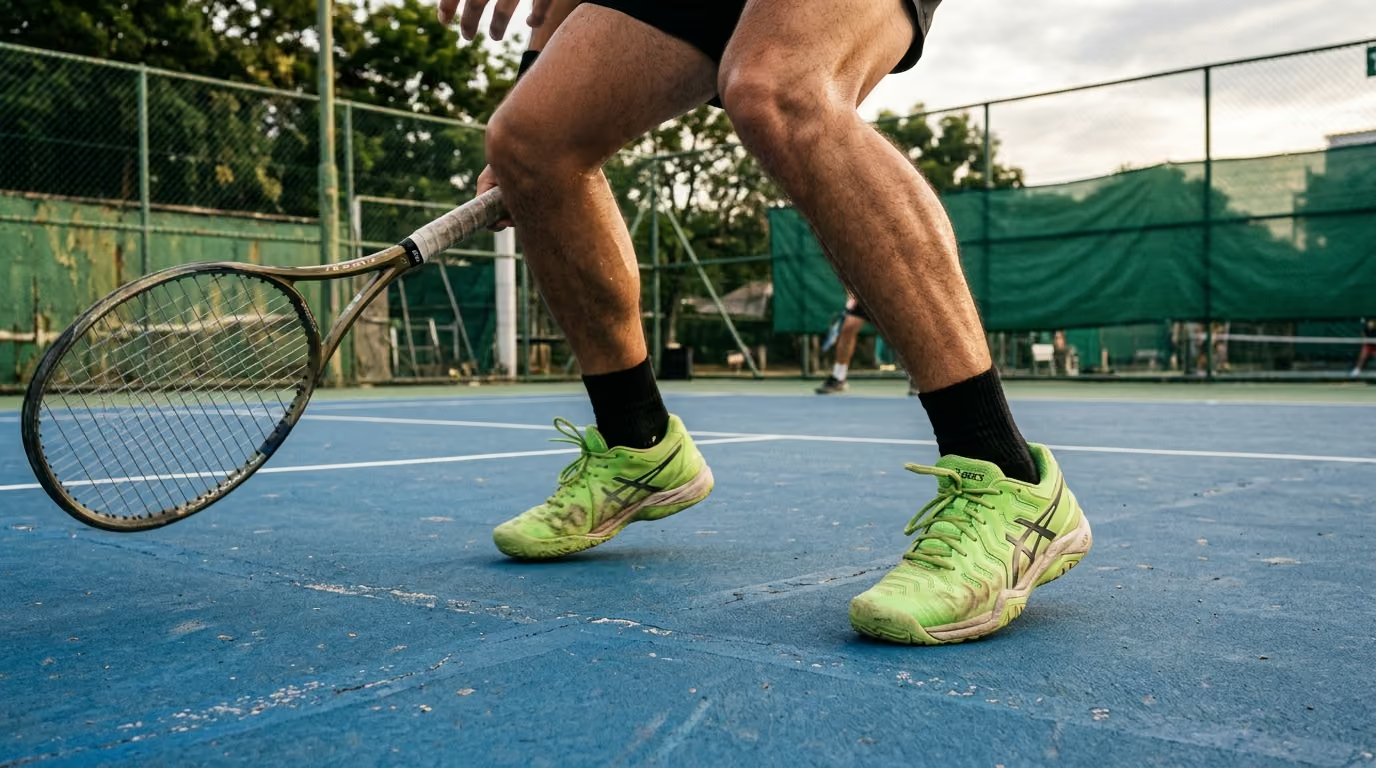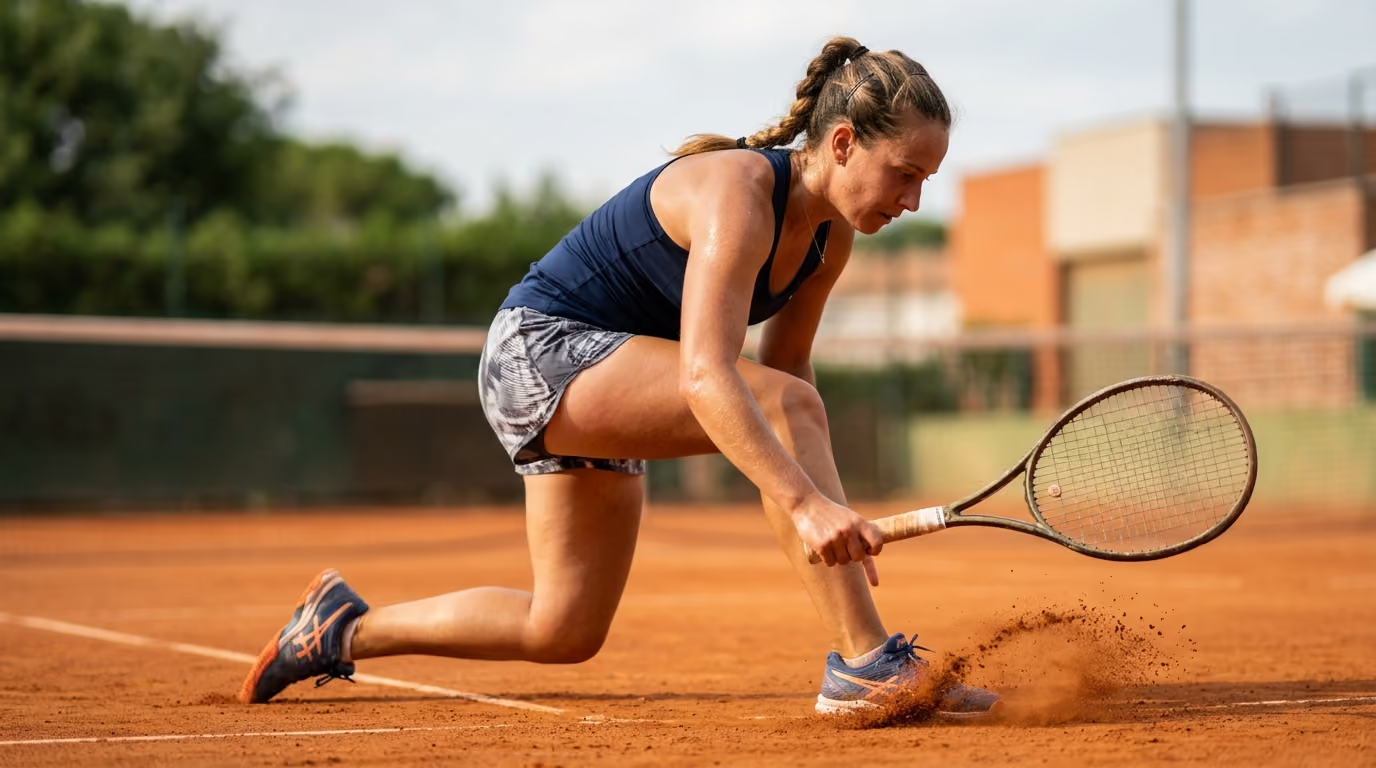

Players can maintain fluid, efficient movement under pressure by understanding the difference between passive flexibility and active, usable mobility.




Many players believe that stretching more or forcing textbook form is the key to moving well when a match gets intense. In reality, attempting to micro-manage your physical mechanics under stress is the fastest way to make your body rigid. When competition tightens, trying to control every joint angle creates a cascade of muscle tension that limits your movement.
True mobility under pressure is not about static flexibility, but rather your ability to coordinate and control your joints under the stress of competition. By managing your visual focus, maintaining rhythmic breathing, and pacing your deceleration, you can preserve your functional range of motion when fatigue sets in. This approach helps you maintain fluid, efficient movement without succumbing to stress-induced tension.
Understanding the difference between passive capacity and active control is the first step toward moving freely on the court. To help you maintain fluid movement during tough matches, this guide examines the physical and mental strategies that keep you mobile.
To move well under pressure, you must understand that flexibility and mobility are not the same thing. Flexibility refers to the passive range of motion of a joint. It is measured when an external force or a partner moves your limb while your muscles are relaxed.
Mobility is a much broader and more active quality. It is your ability to voluntarily access, control, and coordinate movement through a functional range of motion. You might possess excellent passive range of motion while lying on a physical therapy table. However, if you lack the strength, balance, and timing to use that range during a fast rally, that flexibility is useless.
To build a movement pattern that survives pressure, we must look at how range of motion is categorized.
A 2024 review of mobility training in athletic populations confirmed that structured mobility programs consistently support sports performance. The researchers found that twenty out of twenty-two studies reported clear performance benefits or preservation of movement quality. However, the review also indicated that increasing your passive range does not automatically improve your play. The real value lies in whether you can actively stabilize and control that range during a fast movement.
Movement on the court is never a fixed, isolated event. Biomechanist Karl Newell developed a model explaining that movement is an ongoing interaction of three distinct constraints.
Your movement pattern on the court is a real-time solution to these combined constraints. Under pressure, environmental constraints become highly unpredictable, and task constraints demand faster reactions. If your individual constraints, like joint range and control, are brittle, your movement quality will break down. For this reason, training must prepare you to adapt to changing situations rather than repeating a single rigid shape. To find practical exercises for these variables, you can read our Mobility & Movement Resources.
Many players try to improve their court movement by running planned cone drills. While these drills build raw change of direction speed, they do not replicate the demands of real play. Research shows that change of direction speed is a closed skill where you know exactly where to move beforehand.
Agility, however, is an open skill that requires you to perceive a stimulus and make a rapid decision before executing the movement. If you only train closed-skill patterns, you will likely become stiff during a live match. Under pressure, the need to read the ball and the opponent adds cognitive load. This mental load can disrupt your timing, make your steps frantic, and lock up your joints.
When a match gets tight, your autonomic nervous system shifts into a state of high arousal. This physiological shift changes how your brain controls your muscles. Understanding these attentional changes can help you keep your movement fluid during critical points.
Anxiety disrupts sports performance through two major attention-based pathways. A systematic review published in international sports science journals defines these as the distraction model and the self-focus model.
Research on athletes under pressure shows that experts often suffer from distraction rather than purely over-monitoring their mechanics. When you worry about the consequences of a missed shot, your visual processing slows down. Your muscles react by co-contracting, which means opposing muscle groups fire at the same time. This co-contraction makes your joints stiff and reduces your reach.
The way you talk to yourself on the court directly affects your joint stiffness. An internal focus directs your attention to your body parts or joint angles. An external focus directs your attention to the objective effect of your movement on the environment.
For well-learned court skills, focusing internally can disrupt your automatic movement control. Research indicates that external cues lead to better movement efficiency, reduced muscle activity, and smoother joint coordination. Using simple, external targets allows your body to organize its joints naturally. Detailed mechanical self-talk should be reserved for low-pressure practice sessions, not competitive matches. For advice on balancing these mental strategies, consult our injury prevention guides.
Your eyes guide your body, and how you gather visual information directly influences your physical coordination. Under pressure, chaotic eye movements can lead to frantic, unstable physical reactions.
The quiet eye is the final, stable gaze fixation directed at a specific target before you initiate a critical movement. A major meta-analysis of quiet eye research found a strong difference in gaze stability between elite and novice athletes. Experts maintain a longer, more stable visual fixation on their target. This stable gaze allows the brain to accurately program the timing, force, and direction of the movement.
When pressure rises, gaze behavior can become highly sensitive to the competitive environment. A 2022 study showed that high-pressure match play often shortens this quiet eye duration. If your eyes are darting around the court or tracking the score board, your brain cannot organize a smooth movement. You end up lunging late, which forces you to use awkward, high-tension physical compensations.
To apply quiet eye principles on the court, you must establish a deliberate visual routine. Instead of scanning the entire court frantically, pick a specific target early in your preparation.
A systematic review of quiet eye training showed that programs lasting several weeks consistently help athletes maintain better gaze control. This stable visual input prevents you from rushing your steps. When your brain has clear visual information, it can coordinate your muscles smoothly, keeping your movement relaxed and efficient. If you want to integrate these visual strategies into your regular training, you can find complete protocols in our court resources section.
Breathing is a powerful physical bridge between your mind and your muscles. It is not just a relaxation technique, but a direct tool for managing physical stiffness and movement rhythm.
When you feel stressed on the court, your natural reaction is to hold your breath or take shallow chest breaths. Holding your breath increases your global muscle tension. This tension locks your rib cage and tightens your hip flexors, which restricts your rotational mobility.
Conversely, diaphragmatic breathing helps down-regulate your nervous system. By expanding your lower ribs as you breathe, you can release excessive tension in your neck, shoulders, and lower back. This physiological release makes it easier to turn your torso and reach for wide balls.
Staying relaxed does not mean you should move like a limp noodle. Court sports require brief moments of task-specific stiffness to transfer force into the ball and protect your joints.
Your objective should be a state of dynamic readiness. You need to remain stable enough to redirect force, without locking your joints into a rigid posture that slows down your reactions.
To maintain this balance of tension, use specific breathing patterns during different phases of a match.
There is no single posture that is perfect for every moment on the court. Trying to force your body into a static, upright position can actually hinder your ability to react quickly.
An effective readiness posture is a dynamic position that preserves your access to your next movement. This posture must adapt to the speed of the incoming ball and your position on the court.
Many players fall into physical habits that limit their movement quality under pressure.
When you get tired, your body's ability to maintain a strong posture begins to break down. Research shows that fatigue alters your joint mechanics, increases your ground contact times, and reduces your ankle stiffness. A systematic review of fifty studies confirmed that physical fatigue negatively affects your balance, reaction times, and spatial coordination.
As your lower-body muscles fatigue, your nervous system often compensates by increasing your trunk movement. You might start bending from your lower back rather than your hips, which can cause discomfort. Recognizing these changes can help you adjust your movement before your technique completely degrades.
To build movement skills that do not break down under pressure, you must progress your training systematically. This five-layer model helps you transition from slow, controlled movements to chaotic, match-like conditions.
This foundational layer focuses on developing your raw joint range, strength, balance, and tissue tolerance.
This layer connects your raw joint mobility to functional, sport-specific movement patterns.
This layer adds simple visual or auditory decisions to your physical movement patterns.
This layer introduces consequences, time constraints, and competitive uncertainty to your training.
This final layer requires you to perform complex, reactive movements after demanding physical work.
Research confirms that change of direction performance can recover quickly with short rest intervals. However, during a long rally, you must rely on smart movement strategies to get you through. To build a robust foundation for this progression, examine our strength and conditioning resources.
While tennis, pickleball, and padel share similar court concepts, each sport places unique physical demands on your body. Understanding these differences can help you adjust your movement patterns to avoid unnecessary joint stress.
Tennis is played on a large court, which requires explosive sprints and massive deceleration forces. You must be able to run long distances, slide into your shots on clay, and absorb heavy impact forces on hard courts.
Pickleball is played on a compact court, which emphasizes rapid hand-eye coordination and constant low-crouched postures. You spend a lot of time near the non-volley zone line, requiring fast lateral steps and quick reflexes.
Padel is a fast-paced game that features constant 360-degree movements, wall rebounds, and overhead play. The compact court demands that you change directions quickly and turn smoothly to track balls off the glass.
We have spent years observing how these sports tax different joints. I remember finishing a tough two hour padel match on a cold Tuesday night and waking up the next morning feeling like my lower back was locked in concrete. For a long time, I just accepted this as the price of playing hard in my forties. But once I started spending just ten minutes on targeted hip mobility before heading to the club, the stiffness almost completely vanished. It taught me that we do not have to accept pain as a default state of aging. In our experience, understanding the specific movement profiles of your chosen sport is the first step toward lasting comfort on the court.
To perform well and protect your joints over time, you must balance your training volume with proper recovery. Tracking your daily physical readiness can help you avoid overtraining and injury.
Many players rely on a single fitness tracking metric, such as resting heart rate or heart rate variability, to decide if they are ready to play. However, the International Olympic Committee consensus statement on player monitoring warns that no single marker has been validated to identify an overtrained state.
Instead, a smart monitoring approach combines both objective physical metrics and subjective personal feelings. Your subjective ratings of muscle soreness, mental stress, and sleep quality are often the most sensitive indicators of physical fatigue.
To get an accurate picture of your physical readiness, track both your external training load and your internal physical response.
If your weekly training volume spikes while your sleep quality declines, your risk of physical fatigue increases. This fatigue can directly degrade your coordination, making you more prone to stiff movement and injury.
You can also assess your daily physical readiness by paying attention to specific visual cues during your warm-up.
If you notice these signs during your warm-up, focus on moving efficiently rather than pushing for maximum speed. For comprehensive advice on tracking your training load, see our recovery science guides.
A traditional warm-up often consists of static stretching, where you hold a stretch for thirty to sixty seconds. However, research suggests that long-duration static stretching before play can actually reduce your explosive power and muscle stiffness.
A performance-focused warm-up should prioritize dynamic stretching and active joint preparation. Dynamic stretching involve moving your limbs through a full range of motion under active control. This movement raises your core body temperature, improves your joint lubrication, and prepares your nervous system for fast actions.
While static stretching can be useful for long-term flexibility, it is best done after your matches or during separate recovery sessions. Before a match, your warm-up should focus on building active, usable mobility.
To prepare your body for a match, use this systematic seven-step warm-up routine.
When trying to improve their court mobility, many players make common mistakes that can actually limit their performance and increase joint stress.
Many players focus solely on increasing their passive flexibility through intense stretching. However, having a wide range of motion is useless if you cannot actively stabilize your joints within that range. Uncontrolled joint movement can lead to unstable joint mechanics and increased injury risk. Focus on developing active strength and control throughout your entire usable range.
Trying to micro-manage your physical technique during a fast match is a recipe for physical rigidity. When you think about your joint angles, you disrupt your brain's automatic movement control. Keep your competitive focus on external targets, such as the ball's trajectory or a specific court space. Save your detailed mechanical corrections for low-pressure practice sessions.
A wearable fitness tracker can provide useful data, but it should not be the only tool you use to assess your physical readiness. Pay close attention to your subjective feelings of muscle soreness, mental stress, and sleep quality. If your body feels exceptionally stiff and tired, adjust your training intensity regardless of what your fitness tracker says.
Many players think that fatigue simply makes their muscles feel tired. In reality, physical fatigue degrades your balance, reaction times, joint coordination, and spatial awareness. When you are tired, your brain's ability to coordinate complex movements declines, leading to rigid, inefficient movement patterns. Prepare for this by pacing your deceleration early when fatigue sets in.
Human movement is naturally asymmetrical, and racquet sports inherently favor your dominant side. Trying to force perfect symmetry in your movement patterns can create unnecessary physical tension. Focus on developing functional, adaptable movement patterns that allow you to solve court tasks efficiently, rather than chasing a visual ideal of perfect symmetry.
While minor muscle stiffness and fatigue are normal parts of training, certain physical symptoms require professional medical evaluation. Knowing when to see a qualified healthcare provider can help you stay healthy and active for years to come.
If you experience any of the following symptoms, stop playing and consult a healthcare professional.
Pushing through sharp, persistent pain is never a smart strategy for long-term health. A qualified physical therapist or sports medicine physician can help diagnose the root cause of your symptoms and design a safe, effective recovery plan.
By addressing minor physical issues early, you can avoid chronic injuries and continue enjoying your favorite racquet sports for years to come. Your goal should always be to build a resilient, adaptable body that allows you to play with confidence and ease.
Use this practical checklist to keep your movement fluid and efficient during your next competitive match.
Maintaining high-quality movement under pressure is an active, ongoing skill that requires consistent physical and mental practice. By focusing on usable mobility, stable gaze control, and strategic breathing, you can stay relaxed and efficient on the court, even during the most demanding matches.
Follow Evercourts for practical insights on tennis, pickleball and padel performance, movement, recovery and healthy ageing. Stay connected for new articles, research-led guidance and ideas to help you play well and keep playing for years.


Read practical guidance for better movement, smarter preparation and a game that keeps working for you.
explore the Blog