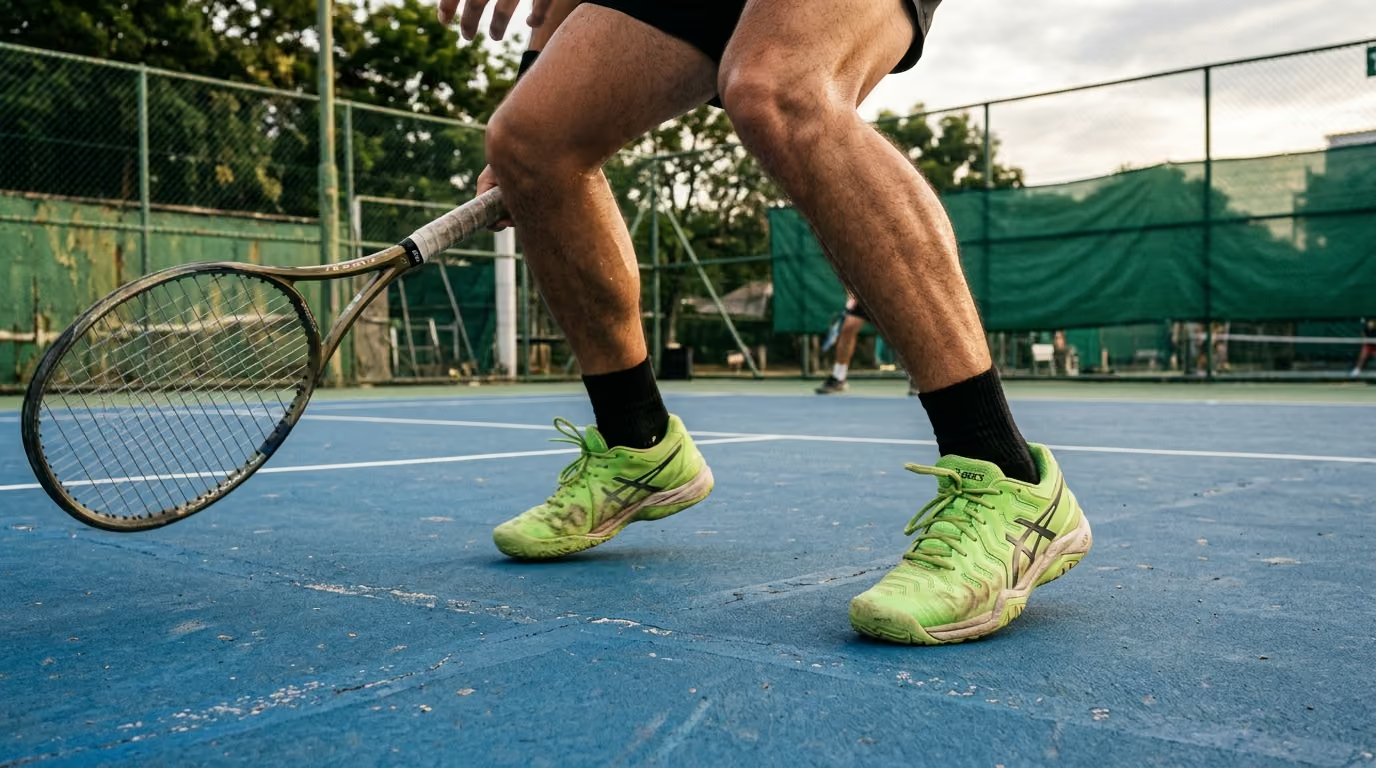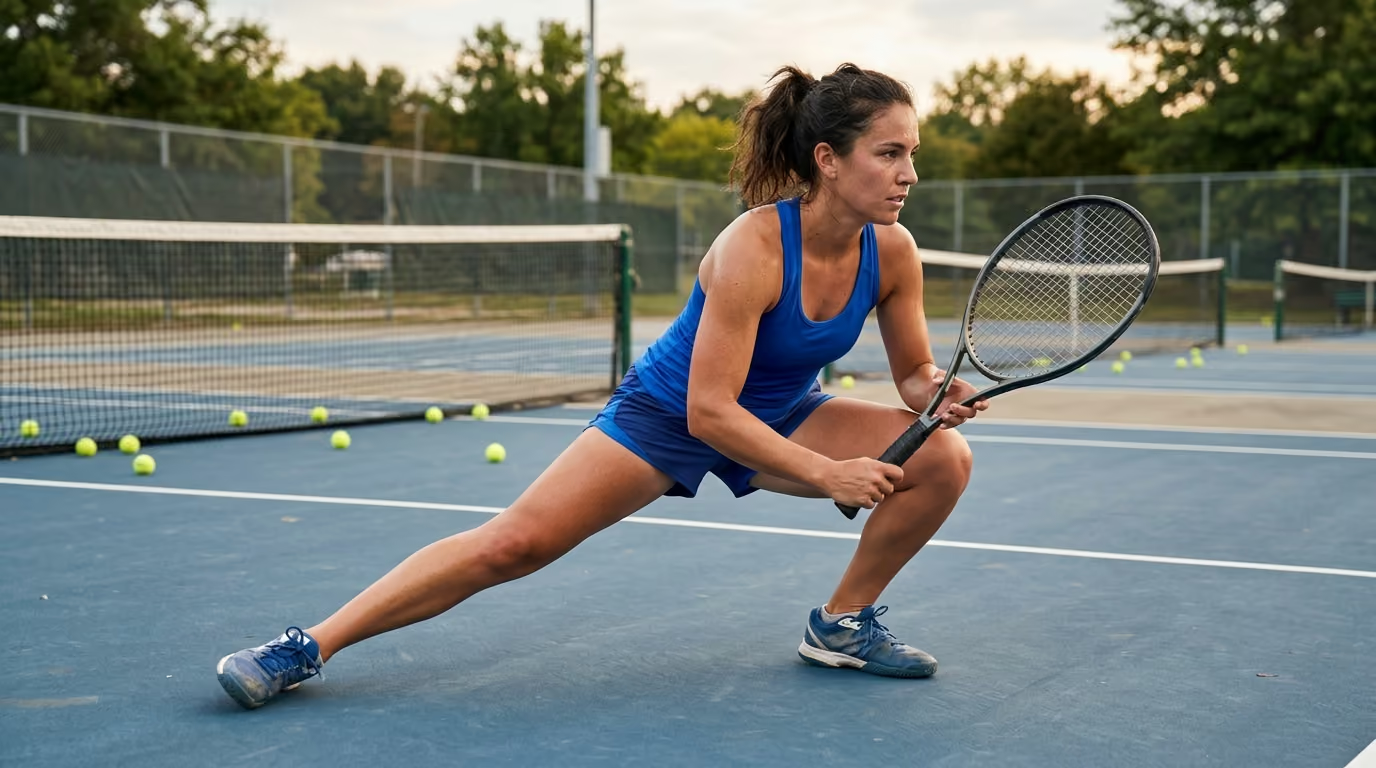

While many assume a quick stretch prepares them for racquet sports, effective preparation involves dynamic mobility before play and static stretching for recovery.




You stand near the baseline, cold wind brushing your face, as you reach down to pull your heel toward your glutes. You hold it for ten seconds, switch legs, swing your arms back and forth, and assume you are ready to play. This familiar scene happens daily on tennis, pickleball, and padel courts around the world. Unfortunately, this brief, unstructured approach does little to prepare your muscles for the rapid changes of direction ahead.
To optimize your performance and maintain long term athletic longevity, your physical preparation must match the immediate goal of your session. Before play, use dynamic mobility and progressive court movements to prepare your body for rapid movement. Save static stretching, active range of motion training, and targeted strength work for post match recovery or separate conditioning sessions.
To build a reliable movement routine, we must first define our terms. Many players use flexibility and mobility as if they mean the same thing. However, understanding the difference is essential for protecting your joints and improving your court movement.
Flexibility is the passive or low effort range available at a joint. It is often measured when an external force moves your limb, or when you relax into a position. A classic example is a passive hamstring stretch where you lie on your back and pull your leg upward. While flexibility shows what your joints can do when relaxed, it does not tell us how well you move under pressure. A player can have exceptional passive flexibility but still lack the ability to control their body during a sudden lunge.
Mobility is best understood as usable range of motion. It is your active ability to access, control, and express a joint position during athletic movement. Mobility requires several key elements to work together. First, you need the physical range to reach a position. Second, you must possess the active control to get there voluntarily. Third, you need sufficient strength to produce and absorb force at that end range. Finally, your tissues must tolerate the speed and load of your sport.
Range of motion describes the movement available at a joint. This range can be passive, active, or loaded. In racquet sports, we are primarily concerned with sport-specific range of motion. This is the range you express at high speeds while maintaining your balance and coordination. Having more range of motion is not automatically better. The critical question is whether you have enough controlled range to meet the specific demands of your sport.
Dynamic mobility involves repeated, controlled movements through a progressively increasing range. Walking lunges with a torso twist, squat-to-stand exercises, and controlled shoulder circles are excellent examples. Research shows that dynamic movement is the ideal preparation tool for athletes. A systematic review of warm-up structures concluded that a performance-oriented warm-up should include submaximal aerobic activity and large-amplitude dynamic stretching. This approach raises your core body temperature and prepares your nervous system for fast actions.
Static stretching involves holding a muscle in a lengthened position for a set period. It is highly effective for increasing short-term range of motion. However, it should not be viewed as a primary injury prevention tool. A comprehensive systematic review found moderate to strong evidence that routine static stretching does not reduce overall exercise-related injury rates. Furthermore, static stretching immediately before explosive activity can sometimes reduce your power output. A review of acute stretching studies indicated that holding static stretches for longer than sixty seconds per muscle group can cause small, temporary decreases in strength. If you choose to use static stretches before playing, keep them brief and follow them with dynamic movements.
Isometric exercise involves producing force against an immovable resistance without joint movement. Holding a wall sit, performing a split-squat hold, or resisting a band with your wrist are common isometric drills. These exercises are highly valuable when movement causes discomfort. Research shows that isometrics can provide short term pain relief for certain tendon conditions. However, systematic reviews indicate that isometrics are not universally superior to dynamic strength exercises for long term tendon recovery. They are best used as a tolerable starting point before progressing to moving exercises.
Loaded range of motion work involves strengthening your muscles while they move through a full, meaningful range. Exercises like Romanian deadlifts, deep lateral lunges, and full-range calf raises fit this category. This type of training ensures you build strength where your muscles are most vulnerable. A meta-analysis on training ranges of motion found that full range of motion resistance training produces greater muscle strength and lower-limb growth than partial range training. By loading your joints through their full available path, you teach your body to handle high athletic forces.
Let's organize these tools into a simple decision framework. You do not need to perform every type of stretch before every match. Instead, use this step-by-step approach to choose the right tool for your specific situation.
Before you begin any physical routine, you must know what you want to achieve. If you are preparing for a competitive singles match, your goal is physical readiness. If you are training on an off-day, your goal might be to build new range of motion. If you have a mild, nagging ache, your goal is to manage symptoms safely. Matching your physical tool to your direct objective saves time and protects your tissues.
Normal physical stiffness usually improves as you move and warm up. However, true injury pain behaves differently and requires caution. Never attempt to stretch through sharp, catching, or worsening joint pain. If you experience sudden weakness, joint instability, or radiating numbness, you must stop immediately. Stretching an injured, highly sensitive structure often increases inflammation and delays recovery.
If you feel restricted on the court, you need to identify the nature of that limitation. A passive restriction means your joint cannot reach a position even when fully relaxed. An active-control restriction means you have the passive range, but your muscles cannot pull you into that position actively. A loaded restriction occurs when you can move freely without weight, but lose control under the physical load of a match. Finally, a tolerance restriction occurs when your nervous system feels threatened by a position and causes your muscles to tighten protectively.
Once you know your goal and restriction type, you can select the correct exercise from our physical toolbox.
Let's examine how to structure your daily routines based on your schedule.
Your primary tool before competition is a progressive warm-up. This should feature low-intensity aerobic work, dynamic mobility, and sport-specific movement rehearsals. Avoid long, passive static stretches during this window. If you have a specific, non-painful restriction that requires a brief static stretch, limit the hold to under thirty seconds. Always follow any static stretching with fast, dynamic movements to wake up your nervous system.
After your match is finished, your goal is to transition your body into a restful state. This is the ideal time for slow, relaxed movement and optional static stretching. Spend five to ten minutes walking or cycling at a very easy pace. Follow this with gentle static stretches for your hips, calves, shoulders, and chest. Focus on deep, slow breathing to help your nervous system recover from the stress of competition.
To make permanent changes to your movement capacity, you must dedicate time away from the court. Use separate, off-day sessions to perform active mobility drills and loaded range of motion training. This is where you can safely push to the edges of your physical limits. Focus on exercises that challenge your balance, control, and strength at your end ranges. This approach supports long term healthy aging and athletic longevity for court players.
A high-quality warm-up should take between ten and twenty minutes. It should guide your body smoothly from rest to competitive intensity. We recommend breaking your pre-match routine into four distinct phases.
Do not step directly onto the court and start hitting hard groundstrokes. Begin with five minutes of continuous, low-intensity movement. You can jog around the court perimeter, perform easy side shuffles, or use a stationary bike if one is available. This initial phase increases your heart rate, improves blood flow, and raises the temperature of your muscles. Warm muscles are naturally more elastic and less prone to minor strains.
Once you feel warm, transition into controlled dynamic movements. Focus on the primary joints used in racquet sports, including your ankles, hips, thoracic spine, and shoulders.
For your lower body, perform ten repetitions of ankle rocks. Stand facing a fence or wall, place one foot forward, and drive your knee over your toes while keeping your heel flat on the ground. Hold the end position for two seconds before returning to the start. Next, perform ten slow bodyweight squats, pausing briefly at the bottom. Follow this with ten walking reverse lunges, adding a gentle torso twist over your front leg.
For your upper body and trunk, perform ten repetitions of open-book stretches. Lie on your side with your knees bent, and slowly rotate your top arm and upper back toward the floor behind you. Stand up and perform ten controlled shoulder circles, gradually increasing the size of the circles. Finish with ten light band pull-aparts or wall slides to engage your upper back and shoulder blade stabilizers. If you want to design a complete routine, you can read our mobility and movement resources to find specific guides.
Racquet sports are highly unpredictable and require rapid, explosive footwork. Your warm-up must prepare your nervous system for these sudden movements.
Begin by practicing your split-step rhythm. Perform ten light hops, landing softly on the balls of your feet. Next, practice low-intensity lateral shuffles across the doubles alley. Progress to shadow lunges, stepping forward as if reaching for a low volley, then pushing back smoothly to your starting position. Finish by rehearsing crossover steps and backpedaling to simulate tracking down a deep overhead lob.
The final phase of your preparation occurs with your racquet in hand. Start by hitting slow, cooperative groundstrokes with your partner. Focus on smooth, easy swings and consistent foot positioning.
Gradually increase your racquet head speed over several minutes. If your sport involves serving, do not start with maximum-effort serves. Begin with five to ten shadow serves without a ball, focusing on your kinetic chain. Next, hit five submaximal serves at roughly half-speed, paying close attention to your shoulder comfort. Slowly increase your effort until you are serving at match intensity. This gradual progression protects the delicate rotator cuff muscles from acute overload during the late-cocking phase of your swing.
What you do immediately after stepping off the court sets the foundation for your physical recovery. Many players make the mistake of walking straight to their cars and sitting down for a long drive home. This sudden transition can cause blood to pool in your lower limbs and lead to muscle stiffness the next day.
Your post-match routine should focus on calming your nervous system. Spend three to five minutes walking slowly around the court while focusing on long, slow exhalations. This simple practice signals to your brain that the physical stress of competition is over. It helps transition your body from a heightened state of alert to a restful, healing state.
Once your breathing has returned to normal, you can perform optional static stretches. This is the ideal window for static stretching because your muscles are highly warm and compliant. Focus on key areas that absorb high loads during play, such as your calves, hip flexors, adductors, and forearms.
Hold each stretch for thirty to sixty seconds. Keep the intensity moderate, aiming for a gentle pull rather than intense discomfort.
To stretch your calves, stand facing a wall with one leg straight behind you, pressing your back heel firmly into the ground.
To stretch your hip flexors, drop into a half-kneeling position, tuck your pelvis under, and lean forward slightly until you feel a pull in the front of your rear hip.
For your adductors, stand with a wide stance and shift your weight to one side, keeping the opposite leg straight.
Finally, stretch your forearms by extending one arm forward with your palm facing up, and gently pulling your fingers down toward your wrist with your opposite hand.
It is important to manage your expectations regarding post-match stretching. While a gentle stretch feels pleasant and can reduce immediate muscle tension, research shows it does not eliminate delayed onset muscle soreness. Muscle soreness is caused by microscopic structural damage to muscle fibers, which requires time, nutrition, and sleep to heal. If you enjoy stretching after your matches, continue to do so for the mental relaxation and temporary comfort it provides. However, do not rely on stretching as your sole recovery strategy. Prioritize rehydration, proper nutrition, and quality sleep to support your body's natural rebuilding processes.
While tennis, badminton, pickleball, and padel share many movement characteristics, each sport places unique physical demands on your body. Understanding these differences allows you to customize your physical preparation and training routines.
Tennis is a high-impact sport characterized by heavy racquets, long court distances, and explosive rotational forces. Players must handle powerful groundstrokes and high-velocity serves. According to epidemiological research, acute injuries in tennis are most common in the lower extremities, while chronic overuse issues frequently affect the upper body.
A tennis player's mobility plan must prioritize ankle dorsiflexion, hip rotation, and thoracic spine mobility. Adequate hip rotation is essential for generating power from the ground up during groundstrokes. If your hips are stiff, your body will compensate by placing excessive rotational stress on your lower back. Furthermore, tennis serves demand exceptional shoulder internal rotation and scapular control. Research has identified shoulder internal rotation deficits as a potential risk factor for shoulder injuries in overhead athletes. Focus on maintaining a balanced ratio of shoulder strength and mobility to protect your rotator cuff during high-velocity swings.
Badminton is the fastest racquet sport in the world, requiring continuous lunging, jumping, and rapid changes of direction. The physical demands of badminton are exceptionally high, with a large emphasis on lower-limb capacity. A systematic review published in 2024 reported that lower-limb injuries accounted for over half of all badminton injuries, with ankle sprains being the most prevalent.
For badminton players, ankle and calf mobility under physical load is a top priority. When lunging for a low shuttlecock near the net, your knee must travel far over your toes. If your ankles are stiff, your heel will lift, reducing your stability and increasing the stress on your knee joint. Badminton research also highlights that high vertical ground-reaction forces and knee valgus during landing are significant risk factors for knee ligament injuries. Therefore, badminton players should focus on developing excellent eccentric strength and landing control. Ensure your routine includes lateral lunges, step-downs, and single-leg landing drills to prepare your joints for these extreme demands.
Pickleball and padel are played on smaller courts than tennis, resulting in rapid-fire volleys, frequent lateral movements, and continuous low-to-the-ground play. The smaller dimensions mean you must react quickly and stay in a low, athletic stance for extended periods.
In padel, the presence of glass walls adds a unique element of spatial awareness, quick turns, and frequent overhead actions. Padel players must frequently track down high lobs, requiring significant thoracic extension and shoulder mobility. If your thoracic spine is stiff, you will struggle to reach overhead without arching your lower back excessively.
In both pickleball and padel, the continuous low stance places high demands on your quadriceps, hips, and lower back. I remember finishing a tough two hour padel match on a cold Tuesday night and waking up the next morning feeling like my lower back was locked in concrete. For a long time, I just accepted this as the price of playing hard in my forties. But once our team started spending just ten minutes on targeted hip mobility before heading to the club, the stiffness almost completely vanished. It taught us that we do not have to accept pain as a default state of athletic aging. For these sports, prioritize deep hip flexor mobility, adductor strength, and rotational control of your trunk to navigate the fast paced court changes. For more updates on court culture and training advice, check out the Evercourts blog.
Even with the best intentions, court players often fall into common training traps. Avoiding these errors will save you from unnecessary frustration and help keep you on the court.
When a muscle feels tight, our natural instinct is to stretch it as hard as possible. However, tightness is often a protective response from your nervous system rather than a physical shortening of the tissue. If a muscle is weak or fatigued, your brain may tighten it to create temporary stability. Stretching a weak, overworked muscle can make it even more vulnerable. Instead of stretching, try performing light, low-load strength exercises to build stability and reassure your nervous system.
There is a common belief that we must push through pain to gain physical flexibility. This "no pain, no gain" mentality is highly dangerous when applied to joint mobility. Sharp or catching pain is a clear warning sign from your body that something is wrong. Forcing a joint into a painful range can damage your cartilage, ligaments, or tendons. Always work within a pain-free range, and let your body guide your progress.
Many players still use static stretching as their entire warm-up routine. As we discussed, long static holds can temporarily reduce your muscle power and speed. A proper warm-up must prepare your cardiovascular system and coordinate your movements. Save the long, relaxed static stretches for your post-match cool-down or evening relaxation routines.
Developing extreme passive flexibility without the strength to control it is a recipe for joint instability. If you can passively pull your leg into a high position but cannot hold it there actively, you have a control gap. This gap is where court injuries often occur. Always pair your flexibility work with loaded range of motion exercises to ensure you can safely control every degree of movement. Integrating these drills into your broader strength and conditioning program builds lasting physical capacity.
To help you apply these principles to your own training, let's analyze six common real-world scenarios. These patterns demonstrate how to modify your approach based on specific physical needs.
Imagine a recreational player who spends eight hours sitting at a desk before driving straight to the court for a mid-week match. Their hips feel locked, their lower back is tight, and their shoulders are rounded forward.
The priority for this player is to wake up their nervous system and raise their core body temperature. They should begin with five minutes of light, active movement. This could include jogging, high knees, and easy side-to-side shuffles. Next, they should perform dynamic mobility drills to address their prolonged seated posture. We recommend ten repetitions of squat-to-stand movements, walking lunges with thoracic rotation, and standing chest openers. They should avoid any long, passive static stretches, as their goal is physical readiness rather than long term range modification. Once they feel warm and loose, they can progress to shadow swings and light hitting. This simple sequence transitions them smoothly from a sedentary desk state to active match play.
This player has plenty of passive hip flexibility, meaning a physical therapist could easily move their hips through a full range on a treatment table. However, during a fast match, this player struggles to control deep lunges. They often lose their balance, and their front knee collapses inward when reaching for low balls.
The priority here is to develop active control and eccentric strength. This player does not need more passive stretching. Instead, they should integrate loaded range of motion work and landing drills into their off-court sessions. Good options include slow, controlled split squats, lateral lunges holding a light weight, and step-downs from a low step. They should focus on keeping their front knee aligned over their middle toe during every repetition. They can also practice lateral hop-and-stick drills to build deceleration control. By teaching their muscles to absorb force, they will feel far more stable and confident during demanding court movements.
This player feels a distinct sense of tightness in their dominant shoulder when reaching back during the serve. They do not have any physical pain, but they feel like their swing is restricted.
The priority is to improve active shoulder rotation and scapular movement before playing. They should start with a general cardiovascular warm-up to warm their entire upper body. Next, they should perform dynamic shoulder movements, such as arm swings, wall slides, and controlled shoulder rotations. They can also use a light resistance band to perform external and internal rotation exercises. This activates the rotator cuff muscles and prepares them to stabilize the shoulder joint. If they choose to perform a brief static stretch for their shoulder, they must keep it under thirty seconds and immediately follow it with progressive shadow serves. This ensures their shoulder is fully prepared to handle the extreme forces of high-speed serving.
This player experiences sharp, persistent discomfort on the outside of their elbow during repeated backhands and when gripping their racquet tightly. This common issue is often related to tennis elbow, a form of forearm tendon irritation.
The priority for this player is careful load management and progressive tendon strengthening, rather than aggressive stretching. They should immediately modify their playing volume to avoid triggering sharp pain. They can use tolerable wrist-extension holds as an initial tool. This involves extending their wrist against a light resistance and holding the position for thirty to forty-five seconds. Research indicates that these isometric holds can help manage symptoms and maintain tissue tolerance in selected athletes. As the tendon settles, they should progress to slow eccentric and concentric wrist-extension exercises. They should also assess their racquet grip size and technique, as poor mechanics can place unnecessary stress on the elbow joint.
This player has a clear physical restriction in ankle dorsiflexion, meaning their ankles do not bend deeply. When they lunge forward, their front heel lifts off the ground, causing them to lose balance and place extra stress on their knee. This restriction is present on both sides and does not cause pain.
The priority is to combine targeted static stretching with loaded mobility work to make lasting changes. In their off-court sessions, they should perform targeted calf stretches, holding each position for forty-five to sixty seconds with both a straight knee and a bent knee. Next, they should transition to loaded ankle exercises. This includes loaded calf raises through a full range of motion, standing on a step to allow their heels to drop below the level of the step. They should also perform split squats, allowing their front knee to travel forward over their toes while keeping their front heel firmly on the floor. This combination of static stretching and loaded movement helps their body adapt to deeper joint angles.
This player experiences a dull, aching sensation in their patellar tendon during rapid deceleration and jumping. They are currently competing in a multi-day tournament and need to manage their symptoms between matches.
The priority here is short-term symptom management and safe loading, under the guidance of a qualified health professional if possible. This player should avoid aggressive quadriceps stretching, as pulling a sensitive tendon into deep flexion can often increase irritation. Instead, they can use tolerable isometric quadriceps holds, such as a Spanish squat or a mid-range wall sit, before their matches. Research suggests that these holds can provide temporary pain relief for selected athletes during active competitive seasons. However, the player must not view this temporary relief as a complete cure. Between tournament days, they should focus on light active recovery, proper nutrition, and hydration, and plan a more comprehensive rehabilitation program once the competition ends.
To make lasting physical improvements, you must establish a consistent weekly routine that goes beyond your match-day warm-up. Trying to improve your mobility by stretching for five minutes once a week is rarely effective. Instead, structure your week to feature distinct periods of active movement, loaded range of motion work, and dedicated recovery.
Set aside one or two sessions each week away from the court for dedicated mobility training. These sessions do not need to be long; fifteen to thirty minutes is sufficient if you stay focused. Begin with five minutes of light joint mobilization, such as hip airplanes and thoracic rotations, to open up your movement capacity. Transition into fifteen minutes of loaded range of motion exercises, focusing on your specific physical limitations. If your hips are stiff, prioritize deep lateral squats and single-leg hinges. If your ankles are restricted, perform loaded calf raises with a slow, controlled five-second lowering phase.
You can easily combine your mobility work with your existing strength training routine. In fact, performing strength exercises through a full range of motion is one of the most effective ways to build lasting mobility. When you perform a split squat, focus on lowering your back knee all the way to the floor in a controlled manner. When you perform dumbbell rows, allow your shoulder blades to protract fully at the bottom of the movement before pulling back. This active loading under stretch teaches your nervous system that these deep ranges are safe and strong. Over time, your brain will naturally allow you to access these deeper positions on the court without feeling restricted.
A balanced weekly schedule for an active racquet sports player might feature three playing sessions, two strength and loaded mobility sessions, and one dedicated recovery day. On match days, focus entirely on your progressive dynamic warm-up and a brief post-game cool-down. On your off-court training days, perform your loaded range of motion exercises and joint stability work. On your dedicated recovery day, spend twenty minutes performing gentle, passive static stretches and deep breathing exercises to help your body rebuild. This structured approach ensures you are preparing your tissues for play, building physical capacity, and allowing adequate time for recovery.
While physical stiffness and minor muscle fatigue are normal parts of playing racquet sports, you must learn to recognize when your body requires clinical attention. Understanding the difference between normal adaptation and potential injury is essential for protecting your long term health.
You should consult a qualified healthcare provider, such as a physical therapist, sports chiropractor, or sports medicine physician, if you experience any of the following warning signs:
Many court players try to push through pain by stretching harder or taking pain relievers before their matches. This approach often masks important physical feedback from your body and can turn a minor strain into a chronic, debilitating injury. A qualified healthcare professional can provide an accurate diagnosis and design a personalized recovery plan. This ensures you address the root cause of your symptoms and safely return to the court without risking further damage. Understanding how to prepare your tissues is essential for injury prevention on the court.
Return to this guide whenever you plan a new training season, transition to a different court surface, or feel a new physical restriction developing. By adjusting your preparation and training to match your physical needs, you can enjoy tennis, pickleball, and padel with confidence and physical longevity.
Consistency in your physical preparation is your greatest tool for staying active, moving well, and playing the sports you love for years to come.
Follow Evercourts for practical insights on tennis, pickleball and padel performance, movement, recovery and healthy ageing. Stay connected for new articles, research-led guidance and ideas to help you play well and keep playing for years.


Read practical guidance for better movement, smarter preparation and a game that keeps working for you.
explore the Blog