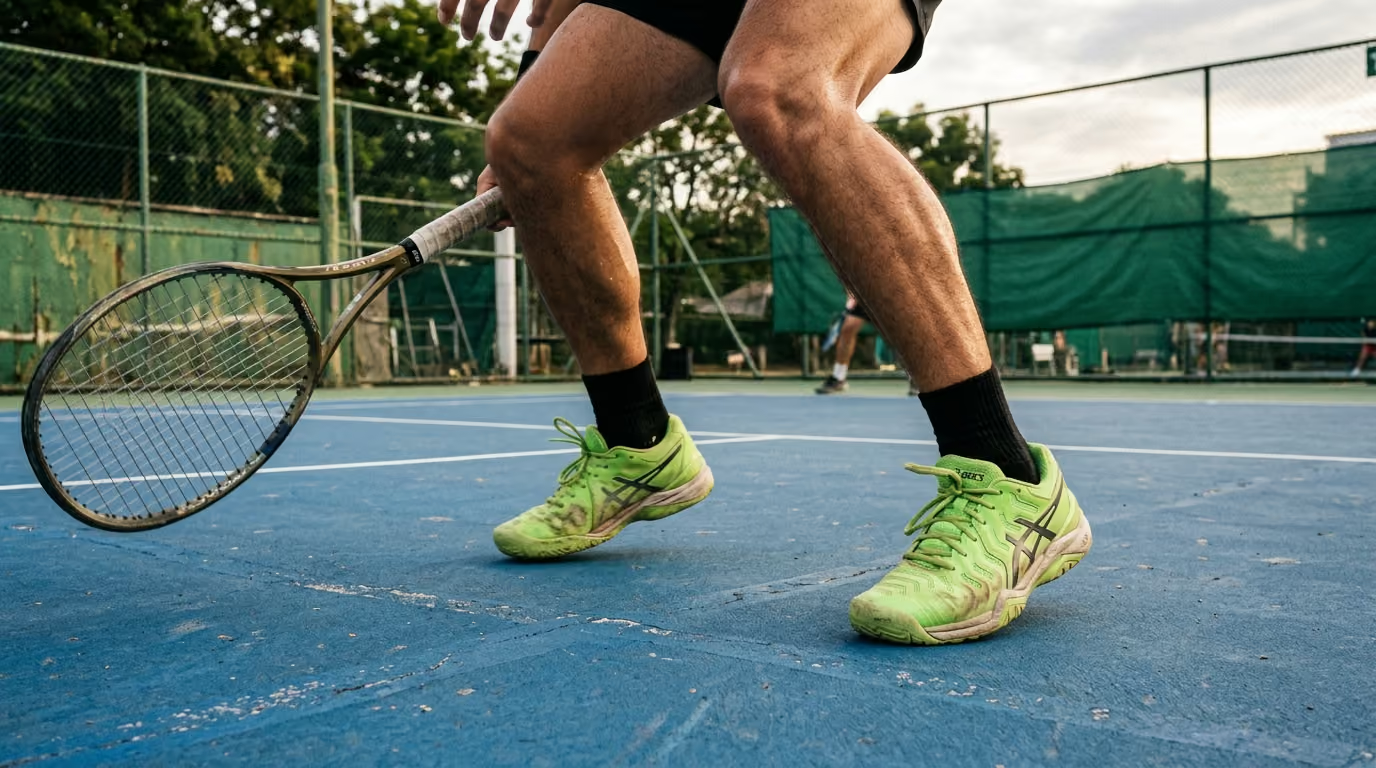

Many assume static stretching after racquet sports prevents soreness, but modern sports science reveals it does not deliver the recovery most players expect.




You finish a demanding three-set tennis match or a fast-paced pickleball session and feel a deep tightness creeping into your legs and lower back. Your natural instinct is to drop to the court and begin holding deep stretches. You might believe this routine will prevent tomorrow's muscle soreness, restore your flexibility, and speed up your overall recovery. However, modern sports science suggests that this traditional post-match routine does not deliver the results most players expect.
I remember finishing a tough two hour padel match on a cold Tuesday night and waking up the next morning feeling like my lower back was locked in concrete. For a long time, I just accepted this as the price of playing hard in my forties. But once I started spending just ten minutes on targeted hip mobility before heading to the club, the stiffness almost completely vanished. It taught me that we do not have to accept pain as a default state of athletic longevity.
No single stretching method serves all purposes on the court. To move well and protect your joints, you must use dynamic mobility before play to prepare your nervous system, reserve static stretching for long-term range of motion work, and prioritize passive rest and hydration for actual recovery after matches. Treating every style of stretching as a recovery tool is one of the most common errors in modern racquet sports.
To get the most out of your time on the court, you must separate three distinct goals. First, you need readiness, which is the immediate preparation of your nervous system and muscles to produce force. Second, you want to build long-term range of motion, which involves lasting mechanical changes in your joints. Finally, you need post-match relaxation, which helps your body transition out of a high-stress state.
To select the right recovery and movement strategies, we must first define our terms clearly. Many players use terms like flexibility and mobility interchangeably. This confusion leads to ineffective training and poor court preparation.
Flexibility is the passive range of motion available around a specific joint. It is typically measured when an external force, such as a partner or a strap, moves your limb through an arc. While passive flexibility is useful, it represents potential movement rather than active capability.
For racquet athletes, passive flexibility is not an unconditional virtue. Having a large range of motion without the strength to control it does not improve performance. In fact, excessive laxity without stability can increase stress on your joints during explosive movements.
Range of motion can be measured and expressed in several distinct ways. Understanding these differences helps us program better training sessions:
An increase in passive range of motion does not automatically make you a better mover on the court. For example, a classic study showed that while static stretching improved passive sit-and-reach scores, only a sport-specific warm-up improved sprint performance. We must focus on usable, controlled movement.
In practical coaching, mobility is the ability to access and control movement through a joint or a complete pattern. A simple and effective framework is to think of mobility as available motion combined with active control and strength in that position.
This framework separates passive tissue length from your actual ability to use that range during a match. When you lunge for a low ball in pickleball, your brain must trust that your hip muscles can control that deep position. If you lack control, your nervous system will put on the brakes, causing you to feel stiff and slow. You can read more about building usable joint control in our guide to mobility and movement.
We can organize the tools available to racquet athletes into five distinct categories. Each method has a specific physiological impact and a unique role in your training calendar.
Static stretching involves moving a joint slowly toward the end of its comfortable range and holding that position. General guidance from the American College of Sports Medicine recommends holding these stretches for 10 to 30 seconds for most adults. You should repeat each stretch two to four times, moving to a sensation of tightness or mild discomfort rather than sharp pain.
This method is highly effective for dedicated flexibility sessions and low-intensity cooldowns. It is also useful for addressing specific, long-term joint restrictions. However, it is not ideal as your sole pre-match warm-up. Holding long, passive stretches can temporarily reduce your muscles' ability to produce explosive force.
Dynamic mobility utilizes controlled, repeated movements through a progressively larger range of motion. Instead of holding a position, you keep your body in continuous motion. Common examples include walking lunges with a trunk rotation, controlled leg swings, and progressive shadow swings.
Research shows that dynamic mobility has a neutral or highly beneficial effect on subsequent athletic performance. A 2023 network meta-analysis found that dynamic stretching improved sprint times, while static stretching had a small negative impact on power output. The same review identified seven to ten minutes of dynamic stretching as the most effective duration for movement preparation.
Active range-of-motion drills are controlled movements performed entirely under your own muscular effort. They differ from passive stretching because you must actively recruit opposing muscles to create the joint position. Examples include active hip rotations, scapular wall slides, and split-stance trunk rotations.
These drills are highly valuable when you want to rehearse the specific positions required during play. They teach your central nervous system to permit movement into deeper ranges. This active control is vital for stabilizing your joints during sudden decelerations.
Loaded mobility combines range-of-motion work with external resistance or bodyweight loading. Examples include a light goblet squat held at a comfortable depth, a loaded hip airplane, or a controlled Cossack squat. This method is a strength-and-control intervention performed through a useful, extended range of motion.
The scientific rationale for loaded mobility is clear. Racquet players must express force in end-range positions, and light loading prepares the tissues for these demands. A meta-analysis comparing strength training and traditional stretching found no significant difference between the two for improving range of motion. This indicates that appropriately designed strength training is an excellent tool for developing flexibility.
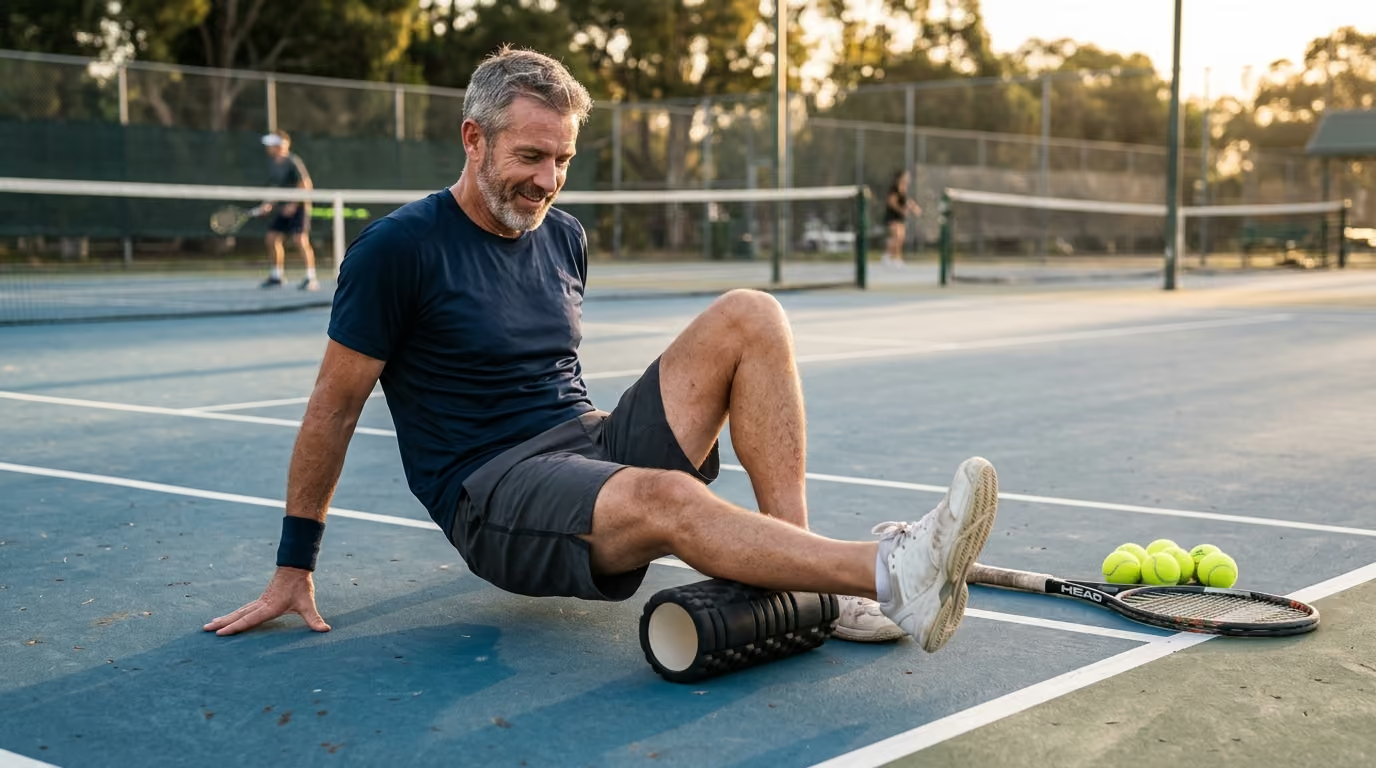
Self-massage, often called self-myofascial release, includes the use of foam rollers, roller massagers, and massage balls. A systematic review and meta-analysis of foam rolling studies found a large positive effect on joint range of motion. This tool allows players to increase their short-term flexibility without reducing muscle strength or power.
While short bouts of foam rolling can increase range of motion and reduce the perception of muscle soreness, its long-term benefits are less consistent. Research on chronic foam rolling shows conflicting results regarding permanent flexibility changes. It should be used as a comfort tool rather than a replacement for physical conditioning.
Many players grow up believing that stretching after a match is mandatory to prevent soreness. However, the scientific consensus on post-exercise stretching paint a very different picture.
A major systematic review and meta-analysis of randomized controlled trials investigated the effect of post-exercise stretching on delayed-onset muscle soreness, commonly known as DOMS. The researchers looked at soreness levels at 24, 48, and 72 hours after exercise. They found no clinically important differences between players who stretched after exercise and those who rested passively.
An earlier systematic review confirmed these findings, showing that stretching before or after exercise reduced soreness by less than two millimeters on a 100-millimeter scale. A comprehensive Cochrane review also reported that stretching reduced soreness by an average of only 1.04 points on a 100-point scale. These trivial numbers mean that post-match stretching will not prevent you from feeling sore the next day.
Stretching does not remove lactic acid from your muscles, nor does it repair microscopic tissue damage. If you feel less stiff after a gentle post-match stretch, you are experiencing a temporary change in your nervous system's pain tolerance rather than physical tissue repair. For genuine recovery, your focus should be on sleep, hydration, and nutritional support.
For decades, athletes performed long static stretches before stepping onto the court. However, modern sports medicine reviews suggest this practice can actually hinder performance. When you hold a static stretch for more than 60 seconds per muscle group, you can experience a one to two percent reduction in strength, power, and jump height.
A 2023 network meta-analysis confirmed that static stretching before explosive tasks reduces performance. In contrast, dynamic stretching and combined protocols consistently improve explosive output. If you have a highly restricted joint, you can still perform a brief static stretch before play, but you must follow it with dynamic, explosive movements to prime your nervous system.
Foam rolling has gained popularity as a recovery tool, and research supports its use for short-term comfort. A systematic review of 32 studies showed that foam rolling increases range of motion without harming athletic performance.
Additionally, meta-analyses suggest that foam rolling can help restore sprint and strength performance more quickly than passive rest alone. It also raises the pain-pressure threshold, meaning your muscles feel less tender to the touch. It is a highly effective tool for managing perceived stiffness, but it does not physically break up scar tissue or permanently alter your muscle structure. To learn more about modern recovery methods, explore our recovery science resources.
To help you choose the right approach for your training, we have compared these five methods across three critical areas: primary acute effect, best practical use, and main limitation.
To get the best results from these methods, you need structured, easy-to-follow protocols. Below are four court-tested routines designed for racquet sports players.
This sequence is designed to raise your core temperature, prepare your joints, and prime your nervous system for rapid lateral movements and explosive overheads.
Begin with easy jogging, side shuffles, and skipping across the court. Keep the intensity low, aiming for a light sweat.
Perform each movement continuously without holding the end positions:
Focus on stability and muscle recruitment:
Perform shadow swings, split-steps, and progressive short court rallies. Gradually increase the intensity of your movements and swings until you reach match speed.
Use this ten-minute routine immediately after a tough match to help your body transition into a relaxed, restful state.
Perform this 20-minute session two to three times per week on non-match days to build lasting mobility and athletic longevity.
Use this routine when you must play back-to-back matches within 24 hours and feel stiff from the previous day's effort.
While all racquet sports share common movement patterns, each sport places unique biomechanical demands on your body. Tailoring your mobility and warm-up work to your specific sport is essential for protecting your health on the court.
Tennis requires explosive lateral braking, deep lunges, and repetitive, high-velocity overhead serving. The serving motion places extreme stress on your shoulder joint, requiring excellent shoulder internal rotation and thoracic spine extension.
Your pre-match routine should emphasize thoracic mobility and shoulder blade control to protect your rotator cuff. After play, prioritize static stretching for your calves, hip flexors, and posterior shoulder to combat the structural tightening caused by hours of hard court running.
Pickleball features a shorter court, which demands constant, rapid reactions and a low, semi-squatted athletic stance. Players must spend significant time bent over in the kitchen, placing high static demands on the lower back, hips, and knees.
Your preparation should focus on deep hip flexion, ankle dorsiflexion, and active glute engagement. This ensures your hips, rather than your lower back, absorb the impact of low dink shots. Post-match, focus on stretching your quadriceps and hip flexors, which can become highly congested from the continuous low stance.
Padel combines elements of tennis and squash, requiring continuous rotational movements, play off the walls, and frequent overhead smash variations. This style of play demands excellent thoracic spine rotation and hip mobility to handle sudden turns and low rebounds.
Your warm-up should prioritize trunk rotation, active hip internal and external rotation, and shoulder stability. Because padel matches involve rapid decelerations on synthetic turf, pay close attention to your calf and Achilles tendon mobility both before and after play.
Badminton is an incredibly fast racquet sport characterized by explosive vertical jumps, deep forward lunges, and rapid wrist work. Players must frequently decelerate from high speeds and lunges to recover their position on the court.
Your mobility work should focus on ankle dorsiflexion, deep groin flexibility, and shoulder mobility. Loaded mobility is highly valuable for badminton players during off-court training, as it prepares their joints to withstand the massive deceleration forces of a deep forward lunge.
Squash is played in a confined space and involves relentless, repetitive lunging, reaching, and twisting. The sport is highly eccentric, meaning your muscles must work incredibly hard to slow your body down before taking a shot.
Squash players benefit greatly from active hip and ankle range-of-motion work. Because the sport is highly taxing on your cardiorespiratory system, your post-match recovery should focus on downregulating your nervous system through slow breathing and light, comfortable static stretching.
To protect your body and get the most out of your training, avoid these common movement and stretching errors.
Many players spend 20 minutes stretching after a hard match, believing it will prevent tomorrow's soreness. As the scientific evidence shows, stretching does not reduce delayed-onset muscle soreness. If you enjoy stretching because it helps you relax, continue doing it, but do not rely on it as a cure for muscle soreness. True recovery requires managing your training volume, getting high-quality sleep, and consuming adequate protein and fluids.
Holding deep, static stretches for a minute or more before you play can temporarily decrease your muscle power and agility. This occurs because long stretches desensitize your nervous system and reduce the stiffness of your muscle-tendon units, which act like rubber bands to produce power. Keep your pre-match routine dynamic, and save your long static holds for after play or separate training sessions.
Many athletes chase extreme flexibility, assuming it will make them better players. However, having a large range of motion is useless if you cannot control it. Excessively loose joints without supporting muscle strength can increase your risk of injury during sudden lateral movements. Focus on building active controlled range of motion rather than passive flexibility.
A common myth is that foam rolling physically breaks up adhesions or scar tissue in your muscles. In reality, a human hand or foam roller cannot apply enough force to alter dense fascia. Foam rolling works by stimulating sensory receptors in your skin and muscles, which signals your nervous system to relax. Use foam rolling for its excellent neurological benefits, but do not buy into unscientific claims about tissue breaking.
Some players believe that a stretch must hurt to be effective. This is incorrect and can trigger a protective contraction in your muscles. When a stretch hurts, your nervous system perceives a threat and tightens the muscle to protect the joint. Always stretch to a point of mild tightness or comfortable tension, and breathe deeply to encourage your muscles to relax.
Stretching is a completely optional part of a cooldown. A highly effective cooldown can consist of nothing more than five minutes of easy walking, slow diaphragmatic breathing, and proper hydration. If you do not enjoy stretching, you do not need to force yourself to do it after a match. Focus on the recovery methods that best fit your personal preferences and lifestyle. Learn more about healthy recovery habits in our resources on healthy aging and athletic longevity.
To understand why stretching behaves the way it does, we must look at how our tissues respond to exercise and recovery.
When you play a hard match, your muscles undergo microscopic damage, especially during eccentric actions like stopping, lunging, and landing. This micro-tearing triggers a natural inflammatory response, which is a necessary step for your body to repair and strengthen itself.
Stretching does not speed up this structural repair process. In fact, aggressive stretching on highly damaged muscles can sometimes cause additional micro-trauma.
However, stretching has a profound effect on your nervous system. Gentle, comfortable stretching after a match helps your body shift from a sympathetic state, which is your fight-or-flight mode, into a parasympathetic state, which is your rest-and-digest mode. This neurological shift is highly valuable for sleep quality, digestion, and overall stress reduction.
Furthermore, regular mobility work helps maintain tissue compliance. While it may not prevent acute soreness, it prevents your body from adapting to a short, restricted range of motion over time. This long-term consistency is what supports your joint health and keeps you playing pain-free for years to come.
Every player's body is unique, and a generic stretching routine will not address your individual needs. Here are six common player scenarios and how to manage them.
While muscle tightness and mild soreness are normal parts of playing racquet sports, you must be able to recognize the difference between routine fatigue and a genuine injury. Stretching or rolling an injured muscle can often make the problem worse.
You should stop your stretching routine and consult a qualified healthcare professional if you experience any of the following warning signs:
A physical therapist can identify the root cause of your movement limitations and provide a safe, personalized training plan. If you are recovering from an injury or want to learn more about protecting your joints, explore our injury prevention resources.
You should return to this guide whenever you are updating your training routine, preparing for a tournament, or noticing new areas of stiffness. Consider bookmarking this resource to help you:
By selecting the right movement preparation and recovery strategies for your body, you can continue playing the sports you love with confidence, comfort, and longevity for many years to come.
Follow Evercourts for practical insights on tennis, pickleball and padel performance, movement, recovery and healthy ageing. Stay connected for new articles, research-led guidance and ideas to help you play well and keep playing for years.


Read practical guidance for better movement, smarter preparation and a game that keeps working for you.
explore the Blog