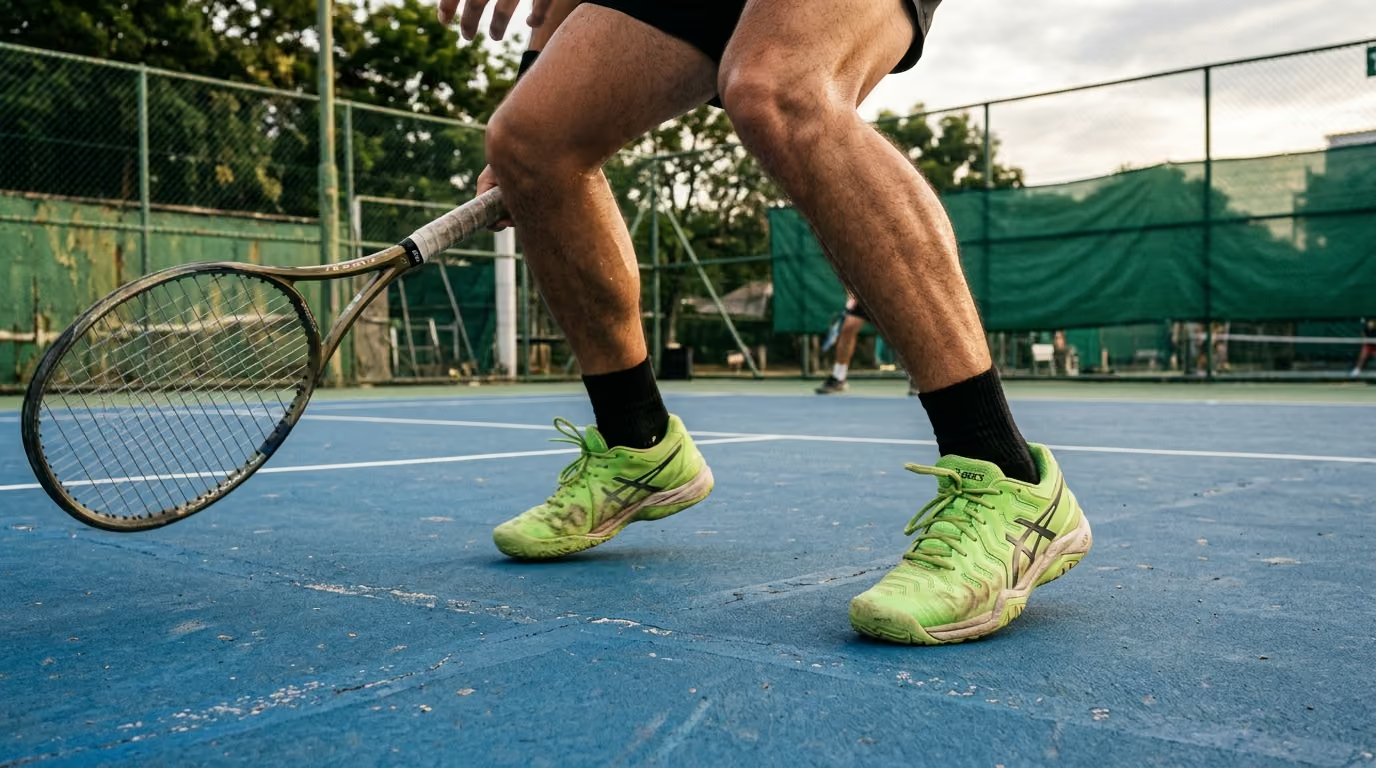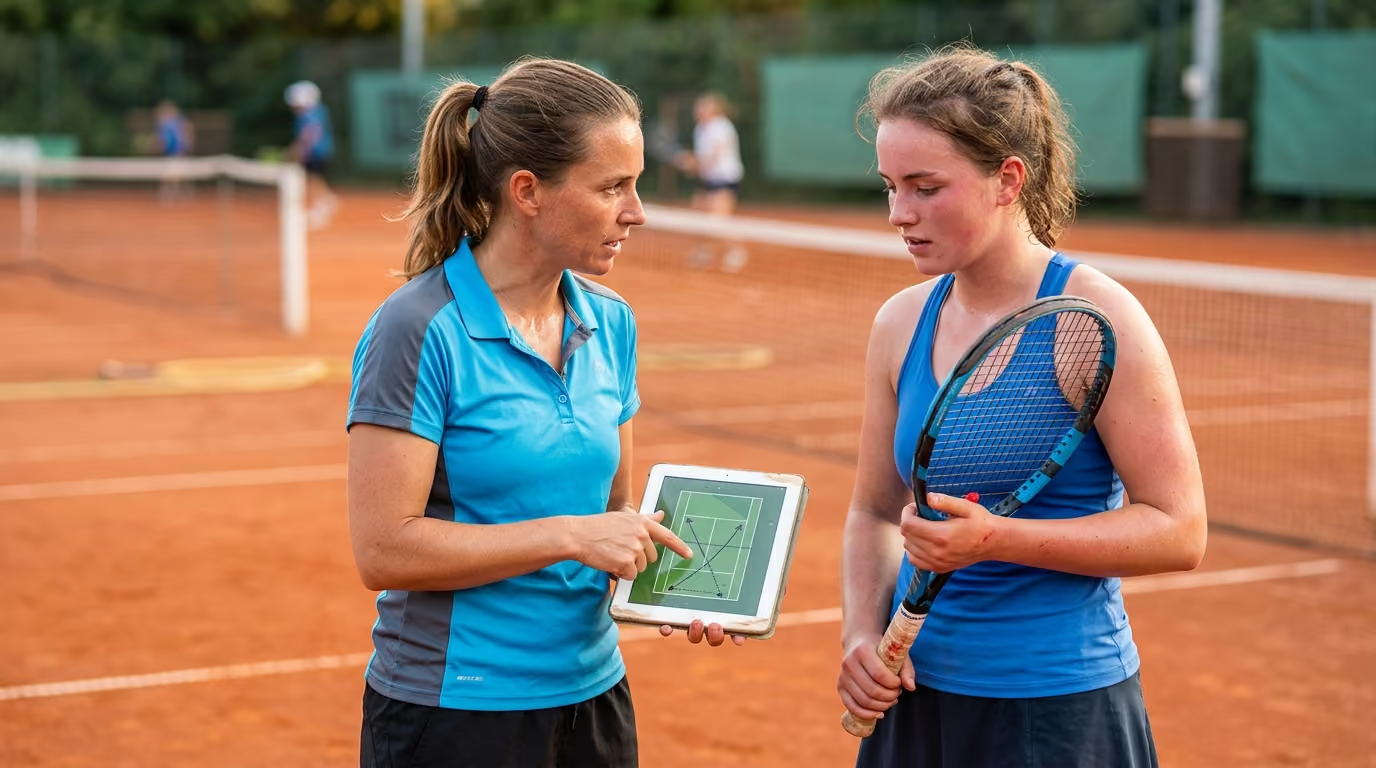

Players can significantly reduce their risk of injury by integrating tactical choices into their game, leading to a more sustainable and effective playing career.




Have you ever finished a weekend match and spent your evening searching the internet for ways to stop joint soreness? Many recreational and competitive players struggle with recurring stiffness in the knees, the lower back, or the shoulders. While physical training and stretching are valuable, players often ignore how their on-court decisions drive physical stress. Smarter tactical choices can reduce the mechanical demands placed on your body during a match.
Making smarter tactical decisions acts as a direct method of injury prevention on the court. By choosing high-margin shots, anticipating opponent plays, and conceding unrecoverable balls, players minimize high-risk emergency movements. This strategic approach manages joint and muscle load without compromising competitive performance.
Every shot you select on the court forces a specific movement from your body. If you hit a short, sit-up ball to your opponent's forehand, you must immediately brace for a fast defensive run. This is a direct physical consequence of a tactical choice. By contrast, a deep, looping shot buys you time and allows a balanced recovery.
We can define tactical injury prevention as the deliberate use of strategy and positioning to limit unnecessary physical demands. It does not mean playing passively or avoiding hard work. Instead, it means allocating your physical effort to points and situations where you have a genuine competitive advantage. This approach is a vital component of modern injury prevention resources for racket sports.
The International Olympic Committee consensus statement on load in sport highlights that poor load management is a major cause of athletic injury. Load is not just the total time you spend on the court. It also includes how often you accelerate, decelerate, lunge, and twist. Smarter court positioning directly reduces the frequency of these high-stress actions.
We must distinguish between necessary load and unnecessary load. Necessary load is the physical effort required to play a competitive point. Unnecessary load is the extra movement caused by poor positioning, late preparation, or chasing impossible balls. Reducing unnecessary load preserves your joints and supports your athletic longevity.
To play smarter, we must understand where racket players get hurt. Large-scale reviews of tennis epidemiology show distinct patterns of physical stress. For example, a tennis epidemiology review reported lower-extremity injury rates of 23.0 per 1000 match exposures. By contrast, trunk injuries occurred at a rate of 6.12, and upper-extremity injuries at 17.7 per 1000 exposures.
The research identifies the ankle as the most common location of acute injury. This is followed by the wrist, the knee, the foot, and the shoulder. This distribution tells us that the lower limbs bear the brunt of sudden, acute trauma. Conversely, chronic overuse injuries are more frequently seen in the upper limbs and trunk. To learn more about common physical risks, read our articles on player health topics.
A tennis review reported that injury incidence varies from 0.05 to 2.9 injuries per player per year. The reported prevalence of lateral epicondylitis, commonly known as tennis elbow, ranges from 14 percent to 41 percent in athletic literature. At Wimbledon, researchers recorded 700 injuries over 10 years of main-draw competition. The overall presentation rate was 20.7 injuries per 1000 sets played, with female players presenting slightly higher rates than male players.
These statistics show that court movement is physically expensive. Acute injuries usually happen during emergency deceleration, lateral lunging, or awkward landing. Overuse injuries occur when repetitive actions like serving are performed without sufficient preparation. By using tactical adjustments, players can reduce both acute exposure and chronic wear.
Movement on the court is not just a physical reaction. It is a cognitive and physical cycle. We can divide this process into five distinct stages: Recognize, Select, Organize, Execute, and Recover. Understanding this cycle helps players identify where physical risk begins.
The cycle begins when you perceive your opponent's shot. Excellent players look for early cues like shoulder rotation, hip alignment, and racket face angle. If you recognize the ball's trajectory early, you gain valuable split-seconds. Recognizing the play late compresses the time you have to move, which immediately increases physical strain.
Once you recognize the incoming ball, you must choose your reply. This is where tactical risk management occurs. You must decide whether to attack, neutralize, or defend. Making a high-risk choice from an unstable position increases the physical force required to execute the shot.
Organizing means setting your feet and establishing a balanced athletic base. When you have sufficient time, you can align your hips and shoulders with the ball. This allows the large muscles of your legs and core to absorb and transfer force. When you fail to organize, your arms and spine must compensate, raising the risk of overuse injuries.
Execution is the physical act of hitting the shot. In an ideal situation, you transfer energy smoothly through the kinetic chain from the ground up. If your tactics put you in a poor position, execution becomes an emergency action. You might hit while falling backward, twisting your spine, or reaching at maximum shoulder extension.
The cycle does not end when the ball leaves your strings. You must immediately move back to an optimal court position. Good recovery positioning reduces the distance you must cover on the next shot. If you stand and watch your shot, you will be forced into another emergency sprint.
Certain decision patterns consistently place players in high-risk physical situations. Recognizing these patterns allows you to make deliberate adjustments during matches. Let us look at four common tactical mistakes that increase joint and muscle load.
Many players possess a competitive drive that makes them chase every ball. While admirable, chasing a ball that has a near-zero percent chance of a successful return is physically costly. You must perform an all-out sprint, a hard deceleration, and often a desperate lunge. If the score is 40-0 against you, the physical risk of a maximum lunge rarely matches the competitive benefit.
Late preparation is rarely a foot speed issue. It is usually a failure of early anticipation or a delayed split-step. When you prepare late, you are forced to make sudden, violent adjustments. You might brake on a straight knee or bend your spine sideways to reach the ball. This pattern places heavy shear forces on the knee joints and lower back.
Reaching occurs when your hands and arms try to do the work of your feet. If you do not move your feet to get close to the ball, you must stretch your upper body. This pattern frequently causes shoulder strain and wrist pain. Over time, repetitive reaching leads to chronic tendon issues in the upper body.
One emergency movement is a normal part of racket sports. However, a series of emergency movements indicates a tactical failure. If you hit a weak, short ball, your opponent can easily pull you wide. You are then forced into a cycle of desperate chases, hard braking, and weak returns. Breaking this cycle requires hitting deep, high-margin neutralizing shots to restore your court position.
The physical risks of tactical choices vary significantly depending on whether you play tennis, pickleball, or padel. Each sport features unique court dimensions, pacing, and movement constraints.
Tennis involves a large court area, requiring players to cover significant distances. The movement patterns feature high-speed sprints followed by heavy lateral deceleration. Because of the court size, tennis players face a high risk of acute lower-limb injuries, particularly ankle sprains and knee strains. Tactical adjustments in tennis should focus on deep shot placement to prevent being pulled into long lateral chases.
Pickleball uses a much smaller court, which reduces the need for long sprint distances. However, the game features rapid reaction times and low bounce heights near the non-volley zone line. Pickleball players must perform frequent, repetitive lunges and deep knee bends to play low balls. Tactical prevention in pickleball involves hitting deep return shots to keep opponents back, reducing the need for constant, deep lunging.
Padel is played inside a glass enclosure, which completely alters movement geometry. The presence of walls allows players to let the ball pass and play it off the rebound, which can reduce the physical urgency of a sprint. However, padel involves a high volume of overhead shots, such as the bandeja and vibora. These repetitive overhead actions place significant mechanical stress on the shoulder joint and rotator cuff, requiring careful shot selection to avoid arm fatigue.
Applying tactical injury prevention does not require you to change your entire style of play. You can make simple adjustments to your match strategy to protect your body. These practical steps help manage physical strain while keeping your game competitive. Incorporating these strategies alongside strength and conditioning programs will build a highly resilient game.
First, prioritize shot depth over raw power. Hitting a deep, looping shot buys you time to recover your position. It forces your opponent backward, which reduces their ability to hit sharp angles. This single tactical change can reduce your lateral running distance by up to thirty percent during a match.
Second, master the timing of your split-step. The split-step should be executed just as your opponent makes contact with the ball. This light hop pre-loads your leg muscles, allowing you to move in any direction with balanced control. Good split-step timing prevents the sudden, jerky movements that often lead to muscle strains.
Third, practice structured decision-making drills. In training, try a drill where you are only allowed to chase balls that bounce within the court lines. If a ball is heading wide and you cannot reach it comfortably, practice the mental skill of letting it go. This builds the habit of assessing physical cost versus competitive value.
Many players hold misconceptions about how safety and strategy interact on the court. Avoiding these common mental traps is essential for long-term athletic success.
Some players believe that playing safely means hitting soft, defensive shots. In reality, hitting short, defensive ball after ball forces you to run more. Your opponent will dictate the point, moving you from corner to corner. An aggressive, well-placed shot can end the point quickly, saving you from a grueling ten-shot rally. Smarter play means finding the right balance between risk and reward.
Many players believe that a good warm-up makes them immune to injury. While structured warm-ups are excellent for preparing muscles, they cannot offset the strain of poor movement decisions. A randomized controlled trial known as the TennisReady study evaluated an unsupervised e-health prevention program for recreational players. The study found that the prevention program did not reduce injury rates, showing that a simple warm-up routine is not a complete solution. You must combine physical preparation with smart tactical choices during play.
If you successfully reach a wide ball and hit a winner, you might think your decision was correct. However, this success bias ignores the physical toll of the movement. If that single chase caused a micro-tear in your calf muscle, the point was not worth the cost. Evaluate your plays by both their competitive outcome and their physical cost.
Fatigue is one of the most significant risk factors for injury. As you tire, your reaction time slows, and your motor control declines. A study on match-play fatigue in tennis demonstrated that physical wear directly compromises movement quality. When you are tired, you are more likely to take emergency steps and prepare late.
Our team has observed this dynamic in our own play. I remember finishing a tough two hour padel match on a cold Tuesday night and waking up the next morning feeling like my lower back was locked in concrete. For a long time, I just accepted this as the price of playing hard in my forties. But once I started spending just ten minutes on targeted hip mobility before heading to the club, the stiffness almost completely vanished. It taught me that we do not have to accept pain as a default state of aging.
When you are fatigued, your tactical choices must change to protect your tissues. If you feel your legs getting heavy, transition to a higher-margin game plan. Use lob shots, play down the middle of the court, and focus on placement rather than power. This approach improves your movement economy and allows your heart rate to recover between points. To find more ways to manage post-match physical strain, you can read our recovery science guidelines.
Tactical prevention is a powerful tool, but it cannot solve existing structural issues. Knowing when to stop playing and seek professional help is vital for protecting your joints. If you experience any of the following warning signs, you should consult a qualified healthcare provider.
First, seek help if you feel sharp, shooting, or radiating pain during movement. This type of pain often indicates nerve compression or acute tissue damage. Second, do not ignore joint swelling, heat, or visible inflammation. These symptoms suggest an acute joint issue that requires clinical evaluation.
Third, see a professional if your pain persists for more than forty-eight hours after playing. Normal post-match soreness should resolve with rest and light movement. Finally, if you find yourself limping or changing your gait to avoid pain, stop playing immediately. Continuing to play while compensating will only create secondary injuries in other parts of your body.
To start implementing tactical injury prevention this week, use the following checklist:
By combining physical preparation with smart court choices, you can protect your body and enjoy your favorite sports for years to come. For more detailed training strategies, check out our mobility and movement strategies to build a resilient foundation for your game.
Follow Evercourts for practical insights on tennis, pickleball and padel performance, movement, recovery and healthy ageing. Stay connected for new articles, research-led guidance and ideas to help you play well and keep playing for years.


Read practical guidance for better movement, smarter preparation and a game that keeps working for you.
explore the Blog