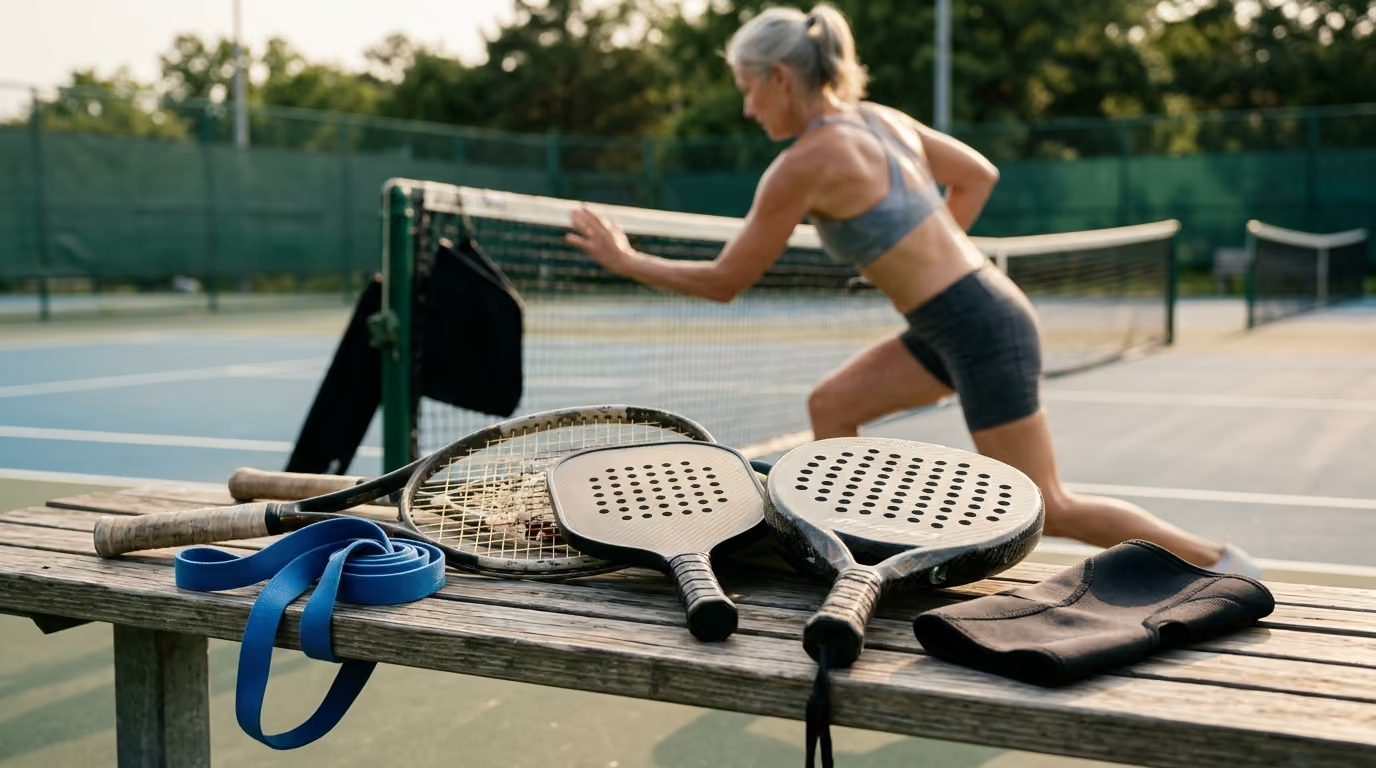

A comprehensive framework for evaluating the physical demands of tennis, pickleball, and padel helps players choose the best sport for healthy aging.




Many players believe that choosing the racquet sport with the smallest court is the safest path to long-term health. However, true athletic longevity is not built by simply avoiding physical stress, but by matching the specific demands of tennis, pickleball, or padel to your unique musculoskeletal capacity. Selecting the right sport depends on balancing cardiovascular training, impact tolerance, joint repetition, and structured physical conditioning.
Many popular fitness guides label smaller-court sports as low impact because they do not require long, high-speed sprints. This simple classification overlooks the intense, localized forces that occur during short, sudden movements. To build true athletic longevity, players must look beyond simplified labels and analyze the actual stresses placed on the body during play.
The World Health Organization recommends that older adults accumulate 150 to 300 minutes of moderate-intensity aerobic activity each week. They also recommend muscle-strengthening activities at least twice a week. Furthermore, older adults should perform multicomponent activities that emphasize balance and strength on three or more days per week. Racquet sports can help you meet these guidelines, but each sport provides a different physical stimulus.
To meet these health standards safely, players need a comprehensive evaluation framework. Rather than asking if a sport is high impact, players should evaluate several key dimensions of court load.
First, consider the total external load, which includes overall distance, running speed, and change of direction frequency. Second, monitor the internal load, which covers heart rate, perceived exertion, and metabolic fatigue. Third, evaluate the local tissue load, which is the repeated stress on specific tendons, joints, and muscles. Fourth, assess the movement-risk profile, such as the potential for tripping, falling, or colliding with court boundaries.
Fifth, examine the cognitive and skill demands, including reaction time, visual tracking, and spatial awareness. Sixth, balance the training dose and recoverability, meaning how frequently you can play without developing persistent soreness. Finally, evaluate the overall longevity value, which is how easily the sport can be adapted as you age.
By using this framework, you can select the sport that aligns with your current physical state. You can also identify which areas of your fitness require supplementary training. For instance, players can browse our collection of healthy aging and athletic longevity resources to understand how to structure their physical preparation.
Court dimensions play a massive role in shaping how your body moves and how it experiences physical stress. The physical layout of each sport dictates the typical running patterns, reaction times, and braking requirements.
A standard tennis court measures 23.77 meters in length. For singles play, the width is 8.23 meters, while doubles play expands the width to 10.97 meters. This substantial playing area requires athletes to cover significant distances during a typical rally.
Because of these dimensions, tennis naturally demands longer acceleration phases and higher running speeds. Players must frequently sprint across several meters, execute emergency braking maneuvers, and then quickly recover to a central court position. This spatial layout encourages open-stance or semi-open-stance rotational hitting, which places high rotational forces on the hips, trunk, and lower back.
The large court size means that tennis provides an exceptional stimulus for maintaining lower-body power and aerobic fitness. However, this large space also increases the peak forces transmitted through the lower joints during sudden stops. If a player lacks the deceleration strength required to control these forces, the risk of acute muscle strains or tendon injuries rises.
A standard pickleball court measures 13.41 meters in length and 6.10 meters in width. This compact area is identical for both singles and doubles play. The court also features a dedicated non-volley zone, commonly called the kitchen, which extends 2.13 meters from the net on both sides.
The smaller playing area drastically reduces the maximum running distance required during a rally. However, this compact space does not make the sport physically effortless. Instead of long-distance sprints, pickleball emphasizes rapid lateral adjustments, frequent split steps, and quick forward lunges to reach short shots.
The presence of the non-volley zone forces players to spend significant time in a low, crouched athletic stance. This posture requires continuous isometric endurance in the quadriceps and gluteal muscles. Additionally, players must frequently reach outside their stable base of support to play low balls, which can challenge static and dynamic balance.
A standard padel court measures 20 meters in length and 10 meters in width. The court is surrounded by walls made of tempered glass and metallic mesh, which are active parts of the playing environment. This setup means that the ball can bounce off the walls, keeping the ball in play much longer than in tennis or pickleball.
The enclosing walls completely change the movement patterns of the sport. Players do not just sprint toward where the ball is heading. They must often run past the ball, anticipate its rebound off the glass, and then rotate their bodies to strike it as it travels backward.
In our experience, these wall interactions require superb spatial awareness, constant weight shifting, and frequent multi-directional adjustments. I remember finishing a tough two hour padel match on a cold Tuesday night and waking up the next morning feeling like my lower back was locked in concrete. For a long time, I just accepted this as the price of playing hard in my forties. But once I started spending just ten minutes on targeted hip mobility before heading to the club, the stiffness almost completely vanished. It taught me that we do not have to accept pain as a default state of aging. This personal insight shows how the rotational and multi-directional demands of padel can accumulate stress in the hips and lower back if mobility is neglected.
To make an informed decision about athletic longevity, we must compare the exact physiological loads these three sports place on the body. This comparison reveals that different sports stress different physical systems.
Tennis, padel, and pickleball present distinct locomotor demands due to their unique court sizes and play styles. Research compared doubles tennis and padel matches to measure player movement. The study showed that tennis players cover greater total distances, reach higher top speeds, and perform more true sprints during a match.
Conversely, padel matches feature shorter, more frequent acceleration and deceleration phases. Players must constantly make rapid, low-amplitude adjustments to position themselves relative to the bounding ball. The deceleration forces in padel are highly repetitive, though they rarely reach the peak intensity seen in full-court tennis.
Pickleball features the lowest average movement distance, particularly in doubles play. However, pickleball players must execute highly abrupt stops over very short distances. Because players must react to a light, fast-moving plastic ball, they undergo high-frequency changes of direction without the benefit of a long deceleration zone.
Another critical variable for joint health is hitting volume, which refers to the number of strokes performed per session. The comparison of doubles tennis and padel revealed that padel produces more rallies and a higher total number of volleys and groundstrokes per match.
This high stroke volume means that padel places a significant repetitive burden on the dominant shoulder, elbow, and wrist. The constant rotation required to hit balls off the wall also increases the cumulative rotational demand on the thoracic spine.
Pickleball also features incredibly high hitting volumes during fast-paced exchanges at the kitchen line. These rapid hand exchanges require swift, repetitive wrist flicking and forearm rotation, which can stress the lateral elbow tendons. Tennis has a lower overall hitting frequency per hour, but each individual stroke is significantly more explosive and requires greater peak muscle recruitment across the entire kinetic chain.
Despite the differences in court size and running distance, the average physiological stress can be surprisingly similar. Research indicates that average heart rates and blood lactate levels can be comparable between doubles tennis and padel matches.
This phenomenon occurs because padel involves continuous play with shorter rest intervals between rallies. The walls keep the ball in play, which extends rally lengths and reduces the downtime between points. Tennis has longer, more explosive rallies, but players enjoy longer rest intervals between those high-intensity efforts.
Pickleball can also elevate the heart rate into moderate aerobic zones, especially during singles play or highly competitive doubles. The physical strain is often more continuous, as rallies can last a long time when players possess excellent defensive skills. Therefore, players should not assume that a smaller court automatically translates to a lower cardiovascular workout.
Understanding the common injuries associated with each sport allows players to implement targeted injury prevention strategies before symptoms develop.
As pickleball has grown in popularity, researchers have begun tracking its specific injury trends. An analysis of U.S. emergency department data from 2014 to 2023 estimated that pickleball-related injuries increased from 1,313 cases to 24,461 cases. This sharp rise is heavily influenced by the massive influx of new players, rather than an inherent danger in the sport itself.
The study showed that the majority of these injuries occurred in players aged 60 to 79. Older players had significantly higher odds of experiencing wrist or hand injuries, fractures, and falls.
A separate study of 237 older pickleball participants found that 32.1% had experienced an injury during the previous year. Lower-extremity injuries accounted for 57.9% of these issues, while muscle or tendon sprains and strains made up 61.8% of the total. This data highlights that while pickleball reduces long-distance sprinting, the combination of rapid deceleration, reaching, and falling remains a real concern for older athletes.
Padel injuries show a distinct pattern that reflects the sport's high hitting volume and hard playing surfaces. A systematic review of padel injury literature analyzed eight studies representing over 2,000 players. The review reported an injury incidence of three injuries per 1,000 training hours, which increased to eight injuries per 1,000 matches.
The most common injury location identified in this review was the elbow. This is largely due to the repetitive nature of padel strokes, especially when striking the ball late or using improper backhand mechanics. The knee was the second most common site, followed closely by the shoulder and the lower back.
Muscular and tendinous strains represented the vast majority of these reported cases. The combination of hard concrete or synthetic turf courts, paired with rapid rotational movements, places substantial stress on the patellar and Achilles tendons. To learn more about managing these specific demands, players can read our padel instructional guides for movement tips.
Tennis has a long-established injury profile that reflects its explosive, multi-directional nature. Because tennis involves serving overhead, shoulder injuries are much more prevalent than in pickleball. The repetitive overhead motion can lead to rotator cuff tendinopathy and shoulder impingement if thoracic mobility is restricted.
The lower extremity is also heavily taxed during tennis play. The large court dimensions require deep lateral lunges, which place massive eccentric loads on the patellar tendon and the knee joint. The sudden transition from sprinting to stopping also makes the Achilles tendon and calf muscles highly vulnerable to acute strains.
However, tennis also offers profound systemic health benefits. A comprehensive review of tennis literature associated regular participation with improved aerobic fitness, lower body fat, better lipid profiles, and enhanced bone health. The key for older athletes is managing the high peak forces of the sport to enjoy these long-term benefits safely. You can examine our specialized tennis instructional content to refine your technique and protect your joints.
No single racquet sport is perfect for every individual. To achieve athletic longevity, you must choose a sport, or modify your current play style, to match your physical profile.
This profile represents players who prioritize steady, long-term physical activity without high joint impact. A typical example is a 68-year-old athlete with moderate cardiovascular fitness and mild knee joint wear.
For this profile, doubles pickleball offers an exceptional option. The smaller court size keeps running distances manageable, which reduces the peak force transmitted through the knees. However, to stay safe, this player must prioritize structured footwork over lunging and avoid chasing low-percentage shots that compromise balance.
Our team recommends that this player limit their weekly playing volume. The research shows that higher weekly playing hours are a key risk factor for injury in older pickleball participants. Keeping sessions to a reasonable length ensures the body has adequate time to adapt and recover. For helpful advice on technique, players can review our pickleball gameplay analysis to play smarter.
This profile describes a 55-year-old player who has spent decades playing tennis but wants to reduce full-court running. Padel is a natural transition because it retains many tactical elements of tennis while using a smaller, enclosed court.
The major challenge for this player is adjusting to the different physical demands of padel. While they will run less distance, they will experience a significantly higher volume of strokes and rallies. This transition can overwhelm the elbow and shoulder tendons if the player immediately tries to play at high intensity.
To transition safely, the player should initially reduce their match duration and avoid playing consecutive days. They must also spend time practicing wall rebounds to learn how to let the ball pass them rather than reaching forward. This adjustment reduces unnecessary lunging and protects the lower back from sudden twist movements.
This profile consists of highly active older athletes, such as a 62-year-old, who want to preserve their fast-twitch muscle fibers, agility, and maximal sprinting capacity.
Tennis is the premier choice for this athlete because the large court dimensions provide the necessary room to sprint and accelerate. Singles tennis, or high-intensity doubles, forces the nervous system to coordinate rapid movements over longer distances. This physical challenge is excellent for maintaining bone density, cardiovascular power, and lower-body strength.
However, this athlete must understand that they cannot rely solely on playing matches to stay fit. They must prepare their body off the court with specific deceleration training and eccentric calf strengthening. This extra preparation ensures that their tendons can tolerate the extreme braking forces that tennis demands.
This profile includes any player struggling with persistent tendon pain, such as lateral elbow tendinopathy or Achilles tendon stiffness. These players often make the mistake of switching sports without changing their underlying mechanics or playing frequency.
If you have elbow pain, switching from tennis to padel or pickleball will not automatically solve the problem. Padel injury reviews identify the elbow as the most vulnerable joint, and pickleball also carries significant upper-extremity tendon risks. The solution lies in managing specific equipment and mechanical variables.
These players should check their racket or paddle weight, as a paddle that is too light can transmit excessive shock to the forearm. They must also avoid using an excessively small grip size, which forces the hand to squeeze too tightly. Finally, they must reduce their weekly stroke volume and focus on initiating their hits from the shoulder and trunk, rather than flicking the wrist.
This profile applies to players who feel anxious about their balance, perhaps due to a previous slip or fall on the court.
For these athletes, the primary goal is creating a highly controlled and predictable playing environment. While pickleball has a smaller court, emergency department data shows that falls remain a major source of injury for older players. Therefore, simply choosing a smaller court is not enough to guarantee safety.
This player should focus on implementing practical movement strategies. For example, they should establish a rule to never run backward on the court; instead, they should turn sideways and shuffle. They should also invest in high-quality, flat-soled court shoes designed specifically for lateral support. Practicing simple balance exercises at home can also help rebuild the confidence needed to move freely.
To play racquet sports for decades, players should not rely on their sport as their only source of physical exercise. A well-rounded approach combining court play with structured training is the gold standard for athletic longevity.
Combining different racquet sports can be an excellent way to train different athletic qualities. For example, playing tennis once a week trains your large-space running, top-end speed, and rotational power. Playing pickleball on a separate day can then refine your short-range reaction times, hand-eye coordination, and low-stance endurance.
The primary risk of this approach is accumulating an excessive weekly hitting volume. Because both sports require repetitive arm strikes, your shoulder and elbow joints can easily become overloaded. To avoid this, players should limit their competitive matches and treat one of the sessions as a light, technical practice.
Because padel is played in a doubles format on an enclosed court, it can sometimes be highly stop-and-start. If a player only plays recreational padel, they may not accumulate enough continuous aerobic exercise to meet health guidelines.
To balance this, players can add low-impact aerobic conditioning to their weekly routine. Activities such as brisk walking, cycling, or swimming are excellent options. These activities allow you to build cardiovascular endurance without adding repetitive impact to your joints or extra stroke volume to your shoulders.
Many recreational athletes believe that playing their sport is enough to keep them strong. However, racquet sports do not provide a balanced, progressive resistance stimulus for all major muscle groups. To protect your joints, you must participate in structured strength and conditioning programs at least twice a week.
Your off-court training should target the specific muscles that support your court movement. This includes performing heel raises to strengthen the calf muscles and protect the Achilles tendon. It also involves single-leg exercises, like split squats, to build the eccentric strength needed for safe stopping and lunging. Finally, shoulder external rotation exercises can reinforce the rotator cuff against repetitive hitting volumes.
The most common cause of athletic injuries is a sudden change in training volume. To keep your body healthy, you must follow conservative progression principles.
First, only increase one major variable at a time. If you decide to play an extra session this week, do not also increase the intensity of your matches. Second, always alternate high-intensity days with dedicated rest days or light skill sessions. Finally, remember that tournament play is a massive physical stressor; if you play a tournament over the weekend, you must reduce your training volume during the following week.
By recognizing and correcting frequent errors, players can prevent unnecessary physical setbacks and keep enjoying their favorite sports.
Because pickleball is easy to learn and is played on a smaller court, many players assume it requires no physical preparation. This belief often leads to a lack of warm-up before matches. Players step onto the court cold and immediately attempt to make rapid, explosive lateral movements.
This mistake can be highly problematic for older tendons and joints. Even though the overall running distance is short, the sudden stops and starts still require substantial muscle contraction. A proper warm-up, involving light jogging and dynamic stretching, is just as important for pickleball as it is for tennis.
Many athletes believe that if a match made them sweat heavily and raised their heart rate, it was an excellent workout. While cardiovascular strain is important, it is only one component of physical load.
A long, hot padel match might result in a high heart rate and significant sweat loss, but it may not have challenged your high-speed movement or lower-body power. Conversely, a tennis session might involve fewer total minutes of play but place much higher peak eccentric forces on your knees. To build balanced athletic longevity, you must evaluate your training based on both movement quality and physiological strain.
Tendon issues rarely start with sharp, sudden pain during a match. Instead, they typically present as mild stiffness or dull aching several hours after play, or the following morning.
Many players ignore these subtle warning signs because the discomfort disappears once they warm up during their next match. This is a classic mistake that can lead to chronic tendinopathy. If a joint or tendon feels stiff every morning, it is a clear sign that the tissue is not recovering fully between sessions. Ignoring this feedback and continuing to play through the stiffness can eventually lead to a more severe injury.
While physical conditioning and smart load management can prevent many issues, some symptoms require expert clinical evaluation. Recognizing these signs early can prevent minor issues from turning into chronic limitations.
You should seek guidance from a qualified physical therapist or sports medicine physician if you experience any of the following warning signs. First, pay attention to persistent night pain that disrupts your sleep, as this can indicate significant joint inflammation or a tendon tear. Second, watch for visible joint swelling that does not subside within forty-eight hours of a match. Third, do not ignore any sudden popping or snapping sensations accompanied by immediate pain or weakness.
Additionally, you should seek professional help if you experience a persistent limp that alters your normal walking stride. A progressive loss of grip strength, or numbness and tingling radiating down your arm, are also clear signs that require medical attention. Finally, if you experience repeated, unexplained falls or balance losses on the court, a professional assessment is essential to identify the underlying cause and protect your athletic longevity.
To maintain your physical capabilities and keep enjoying the court for years to come, prioritize movement quality over match intensity.
Follow Evercourts for practical insights on tennis, pickleball and padel performance, movement, recovery and healthy ageing. Stay connected for new articles, research-led guidance and ideas to help you play well and keep playing for years.


Read practical guidance for better movement, smarter preparation and a game that keeps working for you.
explore the Blog



