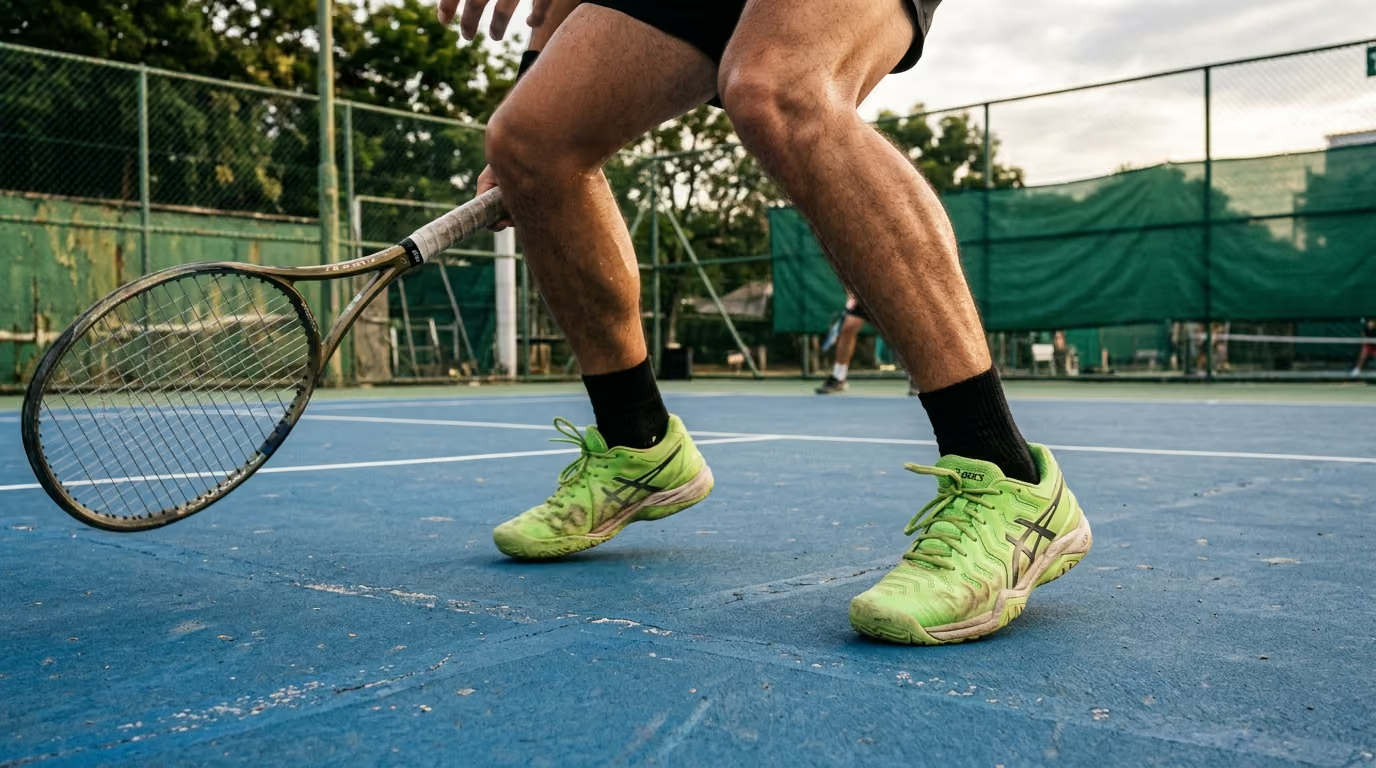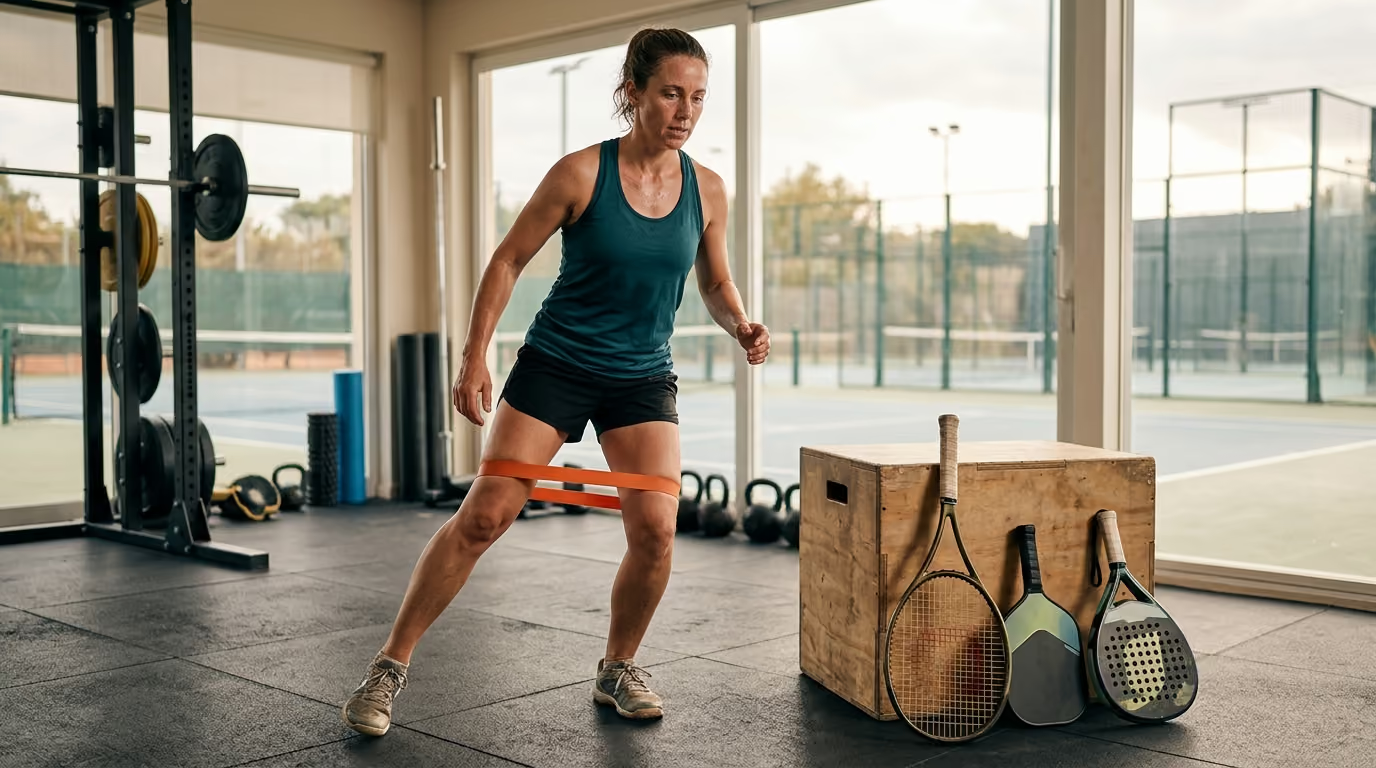

While many assume tennis, pickleball, and padel conditioning require entirely separate routines, their distinct demands can be met with a shared foundational approach.




Many multi-sport players wonder if training for tennis, pickleball, and padel requires completely separate conditioning routines. While all three sports share a baseline of rotational power and lateral agility, their distinct court sizes and rally structures demand targeted athletic adjustments. By maintaining a shared foundation of lower-body strength and aerobic recovery, you can easily shift your training focus to match the specific movement frequencies of each sport.
Racket sports are enjoying a massive surge in global participation. It is increasingly common for a player to schedule a tennis singles match on Monday, a pickleball doubles social on Wednesday, and a padel game on Friday. This multi-sport lifestyle keeps court sessions highly engaging. However, switching between different court sizes and equipment can place unexpected stress on the musculoskeletal system.
I remember finishing a tough two hour padel match on a cold Tuesday night and waking up the next morning feeling like my lower back was locked in concrete. For a long time, I just accepted this as the price of playing hard in my forties. But once I started spending just ten minutes on targeted hip mobility before heading to the club, the stiffness almost completely vanished. It taught me that we do not have to accept pain as a default state of aging.
Developing physical durability is key to maintaining healthy aging and athletic longevity on the court. Each sport places unique demands on your muscles, tendons, and energy systems. If you understand these differences, you can train smarter and avoid unnecessary injuries. This guide provides a detailed breakdown of how to prepare your body for all three sports.
Our team has analyzed the physiological demands of each discipline. We want to help you build a physical foundation that supports multi-sport play. By focusing on smart strength work and targeted conditioning, you can enjoy these sports for decades.
Current sports science research classifies tennis, pickleball, and padel as intermittent racket sports. This classification means they all combine repeated high-intensity efforts with brief periods of active recovery. During a typical match, your body must constantly transition between different energy pathways.
To build a complete training program, we must separate conditioning into five distinct physical demands. The first is movement demand, which dictates how far and how often you must run. The second is stroke-production demand, which covers the frequency and force of your hits.
The third is court-position demand, which determines whether you play at the net or the baseline. The fourth is energy-system demand, which balances short explosive bursts with aerobic recovery. Finally, tissue and joint demand covers the cumulative impact on your shoulders, elbows, knees, and ankles.
A systematic review published in the Journal of Human Kinetics highlights these shared athletic requirements. All three sports require a strong aerobic engine to help you recover between points. They also require excellent eccentric strength to handle rapid braking on the court.
By building these general qualities first, you create a robust physical foundation. Once this baseline is established, you can bias your training toward your primary sport. This approach ensures you remain fast, powerful, and free from chronic fatigue.
Court size is the most obvious difference between these three sports. The dimensions of the playing area directly dictate your movement patterns and stride lengths. A larger court requires longer runs, while a smaller court demands rapid, short-step adjustments.
A standard tennis court is 23.77 meters long. It measures 8.23 meters wide for singles and 10.97 meters wide for doubles. The International Tennis Federation also recommends significant runoff space behind the baselines. This open layout creates massive running demands for singles players.
Tennis players frequently cover deep balls, wide-angle shots, and drop shots. This requires high-speed sprinting, deep lateral sliding, and heavy deceleration. Because you must cover a large area, your strides must be long and explosive. This format places high eccentric stress on your quadriceps and glutes during hard stops.
A regulation pickleball court is much smaller, measuring 13.41 meters long and 6.10 meters wide. This size is identical for both singles and doubles play. The court also features a unique 2.13-meter non-volley zone, commonly known as the kitchen. This line restricts players from hitting volleys close to the net.
Because the court is small, your running distance is limited. However, you must make constant, compact movements to guard the kitchen line. This setup demands excellent split-step reactions and rapid lateral shuffles. You must also hold low, athletic stances for extended periods, which challenges isometric quad strength.
Padel is played on an enclosed court measuring 20 meters long and 10 meters wide. The court is divided by a net and surrounded by glass and metal walls. These walls are actively in play, which fundamentally changes how you move.
Instead of always running forward, you must often let the ball pass you. You then turn, track the ball off the back wall, and strike it on the rebound. This dynamic requires complex footwork, rapid pivots, and excellent spatial awareness. Padel movement combines short, multidirectional sprints with frequent rotational adjustments.
Understanding how points are played helps you train the correct energy systems. Each sport has a distinct rhythm of play and rest.
A comprehensive meta-analysis of elite tennis match play revealed fascinating temporal data. The average rally duration ranges from 5.5 seconds for male players to 6.4 seconds for female players. Rallies typically consist of four shots or fewer. However, the effective playing time is only about 18% to 20% of the total match.
This low percentage reflects the long recovery periods between points. During a match, a male player covers about 9.6 meters per point. This accumulates to over 2,200 meters of total running during a best-of-five match. Therefore, tennis conditioning must prioritize explosive point-level power alongside match-long aerobic endurance.
A professional match-activity analysis shows that pickleball rallies are highly compact. Over 60% of rallies in professional doubles involve between 3 and 10 shots. Furthermore, 71.3% of these shots are played from the transition zone. An incredible 90.8% of shots are intercepted out of the air or right after the bounce.
These findings highlight a highly reactive playing environment. You rarely sprint long distances, but you must make rapid, continuous split-second decisions. The physical toll in pickleball comes from high-frequency muscle contractions and constant postural adjustments. This pattern can cause significant fatigue in the calves, forearms, and lower back.
Research shows that padel points last significantly longer than tennis points. Average rally durations in padel range from 10 to 15 seconds. Players complete approximately 4 to 6 strokes per rally. The work-to-rest ratio sits between 1:1.13 and 1:1.41, which indicates high cardiovascular demand.
Padel players cover roughly 8 to 12 meters per point. Because rallies are extended and walls keep the ball in play, you experience sustained cardiac output. This requires a highly developed aerobic system to prevent technical drop-offs during long games. Players must also navigate different physical demands depending on which side of the court they play.
To perform your best on the court, you need to understand how your body produces energy. We must avoid the mistake of training only one energy pathway. Racket sports require a smart blend of both aerobic and anaerobic systems.
A systematic review of padel match play shows moderate physiological responses. During a typical match, players average 40% to 50% of their maximal oxygen consumption. Mean heart rates range from 140 to 160 beats per minute. This corresponds to roughly 70% to 80% of maximal heart rate.
These metrics indicate that padel relies heavily on aerobic metabolism. While points involve explosive jumps and overheads, the steady-state demand is high. Training should include moderate-intensity interval sessions to mimic these match conditions. This type of recovery science helps players maintain stamina during long third-set tiebreakers.
Tennis demands a highly developed anaerobic system supported by a strong aerobic base. The explosive sprints to chase wide balls rely on phosphocreatine stores. The rest period between points allows these stores to replenish. If your aerobic fitness is poor, you will struggle to recover before the next point begins.
Tennis conditioning should feature short, high-intensity intervals with complete recovery. This training helps you maintain your first-step quickness deep into the third hour of a match. It also helps preserve your stroke technique when fatigue sets in.
Pickleball conditioning is less about high-speed running and more about muscular endurance. The continuous lateral shifting at the kitchen line requires stable hip and core muscles. Because point play is rapid, your heart rate can remain elevated for long periods.
An aerobic base is highly beneficial for pickleball players. It allows you to play multiple matches in a single day without experiencing extreme fatigue. Combining light cardio with specific lower-body endurance exercises is the most effective approach.
To move efficiently and protect your joints, you must prioritize lower-body strength. Every change of direction on the court starts with absorbing force. If your muscles cannot absorb this force, your joints and tendons will take the blow.
Multi-sport players should focus heavily on single-leg exercises. On the court, you rarely push off or land on both feet simultaneously. You are almost always loading one leg during a lunge, shuffle, or split-step. Unilateral training builds balanced strength and improves lateral stability.
Begin with the classic split squat. Stand with one foot forward and one foot back, then lower your hips under control. Keep your front knee aligned with your toes to protect the joint. Perform 3 sets of 8 repetitions on each leg to build basic movement control.
Once you master the split squat, progress to the rear-foot-elevated split squat. Place your back foot on a low bench or step, then lower your rear knee toward the floor. This variation places greater demand on the front quadriceps and glutes. It is excellent for building the deep eccentric strength needed for sudden stops.
Finally, integrate lateral lunges to prepare for wide court reaches. Step directly to the side, bend your loading knee, and push your hips backward. Keep your trailing leg completely straight as you sink into the lunge. This movement targets the adductors and glutes, which are highly active during lateral changes of direction.
Your trunk acts as a bridge between your lower body and your upper body. When you hit a ball, force travels from the court, through your legs, and out of your racket. If your core is weak, this force is lost, which reduces stroke power and increases back strain.
The Pallof press is an excellent exercise for building rotational stability. Stand sideways to a cable machine or resistance band anchor. Hold the handle at your chest, step out to create tension, and press your arms straight forward. Hold this position for three seconds while resisting the pull of the band, then return to your chest.
You should also include medicine-ball rotational throws in your program. Stand perpendicular to a solid wall while holding a light medicine ball. Pivot your back foot, rotate your hips, and throw the ball horizontally against the wall. Catch the rebound and immediately repeat the movement to build explosive rotational power.
To translate gym strength to court performance, you must practice specific movement drills. A simple but highly effective drill is the five-meter shuttle run. Set up two cones five meters apart on the court. Sprint to the first cone, decelerate, touch the line, and shuffle back to the start.
Focus on keeping your center of gravity low as you approach each cone. Take short, rapid adjustment steps to slow down rather than taking one giant stride. This technique reduces the peak force on your patellar tendons and knees. Perform 5 repetitions, rest for 60 seconds, and complete 3 total sets.
You can also use this strength & conditioning resource to design sport-specific movement sessions. Incorporating split-step reaction drills is highly beneficial. Have a partner stand opposite you and signal which direction to move. Respond instantly with a split step and a rapid two-meter sprint.
Overhead strokes are common to all three racket sports. However, the mechanics and physical volumes of these strokes differ significantly. Protecting your shoulders requires a clear understanding of these sport-specific nuances.
The tennis serve is one of the most violent actions in sports. It requires your shoulder to go from deep external rotation to rapid internal rotation in milliseconds. This action puts immense stress on the rotator cuff, labrum, and biceps tendon.
To maintain shoulder health, you must focus on thoracic mobility and scapular control. If your mid-back cannot extend and rotate, your shoulder joint will overcompensate. You should also perform regular rotator cuff strengthening exercises using light resistance bands. Focus on external rotation movements to balance the high volume of internal rotation on the court.
In padel, you will hit a high volume of overheads, but they are rarely maximal-effort serves. Instead, you will use tactical overheads like the bandeja and vibora. These shots require you to strike the ball with spin from a slightly lower contact point.
Because you must often hit these shots while moving backward, core stability is critical. You must also turn your shoulders quickly after tracking rebounds off the back wall. Padel players should perform overhead medicine-ball slams to build specific upper-body endurance. This training helps protect the shoulder joint during long, repetitive matches.
Pickleball uses a lower net, measuring 36 inches at the sidelines and 34 inches at the center. Because the paddle is short and light, overhead actions are compact and rapid. You do not need the massive kinetic chain coordination of a tennis serve.
Instead, pickleball players need excellent forearm and wrist stability to control quick volleys at the net. You also need good shoulder endurance to hold your paddle high during rapid kitchen exchanges. Focus on lateral raises, band pull-aparts, and wrist flexion exercises. These movements build the specific muscular endurance needed for rapid interceptions.
For more detailed shoulder-saving exercises, review our injury prevention resources.
Many multi-sport players make simple errors when designing their training. Avoiding these common mistakes can save you from chronic aches and long layoffs.
Because pickleball is played on a smaller court, players often assume it is physically easy. They skip lower-body strength training and head straight to the court. This is a major mistake that often leads to Achilles tendon issues.
The rapid, short-step movements in pickleball place high demands on your calves and ankles. Without a baseline of strength, these tissues can quickly become overloaded. Every pickleball player should perform regular calf raises and squat variations. Building calf strength is essential for handling the constant stop-and-start actions of the sport.
Tennis players who try padel often try to run down every ball directly. They ignore the walls and sprint backward, which puts their body in awkward positions. This movement style can cause severe lower back strain and neck stiffness.
In padel, you must learn to let the ball pass you and hit it after it rebounds off the glass. This action requires a calm pivot, a low center of gravity, and a controlled turn. If you try to play padel with pure tennis footwork, you will quickly exhaust yourself. Practice wall-reading drills to teach your nervous system this unique movement pattern.
Many players prepare for racket sports by going for long, slow jogs. While continuous cardio builds basic aerobic fitness, it does not prepare your body for match play. A slow jog does not train your muscles to accelerate, decelerate, or change directions.
To build true court fitness, you must include interval training. Your heart rate on the court spikes during hard rallies and drops during rest periods. Your training should mimic this stop-and-start pattern to prepare your cardiovascular system. Replace one of your weekly jogs with a court-specific interval session.
The physical stress of racket sports accumulates over weeks and months. Optimizing your recovery is just as important as working hard in the gym. If you do not allow your tissues to adapt, your performance will suffer.
Repetitive impact on hard courts can cause micro-damage in your tendons and joints. The Achilles tendon, patellar tendon, and rotator cuff are particularly vulnerable. To support tissue health, you must prioritize sleep, hydration, and active recovery. Light movement on your rest days helps flush out metabolic waste and keep joints lubricated.
Using targeted mobility work can also make a massive difference in how you feel. Spend ten minutes stretching your calves, hip flexors, and thoracic spine after every match. This practice prevents your muscles from locking up and preserves your range of motion. You can learn more about managing post-match fatigue by reading our player health articles.
While minor muscle soreness is a normal part of training, you must listen to your body. Playing through structural pain can turn a minor strain into a chronic injury. You should know the clear warning signs that indicate it is time to see a healthcare professional.
If you experience localized swelling in any joint, stop playing immediately. Sharp, stabbing pain during movement is another clear sign of a structural issue. You should also seek professional care if you feel numbness or tingling down your arms or legs. Finally, any pain that persists beyond 72 hours of complete rest deserves a medical assessment.
A qualified physical therapist or sports physician can diagnose the root cause of your pain. They can provide a targeted rehabilitation plan to get you back on the court safely. If you have questions about finding a specialist, feel free to visit our contact page for guidance.
If you play tennis, pickleball, and padel, you cannot train every physical quality at maximum intensity. Doing so will quickly lead to overtraining and injury. Instead, you should use a smart prioritization strategy based on your playing goals.
To balance all three sports, you need a structured weekly schedule. This blueprint ensures you get enough court time while allowing your body to recover.
To simplify your programming, use this breakdown of physical priorities for each sport. It highlights where to focus your training energy.
To apply this knowledge and improve your court performance, follow this simple checklist this week:
Follow Evercourts for practical insights on tennis, pickleball and padel performance, movement, recovery and healthy ageing. Stay connected for new articles, research-led guidance and ideas to help you play well and keep playing for years.


Read practical guidance for better movement, smarter preparation and a game that keeps working for you.
explore the Blog