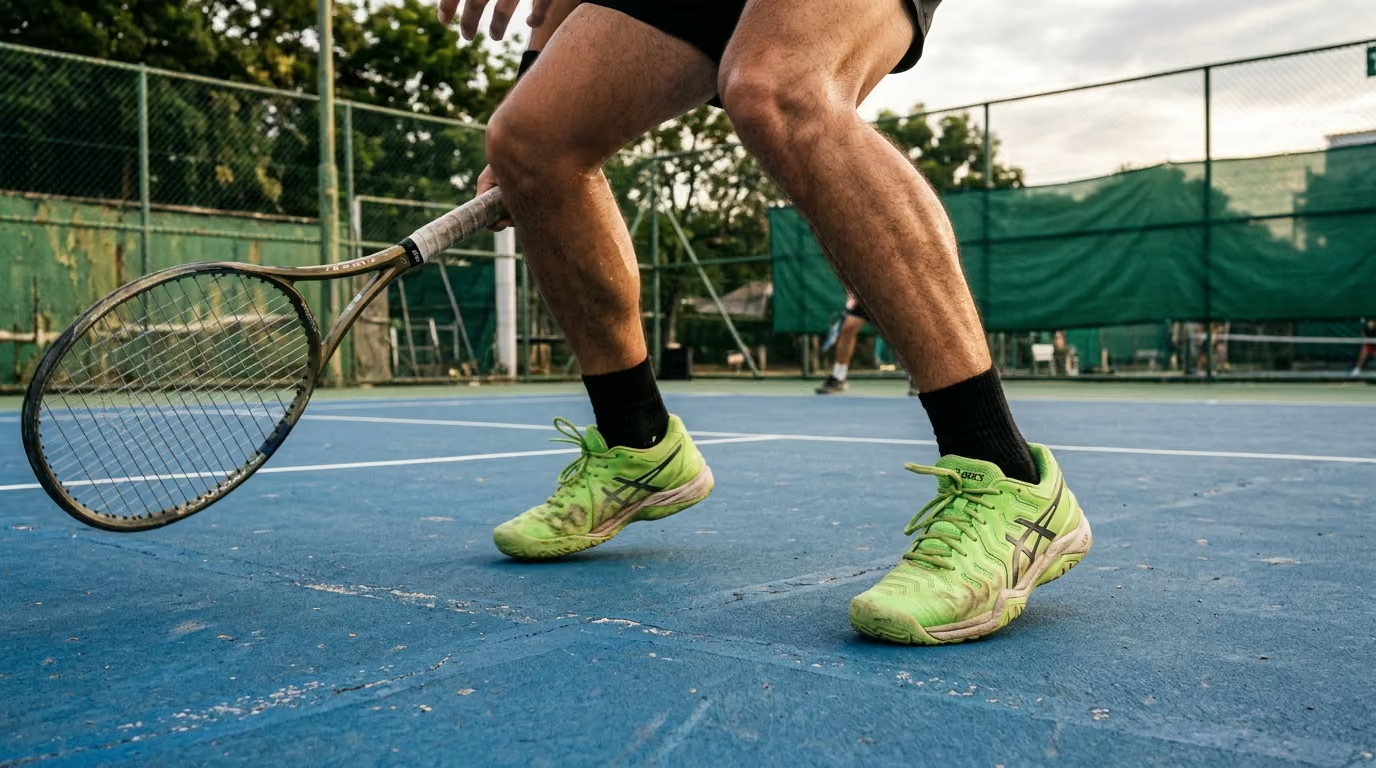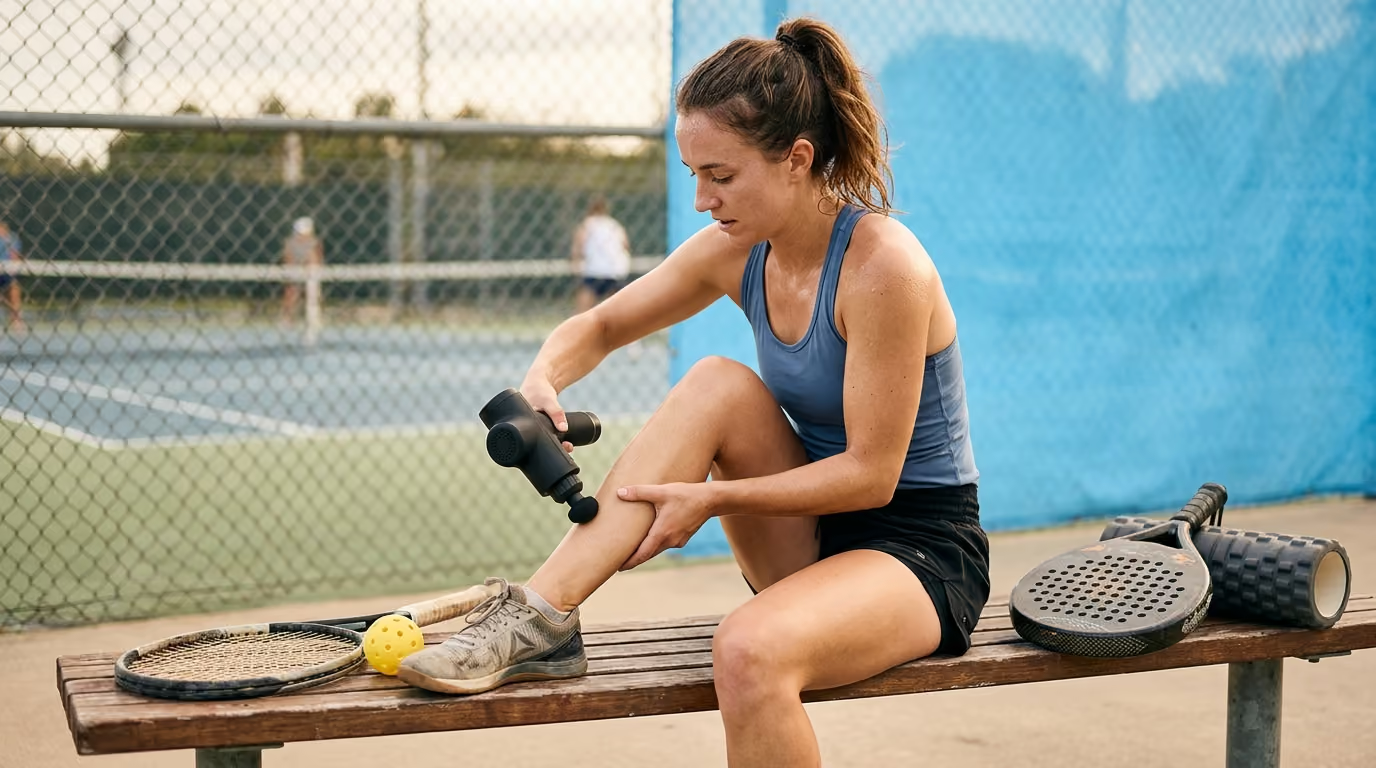

Three distinct court sports, tennis, pickleball, and padel, each impose unique mechanical, metabolic, and neuromuscular loads requiring tailored recovery strategies.




Imagine standing on the baseline at the end of a long, hot afternoon of play. You feel a familiar, heavy ache spreading through your legs, shoulders, and lower back. Whether you just finished a long singles tennis match, a fast-paced padel tournament, or multiple games of pickleball, your recovery needs depend entirely on what your body just endured.
To maintain athletic longevity and prevent injuries, recovery must be customized to the precise mechanical, metabolic, and neuromuscular loads of each sport rather than their general reputations. While tennis requires long-distance endurance and deceleration control, padel demands high rotational stability for back-wall play, and pickleball requires deep, sustained knee flexion.
This sport-by-sport guide compares recovery strategies for tennis, pickleball, and padel. It will help multi-sport players transfer recovery principles without assuming that these court sports create identical physical demands.
To optimize recovery, players must understand that fatigue is not a single, generic feeling. Our bodies process different types of physical stress depending on how we move, how long we play, and how often we change directions. Researchers divide these physical demands into six distinct layers of load.
External load refers to the work you perform on the court. This includes the total distance you cover, the number of accelerations and decelerations, and the volume of strokes you hit. It also accounts for jumps, lateral changes of direction, and total playing time.
Internal load measures how your body responds to that external work. This is reflected in your heart rate, rate of perceived exertion, respiratory demand, and thermal strain. Your level of subjective fatigue is also a primary indicator of internal load.
Mechanical load represents the physical stress applied to specific joints, bones, and muscles. In racquet sports, this includes high-impact braking, lunging, trunk rotation, and repetitive overhead hitting. It also includes the localized loading of the wrist and elbow tissues from ball impact.
Metabolic load refers to how your body produces energy and uses fuel during play. It involves carbohydrate use, muscle glycogen depletion, and fluid loss through sweat. Metabolic load also depends on the balance between short, high-intensity efforts and low-intensity recovery periods between points.
Neuromuscular load involves the nervous system's ability to send signals to your muscles. Explosive starts, sudden decelerations, and reactive changes of direction tax this system heavily. When neuromuscular load is high, your ability to produce force decreases late in a session.
Contextual load accounts for the variables that alter the intensity of play. These include playing singles versus doubles, competitive versus recreational formats, and environmental heat. It also includes the court surface, tournament schedules, and your overall technical level.
We can organize these factors into a practical decision rule for court athletes. The longer your session, the greater your total movement distance, the hotter the environment, and the shorter your rest period, the more important rapid recovery becomes. You must prioritize active rehydration, carbohydrate replacement, protein intake, quality sleep, and temporary load reduction.
A multi-sport player cannot treat these sports as interchangeable. A recreational doubles match on a cool morning requires a different recovery response than a multi-game tournament in summer heat. Let us look at how court dimensions directly shape these recovery needs.
The size of the court and the presence of walls determine how you move, accelerate, and stop. These geometric differences place unique physical demands on your muscles, tendons, and joints.
A standard tennis court is 23.77 meters long and 8.23 meters wide for singles. For doubles play, the width expands to 10.97 meters. The recommended surrounding run-off space is also substantial, which often expands the total playing area to approximately 40.23 meters by 20.11 meters.
This large playing surface permits longer sprints and deeper recovery positions than the other two sports. Tennis players must repeatedly accelerate from a central stance, brake into wide balls, and lunge to reach groundstrokes. They also rotate their entire body through forehands, backhands, serves, and overheads.
Because of this geometry, tennis recovery must account for long lateral and diagonal movement paths. Players experience high braking forces and eccentric muscle strain during deep decelerations. They also experience significant shoulder loading during serves and overheads, alongside high trunk rotation.
A pickleball court measures 6.10 meters by 13.41 meters for both singles and doubles. The non-volley zone, commonly called the kitchen, extends 2.13 meters from the net on each side. This compact layout means doubles players share a highly restricted space with their partners.
The smaller court reduces the need for long, high-speed running bouts. However, it increases the frequency of short, reactive movements and rapid split steps. Players must perform compact lateral adjustments, quick lunges, and constant transitions around the kitchen line.
Court size changes how movement is distributed, but it does not make pickleball easy to recover from. While you cover less total distance, you perform more frequent short reactions. You also spend long periods in a semi-flexed, low defensive stance. This stance concentrates loading on the calves, Achilles tendons, quadriceps, knees, and hips.
A standard padel court is 20 meters long by 10 meters wide. It is enclosed by walls made of glass and mesh. Because padel is almost exclusively played as a doubles sport, four players occupy this confined space.
The walls fundamentally alter the movement demands of the sport. Points do not end when the ball passes a player. Instead, players must continue play after the ball rebounds from the back or side walls. This prolongs rallies, increases decision-making demands, and requires rapid transitions between defense and attack.
Padel court geometry encourages short lateral and forward movements. It demands frequent changes of direction, repeated crouching, and rotational power. Players must also hit a high volume of overhead and semi-overhead shots, requiring excellent shoulder stability.
These movement profiles show that each sport stresses the body differently. The mechanical load of stopping on a large tennis court differs from the low-stance demands of pickleball. It also differs from the highly rotational, wall-based movement of padel.
To recover effectively, you must understand the difference between total match duration and effective playing time. The physical cost of a sport depends heavily on how much time you spend running versus resting.
Research on international tennis reveals average rally durations of 5.5 seconds for male players and 6.4 seconds for female players. The effective playing time is relatively low. It averages approximately 18.6 percent for men and 20 percent for women.
During a point, a player covers about 8 to 15 meters of total movement. This translates to roughly 1,300 to 3,600 meters per hour of play, depending on your skill level and the court surface. International male players cover about 607 meters per set and 2,292 meters per match during best-of-five competition.
These figures illustrate why tennis recovery is governed by high peak movement loads spread across a long total duration. A two-hour tennis match contains considerable rest time between points. However, the repeated high-force accelerations, serves, and emotional stress still generate deep systemic fatigue.
Furthermore, tennis demands differ by surface. Effective playing time on clay courts averages 20 to 30 percent, compared to 10 to 15 percent on hard courts. Clay courts encourage longer rallies and sliding movements, whereas hard courts place higher impact forces on your joints.
Available research shows that recreational pickleball produces moderate-to-vigorous cardiovascular demand. In recreational players, mean heart rates average approximately 111 beats per minute for both singles and doubles. This corresponds to roughly 70 to 71 percent of predicted maximum heart rate.
In these studies, players spent more than 70 percent of their playing time in moderate-to-vigorous heart-rate zones. A separate review of pickleball participation found that recreational players easily accumulated more than 68 minutes of moderate-to-vigorous physical activity per session.
Tournament-style recreational pickleball often features short, dense matches. Players might complete four doubles matches per day, with each match lasting about 15 minutes. This creates a high game density, meaning recovery must occur repeatedly throughout a single day.
Step counts can also be deceptive. One study found that doubles pickleball produced 36 percent greater energy expenditure than self-selected walking. This occurred even though walking produced 54 percent more steps than pickleball. Steps do not capture the energy cost of low-stance lunging, quick reactions, and rapid changes of direction.
A time-motion analysis of padel reported an average match duration of 53.7 minutes. Within this timeframe, effective playing time was approximately 16.8 minutes, while rest periods totaled 36.9 minutes. This means the ball was in play for roughly 31.3 percent of the match.
Other high-level datasets report average rally durations of 12.7 seconds, with 15-second rest periods between points. In these competitive settings, effective playing time can reach up to 45.9 percent of the total match duration. The average rally duration in standard recreational play is about 6.7 seconds, with 42.6 shots hit per minute of match time.
These variations show that padel places a high change-of-direction burden on the body relative to its court size. Padel players cover approximately 2,000 to 3,000 meters per match. Roughly half of this distance is covered while the ball is actively in play.
A player can experience over 600 accelerations per match, alongside hundreds of meters of explosive movement. Padel recovery must focus on both cardiovascular restoration and repairing the neuromuscular fatigue caused by constant turning.
Because the physical loads of these sports differ, your post-play recovery strategy must target the specific tissues and energy systems that were stressed.
The primary recovery priority after a demanding tennis session is fluid and carbohydrate replacement. Because matches can last several hours, glycogen depletion and dehydration are common, particularly in hot weather.
To guide your hydration, you can use the four "R's" framework: rehydrate, refuel, repair, and rest. For rapid rehydration within a four-hour window, research suggests replacing approximately 150 percent of the fluid mass lost during play. You should include sodium in your drinks to improve fluid retention and prevent cramping.
The second priority is addressing local muscle and tendon strain. Tennis players must monitor calf and Achilles tendon soreness after moving on hard courts. You should also check for patellar tendon symptoms, groin tightness, hip stiffness, and shoulder external-rotation fatigue.
Finally, you should plan the day after a long match strategically. Use the following day for low-intensity aerobic work, gentle mobility exercises, or technical hitting with minimal movement. This supports active recovery without overloading your joints. If you need targeted strategies, you can find helpful advice in our injury prevention resources.
In pickleball, the primary recovery challenge is managing cumulative game density. While a single 15-minute game is short, playing several games back-to-back can result in hours of total court time.
Your recovery plan should account for the total time spent standing and moving rather than the duration of any single game. Take short, active breaks between matches instead of sitting completely still for long periods. This keeps your muscles warm and prevents stiffness.
The second priority is managing the mechanical stress of low-position play. The compact kitchen-line stance requires strong, resilient calf, ankle, and quadriceps muscles. Incorporate mobility work for your ankles and hips to relieve the pressure on your knees and lower back.
Lastly, players must avoid the misconception that pickleball is too easy to require recovery. While a study on young-to-middle-aged adults found no measurable lower-body neuromuscular fatigue after 15 controlled games, this finding should not be generalized to everyone. Older players or those with existing joint issues must pace their sessions to support athletic longevity. You can check out more specialized tips in our player health articles.
Padel recovery must target the high neuromuscular strain caused by constant accelerations, decelerations, and changes of direction. These explosive movements tax the fast-twitch muscle fibers of your lower body.
Your post-match routine should focus on relieving tension in the adductors, groin, calves, and hamstrings. Spend time on gentle, multi-directional stretching to restore joint range of motion. Light foam rolling can also help soothe highly active muscle groups.
The second priority is addressing cognitive and decision-making fatigue. Because players must constantly react to unpredictable ball rebounds off the walls, mental fatigue is common in padel. Prioritize high-quality sleep and relaxation techniques to restore your reaction times and spatial awareness.
Do not use total match duration as your only indicator of physical load. A 60-minute padel match can contain a high density of explosive sprints and rotations. Track your perceived exertion and next-day soreness to guide your training volume.
To help you compare these requirements, we can look at a summary of the load profiles of each sport. This comparison highlights the unique physical challenges of tennis, pickleball, and padel.
Implementing recovery strategies during your matches and training sessions can significantly reduce post-play fatigue. Small adjustments to your on-court routine will yield major benefits for your physical longevity.
During play, use changeovers and breaks between games to hydrate and fuel your body. In our experience, waiting until you feel thirsty to drink is a common mistake that can hurt your late-game performance.
For matches lasting longer than 60 minutes, carry a sports drink containing carbohydrates and electrolytes. Take small, frequent sips rather than gulping large amounts of water. This maintains your blood volume, supports your sweat rate, and prevents stomach discomfort.
Pay attention to your movement pacing during long rallies. Avoid unnecessary rushing between points, and use your allotted rest time to lower your heart rate. Taking slow, deep belly breaths during transitions helps calm your nervous system and preserves your energy.
The first 30 to 60 minutes after you walk off the court represent a critical recovery window. Your body is highly receptive to nutrients that kickstart muscle repair and glycogen replenishment.
If you play multiple racquet sports, you must structure your training week carefully to prevent overuse injuries. Avoid scheduling your most intense sessions back-to-back, and allow adequate rest days between matches.
For example, if you play a demanding singles tennis match on Monday, do not schedule an intense padel session for Tuesday morning. Instead, use Tuesday for a light pickleball doubles session or focused mobility work. This alternates the mechanical stress on your joints while maintaining your active lifestyle.
In corporate or recreational settings, players often struggle with consistency. If you feel excessive muscle soreness or joint pain, reduce your playing volume for a few days. Listening to your body's feedback is essential for long-term health and athletic success. For structured guidance on balancing your training, check out our strength and conditioning resources.
Many players follow recovery advice that is based on myths rather than sports science. Recognizing these common errors can save you from unnecessary stiffness and injury.
Many recreational players use smartwatch data to calculate their post-match nutrition and recovery needs. However, research shows that wearable devices can have significant errors when estimating energy expenditure during intermittent racquet sports.
One study found that popular wearable devices showed mean absolute percentage errors greater than 10 percent during pickleball gameplay. These devices often struggle to capture the metabolic cost of short, explosive lateral movements and rapid changes of direction. Use heart-rate trends to monitor your cardiorespiratory exertion, but do not rely on calorie estimates to plan your meals.
A player might wake up the morning after a match feeling energetic and aerobically fresh. They may assume this means their body is fully recovered and ready for another intense session.
However, cardiorespiratory recovery occurs much faster than localized muscle and tendon repair. Your heart and lungs may feel great, but your Achilles tendons, patellar tendons, or rotator cuff muscles may still be suffering from micro-tears.
Always assess your joint mobility and local muscle tenderness before jumping back onto the court. If you want to dive deeper into the science behind tissue repair, explore our recovery science resources.
Consistent, high-quality recovery habits protect your musculoskeletal system from chronic wear and tear. Over time, these practices build resilient tissues that can handle the explosive demands of court sports.
Sleep is the absolute foundation of athletic recovery and physical longevity. During deep sleep, your body releases human growth hormone, which is essential for repairing muscle tissue and strengthening bones.
I used to think a tough conditioning block was the only way to improve my court endurance. Then I started tracking my sleep. I noticed that on days I slept less than six hours, my reaction time at the net was noticeably sluggish, and I felt gassed by the second set. Prioritizing consistent rest did more for my late match stamina than any extra sprints ever did. Recovery is the true foundation of performance.
To support healthy aging and high performance, aim for seven to nine hours of quality sleep per night. Establish a calming pre-sleep routine by limiting screen time, lowering your room temperature, and avoiding heavy meals close to bedtime. These adjustments can significantly improve your sleep quality and next-day readiness.
Consuming adequate protein throughout the day provides the building blocks your body needs to rebuild muscle fibers. Sports nutrition guidelines recommend distributing your protein intake across multiple high-quality meals.
A beneficial strategy for active court players is consuming a protein-rich snack before bed. Research suggests that pre-sleep protein increases amino acid availability overnight, which stimulates muscle protein synthesis while you sleep. Good options include Greek yogurt, cottage cheese, or a high-quality protein shake.
Tendons have a limited blood supply compared to muscles, which means they take longer to adapt to training loads and recover from exercise. Repetitive jumping, lunging, and striking can lead to chronic tendon irritation if recovery is neglected.
To protect your joints, incorporate regular mobility work for your ankles, hips, and thoracic spine. Healthy joint mobility distributes impact forces evenly across your kinetic chain, reducing the strain on your knees and lower back.
Additionally, avoid sudden, drastic increases in your weekly playing volume. Gradual progression is the safest way to build tendon resilience and support athletic longevity.
While mild muscle soreness is a normal response to physical activity, certain symptoms indicate a more serious issue that requires professional evaluation. Knowing when to consult a qualified healthcare provider can prevent a minor strain from becoming a chronic injury.
Delayed onset muscle soreness typically peaks 24 to 48 hours after an intense session and is characterized by a dull, diffuse ache in your muscles. This soreness should gradually improve with light movement and gentle stretching.
In contrast, sharp pain, localized joint swelling, or pain that worsens with movement are warning signs of an injury. If you experience a sudden pop or snap during play, stop immediately and seek medical attention.
Consult a physical therapist, sports physician, or orthopedic specialist if you notice any of the following symptoms:
A professional assessment can provide you with an accurate diagnosis and a customized rehabilitation plan. This ensures you can return to the court safely and continue enjoying your favorite sports for years to come.
You should return to this comparative guide whenever you plan to transition between racquet sports, such as moving from outdoor tennis to indoor padel. Revisit these recommendations before entering a tournament with consecutive playing days, or if you begin experiencing unexplained physical fatigue. For more information about our research-led approach to athletic longevity, visit our about page.
Tailoring your recovery to the specific physical demands of your sport is the key to maintaining your performance and protecting your joint health over a long playing career.
Follow Evercourts for practical insights on tennis, pickleball and padel performance, movement, recovery and healthy ageing. Stay connected for new articles, research-led guidance and ideas to help you play well and keep playing for years.


Read practical guidance for better movement, smarter preparation and a game that keeps working for you.
explore the Blog