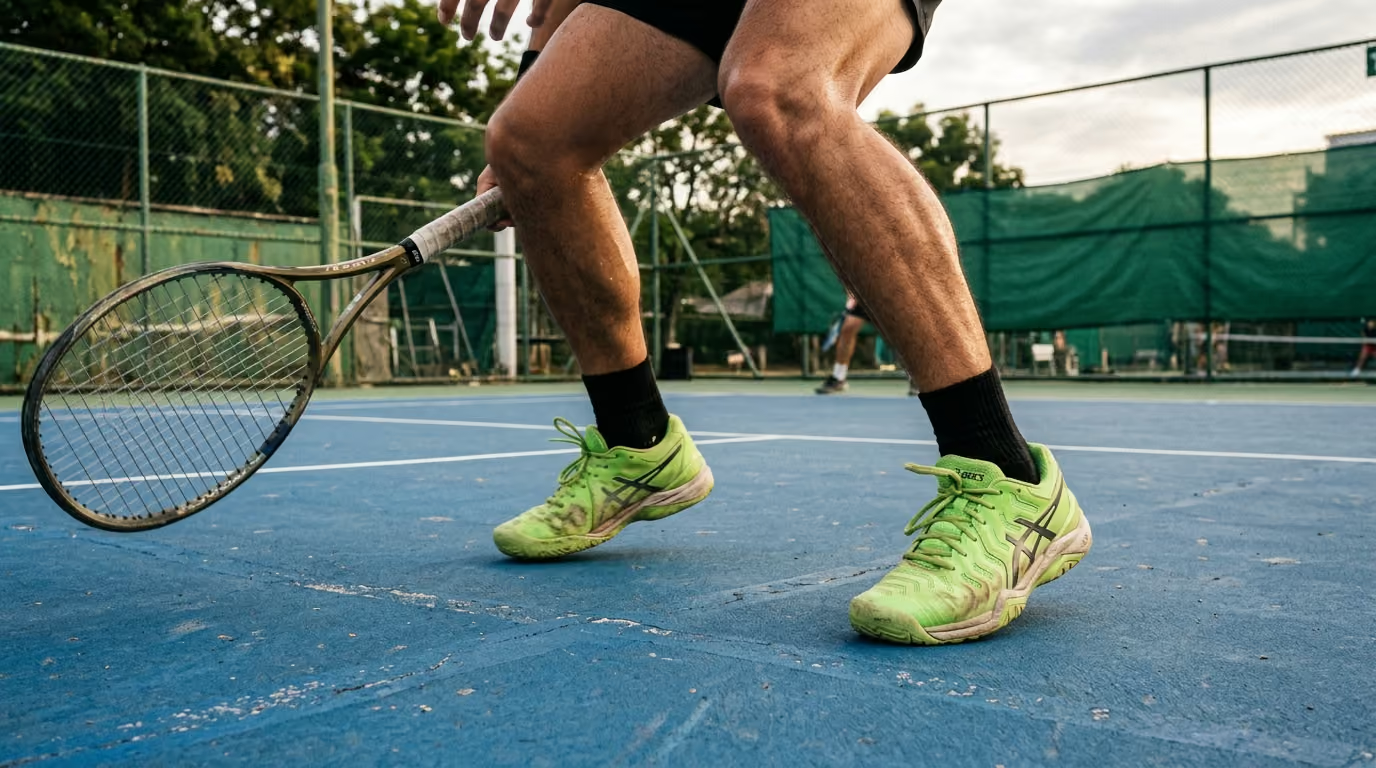
Effective injury prevention strategies for tennis, pickleball, and padel are understood by comparing their distinct injury risks and common types of physical setbacks.




Many players assume that migrating from the spacious layout of a tennis court to the smaller dimensions of a pickleball or padel court reduces their overall injury risk. In reality, shifting to a smaller playing area changes the mechanical stress on the body rather than eliminating it. While tennis demands expansive, long-distance deceleration and high-velocity serving, pickleball and padel introduce rapid direction changes, localized joint compression, and repetitive impact.
The fundamental difference in injury risk between these three sports lies in how court dimensions, wall interactions, and equipment weight redistribute physical stress across the body. Tennis primarily stresses the lower limbs through wide-court coverage and the upper body through high-velocity overhead serves. Pickleball concentrates pressure on the knees, ankles, and wrists via short-range movements and fast-paced kitchen exchanges, while padel strains the elbow and shoulders through constant wall-rebound plays and frequent overhead shots.
Incidence measures the frequency of new injuries over a specific tracking timeframe. For instance, researchers often express incidence as the number of events per 1,000 playing hours. In padel, a systematic review documented an incidence of approximately 3 injuries per 1,000 training hours. This rate rose to 8 injuries per 1,000 competitive matches, highlighting the physical demands of match play.
Prevalence, by contrast, tracks the total proportion of a playing group experiencing symptoms at any given point. The same padel review indicated an overall career prevalence range of 60% to 95%. This means a vast majority of players will encounter some form of physical setback during their playing lifetime. Understanding these metrics helps players assess their personal risks on the court.
A sport might have low acute incidence but high chronic prevalence. This means it rarely causes sudden trips or falls, but it frequently causes nagging joint soreness over several months. To manage these chronic risks effectively, players should examine targeted injury prevention resources that address both acute slips and long-term wear.
Emergency department reports versus clinical surveys also skew our view of court safety. Emergency room records naturally emphasize acute fractures, deep cuts, and sudden falls. Clinical surveys capture the quiet buildup of chronic tendon issues, which rarely require hospital visits but can sideline players for weeks.
This difference is especially clear in pickleball research. A 10-year national study tracking emergency department data showed a steep rise in acute injuries, particularly fractures and fall-related trauma among older adults. Yet, local surveys of active players show that muscle strains and tendon irritations are far more common overall. This indicates that while falls are the most severe risk, daily wear and tear is the most frequent obstacle.
We must also differentiate between acute and overuse injuries. Acute injuries happen in a single fraction of a second, such as a rolled ankle or a muscle tear. Overuse injuries build up over weeks or months of repetitive motion, such as lateral elbow tendinopathy or shoulder impingement. Both types of injury require distinct prevention strategies to keep players active and healthy.
Workload plays a major role in how these issues develop. External workload includes measurable factors like hours on court, total games played, and stroke counts. Internal workload refers to how your body perceives that stress, including heart rate, muscle soreness, and sleep quality.
Relative workload compares your current activity level to your recent baseline. If you suddenly double your playing hours, your relative workload spikes, which significantly increases your injury risk. Maintaining a stable, gradually progressive workload is key to protecting your tissues from sudden failure.
The dimensions of a playing court dictate how an athlete moves, decelerates, and recovers position. Each of the three sports places unique mechanical demands on the lower body due to these spatial differences. Understanding these movement patterns is the first step toward preventing common lower-limb strains.
A standard tennis singles court measures 23.77 meters long and 8.23 meters wide. This large area requires players to sprint, brake hard, and slide laterally to reach the ball. Stopping from a full sprint puts immense strain on the ankles, knees, and hips.
Tennis players frequently load their joints in an open stance. This stance demands strong rotational control from the hips and trunk. The long distances between shots mean players must develop excellent deceleration strength to prevent hamstring or calf strains.
The pickleball court is much smaller, measuring 13.41 meters long and 6.10 meters wide. This compact area reduces the need for long-distance sprinting. However, it requires frequent, highly explosive short steps, especially near the non-volley zone.
This zone, also called the kitchen, demands constant lateral shuffling and deep lunging. Players must react to rapid shots by shifting their weight instantly. This movement pattern can lead to knee meniscus strain or patellar tendon pain if the joints lack proper preparation.
Furthermore, players often backpedal blindly when facing deep lobs. Backpedaling on a short court is a primary cause of slips, trips, and severe falls. Older players are especially vulnerable to balance loss during these sudden backward movements.
Padel courts are 20 meters long and 10 meters wide, enclosed by glass and wire mesh walls. This setup keeps the ball in play longer, creating extended, highly physical rallies. Players must constantly react to unpredictable rebounds off the walls.
These wall interactions require rapid, 360-degree pivoting and awkward lateral reaches. The body must decelerate suddenly, twist to face the wall, and immediately accelerate toward the net. This constant twisting and turning puts unique rotational demands on the lower back and knees.
Players must maintain a low center of gravity while reading the ball's path. Without strong hip abductors and stable ankles, these sudden pivots can easily lead to joint sprains. Preparing the body for these multi-directional shifts is essential for long-term court safety.
The physical impact of striking a ball depends on racket weight, ball velocity, and stroke frequency. Each sport targets different areas of the upper extremity, from the shoulder girdle down to the fingers. Analyzing these stroke profiles helps players identify which tissues require the most protection.
The tennis stroke profile is highly diverse, featuring heavy topspin groundstrokes, slices, volleys, and high-velocity serves. The serve is particularly demanding, requiring a coordinated sequence of movements known as the kinetic chain. This chain begins in the legs, moves through the hips and trunk, and ends in the shoulder, elbow, and wrist.
If any link in this chain is weak, the shoulder and elbow must work harder to generate power. This compensatory effort can lead to rotator cuff tendonitis or medial epicondylitis. Improving your core stability and leg drive is often the most effective way to protect your hitting arm.
Pickleball strokes rely on a solid paddle and a lightweight plastic ball. Because the ball does not compress like a tennis ball, the impact forces travel directly into the wrist and elbow. This can create high-frequency vibrations that stress the local tendons over time.
Players often use highly active wrist movements to flick the ball over the net during fast kitchen exchanges. This repetitive wrist action can overwork the forearm muscles, leading to lateral elbow soreness. While the cardiovascular load of pickleball may feel moderate, the local mechanical strain on the forearm can be surprisingly high.
Players must build local tissue endurance to handle the high volume of rapid, short-range strokes. Without this conditioning, the forearm tendons can become chronically inflamed. Simple grip adjustments and wrist strengthening exercises can help mitigate this risk.
Padel gameplay involves an exceptionally high volume of overhead strokes, such as the bandeja, vibora, and smash. These shots require players to strike the ball above head height while moving backward or turning. This repetitive overhead motion puts immense strain on the shoulder joint and the rotator cuff.
The padel racket is solid, thick, and unstrung, which alters how vibrations are absorbed. The lack of string tension means the forearm muscles must absorb more of the impact force. This combination of frequent overheads and solid racket impacts makes lateral elbow tendinopathy the most common overuse injury in padel.
Additionally, the explosive trunk rotation required for powerful overheads can strain the abdominal wall and lower back. Padel players must develop excellent core strength to manage these rotational forces safely. Balancing your training with rotational stability exercises is key to avoiding abdominal wall strains.
The tools you bring to the court have a direct impact on how your body handles physical stress. Racket weight, handle size, string tension, and footwear choice all influence injury risk. Making informed equipment decisions is a simple yet effective way to protect your joints from unnecessary strain.
Tennis players can customize their equipment through racket weight, frame stiffness, string material, and tension. A frame that is too heavy can fatigue the shoulder, while strings that are too stiff can transfer excess vibration to the elbow. Finding the right balance is essential for minimizing upper-limb stress.
Using a grip that is too small forces the player to squeeze the handle tighter, which overworks the forearm muscles. Players should monitor their equipment and consult professionals to ensure their racket setup matches their current physical strength. Regularly replacing worn strings also helps maintain consistent shock absorption.
Pickleball paddles are typically made of carbon fiber, fiberglass, or wood, and they do not have strings. The weight of the paddle, often between 7 and 9 ounces, significantly affects how the forearm manages impact. A paddle that is too heavy can strain the wrist, while one that is too light might force the player to swing harder, increasing shoulder strain.
Selecting the right grip circumference and replacing worn footwear are critical steps for maintaining court traction and safety. Court shoes with lateral support are far safer than running shoes, which lack the stability needed for quick side-to-side movements. Investing in proper footwear is one of the best ways to protect your ankles and knees.
Padel rackets are limited to a maximum length of 45.5 centimeters and a thickness of 38 millimeters. They feature perforated surfaces to reduce air resistance, but they remain relatively heavy compared to their short length. This unique shape creates a distinct balance point that affects wrist and shoulder loading.
The heavy balance of some padel rackets can place substantial strain on the wrist joint during quick defensive plays. Players should select a racket weight they can control comfortably even when fatigued. Using a safety lanyard is also mandatory in padel to prevent the racket from slipping out of your hand.
The court environment also plays a major role in player safety. Padel courts are enclosed by glass and wire mesh, meaning players must remain highly aware of their surroundings to avoid painful collisions. Wet or dirty glass can also alter ball rebounds, requiring rapid, awkward adjustments that increase injury risk.
To implement these findings, players must transition from generic stretching to structured, sport-specific preparation. Here is how to apply this knowledge systematically before, during, and after play.
Before stepping onto the court, perform a dynamic warm-up designed to prime your cardiovascular system and major joint groups. Start with three minutes of light jogging or lateral shuffling to increase tissue temperature. Next, complete ten controlled bodyweight squats and ten lunges with a gentle torso twist.
Prepare your shoulders with arm circles and band pulling exercises to activate the rotator cuff. Gradually increase your stroke intensity during warm-ups, starting with short court hits before moving to full-court baseline drives and serves. During your training, monitor your weekly serve volume.
Avoid spiking your serve count in a single week, as this is a primary driver of shoulder and lower back irritation. Focus your off-court training on rotator cuff endurance, thoracic mobility, and single-leg deceleration control. Check out strength and conditioning protocols to build a robust baseline of physical resilience.
For pickleball, your dynamic warm-up should emphasize balance, quick footwork, and low-position hip mobility. Begin with two minutes of brisk walking, followed by gentle side-shuffling across the court. Perform ten calf raises to warm up the Achilles tendons, which undergo significant stress during quick forward starts.
Practice several split steps to prime your nervous system for sudden changes of direction. To prevent severe falls, practice the pivot-and-turn technique instead of running backward for deep lobs. When a ball goes over your head, turn your body to the side and run backward using lateral or crossover steps.
This simple mechanical adjustment keeps your center of gravity stable and prevents you from tripping over your own feet. Ensure your paddle grip is thick enough to allow a relaxed hold, reducing forearm fatigue during long exchanges. Players should focus on hip mobility to make low-stance playing more comfortable.
Padel players must prepare their bodies for high-volume overhead striking and rapid wall rotations. Begin your warm-up with dynamic chest openers and trunk rotations to prepare the spine for twisting actions. Perform low-intensity lunges in multiple directions to prime your hips and knees for wall rebounds.
Practice low-speed wall retrievals, focusing on small, quick steps rather than long, lunging reaches. On court, start with slow volleys and gentle lobs, gradually building up to high-speed smashes. Limit your smash repetitions during practice sessions, particularly when your shoulder or forearm begins to feel tired.
Off-court, prioritize forearm extensor strengthening, shoulder external rotator endurance, and trunk rotation control. These targeted exercises help distribute the impact of solid racket strikes across your entire upper body. Consistent core strengthening will also help protect your lower back from rotational strain.
Many racquet sports enthusiasts enjoy playing multiple games throughout the week. While cross-training has many benefits, transitioning between these sports requires careful physical adjustments. Each sport has distinct mechanical demands that can shock unprepared tissues.
If you are a tennis player transitioning to pickleball, your primary challenge is adapting to a compact court and a faster game tempo. You may be tempted to use your large, loopy tennis swings, which can lead to late contact and wrist strain. Shorten your backswing and focus on compact, controlled strokes.
Be prepared for the constant, low-stance positioning required near the kitchen line. Your knees and lower back will experience more sustained isometric holding than they do in tennis. Give your body time to adapt to these new, low-lying posture demands.
To protect your joints, incorporate deep squats and lateral hip strengthening into your routine. This will help you maintain a low athletic stance without putting excessive pressure on your knees. Monitor your joints closely during the first few weeks of this transition.
Transitioning from pickleball to tennis requires a major adjustment in running volume and swing mechanics. You must prepare for the larger court, which demands longer sprint distances and heavier braking forces. Start by playing doubles or limiting your singles sessions to thirty minutes.
Introduce the serve gradually, as the overhead motion is much more intense in tennis than the underhand serve of pickleball. Incorporate longer-range lateral movement drills into your weekly routine to build calf and hamstring endurance. Read through our tennis instructional guides to understand how to adjust your footwork for wider court coverage.
You should also focus on building shoulder strength to handle the heavier tennis racket. Performing regular rotator cuff exercises will help prevent shoulder impingement as your playing volume increases. Take regular rest days to allow your muscles to recover from the increased running demands.
Tennis players moving to padel often struggle with the presence of walls and the high volume of overhead shots. You may try to hit every ball before it bounces off the glass, leading to rushed, awkward movements. Learn to let the ball pass you and play it after the rebound.
This requires patience and different footwork, using small recovery steps rather than long strides. Because padel features far more overhead shots than tennis, you must monitor your elbow and shoulder fatigue closely. Rest your hitting arm between multi-game sessions to prevent overuse tendinopathy.
Refer to padel gameplay advice to master wall positioning and save energy. Working on your rotational mobility will also help you handle the constant twisting required to play balls off the wall. Focus on maintaining a relaxed grip to minimize elbow strain during off-the-glass plays.
Pickleball players entering padel must adjust to a larger court, a heavier solid racket, and a completely different stroke profile. You will face a much higher volume of overhead shots and deeper rotational demands. Focus on building shoulder endurance and trunk stability to handle the constant overhead striking.
Learn the rules of wall play to avoid running into the glass or wire fencing during fast-paced points. Start with shorter playing sessions and allow ample recovery time for your shoulders and wrists to adapt to the heavier padel racket.
Incorporating single-leg stability exercises into your routine will help you handle the rapid, multi-directional movements of padel. This will also improve your balance when reacting to unpredictable ball rebounds. Give your body several weeks to adapt before entering competitive padel matches.
Even highly experienced athletes can fall into common training traps that lead to injury. Recognizing these pitfalls allows you to make proactive adjustments to your routine. Here are three frequent errors players make regarding their training and recovery.
One frequent mistake is assuming that a smaller court automatically makes a sport safer or less physically demanding. While a smaller court reduces long-distance sprinting, it increases the frequency of rapid accelerations, sharp braking, and quick pivots. These short, explosive movements can place intense localized stress on the Achilles tendon, patellar tendon, and plantar fascia.
Assuming a sport is low impact can lead players to skip warm-ups or overplay, resulting in sudden acute injuries or severe overuse pain. To maintain a high level of performance, players must treat every sport with equal physical respect. This means dedicating time to a proper warm-up regardless of court size.
Another common error is treating "tennis elbow" as a condition exclusive to tennis. Lateral elbow tendinopathy is highly prevalent in padel and pickleball due to solid racket impacts and repetitive wrist flicking. Labeling this condition based on one sport leads to confusion and poor prevention choices.
For details on why this occurs, players must address the underlying mechanical cause, which is often a combination of weak forearm muscles, a tight grip, and improper stroke timing. Focusing on total-arm conditioning is far more effective than simply resting the joint. Strengthening the wrist extensors and shoulder stabilizers is key to resolving this issue.
A third major pitfall is relying solely on stretching or passive braces to manage chronic joint discomfort. While stretching can temporarily improve range of motion, it does not build the tissue strength required to handle high court loads. Similarly, wearing a brace can support a joint temporarily but should not replace a structured, progressive strengthening program.
True physical resilience comes from gradually loading the muscles and tendons to build long-term load capacity. If you rely on a brace to get through every match, you may be masking a deeper issue that requires targeted rehabilitation. Focus on building active joint stability through progressive resistance training instead.
Optimizing your recovery between court sessions is essential for protecting your joints and maintaining athletic longevity. When you play, your tendons and muscles experience microscopic tissue breakdown, which is a normal response to physical activity. Your body needs adequate time and resources to repair this tissue, making it stronger for your next match.
If you play again before this repair process is complete, you accumulate chronic fatigue and increase your risk of overuse injuries. Ensure you allow at least 24 to 48 hours of recovery between high-intensity sessions, particularly when introducing a new sport. Proper sleep, hydration, and active recovery, like light walking or mobility work, are critical for tissue health.
To maintain your physical capabilities over time, prioritize a balanced routine that combines playing time with structured physical preparation. Explore our healthy aging and athletic longevity resources to learn how to keep playing your favorite sports for years to come.
Integrating proper recovery science guidelines into your weekly routine will help you manage fatigue, protect your joints, and perform your best every time you step on the court. Remember that recovery is an active process that requires consistent attention, not just passive rest.
Examining real-world scenarios can help clarify how these injury risks present during daily play. These case patterns illustrate the importance of matching your physical preparation to the specific demands of your sport.
A previously inactive 68-year-old player begins playing pickleball three times a week, with each session lasting two hours. During deep lob plays, the player backpedals quickly to reach the ball and loses balance, resulting in a fall that causes a wrist fracture. This case reflects a classic risk pattern of a sudden workload increase combined with poor backward movement mechanics.
To prevent this, the player should limit early sessions to 45 minutes, perform balance training, and learn to turn and run instead of backpedaling. This simple adjustment keeps their center of gravity stable and reduces fall risk. Gradually building playing time allows the bones and joints to adapt safely.
A competitive tennis player transitions to padel, playing three matches a week and practicing smashes frequently. Within a month, the player develops severe lateral elbow pain that hurts during daily activities, like holding a coffee cup. This player changed their stroke distribution without adjusting their tissue capacity, overworking their forearm extensors with the solid padel racket.
The solution involves reducing smash volume, using a lighter racket with a thicker grip, and performing progressive forearm strengthening. Taking regular rest days between matches is also essential for tendon recovery. Rebuilding stroke volume gradually will help prevent the return of symptoms.
An experienced doubles pickleball player enters a local singles tennis tournament and experiences severe calf and hamstring tightness during the second match. The sudden increase in court coverage, sprint distance, and braking forces overwhelmed the player's lower-limb muscles. To transition safely, the player should have introduced singles movement gradually through half-court hitting drills and targeted calf conditioning.
Focusing on deceleration training and eccentric hamstring exercises can also help prepare the legs for wide-court tennis. This case shows that even fit athletes must respect the unique movement demands of different court sizes.
A padel player repeatedly reaches for low wall rebounds while standing upright, twisting sharply on a planted foot and spraining their ankle. This injury occurred due to poor spatial awareness near the walls, late ball recognition, and weak ankle stabilization. The player should practice wall-reading drills, use small adjustment steps to keep their center of gravity low, and perform single-leg balance exercises.
Learning to anticipate ball bounces off the glass reduces the need for sudden, emergency movements. This proactive approach protects both the joints and the lower back from sudden rotational shocks.
While many minor court aches resolve with rest and workload adjustments, certain symptoms require a professional clinical evaluation. You should consult a qualified healthcare provider, such as a physical therapist or sports medicine physician, if you experience any of the following warning signs:
Seeking early professional assessment is essential for preventing minor tissue strains from developing into chronic, long-term injuries. A qualified clinician can provide an accurate diagnosis, rule out structural damage, and design a personalized rehabilitation plan to help you return to the court safely and confidently.
By understanding these distinct movement patterns and physical demands, you can tailor your preparation, protect your joints, and continue enjoying the physical and social benefits of racquet sports for many years to come.
Follow Evercourts for practical insights on tennis, pickleball and padel performance, movement, recovery and healthy ageing. Stay connected for new articles, research-led guidance and ideas to help you play well and keep playing for years.


Read practical guidance for better movement, smarter preparation and a game that keeps working for you.
explore the Blog