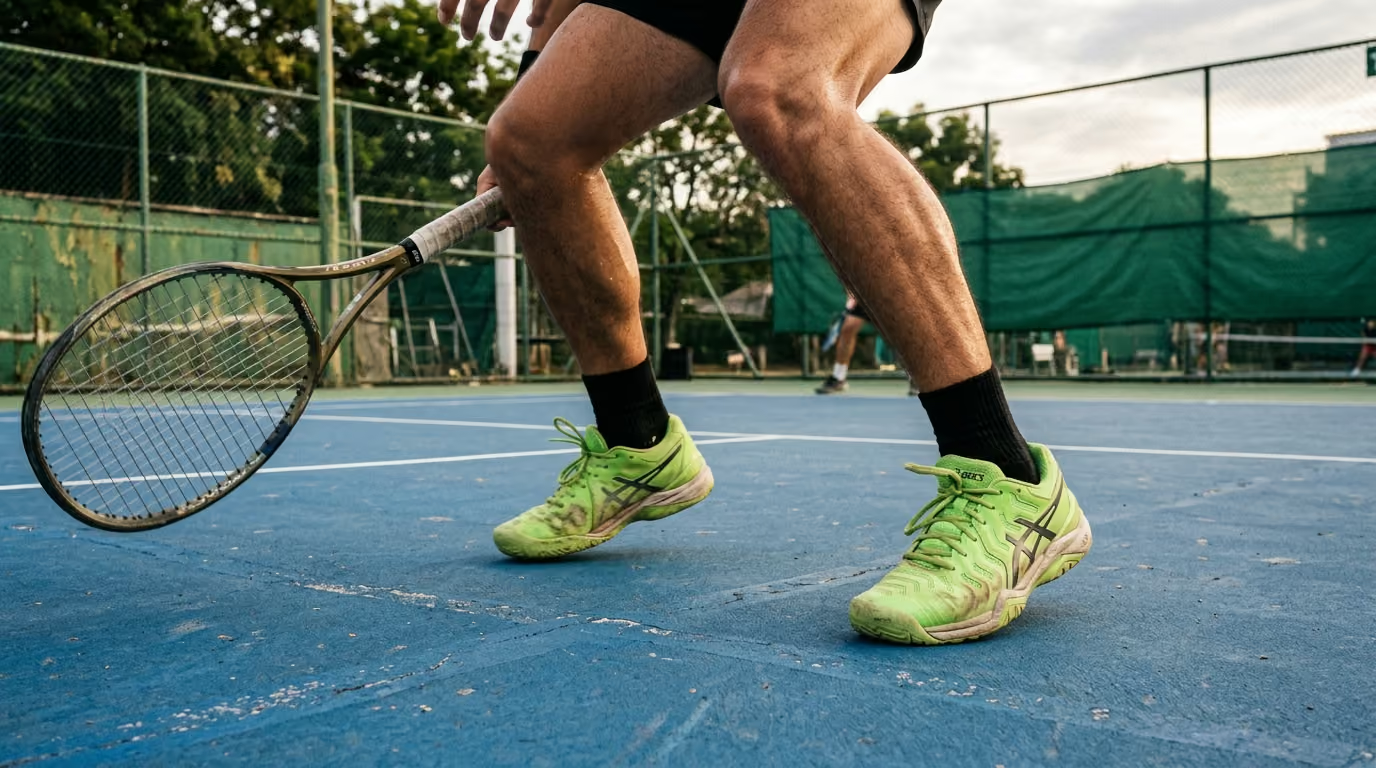
You will learn how to build a systematic, science-backed plan to prevent injuries and safely return to competitive racquet sports after a break.




An athletic transition back to the court requires a systematic strategy. A beginner-to-competitor injury-prevention plan is a structured pathway to build tissue tolerance and movement capacity. It is not a basic stretching list, nor is it a collection of fast fitness hacks. Instead, this resource provides an in-depth framework for adult players returning to racquet sports after inactivity, illness, or years away from the game.
To transition safely from a low baseline to competition, players must progressively build general tissue capacity first, followed by gradual exposure to sport-specific speed and volume. This structured, step-by-step approach allows your tendons, muscles, and cardiovascular system to adapt without sudden, overwhelming stress. By understanding the physical demands of your chosen sport, you can keep playing for years to come. This guide covers the science of court movement, physical preparation, progressive training stages, and practical recovery guidelines.
To prevent injuries on the court, you must first understand that general fitness is not the same as court-specific capacity. Many returning players believe that walking or cycling makes them ready for a fast match. While general cardiorespiratory fitness is highly valuable, racquet sports demand unique physical capabilities.
Capacity is the total amount of physical, technical, and psychological stress a player can tolerate while maintaining movement quality. For court athletes, capacity consists of several distinct layers. Aerobic capacity allows you to sustain repeated rallies and recover quickly between points. Muscular strength provides the force required to accelerate, decelerate, and strike the ball.
Connective tissue tolerance is the ability of your tendons and joints to absorb high impact forces. This tolerance must be built gradually because tendons adapt much slower than muscles. If your muscles are strong but your tendons are unprepared, sudden movements can cause micro-tears and chronic irritation. Proper athletic capacity also requires sufficient mobility in the ankles, hips, and thoracic spine.
Load is the total physical stress placed on your body during training or play. Sports scientists divide load into two categories, which are external and internal. External load is the physical work you perform on the court. This includes the total minutes you play, the number of hard swings, the count of sudden stops, and the distance covered.
Internal load is your body's physiological and mental response to that work. This is measured by your heart rate, muscle soreness, fatigue levels, and sleep quality. Progressive overload is the systematic increase of these demands over time to stimulate positive adaptation. Managing this load is essential because both sudden spikes and prolonged periods of underloading can increase your injury risk.
Tissue tolerance is the ability of specific tissues, such as muscles, tendons, ligaments, and bones, to handle force. This tolerance is highly specific to the angle of movement, the speed of loading, and the joint position. A tissue can tolerate slow, predictable forces but fail under rapid, unpredictable demands.
For example, your Achilles tendon may easily handle a straight-line jog. However, that same tendon may struggle to absorb the force of a sudden, explosive lateral lunge. Building tissue tolerance requires exposing your body to diverse movement angles at controlled speeds. This prepares your connective tissues for the unpredictable nature of real match play.
Your injury risk is often determined by the relationship between your recent training and your long-term preparation. Acute workload refers to the physical stress you have undergone in the current week. Chronic workload represents your average training volume over the past several weeks.
A sudden spike in your acute workload, such as playing a long weekend tournament after weeks of inactivity, can trigger injury. While high-performance settings use complex mathematical ratios to track this relationship, recreational players should use a simpler approach. You should track your total weekly play time, your subjective physical exertion, and your next-day stiffness. Keep your weekly increases moderate to allow your tissues to adapt safely.
Scientific research shows that injury patterns vary significantly across different racquet and paddle sports. A systematic review published in 2026 examined injury prevalence in court games. The review reported substantial variation, with injury rates ranging from 34.2 percent in recreational pickleball to 92 percent in competitive padel. These differences are driven by court dimensions, equipment weight, and typical movement patterns.
The 2026 review also highlighted that different sports place unique stresses on the human body. In badminton, injuries are predominantly acute and affect the lower limbs. This is due to the constant jumping, rapid lunging, and sudden changes of direction. In contrast, tennis injuries often follow overuse patterns in the upper limbs and trunk, reflecting the repetitive demands of hitting a heavier ball.
An earlier review of tennis injuries confirmed that lower extremity issues are highly common, followed by upper extremity and trunk symptoms. However, researchers emphasize that high-quality, long-term studies on recreational players are still limited. This means that while we can identify common patterns, we must tailor our injury-prevention strategies to the individual player.
Pickleball injury data are highly relevant to adults returning to activity, especially those over the age of sixty. An analysis of United States emergency department data showed a massive increase in pickleball-related injuries. These incidents rose from an estimated 1,313 in 2014 to 24,461 in 2023. It is important to note that these statistics only capture severe injuries requiring emergency medical care.
The analysis revealed that the majority of these emergency room visits occurred in players aged sixty to seventy-nine. Within this demographic, falls were the predominant mechanism of injury. Women in this age group showed higher odds of suffering upper-extremity fractures and wrist sprains. These statistics highlight the critical need for balance training, floor awareness, and wrist-strengthening exercises.
Badminton, squash, and padel are played at high speeds on smaller courts. A systematic review of badminton injuries showed that the ankle and knee are the most vulnerable joint areas. The rapid acceleration and braking required to cover the court put immense stress on the Achilles tendon and patellar tendon.
Because of these demanding forces, beginners in fast court sports need extensive preparation. You must develop single-leg stability, landing control, and the ability to absorb force through your hips and knees. This mechanical preparation must be established before you attempt high-speed, competitive play.
Before stepping onto the court, you must establish whether your body is medically ready for physical exertion. This is particularly important if you have been inactive for several months, are recovering from illness, or have existing health conditions.
The American College of Sports Medicine, or ACSM, provides a clear framework for screening physical readiness. This model bases exercise-clearance decisions on three distinct factors. These are your current physical activity level, the presence of any signs or symptoms of cardiovascular disease, and your desired exercise intensity.
If you are currently inactive, the ACSM recommends beginning with light-to-moderate exercise. If you remain free of symptoms, you can progress gradually over several weeks. This screening process helps identify individuals who need medical evaluation before starting a vigorous exercise program.
You must seek professional medical clearance if you experience any concerning physical symptoms during or after exertion. These warning signs include chest pain, unexplained shortness of breath, dizziness, fainting, or severe palpitations.
You should also consult a doctor if you have known cardiovascular, metabolic, or renal disease. Clinical clearance is also required if you are recovering from surgery, fractures, significant infections, or a major flare of a chronic health condition. Do not attempt to push through these symptoms on the court.
If you are returning to play after an illness, your progression must be guided by your current symptoms. Do not try to match your pre-illness performance levels immediately. Instead, utilize a conservative, step-by-step return sequence.
If you experience any returning symptoms, such as unusual fatigue or elevated heart rate, step back to the previous level immediately.
To prepare your body for the demands of racquet sports, you must build a strong physical foundation. This preparation should cover aerobic conditioning, strength training, deceleration capacity, balance, and upper-body preparation.
A strong aerobic system is the foundation of recovery. It allows you to sustain energy during long rallies and recover quickly between points. World Health Organization guidelines recommend that adults accumulate 150 to 300 minutes of moderate-intensity aerobic activity per week. Alternatively, you can perform 75 to 150 minutes of vigorous-intensity exercise.
These guidelines are excellent targets, but you should build toward them gradually. If you are starting from zero, begin with two or three brief walks each week. You can also use low-impact options like stationary cycling, elliptical training, or pool exercises. This base conditioning will help you tolerate longer court sessions without excessive fatigue.
A structured strength program is vital for joint stability and force production. You can find detailed programs in our strength and conditioning guidelines. Your routine should target all major muscle groups with functional movements.
For the lower body, prioritize squats, split squats, step-ups, and calf raises. These exercises prepare your quadriceps, glutes, and calves for the impact of court movement. For the trunk, focus on anti-extension and anti-rotation movements like planks, side planks, and Pallof presses. A stable trunk allows you to transfer force efficiently from your legs to your racket arm.
Most racquet sport injuries occur when braking or changing direction, rather than when accelerating. This means you must train your eccentric capacity, which is the ability of your muscles to absorb force as they lengthen.
To build this capacity, incorporate slow step-downs and controlled split-squat lowering into your workouts. You can also practice stick-and-hold landings, where you hop forward and land softly on one leg. These exercises teach your muscles and tendons to act as effective shock absorbers, protecting your joints from sudden impact.
Neuromuscular training improves your coordination, balance, and joint awareness on the court. A clinical meta-analysis reported that neuromuscular training can reduce lower-extremity injury risk significantly. Although much of this research comes from team sports, the principles apply directly to racquet athletes.
Incorporate single-leg balance exercises, lateral hops, and forward-and-back lunges into your weekly routine. You can also practice reactive drills, where you shuffle laterally and stop on a partner's cue. These movements improve your brain's ability to coordinate muscle contractions quickly during unpredictable play. You can read more about these movement patterns in our mobility and movement practices.
Repeated overhead striking and ball impact place high demands on your upper body. To prevent overuse injuries like tennis elbow, you must prepare your rotator cuff, shoulder blades, and forearms.
Incorporate rows, external shoulder rotations, and scaption exercises into your routine. Strengthen your wrists and forearms with controlled extension, flexion, pronation, and supination movements. Good thoracic spine mobility is also crucial, as it allows your shoulder to rotate fully without restriction.
Transitioning from inactivity to competitive play requires a structured, multi-stage plan. Each stage has specific goals and progression markers. You should only move to the next stage when your body can tolerate the current workload without lingering pain or fatigue.
The main goal of this initial stage is to build a consistent daily routine and ensure your body is ready for basic movement. This stage typically lasts between one and three weeks, depending on your starting physical condition.
During this stage, focus on walking, light mobility, and basic balance exercises. You should be able to complete ordinary daily activities, such as climbing stairs, without joint discomfort or unusual fatigue. Begin performing two brief, bodyweight strength sessions each week to prepare your muscles. Do not perform any hard court sessions during this phase.
This stage lasts between two and six weeks and focuses on building systemic strength and endurance. Your goal is to establish a regular physical routine and improve your muscular endurance.
Begin performing two structured strength sessions each week, ensuring you target the major muscle groups. You can use this example strength workout to build your foundation:
Perform these exercises with controlled tempos and moderate resistance. You should finish each workout feeling like you could have performed several more repetitions. Avoid training to failure, as this can cause excessive soreness that delays your next session.
This stage lasts two to four weeks and introduces low-speed, court-specific movement patterns. You will practice these movements without the stress of hitting a ball.
Begin practicing split-step mechanics, gentle side shuffles, and controlled forward-and-back stepping. Perform shadow swings to prepare your shoulders and trunk for rotational forces. Always practice these movements in a predictable, controlled environment before adding speed. This allows you to develop coordination and muscle memory before facing a real opponent.
This stage lasts two to six weeks and marks your return to the actual court. You will begin hitting balls, but under highly controlled conditions.
Always play with a cooperative partner who agrees to hit the ball directly to you. This reduces your court coverage and prevents the need for sudden, explosive reaches. Limit your session duration to twenty or thirty minutes, and take frequent standing rests. A highly effective session structure for this stage is:
Do not hit hard serves or overheads during this stage. Your focus should be on clean contact, balanced footwork, and smooth deceleration.
During this stage, you will introduce competitive scoring, but with strict physical constraints. This allows you to experience tactical decision-making without the joint stress of full-court play.
Play half-court games or cross-court points only, which limits the distance you must travel. Agree with your partner that you will not chase drop shots, short lobs, or wide balls. Play short games to four or five points, then take a planned rest break. This structured approach helps your body adapt to the psychological pressure of scoring while protecting your tissues.
This phase removes the court constraints and prepares you for standard, unconstrained practice. However, you must still progress the variables of play separately.
Begin by playing full-court rallies at a cooperative, moderate pace. Once your body tolerates this, introduce normal scoring with limited intensity. Slowly increase the speed of the exchanges and the competitiveness of the points over several sessions. Do not try to increase your playing time, your hitting speed, and your physical intensity all in the same week.
This final stage represents a safe return to competitive match play or tournament action. Before entering a match, ensure you meet these physical milestones:
When you begin competing, limit the number of matches you play in a single week. A tournament involves repeated, high-intensity efforts that can quickly overwhelm unprepared tissues if recovery time is insufficient.
While all racquet sports share common movement patterns, each sport has unique physical demands. You must tailor your preparation to the specific forces, court dimensions, and equipment of your chosen game. You can find comprehensive sport-specific advice on our structured injury prevention resources page.
Tennis is played on a large court with a relatively heavy racket and ball. This combination creates high impact forces and demands wide, high-speed court coverage. The overhead serve is a complex movement that requires excellent thoracic mobility, shoulder stability, and core control.
To prevent injuries in tennis, focus heavily on the kinetic chain. This means ensuring your legs and core are strong enough to generate power, reducing the stress on your shoulder and elbow. You must also develop strong eccentric leg strength to handle wide, open-stance groundstrokes.
Pickleball is played on a smaller court, which reduces long-distance running but increases rapid, short-distance reactions. The game features constant dinking, fast volley exchanges, and frequent sudden reaches at the kitchen line.
For pickleball players, the primary safety focus should be balance and fall prevention. Practice controlled backward stepping to handle deep lobs safely without falling backward. You must also strengthen your wrists and forearms to absorb the rapid, repeated paddle impacts at close range. More tailored advice is available in our pickleball player guides.
Padel is played inside a glass enclosure, creating unique rotational demands and constant wall interactions. The game features rapid, multi-directional lunges and frequent overhead smashes.
Padel players must focus on ankle stability and multi-directional knee control. The constant turning and backing up to play balls off the glass can easily strain the Achilles tendon. You must develop strong calf muscles and excellent landing mechanics to handle the repeated overhead jumps. For specific padel advice, refer to our padel movement strategies.
Many returning athletes suffer preventable injuries because they fall into common training traps. Recognizing these misconceptions is a vital step in your preparation.
A very common pitfall is relying solely on passive stretching for injury prevention. While stretching can improve your temporary joint range of motion, it does not build tissue strength.
Passive flexibility without active control can actually increase your risk of joint sprains. To protect your joints, you must combine flexibility with strength and balance training. Your focus should be on building usable, strong ranges of motion rather than passive flexibility.
Many players who were highly active in their youth return to court sports expecting their bodies to perform the same way. However, past athletic achievements do not guarantee current tissue capacity.
If you have been inactive for ten years, your tendons and muscles have adapted to a sedentary lifestyle. Your mind may remember the timing of a fast lunge, but your joints cannot support the impact. Respect your current physical baseline, and build your capacity slowly.
Another common mistake is assuming that a successful, pain-free first session means you are fully ready. Injury risk is often determined by accumulated physical load, not just a single workout.
A high-intensity session can feel wonderful in the moment, but it can trigger severe tendon irritation twenty-four hours later. Always wait at least one full day to evaluate how your body responded to a new activity level. This delayed feedback is the most accurate way to guide your weekly progression.
Many players rely on elbow straps, knee braces, or kinetic tape to get through a match. While these supports can provide temporary relief, they do not address the underlying physical weakness.
Relying on external supports can mask symptoms, leading to further tissue damage. Use braces only as temporary aids, and focus your energy on progressive strengthening and movement control.
Recovery is the physiological process where your body adapts to the physical stress of exercise. Without adequate recovery, progressive loading will quickly lead to tissue breakdown and injury.
To manage your loading safely, implement a strict twenty-four-hour symptom-monitoring framework. This is the most effective way to judge if a training session was appropriate for your current tissue tolerance.
Assess how your body feels the morning after a court session. Check for local joint tenderness, muscle stiffness, and your ability to walk or perform a bodyweight squat comfortably. If you experience significant next-day stiffness that lasts more than thirty minutes, your previous session was too demanding. Reduce your playing time or intensity during your next session to allow your tissues to adapt.
A structured, dynamic warm-up is essential to prepare your muscles and nervous system for the demands of play. Avoid static stretching before a match, as this can temporarily reduce muscle power.
Instead, start with five minutes of easy walking or slow jogging to raise your core body temperature. Follow this with dynamic movements like arm circles, hip openers, and gentle lunges. Transition into court-specific movements, such as light side shuffles and shadow swings, before hitting. This sequence prepares your kinetic chain for rapid movements. You can learn more about these active preparation methods in our recovery science principles.
Your body does not grow stronger during the actual workout; it adapts during rest. Ensure you get adequate sleep, maintain hydration, and eat sufficient protein to support muscle repair.
Avoid playing hard matches on consecutive days, especially during your first few months back. Space your court sessions with at least one day of rest or low-impact activity. This structured spacing gives your tendons and joints the time they need to rebuild and strengthen between demands.
While mild, temporary muscle soreness is a normal part of physical training, you must be able to recognize when a symptom requires professional care.
You should consult a qualified physical therapist or sports medicine physician if you experience any of the following clinical warning signs:
A healthcare professional can provide an accurate diagnosis, rule out structural damage, and design a personalized rehabilitation program. Do not try to play through severe pain, as this can turn a simple strain into a chronic, long-term issue.
While equipment changes can help, they are not a substitute for physical preparation. Using a lighter racket or lower string tension can reduce the force transmitted to your elbow, but you still need sufficient forearm strength. Focus on technique and muscle capacity first, then adjust your equipment to provide additional comfort.
Players with generalized joint hypermobility should focus heavily on joint stability and muscle strength. Avoid aggressive, passive stretching, as your ligaments are already lax. Instead, prioritize controlled, mid-range strength movements, balance exercises, and landing mechanics to teach your muscles to protect your joints.
A higher body mass increases the mechanical forces placed on your lower joints during deceleration and lunging. If you have a high body mass, focus on shorter steps, controlled stopping distances, and gradual court exposure. Prioritize eccentric lower-body strength training to help your muscles absorb these high impact forces safely.
Follow Evercourts for practical insights on tennis, pickleball and padel performance, movement, recovery and healthy ageing. Stay connected for new articles, research-led guidance and ideas to help you play well and keep playing for years.


Read practical guidance for better movement, smarter preparation and a game that keeps working for you.
explore the Blog