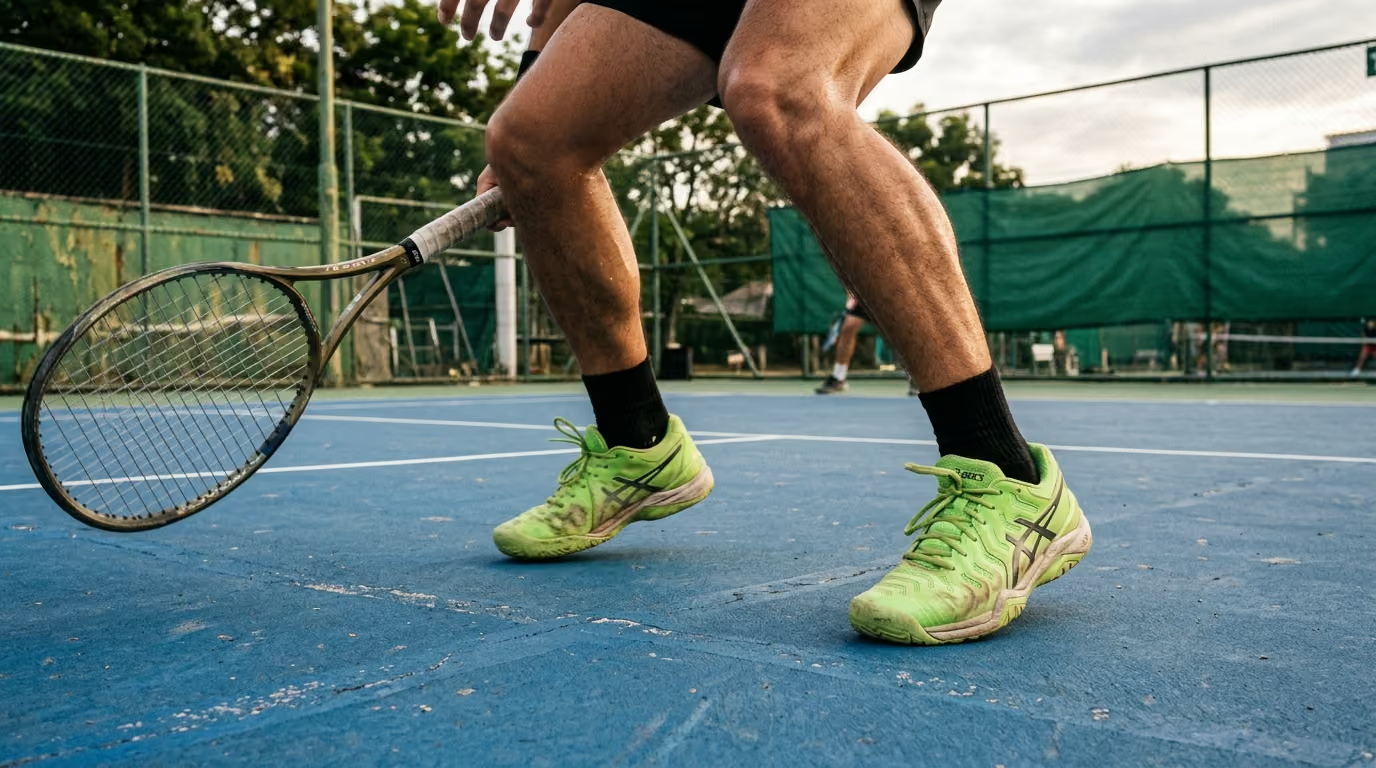
Two primary calf muscles and the Achilles tendon form the lower leg complex, which is susceptible to injury in court players.




Lower leg injury prevention in racquet and court sports is often misunderstood. It is not a matter of performing passive static stretches before a match, nor is it about resting completely whenever soreness appears. True protection for your calf muscles and Achilles tendon requires a structured system of progressive tissue loading, movement preparation, and smart workload management. This guide establishes a practical framework to keep you moving fluidly and playing without interruption.
To protect your lower legs on the court, you must progressively build the structural capacity of your tendon and calf muscles so they can handle rapid starts, stops, and jumps. You must also avoid sudden spikes in playing time and monitor early symptoms, such as morning stiffness, before they become severe. Finally, any sudden pop, severe swelling, or loss of push-off force requires immediate medical evaluation.
Understanding your lower leg anatomy helps you identify where potential problems are developing. The lower leg complex consists of two primary calf muscles, which are the gastrocnemius and the soleus, and the Achilles tendon. The Achilles tendon connects these calf muscles to your heel bone. It acts as a powerful spring, storing and releasing energy with every stride, jump, and lateral cut.
Achilles tendinopathy is an activity-related condition characterized by localized pain, stiffness, and reduced physical function. It is generally caused by repetitive tissue strain rather than a single traumatic event. Clinicians divide this condition into two primary types based on where the pain occurs.
Midportion tendinopathy causes pain and tenderness several centimeters above the heel insertion point. Insertional tendinopathy occurs at or very near the point where the tendon attaches to the heel bone.
A sudden increase in training load can trigger a reactive flare, which is a temporary increase in pain and swelling. If left unmanaged, this can develop into chronic tendinopathy, where the tendon loses its ability to handle rapid athletic forces.
A calf strain is an acute tear or stretch of the muscle fibers within the gastrocnemius or the soleus. Players typically experience this as a sudden, sharp pain during a rapid sprint, jump, or forceful stretch. Following a strain, you may experience reduced push-off strength, an altered walking gait, or difficulty performing a single-leg heel raise.
The gastrocnemius is frequently injured during high-speed movements when the knee is fully extended. The soleus is more vulnerable during deep, low-to-the-ground movements where the knee is bent under a heavy load.
An Achilles tendon rupture is a complete structural failure of the tendon tissue. Unlike tendinopathy, a rupture is a sudden, traumatic event that occurs during explosive movement. Research published in the American Journal of Sports Medicine shows that these ruptures are highly prevalent in court-based sports.
Players who experience a rupture often report hearing an audible pop or feeling as though they were kicked in the back of the leg. This injury causes an immediate loss of push-off power and requires urgent medical attention.
The physical demands of court sports place unique, high-velocity forces on the lower leg structures. Unlike running in a straight line at a constant speed, playing tennis, pickleball, or padel requires constant deceleration and change of direction.
Court players frequently transition from a complete standstill into a sudden, explosive sprint. This first-step acceleration requires the ankle to move into deep dorsiflexion before the calf and Achilles contract violently to propel the body forward.
Video analysis of high-level athletes shows that most noncontact Achilles ruptures occur during this exact transition. The player pushes off from a stopped position with the foot dorsiflexed, the knee slightly bent, and the hip extended. This combination places maximum mechanical stress on the Achilles tendon.
Stopping quickly to hit a shot or change direction requires intense eccentric control from the lower leg. As you plant your foot to brake, the calf muscles must lengthen under load to absorb your momentum.
This deceleration process can generate forces multiple times your body weight. Over the course of a multi-set match, these repetitive braking forces accumulate, leading to tissue fatigue and an increased risk of injury.
Repeated jumping and landing place extreme demands on the tendon's elastic capabilities. During landing, the Achilles tendon acts as a shock absorber, stretching to decelerate your body weight.
If your landing mechanics are stiff, or if you are fatigued, the calf muscles cannot absorb the impact force effectively. This transfers the excess load directly to the tendon tissue, increasing the likelihood of micro-tears.
Epidemiological data reveals two distinct high-risk groups for lower leg injuries. The first group consists of players returning to the court after a layoff. Sports medicine research indicates that a high percentage of Achilles ruptures occur during early-season play or immediately following a period of inactivity. This highlights the danger of returning to competitive play without a gradual buildup.
The second high-risk group consists of experienced, veteran players. Studies of professional basketball players found that the average age for an Achilles rupture was 28.3 years, with athletes averaging 6.8 seasons of competitive play before the injury.
This demonstrates that high-level technical skill and general fitness do not protect against accumulated tissue stress. As we age, our tendons naturally lose some of their elasticity, making regular capacity-building exercises even more critical.
To prevent lower leg injuries, you must understand the relationship between tissue capacity and applied physical load. This concept is known as the capacity-load model.
An injury occurs when the applied physical load exceeds your current tissue capacity. To protect your lower legs, you must use structured injury prevention resources to increase your capacity while managing your playing load.
The most common cause of Achilles and calf injuries is an acute spike in training workload. This occurs when a player rapidly increases their playing time, introduces intense sprint drills, or plays in a weekend tournament without adequate preparation.
Your cardiovascular fitness may improve quickly, but tendon tissue adapts much more slowly than your heart and lungs. Stacking multiple new training stressors at the same time creates a dangerous gap between your ambition and your tendon's structural capacity.
To build resilient tissues safely, you must follow a structured progression. This framework moves from simple, controlled movements to high-speed, unpredictable court actions.
By working through these stages, you give your calf muscles and Achilles tendon the time they need to remodel and strengthen. This systematic approach is the foundation of long-term athletic longevity.
To build true physical capacity, your training must target both the gastrocnemius and soleus muscles. This requires performing exercises with both a straight knee and a bent knee.
You can find more detailed exercises in our strength and conditioning resources. The following movements form a comprehensive capacity-building routine.
This exercise focuses on the larger, outer calf muscle. You should perform it slowly and with complete control.
Perform 3 sets of 10 to 12 controlled repetitions, three times per week.
The soleus muscle is highly active during deep court lunges and deceleration. Because it does not cross the knee joint, you must bend your knee to target it effectively.
Perform 3 sets of 15 repetitions with a challenging but manageable weight.
Recent clinical guidelines for tendon health emphasize the importance of heavy, slow loading. Tendons respond favorably to high tension applied slowly. This type of training stimulates collagen synthesis and improves the structural alignment of the tendon fibers.
To perform heavy-slow resistance training, use a leg press machine or a loaded calf raise machine. Select a weight that allows you to complete 6 to 8 repetitions with difficulty.
Lower the weight over a slow four-second count, pause briefly, and push back up over a three-second count. This controlled tension builds maximum tissue strength without exposing the tendon to sudden, high-impact forces.
If you are experiencing mild tendon irritability, dynamic raising and lowering can sometimes provoke pain. In these situations, isometric holds are a valuable tool. Isometric contractions can have an analgesic effect, helping to reduce tendon pain while maintaining muscle activation.
To perform an isometric hold, raise up onto a single-leg heel raise on flat ground. Hold this mid-range position statically for 30 to 45 seconds. Keep your knee straight and maintain a steady, upright posture.
Complete 4 to 5 repetitions of this hold, resting for 60 seconds between efforts. You can perform this daily to manage mild symptoms.
While slow strength training builds the foundation, it is not enough on its own. Court sports require your tendons to act as rapid springs. To prepare for these forces, you must integrate a progressive plyometric program.
This type of training focuses on the stretch-shortening cycle, which is the muscle's ability to transition from a rapid lengthening to a rapid shortening. You can discover more movement progressions in our mobility and movement resources.
Before attempting high-speed single-leg jumps, you must master basic landing mechanics on two feet.
Once bilateral jumping is pain-free, you can progress to unilateral movements that mimic court demands.
The final phase of preparation introduces lateral movement and unpredictable court-style changes of direction.
While all racquet sports place significant demands on the lower legs, the exact physical stressors vary. Understanding these nuances allows you to tailor your preparation.
Tennis is characterized by long, explosive movements across a large court. Players must cover significant distances, often ending in deep, wide lunges to reach wide balls.
Pickleball is played on a smaller court, which changes the nature of the movement. Instead of long-distance sprints, pickleball features rapid, continuous lateral shifting.
If you are looking to improve your overall court movement and longevity, you can check out the Evercourts homepage for specialized court guides.
Padel is played in an enclosed glass cage, creating a highly dynamic environment with continuous changes of direction.
To learn more about optimizing your play for specific court environments, read through our detailed court life articles.
Even well-intentioned players often fall into predictable training traps. Avoiding these common mistakes will significantly reduce your risk of injury.
Many players believe that stretching a tight calf muscle before a match is the key to preventing injury. However, aggressive static stretching immediately before explosive play can temporarily reduce the muscle's force production and elastic capacity.
Instead of stretching a cold muscle, focus on active, dynamic warm-ups. Save your longer, passive stretches for after your match or during separate recovery sessions.
When a player develops tendon pain, their first instinct is often to stop all activity and rest completely for several weeks. While rest may temporarily reduce pain, it does not solve the underlying issue.
Complete rest actually decreases the load-bearing capacity of both the muscle and the tendon, making it more vulnerable to re-injury when you return to play. Instead of complete rest, you should modify your activities to non-provocative levels and continue progressive, pain-free loading.
The Achilles tendon has a limited blood supply compared to muscle tissue. Because of this, early signs of tendon irritation often present as stiffness or soreness when taking your first steps in the morning.
Many players ignore this warning sign because the stiffness disappears once they walk around or warm up. Ignoring persistent morning stiffness is a major mistake, as it is often the first indicator of developing tendinopathy.
It is easy to let competitive drive push you beyond your physical capabilities. We often see players return to the court too quickly after an injury because they miss the game.
A few years ago, I realized my tennis serve speed was dropping, and my shoulder was constantly throbbing after matches. Instead of pushing through the pain, I took a month to rebuild my mechanics and focus on rotator cuff endurance. I stopped trying to hit flat aces and developed a much heavier kick serve. My win rate actually went up, and my shoulder stopped hurting.
Sometimes longevity means outsmarting your own ego on the court. This same principle applies to your lower legs. If your calves are tight and your heels are sore, backing off to rebuild your physical capacity is always the smarter long-term strategy.
Investing time in calf and Achilles training does more than just prevent injury. It directly influences your overall athletic longevity, allowing you to play the sports you love for years to come. You can explore more about this in our healthy aging and athletic longevity resources.
Your lower leg muscles are the first line of defense for your entire kinetic chain. When you land from a jump or take a hard step, a strong calf complex absorbs a significant portion of the impact force.
If your calves are weak, those impact forces travel upward into your knees, hips, and lower back. Building calf capacity protects your joints from premature wear and tear.
The calf muscles are often referred to as the peripheral heart. When these muscles contract during movement, they squeeze the deep veins in your lower leg, helping to pump blood back up to your heart.
This mechanical pumping action is essential for circulation and recovery. Strong, active calf muscles improve systemic circulation, helping to flush out metabolic waste products after a demanding match.
Maintaining your lower leg health ensures that you can remain active, mobile, and competitive on the court throughout your life.
While mild stiffness can often be managed with careful workload adjustment, certain signs indicate the need for professional medical evaluation. Knowing when to see a qualified healthcare provider can prevent a minor issue from turning into a career-ending injury.
If you experience any of the following symptoms, stop playing immediately and seek urgent medical evaluation. These are classic signs of an Achilles tendon rupture.
Healthcare professionals often use the Thompson test to check for a rupture. This test is performed by having the patient lie face down with their feet hanging over the edge of a table. The clinician squeezes the calf muscle. If the foot does not move into plantar-flexion, it suggests a complete rupture of the Achilles tendon.
Never attempt to self-diagnose a severe lower leg injury. Partial tears can sometimes present with relatively normal walking patterns, meaning they are easily missed without professional imaging or testing.
You should also consult a physical therapist or sports medicine specialist if you experience persistent, low-grade symptoms that do not improve. Seek help if:
A qualified professional can design a personalized rehabilitation plan to address your specific deficits, helping you return to the court safely and confidently.
No single shoe can guarantee protection against an Achilles rupture. However, your footwear does act as a load-modifying variable.
Shoes with a higher heel-to-toe drop reduce the maximum stretch placed on the Achilles tendon, which can be helpful if you are recovering from tendinopathy. Conversely, switching suddenly to zero-drop minimalist shoes increases the stretch and load on your calf complex.
Avoid changing your footwear style immediately before a tournament. Always wear shoes that are specific to your playing surface to ensure appropriate traction and support.
Heel lifts and compression sleeves are useful tools for managing temporary symptoms, but they do not replace progressive strengthening.
A temporary heel lift can reduce the stretch on an irritable Achilles tendon, helping to manage acute pain. Compression sleeves can improve local blood flow and provide a feeling of warmth and support during play.
However, these tools are passive aids. They do not increase the actual structural capacity of your muscles or tendons. Use them for temporary comfort, but continue to focus on your active strengthening and plyometric routines.
A feeling of mild calf tightness is common, but it should not be ignored. If the tightness is symmetrical and resolves after a dynamic warm-up, it is generally safe to play.
However, if the tightness is localized to one specific spot, feels like a sharp "knot," or worsens as you run, you should stop playing. Attempting to push through an acute, localized muscle spasm can easily lead to a structural muscle tear.
Instead of playing, perform gentle active mobility work and monitor the muscle's response over the next 24 hours.
Tendon tissue adapts much more slowly than muscle tissue because of its limited blood supply. While your cardiovascular fitness might return after a few weeks of training, rebuilding structural tendon capacity takes time.
Clinical research shows that significant changes in tendon structure and strength require at least 12 weeks of consistent, progressive loading. If you are returning from an extended break, plan for a gradual three-month transition phase before participating in high-intensity, competitive tournament play.
Follow Evercourts for practical insights on tennis, pickleball and padel performance, movement, recovery and healthy ageing. Stay connected for new articles, research-led guidance and ideas to help you play well and keep playing for years.


Read practical guidance for better movement, smarter preparation and a game that keeps working for you.
explore the Blog