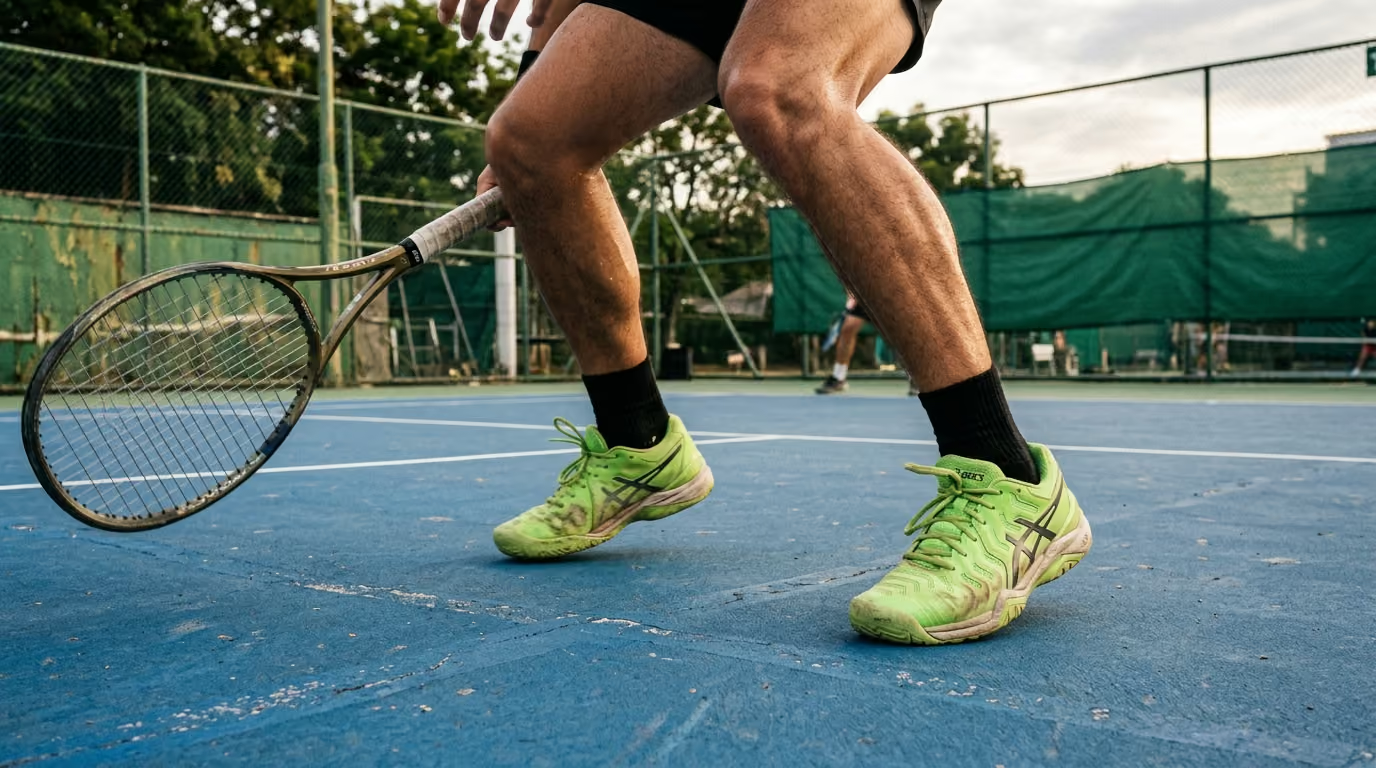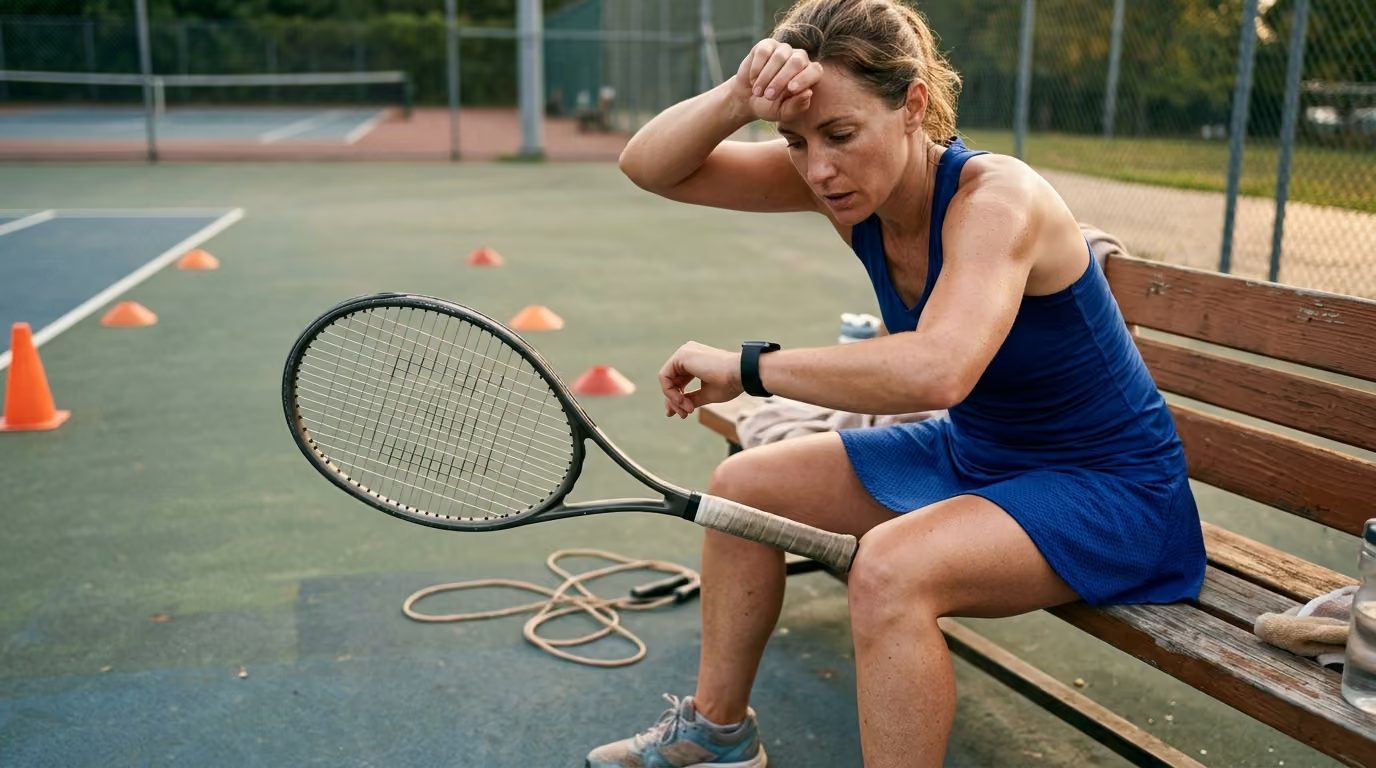

Adult racquet sports players will achieve sustained performance and quicker recovery between intense rallies with a strong aerobic conditioning foundation.




You are deep in the second set of a competitive match. Your lungs burn, your legs feel heavy, and your shots begin to miss the target. You know you have the technical skill to win this match. However, your body can no longer keep up with the physical demand of the rallies.
This frustrating experience is common among recreational and competitive racquet sports players. Many athletes focus solely on practicing their strokes or playing practice matches. They overlook the vital cardiovascular base that supports every movement on the court. Without a strong aerobic foundation, your performance will inevitably decline as the match continues.
Aerobic conditioning builds the vital base that allows racquet sports players to recover quickly between intense rallies and sustain performance across multi-hour matches. By training your cardiorespiratory system, you can maintain technical accuracy, reduce late-match fatigue, and protect your joints from the heavy loads of fatigue-induced movement errors.
Tennis, pickleball, and padel are fundamentally intermittent activities. Players perform brief, explosive actions followed by short recovery periods between points. These explosive bursts include rapid accelerations, sudden decelerations, quick lateral shuffles, and powerful strokes. This cycle repeats dozens of times over the course of a single set.
To understand how to train for these sports, we must look at how the body produces energy. Sports scientists often use a two-layer model to describe court-based fitness. The first layer is the engine, which represents your aerobic capacity and your ability to recover. The second layer consists of the attacks, which are the explosive, anaerobic movements that win points.
During a fast-paced rally, your body relies primarily on anaerobic energy pathways. The phosphagen system provides immediate power for the first few seconds of movement. If the rally extends past ten seconds, your glycolytic system begins to assist. Both of these systems operate without using oxygen, but they exhaust their energy fuel very quickly.
Once the point ends, your aerobic system takes over the vital task of recovery. During the twenty seconds of rest before the next serve, your aerobic engine works to replenish your anaerobic fuel. It delivers oxygen to fatigued muscles, helps clear metabolic byproducts, and lowers your heart rate. A stronger aerobic system means you start the next point feeling much fresher.
Cardiorespiratory fitness is often measured by your maximum rate of oxygen consumption, which is known as VO2max. While racquet sports require explosive power, research indicates that match play is highly dependent on your aerobic capacity. Studies on tennis players show that average match intensities typically hover around 50 to 60 percent of a player's VO2max.
During intense rallies, however, your physiological strain can spike much closer to your maximum limit. Heart rates during competitive play generally range from 70 to 90 percent of your maximum heart rate. These numbers prove that racquet sports place a continuous, heavy load on your heart and lungs. Maintaining a strong aerobic base is essential for tolerating these cardiovascular demands.
However, sports scientists acknowledge that heart rate and actual energy expenditure do not always match perfectly. Your heart rate can remain elevated during breaks in play due to several external factors. Dehydration, extreme heat, and performance anxiety can cause your heart rate to spike even when you are resting on the changeover bench. Therefore, we must use multiple tools to track our training intensity.
Building a strong aerobic base is also a powerful strategy for supporting your long-term health. The World Health Organization recommends that adults achieve 150 to 300 minutes of moderate-intensity aerobic physical activity each week. Meeting these goals is linked to a lower risk of cardiovascular disease and improved athletic longevity. To learn more about maintaining your physical capabilities as you age, you can view our Athletic Longevity Resources.
You do not need to visit a sports science laboratory to monitor your training intensity. Several practical, accessible tools can help you track your effort levels during conditioning sessions. Using these methods ensures you train at the correct intensity to trigger the right physiological adaptations.
One common method is calculating your heart-rate reserve, which accounts for your individual fitness level. To find this number, subtract your resting heart rate from your maximum heart rate. You can then calculate your target heart rate zones based on this range. The American College of Sports Medicine classifies moderate exercise as 40 to 59 percent of your heart-rate reserve.
Vigorous exercise is defined as 60 to 84 percent of your heart-rate reserve. For example, a fifty-year-old player with a resting heart rate of sixty beats per minute can use this formula to find their target training zones. However, because age-predicted maximum heart-rate formulas are often inaccurate, you should treat heart-rate data as a guide rather than an absolute rule.
A simpler and highly reliable tool is the rating of perceived exertion. The traditional Borg scale runs from six to twenty, but recreational players often prefer a basic zero to ten scale. On this scale, a rating of two to three represents easy, conversational movement. A rating of four to five is moderate, while six to seven indicates a hard but controlled interval effort.
The talk test is another excellent tool for monitoring your intensity on the court. During moderate-intensity exercise, you should be able to talk in full sentences but not sing comfortably. Once you can only say a few words before pausing for a breath, you have crossed into vigorous intensity. This test is highly practical because it does not require any special technology or wearable sensors.
To build a complete physical profile, you should understand the four primary methods of cardiovascular conditioning. Each method offers unique training benefits and carries specific joint-loading characteristics. By balancing these approaches, you can build a resilient cardiovascular system while protecting your joints from injury.
Steady-state conditioning involves continuous, low-intensity exercise at a stable pace. Excellent options for this training mode include brisk walking, outdoor cycling, swimming, or light elliptical training. The goal of this training is to maintain a consistent heart rate in your moderate-intensity zone.
This method is highly efficient for accumulating your weekly aerobic minutes without creating excessive physical stress. It is easy to monitor using the talk test, making it ideal for beginners or players returning from a long layoff. It also provides a valuable mental break from the complex tactical decisions of court play.
The primary limitation of steady-state training is its lack of specificity to racquet sports. It does not train the rapid accelerations, sudden stops, or lateral movements required during a match. To build the muscular strength needed to handle these complex movements, you can read our Strength & Conditioning Resources.
For recreational players, we suggest starting with two steady-state sessions per week. Keep each session between twenty and forty minutes in duration at a comfortable, conversational pace. Focus on maintaining a smooth, steady rhythm throughout the entire workout before you think about increasing your speed.
Aerobic intervals alternate challenging work periods with active recovery phases. A standard interval session might involve five repetitions of three minutes of hard effort, with two minutes of easy movement between each work period. This structured approach allows you to spend more time at a higher intensity.
This method is highly effective for improving your cardiorespiratory power and your recovery capacity. It trains your body to clear metabolic byproducts quickly during the recovery periods. You can perform these intervals on low-impact machines like stationary bikes or rowing machines to reduce joint stress.
A common mistake is running your work intervals too fast, which turns the session into an anaerobic workout. If you perform maximal sprints, you will experience excessive muscle soreness and require longer recovery times. To get the best results, keep your effort level around a seven out of ten on your perceived exertion scale.
To progress your interval training, start by adding one or two repetitions to your workout. Once you can complete the extra repetitions with good form, you can slightly extend the duration of the work periods. Avoid reducing your recovery times until you can easily complete the entire session without excessive fatigue.
Court conditioning uses actual racquet-sport movement patterns to build your cardiorespiratory fitness. These drills involve lateral shuffles, backpedals, split steps, and short accelerations performed on the court. This training mode ensures your movement patterns are highly efficient and realistic.
This method is exceptionally valuable because it trains your physical conditioning and your movement economy at the same time. You can practice recovering to a neutral court position after hitting a simulated shot. This direct connection to match play helps translate your gym-based fitness directly to the court.
However, repeated lateral cutting on a hard court surface creates significant physical stress on your joints and tendons. If you are already playing matches multiple times a week, adding intense court drills can lead to chronic overuse injuries. Your physical technique can also break down quickly if you become excessively fatigued during these drills.
To use this method safely, try performing tempo court movement drills. Move at roughly sixty percent of your maximum speed for twenty seconds, then rest for forty seconds. Focus entirely on maintaining balanced footwork, smooth decelerations, and perfect postural control during every movement.
Low-impact cross-training develops your cardiovascular fitness using exercises that do not involve heavy landing forces. Stationary cycling, elliptical training, rowing, and deep-water running are outstanding choices. These exercises are highly effective for building your aerobic base while protecting your lower-limb joints.
This approach is perfect for adding weekly training volume without placing extra stress on your knees and lower back. It is also an invaluable tool if you are recovering from a minor joint injury. You can keep your heart and lungs active while your muscles and tendons heal.
The main limitation is that low-impact cross-training does not fully prepare your body for the unique physical demands of court play. It will not train your feet to handle the friction of quick stops on a hard court. Therefore, you should use cross-training to support your court play rather than to replace it entirely.
A strong aerobic system is only useful if you know how to apply it during a match. When you develop your physical endurance, you directly protect your physical technique from the negative effects of fatigue. Tired players tend to take shortcuts, which leads to poor footwork and frequent technical errors.
Fatigue also impairs your brain's ability to make fast, accurate tactical decisions on the court. When your brain is deprived of oxygen, you are more likely to lose concentration and hit high-risk shots. By maintaining your aerobic capacity, you can stay calm, read the court clearly, and execute your strategy late in the match.
To apply your physical fitness during a match, focus on your breathing rhythm between points. The moment a rally ends, take deep, controlled breaths through your nose. This nasal breathing technique helps activate your parasympathetic nervous system, which lowers your heart rate and restores calm.
You can also use your rest periods during changeovers to practice active recovery. Instead of slumping forward on the bench, sit tall and focus on slow abdominal breathing. This simple change helps maximize your lung capacity, allowing your body to recover more efficiently before the next game begins.
While all racquet sports are intermittent, the specific physical demands differ among tennis, pickleball, and padel. Tailoring your training to your primary sport ensures you build the exact physiological capacities you need. Let us look at how the physical demands vary across these three popular court sports.
Tennis is played on the largest court, which means players must cover significant distances during a match. Rallies can be highly variable, ranging from a quick serve to a long baseline exchange. Tennis players need a substantial aerobic base to handle the total duration of long matches.
Because a single tennis match can easily last over two hours, players benefit greatly from longer steady-state conditioning sessions. This training helps build the global cardiovascular endurance required to sustain effort over multiple sets. It also helps prevent your technical shots from breaking down during the third set.
The rotational demands of tennis strokes also place a high demand on your core musculature. Your conditioning program should include exercises that support your spinal stability over a long duration. This prevents your lower back from taking on excessive physical load as you become tired.
Pickleball is played on a much smaller court, which reduces the need for long-distance sprinting. However, the game requires incredibly fast hand-eye coordination and rapid, short steps. Players must spend a significant amount of time in a low, athletic stance near the kitchen line.
This constant low stance requires excellent isometric endurance in your thighs and hips. The cardiovascular challenge in pickleball comes from rapid, repeated bursts of movement during fast-paced exchanges. The work-to-rest ratio is often highly compressed, meaning you have very little time to recover between rallies.
Pickleball players should focus on short, high-density interval training to build their recovery capacity. Training with thirty seconds of quick, lateral movements followed by fifteen seconds of rest mimics the natural rhythm of the game. This specific training helps you stay sharp and responsive during long dink battles.
Padel is played in an enclosed court, which leads to incredibly long, continuous rallies. Because the ball can bounce off the glass walls, points are rarely won with a single fast shot. This requires players to perform constant rotations, overhead smashes, and quick vertical jumps.
The physical demand of padel is highly eccentric, meaning your muscles must constantly absorb force as you slow down. You must decelerate quickly, turn to track the ball off the wall, and then accelerate forward. This movement pattern places a massive load on your calves, Achilles tendons, and thighs.
Padel players benefit from a combination of low-impact cardiovascular training and specific footwork drills. Building a strong aerobic engine helps you recover from the repeated high-intensity overhead smashes. It also ensures you can maintain your physical balance during long, chaotic rallies.
To get the most out of your aerobic training, you should organize your sessions into a balanced weekly plan. A structured schedule ensures you challenge your cardiovascular system while leaving plenty of time for physical recovery. This balance is key to supporting your long-term health and athletic longevity.
For recreational players who play twice a week, we recommend adding one steady-state session and one interval session. This combination provides a balanced cardiorespiratory stimulus without overloading your weekly schedule. It also separates your hardest conditioning days from your most competitive match days.
Let us look at a practical weekly framework for a recreational player who wants to prioritize athletic longevity. This schedule balances court play, aerobic conditioning, and strength training to keep you moving well for years to come.
As we age, our physical systems undergo natural changes that require us to adapt our training methods. Maintaining a strong aerobic engine is one of the most powerful things you can do to support healthy aging. For players over fifty, the primary focus must shift toward joint protection and tendon health.
For targeted guidance on keeping your body moving freely, you can consult our Mobility & Movement Resources. I remember finishing a tough two hour padel match on a cold Tuesday night and waking up the next morning feeling like my lower back was locked in concrete. For a long time, I just accepted this as the price of playing hard in my forties.
But once I started spending just ten minutes on targeted hip mobility before heading to the club, the stiffness almost completely vanished. It taught me that we do not have to accept pain as a default state of aging. This experience shows why older players must combine aerobic conditioning with targeted mobility and strength.
Older players should rely heavily on low-impact cardiovascular training, such as stationary cycling or swimming, to build their base. This allows you to save your joints for the high-impact demands of actual match play. Always progress one training variable at a time, such as session duration, before adding intensity.
A strong aerobic system does not just help you run faster, it acts as a powerful recovery accelerator. When you improve your cardiovascular fitness, you increase your capillary density and mitochondrial efficiency. This physiological adaptation allows your body to deliver oxygen-rich blood to fatigued muscles much faster.
This improved blood flow speeds up the removal of metabolic byproducts that accumulate during intense physical effort. This directly reduces next-day muscle soreness and systemic fatigue, allowing you to return to the court sooner. It also helps preserve your energy levels during consecutive days of play.
Furthermore, regular aerobic exercise promotes better blood flow to your tendons and ligaments. These connective tissues naturally have a very poor blood supply, which makes them slow to heal and prone to overuse injuries. By maintaining excellent cardiovascular health, you support tendon remodeling and lower your risk of developing painful tendinopathies.
Understanding the relationship between training load and physical recovery is essential for long-term health. To learn more about how to manage your physical stress, you can read our comprehensive Recovery Science Resources. Balancing your training intensity with quality recovery is the key to athletic longevity.
Many adult court players make simple training mistakes that limit their progress and increase their injury risk. Recognizing these common pitfalls will help you optimize your time on the court and protect your physical health. Let us look at the two most frequent errors players make regarding cardiovascular training.
The first major mistake is assuming that playing your sport is the only conditioning you need. While match play is highly valuable, it is often too unpredictable to build a systematic aerobic base. If you only play doubles matches with short rallies, you may not challenge your cardiovascular system enough to trigger real fitness improvements.
The second common error is turning every conditioning session into a maximal sprint workout. Many players believe that if they are not completely exhausted after a workout, the session was not effective. In reality, excessive intensity prevents you from building a sustainable aerobic base and significantly increases joint strain.
To help you apply these principles to your own life, let us examine four common player profiles. These case studies show how real-world players can adjust their aerobic training to solve specific performance and health challenges. By identifying with one of these patterns, you can design a program that works for you.
Sarah is a highly skilled tennis player in her late forties who wins her first sets easily. However, during the second set, her movement slows down, her shot quality drops, and she struggles to recover between long rallies. Sarah has excellent technical skills, but her aerobic engine is not strong enough to support her match play.
To solve this, Sarah added one forty-minute moderate-intensity cycling session and one interval session to her weekly routine. Her interval workout consisted of five repetitions of three minutes of hard effort with two minutes of easy recovery. Within six weeks, she noticed a dramatic improvement in her ability to maintain her technical form during long matches.
Mark is an avid pickleball player who loves competitive singles matches. However, the constant starting and stopping on the hard court causes nagging irritation in his knees. Mark wants to maintain his cardiovascular fitness without putting excessive stress on his joints.
Mark adjusted his plan by replacing one of his weekly court conditioning sessions with low-impact cross-training. He chose stationary cycling, keeping his heart rate in a moderate zone for forty-five minutes. This allowed him to maintain his aerobic engine while giving his knee joint tissues sufficient time to recover between matches.
David is an experienced cyclist who recently took up padel. Despite having an exceptional aerobic base from hours of road riding, he found himself completely exhausted after just twenty minutes of court play. David had a great engine, but his body was not conditioned for the lateral movements and rapid decelerations of padel.
To adapt, David began incorporating court-specific tempo movement drills into his schedule. He performed controlled lateral shuffles and shadow strokes at sixty percent intensity, focusing on smooth deceleration. This allowed his musculoskeletal system to adapt to the specific mechanical demands of padel without overwhelming his joints.
Lisa is a busy professional who can only dedicate three hours a week to exercise. She wants to maximize her court performance while still meeting the recommended guidelines for cardiovascular health. Lisa needs a highly efficient training model.
Lisa structured her week around one competitive match, one thirty-minute aerobic interval session on a rower, and one forty-five-minute moderate-intensity cross-training session. This efficient structure allowed her to meet the World Health Organization's physical activity guidelines while keeping her court movement sharp and her joints healthy.
While improving your aerobic fitness is highly beneficial, you must always prioritize physical safety. Engaging in vigorous training carries inherent risks, especially if you have existing health conditions or are returning from a long period of inactivity. It is always wise to listen to your body and seek professional advice when needed.
You should consult a qualified healthcare provider before beginning any high-intensity conditioning program if you have a history of cardiovascular issues. Seeking professional guidance is also essential if you experience unexplained symptoms during or after exercise. For advice on managing and preventing sports-related physical issues, you can visit our Injury Prevention Resources.
You must immediately stop exercising and seek medical attention if you experience warning signs during play or training. These warning signs include:
You should return to this guide whenever you are planning a new training block, recovering from an injury layout, or preparing for an upcoming tournament season. Adjusting your aerobic conditioning to match your current physical state is a lifelong process that supports both performance and longevity.
By systematically building your cardiovascular engine, you can continue to enjoy the physical challenge and social connection of racquet sports for many years to come.
Follow Evercourts for practical insights on tennis, pickleball and padel performance, movement, recovery and healthy ageing. Stay connected for new articles, research-led guidance and ideas to help you play well and keep playing for years.


Read practical guidance for better movement, smarter preparation and a game that keeps working for you.
explore the Blog