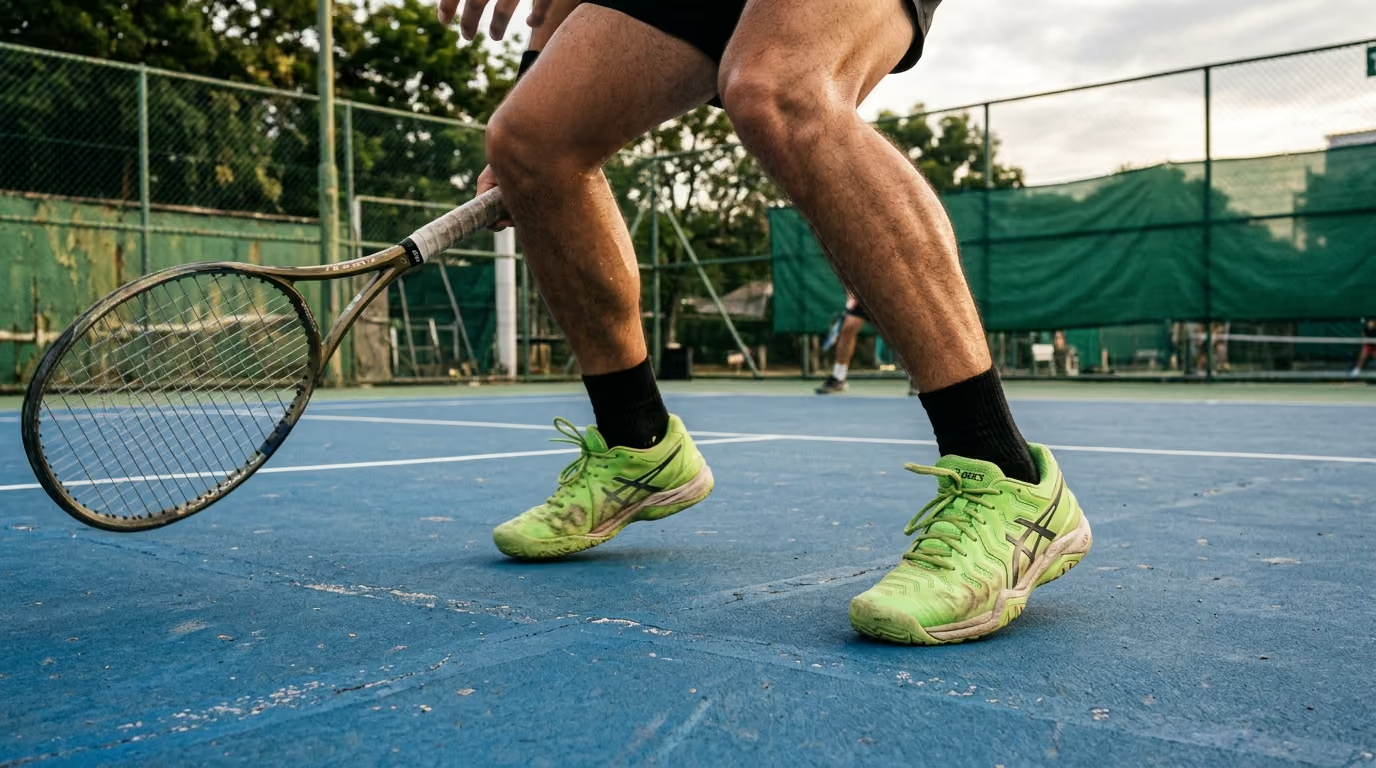
Players can effectively prepare their bodies for racquet sports with a dynamic warm-up that transitions from low-intensity movement to sport-specific coordination.




An effective dynamic warm-up for racquet sports is a structured, progressive system that transitions from low-intensity movement to active joint mobility, muscle activation, and sport-specific coordination. Instead of holding passive stretches, players should use active movements to raise core temperature, prime the nervous system, and rehearse the exact footwork patterns they will use during play. This deliberate preparation enhances court readiness, supports long-term joint health, and prepares the body for explosive multi-directional movement.
Many players step onto the court cold and immediately begin hitting full-speed groundstrokes. Others spend several minutes holding static stretches while standing by the net. While static stretching has its place in a general flexibility routine, evidence suggests that a dynamic, active warm-up is far more appropriate before explosive physical activity. This comprehensive guide outlines the science, structure, and sport-specific adaptations of a modern movement preparation system.
Physiologically, a dynamic warm-up serves as a ramp that prepares your body for high-intensity movement. When you perform controlled, active movements, your core temperature rises and blood flow to active muscles increases. This temperature elevation decreases muscle fluid viscosity, which allows muscles to contract and relax more quickly. Nerve conduction velocity also increases, which improves your coordination, reaction time, and balance on the court.
A clinical review of stretching strategies notes that dynamic warm-ups use active movements to take joints through their relevant ranges. This is in contrast to passive static stretching, where a joint is held in a fixed, elongated position. The American College of Sports Medicine recommends preceding static stretching with an active warm-up or using dynamic stretching during warm-ups to avoid potential reductions in immediate strength and explosive power. If an athlete holds a long, passive stretch immediately before a match, they may temporarily decrease their muscle-tendon stiffness, which can reduce their ability to sprint and change direction quickly.
However, the scientific evidence surrounding warm-ups is nuanced. A systematic review published in the Journal of Strength and Conditioning Research found that dynamic warm-ups were associated with improved strength, speed, and agility. Yet another review reported that while dynamic stretching improved joint range of motion, the direct performance-enhancement benefit across all athletic tasks was modest, averaging around 1.3 percent. We should view a dynamic warm-up as a low-risk readiness strategy rather than a guaranteed, immediate performance enhancer.
Furthermore, structured neuromuscular warm-ups have shown strong results in injury reduction over time. Programs like the FIFA 11+, which combine strength, balance, and low-level plyometrics, have been extensively researched in team sports. A meta-analysis published in the British Journal of Sports Medicine found a 33 percent lower ankle-injury risk in athletes using this structured neuromuscular protocol. While we cannot directly translate these exact percentages to racquet sports, the underlying principle remains clear. A structured, active preparation system is highly valuable for preventing court-related strain and supporting athletic longevity.
Racquet sports place unique biomechanical demands on the human body. Unlike running or cycling, which involve continuous, predictable movement in a single direction, racquet sports are characterized by chaos and rapid changes of direction. To move efficiently and avoid early fatigue, your warm-up must prepare you for these specific stresses.
Tennis, pickleball, and padel matches are composed of hundreds of short, explosive sprints. Match analysis of tennis players reveals that athletes perform approximately two to six changes of direction per rally. Over the course of a three-set match, this can add up to 400 changes of direction for women and over 600 for men. These actions require intense eccentric muscle contractions, meaning your muscles must act as brakes to stop your body before you can accelerate in a new direction. A standard jog around the court does not prepare your tendons and joints for this high-impact braking force.
To retrieve low balls or hit effective dinks at the kitchen line, players must drop their center of gravity. This requires significant joint range of motion, particularly in the ankles, knees, and hips. Without adequate ankle dorsiflexion, your heels will lift off the court, throwing you off balance and putting excessive stress on your knees. Additionally, deep lateral lunging requires dynamic control of your inner thigh muscles, known as the adductors. Your warm-up must actively lengthen and strengthen these tissues under control before you face a wide, fast ball.
A powerful forehand, backhand, or overhead smash is not just an arm movement. The force begins in the legs, transfers through the pelvis, and travels up through the spine to the shoulder, elbow, and wrist. This is known as the kinetic chain. If any link in this chain is stiff or uncoordinated, other areas must overcompensate. For example, a stiff upper spine often leads to excessive lower-back twisting or shoulder strain. Preparing the thoracic spine for rotation and the shoulder blades for stable overhead movement is essential for clean mechanics and long-term joint health.
Racquet sports expose your tendons to repetitive, high-frequency loads. This frequently affects the Achilles tendon, patellar tendon, rotator cuff, and common extensor tendon at the elbow. A systematic review of padel injuries highlighted that tendinous and muscular injuries are highly common, with the elbow being a major site of irritation. In pickleball, a South Korean study found that 78 percent of reported injuries were classified as overuse rather than acute trauma, affecting the knees, elbows, and shoulders. A proper warm-up helps prepare these tendons by gradually introducing tension, but it must be paired with sensible training volume and recovery.
To get the most out of your pre-court preparation, we recommend a structured, four-stage progression. This model organizes your warm-up into a logical flow, moving from low-intensity, general movements to high-intensity, sport-specific actions. This ensures that your body is thoroughly prepared without becoming prematurely fatigued.
The goal of this phase is to gradually increase your heart rate, core temperature, and respiration. You want to start sweating lightly and feel your muscles become more pliable. This phase should consist of low-intensity locomotion that uses different movement directions, such as forward jogging, backward jogging, and gentle side shuffles. Keep the intensity low enough that you could easily maintain a conversation.
Once your body temperature has risen, you can begin moving your joints through their active ranges of motion. This phase focuses on the ankles, hips, thoracic spine, shoulders, and wrists. Rather than holding stretches, you will perform controlled, continuous movements. This active mobilization helps lubricate the joints with synovial fluid and prepares your muscles to tolerate the dynamic stretches they will encounter during play.
This phase transitions your body from simple flexibility to active control. You will perform low-load strength and balance exercises to prime your muscles for coordination and stability. By stimulating the glutes, core, upper back, and rotator cuff, you teach your body to maintain proper alignment. This phase is about motor control and joint alignment, so you should focus on precision rather than muscle fatigue.
The final phase prepares your nervous system and tendons for the explosive forces of the game. You will perform low-level plyometrics, such as hopping and skipping, followed by rapid footwork and acceleration drills. This phase also includes shadow swings, allowing you to rehearse your strokes and split-step timing at game speed. By the end of this phase, your heart rate should be elevated, and you should feel completely ready to compete.
I remember finishing a tough two hour padel match on a cold Tuesday night and waking up the next morning feeling like my lower back was locked in concrete. For a long time, I just accepted this as the price of playing hard in my forties. But once I started spending just ten minutes on targeted hip mobility before heading to the club, the stiffness almost completely vanished. It taught me that we do not have to accept pain as a default state of aging. Rather, committing to a targeted mobility and movement routine can fundamentally change how our joints respond to the court.
Below is the complete, step-by-step warm-up protocol. You can perform this entire routine directly on the court before your session.
Perform these movements continuously at a light, easy pace. Move from one baseline to the other, or across the width of the court.
Perform each of these movements for 10 to 12 repetitions per side. Move with control and do not bounce at the end of the range.
Perform two sets of 10 repetitions for each exercise. Focus on proper alignment and control.
Perform each of these drills for 20 to 30 seconds. Focus on being springy, quiet, and responsive.
Now that your body is physically prepared, pick up your racket or paddle. Use this final phase to transition into actual play.
While the foundational movement principles remain the same, each racquet sport has distinct physical demands. Adapting your preparation to your specific sport ensures you are ready for the unique court geometry, movement speeds, and ball physics you will face.
Tennis is played on a large court, which requires longer sprints and deep, high-velocity lunges. Players frequently slide on clay or hard courts, demanding exceptional lateral hip control and ankle stability. The serve is also a major component of the game, placing massive, high-speed forces on the shoulder joint.
To prepare for tennis, your warm-up should emphasize wide lateral recovery steps and deep lunging. You must also spend more time preparing your shoulder for the overhead service motion. Begin with easy, relaxed serves, and never hit a full-power serve until you have played several comfortable groundstrokes.
Tennis Sequence:
Pickleball is played on a much smaller court, which reduces the need for long-distance sprinting. However, it requires exceptionally fast reaction times, quick hand exchanges, and a constant, low athletic posture at the non-volley zone. The rapid, short-distance movements place a high demand on the calves, Achilles tendons, and knees.
Because of the high volume of quick, compact strokes, your pickleball warm-up should focus on wrist flexibility, knee tracking, and fast footwork. It is also helpful to review pickleball training articles to understand how to maintain joint integrity over a long season.
Pickleball Sequence:
Padel is played on a small, enclosed court with glass walls, creating a highly dynamic environment. Players must deal with wall rebounds, requiring rapid turns, backpedaling, and sudden changes of direction. The sport also involves an exceptionally high volume of overhead shots, such as the bandeja, vibora, and smash.
Your padel warm-up must focus heavily on thoracic rotation and shoulder blade stability to handle the constant overhead demands. You must also prepare your ankles and calves for frequent, sudden stops near the glass. For more strategies on managing your body during matches, check out our padel court strategies.
Padel Sequence:
Despite the growing body of sports science research, many recreational and competitive court athletes continue to use outdated warm-up habits. Recognizing and correcting these common mistakes can significantly improve your comfort and readiness on the court.
The classic pre-match routine for many players consists of sitting on the court and stretching their hamstrings, quadriceps, and calves. While this may feel like it is releasing tension, holding passive stretches for longer than 60 seconds can temporarily reduce your muscle's ability to contract quickly. This can lead to a slight decrease in your sprint speed, vertical jump, and change-of-direction reaction.
Correction: Save your long, relaxing static stretches for after your match or as a separate flexibility session. Before you play, focus on active, dynamic movements that gently take your joints through their natural ranges.
Arriving late to the court often leads to players rushing directly into a competitive match. This sudden jump in intensity exposes cold, stiff tendons to massive, explosive forces. Your Achilles tendons, patellar tendons, and rotator cuff muscles need gradual loading to handle these stresses safely.
Correction: Even if you are short on time, commit to a shortened, five-minute version of your warm-up. A few quick shuffles, arm circles, and split steps are far better than starting completely cold.
On the other hand, some highly motivated players perform a warm-up that is so long and intense that it becomes a workout in itself. If you are breathing heavily, feeling your muscles burn, or sweating profusely before the first point, you have overdone it. This early fatigue will reduce your coordination and performance during the actual match.
Correction: Keep your repetitions low and your rest periods sufficient. Your warm-up should leave you feeling warm, loose, alert, and energized, not exhausted.
Many players focus all their attention on their legs, performing jogging and footwork drills while ignoring their upper body. However, racquet sports require repeated, high-velocity shoulder rotation, forearm pronation, and wrist extension. Entering a match with a stiff upper back and shoulders can lead to early strain on your shoulder joint or elbow.
Correction: Always include thoracic rotations, arm circles, shoulder blade slides, and wrist movements in your routine. This ensures that your entire kinetic chain is prepared to transfer force smoothly to your racket or paddle.
A well-designed movement preparation routine does more than prepare you for the next hour of play. It also plays a key role in how your body responds to the session over the following 24 to 48 hours. By gradually preparing your tissues, you support your recovery and long-term athletic longevity.
When you perform a dynamic warm-up, you increase the lubrication within your joints, which helps protect your cartilage from sudden, high-impact forces. This gradual transition also reduces the amount of microscopic muscle tearing that occurs during explosive changes of direction, helping to mitigate post-match muscle soreness.
Furthermore, preparing your muscles and tendons to share the load evenly prevents specific areas from taking on too much stress. For example, when your hips and upper back are moving well, your lower back and knees do not have to overwork to compensate. This balanced distribution of force is essential for protecting your joints and improving player health over a long playing career.
While mild stiffness can be a normal part of physical activity, you should never ignore persistent or sharp pain. A dynamic warm-up is designed to prepare healthy tissues, not to mask an underlying injury. If you experience any of the following warning signs, you should consult a qualified physical therapist or sports medicine physician:
A professional assessment can help identify the root cause of your discomfort, whether it stems from technique, equipment, or muscle imbalances. For more information on maintaining your physical health and longevity, explore our library of court-side educational resources.
If your match is delayed by 15 minutes or more, your body temperature and heart rate will begin to drop. Do not sit completely still during this delay. Keep your muscles warm by wearing a jacket, standing up to walk, or performing gentle dynamic stretches. When you are finally called to the court, perform a shortened, two-minute version of your warm-up, focusing on active mobility, split steps, and shadow swings to quickly regain your readiness.
In cold environments, your muscles and tendons are naturally stiffer, and it takes longer to raise your core body temperature. Extend your Phase 1 (Raise) to six or eight minutes, starting with a very easy walk and slowly building to a jog. Keep your warm-up jacket and pants on until you have completed your active mobility phase to help trap your body heat. Avoid long periods of standing still between exercises, and transition directly from your warm-up into your hitting progression.
Doubles play involves less total running distance, but it demands faster reaction times, quicker horizontal shuffles, and rapid hand exchanges at the net. Because you do not have as much time to react to the ball, your nervous system must be exceptionally sharp. Focus heavily on Phase 4 (Elastic and Neuromuscular Preparation), emphasizing quick-feet drills, lateral split-steps, and fast partner reaction starts. This ensures you are ready for the high-speed exchanges that characterize doubles play from the very first point.
Yes, but timing is key. If you have a specific joint restriction, such as exceptionally tight calves or hip flexors, you can perform a short static stretch before you play. However, keep the stretch brief, holding it for no more than 20 to 30 seconds. Always follow any static stretch with active mobility and dynamic movements to restore muscle stiffness and neural drive before stepping onto the court. Save long, relaxing static stretches for your post-match recovery.
Follow Evercourts for practical insights on tennis, pickleball and padel performance, movement, recovery and healthy ageing. Stay connected for new articles, research-led guidance and ideas to help you play well and keep playing for years.


Read practical guidance for better movement, smarter preparation and a game that keeps working for you.
explore the Blog