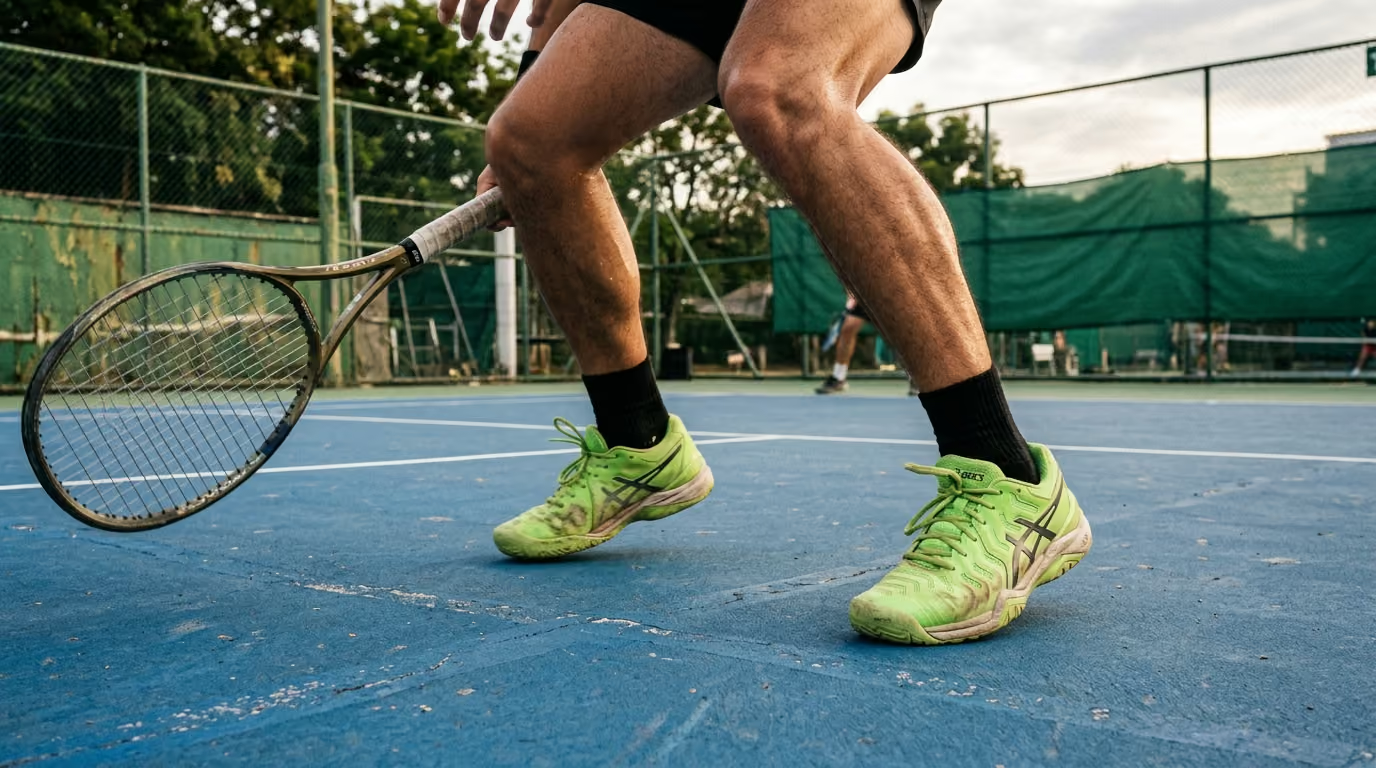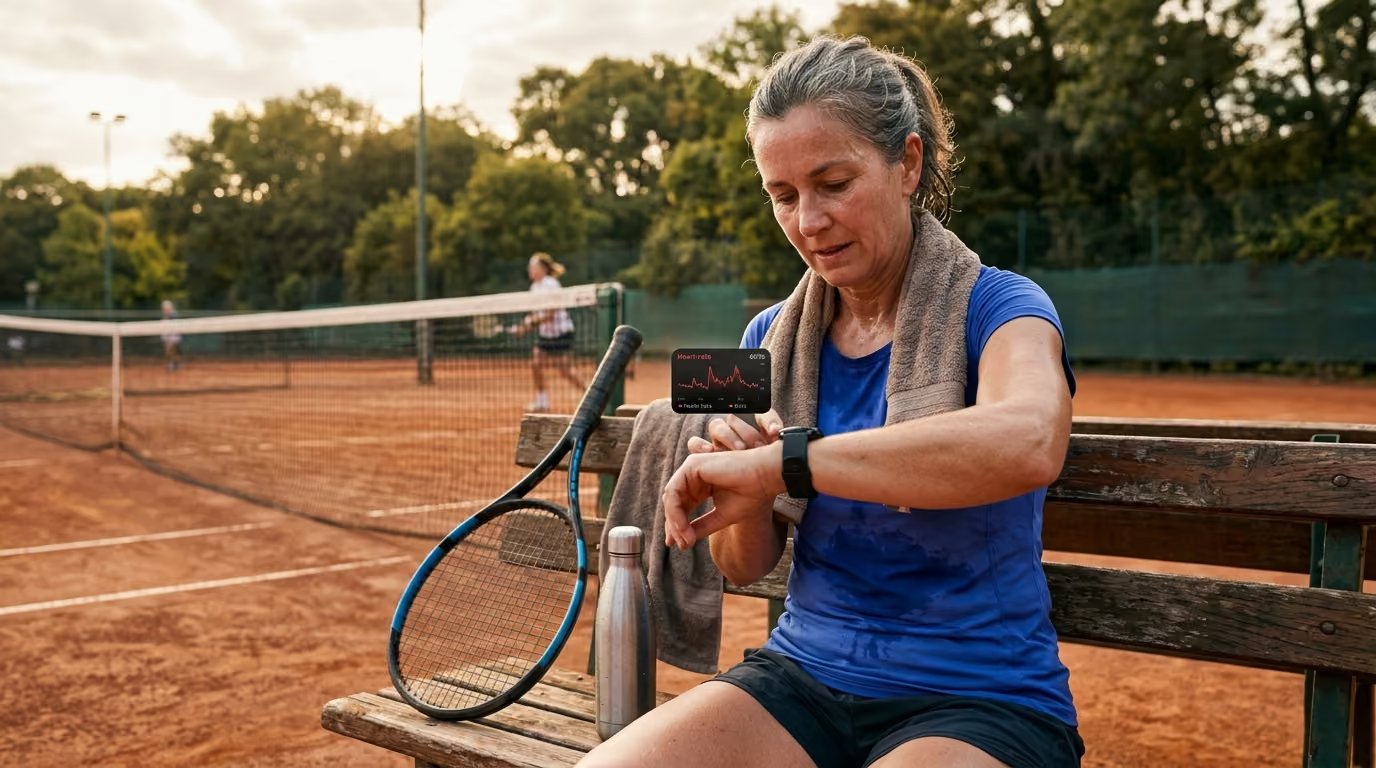

Racquet sports longevity depends on carefully managing environmental conditions like heat, cold, humidity, wind, and altitude to protect an athlete's body.




We often blame our joints, our age, or our training programs when we experience sudden fatigue or stiffness on the court. However, the true culprit is often the invisible tax of our playing environment. Managing heat, cold, humidity, wind, and altitude is a cornerstone of long-term joint health and cardiovascular safety for court athletes. Rather than treating weather as a minor inconvenience, managing environmental conditions as a direct physiological workload preserves athletic capacity over a lifetime. This comprehensive guide outlines how to adjust your play, clothing, hydration, and recovery to protect your body across all playing environments.
Every time you step onto the court, your body enters a dynamic exchange with the surrounding air, sun, and surface. Racquet sports are highly demanding, requiring rapid acceleration, deceleration, sudden direction changes, and brief recovery periods. These physical demands create substantial cardiovascular and thermal strain even when you are not running continuously. When the environment becomes extreme, your body must direct energy away from athletic movement to manage its internal temperature.
This physiological tax has a direct effect on your performance and safety. Research from professional tennis tournaments shows that severe heat stress alters match dynamics and player efficiency. Specifically, high thermal stress is linked to more unforced errors, reduced serve and return efficiency, and greater performance variability. Players also experience shorter rally lengths and less shot variety. This is because the central nervous system reduces work capacity to prevent dangerous overheating.
For players focusing on athletic longevity, environmental conditions should be managed as a major component of overall training volume. The American College of Sports Medicine, or ACSM, recommends modifying your exercise plans based on environmental factors. Instead of relying solely on air temperature, sports scientists use Wet Bulb Globe Temperature to estimate true environmental load. This composite index measures air temperature, humidity, wind speed, and radiant heat from the sun.
Managing environmental load requires a systematic decision framework rather than guesswork. First, measure the environment by checking the temperature, humidity, wind, and altitude. Second, estimate your personal risk factors, including your age, hydration level, clothing choice, and acclimatization status. Third, modify the session by adjusting your pacing, scheduling, and court time. Finally, monitor your body for early warning signs and stop playing before mild strain turns into a serious medical event.
Hydration is one of the most critical variables for protecting your cardiovascular system and joint tissues during play. When you sweat, you lose fluid from your blood plasma, which makes your heart work harder to pump blood to active muscles. Dehydration also reduces the water content of joint cartilage, which can make your joints feel stiff and less cushioned. To protect your body, you must establish a systematic hydration routine that begins long before you arrive at the club.
Relying solely on thirst is a common mistake that can leave you in a constant state of dehydration. The Centers for Disease Control and Prevention, or CDC, advises athletes to drink fluid before they feel thirsty, especially in hot conditions. To start your match adequately hydrated, consensus sports guidelines recommend drinking about six milliliters of fluid per kilogram of body mass two to three hours before exercise. If you weigh 80 kilograms, this equals roughly 480 milliliters, or 16 ounces, of fluid.
During your match, you should establish a structured drinking schedule during every changeover. A practical starting point is to consume four to eight ounces of fluid every 15 to 20 minutes of play. For sessions lasting less than an hour, plain water is generally sufficient to maintain fluid balance. However, if your practice or match lasts longer than 60 minutes, plain water may dilute your blood sodium levels. For longer sessions, you should use a hydration solution that contains sodium, potassium, and a small amount of carbohydrates to speed up fluid absorption.
You can calculate your personal sweat rate to make your hydration plan highly precise. First, weigh yourself in minimal clothing immediately before your match. Second, track the exact number of ounces you drink during your session. Third, weigh yourself again after your match, using the same scale and minimal clothing.
For every pound of body weight lost during play, you have experienced 16 ounces of fluid deficit. Add the volume of fluid you drank to this deficit, then divide the total by the hours of play. This calculation gives you an accurate hourly fluid target for similar weather conditions.
While drinking enough is vital, you must also avoid the dangers of overdrinking. Consuming massive volumes of plain water without electrolytes can lead to a dangerous condition called hyponatremia. This occurs when your blood sodium levels drop too low, causing headache, confusion, muscle weakness, and fatigue. To protect your athletic longevity, balance your fluid intake with sodium, and never force yourself to drink past the point of comfort.
Cold weather presents a different set of challenges for your joints, muscles, and overall movement patterns. When temperatures drop, your blood vessels constrict to keep your core warm, which reduces blood flow to your limbs. Your muscles, tendons, and ligaments become less elastic, and the synovial fluid that lubricates your joints becomes more viscous. This sudden stiffness increases the work required to move and raises your susceptibility to minor muscle strains.
I remember finishing a tough two hour padel match on a cold Tuesday night and waking up the next morning feeling like my lower back was locked in concrete. For a long time, I just accepted this as the price of playing hard in my forties. But once I started spending just ten minutes on targeted hip mobility before heading to the club, the stiffness almost completely vanished. It taught me that we do not have to accept pain as a default state of aging.
To protect your joints in the cold, you must modify your warm-up to focus on systemic temperature elevation and joint lubrication. Our team recommends beginning your warm-up indoors whenever possible to avoid immediate chilling. Your warm-up should last longer than it does in the summer, and it must continue until right before you start playing. A structured cold-weather warm-up should follow these six progressive steps:
You can learn more about these joint-mobilization patterns by reading our dedicated mobility and movement resources. These routines are designed to help you prepare your connective tissues for high-impact sports.
Choosing the right clothing system is equally important for maintaining warmth and mobility in cold, damp conditions. The Mayo Clinic and the National Athletic Trainers’ Association both recommend a three-part layering system. Your base layer should be a thin, synthetic material that wicks sweat away from your skin. Avoid cotton, because it holds moisture next to your body and causes rapid chilling.
Your middle layer should be an insulating fabric, such as fleece or wool, to trap body heat. Your outer layer should be a lightweight, windproof, and water-resistant shell that keeps the elements out while letting sweat vapor escape. Make sure to cover your head, ears, hands, and neck, as these areas lose heat quickly and can compromise your overall comfort. By using this layering approach, you can easily shed or add clothing as your activity level changes.
Wind and altitude are often viewed as simple playing variables, but they have major physiological impacts. When you play at high altitude, the atmospheric pressure is lower, which means there are fewer oxygen molecules in every breath you take. This reduction in oxygen availability makes your heart and lungs work much harder to support your muscles. You will likely feel out of breath much faster than you do at sea level, even during basic rallies.
If you are traveling to a higher altitude for a tournament, you must respect the necessary acclimatization timeline. International sports organizations note that partial adaptation to moderate altitude can occur within five to seven days. However, full acclimatization often requires up to two weeks of exposure. If you attempt to play at your usual sea-level intensity on your first day, you will experience rapid fatigue and muscle soreness.
To manage altitude safely, you should adjust your pacing and expectations during your first few days. Reduce your overall session duration, extend your rest periods between points, and focus on tactical consistency rather than raw power. Drinking extra water is also crucial at altitude, because the dry air increases fluid loss through your breath. Monitor your breathing closely and never hesitate to take an extra break if you feel dizzy or lightheaded.
Wind is another environmental factor that requires careful management to protect your body from joint strains and fatigue. High wind speeds can alter ball flight, forcing you to make sudden, awkward adjustments to your footwork and swing. These abrupt movements can put unusual stress on your ankles, knees, back, and shoulders. Wind also increases the rate of evaporative cooling, which can mask how much you are sweating and lead to dehydration.
To stay safe on windy days, you should focus on conservative, balanced movement rather than reaching for wide balls. Keep your knees bent and your center of gravity low to maintain your footing on unstable or dusty courts. Secure your equipment and hydration bottles so you do not have to chase items across the facility. Finally, if you are playing in cold wind, wear a wind-resistant jacket to prevent your muscles from cooling down between games.
Many players believe that moving indoors protects them from environmental stress, but indoor courts are not neutral spaces. Indoor facilities can suffer from high humidity, poor air movement, elevated carbon dioxide levels, and inadequate temperature regulation. When multiple courts are active in a closed space, the air can quickly become stale, hot, and humid. This stagnant environment reduces the rate of sweat evaporation and increases your cardiovascular strain.
Indoor sports facility guidelines recommend maintaining relative humidity between 40 percent and 60 percent. For optimal athletic performance, heating systems should be set around 19.5 to 20.5 degrees Celsius, while cooling systems should keep temperatures around 24 to 25 degrees Celsius. When humidity or temperature climbs past these recommended zones, the physiological cost of your session increases.
Carbon dioxide levels can serve as a practical indicator of ventilation quality within an indoor sports facility. While carbon dioxide is not toxic in moderate amounts, high levels suggest that fresh air is not circulating properly. Building ventilation standards recommend keeping indoor carbon dioxide levels below 1,200 parts per million. If you play in a facility with poor ventilation, you may experience headaches, lethargy, and a faster rate of fatigue.
To protect your health when playing indoors, you should use a simple facility checklist before starting your session:
If you are organizing an indoor tournament, work with facility managers to optimize the HVAC settings. Ensure that filters are clean and that the system is drawing in outdoor air rather than simply recirculating stale air. If you play in a facility that feels stagnant or overheated, treat the session with the same pacing modifications you would use on a hot outdoor court.
While all racquet sports share similar physiological demands, tennis, pickleball, and padel differ in court size, equipment, and movement patterns. These differences change how environmental factors tax your body. To play safely for years to come, you should understand the unique environmental risks associated with your specific sport.
Tennis courts are large, meaning you must cover significant distances during a match. This high running volume increases your metabolic heat production, making you highly susceptible to heat illness on hot days. Furthermore, outdoor tennis courts are often dark, hard surfaces that absorb and radiate solar heat. This radiant heat can make the air right above the court surface feel up to ten degrees hotter than the official weather report.
To protect your joints and heart during hot tennis matches, you must prioritize long-term injury prevention. Use the full 90 seconds allowed during changeovers to sit in the shade, drink cool fluids, and place cold towels on your neck. In cold weather, the larger court size means you may experience longer periods of inactivity if your partner is serving or if points are short. Keep your warm-up jacket on during these down times to prevent your shoulder and back muscles from tightening up.
Pickleball is played on a smaller court, which reduces the total running distance but increases the volume of quick, explosive steps. The game requires constant deep knee bends and rapid lunges, which put high forces on your knees and lower back. Because pickleball is often played on concrete surfaces, the joints of your lower body take a consistent pounding. On hot days, the proximity to the hard surface increases your heat exposure, while cold weather can make concrete feel exceptionally hard and unforgiving.
Wind also has a disproportionate effect on pickleball because the plastic wiffle ball is lightweight and easily deflected. Chasing a drifting ball can force you into awkward, off-balance positions that stress your ankles and knees. To stay safe on windy days, focus on hitting high-margin shots to the center of the court rather than chasing lines. In cold weather, plastic pickleballs become hard and brittle, which can increase the impact vibration traveling up your paddle to your elbow and wrist.
Padel is played in an enclosed court surrounded by glass walls and metal mesh. This enclosure can create a microclimate that traps heat and humidity, especially in indoor facilities or on sunny days. The lack of air movement inside the padel cage reduces sweat evaporation, making it harder for your body to cool itself. Padel also features a high volume of overhead smash shots, which require rapid shoulder acceleration and thoracic spine extension.
In cold weather, the glass walls of a padel court can collect condensation, making the surface slick and altering how the ball bounces. These unpredictable ball actions can force you into sudden, jerky movements that stress your back and shoulders. To protect your shoulder joints in the cold, extend your dynamic arm and shoulder warm-up before trying to hit powerful overheads. If you are playing indoors on a hot day, step out of the glass enclosure during breaks to access moving air and cool down.
Even experienced athletes can fall into habits that compromise their safety and performance. To protect your athletic longevity, you should identify and correct these common environmental errors.
Many players look at a thermometer and assume that a 24-degree Celsius, or 75-degree Fahrenheit, day is perfectly safe. However, if the relative humidity is 90 percent and the sun is shining directly on a dark court, your body will face severe heat stress. High humidity prevents sweat from evaporating, which is your body's main way of cooling down. Always check both the humidity and the heat index before deciding on your play intensity and rest intervals.
By the time you feel thirsty on the court, your body is already in a state of mild dehydration. This delay can cause a drop in coordination, slower reaction times, and increased cardiovascular strain. To prevent this, establish a simple habit of taking two to three sips of water or electrolyte solution during every single changeover, regardless of how thirsty you feel.
Cotton is an excellent fabric for casual wear, but it is a poor choice for cold-weather sports. When you sweat, cotton fibers absorb the moisture and hold it against your skin, destroying the fabric's ability to keep you warm. As soon as you stop moving, this damp layer will chill your body rapidly, leading to stiff muscles and shivering. Always choose synthetic, moisture-wicking fabrics for your base layer to keep your skin dry and warm.
Arriving at a higher altitude and immediately playing a high-intensity singles match is a recipe for extreme fatigue and joint strain. Your body needs time to adapt to the lower oxygen levels in the air. For your first few days at altitude, focus on light hitting sessions, extend your rest breaks, and allow your cardiovascular system to adjust before playing competitive matches.
Your recovery does not begin when you get home, it starts the moment your match ends. Environmental stress can alter your body's recovery timeline, meaning a hot, humid match requires a different recovery approach than a cold, windy session. To maintain your playing schedule and protect your joint health, you must adjust your post-match habits to match the environment you just played in.
Playing in hot, humid conditions depletes your fluid levels, burns through your carbohydrate stores, and elevates your core temperature. Your recovery should focus on active cooling, rapid rehydration, and restoring your body's electrolyte balance. As soon as your match ends, move to a cool, shaded, or air-conditioned space to help your core temperature return to normal.
To replenish your fluids, drink an electrolyte-rich beverage that contains sodium, as this helps your body retain water rather than passing it as urine. You should also consume a meal or snack containing both carbohydrates and protein within two hours of finishing your match. This helps rebuild your muscle glycogen stores and provides the building blocks needed to repair muscle tissue. To learn more about optimizing this process, explore our recovery science articles.
Cold-weather play presents a different set of recovery demands for your muscles and joints. When you exercise in the cold, your muscles must work harder to generate heat, which can lead to early fatigue and increased muscle soreness. Your joints may also feel stiff and sore due to the lower temperatures and wind exposure.
Your primary goal after a cold match is to warm your body up and restore joint mobility. Change out of your damp playing clothes immediately and put on dry, warm layers. A warm shower or bath can help increase blood flow to your limbs, helping to flush out metabolic waste and relax tight muscles. Gentle stretching or using a foam roller can also help restore joint range of motion and reduce post-match stiffness.
While staying active is a key part of healthy aging, you must know when to stop playing to protect your health. Environmental emergencies can develop quickly, and ignoring early symptoms can lead to severe injury or illness. To play safely for years to come, learn to recognize the warning signs that indicate you should end your session immediately.
Heat exhaustion and exertional heatstroke are serious medical conditions that require immediate attention. Heat exhaustion typically develops gradually and is characterized by heavy sweating, weakness, cold or pale skin, headache, nausea, and dizziness. Exertional heatstroke is a life-threatening emergency where your body's temperature-regulating system fails, leading to confusion, slurred speech, loss of coordination, and hot, dry, or red skin.
If you or your playing partner experience any of these symptoms, you must stop playing immediately:
If you suspect heatstroke, call emergency medical services immediately and move the person to a cool, shaded area. Begin cooling them down by applying cold water or ice packs to their neck, underarms, and groin. Do not allow them to try and walk it off or return to the court, as this can worsen their condition.
Hypothermia and frostbite are the primary risks when playing in cold, wet, or windy conditions. Hypothermia occurs when your body loses heat faster than it can produce it, causing your core temperature to drop. Frostbite is a localized injury that occurs when skin and underlying tissues freeze, most commonly affecting your fingers, toes, nose, and ears.
Stop playing and seek warmth immediately if you notice any of these cold-related symptoms:
If you have a pre-existing medical condition, such as cardiovascular disease, asthma, or respiratory sensitivity, you should consult a qualified healthcare provider before playing in extreme environments. Cold air can trigger airway constriction, while heat puts extra stress on your heart and vascular system. Working with your doctor can help you establish safe playing guidelines and ensure you can continue enjoying racquet sports for years to come.
By understanding and managing the environmental conditions on the court, you can protect your joint health, maintain your performance, and continue playing the sports you love for a lifetime.
Follow Evercourts for practical insights on tennis, pickleball and padel performance, movement, recovery and healthy ageing. Stay connected for new articles, research-led guidance and ideas to help you play well and keep playing for years.


Read practical guidance for better movement, smarter preparation and a game that keeps working for you.
explore the Blog