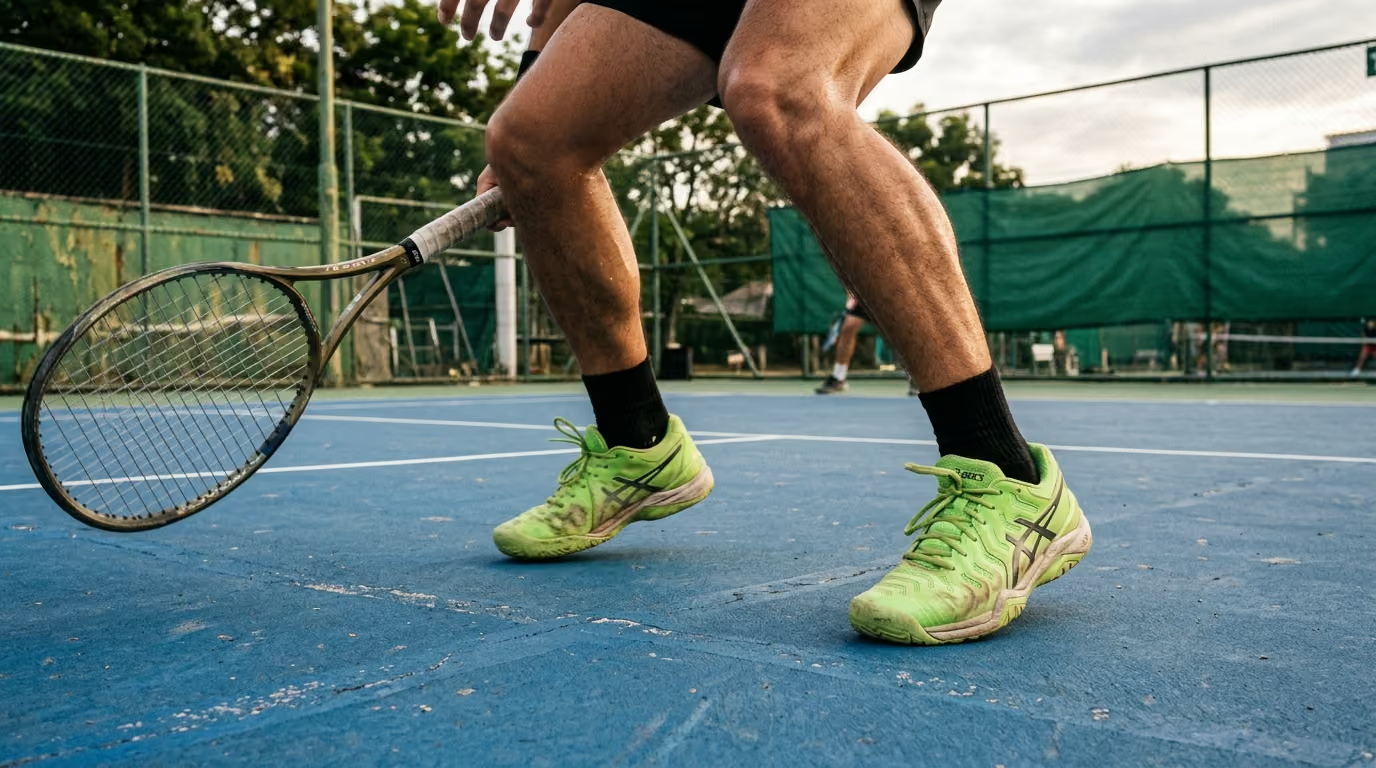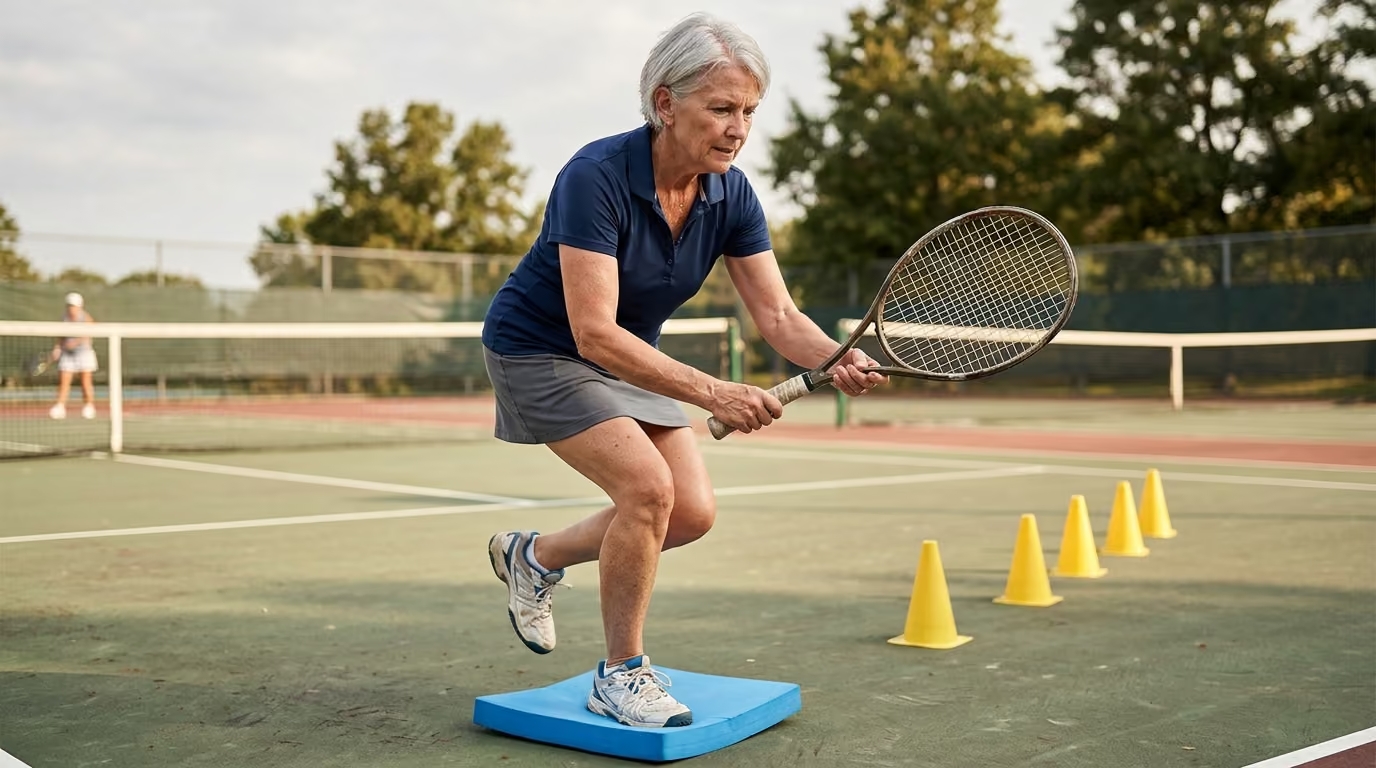

When a racquet sports player lunges for a drop shot and trips, maintaining stability is crucial for both game performance and long-term health.




You are deep in the second set of a competitive match. Your opponent hits a soft drop shot that lands just over the net. Your competitive instinct takes over, and you sprint forward to make the save. Just as you reach for the ball, your front toe catches on the court surface. Your upper body continues moving forward, your back foot slips, and you find yourself struggling to stay upright.
This scenario is incredibly common on tennis, pickleball, and padel courts. For older athletes, maintaining stability is not just about keeping the point alive. It is about protecting your health and ensuring you can play for years to come. Preventing falls requires a comprehensive approach that targets your physical capacity, court environment, and tactical decisions.
To reduce fall risk on the court, older players must systematically develop lower-body strength, practice reactive stepping, and refine their visual tracking under dual-task conditions. Managing external factors like footwear, court moisture, and fatigue is equally essential for maintaining control. Ultimately, the most effective prevention strategy involves combining physical conditioning with smart tactical decisions, such as knowing when to safely concede a point.
Falls represent a major health challenge for older adults. According to data from the Centers for Disease Control and Prevention, more than 14 million adults aged 65 and older report falling each year. This means approximately one in four older adults experiences a fall annually. Among these individuals, about 37 percent report an injury that requires medical treatment or restricts their activity for at least one day.
The physical and societal impact of these accidents is significant. The CDC reports approximately 3.6 million emergency department visits and 1.2 million hospital stays related to falls each year. Furthermore, falls are the leading cause of injury and injury-related death among adults aged 65 and older. The World Health Organization notes that 20 to 30 percent of older people who fall experience moderate to severe injuries, such as deep bruises, hip fractures, or head trauma.
These issues become highly specific when we look at racquet sports. Tennis, pickleball, and padel are physically demanding. They require rapid acceleration, sudden deceleration, lateral shuffling, and rotation. Players must also lunge out of their base of support while tracking a moving ball in real time.
In a national injury-surveillance study of players aged 60 and older, slips, trips, and falls accounted for 66.9 percent of senior pickleball injuries. For senior tennis players, these events made up 59.0 percent of all recorded injuries. The study estimated 28,984 senior pickleball injuries and 58,836 senior tennis injuries over a ten-year period.
The diagnoses from this study are highly revealing. In senior pickleball, the most common diagnoses were strains or sprains at 31.0 percent, followed closely by fractures at 30.4 percent. In senior tennis, strains or sprains accounted for 26.1 percent, while fractures made up 23.5 percent. Upper-extremity injuries were the most common regional category for both sports. This highlights a critical biomechanical truth. The fall itself is the initiating event, but the injury often occurs when a player reaches out with a hand or twists a joint to break the impact.
To build an effective defense against falls, we must understand that fall risk is multifaceted. It consists of intrinsic, behavioral, environmental, and task-related factors. The WHO groups these factors into biological, behavioral, environmental, and socioeconomic categories. Intrinsic factors include age-related muscle loss, joint stiffness, visual decline, and certain medications. Behavioral factors involve rushing, playing through deep fatigue, or overestimating physical capacity. Environmental factors include slick court surfaces, poor lighting, cracked pavement, or inappropriate footwear.
We must also understand that balance is not a single, isolated skill. It is helpful to break balance down into five specific components.
Many players can stand on one leg in a quiet room but struggle to stay upright when chasing a short ball. This happens because court movement requires a deep functional reserve. Functional reserve is the gap between your maximum physical capacity and the immediate demands of your environment. When you are fresh, your reserve is high. You can react quickly, plant your foot securely, and adjust your posture. However, late in a long match, fatigue reduces this reserve. An ordinary movement that felt safe in the first game can become hazardous in the third set.
Understanding the progression of a balance failure also helps. A loss of balance is a minor wobble that you quickly correct. A near-fall is a more serious slip where you must take a chaotic recovery step or grab the net to stay upright. A fall occurs when your body actually hits the ground, and an injurious fall results in physical tissue damage. Recognizing your own near-falls during practice can alert you to a shrinking functional reserve before an actual injury occurs. You can read more about these protective concepts in our healthy aging and athletic longevity resources.
To manage these risks, we can look to established medical protocols. The CDC developed the STEADI framework to help clinicians identify older adults at risk of falling. STEADI stands for Stopping Elderly Accidents, Deaths, and Injuries. The core of this clinical approach relies on three steps: screening, assessing, and intervening. Healthcare providers screen older adults annually by asking about previous falls, walking difficulties, and balance issues. If a patient is deemed at risk, a comprehensive assessment follows. This includes reviewing medications, checking blood pressure when standing, testing vision, and evaluating feet and footwear.
The assessment also utilizes physical performance tests. The Timed Up and Go test measures how quickly a person can rise from a chair, walk three meters, turn, and sit back down. The 30-Second Chair Stand test counts how many times a person can stand up from a chair without using their arms. The four-stage balance test evaluates stability in different standing positions with the feet close together, in a tandem stance, and on one leg.
While these tools are excellent for general mobility, we must adapt them for the specific demands of racquet sports. A court-specific screening should look at several athletic movements.
These self-assessments are not meant for medical diagnosis. Instead, they serve as practical training indicators. If you experience recurrent falls, unexplained lightheadedness, or sudden joint pain, you should always consult a physician. We want to build dynamic capacity, but we must do so safely. Understanding these baseline limits is the first step toward creating a targeted training program.
To understand your baseline physical capacity, you can perform three standard screenings at home or with a training partner. These tests are adapted from the CDC's clinical guidelines.
The U.S. Preventive Services Task Force strongly recommends exercise interventions to prevent falls in community-dwelling adults aged 65 and older who are at increased risk. Their extensive research review confirmed that targeted exercise significantly reduces the rate of falls and the risk of experiencing an injurious fall. The pooled data showed a 15 percent reduction in fall rate and a 16 percent reduction in injurious falls.
Crucially, these benefits are not achieved through general walking alone. A systematic review of exercise interventions found that a multi-component program is the most effective approach. This means combining lower-body strengthening, dynamic balance training, and reactive stepping. Let us break down how to develop these specific capacities.
Leg strength is your primary defense against gravity and sudden acceleration. Strong quadriceps, glutes, hamstrings, and calves allow you to absorb the force of landing and push off with control. To build this foundation, you can incorporate targeted exercises into your weekly routine. You do not need heavy gym machinery to start.
Begin with the sit-to-stand exercise using a sturdy chair. Stand up without using your hands, then lower yourself slowly back to the seat. Aim for three sets of ten repetitions.
As you progress, move to bodyweight squats. Stand with your feet shoulder-width apart, bend your knees, and lower your hips as if sitting in a chair. Keep your chest up and your knees aligned with your toes.
Step-ups are another excellent choice for building single-leg stability. Step onto a low platform with one foot, push through your heel to stand tall, and step down with control.
To make these movements more court-specific, add lateral lunges. Step wide to the side, bend your loading knee, keep your opposite leg straight, and push back to the start. This movement mimics the exact mechanics of reaching for a wide groundstroke.
While strength is vital, you also need the speed to place your foot in the right spot when you lose balance. This is reactive stepping. Research shows that reactive and volitional step training can reduce falls in older adults by roughly 50 percent. This training improves simple reaction time by about 35 milliseconds. It also improves choice reaction time by approximately 80 milliseconds.
To train this, start with simple reaction drills. Stand in a ready position while a partner holds a tennis ball at shoulder height. When they drop the ball, your goal is to step forward and catch it before the second bounce.
To progress, try choice reaction drills. Place four colored cones in a semi-circle around you. Have a partner call out a color, and immediately step and touch that cone with your foot, then return to the center.
Finally, practice reactive agility. Have a partner toss soft foam balls to your left, right, front, or back. You must step quickly to catch or block each ball, always returning to a balanced center. These drills teach your nervous system to execute rapid, controlled steps without hesitation.
Strength and reaction are only as useful as your available range of motion. Tight hips and ankles restrict your stride, make your lunges shallow, and force your lower back to bend excessively.
I remember finishing a tough two hour padel match on a cold Tuesday night and waking up the next morning feeling like my lower back was locked in concrete. For a long time, I just accepted this as the price of playing hard in my forties. But once I started spending just ten minutes on targeted hip mobility before heading to the club, the stiffness almost completely vanished. It taught me that we do not have to accept pain as a default state of aging.
To keep your joints moving freely, include ankle and hip mobility exercises in your daily routine. Perform controlled ankle circles to maintain lateral flexibility. Practice the half-kneeling hip flexor stretch to open up the front of your hips. You can find excellent guidance on maintaining joint health in our injury prevention resources. Investing a few minutes in mobility before you step onto the court pays massive dividends in your overall stability.
Court sports are highly complex environments. You cannot simply look at your feet while you play. You must track a yellow ball, watch your opponent, communicate with your partner, and maintain your position. This requires your brain to process multiple streams of information simultaneously, which is known as dual-tasking.
Research indicates that older adults with superior divided visual attention and multiple-object tracking tend to have better balance and dynamic control. An associative study of experienced older pickleball players found they possessed better visual attention and reaction times than inactive controls. This suggests that racquet sports may help keep these cognitive pathways sharp, though it does not prove causation.
To improve your dual-task capacity, you can practice specific exercises that combine physical movement with cognitive challenges.
Visual awareness is another critical pillar of fall prevention. As we age, our depth perception, contrast sensitivity, and ability to recover from glare can decline. To optimize your vision on court, schedule regular eye examinations. Discuss with your optometrist the specific demands of your sport.
Many players benefit from wearing single-vision sports glasses rather than progressive or multifocal lenses on the court. Multifocal lenses can distort your ground-level vision, making it difficult to judge the height of the net or the distance of a low ball. Ensure you wear appropriate tinted lenses for outdoor play to reduce blinding glare. If you play indoors, make sure the court lighting is bright and even. Finally, always keep the playing area clean by clearing away stray balls, towels, or water bottles that could cause a trip.
Improving your physical capacity is only half the battle. You must also adopt safer movement habits to manage your exposure to risk. Changing how you move during a rally can prevent dangerous positions before they occur. Let us examine five critical habits that every older player should master.
Your movement begins before the ball is hit. Standing completely upright with locked knees delays your reaction time and forces you to take sudden, unstable steps.
Instead, adopt a dynamic ready position. Stand with your feet slightly wider than hip-width apart, bend your knees, and hinge forward slightly at your hips. Keep your weight distributed through the balls of your feet, and hold your racquet out in front. This active stance lowers your center of mass, making you more stable and ready to move in any direction.
When a ball is hit wide, your instinct is to reach for it at all costs. However, reaching far outside your base of support while your trunk continues moving can easily cause a fall.
Instead, focus on taking small, rapid adjustment steps to get your body behind the ball. If you cannot reach the ball with a controlled step, it is safer to let the ball go. Conceding a single point is always better than risking a severe fall. You can read more about movement strategies in our mobility and movement resources. Learning to respect your physical limits is a hallmark of an experienced, smart player.
Running straight backward is one of the most common causes of serious head and back injuries on the court. When you run backward, you cannot see obstacles behind you, and your heel can easily catch on the surface.
If a lob is hit over your head, do not backpedal. Instead, use a drop step. Turn your hips and shoulders to the side, and run diagonally or forward toward the back of the court.
This keeps your body in a powerful, forward-running position while keeping your eyes on the ball. If you realize you cannot get under the lob safely, stop your pursuit. Turn around, face the net, and prepare for the next point rather than crashing into the back wall or fence.
Many falls occur after you hit the ball, when you try to stop your forward momentum. If you plant your foot aggressively on a locked knee, you risk a hyperextension injury or a slip.
Instead, practice using multiple, small braking steps to slow down. Once you have struck the ball, immediately focus on regaining your balance. Do not stand up abruptly; keep your knees soft and slide back toward the center of the court. This transition back to a stable position is just as important as the stroke itself.
Stopping after a fast sprint is one of the most mechanically demanding tasks on the court. When you run forward, your body accumulates linear momentum. To stop, you must apply braking force through your legs in the opposite direction.
If you try to stop in a single, abrupt step, your knee joints absorb the entire force. This can lead to patellar tendon strains, meniscus tears, or a loss of balance that throws you forward.
Instead, you should utilize a sequence of smaller deceleration steps. As you approach the ball, begin to shorten your stride. Keep your center of mass low by bending your knees and hips.
Allow your feet to make light, rapid contact with the court surface. This distributes the braking force across multiple steps and larger muscle groups, like your glutes and quadriceps. This technique not only protects your joints but also keeps your feet under your hips, ready to transition back to the center.
If you do lose your balance completely, knowing how to fall can significantly reduce your injury risk. The natural instinct is to extend a rigid arm to break the fall, which often results in wrist fractures.
Instead, work on lowering your center of mass by bending your knees. Try to roll with the fall, absorbing the impact across larger, muscular areas of your body like your thighs, hips, and shoulders. Keep your chin tucked toward your chest to protect your head from hitting the court.
While you should not attempt dangerous falls in training, practicing simple floor-transfer skills with a physical therapist can build confidence. Learning how to get up from the floor safely is an invaluable skill for healthy aging.
While tennis, pickleball, and padel share many similarities, each sport places distinct physical demands on your body. Understanding these differences allows you to tailor your fall-prevention strategies to your preferred game. Let us analyze the unique movement profiles of each sport.
Tennis is played on a larger court, which means you must cover greater distances. This requires longer sprints, wider lateral runs, and high-velocity deceleration. Because of the court size, tennis players are more likely to experience slips during sudden changes of direction. The surface you play on also plays a massive role in fall risk.
Clay courts allow you to slide into shots, which requires excellent ankle strength and balance. Hard courts offer high traction, which can cause your shoe to catch if you do not lift your feet. Grass courts can be slick, especially in the morning or during humid days.
If you are a tennis enthusiast, prioritize eccentric thigh strength and deceleration training. Focus on exercises like split squats and lateral lunges to handle the heavy braking forces. You can explore more tennis-specific strategies in our curated tennis articles.
Pickleball is played on a much smaller court, which dramatically reduces the need for long-distance sprinting. However, it requires intense, rapid lateral shuffling and deep lunges at the kitchen line. Many pickleball falls occur during fast volley exchanges when players react to a sharp angle. The desire to reach a low dink can lead to over-extension and a loss of balance.
Furthermore, many older players transition to pickleball from other sports and may underestimate its fast pace. The quick, reactive nature of the game demands superior hand-eye coordination and rapid choice reaction times.
Pickleball players should focus heavily on lateral band walks, short reactive stepping drills, and core stability. You must also ensure your shoes are designed specifically for court movement, as running shoes do not provide adequate lateral support. For more tips on staying safe on the pickleball court, visit our pickleball articles.
Padel is a fast-growing racquet sport played inside an enclosed glass cage. It involves a unique blend of tennis-like strokes and wall rebounds, which introduces a 360-degree movement pattern. Padel players must constantly turn their backs to the net to chase balls off the glass. This rotation can cause spatial disorientation and dizziness, especially for older players.
The surface is typically artificial turf covered with fine sand, which can be surprisingly slippery. Slipping while turning to face a wall rebound is a common mechanism of injury in padel.
To stay safe, padel players must master the turning sequence. Practice slow, controlled turns in training to build comfort with rotational movement. Focus on ankle stability and wear shoes designed specifically for sanded turf to ensure proper grip. You can read more about safe play in our padel articles.
When designing a fall-prevention plan, many players fall victim to common misconceptions. Avoiding these errors will help you train more effectively and stay injury-free.
Many players believe that if they can stand on one leg for thirty seconds, their balance is perfect. While static balance is a helpful starting point, it does not prepare you for the chaotic demands of a live match. On the court, you are moving, tracking a ball, and reacting to an opponent. Your training must reflect this reality.
Once you can comfortably stand on one leg, progress to dynamic exercises. Add head turns, eye movements, and ball tosses to your balance routine. This teaches your brain to maintain stability while your attention is divided.
Another common mistake is trying to move as fast as possible during agility drills. While speed is impressive, uncontrolled speed is a recipe for a fall. If you cannot brake or change direction safely, your speed is a liability. Your primary goal should be the fastest movement from which you can recover and stop with perfect control.
During training, focus on clean movement mechanics first. Ensure your chest is up, your knees are bent, and your feet are under your hips when you stop. Only increase your speed when you can perform the deceleration phase with total control.
Many players try to push through the final games of a long session, ignoring the warning signs of fatigue. As your muscles tire, your reaction times slow down, and your footwork becomes sloppy. Your brain also becomes fatigued, leading to poorer tactical decisions. You are far more likely to take a risky step or attempt a dangerous reach when you are tired.
Pay close attention to how your body feels. If you notice your feet catching on the court, or if you are struggling to recover after a lunge, it is time to stop. Respecting your physical limits is essential for long-term athletic longevity.
Fatigue is one of the most significant risk factors for falls on the court. When your muscles are tired, their ability to absorb impact and produce force decreases. Fatigue also impairs your proprioception, which is your body's ability to sense its position in space. This makes you more likely to misjudge the distance of a step or the height of a court boundary.
To maintain your functional reserve, you must prioritize proper recovery between play sessions. Ensure you get adequate sleep, as sleep deprivation severely impacts your reaction times and balance. Stay well-hydrated before, during, and after your matches. Dehydration can cause dizziness, muscle cramps, and cognitive decline, all of which increase your risk of falling.
You should also structure your playing sessions to include scheduled rest breaks. Avoid playing long, continuous matches without a pause. Instead, play in shorter blocks and take a few minutes to hydrate and recover between games. This keeps your physical and mental capacities sharp, helping you maintain safe movement habits throughout your session. For deeper insights into managing your physical resources, explore our recovery science resources.
The shoes you wear are your only physical connection to the court. Many recreational players make the mistake of wearing running shoes to play tennis or pickleball. Running shoes are designed for forward motion and have thick, cushioned soles with narrow bases.
On a racquet court, this design is a major hazard. The high, narrow soles of running shoes make ankle rolls and lateral slips much more likely.
Instead, you must wear court-specific shoes. Tennis, pickleball, and padel shoes are built with flat, wide outsoles that extend slightly outward to provide lateral stability. They feature reinforced toe caps to handle dragging and durable rubber compounds designed for court friction.
Make sure your court shoes fit snugly to prevent your foot from sliding inside the shoe. Replace your footwear regularly, as worn treads lose their grip and significantly increase slip risks on dusty or damp courts.
To help you implement these concepts, we have developed a flexible weekly training template. You do not need to follow this perfectly every week. Instead, use it as a guide to balance your play time with targeted physical training.
Spend twenty to thirty minutes twice a week on these foundational exercises. They can be performed at home or in a gym.
These short sessions can be done on non-consecutive days and take only ten to fifteen minutes.
Never step onto the court and begin playing at full speed immediately. A dynamic warm-up prepares your nervous system and muscles for the demands of the match.
To better understand how these principles apply to individual players, let us examine six common case patterns. These examples show how specific movement habits and capacity deficits can increase fall risk, and how to address them.
Arthur is a 68-year-old tennis player who lifts weights regularly and walks several miles a day. He has excellent general strength but frequently falls when trying to chase down wide balls. During rallies, he struggles to react quickly enough to get his feet into position, leading to desperate lunges.
Arthur's primary issue is not lack of strength. His limitation is a deficit in reactive stepping and change of direction mechanics. Because he only trains slowly in a straight line, his nervous system cannot execute rapid lateral adjustment steps under pressure.
To address this, Arthur should reduce his all-out sprints during matches and focus on reactive stepping drills. He should practice choice reaction exercises, stepping toward colored cones in response to a partner's verbal cue. He must also practice lateral step-and-stop drills, learning to absorb his momentum over multiple small recovery steps rather than a single hard plant.
Brenda is a 72-year-old pickleball player who loves competitive doubles. Whenever an opponent hits a deep lob over her head, Brenda immediately backpedals while keeping her eyes glued to the ball. She has had two near-falls this month from catching her heel on the court surface while moving backward.
Brenda's issue is a common behavioral risk factor. Running straight backward reduces her visual field, limits her balance, and makes catching her heel highly likely. Her commitment to returning every ball is exceeding her safe movement capacity.
Brenda must learn to use the drop step. In training, she should practice turning her hips to the side and running diagonally toward the back of the court. She must also establish a strict tactical rule. If she cannot execute a clean turn and run, she must concede the point. Letting the ball bounce is a smart tactical choice that protects her safety.
Charles is a 65-year-old padel player who prides himself on his endurance. He feels completely stable during his warm-ups and the first set of his matches. However, deep in the second or third set, he starts catching his feet on the turf and stumbling during lateral lunges.
Charles is suffering from a shrinking functional reserve caused by fatigue. As his muscles tire, his proprioception declines, and his brain struggles to coordinate complex movements. His decision-making also suffers, leading to risky reaches late in the match.
Charles needs to manage his exposure to fatigue. He should play shorter matches or take scheduled, structured breaks to hydrate and rest. He should also incorporate fatigue-specific training into his routine. This means performing controlled balance and stepping drills at the end of a mild conditioning session, teaching his body to maintain stability when tired.
Diane is a 70-year-old tennis player who performs well during private lessons. However, during chaotic doubles matches, she frequently bumps into her partner, misjudges balls, and loses her footing. She feels overwhelmed by the constant movement of multiple players on the court.
Diane's challenge is balance under dual-task conditions. She has adequate static and dynamic balance when she can focus solely on her movement. However, when she must track the ball, monitor her partner, and make quick tactical decisions, her cognitive resources are overloaded, and her balance suffers.
Diane should practice dual-task training to build her cognitive capacity. She can practice single-leg balance while tossing a ball against a wall, or perform dynamic footwork while reciting the alphabet backward. On the court, she and her partner should establish clear verbal communication rules for who takes specific balls, reducing chaos and visual confusion.
Evelyn is a 67-year-old pickleball player who was recently diagnosed with osteopenia. She is highly concerned about falling because she knows that her bone density is lower than average. During matches, she often lunges forward to make low dinks, sometimes losing her balance and reaching out with her hands to catch herself.
Evelyn's primary risk is the high consequence of a fall injury. The national surveillance study showed that women are significantly more likely than men to sustain fractures, particularly in the wrist, during court falls. Her instinct to extend her arms is a major risk factor for a serious fracture.
Evelyn must prioritize clinical guidance and bone health management. She should consult a physical therapist for safe falling instruction, learning how to roll and distribute impact if she does fall. She must also practice strict decision-making, choosing to let low, wide balls go rather than attempting high-risk lunges. Finally, she should focus on building lower-body strength and balance to prevent the fall from occurring in the first place.
Frank is a 74-year-old tennis player who suffered a minor fall three months ago. Although he was not seriously injured, the experience shook his confidence. He now refuses to run for any ball that is more than a step away, and his play has become highly restricted.
Frank is experiencing a common behavioral pattern where fear of falling narrows his activity. This fear can lead to deconditioning, which actually increases his fall risk over time. While caution is sensible, excessive fear can be counterproductive if it prevents him from maintaining his physical capacity.
Frank needs a program of gradual exposure to build his confidence. He should start with predictable, low-speed balance and stepping drills in a safe environment. For example, he can practice controlled side-stepping along the net, where he can grab hold if he feels unstable. As his confidence and dynamic balance improve, he can gradually progress to slow-paced rallies. Measuring his progress through functional tests like the Timed Up and Go can provide objective proof of his growing capacity.
While self-guided training is highly beneficial, certain symptoms require professional medical evaluation. Fall prevention is a serious healthcare issue, and some warning signs should never be ignored. Consult a qualified healthcare provider if you experience any of the following:
A physical therapist or qualified clinician can perform a comprehensive fall-risk assessment. They can check your orthostatic blood pressure, review your medications with a pharmacist, and design an individualized exercise program. If you want to read more about our commitment to research-led guidance, please visit our about page. We are dedicated to helping you enjoy racquet sports safely for years to come.
When to revisit this resource: Review this guide annually, or whenever you transition between different playing surfaces or seasons. Use these physical capacity tests and movement habits as a regular checkup to keep your on-court performance safe, secure, and enjoyable.
By investing in your dynamic balance, lower-body strength, and visual awareness, you can confidently protect your longevity on the court and continue playing the sports you love for a lifetime.
Follow Evercourts for practical insights on tennis, pickleball and padel performance, movement, recovery and healthy ageing. Stay connected for new articles, research-led guidance and ideas to help you play well and keep playing for years.


Read practical guidance for better movement, smarter preparation and a game that keeps working for you.
explore the Blog