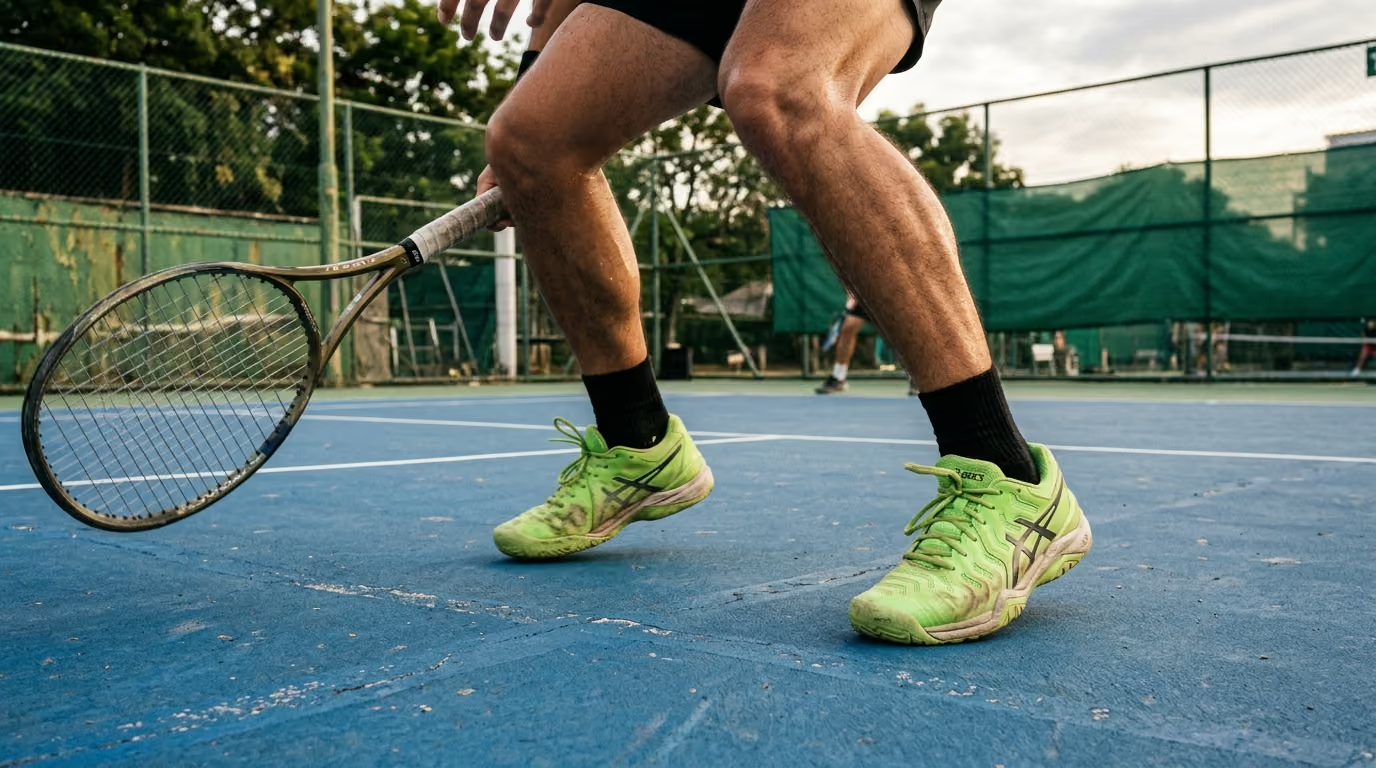
Two distinct biological timelines dictate court readiness, requiring targeted strength training to protect tendons and joints during high-intensity racquet sports matches.




Every week, thousands of court athletes finish a match and face the reality of physical stiffness. They wonder if they can continue playing their favorite sport ten years from now. They notice a sore shoulder, a tight Achilles tendon, or a first step that feels slightly slower.
Athletic longevity on the court is achieved by keeping your physical capacity higher than the physical demands of your matches. Rather than simply playing less, you must build tissue tolerance, muscle strength, and movement control through structured off-court training. This proactive approach ensures your joints and muscles can absorb the explosive forces of tennis, pickleball, and padel for decades. Let's look at how we can turn this goal into a repeatable, scientific framework.
To understand athletic longevity, we must examine how mechanical stress affects the human body. Many recreational players believe that playing matches is the only fitness work they need. However, the high forces of a competitive match can easily overwhelm a body that lacks structural preparation. We use a simple formula to assess your readiness on the court. Sport readiness equals physical capacity, technical efficiency, tactical efficiency, and recovery capacity, minus your accumulated fatigue.
Physical capacity is the absolute foundation of this equation. If your physical capacity is low, even minor fatigue can cause your movement mechanics to break down. This breakdown increases the risk of acute muscle strains and chronic joint wear. To protect your body, we focus on building a robust performance reserve.
The performance reserve is the difference between what a match requires and your maximum physical capability. Imagine a tough singles tennis match requires you to decelerate at 80 percent of your maximum capacity. If you have no reserve, any added fatigue or heat will push you to your physical limit. However, if we increase your lower-body strength, that same match now requires only 60 percent of your capacity. This difference is your safety buffer. You can read more about building this buffer in our healthy aging and athletic longevity resources.
Another critical concept is the two clocks model. Your body has two distinct biological timelines for adaptation. The cardiovascular clock represents how quickly your heart and lungs adapt to training. The tissue clock represents how quickly your tendons, ligaments, joint cartilage, and bones adapt.
Cardiovascular fitness improves relatively quickly, often within a few weeks of consistent play. Connective tissues, however, require months of progressive loading to build structural strength. When returning from a layoff, you might feel cardiovascularly ready for a three-set match. Unfortunately, your Achilles tendon or patellar tendon is still weeks behind in its adaptation. This mismatch is a major cause of early-season tendon injuries.
As we age, our bodies undergo predictable physical changes that affect athletic performance. Understanding these changes allows us to design training programs that target our vulnerabilities. It is a mistake to assume that simply playing matches will prevent these age-related declines.
Research on master athletes reveals important trends about physical decline. A key study of master athletes aged 37 to 90 found that peak aerobic and anaerobic power declined by approximately 7 to 14 percent per decade. This rate of decline was similar across power athletes, endurance athletes, and sexes. Another study compared rowing athletes to powerlifters over several decades. Rowing performance declined by 29 percent from age 25 to 85. Powerlifting performance declined by about 3 percent annually during the fourth decade, and approximately 1 percent annually after that.
These findings show that strength and power decline more rapidly than endurance. If you only play your sport, you may maintain some aerobic fitness, but you will lose the strength needed for explosive movement. This loss of strength directly compromises your ability to decelerate and change direction safely on court.
Strength and power are related but distinct concepts. Strength is the maximum force your muscles can produce. Power is how quickly you can produce that force. In court sports, power is what determines your first-step quickness and your recovery after a deep lunge.
Longitudinal research over a 4.5 year period in master athletes showed measurable declines in peak relative power and jump height. This study noted similar changes in both male and female athletes. Fortunately, systematic reviews show that targeted power training improves functional capacity in older adults. This type of training helps maintain balance and reduces the risk of falls more than traditional slow resistance training.
To maintain your physical capabilities, you must train both strength and power. A mature physical program should include heavy strength movements alongside faster, lighter exercises. This combination prepares your muscles and tendons for the rapid deceleration forces of court play.
In addition to strength, we must address reactive balance. Static balance is the ability to stand on one foot on a flat floor. Reactive balance is the ability to maintain control when you hit an unexpected bad bounce or must reach for a wide shot. The World Health Organization recommends that older adults perform varied activities emphasizing functional balance and strength on three or more days per week. This consistent balance training keeps your nervous system sharp and ready for unpredictable court movements.
Every racquet sport places unique physical demands on your joints and connective tissues. To prevent injury, we must understand where these injuries typically occur. The data shows clear patterns depending on your sport, age, and exposure level.
A comprehensive review of tennis injuries found that the lower extremities are the most common site of injury. The upper extremities and the trunk follow closely behind. The review also reported that injury risk increases steadily with age. The risk rises from 0.01 injuries per player per year in young children to 0.5 injuries per player per year in players over 75.
In the lower limbs, the most common issues are calf strains, Achilles tendinopathy, and plantar-foot pain. The rapid acceleration and deceleration of court play place intense tension on the calf-complex. Patellar tendinopathy and knee meniscus symptoms are also frequent. These joint issues often arise from poor eccentric strength in the quadriceps, which forces the knee joint to absorb too much impact. Read about managing these risks in our injury prevention resources.
Upper-limb injuries in tennis are often related to overhead strokes and serves. Rotator cuff irritation, biceps tendon issues, and lateral elbow pain are highly prevalent. These issues are rarely isolated to the shoulder or elbow joint alone. Instead, they often stem from a breakdown in the kinetic chain. If your legs or core muscles tire during a match, you will use your arm to force ball speed. This compensation pattern overloads the delicate tendons of the shoulder and elbow.
Pickleball presents a different injury profile, particularly for older adults. A study of 237 older pickleball players found that over 32 percent reported an injury during the previous year. Lower-extremity injuries made up nearly 58 percent of these cases, while muscle and tendon issues accounted for nearly 62 percent. National estimates of pickleball-related injuries presenting to US emergency departments rose from 1,313 in 2014 to 24,461 in 2023.
Researchers note that most pickleball injuries in emergency departments result from falls. The smaller court size encourages players to stay close to the kitchen line. This positioning requires frequent backward steps and lateral shuffling, which can lead to trips and falls if balance is compromised. Therefore, older pickleball players must prioritize dynamic balance and backward-movement training.
To build a body that can handle the court, you need a structured weekly training plan. This plan should supplement your play rather than compete with it. We must prioritize movements that strengthen our kinetic chain and build tissue tolerance.
A general strength program should target several key movement patterns. First, incorporate the squat or sit-to-stand pattern. This movement strengthens the quadriceps and glutes, which are essential for deep lunging on court. Perform three sets of eight to twelve repetitions twice per week.
Second, include a hip hinge pattern, such as the Romanian deadlift. This exercise targets the hamstrings and glutes, which act as your primary deceleration brakes. Keep your back straight, hinge at the hips, and feel the stretch in your hamstrings before returning to a standing position.
Third, prioritize single-leg stability with split squats or step-ups. Court sports are played primarily on one leg at a time. Strengthening each leg individually improves your pelvic control and reduces the risk of hip and knee pain. Check our strength and conditioning resources for specific exercise progressions.
Fourth, do not neglect calf and ankle strength. You should perform both straight-knee calf raises and bent-knee calf raises. Straight-knee raises target the gastrocnemius muscle, while bent-knee raises target the deeper soleus muscle. The soleus muscle absorbs massive forces during deceleration, making it crucial for Achilles tendon health.
For the upper body, focus on rowing and pressing patterns. These exercises build strength in your upper back, shoulders, and chest. Additionally, perform external shoulder rotation exercises to strengthen the rotator cuff muscles. These small muscles stabilize the shoulder joint during fast racket swings.
Once you have established a strength foundation, you can introduce power training. Power training should be low in volume but high in movement quality. Examples include fast sit-to-stands, light medicine-ball chest passes, and low-amplitude lateral hops.
Stop any power exercise the moment your movement speed or landing control begins to decline. This ensures you train your nervous system to move efficiently without overloading your joints. You should scale these power exercises to your individual fitness level and training experience.
Finally, your weekly plan must include cardiovascular conditioning. While matches provide intense intervals, low-intensity aerobic work helps build your base endurance. This low-impact work can include cycling, swimming, or walking on an incline.
A strong aerobic system helps clear metabolic waste and accelerates recovery between hard rallies. We recommend performing one or two low-intensity aerobic sessions per week. This routine ensures you maintain endurance without adding excessive high-impact stress to your joints.
While all racquet sports share common physical demands, they differ in court size, equipment weight, and movement patterns. Tailoring your training to your specific sport is essential for long-term health. What works for a tennis player may not fully address the needs of a pickleball or padel player.
Tennis is played on a large court, requiring longer sprint distances and higher maximum speeds. The tennis ball is relatively heavy, and the racket is long, creating substantial leverage torque on your shoulder and elbow. Tennis players must prioritize shoulder rotator cuff strength and trunk rotational flexibility. They also need exceptional eccentric leg strength to handle the violent deceleration required on hard courts.
Pickleball is played on a much smaller court, which reduces the need for long sprints. However, it requires exceptionally rapid, short-distance reactions and deep knee flexion at the kitchen line. The paddle is short and light, so upper-body tendon overload is less common than in tennis. Pickleball players should focus heavily on quadriceps endurance, hip mobility, and single-leg balance. They must also practice controlled backward movement to avoid falling while chasing lobs.
Padel is played in an enclosed cage with glass walls, creating a highly dynamic environment. The sport involves constant turning, overhead play, and reacting to unpredictable wall bounces. The volume of overhead strokes, such as the bandeja and vibora, is much higher than in tennis or pickleball. Padel players must focus on thoracic spine mobility and shoulder blade control to protect their rotator cuff. They also need excellent ankle mobility to handle the frequent rotational turns on the artificial turf surface.
To compare these demands, we can look at the primary physical challenges of each sport. Tennis demands high sprint speed, shoulder torque tolerance, and eccentric braking capacity. Pickleball demands fast reaction speed, deep knee flexion, and reactive balance to prevent falls. Padel demands thoracic rotation, shoulder overhead endurance, and multi-directional agility. By understanding these differences, you can adjust your off-court training to target the specific stresses of your chosen sport.
To keep playing your sport for years, you must treat recovery as an active part of your training. Recovery is the process by which your muscles, tendons, and joints rebuild after the stress of a match. Without sufficient recovery, your body remains in a state of chronic fatigue, which increases your injury risk.
In our experience, active recovery is the key to maintaining athletic longevity. I remember finishing a tough two hour padel match on a cold Tuesday night and waking up the next morning feeling like my lower back was locked in concrete. For a long time, I just accepted this as the price of playing hard in my forties. But once I started spending just ten minutes on targeted hip mobility before heading to the club, the stiffness almost completely vanished. It taught me that we do not have to accept pain as a default state of aging. You can read more about these movement strategies in our mobility and movement resources.
A practical way to manage your training load is the 24-hour response rule. After a demanding match or training session, pay close attention to how your body feels over the next 24 hours. Some muscle soreness is normal and indicates that your muscles are adapting. However, if you experience joint pain or deep tendon stiffness the next morning, the load was likely too high.
If your joints feel stiff or painful, reduce the volume or intensity of your next session. This simple feedback loop prevents you from stacking excessive stress on top of unrecovered tissues. It is a highly effective way to manage your workload without relying on complicated mathematical formulas.
Sleep is another non-negotiable pillar of active recovery. During deep sleep, your body releases growth hormones that repair tissue damage and strengthen your immune system. Aim for seven to nine hours of quality sleep each night. If you have a poor night of sleep, consider reducing the intensity of your next workout or focus on light technical drills instead of hard matches.
Nutrition and hydration also play a major role in tissue health. Ensure you consume adequate protein throughout the day to support muscle repair. Hydrate consistently before, during, and after matches to keep your fascia and tendons pliable. To learn more about optimizing your post-match habits, explore our recovery science resources.
Applying these theoretical frameworks to real-world scenarios helps us understand how to manage training over time. Every player brings a unique physical history and training volume to the court. Let's look at five common case patterns we observe in mature athletes.
Consider a 55-year-old tennis player who competes in multiple regional tournaments. They have excellent cardiovascular endurance and can play three sets of singles without feeling out of breath. However, they perform no structured strength training off the court. They suffer from recurring calf strains and chronic Achilles tendon pain that limits their training consistency.
This player's cardiovascular capacity is highly developed, but their tissue capacity is dangerously low. The high-speed acceleration and deceleration of singles matches place massive eccentric loads on the calf muscles and Achilles tendon. Without off-court resistance training, these tissues cannot handle the repetitive stress. This creates a clear mismatch where the sport's mechanical demands exceed the player's tissue tolerance.
To address this mismatch, we must temporarily reduce their match play volume and introduce progressive resistance exercises. We start with slow, heavy calf raises on a leg press machine to build tendon stiffness. We also add Romanian deadlifts to strengthen the hamstrings and glutes, which helps reduce the braking load on the lower leg. Gradually, we reintroduce light plyometrics and short court sprints.
The key lesson here is that playing your sport is not enough to prepare your tissues for the sport itself. You must build structural strength off the court to protect your joints and tendons from the high-force demands of competition. This systematic approach is covered extensively in our strength and conditioning resources.
Now let's look at a 62-year-old player who lifts heavy weights twice per week, plays singles tennis three times per week, and adds weekend tournaments. They are highly dedicated to their fitness but suffer from persistent fatigue, declining match quality, and chronic joint soreness. They struggle to sleep through the night and feel constantly stiff when they wake up.
This player is a classic example of excessive training volume combined with poor recovery management. While their strength training and match play are beneficial individually, the total cumulative stress is overwhelming their body's ability to adapt. Their autonomic nervous system is stuck in a sympathetic state, which impairs tissue healing and disrupts their sleep cycles. High cortisol levels can also hinder tendon collagen synthesis, leading to chronic joint irritation.
To resolve this, we must reorganize their weekly training schedule to avoid stacking high-intensity sessions. We reduce their strength training volume to a maintenance level during dense competitive periods. We also replace one high-intensity singles match with a low-impact active recovery session, such as easy cycling or swimming. Finally, we establish a strict wind-down routine before bed to improve their sleep quality.
The lesson is that your body does not adapt to the training you perform; it adapts to the training you can recover from. Balancing your weekly load is essential for protecting your joint health and maintaining high performance over time. Explore our recovery science resources to learn how to manage your recovery variables.
Imagine a 68-year-old pickleball player who plays doubles four times per week. They have great cardiovascular health and enjoy the social aspect of the game. However, they have poor single-leg balance and rarely practice moving backward on the court. Recently, they have had several near-falls while trying to chase lobs over their head.
This player has adequate endurance but lacks the reactive balance and motor control needed for safe movement. In pickleball, the short court demands rapid lateral shifts and sudden backward retreats. If your central nervous system cannot process visual and proprioceptive inputs quickly, you will lose your balance when moving backward. This lack of control is a primary contributor to fall-related injuries in older pickleball players.
Our intervention focuses on improving their single-leg stability and spatial awareness. We introduce dynamic balance drills, such as standing on one leg while throwing a tennis ball against a wall. We also teach them how to perform a proper drop-step to move backward safely, rather than running straight back. Finally, we add ankle-reactivity exercises to improve their ability to recover from unexpected trips.
This case shows that cardiovascular fitness does not protect you from fall risks. You must train balance and spatial movement patterns dynamically to ensure safety on the court.
Consider a 50-year-old racquet sports player who returns to the court after a six-month break due to a busy work schedule. Feeling enthusiastic, they immediately resume their previous schedule of playing three high-intensity matches per week. Within two weeks, they develop severe patellar tendinopathy and acute shoulder pain that forces them to stop playing again.
This player made the common mistake of assuming their previous physical capacity was still present. During a six-month layoff, muscle strength, tendon stiffness, and joint tolerance decline significantly. While their cardiovascular system might recover quickly, their connective tissues are completely unprepared for the sudden return to high-intensity loading. The tissue clock was ignored, leading to rapid overuse injuries.
We rebuild this player using a structured, six-week progressive re-entry program. During the first two weeks, they perform light technical hitting and low-intensity footwork drills for only twenty minutes per session. We also introduce basic strength exercises to rebuild muscle mass in their legs and shoulders. Over the next four weeks, we gradually increase match duration and intensity while monitoring their 24-hour symptom response.
The lesson is that previous fitness is not the same as current tissue tolerance. You must respect the slower adaptation rate of your tendons and bones when returning to play after any significant layoff.
Finally, let's examine a 70-year-old doubles player who has experienced a natural decline in maximum sprint speed. Despite this physical change, they remain highly competitive and rarely suffer from injuries. They achieve this longevity through exceptional anticipation, positioning, and tactical efficiency.
This player demonstrates how tactical longevity can compensate for physical changes. Instead of trying to chase down every ball with maximum effort, they read their opponent's paddle face and body language to anticipate the shot early. They use efficient court positioning to reduce the total distance they must cover during a rally. They also communicate clearly with their doubles partner to share court coverage strategically.
By reducing their physical exertion during play, they place less stress on their joints and muscles. This tactical conservation of energy allows them to maintain high-quality movement late in matches. It also reduces their recovery time between playing sessions, making their sport highly sustainable.
This case proves that competitive longevity is not just about physical capacity. It is also about playing smarter. By combining structured physical preparation with tactical efficiency, you can continue to enjoy competitive matches at any age.
Many court athletes make simple training mistakes that limit their athletic longevity. These errors often stem from popular fitness myths or a lack of understanding of sports science. Recognizing these pitfalls can help you avoid unnecessary injuries and keep you playing.
The first common pitfall is relying solely on matches for physical fitness. Many players believe that playing three or four times per week is all they need to stay in shape. However, match play does not provide the progressive resistance needed to maintain muscle mass and bone density. Over time, this approach leads to muscle imbalances and joint overload as your sport demands exceed your tissue capacity.
The second pitfall is believing that static stretching will solve every injury. When a tendon or muscle feels tight, our instinct is to stretch it. However, chronic tightness is often a sign of muscle weakness rather than a lack of flexibility. Stretching a weak, overloaded tendon can actually irritate the tissue further. Instead of excessive stretching, focus on building progressive strength to improve tissue tolerance.
The third pitfall is practicing complete rest for joint and tendon pain. Resting on the couch for several weeks may temporarily reduce your symptoms. However, complete inactivity makes your muscles and tendons weaker and less prepared for the court. When you return to play, the original pain often returns immediately. The consensus in physical therapy is to use symptom-guided, progressive loading to rebuild tissue strength.
The fourth pitfall is returning to your old volume too quickly after a layoff. Whether you took time off for a vacation, illness, or injury, your body loses capacity quickly. Your cardiovascular fitness may return in a few weeks, but your tendons take much longer to adapt. Always use a gradual re-exposure plan to rebuild your playing volume and intensity step-by-step.
While a proactive self-care routine is highly effective, you must recognize when an injury requires professional evaluation. Trying to push through certain physical symptoms can lead to long-term tissue damage or serious health complications. Knowing when to see a qualified healthcare provider is essential for your athletic longevity.
There are several red flag symptoms that demand immediate medical attention. First, if you experience chest pain, pressure, or tightness during play, stop immediately and seek medical care. Unexplained dizziness, lightheadedness, or fainting during or after a match are also serious cardiovascular warnings.
Second, pay attention to sudden and severe joint swelling. If a knee, ankle, or shoulder swells rapidly after a specific movement, it may indicate a structural ligament or meniscus tear. An inability to bear weight on a leg after a twist or fall is another clear sign that you need a professional diagnosis.
Third, watch for neurological symptoms such as sharp, radiating pain down your leg or arm. Tingling, numbness, or sudden muscle weakness in your extremities can indicate nerve compression in your spine. These symptoms should never be ignored or self-managed with stretching.
Finally, seek professional guidance if you experience pain that steadily worsens over several weeks. If your discomfort does not improve despite modifying your workload and focusing on recovery, a physical therapist can help. They can identify specific movement compensations and design a safe, individualized rehabilitation program.
To turn this comprehensive guide into an active, weekly plan, use this simple checklist. These steps will help you build your physical capacity, protect your joints, and extend your playing years.
Follow Evercourts for practical insights on tennis, pickleball and padel performance, movement, recovery and healthy ageing. Stay connected for new articles, research-led guidance and ideas to help you play well and keep playing for years.


Read practical guidance for better movement, smarter preparation and a game that keeps working for you.
explore the Blog