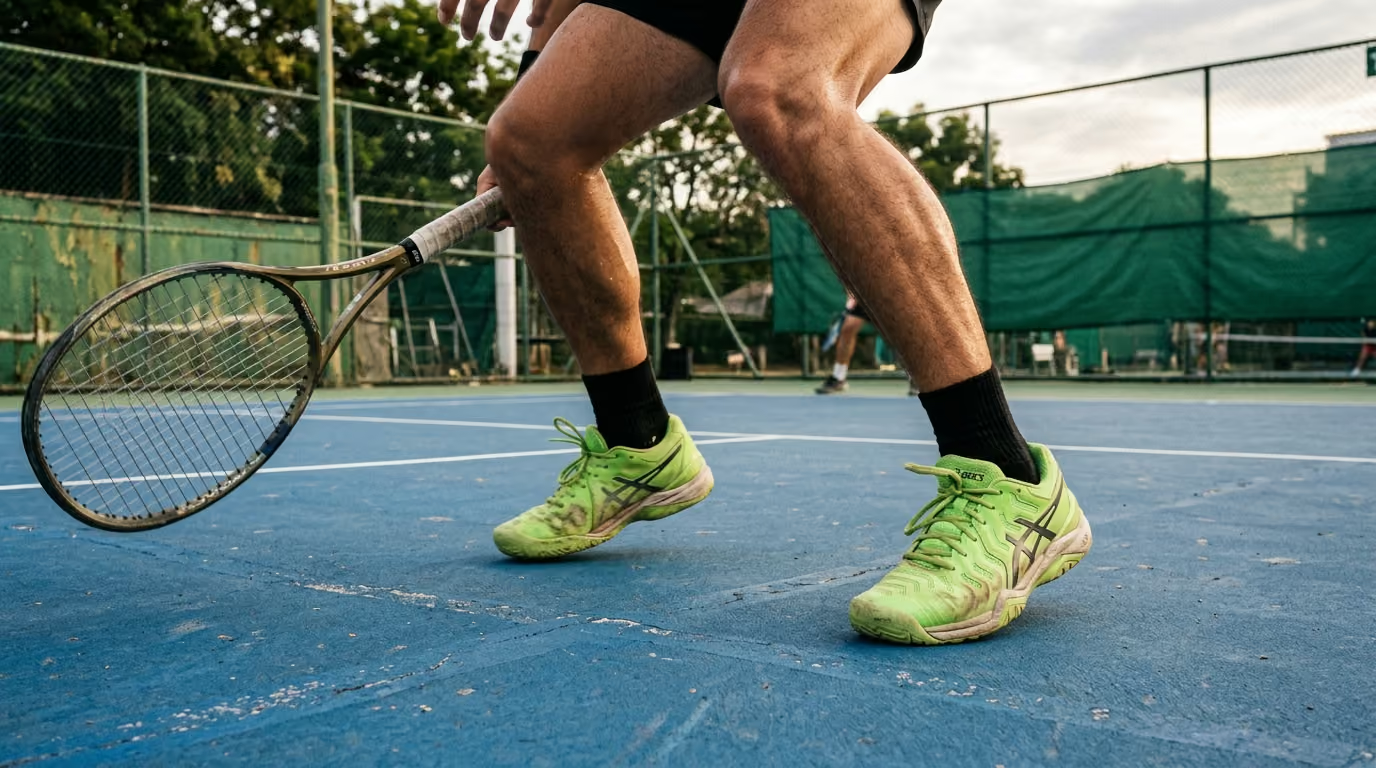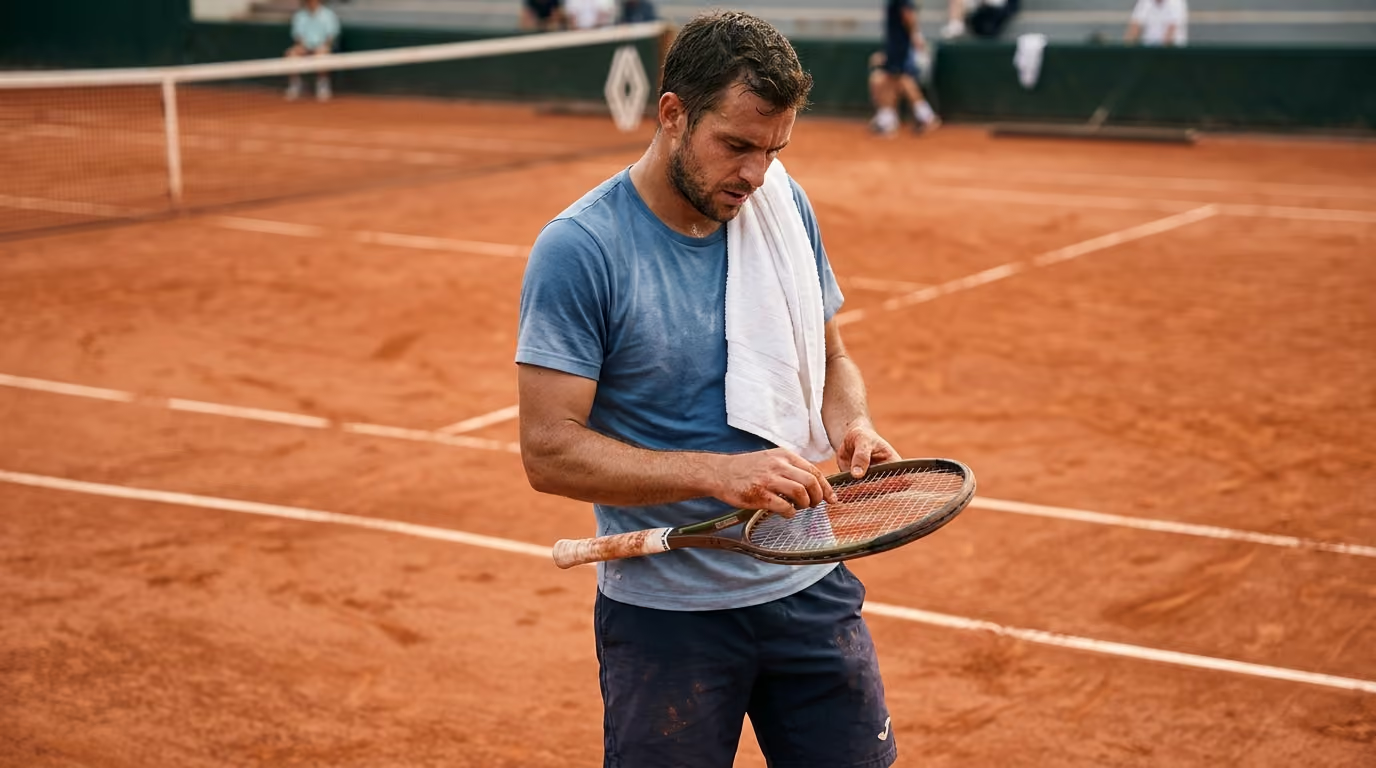

When a racquet sports player needs to reset their focus and strategy between points, a structured routine helps manage pressure and improve performance.




A between-point routine is a structured sequence of actions, thoughts, and physiological adjustments performed between rallies. It is not a superstitious ritual designed to control external luck, nor is it a rigid script that makes your play mechanical. Instead, it is a deliberate mental and physical reset that helps you manage pressure. This guide provides a comprehensive framework to help you build a repeatable routine on the court.
A successful between-point routine uses a structured sequence of emotional resetting, deep breathing, tactical selection, and visual focus to bridge the gap between points. By standardizing this brief window, players can lower performance anxiety, improve spatial awareness, and execute their next shot with absolute commitment. Implementing this habit consistently ensures that your mental state remains stable regardless of the score or previous errors.
To understand how routines influence performance, we can look at sport psychology research. A comprehensive meta-analysis on pre-performance routines evaluated thirty-three articles and sixty-one intervention samples across fifteen sports. This study analyzed how structured behaviors affect athletes under varying levels of pressure. The researchers defined these routines as sequences of task-relevant thoughts and actions.
The findings showed that routines provide clear, measurable benefits to performance. In pre-post studies, athletes using a routine showed a small but significant standardized performance improvement of 0.31. When researchers looked at experimental studies under low pressure, the effect size rose to 0.64. Under high-pressure conditions, the effect size increased further to 0.70.
However, the scientific evidence also contains important caveats and uncertainties. The statistical variance in the high-pressure studies was high, with an I-squared value of 70.62 percent. The 95 percent prediction interval for these pressure studies ranged from negative 0.54 to 1.95. This wide range shows that a routine does not guarantee success for every individual in every new setting.
Additionally, the research highlights some practical limitations of these studies. Only five of the nineteen pressure samples involved actual competitive matches. Most of the tasks studied were self-paced, closed skills, which means we cannot assume the same effects for externally paced actions. There was also a general lack of long-term follow-up measurements in the analyzed research.
Despite these limits, targeted interventions show promising results in racquet sports. A study of twenty-nine tennis players examined second-serve performance under low and high pressure. The intervention group practiced a non-automated routine for four weeks. While both groups experienced higher subjective stress, the routine group maintained their performance under pressure, whereas the control group declined.
Another intervention study showed that structured routines positively affect service-game outcomes. Players who implemented pre-service routines felt more capable and won more service games. The researchers found that mental toughness, combined with an ability to manage errors, predicted overall success. This indicates that routines help players process mistakes quickly.
We must also acknowledge that simply going through the motions is not enough. An observational study of four elite tennis players found no automatic performance increase from routines. The players using routines had a 66 percent first-serve success rate, while those without had 69 percent. This suggests that the quality, personal fit, and consistency of the routine matter more than its mere presence.
To build a routine that survives competitive pressure, you should organize your actions into three distinct phases. This structured progression is known as the reset-plan-commit framework. Each phase serves a unique physical and psychological purpose. By practicing these phases, you can replace emotional reactivity with purposeful execution.
The reset phase begins the moment a point ends. Its primary goal is to close the door on the previous rally, whether you won or lost. Instead of immediately reacting to the outcome, you must deliberately transition your attention. This prevents lingering frustration from bleeding into your next performance.
To execute a successful reset, start by physically turning away from the net. Walk toward the back fence, your towel, or your starting position. This movement creates a physical barrier between you and the previous play. Release the tension in your hands by shifting your racket to your non-dominant hand.
Use this physical transition to label the previous point quickly. You might silently say words like next, late, or good pattern. This label should be neutral and brief, not an extended tactical analysis. The goal is to clear your working memory so you can focus on the present moment.
Once you have reset your emotions, you must identify your next tactical intention. This phase should focus on clear actions rather than desired outcomes. Instead of thinking about winning the point, focus on where to place the ball. You want to select a simple pattern that matches your current position.
Your tactical plan must be highly specific. For example, you might decide to serve wide and attack the next short ball. If you are receiving, your plan might be to hit a deep return through the middle. Keeping the plan simple reduces cognitive overload when the ball is in play.
This phase requires you to separate controllable factors from uncontrollable outcomes. You cannot control your opponent's reaction, but you can control your target. Focus your mental energy entirely on your execution, spacing, and footwork. This shift in attention builds a sense of control and self-efficacy.
The final phase is where you transition from thinking to executing. Once you have a plan, you must silence your internal dialogue. Any lingering tactical debates will only hesitate your physical movement. You must commit fully to your chosen action before you begin.
To signal this commitment, use highly specific physical and visual anchors. Settle your feet into your service or return stance. Fix your eyes directly on your target or the ball. Take a final breath to release any remaining muscular tension.
Many players use a consistent physical action to mark this moment. You might bounce the ball a specific number of times. You might adjust your posture or tap the court with your racket. This action serves as your final green light to compete.
Breathing is one of the most accessible tools for managing your physical state on the court. It acts as a direct link to your autonomic nervous system. By changing your breathing pattern, you can influence your heart rate and muscle tension. However, breathing is not a magic solution that guarantees complete calmness.
A highly practical breathing sequence involves one comfortable inhale followed by a longer exhale. The extended exhale is particularly effective for releasing physical tension. You should avoid taking shallow, rapid breaths, as this can increase anxiety. Keep your breathing natural rather than forced or theatrical.
Your breathing objective should change depending on your internal state. If you feel rushed or angry, use a long, slow exhale to down-regulate. If you feel flat, use a sharper, quicker inhale to increase your physical activation. The goal is to reach your functional zone of energy, not absolute relaxation.
Self-talk can be divided into motivational and instructional categories. Motivational self-talk includes phrases like you can do this or keep fighting. While these can lift your spirits, research suggests that instructional self-talk is more effective for technical execution. Instructional cues tell your body exactly how to move.
An effective cue word should be short, positive, and action-oriented. Examples include early, legs, lift, shape, or through. These words connect directly to your technical goals for the upcoming shot. They prevent your mind from wandering to negative outcomes or past mistakes.
Avoid using self-talk that evaluates your performance or demands specific outcomes. Saying I must win this game creates unnecessary performance pressure. Instead, say high margin or target deep to guide your actions. Keep your internal language consistent and simple.
Visual cues are a powerful way to direct your attention outward. Before you play a point, your eyes should be fixed on a specific target. This could be a spot in the service box, a gap in the court, or the ball itself. Choosing a clear target prevents your eyes from wandering to the crowd or the scoreboard.
The concept of the quiet eye is highly relevant to racquet sports. This term refers to the final visual fixation on a target before you execute a movement. Research indicates that elite players maintain this quiet eye longer than novices. It serves as a physical marker of organized, task-related attention.
To practice this, look at your target for a full second before you begin your serve. If you are receiving, fix your eyes on the ball in the server's hand. Maintain this focus until contact is made. This simple visual habit stabilizes your attention and improves your tracking.
While the underlying principles of between-point routines are identical, the execution varies across sports. Each discipline has different court sizes, pacing, and official time limits. To make your routine effective, you must adapt it to the specific rules of your sport. This ensures you stay within the legal limits while preparing.
The International Tennis Federation permits a maximum of twenty-five seconds between points. This is the most generous time window among the major racquet sports. This longer duration allows tennis players to perform a highly detailed physical and mental reset. It is particularly useful for managing physical fatigue during long, demanding matches.
For tennis players wanting to improve performance, a structured twenty-five-second routine can be broken down carefully. Use the first five seconds for emotional separation by turning your back to the net. Spend the next five seconds focused on a deep, relaxing breath. Use the next seven seconds to select your tactical target and first-ball response.
The final eight seconds should be dedicated to physical preparation and commitment. Settle into your service stance, bounce the ball, and select your cue word. If you are receiving, watch the server closely and set your feet. This systematic timing prevents you from rushing under pressure.
The International Padel Federation rules allow a maximum of twenty seconds between points. Because padel is played on a smaller court, the physical transition is faster. You do not have to walk as far to collect balls or reach your position. This means your routine must be more compact and efficient.
Additionally, padel is strictly a doubles sport, which introduces partner dynamics. Your routine must include quick, clear communication with your partner. When studying court positioning in padel, coordinating your movements between points is essential. You must quickly agree on your serving direction or return formation.
A typical padel routine involves walking back together after a rally. Exchange a single tactical phrase, such as serve middle or watch the lob. Once the plan is set, separate to your positions and take one breath. Settle into your stance and execute the point.
USA Pickleball enforces a much tighter timing structure than other racquet sports. The server must serve the ball within ten seconds after the score is fully called. This compressed window means your routine must occur before the score call begins. You cannot afford to linger or overthink once the referee or server speaks.
When applying pickleball strategy and movement, use your recovery walk to make your decisions. Choose your serve target or return plan as you walk to your position. Once you are set, the score call serves as your final attentional anchor. Treat the final number of the score as your trigger to breathe and commit.
A solid pickleball routine involves settling your feet before the score is called. Take your breath as you hear the numbers. Settle the ball on your paddle or bounce it once, then serve immediately. This proactive preparation keeps you from feeling rushed by the ten-second limit.
The size of the court and the speed of the ball heavily influence your routine's structure. In tennis, you play on a large seventy-eight-foot court with a high-bouncing yellow ball. This requires significant running, which means physical recovery must be a priority during your reset. You need the full twenty-five seconds to lower your heart rate after long, grueling baseline rallies.
In padel, the court is smaller, measuring twenty meters by ten meters, and is enclosed by glass walls. The ball bounces off the walls, keeping it in play longer and creating rapid tactical transitions. Because you are constantly moving in a confined space, physical pacing is essential. Your padel routine must focus on quick positioning adjustments and partner communication.
In pickleball, the court is even smaller, measuring forty-four feet by twenty feet, with a low-bouncing plastic ball. The rallies are often shorter but highly explosive, featuring rapid exchanges at the kitchen line. The ten-second serve rule forces a very fast competitive rhythm. Your pickleball routine must prioritize rapid mental refocusing over extended physical recovery.
Even experienced players can fall into traps when developing their on-court habits. Understanding these pitfalls can save you from frustration and help you build a more resilient system. Here are the two most common errors players make regarding their between-point routines.
Many players believe that the primary purpose of a routine is to eliminate all nervous energy. They think they must feel completely calm before they can play well. However, sport psychology research shows that subjective stress often remains high even with routine training. Trying to force yourself to feel calm can actually increase your anxiety.
The real goal of a routine is functional regulation, not total relaxation. You want to channel your energy so you can prepare and execute your next shot. Nerves are a natural response to competition and athletic challenge. Acknowledge your arousal level, use your breathing to manage it, and focus entirely on your task.
Some players design routines that contain too many steps, thoughts, and technical checks. They believe that more actions will give them more control over the point. However, extensive routines have not been shown to outperform simpler sequences in research. A complex routine is highly vulnerable to breaking down under intense pressure.
A long routine can also lead to excessive self-monitoring and mental fatigue. You might spend too much time analyzing your mechanics instead of playing naturally. Keep your routine simple, adaptable, and easy to execute. Focus on a clean reset, one tactical plan, and a single task-relevant cue.
While routines are primarily viewed as psychological tools, they also have physical benefits. How you manage the seconds between points directly impacts your muscular tension and energy levels. By incorporating deliberate physical resets, you can support your performance and athletic longevity. This pacing is a vital part of managing match-day physical demands.
In our experience, physical recovery begins during the match itself, not just after it. Managing your pacing between points is a crucial step in this process. I remember finishing a tough two hour padel match on a cold Tuesday night and waking up the next morning feeling like my lower back was locked in concrete. For a long time, I just accepted this as the price of playing hard in my forties.
But once I started spending just ten minutes on targeted hip mobility before heading to the club, and actively managing my muscle tension between points, the stiffness almost completely vanished. It taught us that we do not have to accept pain as a default state of aging. Incorporating physical resets on the court directly supports your overall athletic longevity and healthy aging. These small physical breaks accumulate over a multi-set match.
By using your routine to release your grip tension and drop your shoulders, you prevent chronic muscle tightness. Constant tension restricts blood flow and accelerates localized fatigue. Standardizing your recovery pacing also helps stabilize your heart rate variability during matches. This preservation of physical energy keeps your movement sharp and reduces the risk of fatigue-related strain.
Selecting the right instructional cue words is a personal process that requires experimentation. A cue word should act as a trigger for your muscle memory, not a technical checklist. It should summarize a complex movement pattern into a single, actionable sound. By matching your cue word to your technical weakness, you can stabilize your execution.
For example, if you frequently hit your serve long because you drop your head, use the cue tall or reach. If you tend to rush your return, use the cue early or slow. These words remind your brain of the primary technical adjustment without causing paralysis by analysis. Keep your cue words positive, short, and focused on action rather than mistakes.
A highly effective routine includes a tactical planning layer that adapts to the score. You do not need to invent a completely new game plan for every point. Instead, use the score to identify when to adjust your risk, margins, and target selection. This structured approach prevents you from making emotional decisions under pressure.
To implement this, you can divide the match scores into distinct tactical categories. Each category has its own priorities, physical requirements, and technical goals. By classifying the score, you can quickly choose the appropriate risk level. This keeps your decision-making highly systematic and repeatable.
Low-leverage points occur at the beginning of a game, such as 0-0, 15-0, or 0-15. During these moments, your primary goal is to establish a reliable physical rhythm. You want to gather valuable information about your opponent's positioning and movement. Avoid the temptation to experiment with high-risk tactical patterns early on.
Focus on hitting your high-percentage targets with clean technique. Use this time to reinforce your physical movement and tracking. Even though the immediate pressure feels low, maintain a high-quality routine. This builds the consistency you will need when the score becomes tight.
Neutral pressure points include scores like 30-30 in tennis, 3-3 in pickleball, or a tied padel game. These moments represent a critical transition in the game. Your goal is to increase mental clarity and execution rather than trying to force a winner. Focus on a familiar, high-percentage pattern that you trust.
Select a target that gives you a comfortable margin over the net and within the lines. Avoid playing the score emotionally or letting tension rush your mechanics. A clean, disciplined pattern will often provoke an error from your opponent. Keep your visual focus sharp and commit to your chosen target.
Advantage points occur when you have a lead, such as 40-30, break point, or game point. These situations offer a great opportunity to take control of the match. However, many players become passive or defensive when they smell victory. Your priority should be to preserve the tactical pattern that created the lead.
Select a clear target and have a specific plan for your first shot after the serve. Do not play safe by simply pushing the ball back passively. Instead, play smart by using your standard margins while maintaining your aggressive positioning. This balanced approach keeps the pressure on your opponent.
Defensive points occur when you are trailing, such as 0-30, 15-40, or when defending game points. In these situations, score-based urgency can cause players to rush and make poor decisions. You might feel the urge to hit an immediate winner to save the game. However, this high-risk approach usually leads to unforced errors.
Your goal during defensive points is to restore a reliable, low-risk rally pattern. Select a target that reduces your opponent's ability to attack easily. Focus on making one extra shot and extending the rally to force a mistake. Use your between-point routine to slow down your physical pace.
Deciding moments and tie-breaks carry the highest emotional weight in a match. Because of this pressure, your routine should become more concise and focused. Do not introduce new tactics or complex instructions at this stage. Stick to your primary game plan and trust your automated habits.
Reduce your tactical options to a single primary plan and a clear fallback. Use your routine to center your attention on your breathing and your visual targets. By treating these high-stress points exactly like low-leverage points, you stabilize your performance. Commitment is the key to executing under extreme pressure.
Developing a repeatable between-point routine requires a structured training progression. You cannot expect to implement a new routine perfectly during a high-stakes match without practice. By slowly increasing the pressure in training, you can build a highly resilient habit. Here is a six-stage progression to help you automate your routine.
Begin by designing your routine on paper away from the court environment. Write down the five key components of your personalized sequence. These include your physical reset action, your breathing technique, and your tactical question. Finally, select your instructional cue word and your commitment signal.
Keep the entire sequence simple and easy to remember under stress. Reviewing this written plan helps cement the structure in your mind. You can practice visualizing yourself executing these steps in your home. This mental rehearsal prepares you for the next phase of training.
Once your routine is designed, introduce it into low-pressure practice sessions. Use cooperative drills where you must perform the routine before every repetition. The focus here is on consistent execution, not on physical speed or tactical variety. Have a coach or partner watch you to ensure you complete every step.
Practice your timing to ensure it fits within the legal limits of your sport. If you are a tennis player, make sure your sequence takes less than twenty-five seconds. For pickleball players, practice serving within ten seconds of the completed score call. This builds a comfortable, unhurried rhythm.
The next stage is to practice your routine during practice matches or simulated games. Introduce specific score-based decisions to test your tactical planning. For example, play a practice set where you must state your risk level before every point. This helps you connect the score directly to your tactical intention.
Notice how your routine changes when you are leading versus when you are trailing. Work on maintaining the exact same physical structure regardless of the score. This teaches you that the routine is a stable anchor, not a reaction to pressure. Consistent execution is your primary objective.
To build a truly resilient routine, you must practice under emotionally challenging conditions. Create training scenarios that simulate common match-day frustrations. For example, start points immediately after a double fault, a missed overhead, or a disputed call. You can also practice starting points immediately after a very long rally.
Use your routine to process these negative emotions and refocus your attention. Focus on your physical reset gesture and your long, slow exhale. Notice how quickly you can transition from frustration to your next tactical plan. This stage prepares you for the unpredictable nature of competitive play.
Once your routine is stable, practice under strict, timed conditions that mimic tournament play. Use a stopwatch or a court-side clock to monitor your pacing. For tennis players, enforce the strict twenty-five-second limit between rallies. For padel players, practice completing your preparation within twenty seconds.
Pickleball players should practice serving within ten seconds after a loud, clear score call. This timed training helps you identify if your routine is too long or complex. If you are consistently running out of time, simplify your steps immediately. Your routine must fit comfortably within the legal rules of the sport.
The final stage of progression is to implement an objective evaluation framework. After your matches, rate the quality of your routine separately from the match result. Remember that you can lose a point after a perfect routine, or win a point after a poor one. Tracking your process helps you maintain a long-term perspective.
To make this evaluation easy, we suggest using a simple scoring framework. Rate each component of your routine from zero to two based on your execution. A score of zero means no reset occurred, while a score of two represents perfect execution. Compare these process scores with your serving percentages and unforced error patterns.
To ensure your routine is actually helping your game, you need a reliable way to measure its quality. Simply relying on how you feel during a match can be highly subjective and misleading. By tracking specific metrics, you can identify which areas of your routine need improvement. This analytical approach supports your physical and mental development.
To evaluate your performance, score each of the following five core components from zero to two after your practice matches. Use these criteria to calculate your total process score for each session:
By adding these scores together, you can calculate a total process score out of ten for each point. Track this score across several practice matches to monitor your consistency. Compare your highest-scoring matches with your actual performance metrics, such as first-serve percentages or unforced errors. This data-driven approach helps you see the direct connection between your routine and your play.
A standard routine is designed for normal, predictable points during a match. However, racquet sports are filled with unexpected interruptions, emotional spikes, and changing conditions. To keep your composure, you must know how to adapt your routine during these edge cases. Here are several common scenarios and how to handle them.
Making a terrible error, such as missing an easy overhead or hitting a double fault, can trigger immediate frustration. In these moments, you might feel the urge to rush into the next point to erase the mistake. This reaction almost always leads to consecutive errors and a loss of momentum. Instead, you must use a shortened, highly focused version of your reset.
Turn away from the net immediately and focus your eyes on your racket strings. Take one extended, slow exhale to drop your shoulders and release muscle tension. Name a single, simple technical correction silently, such as high elbow or early preparation. Choose a high-percentage target for the next point, and commit fully before playing.
Winning a long rally with a lucky net cord or an opponent's error can trigger a rush of excitement. While this is positive, it can also cause a sudden spike in your heart rate and muscular tension. If you rush into the next point while overexcited, you may lose your physical control. This can lead to unforced errors and a drop in concentration.
Use your standard routine structure to bring your physical activation back to your functional zone. Turn away from the net, take a slow breath, and focus on your next tactical plan. Avoid the temptation to play the next point with excessive power or high risk. Consistency is about managing your high emotions just as carefully as your low emotions.
Disputed line calls and administrative delays can easily disrupt your rhythm and focus. It is easy to get caught up in an argument or feel cheated by a call. However, once the final ruling is made, continuing to argue only hurts your own performance. You must separate the administrative issue from your next tactical decision.
Use a physical reset gesture, such as touching the racket throat or adjusting your posture, to signal the end of the dispute. Take one deep breath to release the anger and refocus your mind. State your next target and first-ball plan, then commit fully to the point. This disciplined transition prevents external drama from controlling your performance.
Playing doubles introduces the challenge of coordinating your routine with a partner. You must communicate clearly without turning the interval into an extended tactical debate. Keep your interactions brief, supportive, and focused on the upcoming point. A great communication format is target plus formation plus first-ball expectation.
For example, you might say body serve, stay back, or watch the middle seam. This keeps your partner informed and aligned with your strategy. Once the plan is agreed upon, separate quickly to perform your individual commitment routine. This collaborative approach builds trust and consistency on the court.
While a between-point routine is a powerful tool for self-regulation, it has limits. Some physical and psychological challenges require specialized, professional support to resolve safely. Knowing when to seek help is an important part of protecting your health and athletic longevity. It ensures you can continue playing the sports you love for years to come.
From a psychological perspective, pay close attention to signs of persistent distress. If you experience severe panic attacks, overwhelming performance anxiety, or chronic insomnia related to matches, consult a licensed sports psychologist. These professionals can provide evidence-based strategies tailored to your unique mental needs. They can help you address underlying anxiety that a simple on-court routine cannot resolve.
On the physical side, do not ignore persistent pain, joint stiffness, or lingering injury symptoms. If you experience sharp pain during movement, swelling, or numbness, consult a qualified physiotherapist or sports medicine physician. Our team at Evercourts emphasizes that pain is not an inevitable consequence of aging or hard play. For additional resources on managing physical health, visit our injury prevention resources page.
A qualified professional can design a personalized strength, mobility, and rehabilitation program for your needs. This proactive care helps you address physical limitations before they lead to serious injury. By combining professional physical guidance with a structured mental routine, you build a complete foundation for longevity. This integrated approach keeps you moving well and performing at your best on the court.
If your opponent plays at a very fast pace, you must protect your own rhythm. While the server controls the start of the point, the rules state they cannot serve until the receiver is ready. Use clear, non-verbal signals, such as raising your non-dominant hand, to indicate you are not set. Settle into your stance and take your breath before lowering your hand.
The core structure of your routine should remain identical, but the final commitment phase will differ. When serving, you control the ball and the timing, allowing you to use a consistent bounce and setup. When receiving, you must adapt to the server's timing and look for visual cues in their stance. Your focus should shift from your own serve mechanics to tracking the ball early.
Yes, a routine can lose its effectiveness if you perform it mindlessly. If you find yourself going through the motions without focusing, your routine has become an empty ritual. To prevent this, focus on varying the tactical content of your planning phase while keeping the structure stable. Ensure that your cue words and targets remain highly relevant to the actual match situation.
A between-point routine must fit within the short twenty to twenty-five-second window between rallies. Its purpose is a quick, immediate reset for the upcoming point. A changeover routine occurs during the ninety-second break when you change ends. This longer break allows you to sit down, hydrate, adjust equipment, and review your overall match strategy.
Follow Evercourts for practical insights on tennis, pickleball and padel performance, movement, recovery and healthy ageing. Stay connected for new articles, research-led guidance and ideas to help you play well and keep playing for years.


Read practical guidance for better movement, smarter preparation and a game that keeps working for you.
explore the Blog