
Playing racquet sports in challenging weather conditions requires systematic adaptation to physiological and tactical challenges for safety and effectiveness.




Many players believe that managing bad weather is simply a matter of mental toughness and a change of shirt. In reality, playing racquet sports in extreme conditions is a physiological and tactical challenge that requires systematic adaptation. To play safely and effectively, you must treat the weather as an active variable by adjusting your preparation, hydration, clothing, and tactics.
Environmental shifts do not merely make a match uncomfortable. They alter how your body regulates heat, how your muscles contract, and how your equipment behaves on the court. By understanding the science of weather exposure, you can protect your body while finding a competitive advantage.
To build a reliable weather strategy, you must separate simple discomfort from physiological danger. Your body experiences weather through five distinct environmental loads, each affecting your movement and stamina.
The heat load is determined by air temperature, relative humidity, radiant solar heat, and court surface temperature. High humidity impairs the evaporation of sweat, which is your primary mechanism for cooling. In contrast, the cold load involves air temperature, wind chill, precipitation, and inactive periods between matches.
The radiation load comes from ultraviolet exposure and direct glare, which can accelerate fatigue and damage skin tissue. Mechanical loads are physical disruptions like high winds, wet court paint, or slippery court debris. Finally, the altitude load involves reduced oxygen availability, faster ball speeds, and rapid dehydration.
Instead of relying on a standard thermometer, look for the Wet Bulb Globe Temperature if it is available. The National Weather Service notes that this metric combines temperature, humidity, wind speed, and solar radiation. This makes it far more accurate than a simple "feels like" temperature for outdoor athletes.
A simple traffic-light model can help you decide when to play and when to modify your session:
This represents normal play conditions. You can follow your standard warm-up, normal hydration, and basic sun protection.
Conditions require moderate adjustments. You should shorten your warm-up, increase rest breaks, seek shade, and monitor your hydration closely.
This zone requires substantial modification or postponement. You should reduce your playing time, schedule matches during cooler hours, and establish strict medical oversight.
You must cancel or suspend play immediately. The environmental hazards in this zone cannot be controlled safely.
Using these parameters is a core part of active injury prevention resources for players of all ages. Weather protocols differ by sport, venue, and age group, so always consult local guidelines before competing.
When you exercise in hot weather, your body pumps more blood to the skin to release heat. This process reduces the amount of oxygen-rich blood available to your working muscles. If the air is highly humid, your sweat cannot evaporate, and your core temperature rises rapidly.
According to consensus guidelines published in the British Journal of Sports Medicine, repeated heat exposure over a week or two is the most effective way to improve tolerance. This process, known as heat acclimatization, helps your body sweat earlier, increases your blood volume, and lowers your heart rate during play. The International Tennis Federation suggests a ten-day acclimatization plan for players traveling to hotter climates:
Pacing yourself in the heat is about protecting the second half of your match. Research shows that early over-exertion in hot weather causes a late-match collapse as thermal strain and dehydration accumulate. You should shorten points when a safe opportunity exists, but avoid reckless, low-probability shots. Use changeovers to lower your heart rate, apply ice towels, and rest in the shade.
To keep your hydration precise, do not guess how much fluid you need. Weigh yourself before and after a practice session in the heat to calculate your individual sweat rate. For every pound of body weight lost during play, you should consume about twenty ounces of fluid.
During mild conditions, drinking two hundred milliliters of water at each changeover is usually sufficient. In hot and humid weather, this can rise to four hundred milliliters per changeover, depending on your individual sweat rate.
Be careful not to over-drink, as consuming too much plain water can cause a dangerous drop in blood sodium levels. To maintain fluid balance, use electrolyte drinks during prolonged sessions, especially if you are a salty sweater.
Cold weather presents a different set of physical demands on the court. Cold temperatures reduce muscle elasticity, slow down nerve conduction, and increase joint stiffness. This makes your body less responsive during rapid changes of direction.
I remember finishing a tough two hour padel match on a cold Tuesday night and waking up the next morning feeling like my lower back was locked in concrete. For a long time, I just accepted this as the price of playing hard in my forties. But once I started spending just ten minutes on targeted hip mobility before heading to the club, the stiffness almost completely vanished. It taught me that we do not have to accept pain as a default state of aging.
To avoid this kind of restriction, you should use dedicated mobility and movement guidelines before stepping onto a cold court. Static stretching is not enough to prepare cold muscles for explosive movement. Instead, use a progressive, dynamic warm-up that raises your core temperature before you hit a single ball.
According to the American College of Sports Medicine, an effective cold-weather clothing system relies on three distinct layers:
This layer sits directly against your skin. It should be made of synthetic fabrics that wick sweat away from your body.
This layer traps warm air near your torso. Materials like fleece or lightweight wool work best for this purpose.
This shell protects you from cold wind and light rain. It should be breathable so that moisture can escape during play.
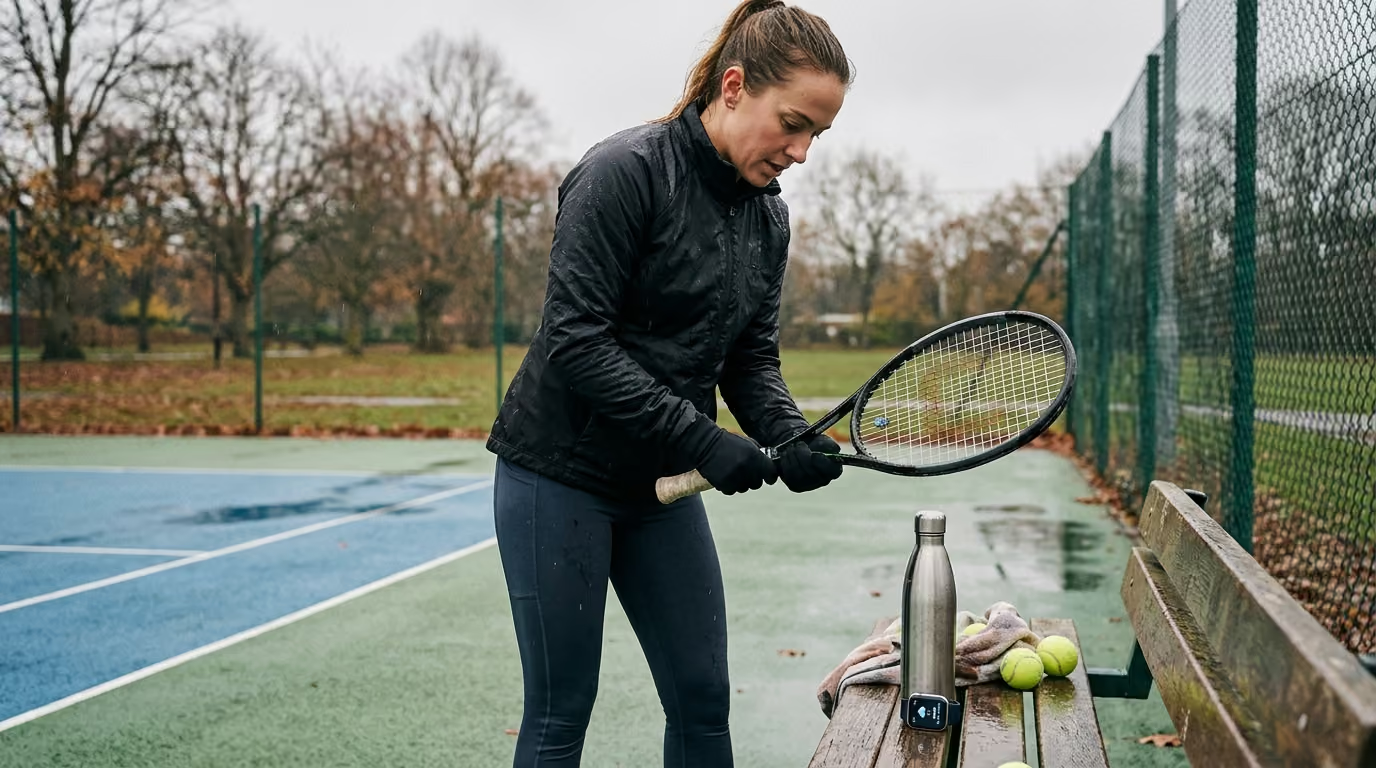
Keep your extremities protected by wearing a warm hat, thermal socks, and lightweight gloves. If your socks become damp with sweat, change them immediately during a match. Wet fabrics conduct heat away from your skin seventy percent faster than dry ones, increasing your risk of cold injury.
Wind is a major physical disruption that can turn a match into an exercise in frustration. Instead of fighting the wind, you must adapt your technique and tactical expectations.
When playing with the wind at your back, the ball will travel faster and deeper than usual. To compensate, use more topspin to pull the ball down into the court and aim for larger margins inside the lines. When playing into the wind, the ball will slow down significantly after the bounce. You can use this to drop the ball short or force your opponent to generate all their own power.
Wind also makes high ball tosses highly unpredictable on the serve. If the wind is swirling, shorten your toss slightly and strike the ball earlier in its ascent. Keep your feet moving with constant, small adjustment steps rather than committing to a static stance too early.
Sunlight presents both a safety hazard and a visual challenge on outdoor courts. The World Health Organization recommends active sun protection whenever the ultraviolet index rises to three or higher. Apply a broad-spectrum sunscreen at least twenty minutes before you step onto the court, and reapply it after two hours of heavy sweating.
To maintain visual performance, choose sunglasses designed specifically for racquet sports. Look for lightweight frames with non-slip nose grips that remain stable when you sprint. Polarized lenses can reduce glare off court surfaces, but make sure they do not distort your depth perception.
Playing at high altitudes changes both your physical capacity and the flight of the ball. At higher elevations, the atmospheric pressure is lower, which means there are fewer oxygen molecules in every breath you take.
According to the Centers for Disease Control and Prevention, you should limit your physical exertion during your first forty-eight hours at altitude. Your heart rate and breathing frequency will be higher at any given workload compared to sea level. You will also lose more moisture through respiration, making early hydration essential.
The thin air at altitude offers less aerodynamic resistance, meaning the ball will travel faster and fly further. To keep the ball in play, focus on these physical adjustments:
To prepare your cardiorespiratory system for these unique demands, focus on consistent athletic preparation and strength conditioning during your training weeks. Building a strong aerobic base at sea level makes the transition to higher altitudes much more manageable.
While environmental variables affect all athletes, the specific demands of tennis, pickleball, and padel require distinct adaptations. The physical dimensions of the court and the materials of your equipment dictate how you should respond.
Tennis involves the largest court dimensions and the longest match durations of the three sports. This means your cardiovascular system faces a sustained endurance challenge, making individualized hydration plans critical.
The high yellow balls are highly susceptible to wind resistance, which can carry deep lobs well past the baseline. You must be prepared to adjust your court positioning, often standing further back to account for wind gusts.
Pickleball is played with a lightweight, hollow plastic ball that is extremely sensitive to wind and cold. In cold temperatures, these plastic balls become brittle and can crack or feel like solid rocks on impact.
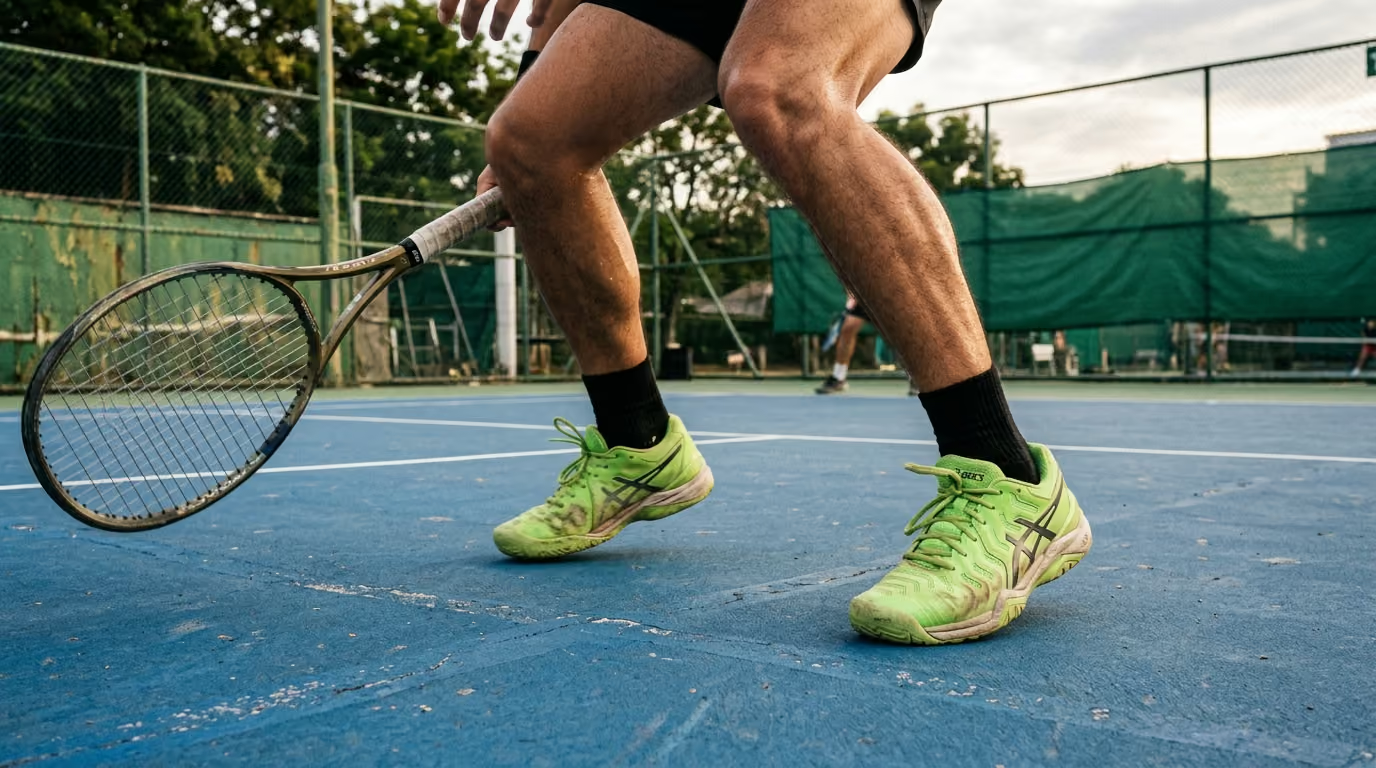
The court surface is often dark asphalt or concrete, which absorbs solar radiation and radiates heat directly into your feet. You must wear shoes with supportive, heat-resistant soles and focus on fast, compact hand exchanges at the non-volley zone.
Padel is unique because it is played within a closed court surrounded by glass walls and metal mesh. In high humidity, moisture condenses on the glass, causing the ball to slide downward unpredictably after impact.
In cold weather, the ball loses its elasticity and bounce, making it much harder to smash the ball out of the court. You must adjust your tactical play to use lower, spin-heavy shots that slide along the damp glass, forcing your opponents into difficult defensive positions.
Many players make repetitive errors when managing weather changes, often due to athletic myths or poor preparation. Recognizing these pitfalls can protect your health and save your match.
The most common misconception is believing that heavy sweating always means your body is cooling down. If the air is highly humid, sweat simply pools on your skin without evaporating, which does not lower your core temperature. If you notice your clothing is soaked but your skin feels hot and dry, you must stop playing and cool down immediately.
Another common mistake is relying solely on your sense of thirst to guide your hydration. By the time you feel thirsty, you may already be mildly dehydrated, which can impair your reaction time.
However, do not swing to the opposite extreme by drinking excessive amounts of plain water without electrolytes. This can lead to hyponatremia, a dangerous condition that causes confusion, muscle weakness, and nausea.
In cold weather, many players assume that wearing a single heavy jacket is the best way to stay warm. A heavy jacket often traps sweat against your body, which then cools rapidly when you stop moving.
Instead, use a smart layering system that you can adjust easily during changeovers. This keeps your core temperature stable without causing you to overheat during intense rallies.
After a grueling match in challenging conditions, use appropriate recovery science insights to restore your body. Rehydrate slowly, consume easily digestible carbohydrates, and allow your muscles to cool down before traveling home.
Playing in extreme weather forces your body to work much harder to maintain its internal balance. This extra strain accelerates glycogen depletion, increases muscle tissue breakdown, and places a heavy load on your cardiovascular system.
In hot weather, your heart rate remains elevated long after the match has ended. This prolonged cardiovascular strain requires a longer period of passive rest before your next training session.
You should prioritize active cooling, high-quality sleep, and anti-inflammatory foods to help your body rebuild damaged tissues. Avoid drinking alcohol immediately after a hot match, as it dehydrates your cells and delays muscle recovery.
In cold weather, your joints and tendons experience higher mechanical stress due to reduced blood flow. This can lead to lingering tightness in your lower back, knees, and shoulders.
To protect your joints, schedule a light recovery session the day after a cold match, focusing on gentle movement and deep hydration. Keeping your muscles warm and mobile prevents temporary stiffness from turning into a chronic overuse injury.
While minor fatigue is normal after a tough match, you must be able to recognize the signs of a medical emergency. Knowing when to stop play can prevent serious physical damage or long-term health complications.
Stop playing immediately and seek medical attention if you experience any of the following symptoms:
To protect your long-term athletic longevity, monitor your daily wellness and track how your body responds to different climates. Reviewing resources on player health articles can help you identify subtle warning signs before they become major medical issues. Never let competitive drive override your physical safety.
Playing racquet sports in challenging weather is about adaptation, preparation, and self-awareness. By treating the climate as a tactical variable, you can protect your body, outsmart your opponents, and continue playing the sports you love for years to come.
Follow Evercourts for practical insights on tennis, pickleball and padel performance, movement, recovery and healthy ageing. Stay connected for new articles, research-led guidance and ideas to help you play well and keep playing for years.


Read practical guidance for better movement, smarter preparation and a game that keeps working for you.
explore the Blog