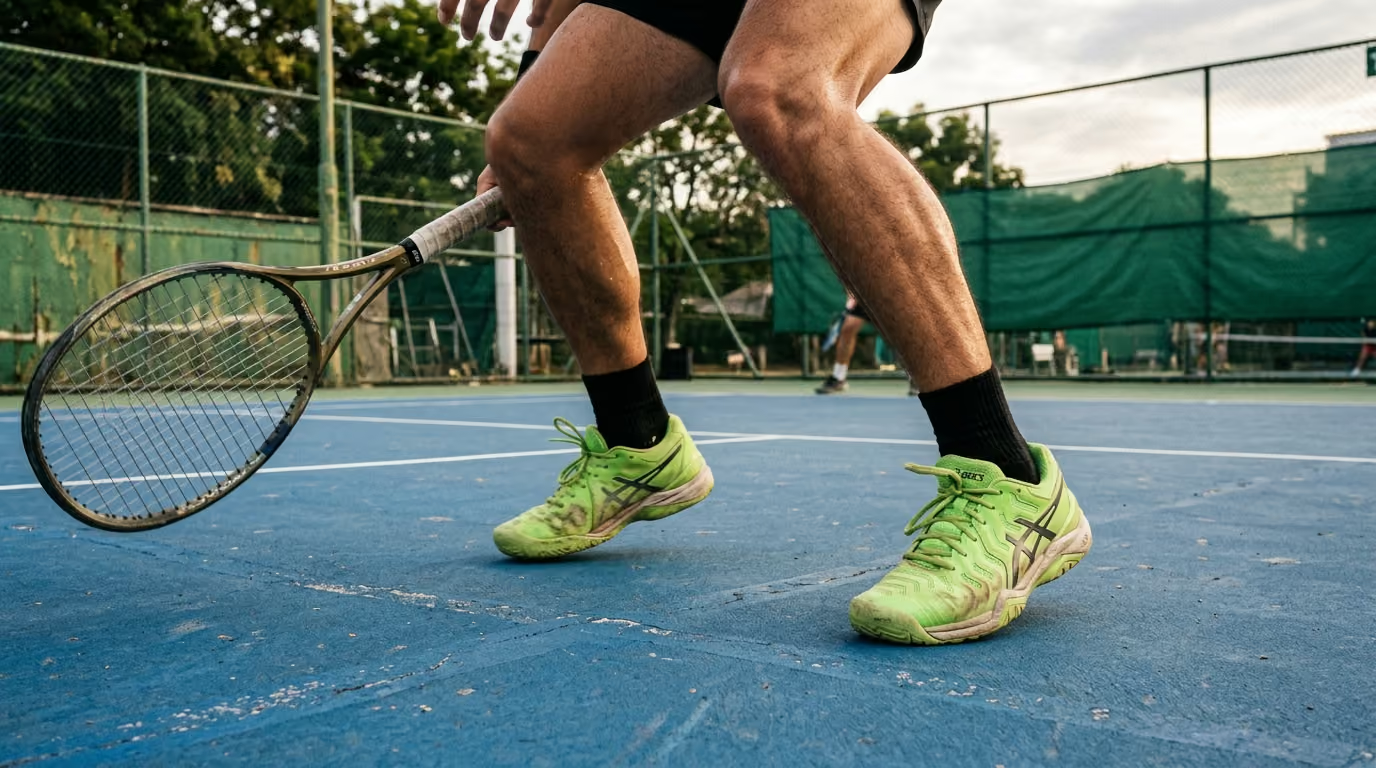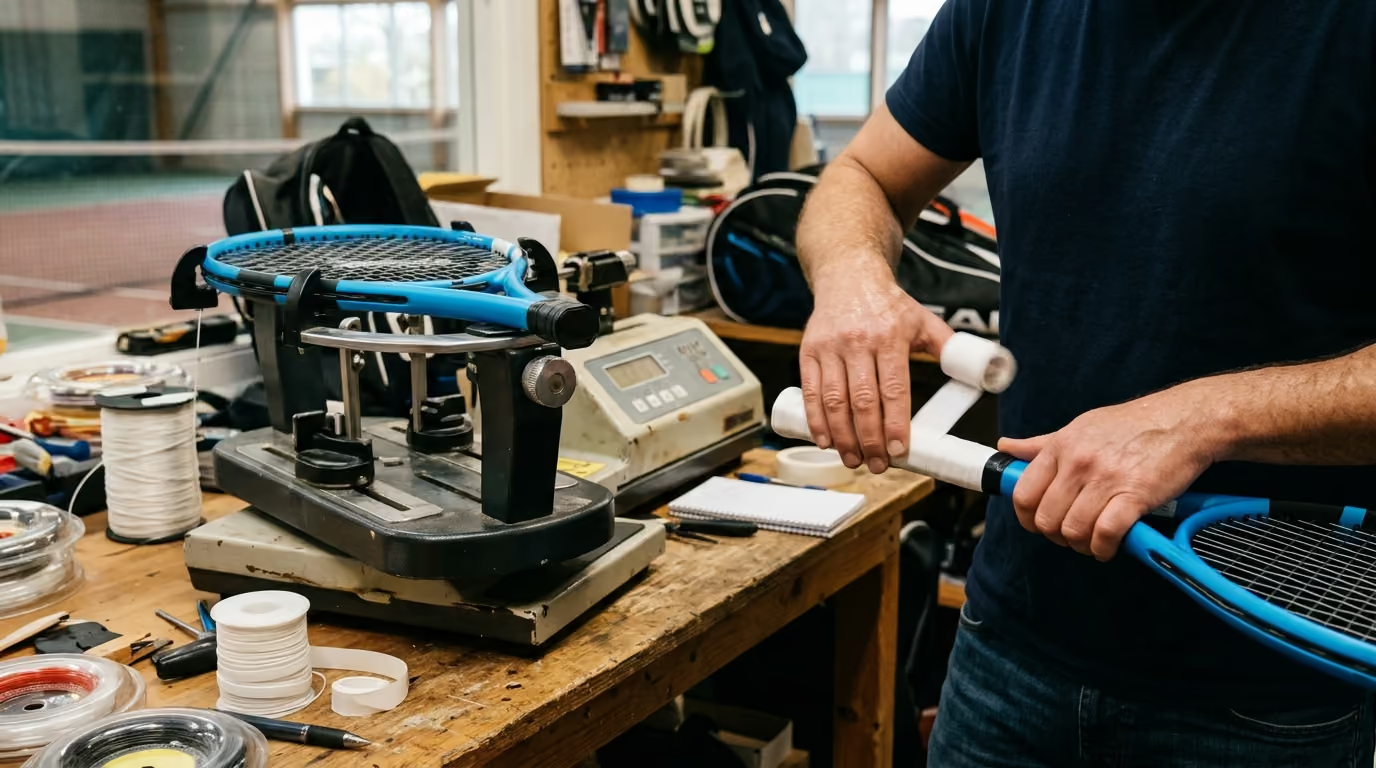

A fully prepared racquet system ensures predictable, comfortable, and physically supportive performance under competitive stress.




You step onto the court for a deciding match on a damp evening. After a grueling rally, your main strings suddenly snap with a loud pop. You reach into your bag for your backup racquet, expecting the same reliable response. Instead, the handle feels slippery, the string bed feels like a wooden board, and your next three shots sail long.
This frustrating scenario is common for players who treat their equipment as isolated items rather than an integrated system. To perform reliably, your equipment must be prepared with the same precision you bring to your training.
Successful racquet preparation requires treating your equipment as a fully unified system of matched frames, customized grips, and calibrated strings. This systematic approach ensures your gear remains predictable, comfortable, and physically supportive under competitive stress. By standardizing your primary and backup racquets, you eliminate timing disruptions and reduce unnecessary muscular fatigue.
A competitive racquet is a complex system where several mechanical elements interact. The International Tennis Federation defines a racket as consisting of a frame and strings, with the frame comprising the handle, throat, and head. Every single adjustment you make to one part of this system will alter another. For example, changing to a stiffer string can alter the launch angle of the ball. Adding weight to the frame will increase stability, but it also increases the physical effort required to swing.
The interaction between racquet size, string material, string tension, frame flexibility, and impact behavior is highly non-linear. Research shows that changing string tension does not produce a simple, straight-line change in ball speed or angle. Instead, the entire racquet frame flexes and vibrates differently depending on where the ball contacts the string bed.
According to a study on string tension and impact location published in the Journal of Mechanical Science and Technology, hitting the ball outside the sweet spot produces massive physical feedback. An impact in the frame's dead spot generated approximately 424 Newtons of hand force. In contrast, hitting the sweet spot produced forces that were 1.61 times lower under the same testing conditions. This highlight shows why preparing your racquet to have a predictable, accessible sweet spot is essential for comfortable play.
Furthermore, upper-limb injuries in racquet sports are multifactorial. A systematic review of tennis injuries indicates that equipment is rarely the sole cause of physical pain. Instead, injuries arise from a combination of fatigue, playing exposure, stroke technique, and equipment choices. Optimizing your equipment system is a powerful way to reduce cumulative physical stress during long tournament days.
The handle is your only physical connection to the racquet. If the handle does not fit your hand, your forearm muscles must work harder to keep the frame stable. This extra muscle tension can quickly lead to fatigue and reduced control over your shots.
Standard tennis grip sizes range from 4 1/8 inches to 4 5/8 inches, which correspond to European sizes L1 through L5. The traditional method to test grip size is the Eastern forehand fit test. Hold your racquet with an Eastern forehand grip and attempt to slide the index finger of your opposite hand into the gap between your ring finger and your palm. If there is not enough room for your finger, the grip is likely too small. If there is a large gap, the grip is likely too large.
However, this test is only a baseline. Hand shape, finger length, and personal preference also play major roles. If you are between sizes, we recommend choosing the smaller base handle. It is much easier to increase a grip size with an overgrip or a heat-shrink sleeve than it is to shave down a handle that is too large.
While a correct grip size is important for control, players should not overstate its connection to injury. A controlled laboratory study published in the American Journal of Sports Medicine analyzed collegiate players using different grip sizes. Researchers tested grip sizes that were one-quarter inch below, at, and one-quarter inch above each player's recommended size.
The results showed no significant differences in forearm muscle activity during single-handed backhands. This suggests that minor variations in grip size do not automatically cause injury. Instead, grip size should be optimized for secure control and quick grip transitions on the court.
Overgrips are thin, replaceable layers wrapped over the original base grip. They alter handle circumference, improve traction, and help manage perspiration. For competitive play, you must use the exact same overgrip model and wrapping technique across all your frames.
When wrapping your overgrip, maintain consistent tension to avoid creating uneven ridges. Overlap the edges by a uniform width, usually about one-sixteenth of an inch. If you prefer a highly cushioned feel, look for overgrips with a polyurethane core. For hot or humid conditions, select a dry-feel overgrip that excels at absorbing moisture.
Never wait for an overgrip to tear before replacing it. A worn grip forces you to squeeze the handle harder to prevent twisting. This extra squeeze causes immediate tension in your wrist and forearm. Replace your overgrip when you notice any of these signs:
Two brand-new racquets of the same model can feel completely different on the court. Manufacturer tolerances mean that static weight, balance, and swingweight can vary between frames. For tournament play, you must bridge these gaps to ensure consistent performance.
Static weight is the actual mass of your racquet when it is resting on a scale. Balance describes how this mass is distributed along the length of the frame. It is often measured in points head-light or head-heavy, where one point equals one-eighth of an inch of displacement from the midpoint.
Swingweight represents how heavy the racquet feels when you are actually swinging it. A higher swingweight provides more power and plow-through, which helps when returning heavy serves. However, a high swingweight also reduces maneuverability and can accelerate shoulder fatigue. Matching these three variables across all your competition frames is crucial for maintaining your timing when switching racquets.
To match your racquets, you can use specialized diagnostic machines at a professional pro shop. Alternatively, you can follow this manual matching process at home:
Your choice of strings is just as important as your frame selection. The string bed acts as the engine of your racquet, directly influencing feel and comfort.
String gauge refers to the thickness of the string, with higher numbers indicating thinner strings. For example, a 17-gauge string is thinner than a 15-gauge string. Thinner strings stretch more easily on impact, offering greater feel, comfort, and spin potential. Thicker strings resist shearing forces, making them much more durable.
Keep in mind that gauge labels are not standardized across all brands. Always check the actual millimeter measurement of the string rather than relying solely on the gauge number.
Reference tension is the target weight you select on the stringing machine. Actual tension is always lower because strings immediately begin to relax after they are pulled. The United States Tennis Association notes that the traditional rule of "tighter strings for control, looser strings for power" is incomplete.
Lower tension allows the strings to slide and stretch more. This increases the time the ball rests on the string bed, which is known as dwell time. As you swing upward, this increased dwell time can raise the launch angle of your shot. This higher launch angle provides depth, which players often perceive as extra power.
If you are trying to find your optimal tension, we recommend a systematic testing sequence:
A string dampener is a small rubber or silicone accessory placed in the string bed. The International Tennis Federation rules require that dampeners be placed below the lowest cross string or above the highest cross string. They must remain entirely outside the pattern of crossed strings.
A common misconception is that a dampener protects your arm from tennis elbow. The Tennis Warehouse Gear Guide clarifies that a rubber dampener only reduces the high-frequency vibration of the strings. It does not eliminate the low-frequency shock and vibration of the actual frame.
A dampener changes the acoustic profile of your shot from a high-pitched ping to a dull thud. This quieter sound can make the racquet feel softer, but the physical force passing through your wrist remains virtually unchanged. You should use a dampener if you prefer a muted sound, but never rely on it to solve physical pain or structural joint issues.
A backup racquet is not an emergency spare to be ignored until a string breaks. It is a performance continuity tool designed to keep your play steady under match pressure.
When you break a string during a competitive match, you are already dealing with mental stress. Switching to a backup that feels lighter or is strung differently will disrupt your timing. You may start overcompensating, which can lead to unforced errors and physical strain.
To prevent this, your backup racquet must be identical to your primary frame in every way. It should feature the same model year, grip size, base grip, overgrip, string type, gauge, tension, and weight balance. Even the placement of your dampener and head tape must be identical.
Before any tournament, we suggest using this backup preparation checklist:
The demands of tennis, pickleball, and padel differ significantly. Each sport requires a unique approach to equipment preparation and lifestyle planning.
Tennis involves high ball velocities and heavy impacts over long playing distances. Strings are subjected to significant shearing forces, causing them to notch and lose tension rapidly.
If you play tennis competitively, you must monitor your tension loss closely. Polyester strings can lose up to twenty percent of their tension within the first few hours of play. Even if they do not break, these "dead" strings lose their resilience, forcing you to swing harder to achieve the same depth.
Pickleball paddles do not have strings, but they require precise preparation nonetheless. The USA Pickleball association regulates paddle dimensions, surface roughness, and core materials.
When preparing a pickleball paddle, focus on these key areas:
Padel paddles, or palas, feature a solid face with holes and an internal foam core. The materials and weight distribution are critical for quick reaction times close to the glass.
Even experienced players can fall into bad habits when preparing their gear. Recognizing these common pitfalls can save you from poor performances and unnecessary frustration on the court.
Do not assume that two frames with the same cosmetic paint job will play the same. Manufacturing variances can cause weight differences of up to ten grams between identical models. Always have your frames measured and matched by a professional technician to ensure true consistency.
Many players use the same set of strings for months, waiting for them to snap. Over time, strings lose their elasticity and "go dead." This means they can no longer absorb impact energy, transferring those forces directly to your arm. As a general rule, replace your strings per year as many times as you play per week. For example, if you play three times a week, restring your racquet at least three times a year.
Choosing a small grip size can give you more wrist snap on your serves, but it has a hidden cost. A handle that is too small requires more squeezing force to prevent the racquet from twisting on off-center hits. This constant squeezing fatigues your forearm muscles, which can lead to chronic elbow irritation over a long tournament weekend.
If you are experiencing arm discomfort, do not simply attach a rubber dampener and continue playing through the pain. A dampener does not reduce the initial impact shock of the ball hitting the racquet. It only silences the high-pitched sound of the strings. If you ignore the underlying causes of your discomfort, you risk worsening your physical condition.
Maintaining healthy joint function is essential for enjoying racquet sports for years to come. Your equipment choices play a direct role in how much physical stress your body must absorb during play.
When a ball strikes your racquet, a wave of energy travels down the shaft, through your hand, and up your arm. If your strings are too stiff, or if your racquet is too light, your muscles and tendons must absorb the bulk of this energy.
According to research on the dynamics of racquet impact, using a flexible frame with a softer string setup can significantly reduce the initial shock force. This is particularly important as we age, as our tendons naturally lose some of their elasticity. By optimizing your gear, you can support your body's natural mechanics and enjoy long-term athletic longevity on the court.
I remember finishing a tough two hour padel match on a cold Tuesday night and waking up the next morning feeling like my lower back was locked in concrete. For a long time, I just accepted this as the price of playing hard in my forties. But once I started spending just ten minutes on targeted hip mobility before heading to the club, the stiffness almost completely vanished. It taught me that we do not have to accept pain as a default state of aging.
By combining proactive injury prevention routines, such as improving on-court mobility, with a well-optimized equipment setup, you can build a reliable defensive shield for your joints.
To keep your equipment playing safely and predictably, we recommend following a regular inspection routine:
While optimizing your racquet setup can make play more comfortable, it cannot cure structural physical injuries. If you are experiencing persistent pain, you should consult a qualified healthcare professional.
Seek medical attention if you notice any of these warning signs:
A qualified physical therapist can help you identify biomechanical issues in your swing and design a targeted strength program. Equipment changes should support your physical recovery, not replace professional medical guidance.
When to revisit this resource: Re-read this guide before the start of your competitive season, or whenever you are planning to purchase a new frame, change your string type, or transition to a new competitive sport.
By treating your racquet as a complete, unified system, you can step onto the court with the confidence that your equipment will perform exactly when you need it most.
Follow Evercourts for practical insights on tennis, pickleball and padel performance, movement, recovery and healthy ageing. Stay connected for new articles, research-led guidance and ideas to help you play well and keep playing for years.


Read practical guidance for better movement, smarter preparation and a game that keeps working for you.
explore the Blog