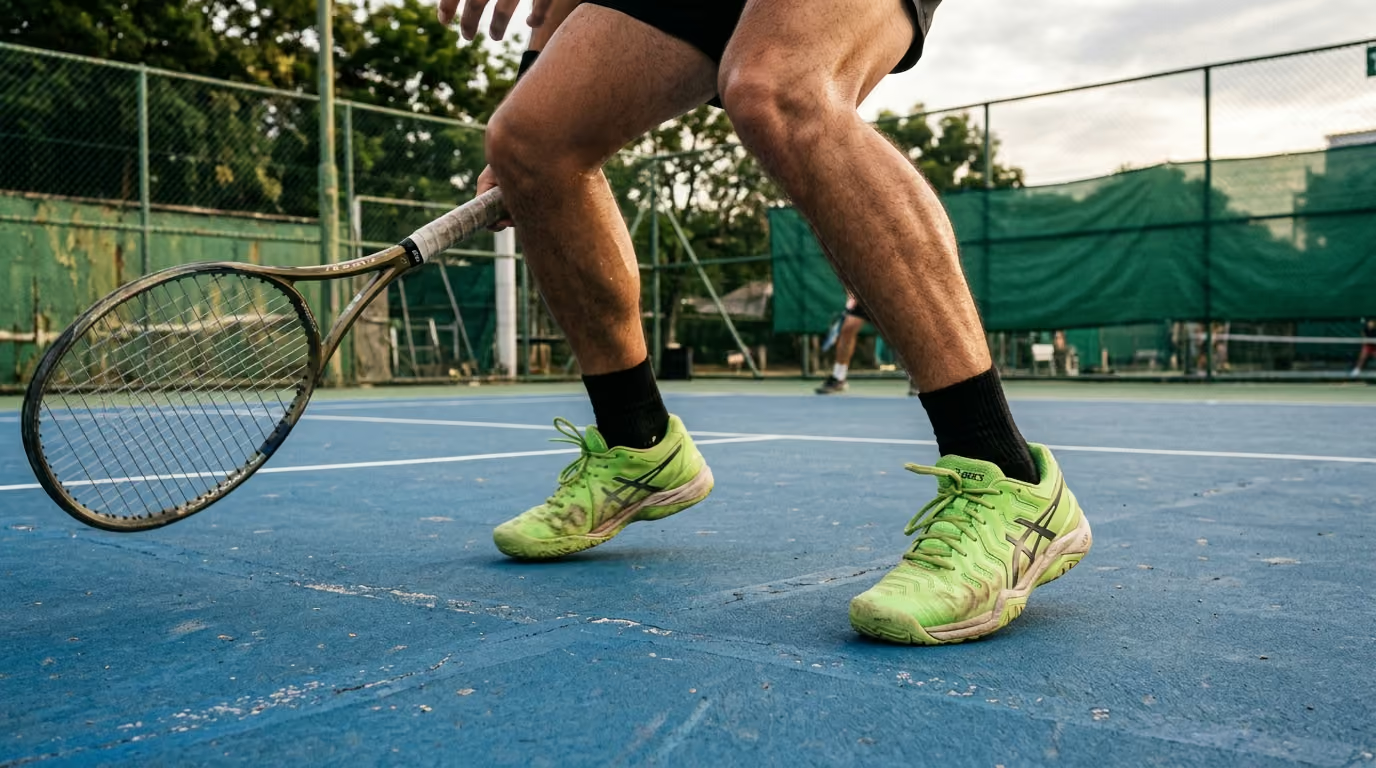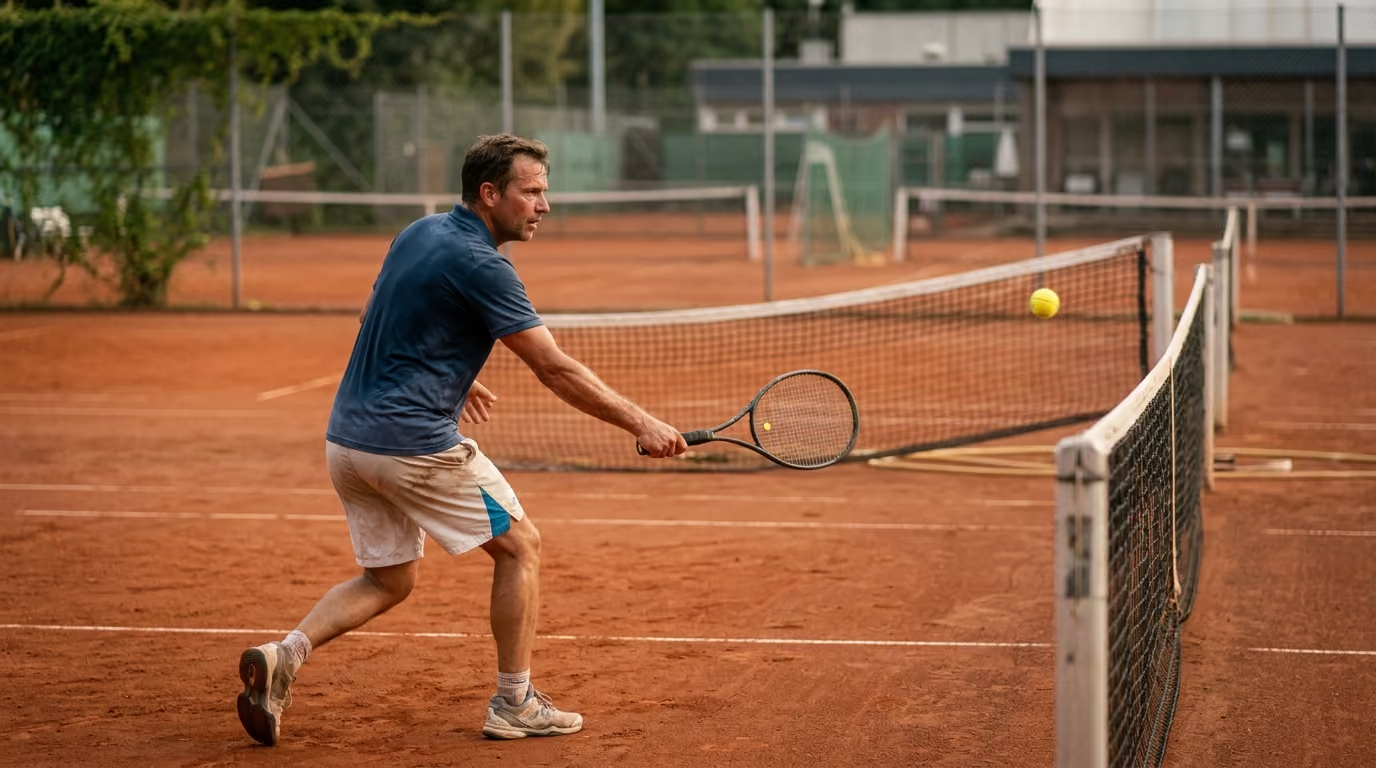

While many tennis players prioritize power, consistent ball depth and rally tolerance are crucial for winning baseline exchanges and developing a reliable rally game.




Why do so many promising groundstrokes end up landing short, clipping the net, or sailing past the baseline? Many recreational players struggle to maintain a steady exchange because they mistake raw power for tactical depth. Rally tolerance is the ability to maintain sound technique, tactical discipline, and mental composure through long exchanges without giving away an easy error. Achieving consistent ball depth requires mastering net clearance, controlling the racquet face angle, and using spin to pull the ball back down into the court safely.
Understanding how points end is critical for developing a smart baseline strategy. Many players believe that winning matches requires hitting spectacular winners from deep in the court. However, sports science research paints a different picture of court performance.
According to a study published in PLOS ONE, a substantial majority of tennis points end very quickly. The researchers analyzed match data across various court surfaces. They found that approximately 65% to 77% of points ended in short rallies of one to four shots. Furthermore, when the server put their first serve in play, they won the majority of these short exchanges.
This trend is not limited to clay or hard courts. A study of elite grass-court tennis published in the Journal of Sports Sciences found that points of zero to four shots were strongly associated with match success for both men and women. This means that a player who can execute a strong serve or return and follow it up with one high-quality shot will win most of their points.
However, long-rally tolerance remains a vital skill. An analysis of Grand Slam match data showed that longer exchanges become critical when initial attacks fail. In some samples, male players won 58.8% of medium rallies and 58.1% of long rallies, compared to 54.5% of short rallies. This indicates that while short points are frequent, the ability to survive and dominate extended exchanges is a defining characteristic of successful players.
The physical and temporal demands of these exchanges also vary by playing style. Research published in an applied physiology review shows that points controlled by attacking players average only 4.8 seconds. Whole-court players average 6 to 11 seconds per point. In contrast, dedicated baseline players participate in points that average 15.7 seconds.
The pressure of the score also changes rally patterns. A study analyzing 28,570 tiebreak points showed that rally length increased from an average of 3.27 shots to 3.70 shots. Simultaneously, the unforced error percentage dropped from 23.5% to 20.6% during these high-pressure moments. This tells us that when the score is tight, players naturally prioritize safety and rally tolerance.
For comprehensive strategies on improving your court presence, you can read our court performance resources.
To build a reliable rally ball, we must treat the stroke as a multi-variable control system. Instead of focusing solely on swing speed, a consistent player manages four distinct elements on every shot.
Aiming higher over the net is the easiest way to find consistent depth. The net is not a flat barrier. According to Tennis Australia, the net is approximately three feet high at the center and three and a half feet high at the posts. This means that hitting over the center of the net offers the greatest vertical margin.
The International Tennis Federation recommends a three-to-six-foot window of net clearance for penetrating rally shots. Hitting too low reduces your margin of error and leads to frequent net errors. Conversely, hitting too high without spin will cause the ball to sail long. The correct height must adjust based on your position on the court.
Ball depth is measured from the net to the opponent’s baseline. A deep ball lands beyond the service line, ideally in the back third of the court. This distance pushes your opponent away from their preferred hitting zone. It reduces their available angles and limits their ability to hit aggressive shots.
However, depth should not be chased blindly. A slow, high ball that lands deep can sit up and invite an attack. True depth must be combined with appropriate pace and spin to remain effective.
Choosing the correct target is essential for maintaining rally tolerance. Crosscourt shots are inherently safer than down-the-line shots. They travel over the lowest part of the net and have more physical court length to land in.
Down-the-line shots carry much higher risk. The net is higher near the singles posts, and the distance to the baseline is shorter. Hitting down the line should generally be reserved for short balls or when your opponent is completely out of position.
A shot is only complete once you have recovered for the next ball. After hitting a crosscourt shot, you must quickly move to cover the most likely return angles. If you stand and watch your ball, you will quickly lose control of the point.
Rally tolerance is as much about footwork as it is about stroke mechanics. Consistent movement allows you to strike the ball from a balanced position. This balance is what makes repeatable depth possible.
Consistent depth is difficult to maintain because it requires simultaneous control of several physical variables. If your contact point shifts by just a few inches, the landing spot of the ball can change by several feet.
Your contact point relative to your body determines the launch angle of the ball. Striking the ball too late often opens the racquet face, causing the ball to fly long. Hitting the ball too far in front can result in a closed face, driving the ball into the bottom of the net.
To find a repeatable contact zone, you must prioritize early preparation. Your unit turn should begin the moment you recognize the direction of the incoming ball. This early turn ensures you can swing smoothly without feeling rushed.
Many players attempt to fix short balls by swinging harder. This horizontal acceleration usually results in flat, low-margin shots that hit the net. Alternatively, the ball may fly completely out of the court.
The correct solution is to alter your swing path. To get more depth, you need a more vertical swing path that creates height and topspin. Topspin is crucial because the forward rotation of the ball creates downward aerodynamic force. This force pulls a high-clearing ball down into the court before it reaches the baseline.
To correct errors during a match, you can use this simple physical diagnostic system:
For additional ideas on refining your baseline groundstrokes, visit our tennis performance articles.
While the physics of ball flight remain constant, the application of rally tolerance changes depending on your sport of choice. Each racquet discipline has unique court dimensions, equipment behaviors, and tactical priorities.
In tennis, rally tolerance is defined by heavy topspin and high net clearance. The large court dimensions allow players to hit with high physical speed while maintaining a large safety margin. Players typically stand several feet behind the baseline to give themselves more time to react to deep shots.
The primary goal is to push the opponent backward using heavy, high-bouncing balls. Once a short ball is forced, the tennis player moves inside the baseline to finish the point. The physical demands of tennis require excellent lateral movement and robust shoulder health.
Pickleball features a much smaller court and a non-volley zone, commonly called the kitchen. On a pickleball court, rally tolerance is expressed through the soft game. Instead of driving every ball, players must master the dink.
A dink is a soft shot that lands in the opponent's kitchen, making it difficult for them to attack. Consistent depth in pickleball often means keeping the ball low and short enough to prevent aggressive volleys, yet deep enough within the kitchen to keep opponents from stepping forward. If you hit your dinks too deep, they will rise above the net and be smashed. You can explore more strategies for the short game in our pickleball skill guides.
Padel introduces the use of glass walls, which completely changes how players think about depth. In padel, hitting a ball deep into the court often allows the opponent to let it pass and play it easily off the back wall. Therefore, depth must be managed differently.
Instead of aiming for the baseline, padel players use slow, dipping shots called chiquitas. These shots land at the feet of the opponents as they stand at the net. Additionally, the lob is a vital tool for regaining court position. A good lob must clear the opponents and land deep enough to force them away from the net. For more on court positioning and walls, see our padel movement strategies.
A high level of rally tolerance does not mean playing defensively. Instead, it is a structured decision-making system that helps you select the correct shot for every situation.
Your physical location on the court dictates your tactical options. If you are standing far behind the baseline, you must prioritize height and depth. Do not attempt to hit winners from this defensive position.
When you are standing on the baseline, you should focus on neutral, high-percentage rally balls. Use your crosscourt targets and maintain a comfortable pace. Only when you step inside the baseline should you consider reducing your net clearance and attacking.
You must read the incoming ball quickly to choose your response. Note the height, speed, and spin of the ball. If the ball is low and heavy, respect the shot and hit a high-clearance reply. If the ball is short and sitting up, you can transition into an attacking mindset.
Always aim for a target that allows for a reasonable margin of error. Beginner coaching material recommends aiming three to five feet inside the lines. Even advanced players should avoid aiming directly for the white lines during neutral exchanges. Your target should be large enough that a slight mechanical mistake still results in a good shot.
Before you swing, visualize the path the ball will take through the air. This is your air target. Selecting your air target helps your brain coordinate the correct muscle movements. If you need depth, focus on hitting through a window several feet above the net.
As soon as the ball leaves your strings, your focus must shift to recovery. Do not stand still to admire your shot. Move back to the center of the open angles to prepare for the next exchange. This continuous cycle of hitting and recovering is the foundation of true consistency.
To minimize unforced errors, you must understand where the court offers the most safety. Selecting high-percentage targets keeps you in the point longer and forces your opponent to take the risks.
When you are under pressure, the center of the court is your best friend. Hitting deep through the middle of the court achieves several tactical goals. First, it reduces the angles your opponent can use on their reply. Second, it lets you hit over the lowest part of the net.
Finally, middle targets provide the widest physical margin of error. If you miss your target by three feet to either side, the ball will still land safely in the court. This makes middle targeting an excellent default choice during long, tiring rallies.
To simplify your tactical planning, divide the opponent's court into three distinct zones:
Your primary goal during a baseline rally is to keep the ball consistently out of the attack zone. Keeping the ball in the neutral and pressure zones will naturally wear down your opponent's patience.
Crosscourt hitting should be your primary patterns of play. The physical distance from corner to corner is several feet longer than the distance straight down the line. This extra distance gives your ball more time to drop into the court.
Additionally, hitting crosscourt aligns with the natural rotation of your body. It requires less precise timing than trying to redirect a fast ball down the line. By sticking to crosscourt patterns, you minimize the risk of unforced errors.
To turn these concepts into habits, you must practice them under structured conditions. These drills are designed to build your physical and mental tolerance for long rallies.
This drill teaches you to use trajectory as your primary depth control:
This game rewards consistent depth without encouraging reckless hitting:
This cooperative drill builds steady consistency under physical fatigue:
Since many points end quickly, you must practice the transition from the serve to the first groundstroke:
Even experienced players fall into mental traps that destroy their consistency. Recognizing these errors is the first step toward correcting them.
Many players believe that consistency simply means getting the ball over the net. However, hitting high, short balls that land near the service line is not effective consistency. These shots give your opponent easy opportunities to attack. True rally tolerance requires hitting with useful depth, not just survival.
When players receive a short, slow ball, they often experience a rush of adrenaline. They swing as hard as they can, trying to hit a clean winner. This flat, high-speed swing often results in a missed shot. Instead, you should maintain your balance, use a controlled swing path, and focus on placement over raw power.
It is tempting to try to end a long rally by hitting a spectacular down-the-line shot. However, attempting this shot from behind your baseline is a very low-percentage play. You should continue hitting crosscourt until you receive a ball that allows you to step inside the court safely. Patience is a critical part of rally tolerance.
Sustaining a high level of rally tolerance requires a body that can handle repetitive physical stress. Long baseline exchanges place unique rotational demands on your joints and muscles.
Developing a strong physical foundation is essential for preventing injuries and enjoying your sport for years. To support this, you can read our injury prevention resources.
The physical toll of these long exchanges can be significant. Repeated rotational forces place a heavy load on the hips, knees, and lower spine.
I remember finishing a tough two hour padel match on a cold Tuesday night and waking up the next morning feeling like my lower back was locked in concrete. For a long time, I just accepted this as the price of playing hard in my forties. But once I started spending just ten minutes on targeted hip mobility before heading to the club, the stiffness almost completely vanished. It taught me that we do not have to accept pain as a default state of aging.
To protect your body from the wear and tear of long rallies, focus on maintaining joint mobility and tissue health. A simple warm-up routine that targets hip rotation and core stability can make a dramatic difference. After your match, take time to stretch your hamstrings, calves, and lower back to promote blood flow and speed up recovery. For detailed advice on looking after your body post-match, review our recovery science guidelines.
While muscle soreness is a normal part of athletic training, you must be able to distinguish between normal fatigue and potential injury. Ignoring physical warning signs can lead to chronic issues that keep you off the court.
You should consult a qualified healthcare professional, such as a physiotherapist or sports physician, if you experience any of the following:
A physical therapist can help you identify movement imbalances and design a personalized exercise program to keep you playing safely. For more guidance on maintaining your physical well-being, visit our player health resources.
To help you integrate these concepts into your game, we have designed a simple four-week development plan. Commit to practicing these focuses during your weekly sessions.
By systematically applying these principles, you will build the physical tolerance and tactical discipline needed to dominate baseline exchanges. Consistent depth is not about swinging harder. It is about using intelligent trajectories, smart targets, and physical preparation to keep the ball in play until the perfect opportunity arises.
Follow Evercourts for practical insights on tennis, pickleball and padel performance, movement, recovery and healthy ageing. Stay connected for new articles, research-led guidance and ideas to help you play well and keep playing for years.


Read practical guidance for better movement, smarter preparation and a game that keeps working for you.
explore the Blog