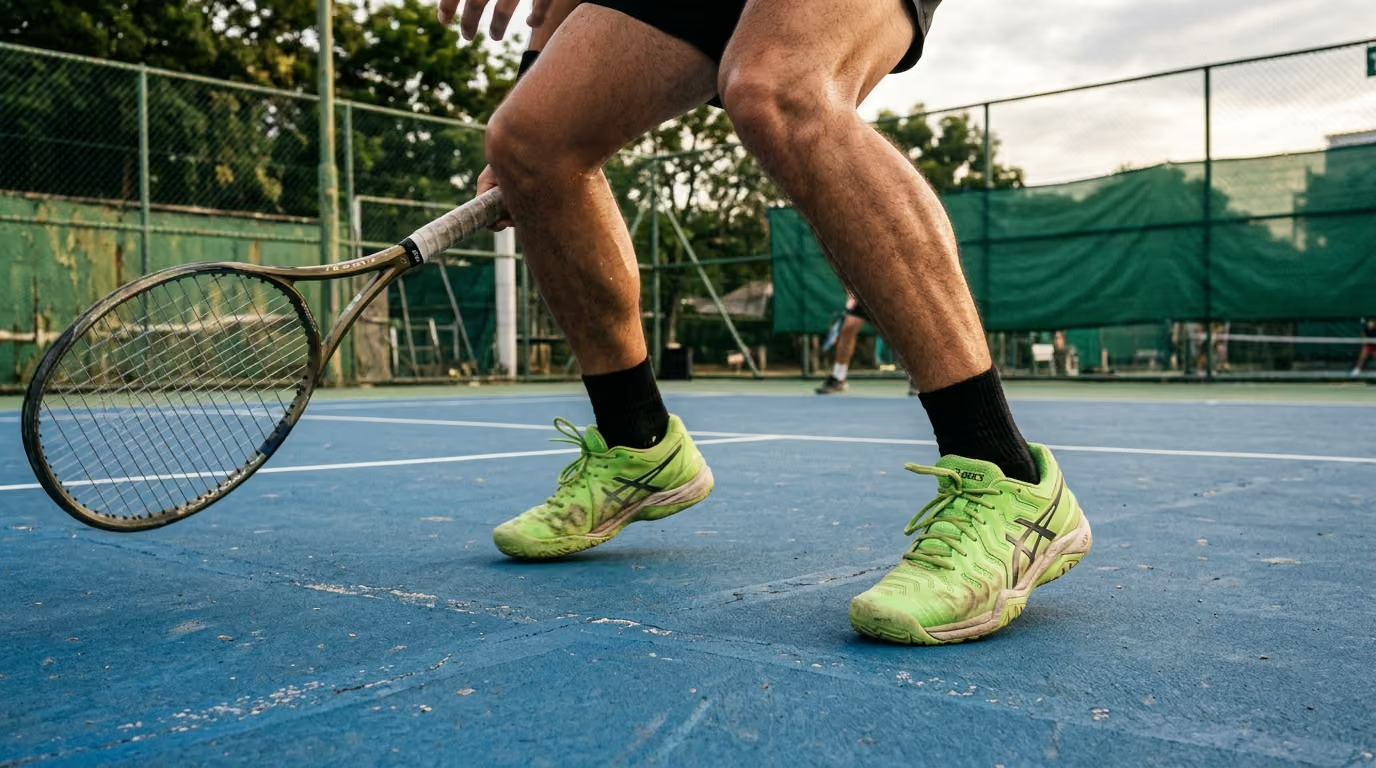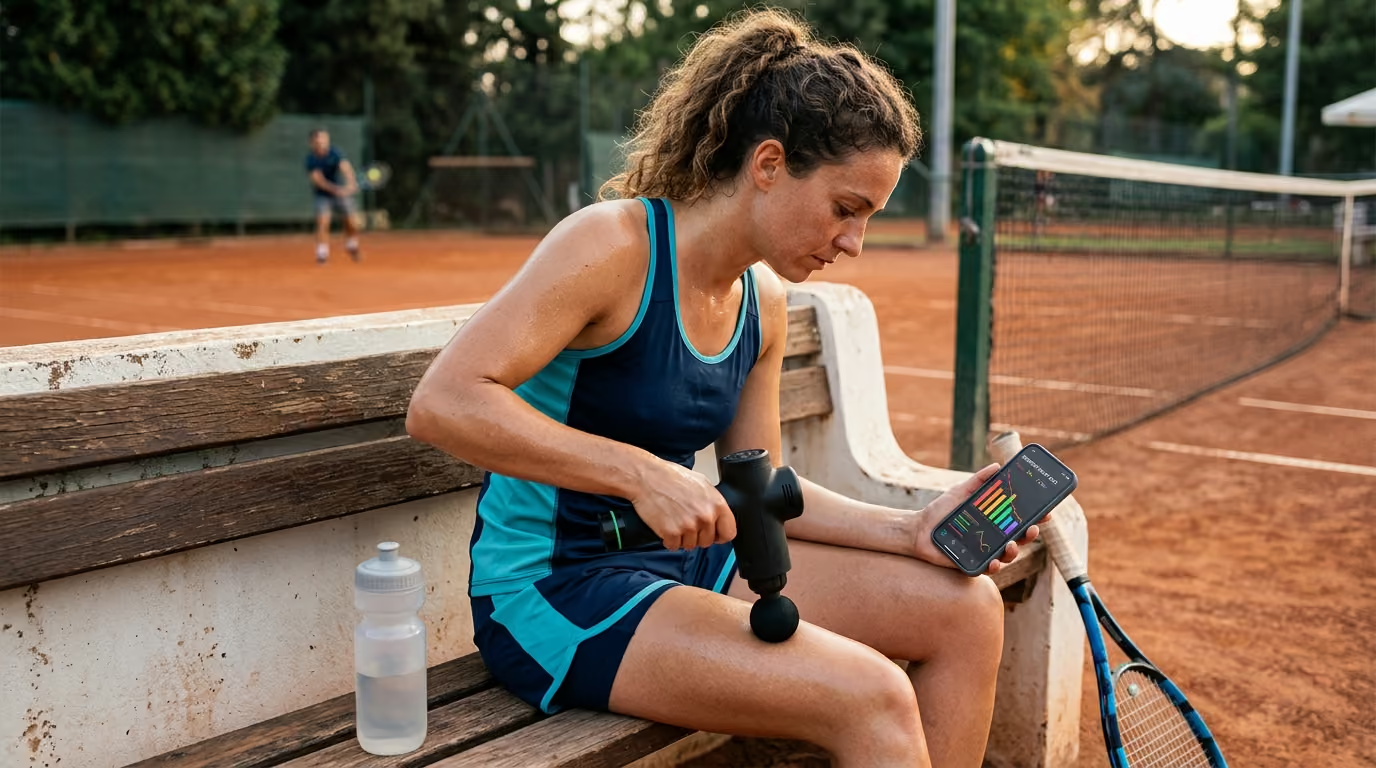

While many assume recovery is a single routine, effective post-match recovery in racket sports requires a systematic approach tailored to specific stressors.




Recovery on the court is not a single treatment or a generic routine. It is a systematic process of replacing what your body lost or damaged during play. Successful recovery in racket sports requires matching your post-match habits directly to the specific stressor of your session, whether that stressor is cardiovascular, muscular, or neurological. Rather than applying a single recovery method to every workout, players must identify which resource is most depleted and address it systematically. This custom approach preserves athletic longevity and keeps you playing without chronic irritation.
Many players view fatigue as a single feeling of being tired. In reality, a hard match affects multiple systems in your body differently. You might finish a session with empty carbohydrate stores, local muscle damage, irritated tendons, or a tired nervous system. Treating all of these issues with a single recovery tool is like trying to fix a broken car engine by changing the tires. To recover well, you must understand exactly what happened to your body during play.
We can analyze these post-match effects by breaking them down into five distinct categories. Each category represents a different type of physical or mental stress. By isolating these stresses, you can choose recovery methods that actually target your current needs.
To manage physical fatigue, you must understand the difference between the work you did on the court and how your body responded to it. Sports scientists call these factors external and internal load. External load is the physical work you performed, which includes match duration, total running distance, and the number of strokes. Internal load is your body's personal response to that work, such as your heart rate, muscle soreness, and perceived effort.
You can track your own daily court physical stress by using a simple formula:
Session load = Session duration in minutes multiplied by session rate of perceived exertion (RPE) on a scale of 1 to 10.
For example, a 90-minute singles match that you rate as an 8 out of 10 produces a session load of 720 units. This number helps you compare different playing days. Over time, tracking these numbers reveals when you are stepping into a high-risk zone for chronic soreness.
Every match or practice session creates a unique blend of physical and mental stress. These demands overlap, but they require different recovery strategies.
Fatigue can also be divided into peripheral and central types. Peripheral fatigue happens directly inside your working muscles, which reduces their ability to produce force. Central fatigue happens in your brain and spinal cord, which reduces your motivation, movement accuracy, and decision-making speed.
In our experience, we used to think a tough conditioning block was the only way to improve court endurance. Then our team started tracking sleep and realized that sleeping less than six hours made reaction times at the net sluggish, proving that recovery is the true foundation of performance. A player with high peripheral fatigue might complain of heavy legs, which requires rest and food. A player with high central fatigue might feel mentally foggy and make poor tactical choices, which requires sleep and mental downtime.
Your ability to bounce back from a hard session is not fixed. It changes based on several personal and environmental factors. Age and training history play a major role in how quickly your muscles repair themselves. Previous injuries can create movement compensations that increase tissue stress on other joints.
Environmental conditions like heat and humidity accelerate fluid loss and increase cardiovascular strain. Your sleep quality, daily nutritional intake, and general life stress also dictate how much energy your body can dedicate to physical repair. Understanding these modifiers helps you predict how much rest you actually need after a competitive match.
Tennis is a classic intermittent sport that requires repeated high-intensity efforts. Players perform short, explosive sprints followed by brief periods of rest. Research indicates that tennis players typically have about 20 to 25 seconds of rest between points, and 90 to 120 seconds of rest during changeovers. This work-to-rest ratio makes tennis a highly demanding challenge for both your cardiovascular system and your muscles.
According to a systematic review, average tennis rally durations range from 5.5 seconds for international male players to 6.4 seconds for international female players. During these short rallies, players cover an average distance of 8 to 10 meters per point. This movement involves constant acceleration, violent deceleration, lateral shuffling, and deep lunging.
The court surface you play on changes the physical demands of your match. Different surfaces alter how you move and how your body absorbs impact.
Tennis match play reduces your explosive physical capabilities even if you do not feel sore. Studies of tournament tennis players show a clear reduction in leg power and maximal voluntary muscle contraction after competitive play. One day of rest is often not enough to restore explosive lower-body qualities after a demanding tournament.
This persistent loss of power can be dangerous. When your leg muscles cannot produce force quickly, your body compensates by placing more stress on your joints and tendons. This makes managing your training volume crucial, especially when playing multiple matches over a weekend. You can monitor your physical readiness by reading our Player Health Articles to learn about structural loading.
Pickleball is often viewed as a low-intensity activity because the court is small and play is rapid. However, looking only at average heart rate can be misleading. While cardiovascular stress may be lower than in tennis, the mechanical and joint demands of pickleball remain significant.
A study tracking recreational pickleball players found an average match heart rate of about 109 beats per minute. This corresponds to moderate-intensity exercise, which is great for general health. However, this average heart rate does not show the sudden stops, quick reaches, and rapid lateral lunges that characterize pickleball play.
The unique physical demands of pickleball are reflected in its injury patterns. Emergency department data shows that muscle strains, joint sprains, and fractures are common among players.
To reduce these risks, explore our Injury Prevention Resources for targeted preparation guides.
Because the paddle is short and the ball is light, pickleball strokes require rapid wrist flicking and quick elbow extension. This repetitive action can irritate the tendons of your forearm, which leads to elbow soreness. Additionally, playing near the non-volley line requires you to stay in a low, loaded squat position. This stance places constant tension on your knees, calves, and Achilles tendons.
For players returning to sport after a long break, these localized demands can easily exceed tissue tolerance. Recovery for pickleball must focus on joint mobility, tissue healing, and gradual physical preparation. Assuming that a low cardiovascular demand means your body does not need recovery is a common mistake.
Padel is played in an enclosed glass cage, which creates a fast, highly repetitive game. Points are long, and the ball bounces off the walls, requiring constant split-step adjustments and rapid turns. This unique design produces physical demands that are quite different from tennis or pickleball.
A systematic review of padel match physiology shows that the sport is highly intermittent. Players experience moderate cardiovascular strain, with heart rates typically staying around 70 to 80 percent of their maximum. However, the movement density in padel is exceptionally high, which means players perform many actions in a short period of time.
The physical stress of padel is clearly visible in injury data. Research shows an injury rate of about 3 injuries per 1,000 training hours, and 8 injuries per 1,000 match hours.
To better understand the movement requirements of padel, check out our Padel Articles for detailed structural breakdowns.
Padel players must constantly move forward and backward to defend against wall rebounds. This transition work requires eccentric braking, which causes microscopic damage to your calf and thigh muscles. The sport also requires high rotation and counter-rotation of your spine during overhead shots. This continuous twisting places significant demands on your lower back and hip joints.
Because points are long and the ball remains in play, the mental concentration required is substantial. Players must track the ball, the opponents, their partner, and the wall rebounds simultaneously. This high cognitive load can cause central nervous system fatigue, which leaves you feeling mentally exhausted even if your muscles feel fine.
To recover effectively, you must match your recovery choices to the dominant physical stress of your session. Applying the wrong recovery tool wastes time and can prolong your soreness.
Sleep is the most powerful recovery resource available to court athletes. During deep sleep, your body releases growth hormone, which repairs muscle tissue and strengthens bones. Sleep also restores your brain's cognitive function, which improves your reaction time and coordination for your next match.
If you play a late-evening match, your body may be too stimulated to fall asleep easily. You can improve your sleep quality by lowering the room temperature, avoiding bright screens, and eating a small meal containing carbohydrates. Do not buy expensive recovery gadgets if you are sleeping less than seven hours a night. To optimize your physical health, you can browse our Recovery Science Resources for sleep guides.
After a long match, your body needs the right building blocks to repair tissue and replenish energy. You should focus on two main nutrients: carbohydrates and protein.
Dehydration reduces your muscle strength, slows your reaction times, and increases your risk of heat illness. To hydrate properly, you should measure your body weight before and after a hard match. For every kilogram of body weight lost during play, you should drink about 1.5 liters of fluid.
Avoid drinking only plain water after a sweaty session in hot weather. Plain water can dilute your blood's sodium levels, which can lead to muscle cramps and headaches. Instead, use an electrolyte tablet or eat a salty snack alongside your water to help your body retain the fluid.
Active recovery involves performing low-intensity movement to promote blood flow without adding stress to your joints. A gentle 15-minute walk or light cycling session can help reduce muscle stiffness after a long match. Keep the intensity low enough that you can easily hold a conversation.
Gentle mobility work can help restore your normal range of motion if you feel stiff. Focus on your hips, ankles, thoracic spine, and shoulders. Avoid aggressive stretching when your muscles are highly sore, as this can worsen microscopic tissue tears.
Sometimes the best recovery strategy is simply doing less physical work. This approach is called load management, and it is highly effective for preventing overuse injuries.
If you are experiencing joint stiffness or persistent fatigue, consider modifying your playing schedule. You can shorten your practice sessions, play doubles instead of singles, or take a complete rest day. For a long-term approach to durability, visit our Healthy Aging & Athletic Longevity Resources page.
Many recreational players follow recovery habits that are outdated or counterproductive. Avoiding these common mistakes can keep you healthy and performing well.
Many players spend money on massage guns, compression boots, and ice baths while ignoring their sleep and diet. These passive tools can make you feel better temporarily, but they cannot restore empty glycogen stores or rebuild muscle tissue.
If you sleep five hours a night and eat poor food, no recovery gadget will prevent chronic fatigue. Focus on the basics of sleep, hydration, and nutrition before investing in expensive gear.
Because pickleball or doubles tennis may not leave you gasping for breath, you might assume your body does not need recovery. However, low-intensity play can still place high mechanical stress on your tendons, joints, and lower back.
Repetitive strokes and sudden stops can wear down your tissues even if your heart rate remains low. Always assess how your joints and muscles feel, not just how tired your lungs are.
When a tendon in your elbow or Achilles feels sore, your natural reaction might be to stretch it aggressively. However, tendons do not respond well to stretching when they are already irritated or overloaded.
Stretching can compress the tendon against the bone, which can worsen your symptoms. If you have localized tendon pain, you should reduce your playing volume and focus on isometric strengthening exercises instead of stretching. Learn more about structural care by reading our Strength & Conditioning Resources.
When you do not recover fully between playing sessions, fatigue begins to accumulate in your body. This cumulative fatigue is dangerous because it slowly reduces your athletic ability and increases your risk of injury.
At the muscular level, chronic fatigue reduces your muscles' ability to absorb impact forces. When your leg muscles are tired, they cannot help your body decelerate during a sudden stop. This forces your knees, ankles, and lower back to absorb the shock, which leads to joint irritation and swelling.
Cumulative fatigue also affects your central nervous system, which weakens your coordination and balance on the court. You might start arriving late to the ball, which forces you to strike from a poor, off-balance position.
This poor positioning places extra stress on your shoulder and elbow joints. Your reaction times slow down, making it harder to protect yourself from fast, incoming shots.
While mild muscle soreness is a normal part of playing sports, you should learn to recognize the signs of a more serious issue. Pushing through significant pain can lead to chronic injuries that require months of rest.
Consult a qualified healthcare professional, such as a physical therapist or sports physician, if you experience any of the following warning signs:
For more information on when to seek help, explore our Resources for Court Athletes to view our medical guidance.
Yes, you can play on consecutive days if you manage your playing volume and intensity carefully. If you play a hard, competitive singles match on Saturday, you should consider playing light doubles or focusing on technical drills on Sunday. This approach keeps you active while reducing the mechanical stress on your joints and muscles.
Use ice for acute injuries with swelling, such as a sprained ankle or a swollen knee, to help manage pain. For general muscle soreness and stiffness, heat is often more beneficial because it increases blood flow and relaxes tight muscles. Avoid using ice on sore muscles as it can slow down the natural muscle repair process.
Active recovery, like light walking or cycling, is generally better than complete rest for mild muscle soreness because it promotes blood flow to damaged tissues. However, if you are experiencing joint pain, a tendon flare-up, or extreme exhaustion, complete rest is necessary to allow your body to heal. Listen to your body and choose the option that matches your current symptoms.
If your muscles feel heavy and weak but your mind is sharp, you are likely experiencing peripheral muscle fatigue. If you feel mentally exhausted, struggle to make quick decisions, and have poor coordination despite your muscles feeling fine, you are experiencing central fatigue. Central fatigue requires sleep and mental relaxation, while peripheral fatigue requires physical rest and proper nutrition.
Follow Evercourts for practical insights on tennis, pickleball and padel performance, movement, recovery and healthy ageing. Stay connected for new articles, research-led guidance and ideas to help you play well and keep playing for years.


Read practical guidance for better movement, smarter preparation and a game that keeps working for you.
explore the Blog