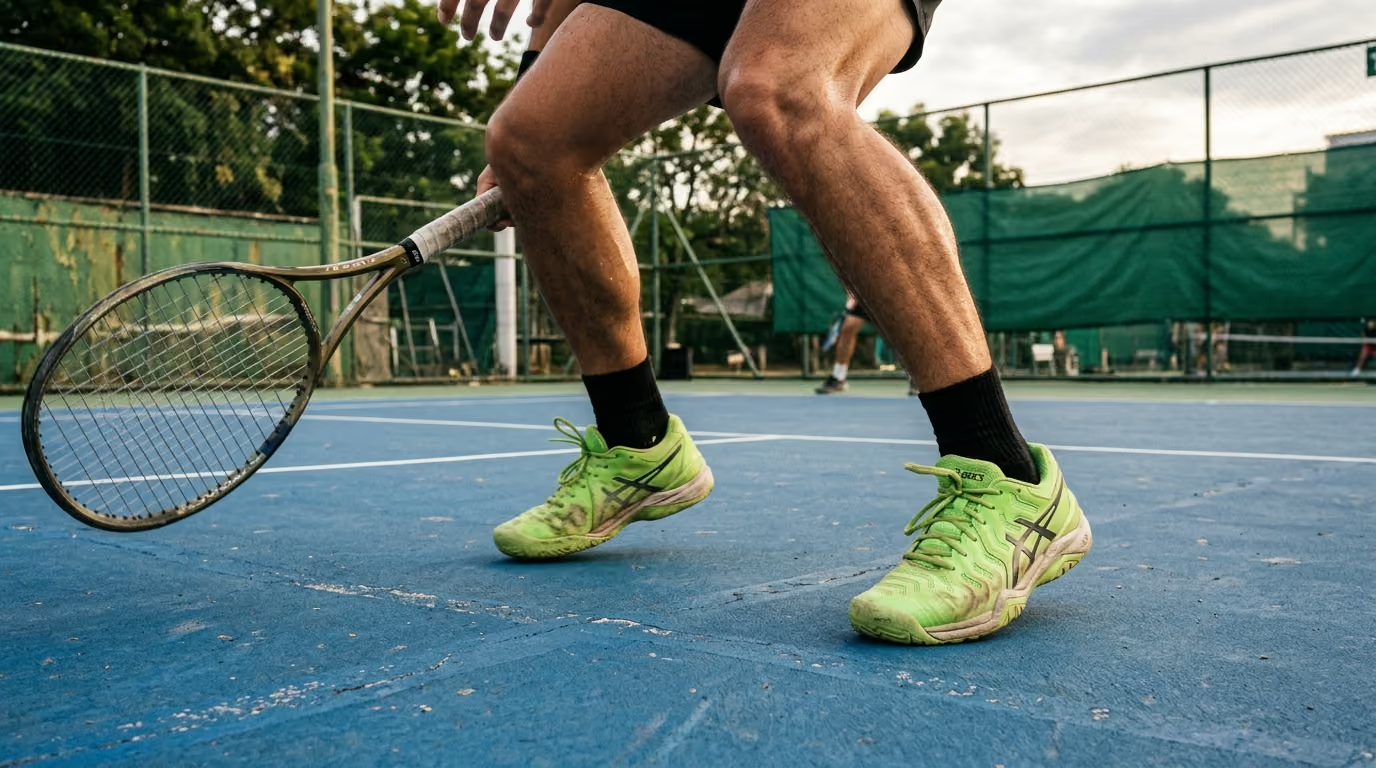
Sleep and recovery are critical for racquet sports players, directly impacting muscle repair, cognitive processing, and movement accuracy to enhance on-court performance.




Imagine walking onto the court for a deciding third set. Your feet feel heavy, the ball seems to travel faster than usual, and your shot selection is fraying under pressure. You might blame your conditioning, your equipment, or your age. In reality, the difference between a clean winner and an unforced error often comes down to what happened in your bedroom the night before.
Sleep serves as the ultimate performance and recovery system for racquet sports players, directly regulating muscle repair, cognitive processing, and movement accuracy. Rather than passive downtime, it is an active state where your brain consolidates new technical skills and your body restores depleted glycogen stores. Prioritizing a consistent sleep opportunity remains the single most effective way to maintain coordination, sharpen reaction times, and extend your athletic longevity.
To manage your nightly recovery, you must first understand what happens when you turn off the lights. Sleep is not a uniform state of unconsciousness. Instead, it is a highly structured series of cycles that your brain repeats every 90 to 110 minutes.
Each cycle consists of non-rapid eye movement (NREM) sleep and rapid eye movement (REM) sleep. NREM sleep is further divided into light stages and deep stage sleep. For a racquet athlete, each stage serves a distinct physiological or cognitive purpose.
Stages 1 and 2 of NREM sleep serve as the transition from wakefulness to deeper rest. During stage 2, your brain produces sudden bursts of activity known as sleep spindles. These spindles are closely linked to muscle memory and the integration of new physical movements.
If your light sleep is repeatedly interrupted, your brain may struggle to lock in the technical adjustments you practiced during your afternoon lesson.
Stage 3 NREM sleep, often called slow-wave sleep, is the period of profound physical restoration. During this stage, your blood pressure drops, your breathing slows, and your muscles relax.
The pituitary gland releases a surge of growth hormone, which stimulates tissue growth and muscle repair. This stage is essential for repairing the microscopic muscle tears caused by explosive lunges, sudden decelerations, and repetitive overhead swings.
During REM sleep, your brain activity increases to levels similar to when you are awake. Your eyes move rapidly behind closed lids, and your body enters a temporary state of paralysis.
This stage is crucial for emotional regulation, memory consolidation, and complex decision-making. REM sleep helps you process the psychological stress of competition and maintain your composure during high-pressure points.
Getting eight hours of sleep is only part of the equation. If your sleep is fragmented by frequent awakenings, your body cannot spend enough time in deep NREM and REM stages.
Alcohol consumption, late-night meals, and high ambient temperatures can all disrupt your sleep architecture. When this occurs, you may wake up feeling sluggish and stiff, even if you spent plenty of time in bed.
Racquet sports require an exceptional blend of endurance, power, and agility. Tennis, pickleball, and padel subject your musculoskeletal system to thousands of eccentric loading cycles. Every split-step, change of direction, and overhead smash creates microscopic damage in your muscle fibers, tendons, and ligaments.
During deep slow-wave sleep, your body orchestrates an environment highly favorable for healing. The release of growth hormone, testosterone, and insulin-like growth factor-1 (IGF-1) increases dramatically. These hormones stimulate protein synthesis, which is the primary mechanism for repairing damaged muscle tissue.
Research indicates that sleep restriction can alter this hormonal balance, reducing testosterone and increasing cortisol. High cortisol levels can promote muscle protein breakdown, delaying your recovery and leaving your tissues vulnerable to cumulative strain. For players focused on injury prevention training, protecting deep sleep is just as important as your strength routine.
Muscle glycogen is the primary fuel source for high-intensity court movements. During sleep, metabolic demands drop to their lowest daily levels. This reduction allows your body to direct its energy toward replenishing glycogen stores in your skeletal muscles.
If you cut your sleep short, you may start your next match with partially depleted fuel reserves. This can cause you to fatigue much earlier in a match, compromising your movement mechanics and court coverage.
Intense physical activity triggers a temporary inflammatory response as your body works to heal microtrauma. Healthy sleep helps regulate this inflammatory cascade, preventing it from becoming chronic.
Chronic sleep restriction can elevate systemic inflammatory markers, which may contribute to persistent joint soreness and tendon irritation. Furthermore, inadequate sleep compromises your immune system, making you more susceptible to minor illnesses that can sideline you from play.
A lack of sleep can significantly lower your pain threshold. When you are sleep-deprived, your central nervous system becomes more sensitive to discomfort. Ordinary post-match soreness can feel much more intense and threatening than it actually is.
Conversely, extending your sleep has been shown to improve pain tolerance and subjective recovery. This allows you to handle the physical demands of consecutive playing days with greater comfort. For more insights on managing post-play fatigue, consider reviewing our specialized recovery science resources.
While the physical benefits of sleep are vital, the cognitive effects are arguably even more critical for racquet sports. Success on the court is not just about raw athletic power. It is about processing visual information, anticipating your opponent's moves, and executing precise motor patterns in milliseconds.
Reaction time is one of the first cognitive functions to degrade under sleep restriction. A ball hit by an advanced tennis, pickleball, or padel player can reach your side of the court in under half a second.
According to sports science research, sleeping even one hour less than your personal average can slow your reaction time by several milliseconds. While a few milliseconds may seem small, they can mean the difference between preparing your racquet early and hitting the ball late behind your body.
Precision is the hallmark of any skilled racquet player. When you are sleep-deprived, your fine motor control suffers.
A study on collegiate tennis players demonstrated that extending sleep to at least nine hours per night for a week improved serve accuracy from 36% to nearly 42%. When players got more rest, their physical coordination became more consistent, allowing them to hit their targets with greater reliability.
A match is a series of rapid tactical choices. You must decide whether to approach the net, hit a high-margin cross-court shot, or attempt a risky down-the-line winner.
Sleep loss impairs the executive function of the prefrontal cortex, which is responsible for judgment and risk assessment. A tired player is more likely to:
Advanced players do not just react to the ball. They anticipate its path by reading their opponent's body language, shoulder rotation, and racquet face angle.
Table tennis research has shown that total sleep deprivation impairs these sport-specific perceptual processes. When you are well-rested, your brain can read these subtle cues effortlessly, making the game feel slower and more manageable.
Whether you are learning to hit a kick serve, execute a delicate pickleball third-shot drop, or slice a padel bandeja, your progress depends on motor learning. Motor learning is the process by which your brain coordinates muscle movements into a smooth, automatic sequence.
This process does not end when you leave the practice court. In fact, some of the most critical steps occur while you are asleep.
When you practice a technical skill, your brain forms temporary neural pathways. Sleep acts as a stabilizing agent that consolidates these fragile pathways into permanent long-term memories.
A meta-analysis of motor learning research indicates a clear benefit of sleep for motor-memory consolidation compared to equivalent periods of wakefulness. During sleep, your brain rehearses the motor patterns you practiced during the day, refining the connections between your motor cortex and your muscles.
In a study involving young badminton players, researchers found that better sleep quality was directly linked to faster improvement in a shuttle-bouncing skill. The players who slept more efficiently showed greater technical progress from one day to the next.
While this study focused on youth athletes, the underlying neurological principle applies to players of all ages. Practicing a skill and then sleeping poorly can significantly reduce the long-term benefit of your practice session.
To maximize your skill acquisition, you should align your practice schedule with your recovery habits. Rather than practicing for hours until your technique degrades, try this structured approach:
Using sleep as a tool for motor learning allows you to make faster technical progress with less physical wear and tear on your joints.
Tennis, pickleball, and padel are highly psychological sports. You must constantly deal with unforced errors, bad line calls, shifts in momentum, and competitive anxiety. Your emotional state dictates how you respond to these challenges, and your emotional state is heavily dependent on your sleep.
When you are short on sleep, physical exertion feels much harder than it actually is. Your rating of perceived exertion increases, meaning a standard baseline rally can feel exhausting.
This elevated sense of effort can drain your motivation, making you less willing to chase down tough balls or fight through a difficult match. When you are fully rested, your body feels lighter, and you can sustain high-intensity efforts with less mental strain.
Sleep deprivation reduces the functional connectivity between your amygdala, the brain's emotional center, and the prefrontal cortex, which regulates your reactions. This neurological change can make you highly reactive and prone to frustration. A sleep-deprived player is far more likely to:
While physical training builds your technical foundation, quality sleep provides the emotional resilience needed to apply those skills under pressure. For players committed to healthy aging and athletic longevity, emotional regulation is a cornerstone of maintaining a lifelong love for the game.
There is no single sleep prescription that works for every individual. While the general public is often advised to get seven to eight hours of sleep, competitive athletes frequently require more.
To determine your personal sleep target, it helps to view recovery as a dynamic balance between physical demands and physical capacity.
$$ \text{Recovery Demand} = \text{Match Load} + \text{Training Load} + \text{Travel} + \text{Psychological Stress} + \text{Injury Burden} $$
$$ \text{Recovery Capacity} = \text{Sleep Opportunity} + \text{Nutrition} + \text{Rest} + \text{Emotional Regulation} $$
When your recovery demand increases due to a tournament or heavy training block, your recovery capacity must expand to match it. This means you must actively increase your sleep opportunity to prevent accumulating a recovery debt.
For adult racquet sports players, sports medicine consensus statements generally recommend the following guidelines:
While consumer wearables can be helpful for tracking general trends, they are not 100% accurate at measuring specific sleep stages. Relying too heavily on a digital device can lead to sleep anxiety, particularly if your tracker displays a low recovery score on a match day.
If you feel alert and ready to play, trust your body over your device. A simple, low-tech way to monitor your recovery is to keep a daily journal tracking your sleep duration, morning refreshment, and muscle soreness.
One of the greatest challenges for racquet sports players is the late-night match. Whether you play in a local evening league or a late tournament bracket, finishing a match after 9:00 PM presents a major recovery obstacle.
You are physically exhausted, yet your nervous system is highly activated, your core body temperature is elevated, and your mind is racing with post-match analysis.
To transition your body from high-performance competition to deep sleep, you need a structured, predictable routine. Our team recommends establishing a late-match landing sequence to wind down efficiently:
If you find yourself lying awake in bed for more than 20 minutes, do not try to force yourself to sleep. Get out of bed, move to a dimly lit room, read a book or do some light stretching, and return to bed only when you feel genuinely sleepy.
When your nighttime sleep is inevitably disrupted by travel, late matches, or work schedules, you can use naps and caffeine as strategic recovery tools. However, these tools must be used with precision to avoid disrupting your subsequent nighttime sleep.
Naps can help restore cognitive function, reduce daytime sleepiness, and offset some of the effects of partial sleep restriction. The length of your nap dictates its physiological effect:
Avoid taking naps after 3:00 PM, as late naps can reduce your biological sleep drive and make it difficult to fall asleep at night.
Caffeine is a powerful adenosine receptor antagonist that can mask fatigue and temporarily enhance your performance on the court. However, using caffeine improperly can create a vicious cycle of sleep disruption and daytime sleepiness.
Traveling for tournaments or away matches introduces several unique variables that can compromise your sleep quality. Shifting time zones, unfamiliar hotel rooms, and altered environments require proactive planning to maintain your competitive edge.
If you are crossing multiple time zones, you can minimize the effects of jet lag by gradually shifting your sleep schedule in the days leading up to your trip.
The travel day itself can be highly dehydrating and stressful. To protect your recovery capacity during transit:
On the day you arrive, prioritize adapting to the local environment. Avoid scheduling highly intense training sessions immediately after a long-haul flight.
Spend time outdoors in natural sunlight to help reset your circadian rhythm, and keep your first evening light and relaxing. Allow at least 24 hours of transition time before engaging in maximal physical efforts on the court.
While all racquet sports share common movement characteristics, each sport places unique physical and cognitive demands on your body. Understanding these differences allows you to tailor your recovery strategies to your specific discipline.
Tennis matches are characterized by their unpredictable duration. A singles match can last anywhere from 90 minutes to over three hours, requiring a massive aerobic and anaerobic engine.
The large court dimensions mean you must cover significant distances, leading to high eccentric forces on your quadriceps and glutes during deep lunges. This physical load demands a high volume of deep slow-wave sleep to support muscle protein synthesis and tissue repair. Tennis players must also pay close attention to glycogen replenishment through a combination of sleep and targeted nutrition.
Pickleball is played on a much smaller court, which reduces the absolute distance covered but dramatically increases the speed of play at the kitchen line. Rallies involve rapid-fire volley exchanges that demand exceptional hand-eye coordination and sustained cognitive focus.
Furthermore, pickleball tournaments often require players to compete in multiple matches per day over a single weekend. This high density of matches makes strategic napping between rounds a critical tool for maintaining cognitive sharpness and preventing mental fatigue.
Padel is played within an enclosed glass cage, creating a highly dynamic, fast-paced game with constant ball rebounds. The sport requires continuous rotational movements, frequent overhead smashes, and rapid changes of direction. This movement pattern can place substantial stress on your lower back, hips, and shoulders.
In our experience, neglecting targeted mobility work combined with poor sleep is a recipe for chronic stiffness. I remember finishing a tough two hour padel match on a cold Tuesday night and waking up the next morning feeling like my lower back was locked in concrete. For a long time, I just accepted this as the price of playing hard in my forties.
But once I started spending just ten minutes on targeted hip mobility before heading to the club, the stiffness almost completely vanished. It taught me that we do not have to accept pain as a default state of aging. Combining mobility and movement patterns with high-quality sleep is the key to staying agile on the padel court.
Even the most dedicated racquet sports players can fall victim to common sleep myths. Recognizing these mistakes can help you avoid unnecessary stress and optimize your nightly recovery.
It is incredibly common to lie awake the night before a big match, worrying about your lack of sleep. Fortunately, the sports science literature shows that a single night of poor sleep has a minimal impact on raw physical strength and endurance.
Your adrenaline and competitive drive can easily compensate for a brief period of sleep restriction. Do not let a bad night's sleep defeat you mentally before you even step onto the court.
While caffeine is excellent for a temporary boost in focus, it does not restore the physical or physiological processes that occur during deep sleep.
Relying on high doses of stimulants to mask chronic sleep loss will eventually lead to a decline in movement quality, slower recovery, and an increased risk of overtraining. Use caffeine as a tactical enhancer, not a structural replacement for rest.
Many players enjoy a cold beer or glass of wine after a tough evening match to help them relax. While alcohol may make you feel drowsy and shorten your sleep latency, it severely disrupts your sleep architecture.
It suppresses REM sleep, increases nighttime awakenings, and elevates your resting heart rate. Ultimately, alcohol impairs the very processes your body needs to recover for the next day.
To help you apply these principles to your own playing schedule, let us analyze five common case patterns we see among recreational and competitive racquet sports players.
While basic sleep hygiene strategies can resolve many common recovery issues, some sleep challenges require specialized attention. You should consult a qualified healthcare provider or sleep specialist if you experience any of the following warning signs:
If you are experiencing persistent pain or recovery challenges, feel free to reach out by contacting our team for further guidance.
When your court performance begins to slip, or when persistent joint stiffness starts to affect your love for the game, return to this guide to reassess your recovery habits. Evaluate your sleep consistency, review your post-match wind-down routines, and ensure you are protecting your total sleep opportunity before investing in complex recovery gadgets.
By treating sleep as a fundamental athletic skill, you can protect your physical capabilities and continue playing tennis, pickleball, and padel for years to come.
Follow Evercourts for practical insights on tennis, pickleball and padel performance, movement, recovery and healthy ageing. Stay connected for new articles, research-led guidance and ideas to help you play well and keep playing for years.


Read practical guidance for better movement, smarter preparation and a game that keeps working for you.
explore the Blog