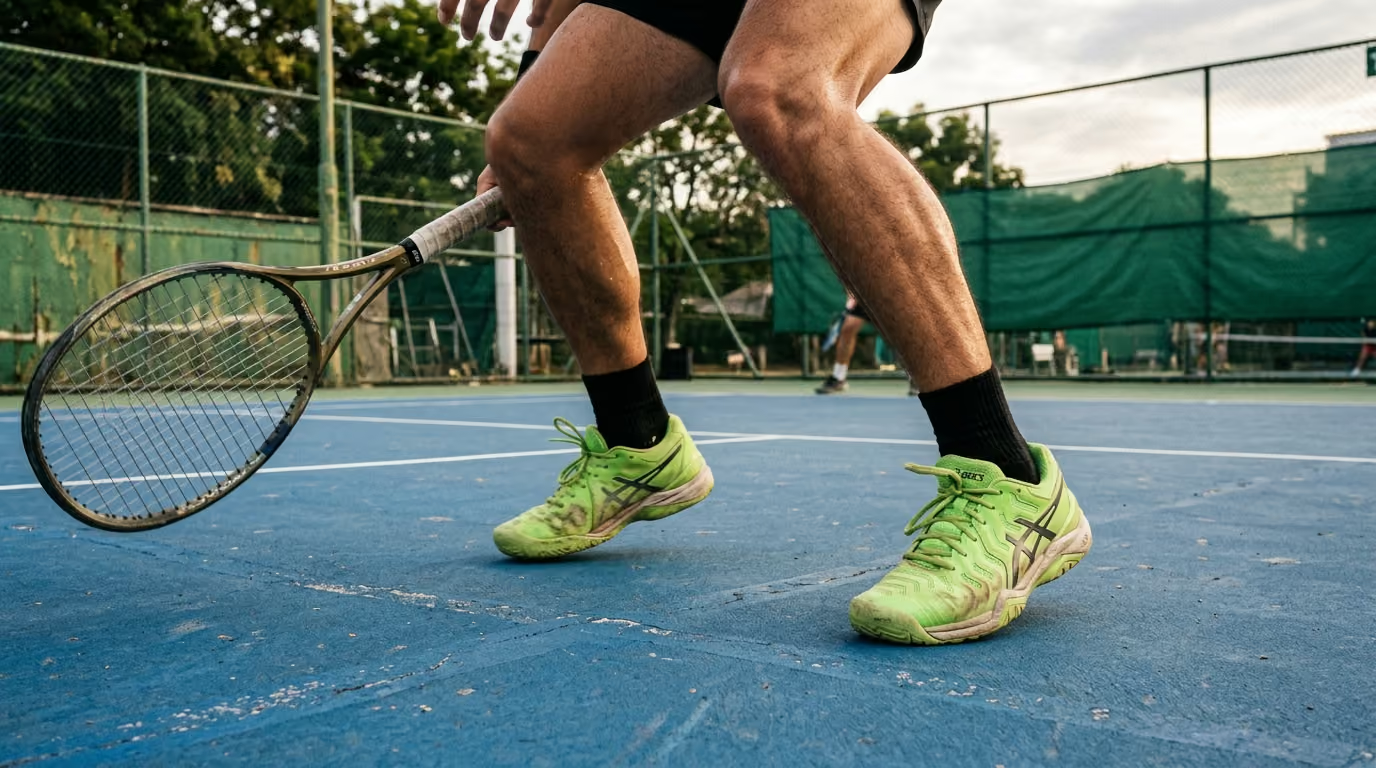
While many assume wrist and hand injuries on court are due to a single bad stroke, they actually stem from a complex load-management problem involving multiple variables.




If you have ever typed "how to stop wrist pain from tennis" into a search engine, you know how frustrating court-related joint soreness can be. The repetitive forces of racquet and paddle sports place significant demands on your hand and wrist. Preventing hand and wrist injuries on court requires managing the overall workload placed on these joint complexes, rather than relying on quick fixes like wrist tape or braces. Players can protect these areas by maintaining a relaxed grip between shots, hitting the ball in the center of the face, and progressively building forearm strength. This systematic approach ensures that your tissues can withstand high-impact forces over time.
To build a reliable prevention strategy, we must view the wrist and hand as part of a dynamic system. Injury is rarely the result of a single isolated stroke. Instead, it is a load-management problem that involves multiple interacting variables. These variables include impact force, vibration, grip pressure, forearm rotation, and cumulative stroke volume.
When you strike a ball, the force of impact travels directly through your racket or paddle into your hand. The muscles of your forearm must contract to stabilize the wrist joint. If these muscles are tired or weak, they cannot absorb this shock effectively. This causes the force to transfer directly to the passive structures, such as ligaments, tendons, and cartilage.
To systematically manage these forces, we use a comprehensive six-part framework. This framework looks at the athlete, the gear, and the environment.
This refers to the physiological tolerance of your tendons, ligaments, and bones. Building tissue capacity requires a structured approach to strength and conditioning. When muscles are strong and resilient, they absorb the bulk of the impact force.
Poor technique alters how force travels up your arm. For example, late contact shifts the impact load from the large muscles of your torso directly to the small muscles of your forearm. Correcting stroke mechanics is often the fastest way to relieve joint stress.
Your racquet or paddle is the physical interface between your body and the ball. Grip size, handle shape, implement weight, and frame stiffness all influence the mechanical stress your hand must manage. Minor changes in equipment parameters can dramatically alter your injury risk.
The sheer volume of play is a primary driver of overuse conditions. Sudden spikes in training frequency or duration often exceed the recovery rate of your tendons. Monitoring your weekly court hours is essential for joint safety.
The court surface, temperature, and lighting all play a role in safety. Slipperiness can lead to falls, which are a major cause of acute fractures. Cold weather can also increase joint stiffness and reduce muscle elasticity.
Your body provides early warning signs before a serious injury occurs. Tracking mild soreness, grip fatigue, and recovery time allows you to make adjustments before structural damage occurs. We focus heavily on these markers to promote healthy aging and athletic longevity on the court.
The hand and wrist complex is a masterpiece of biological engineering. However, its complexity makes it vulnerable to injury. Understanding this anatomy helps players identify where their discomfort is coming from.
The wrist is not a single hinge. It combines the radiocarpal and midcarpal joints with the distal radioulnar joint. This setup allows flexion, extension, radial deviation, and ulnar deviation. It also permits forearm pronation and supination.
Several important structures bear the load during a match. The carpal bones, particularly the scaphoid and lunate, sit at the base of the hand. The distal radius and ulna form the forearm foundation. On the ulnar side, the triangular fibrocartilage complex, or TFCC, acts as a primary stabilizer.
The TFCC is highly relevant to court athletes. It contributes to load transmission and stability between the distal ulna, carpus, and distal radioulnar joint. We must avoid labeling every ulnar-sided symptom as a TFCC tear. Extensor carpi ulnaris, or ECU, tendinopathy, tendon subluxation, and bone injuries can produce identical pain patterns.
This pain occurs near the thumb side of the wrist. In tennis, reported radial-sided conditions include flexor carpi radialis tenosynovitis. De Quervain syndrome and intersection syndrome are also common in this region. These issues often arise from repetitive thumb movement and wrist deviation.
This pain occurs near the little-finger side of the wrist. Common examples include ECU tendon irritation and TFCC lesions. These structures are highly loaded during heavy topspin forehands and late backhand contacts.
Dorsal pain is felt on the back of the wrist. It is often associated with repeated wrist extension, impact shock, or compression. This is common in players who excessively flick their wrists during serves or drives.
This involves the palm or the base of the thumb. It is usually related to handle pressure, tight grip mechanics, or repetitive loading of the thumb muscles. It can cause severe cramping during long matches.
These include sprains, dislocations, tendon pulley problems, bruising, and fractures. They often occur from direct ball contact, collisions, or falls. They can also happen when mishandling a racquet or paddle.
Understanding whether an injury is acute or overuse is vital for treatment. An acute injury has a recognizable event, such as a fall on an outstretched hand or a jammed finger. An overuse injury develops slowly when repeated loading exceeds the tissue’s ability to recover.
In young athletes across wrist-loading sports, reported wrist-pain prevalence has ranged from 32% to 73%. Reported overuse wrist injury prevalence has ranged from 10% to 28%. These statistics emphasize how common overuse pain is, even though data are more limited for tennis than for gymnastics.
A player can experience both patterns simultaneously. Repeated low-grade tendon irritation may precede an acute episode. A sudden fall or mis-hit can easily damage a wrist that is already weakened by chronic fatigue.
Your equipment choices dictate the physical stress transferred to your hand and wrist during contact. Selecting the wrong gear can sabotage even the most polished stroke mechanics.
Grip diameter is a critical variable that players often overlook. Research shows that an optimal grip diameter reduces grip force in both fatigued and non-fatigued states. When a grip is too small, you must squeeze unusually hard to prevent the frame from twisting. This excessive squeezing increases loading on your wrist-extensor tendons.
To evaluate your current setup, use this practical checklist:
Grip size should be changed gradually. A sudden change in handle diameter can alter your stroke timing, hand pressure, and wrist position. We recommend using a thin overgrip to customize your handle size incrementally.
The physical properties of your racquet or paddle also play a massive role. Shock and vibration are highly influenced by impact location, frame stiffness, and grip force. Beginners often strike lower on the head, which increases arm loads and vibration.
Total implement mass, balance point, and swingweight must match your physical capacity. Stiffer frames transmit more vibration to the wrist than flexible frames. String type and tension also modify these forces. Stiff polyester strings at high tensions transmit high levels of shock, whereas softer multifilament strings absorb more impact.
For paddle sports, core materials and face construction are key. Polypropylene cores tend to absorb vibration better than stiffer materials like Nomex. The weight of your paddle should allow you to react quickly without straining your forearm. Avoid relying on marketing claims that promise a single piece of equipment will prevent injury. Equipment can modify loading, but it cannot compensate for poor technique or excessive play.
While proper equipment reduces impact, your stroke mechanics dictate how that force is distributed. Solid technique acts as a natural shock absorber.
Off-center hits are a primary source of wrist strain. Three-dimensional simulations of a tennis backhand show that impact below the longitudinal axis dramatically increases wrist-extension torque. This is why coaches emphasize spacing, preparation, and visual tracking. Hitting the ball cleanly in the center of the stringbed or paddle face keeps twisting forces to a minimum.
Every stroke has unique mechanical demands that you must manage to stay healthy on court.
These shots require high speed, rapid forearm rotation, and deceleration. You must avoid producing speed through wrist action alone. Focus on using a relaxed preparation grip and coordinating your legs, hips, and shoulder. This kinetic sequence prevents the wrist from bearing the entire burden of the swing.
This stroke requires repeated wrist stabilization and grip-force changes. Topspin forehands demand high coordination between forearm rotation and wrist position. Research associates Eastern grips with radial-sided wrist conditions. Western and semi-Western grips are associated with ulnar-sided conditions, such as ECU injuries and TFCC lesions. View these associations as risk patterns rather than absolute rules.
Late contact on the backhand forces the wrist into a compromised, weak position. The two-handed backhand can reduce wrist strain by dividing the force between both arms. If you play a one-handed backhand, you must contact the ball well in front of your body with a firm, neutral wrist.
These shots require rapid racquet stabilization against fast-moving balls. Your hand should be firm at contact, but not clenched throughout the entire rally. Keep your preparation compact to avoid late, jerky movements.
These low-amplitude strokes seem harmless, but their high volume can create cumulative muscle fatigue. Avoid flicking your wrist to guide the ball. Instead, use a stable wrist and control the shot using your shoulder and knees.
Emergency gets often combine poor balance, late contact, and awkward wrist angles. To protect your joints during these shots, focus on your footwork and court positioning. Good spacing reduces the need to flick your wrist in a desperate attempt to save the point.
While tennis, pickleball, and padel share similarities, their specific physical demands and injury profiles differ. Understanding these nuances helps you tailor your prevention strategy.
Reported tennis injury rates vary substantially, ranging from 0.04 to 3.0 injuries per 1,000 hours played. Narrative reviews show that wrist pain and injury represent a greater proportion of reported tennis injuries in recent years. This relative frequency appears particularly higher among female players in modern datasets. This trend highlights the importance of incorporating targeted forearm conditioning into your weekly routine.
In pickleball, the injury landscape is heavily dominated by acute trauma from falls. An analysis of emergency-department data showed a 765.6% increase in pickleball injuries over a ten-year period. Falls accounted for 90.5% of those reported injuries.
The wrist was the most common hand or wrist injury location, accounting for 70% of those cases. Fractures were the most common diagnosis, and wrist fractures alone made up half of all injuries in the study. These injuries were most common among players older than 55, particularly women.
A separate national analysis confirmed that older adults aged 60 to 79 had significantly increased odds of hand and wrist injuries. Falls were more than twice as likely in this older age group. This means a pickleball prevention guide must focus heavily on fall prevention and safe falling techniques.
To reduce fall-related wrist fractures on the pickleball court, follow these guidelines:
Padel presents a different set of challenges. The solid, heavy paddle transmits significant vibration directly to the hand. The close quarters and fast rebounds off the glass require quick reactions and awkward wrist angles. Players must maintain a secure but relaxed grip and utilize the safety lanyard at all times.
Badminton and squash utilize lighter racquets, but require extremely fast wrist snap and forearm rotation. Do not transfer tennis injury statistics directly to these sports. Each discipline has unique stroke speeds, implement weights, and court-movement patterns.
Building physical capacity is your most reliable defense against wrist injuries. A resilient upper limb requires a balance of strength, endurance, and mobility.
Forearm and wrist strengthening should cover all planes of motion. This includes wrist flexion, wrist extension, radial and ulnar deviation, and forearm rotation. Sports-medicine guidance recommends these exercises to reduce overall strain on the upper limb.
To build tissue tolerance, focus on eccentric training. Eccentric exercises load the muscle-tendon unit while it is lengthening. This stimulation promotes collagen synthesis and strengthens the tendon structure.
Perform these three fundamental exercises twice a week:
Rest your forearm on a table with your palm facing down. Use your opposite hand to lift a light dumbbell. Slowly lower the weight over a count of four seconds, using only your target hand. Perform 3 sets of 15 repetitions.
Rest your forearm on a table with your palm facing up. Use your opposite hand to assist in lifting the weight. Lower the weight slowly over a count of four seconds. Perform 3 sets of 15 repetitions.
Hold a hammer or a light dumbbell by the bottom of the handle. Slowly rotate your forearm so your palm faces down, then rotate it so your palm faces up. Perform 3 sets of 12 controlled repetitions.
To build grip endurance, use submaximal holds. Squeeze a soft ball or grip trainer at 50% effort for 30 seconds. This is highly relevant for long rallies, where your muscles must contract continuously.
Never view the wrist in isolation from the rest of your body. Alignment, strength, and range of motion in your chest, shoulders, upper back, and spine help prevent distal injuries. Strong shoulder and trunk muscles allow you to transfer force from your legs to the ball efficiently. When these proximal links are weak, your wrist is forced to overcompensate with late acceleration or excessive grip tension.
I remember finishing a tough two hour padel match on a cold Tuesday night and waking up the next morning feeling like my lower back was locked in concrete. For a long time, I just accepted this as the price of playing hard in my forties. But once I started spending just ten minutes on targeted hip mobility before heading to the club, the stiffness almost completely vanished. It taught me that we do not have to accept pain as a default state of aging.
In our experience, the same principle applies to the upper extremity. When we help players improve their shoulder and thoracic mobility, their wrist symptoms often resolve without any direct wrist treatment. To learn more about this whole-body approach, look through our mobility and movement resources.
Warm-up routines are also vital for tendon safety. A proper pre-play sequence should raise your body temperature and prepare your joints.
This progression aligns with physical-therapy guidelines. Rehearsing movements that mimic court actions prepares your nervous system and muscles for high-velocity impacts.
Many recreational players unknowingly expose their wrists to excessive stress. Identifying these common errors is key to long-term joint health.
A common misconception is that a stronger grip always protects the wrist. In reality, constant maximal grip pressure increases modeled wrist-extension torque by about 20%. This constant tension prevents the forearm muscles from resting between shots. It leads to rapid muscle fatigue and tendon overload.
Tennis elbow involves the lateral epicondyle at the elbow joint. Wrist pain can arise from entirely different structures, such as carpal bones, ligaments, or the TFCC. Treating wrist pain with strategies designed solely for lateral epicondylitis can delay your recovery.
A rigid brace can offer temporary support or psychological comfort. However, it cannot correct poor contact, excessive playing volume, or poor stroke mechanics. Using a brace to mask escalating pain while continuing to play at high volumes often leads to more severe tissue damage.
While stretching is helpful, static stretches do not replace progressive strength training. Tendons require load-bearing exercises to build the physical capacity needed to handle ball impact. Relying solely on stretches leaves your joints vulnerable under load. For a deeper understanding of these concepts, check our injury prevention resources.
Many players believe that minor stiffness is simply a part of playing sports. However, low-force repetitive strokes can create cumulative loading that leads to chronic tendon degradation. Pain that escalates during a match or persists into the next day should never be ignored.
Tendons and ligaments have a limited blood supply compared to muscles. This limited blood flow means they adapt and recover slowly. Proper recovery planning is essential to prevent chronic overuse conditions.
To support healthy tendon recovery, players must monitor their training load. If you increase your court hours too quickly, your tendons will not have enough time to repair. This imbalance leads to micro-tears and chronic tendinopathy. For detailed recovery protocols, refer to our recovery science resources.
A practical monitoring system is a simple way to track physical stress. Keep a training diary and record these variables:
If you are recovering from a wrist injury, follow a progressive return-to-play framework. Do not return to competitive play the moment your pain subsides.
Only progress to the next stage if you remain pain-free for 24 hours. If your symptoms return, step back to the previous level. This systematic approach ensures that you do not overload healing tissues.
While most court-related wrist pain can be managed with rest and training modifications, some symptoms require immediate medical attention.
Consult a qualified healthcare professional if you experience any of the following red flags:
A physical therapist, sports-medicine physician, or orthopedist can perform clinical tests and order imaging if necessary. Getting an accurate diagnosis early prevents a minor issue from turning into a chronic, season-ending injury.
To protect your wrists and hands on the court, focus on making small, practical adjustments this week.
Follow Evercourts for practical insights on tennis, pickleball and padel performance, movement, recovery and healthy ageing. Stay connected for new articles, research-led guidance and ideas to help you play well and keep playing for years.


Read practical guidance for better movement, smarter preparation and a game that keeps working for you.
explore the Blog