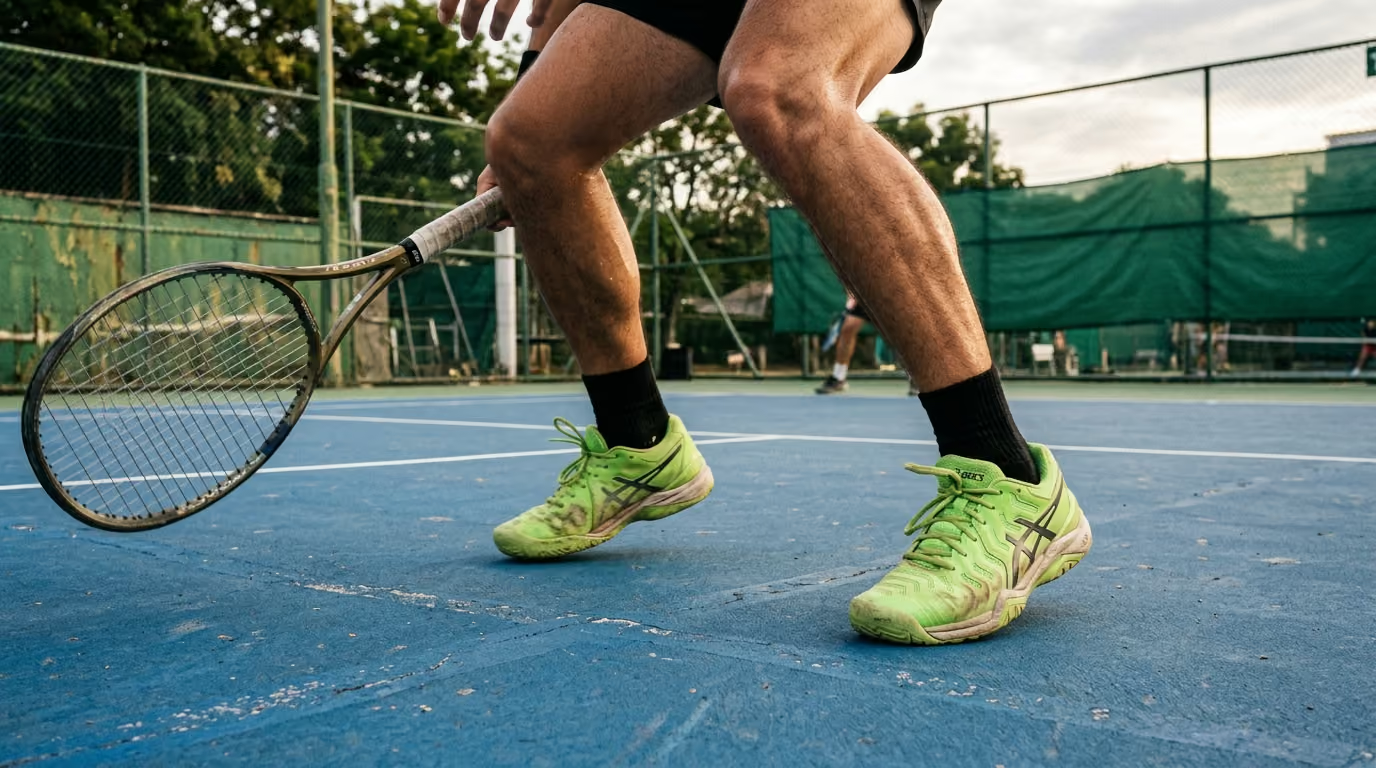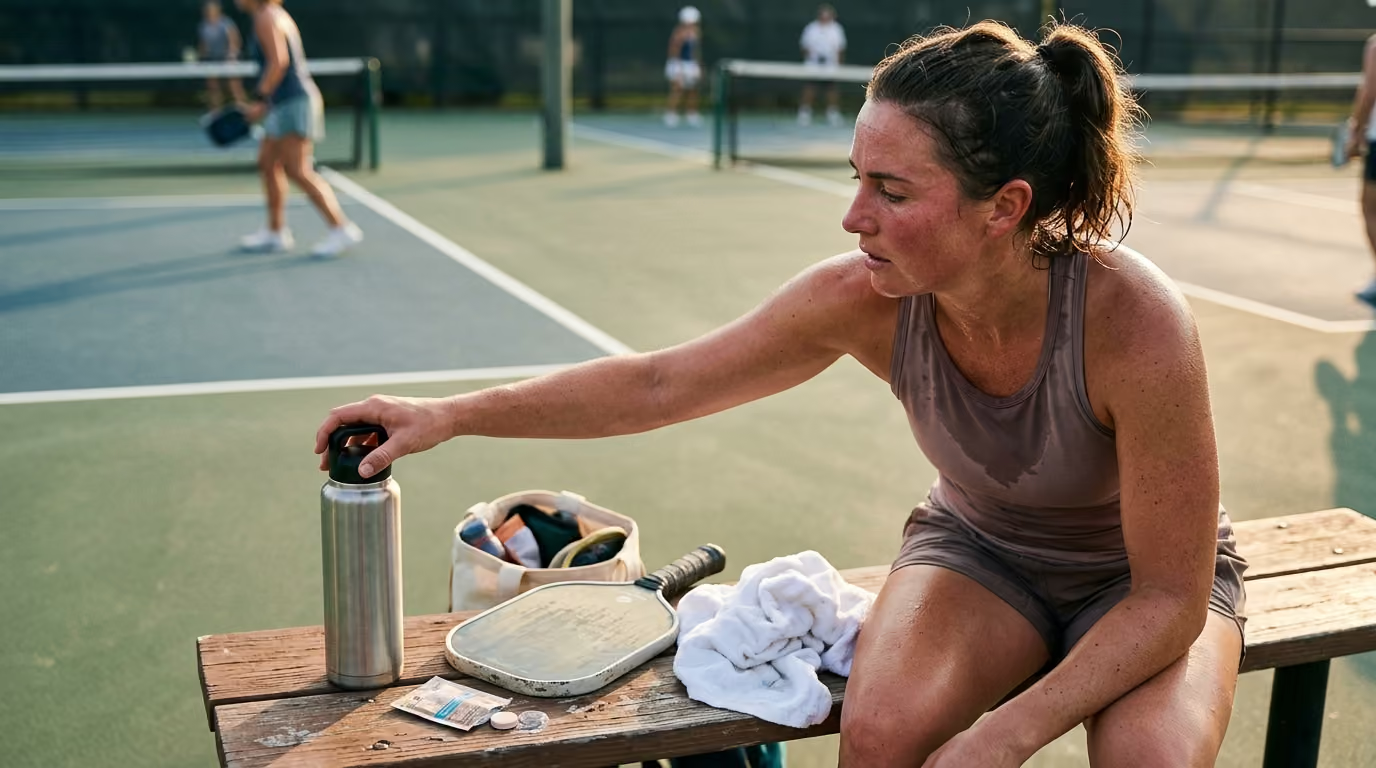

A mean sweat rate of 1.1 liters per hour was observed in indoor tennis, highlighting the vast individual differences in fluid loss during racket sports.




Many court players believe that drinking as much water as possible is the key to maintaining energy. Others spend considerable money on complex electrolyte supplements, hoping to avoid fatigue or cramping. In reality, hydration is a highly individualized fluid balance challenge that cannot be solved with a single generic rule. Staying properly hydrated requires understanding your personal sweat rate, the playing environment, and the duration of your match.
Our physical performance on the court depends on maintaining this fluid balance. Overdrinking can be just as problematic as underhydrating. This guide provides a practical, evidence-based approach to fluid intake designed specifically for racket sports. By learning how to manage your hydration, you can protect your performance and play comfortably for years to come.
To manage your hydration effectively, you must understand how your body handles fluids during exercise. The body constantly moves water and minerals to support muscle contraction, circulation, and temperature regulation. When you step onto the court, your muscles generate heat. Sweat is your primary mechanism for releasing this heat and preventing your body from overheating.
Euhydration refers to a state of normal, optimal body-water content. According to the National Athletic Trainers' Association, maintaining body mass within 1% of your baseline is a good target for this state. Hypohydration represents a deficit in body water. This deficit occurs when your sweat losses exceed your fluid intake during play.
Many coaches suggest that a fluid loss of more than 2% of your body mass can decrease athletic performance. However, these guidelines are not absolute rules. Your body mass fluctuates throughout the day due to food, urine, and clothing. Therefore, we should view these percentages as useful trends rather than instant diagnoses of dehydration.
Sweating is not a uniform process. The American College of Sports Medicine states that both sweat rate and sweat composition vary widely among individuals. Some players barely sweat during an hour of singles play. Others can lose several liters of fluid in the same timeframe.
Research published in peer-reviewed sports science journals highlight these extreme differences. For example, a study of indoor tennis match play found a mean sweat rate of 1.1 liters per hour. However, individual sweat rates in that study ranged from 0.3 liters to 2.0 liters per hour. This wide range proves that a single recommendation, like drinking one bottle of water per hour, will fail many players.
Sweat contains water and essential minerals called electrolytes. Sodium is the primary electrolyte lost in sweat. The concentration of sodium in sweat is highly individual and genetically determined. Some players are salty sweaters, meaning they lose high amounts of sodium during play.
Salty sweaters often notice white, gritty residue on their clothing or skin after a match. They may also experience high levels of thirst or frequent muscle cramping. However, sweat sodium concentration is not a real-time measure of how hydrated you are. Instead, it simply tells you how much sodium you lose when you sweat.
It is important to separate fluid balance from electrolyte balance. Fluid balance is the relationship between the total water you lose and the water you drink. Electrolyte balance concerns the replacement of specific minerals, especially sodium, lost in your sweat.
You can lose a substantial amount of water with very little sodium loss. Conversely, a salty sweater can lose high amounts of both. Your replacement strategy should depend on match duration, environmental heat, and your individual sweat profile. You should not rely on generic marketing claims on sports drink labels to make these decisions.
Ambient temperature is only one part of the environmental equation. Humidity plays a massive role in how hard your body must work to cool itself. When humidity is high, your sweat cannot evaporate easily into the surrounding air. This reduces the cooling effect of sweating, which increases your internal body temperature and heart rate.
To measure this environmental stress accurately, sports scientists use wet-bulb globe temperature. This metric combines air temperature, humidity, wind speed, and solar radiation. On outdoor courts, the surface material can also intensify heat stress. Hard courts absorb and radiate solar heat, making the air temperature near the ground much hotter than the ambient reading.
The most effective way to manage your fluid needs is to calculate your personal sweat rate. This removes the guesswork from your hydration plan. You can easily estimate your sweat rate using a simple mass-balance calculation at home or at your local club.
To perform this test, you will need a reliable digital scale and a way to measure the fluid you drink. Run this test during a typical practice session or match. This will give you a baseline for specific weather conditions.
Follow these steps to calculate your fluid losses:
Once you have these measurements, you can use two simple formulas to find your total sweat loss and your hourly sweat rate.
First, calculate your total sweat loss during the session. Use this formula:
Sweat Loss (L) = Pre-play Weight (kg) - Post-play Weight (kg) + Fluid Consumed (L) - Urine Produced (L)
Because one kilogram of body mass is approximately equal to one liter of water, this calculation is highly accurate. Next, find your hourly sweat rate by dividing your total sweat loss by the duration of your session:
Sweat Rate (L/h) = Sweat Loss (L) / Exercise Duration (hours)
For example, suppose you weigh 80 kilograms before play and 79.2 kilograms after play. During the two-hour session, you drank 1.0 liter of water and did not use the restroom. Your calculation would look like this:
Sweat Loss = 80 - 79.2 + 1.0 - 0 = 1.8 Liters
To find your hourly rate, divide 1.8 liters by 2 hours. Your sweat rate for those specific conditions is 0.9 liters per hour.
To build an effective hydration plan, repeat this test in different conditions. Measure your sweat rate during a cool indoor session, and test it again on a hot summer day. You will likely see a significant difference in your fluid needs.
Use these numbers to guide your drinking habits. Your goal should not be to replace every single milliliter of sweat during play. Instead, aim to keep your total fluid loss below 2% of your body mass. This strategy prevents excessive dehydration without risking the digestive issues caused by overdrinking.
An effective hydration plan spans three distinct phases: before play, during play, and after play. Managing each phase correctly ensures you step onto the court prepared, maintain your energy during the match, and recover quickly afterward.
Your pre-play hydration strategy should focus on arriving at the court in a balanced state. You should not try to correct days of poor drinking habits by chugging liters of water right before your match. This can cause bloating, frequent bathroom trips, and a temporary drop in blood sodium levels.
The American College of Sports Medicine recommends drinking approximately 5 to 7 milliliters of fluid per kilogram of body mass at least four hours before exercise. For a 70-kilogram player, this equals about 350 to 490 milliliters of fluid. This timing gives your kidneys enough time to regulate fluid balance and excrete any excess water as urine.
If you notice your urine is dark or your output is unusually low, drink another 3 to 5 milliliters per kilogram about two hours before play. Your urine color is a helpful tool, but it is not perfect. Certain vitamin supplements, medications, and foods can alter the color of your urine. Use your natural thirst as an additional guide.
If you are a heavy sweater or plan to play in extreme heat, consuming a small amount of sodium before your match can be helpful. The American College of Sports Medicine suggests consuming around 500 milligrams of sodium about 90 minutes before playing in hot conditions. You can easily get this through a lightly salted pre-match meal or a structured sports drink.
Once play begins, your goal is to replace enough fluid to prevent excessive dehydration. Do not wait until you feel extremely thirsty to start drinking. At the same time, avoid forcing down large volumes of liquid that make you feel heavy or uncomfortable.
For intense activity, a general drinking rate of 0.4 to 0.8 liters per hour is a sensible starting range. Smaller players in cool conditions will fall at the lower end of this range. Larger players on hot, humid courts will require the upper end or slightly more.
The best time to drink is during natural breaks in play. On a tennis court, utilize every changeover to take small, controlled sips. In padel or pickleball, take advantage of the breaks between games or matches.
A practical starting point for tennis players is to consume 200 milliliters of fluid per changeover in mild weather. In hot, humid conditions, raise this to approximately 400 milliliters per changeover. Adjust these volumes based on your calculated sweat rate and how comfortable your stomach feels.
Selecting the right beverage depends on the length and intensity of your session. For sessions lasting under an hour, plain water is usually completely sufficient. For longer sessions, you may want to use a carbohydrate-electrolyte drink to maintain both hydration and energy levels.
Recovery hydration is about replacing the fluid and mineral deficits that remain after your match. This is especially critical if you have another match scheduled later that day or early the following morning.
To recover quickly, sports nutritionists recommend replacing approximately 150% of your lost body mass during the hours following play. The National Federation of State High School Associations suggests drinking 16 to 20 fluid ounces of fluid for every pound of body mass lost. This extra volume accounts for the fluid you will continue to lose through sweat and urine after you finish playing.
Including sodium in your post-play fluid or food is essential for proper rehydration. Sodium helps your body retain the water you drink rather than excreting it immediately as urine. A simple post-match meal containing salt, paired with plain water, is often more effective than drinking large volumes of unsalted water alone.
While all three sports require quick lateral movement and high cardiovascular fitness, their hydration demands differ significantly. The court size, match formats, and play dynamics alter how much you sweat and when you can drink.
Tennis matches can be long and physically punishing. A single singles match can easily exceed two hours. You face high-intensity rallies, long running distances, and constant sun exposure on outdoor courts. Because tennis matches are often played in open outdoor stadiums, radiant heat can be intense.
The research on tennis hydration is highly developed. Studies on professional women tennis players during tournament match play in the heat have shown sweat rates averaging 2.0 liters per hour. These players lost an average of 1.2% of their body mass despite drinking frequently.
Tennis players have structured opportunities to hydrate. The rules allow for 90-second rests during changeovers and 120-second rests between sets. You should use these breaks to systematically hydrate. If you are playing a long, hot match, follow a strict schedule. Do not skip a drinking opportunity early in the match, even if you do not feel thirsty yet.
Pickleball matches are typically much shorter than tennis matches. A single game to 11 or 15 points might only take 15 to 20 minutes. However, tournament formats often require you to play multiple matches in a single day. This can lead to hours of cumulative heat exposure and gradual dehydration.
Pickleball courts are smaller, which reduces the running distance per rally. However, the quick, explosive movements still generate significant metabolic heat. Many pickleball players are older adults. Healthy aging means our thirst sensation and kidney function can naturally decline over time. This makes structured hydration planning even more important for older court athletes.
In pickleball, you do not have long, scheduled changeovers like in tennis. Breaks occur between games or during short timeouts. You must be proactive. Keep your water bottle near the court and take sips during quick transitions. If you are playing a multi-hour tournament, monitor your total fluid intake to ensure you are not underdrinking during long waiting periods.
Padel is almost always played as a doubles game, which reduces the total running distance compared to singles tennis. However, the rallies are often longer, and the game involves constant acceleration, jumping, and change of direction. These explosive movements generate a high amount of heat in your working muscles.
Padel is frequently played on indoor or semi-indoor courts enclosed by glass walls. These glass enclosures can trap heat and humidity, creating a microclimate with very little air movement. This poor ventilation makes sweat evaporation difficult, leading to high thermal strain.
A systematic review of padel match play reported water intake volumes ranging from 735 milliliters in women to 861 milliliters in men per match. However, these numbers represent what players chose to drink, not necessarily what they needed. To find your ideal padel hydration plan, use the sweat-testing protocol. Apply these principles during your games and track how you feel on court.
To see how these elements come together, consider our team's experience. I remember finishing a tough two hour padel match on a cold Tuesday night and waking up the next morning feeling like my lower back was locked in concrete. For a long time, I just accepted this as the price of playing hard in my forties. But once I started spending just ten minutes on targeted hip mobility before heading to the club, the stiffness almost completely vanished. It taught me that we do not have to accept pain as a default state of aging. In our experience, combining movement prep with a precise hydration approach keeps the joints moving fluidly. You can learn more about these movement routines in our strength and conditioning guidelines.
Even experienced court players make mistakes when designing a hydration plan. Many of these errors stem from popular fitness myths or aggressive marketing from supplement companies. Recognizing these pitfalls can save you from poor performance and physical discomfort.
You have likely heard the advice that every athlete should drink one liter of water per hour of exercise. This is a highly flawed and potentially dangerous rule. Because sweat rates vary from 0.3 to over 2.5 liters per hour, a fixed recommendation is useless.
If you are a small player with a low sweat rate, forcing down a liter of water per hour will likely cause stomach sloshing and frequent urination. It can also lead to a dangerous dilution of your blood sodium levels. Conversely, if you are a large, heavy sweater, a single liter may not be enough to prevent a substantial drop in your athletic performance. Always base your intake on your personal sweat rate, not a generic guideline.
Electrolyte supplements are highly popular, but they are not always necessary. For short recreational sessions lasting under an hour, your body does not need an aggressive dose of supplemental sodium. Your kidneys are highly efficient at managing your mineral levels, and your regular diet provides plenty of sodium.
Using high-sodium powders during short or low-intensity matches can cause gastrointestinal distress, bloating, and an unpleasant taste. Save your electrolyte drinks for sessions that exceed one hour, matches in high heat and humidity, or when you know you are a heavy, salty sweater. For daily play, plain water is often the most practical and comfortable choice.
Many players believe that having completely clear urine is the ultimate sign of perfect hydration. This is a common misunderstanding. Very clear urine often indicates that you have recently drank a large volume of plain water quickly, causing your kidneys to excrete the excess water. It does not prove that your muscle tissues are fully hydrated.
Your urine color is a helpful general indicator, but it should not be your only metric. If you drink a large bottle of water right before your match, your urine may run clear even if your body is still recovering from a previous state of dehydration. Pay attention to other signs like dry mouth, mild headaches, and your actual performance levels on the court.
Sports drinks can be highly beneficial for long, intense matches, but they are not a magic solution. A study involving adolescent tennis players training in the heat found no significant differences between a sports beverage and plain water for several key metrics. Both groups showed similar results for fluid retention, sweat loss, rate of perceived exertion, and gastrointestinal comfort.
The study did suggest that carbohydrate-electrolyte beverages can help minimize fluid deficits under specific, high-intensity conditions. However, for average recreational play, a sports drink is not strictly superior to plain water. Consider your actual energy needs and match duration before choosing a sugary sports drink over water.
Many players swallow salt tablets at the first sign of a muscle cramp. While severe sodium depletion can contribute to cramping in extreme conditions, most muscle cramps are multifactorial. They are often caused by localized muscle fatigue, poor physical conditioning, or a high pace of play that exceeds your current training level.
Taking highly concentrated salt tablets without sufficient water can irritate your stomach lining and cause nausea. Instead of relying on salt tablets as a quick fix, focus on gradual physical conditioning, proper pacing, and a consistent hydration plan. If you are prone to heat-related cramping, a mildly salted sports drink is a much safer option.
Your hydration habits directly impact your recovery speed and tissue health. Racket sports place high demands on your muscles, tendons, and joints. Keeping these tissues hydrated is essential for preventing wear and tear and supporting your healthy aging goals.
Your joints are cushioned by synovial fluid, which is composed largely of water. When you are dehydrated, the viscosity of this fluid can change, reducing its cushioning ability. This can lead to increased friction within your joints, resulting in stiffness and discomfort after a long match.
By maintaining normal fluid levels, you help keep your joints moving smoothly. This is especially important for the knees, hips, and lower back, which absorb significant impact during the lateral movements of court play. For more strategies on maintaining joint comfort, explore our player health strategies.
When you play a demanding match, your muscles burn stored carbohydrates called glycogen. To restore these energy reserves during recovery, your body requires water. For every gram of glycogen your muscles store, they must bind approximately three grams of water.
If you remain dehydrated after a match, your body will struggle to rebuild these glycogen stores efficiently. This delay can leave you feeling sluggish and weak during your next practice session. Proper post-play hydration, combined with a balanced meal, ensures your muscles have the resources they need to rebuild and recover.
Dehydrated muscle fibers and tendons lose some of their natural elasticity. This stiffness makes them more vulnerable to micro-tears during sudden, explosive movements like sprinting for a drop shot or lunging for a volley. Maintaining consistent hydration helps keep your connective tissues pliable and resilient.
This focus on tissue health is a cornerstone of athletic longevity. By prioritizing your fluid balance, you protect your body from the minor strains and chronic stiffness that often keep adult players off the court. Learn more about protecting your body in our sports recovery science section.
To see how these hydration principles apply in practice, let us examine five common court-sport scenarios. These examples show how to adapt your fluid intake based on actual play patterns.
A 70-kilogram player participates in a casual 45-minute doubles pickleball session in mild, 18-degree weather. They had a normal lunch two hours before play and feel comfortable.
In this scenario, the player does not need an aggressive hydration strategy. The match duration is short, the intensity is moderate, and the weather is cool. A sensible plan is to have a bottle of plain water court-side and drink small sips when thirsty. There is no need for specialized electrolyte powders or sports drinks.
A 75-kilogram player is competing in a challenging singles tennis match in 30-degree summer heat. They lose 1.2 kilograms of body mass during the two-hour match, despite drinking 1.0 liter of fluid. They do not use the restroom during play.
To analyze this case, we calculate their total sweat loss:
Sweat Loss = 1.2 kg + 1.0 L = 2.2 Liters
Their hourly sweat rate is 1.1 liters per hour. Their body mass loss of 1.2 kilograms is 1.6% of their starting weight. This is within a safe, performance-friendly range.
For future matches in similar heat, this player should maintain a similar plan. Because the match exceeds one hour and occurs in high heat, using a carbohydrate-electrolyte beverage containing 0.5 to 0.7 grams of sodium per liter is highly appropriate. They should utilize every changeover to consume 200 to 250 milliliters of fluid.
An 85-kilogram player experiences heavy sweating during a two-hour doubles padel match. The indoor court is poorly ventilated and highly humid. They consume 1.2 liters of water during play and weigh 2.0 kilograms less after the match.
Let us calculate their total sweat loss:
Sweat Loss = 2.0 kg + 1.2 L = 3.2 Liters
Their hourly sweat rate is a high 1.6 liters per hour. They lost 2.4% of their starting body mass, which exceeds the recommended 2% threshold. This player likely finished the match feeling fatigued, stiff, and unusually thirsty.
For their next match in these humid conditions, the player needs to adjust their plan. They should increase their fluid intake to approximately 0.9 to 1.0 liters per hour, taken in small, regular amounts. Because of their high sweat rate and the humid environment, they should use a structured electrolyte drink to replace the lost sodium and support fluid retention.
A player is competing in an all-day pickleball tournament. Anxious about the heat, they drink water constantly throughout the day, consuming over 2.5 liters of water per hour. At the end of the day, they notice they weigh more than they did in the morning and feel slightly bloated and nauseous.
This weight gain is a clear warning sign. The player's fluid intake has exceeded their actual sweat and urine losses. This overdrinking can lead to exercise-associated hyponatremia, a dangerous drop in blood sodium levels.
This player must scale back their drinking. They should transition to drinking in response to natural thirst and their measured sweat losses. If they develop symptoms like worsening nausea, headache, or confusion, they should stop playing immediately and seek medical attention.
A tennis player wins a tough three-set match, losing 1.5 kilograms of body mass. They are scheduled to play the doubles semi-final in three hours.
Because of the short recovery window, this player must use a rapid rehydration strategy. They should aim to consume 150% of their lost mass, which equals 2.25 liters of fluid, over the next two hours.
To ensure their body retains this fluid, they should pair their drinking with a recovery meal containing sodium and carbohydrates. Plain water alone will trigger rapid urine production, delaying the recovery of their muscle tissues.
While most hydration issues can be managed with simple adjustments, there are times when you should seek professional guidance. Working with a qualified healthcare provider, sports dietitian, or athletic trainer can help you address complex challenges safely.
You must be able to distinguish normal tennis fatigue from the warning signs of exertional heat illness. If you or a playing partner experience any of the following symptoms, stop play immediately:
In these situations, move the player to a cool, shaded area, begin active cooling with wet towels or ice, and seek urgent medical assistance. Do not try to force the player to drink large volumes of water if they are confused or vomiting.
If you have pre-existing health conditions, your hydration needs will be unique. Conditions like high blood pressure, kidney disease, or cardiovascular issues can alter how your body manages fluids and minerals.
Certain medications, such as diuretics, beta-blockers, and blood pressure prescriptions, can also affect your sweat rate and electrolyte balance. If you take any of these medications, consult your doctor before making major changes to your fluid or sodium intake. They can help you design a safe, customized plan that protects your health.
If you struggle with chronic muscle cramping, severe post-match fatigue, or difficulty managing your weight during play, consider working with a sports dietitian. They can conduct professional sweat testing to measure your exact sodium losses. This data allows them to create a precise nutrition and hydration protocol tailored to your specific sport.
Prioritizing your health is a key part of maintaining your court performance. For more information on staying active and healthy, visit our racket sport performance platform.
By taking a structured, personalized approach to your court hydration, you can enjoy better energy, faster recovery, and many more years of competitive play.
Follow Evercourts for practical insights on tennis, pickleball and padel performance, movement, recovery and healthy ageing. Stay connected for new articles, research-led guidance and ideas to help you play well and keep playing for years.


Read practical guidance for better movement, smarter preparation and a game that keeps working for you.
explore the Blog