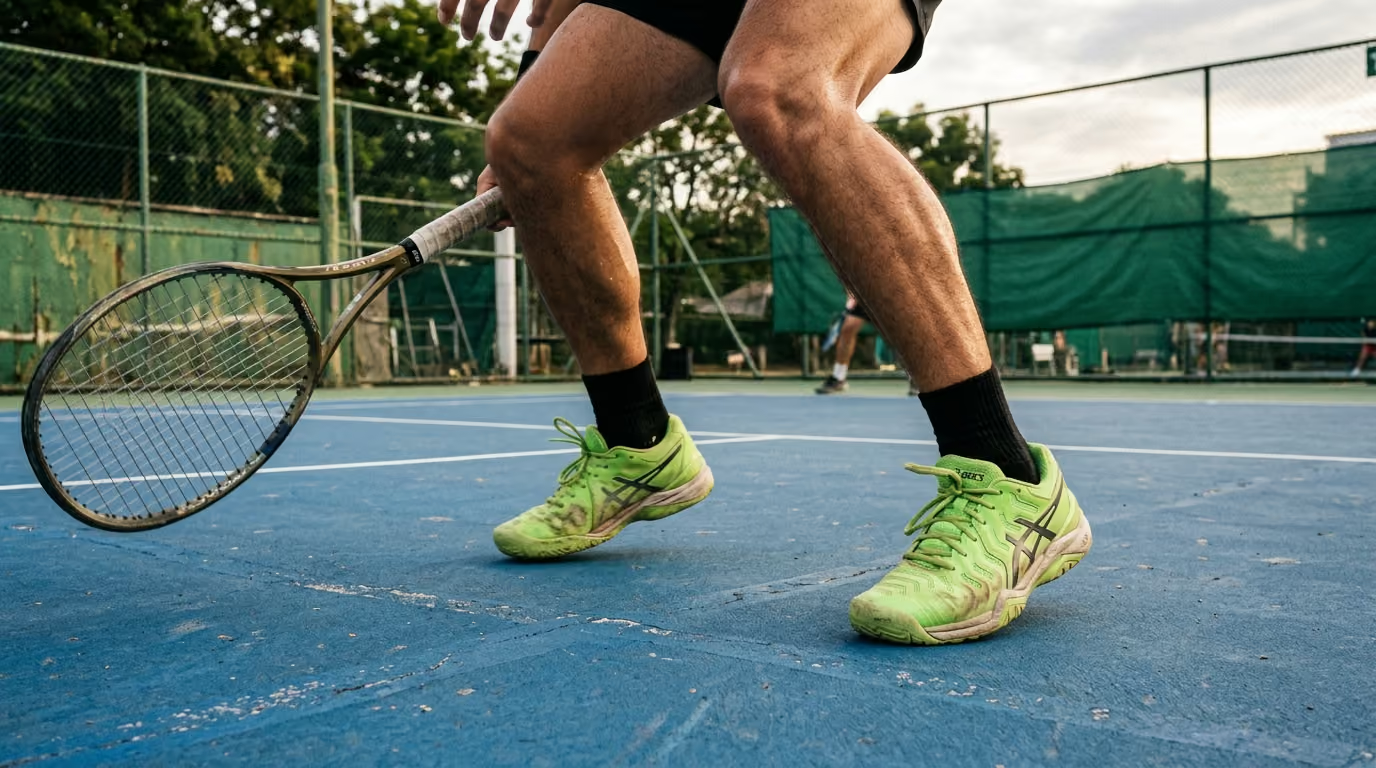

Over 1,000 hours of court time can lead to new injuries in tennis, pickleball, and padel players, highlighting the importance of a structured injury prevention framework.




Injury prevention on the court is not a matter of static stretching before a match or buying the most expensive pair of shoes. It is a systematic process of balancing the physical demands of your sport with your body's current capacity to handle those demands. By understanding this relationship, you can play consistently, perform better, and maintain your physical capabilities for years.
Preventing court injuries requires a structured approach that matches your weekly playing load with your physical capacity. By managing how quickly you increase playing time, performing targeted strength work, and addressing sport-specific movement patterns, you can significantly reduce your overall risk of injury. This framework helps you stay on the court and maintain athletic longevity.
Injury prevention in racquet sports is often oversimplified. Many players believe that a quick hamstring stretch or a new brand of footwear will solve their physical issues. In reality, injuries occur due to an interaction of multiple factors. Your physical capacity, recent training workload, movement habits, recovery sleep, equipment, court surface, and even the weather all play a role.
To understand your risk, you must first distinguish between different types of injury data. Incidence measures the number of new injuries relative to your playing hours, often expressed per 1,000 hours of court time. Prevalence refers to the proportion of players who are currently dealing with an injury during a specific season. An acute injury has a sudden, recognizable onset, like an ankle sprain from a bad landing. An overuse injury develops gradually over several weeks due to repetitive stress without sufficient recovery.
A time-loss injury is severe enough to keep you off the court entirely. A medical-attention injury requires assessment or treatment by a professional, even if you manage to keep playing. The overall injury burden combines how often these events happen with how much play time you actually lose because of them. When we look at these factors together, we can see that injury prevention is a systems problem.
The core principle of this system is the relationship between capacity and load. Injury risk rises when the physical load imposed on your body exceeds your current tissue tolerance. This mismatch is especially dangerous when the load increases faster than your body can adapt.
Load includes more than just the minutes you spend playing matches. It includes high-intensity rallies, serving volume, repeated deep lunges, rapid lateral shuffles, and explosive deceleration. It also includes off-court stressors like poor sleep, travel, hot weather, and daily life stress. Capacity is your body's overall tolerance, built through strength, aerobic fitness, tendon resilience, joint mobility, balance, and coordination.
To manage this system, you must distinguish between external load and internal load. External load is the physical work you perform, such as playing three matches or hitting fifty serves. Internal load is how demanding that work was for your specific body, measured by your heart rate, fatigue, and muscle stiffness. You can calculate your training load by multiplying the session duration in minutes by your rating of perceived exertion on a scale of one to ten.
Tracking your workload helps you avoid sudden spikes in physical stress. Your acute workload is the total playing volume you completed over the current week. Your chronic workload is your average weekly playing base over the previous three to six weeks. Comparing these two numbers helps you identify when you are increasing your playing volume too quickly.
A 2025 review of tennis injuries published in the International Journal of Sports Physical Therapy reported that abrupt increases in the acute-to-chronic workload ratio were the strongest extrinsic predictor of injury. In junior players, a ratio above 1.3 increased risk, while adult players saw a rise in risk when the ratio exceeded 1.5. These numbers are not absolute laws, but they show that rapid spikes in playing volume are highly risky. To play safely, you should avoid doubling your playing time from one week to the next.
Build up your playing volume gradually, and treat next-day stiffness as feedback that your body needs a lighter dose of training. For more guidance on managing these variables, explore our comprehensive injury prevention resources to keep your body moving well.
While all racquet sports share lateral movement, rotation, and overhead hitting, each sport has a unique physical footprint. Tennis typically requires players to cover a much larger court surface. This demands longer sprints, high-intensity deceleration, and repetitive open-stance braking. Tennis players also experience a high volume of repetitive, single-arm rotational forces during groundstrokes and serves.
A systematic review published in Sports Medicine compared various racquet sports and found that tennis injuries are dominated by lower-extremity issues. Muscle injuries accounted for approximately 33% to 62% of tennis cases, while ligament injuries made up 11% to 38%. The ankle was identified as the most commonly injured joint in the tennis literature. Reported tennis injury rates vary widely, from 3.5 to 56.6 injuries per 1,000 hours, depending on whether the study looked at professional or recreational players.
Tennis players are highly exposed to repetitive wrist, elbow, and shoulder strain due to the weight of the racquet and ball. They also experience high impact forces on the knees and Achilles tendons from hard courts. For a deeper look at these specific patterns, check out our dedicated tennis articles.
Pickleball features a smaller court, but this smaller space does not mean the sport is automatically safer for your joints. The most distinctive risk pattern in pickleball is the interaction between rapid movement, sudden balance shifts, and player demographics. A large portion of pickleball players are older adults who may return to sport after years of inactivity. They often face sudden, high-intensity demands during deep lunges near the kitchen line or when chasing lob shots.
An analysis of emergency-department data over ten years found that falls were the leading cause of pickleball injuries, accounting for 65.5% of all cases. Players aged 65 to 80 accounted for 61.1% of these injuries, with fractures being the most common diagnosis. The wrist was the single most frequently injured body region, often hurt when players reached out to break a fall.
Younger pickleball players face different risks, such as ankle inversion sprains or knee strains from aggressive cutting movements. The overall rise in pickleball injuries reflects the sport's massive growth, rather than an inherently dangerous design. You can learn more about staying safe on the short court by reading our pickleball articles.
Padel presents a third distinct profile, combining doubles play on a compact court with glass walls, metal mesh, and constant rebounds. Players must react quickly to balls bouncing off the walls at unusual angles. This requires constant backward movement, rapid trunk rotation, and repetitive overhead strokes like the bandeja and vibora.
A scoping review of padel injuries published in the Journal of Human Kinetics found that the elbow was the most frequent injury location. This was followed closely by the shoulder, the lower back, and the knees. Padel players frequently suffer from tendon and muscle issues due to the high volume of overhead hitting and the stiff, heavy nature of padel paddles.
A separate systematic review estimated padel injury prevalence between 40% and 95%, with an average of three injuries per 1,000 training hours. The repetitive nature of padel groundstrokes places a massive burden on the wrist extensors and forearm muscles. Collisions with partners or the glass walls also represent unique hazards. For tips on managing these specific demands, you can read our library of padel articles.
To protect your body, you need a systematic method rather than random exercises. This step-by-step framework is designed to help you identify your personal risks and build structural resilience.
Before you change your training, you must evaluate your personal risk factors. Start by looking at your age, previous injury history, and current areas of stiffness. A previous injury in the last twelve months is the single strongest predictor of a new injury.
Next, examine your sport-specific factors, such as whether you play singles or doubles, and how many times you play per week. Finally, inspect your playing environment. Look for wet court surfaces, loose leaves, poor lighting, or worn-out shoe tread. Women may experience higher rates of upper-extremity injuries, while men often report more lower-limb strains.
For the next month, keep a simple log of your court sessions. Record the date, the duration of play, and how hard the session felt on a scale of one to ten. Use these numbers to calculate your weekly session load score.
You should also note any pain or stiffness you feel before, during, or after play. Use a traffic-light system to make your log actionable. Green means you are pain-free; yellow means you have minor stiffness that goes away quickly; red means sharp pain or swelling that requires rest. This simple habit keeps you honest about your physical state.
To withstand the forces of racquet sports, you must train your muscles, tendons, and joints off the court. Focus on three to four key areas during your strength sessions.
First, train lower-limb strength with split squats, single-leg deadlifts, and calf raises. These movements build the eccentric strength needed to stop and change direction safely. Second, build tendon resilience in your Achilles, patellar, and forearm tendons through progressive loading. Use heavy, slow movements to make these tissues stiffer and more resistant to strain.
Third, prioritize trunk and hip control to protect your spine. Exercises like side planks, rotational carries, and hip abductor work help keep your pelvis stable. This stability prevents your lower back from twisting excessively during hard groundstrokes.
Fourth, strengthen your shoulder rotators and scapular muscles to support your overhead strokes. Use external rotation exercises, rowing movements, and serratus anterior presses to build a stable platform for your arm. Finally, train your feet and ankles with single-leg balance drills and lateral hopping to prevent inversion sprains on the court.
Never walk directly from your car to the court to start playing points. A dynamic warm-up prepares your nervous system, increases joint fluid, and raises muscle temperature.
Your warm-up should last eight to ten minutes and progress from general movement to sport-specific drills. Start with light jogging or skipping to raise your heart rate. Follow this with dynamic mobility movements like lunges with a twist, leg swings, and arm circles.
Finish with active ankle work, lateral shuffles, and light shadow swings. This approach is far more effective than static stretching, which can temporarily reduce your muscle power.
Poor technique forces your body to use small, fragile joints to perform heavy work. In tennis, you should focus on efficient split-step timing and controlled deceleration to reduce knee strain. In pickleball, avoid running backward blindly to chase lob shots; instead, turn your body and run in a diagonal direction.
In padel, learn to anticipate the ball's bounce off the glass so you do not have to make sudden, awkward lunges. Practicing these movement skills under the guidance of a coach will protect your joints. This training is a central part of mobility and movement training for active court players.
Your racquet, paddle, and footwear are physical extensions of your body. Choose court-specific shoes that offer solid lateral support and appropriate traction for your specific surface. Running shoes do not have the lateral stability needed for rapid changes of direction and can increase your risk of ankle sprains.
For your racquet or paddle, pay attention to weight, balance, and grip size. A grip that is too small or a paddle that is too heavy forces you to squeeze too hard, leading to forearm strain. If you play pickleball, consider wearing protective eyewear to shield your eyes from high-speed balls at the kitchen line.
Before you start playing, check the court for hazards like dust, moisture, or uneven seams. Hard courts offer high grip but place more stress on your joints, while clay courts allow you to slide and absorb braking forces.
If you are transitioning from clay to hard courts, reduce your playing volume for the first two weeks to let your joints adapt. Be mindful of extreme heat or cold, as both conditions affect your muscle flexibility and overall fatigue levels. Adjust your hydration and rest intervals to match the weather.
A structured warm-up is one of the easiest ways to reduce your risk of acute injuries on the court. In other sports, structured neuromuscular programs have shown great success in preventing joint sprains. For example, a meta-analysis published in the British Journal of Sports Medicine showed that the FIFA 11+ program reduced ankle injuries by 33% in soccer players.
While racquet-sport research is still growing, the same principles of balance, strength, and agility apply to court athletes. Your warm-up should prepare your body for rapid acceleration and sudden deceleration. A good routine starts with five repetitions of multi-directional lunges to prepare your hips.
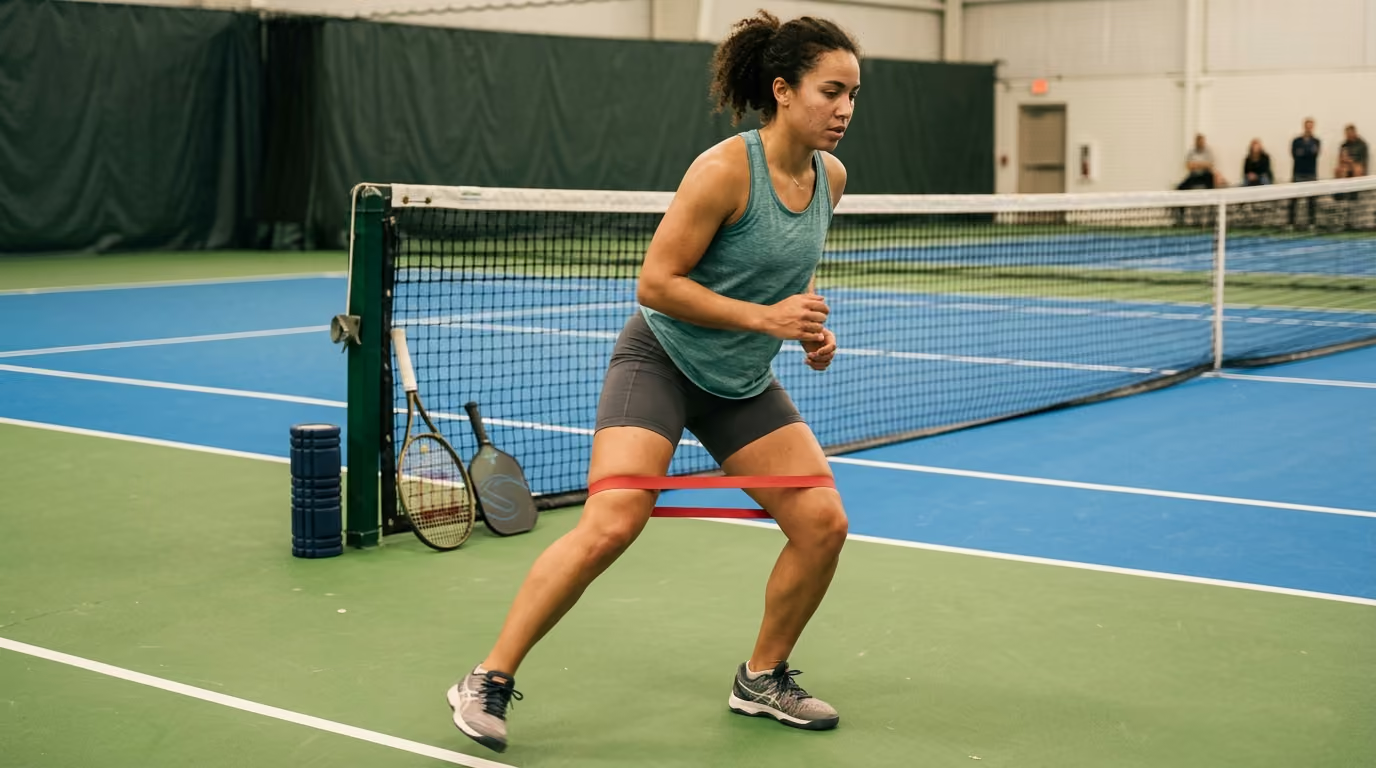
Follow this with ten repetitions of active calf raises to prepare your ankles for the split step. Next, perform ten lateral band walks or side shuffles to engage your gluteal muscles. Finish with ten shadow swings of your racquet or paddle to prepare your upper body.
Dynamic warm-ups are vastly superior to static stretching for court preparation. A systematic review of warm-up protocols found that high-load dynamic routines improved subsequent power and strength performance. In contrast, holding static stretches for longer than thirty seconds had no benefit for power output.
Static stretching can relax your muscles and tendons too much, making them less reactive when you need to spring into action. Save your static stretches for after your match when your goal is to relax tight muscles. Focus on moving through active ranges of motion before play to keep your joints healthy. You can find more detail on building these physical qualities in our guide to strength and conditioning programs.
Your movement mechanics on the court dictate where physical stress is distributed through your body. If your mechanics are poor, your joints will absorb forces that should be handled by your muscles.
In tennis, the split step is the foundation of efficient movement. Landing on the balls of your feet during the split step allows you to absorb impact and change direction instantly.
When stopping to hit a groundstroke, avoid planting your foot at an extreme angle on hard courts. This habit places immense rotational stress on your knees and ankles. Instead, use multiple small adjustment steps to decelerate before you swing.
When serving, engage your legs and hips to generate power through your kinetic chain. Relying solely on your shoulder and arm to power your serve will quickly lead to rotator cuff strain.
Pickleball movement is characterized by short, rapid steps and deep lunges near the kitchen line. The most dangerous movement pattern in pickleball is running backward to track a lob.
This action often causes players to lose their balance, trip, and fall backward onto their wrists or head. Instead, turn your hips to the side, cross your feet over, and run backward diagonally.
When lunging for a low ball, keep your chest upright and bend from your hips and knees. Bending solely from your lower back places excessive strain on your spinal discs.
Padel movement requires you to navigate the court in relation to the surrounding walls. Beginners often watch the ball and run backward toward the glass, which can lead to dangerous collisions.
Instead, turn your body early, track the ball's trajectory, and let it pass you before moving forward to hit it. When hitting overheads, avoid striking the ball too far behind your body.
Reaching backward during a smash forces your shoulder into an unstable position and strains your rotator cuff. Practice keeping the ball in front of you, and use your legs to adjust your position under the ball.
Your equipment choices can either increase or decrease the physical stress placed on your tissues. Think of your gear as a tool to help manage your overall physical load.
Your shoes are your only point of contact with the court surface. You must wear court-specific shoes designed for lateral support, toe durability, and multidirectional traction.
Running shoes are built for forward motion and have thick, soft midsoles that can easily roll during a lateral cut. Court shoes have stiffer outsoles and lateral outriggers that prevent your foot from sliding off the footbed.
However, be careful not to choose a shoe with excessive grip on dry, sticky hard courts. Too much traction can cause your foot to stick to the court during a sudden stop, transferring all the twisting force to your knee.
For tennis players, racquet weight and string tension are key variables. A racquet that is too heavy will tire your shoulder and forearm, while a racquet that is too light will transfer more ball vibration to your elbow.
Keep your string tension within the manufacturer's recommended range, as excessively tight strings increase shock transmission to your arm. For pickleball and padel players, paddle core thickness and handle grip size are vital.
A thicker paddle core absorbs more ball impact, reducing the vibration that travels up your arm. If your grip size is too small, you will have to squeeze the handle tighter to keep it from twisting, which can lead to tennis elbow.
In pickleball, protective eyewear is a highly recommended accessory for players of all ages. The short distance between players at the kitchen line means balls can travel toward your face at high speeds.
Wearing polycarbonate safety glasses can prevent serious eye injuries from direct ball strikes. Additionally, using wrist sweatbands can keep your hands dry, preventing your racquet or paddle from slipping and reducing the need for an extra-tight grip.
The court surface you play on changes how your muscles and joints absorb impact. Different surfaces demand different movement styles and place unique strains on your lower body.
Clay courts are generally more forgiving on your joints because they allow you to slide into your shots. This sliding motion spreads the deceleration forces over a longer period, reducing the peak impact on your knees and hips.
However, clay courts require constant balance adjustments and can be slippery if they are dry or poorly maintained. Hard courts offer predictable ball bounces and excellent traction, but they do not absorb any impact.
Every hard stop on a hard court sends a massive shockwave up your heels, shins, knees, and lower back. If you primarily play on hard courts, you must prioritize calf strength and shoe cushioning to protect your joints.
Padel courts are typically made of synthetic turf filled with fine sand, surrounded by glass walls. The sand allows for a small amount of sliding, which helps reduce knee strain during sudden stops.
However, if the sand is unevenly distributed, you may experience sudden changes in traction, increasing your risk of slipping or twisting an ankle.
The proximity of the glass walls also means you must be comfortable moving in tight spaces. Be aware of moisture on the glass walls, as wet glass can make the ball slide down rapidly, forcing you into a sudden, deep lunge.
Transitioning from one court surface to another is a common trigger for overuse injuries. If you are used to the sliding motion of clay and suddenly play three matches on a hard court, your body will struggle with the abrupt stops.
Your muscles and tendons will have to work much harder to decelerate your body weight. When making a surface transition, cut your weekly playing time in half for the first week.
This temporary reduction gives your tissues time to adapt to the new friction characteristics and forces of the new surface.
No injury-prevention framework is complete without a solid recovery plan. Your body does not get stronger on the court; it adapts and repairs itself during your rest periods.
Sleep is the most powerful recovery tool available to court athletes. During deep sleep, your body releases growth hormones that repair tissue damage caused by intense exercise.
Aim for seven to nine hours of quality sleep each night to keep your injury risk low. You must also schedule dedicated rest days into your weekly routine.
Playing racquet sports seven days a week without a break will eventually lead to tissue breakdown, regardless of your fitness level.
Learning to interpret your body's pain signals is a critical skill for athletic longevity. You do not need to stop playing for every minor ache, but you must know which symptoms require attention.
Use the pain-monitoring model to guide your decisions. If your pain is minor, does not alter your movement, and disappears after a warm-up, it is generally safe to continue playing.
However, if your pain increases during play, causes you to limp, or is accompanied by joint swelling, you must stop immediately.
If you have been off the court due to an injury, do not jump straight back into a competitive match. Use a staged return-to-play protocol to rebuild your tissue tolerance.
Start with simple, pain-free daily activities, then progress to light individual hitting drills. Next, introduce controlled footwork and movement drills without a ball.
Once you can perform these tasks without pain, begin playing short practice sets with a partner. Only return to full, unrestricted competition when you have completed these steps without any increase in your symptoms.
To keep your body healthy, you must avoid the common myths and training errors that lead many players to the clinic.
Many players believe that spending five minutes stretching their hamstrings before a match will protect them from injury. As discussed, static stretching does not prepare your muscles for explosive movement or prevent acute injuries.
Strength, movement control, and load management are far more important for injury prevention. Replace your static stretching with a dynamic warm-up, and save the deep stretches for your post-match routine.
Pickleball and padel players often assume that because their courts are smaller than tennis courts, they do not need to train for injury prevention. This assumption is highly dangerous.
The smaller court space actually increases the frequency of rapid direction changes, short sprints, and deep lunges. The total physical burden remains very high, even if you are not running long distances.
If you wake up the morning after a match feeling like your joints are locked in concrete, your body is telling you that the previous day's load was too high. Ignoring this signal and playing through severe morning stiffness day after day will eventually lead to a chronic overuse injury.
Treat next-day stiffness as a warning sign to reduce your playing volume or intensity for a few days. This is a key principle of athletic longevity resources designed for long-term health.
To see how this framework works in practice, let us look at some common case patterns we see on the court.
A recreational tennis player took a three-month break during the winter. In the spring, they immediately sign up for a competitive league, playing three ninety-minute matches on hard courts in one week.
Within ten days, they develop severe Achilles tendon pain. The mistake here was not the tennis itself, but the sudden, massive spike in acute workload on a hard, unforgiving surface after months of inactivity.
To apply our framework, this player should have started with one thirty-minute hitting session in the first week. They should have gradually built up their court time over four to six weeks while performing basic calf-strengthening exercises at home.
They also should have made sure their court shoes were not worn out, providing adequate heel cushioning for the hard-court surface.
A sixty-five-year-old individual decides to take up pickleball for health and social connection. They have not played a sport in twenty years but have reasonable walking fitness.
During their third session, they try to run backward to track a lob, lose their balance, fall backward, and fracture their wrist. This scenario is highly common in pickleball emergency-department data.
To prevent this, the player should have been taught how to turn and run diagonally rather than backpedal.
They also should have spent time performing balance exercises at home, such as standing on one leg while reaching in different directions. Using supportive court shoes and keeping the court clear of debris would also have significantly reduced their fall risk.
I remember finishing a tough two hour padel match on a cold Tuesday night and waking up the next morning feeling like my lower back was locked in concrete. For a long time, I just accepted this as the price of playing hard in my forties.
But once I started spending just ten minutes on targeted hip mobility before heading to the club, the stiffness almost completely vanished. It taught me that we do not have to accept pain as a default state of athletic longevity.
This same proactive mindset applies to the common issue of padel elbow pain. A regular player decides to play four times a week during a holiday, using a new, heavier paddle.
Within two weeks, they develop sharp outer elbow pain that makes it hard to hold the paddle. The combination of a rapid increase in session frequency and a heavier piece of equipment overloaded their forearm tendons.
To apply our framework, this player should have reduced their playing frequency during the holiday or kept using their old, familiar paddle.
To recover, they should temporarily reduce their overhead smash volume, verify that their paddle grip size is correct, and perform slow, heavy wrist-extension exercises to rebuild tendon strength.
You do not need to spend hours in the gym to protect your body. This practical template can be integrated into your weekly routine to build resilience without burning you out.
If you play on the court two to three times a week, your primary goal is to maintain basic strength and mobility.
If you play four or more times a week and participate in competitive matches, you need a more advanced plan.
If you are over sixty or returning to sport after a long break, your program must focus on balance and fall prevention.
While minor stiffness and temporary muscle soreness are normal parts of training, you should not try to self-treat serious injuries. Consult a physical therapist or sports medicine physician if you experience any of the following warning signs:
A qualified professional can provide an accurate diagnosis, rule out structural damage, and design a safe, personalized rehabilitation plan. Seeking help early can prevent a minor issue from turning into a chronic, season-ending problem.
Mild tendon stiffness that disappears after your warm-up is common, but it is a sign that the tendon is under high stress. You can often keep playing, but you must monitor how your joint feels the next morning. If the stiffness is worse the following day, you need to reduce your playing volume and start a progressive tendon-strengthening program.
Yes, high-quality tennis shoes are excellent for both padel and pickleball because they are designed for rapid lateral movement and ankle stability. However, make sure the shoe's outsole matches the specific surface you are playing on. For example, a clay-court tennis shoe with a deep herringbone tread may have too much grip on a dry, outdoor pickleball court, increasing your risk of tripping.
If your grip size is too small, you will see a gap between your fingertips and the palm of your hand when holding the handle. This small grip forces you to squeeze the handle much harder to keep the racquet or paddle from twisting when you hit the ball. If you suspect your grip is too small, try using an overgrip to increase the handle's thickness and reduce your forearm muscle strain.
Tissues like muscles, tendons, and ligaments adapt to physical stress at different rates. While your cardiorespiratory fitness can improve within two to three weeks, your tendons and joints can take six to twelve weeks to build significant resilience. Be patient when returning to play, and increase your court time slowly to allow these slower-adapting tissues to catch up.
Follow Evercourts for practical insights on tennis, pickleball and padel performance, movement, recovery and healthy ageing. Stay connected for new articles, research-led guidance and ideas to help you play well and keep playing for years.


Read practical guidance for better movement, smarter preparation and a game that keeps working for you.
explore the Blog