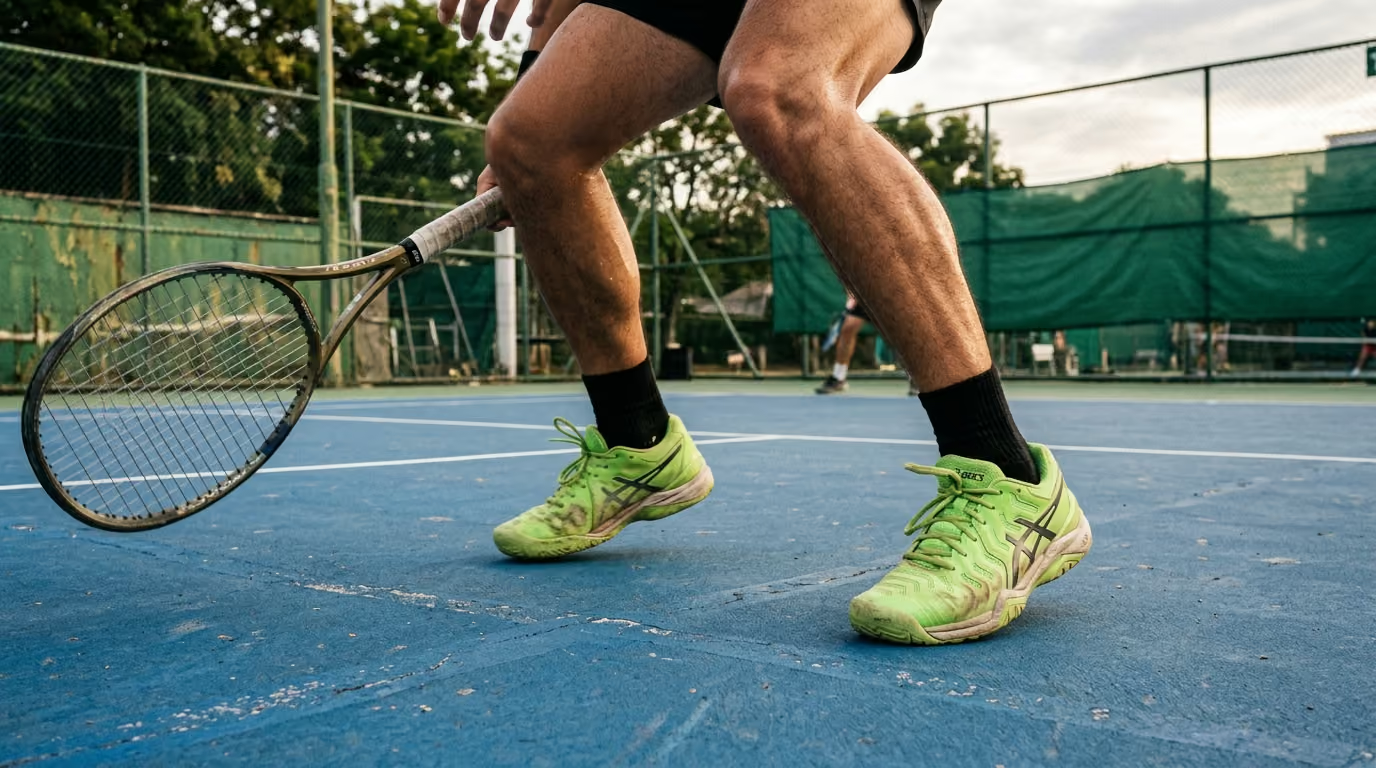
Knee health for racquet sports involves building joint capacity to exceed physical demands, combining strengthening, hip control, and landing coordination.




Many court players believe that protecting their knees means moving less, avoiding deep bends, or quitting hard court surfaces. In reality, wrapping your knees in cotton wool is the fastest way to make them weak and stiff. To play racquet sports for life, you must teach your knees to handle load instead of trying to avoid it. This guide provides an in-depth, research-backed system to build capacity, refine movement mechanics, and manage court demands.
Long-term knee health in racquet sports depends on building joint capacity to exceed the physical demands of play. This balance is maintained through a combination of lower-body strengthening, hip control, landing coordination, and gradual training progression. By preparing the joint for the specific deceleration forces of the court, you can preserve athletic longevity and keep playing for decades.
To keep your joints healthy, you must look at your body as a system of capacity versus demand. Every split step, deep lunge, and sudden stop on the court places a mechanical demand on your lower body. If this demand exceeds your joint's current capacity, you risk developing pain or structural injury. Conversely, when your capacity is high, your knees can tolerate intense match play without issue.
Capacity is not just muscle strength. It includes tissue tolerance, cardiovascular fitness, coordination, and your ability to absorb force. Demands are shaped by match duration, playing style, court surface, and movement quality. Rather than treating knee pain as an inevitable sign of aging, we should view it as a signal that current demands have temporarily outpaced our capacity.
According to tennis epidemiology reviews, lower extremity injuries account for roughly 31% to 67% of all reported tennis injuries. While the ankle and thigh are actually injured more frequently than the knee, knee issues are often more limiting for mature players. The incidence of injury varies widely from 0.04 to 3.0 injuries per 1,000 hours of play. This wide range reflects different fitness levels, ages, and match intensities.
A useful longevity framework involves six key areas. These are capacity, movement quality, exposure, recovery, environment, and individual context. Managing these factors allows you to systematically build a resilient lower body. It shifts the focus from avoiding movement to preparing your body to handle the demands of the sport. You can find more advice on court longevity on the Evercourts homepage.
To protect your knees, you must understand the different types of injuries that can occur on the court. Acute injuries happen suddenly from a single traumatic event. These include ligament sprains, meniscus tears, patellar dislocations, or fractures. They often involve a sudden twist, a slip, an awkward landing, or a collision.
Overuse or load-related problems develop slowly over time. These include patellofemoral pain, patellar tendinopathy, quadriceps tendinopathy, and joint irritation from osteoarthritis. These conditions arise when repeated court movements gradually wear down tissue tolerance without sufficient recovery. They typically present as progressive aching, stiffness, or mild swelling that worsens after play.
Load tolerance is the amount of physical stress your joint can handle without pain or loss of function. It is influenced by your recent training history, strength, tissue health, and recovery quality. A match that is easy for a well-conditioned player can cause overuse pain in someone returning from a long break. Understanding your load tolerance helps you avoid the common trap of doing too much, too soon.
Do not use pain as your only guide when assessing knee health. Mild soreness after a tough match can be a normal training response. However, progressive pain that does not resolve within twenty-four hours indicates that your joint capacity has been exceeded. By recognizing these early warning signs, you can adjust your training volume before a minor ache becomes a chronic issue.
The knee is often a victim of what happens above and below it. It functions as a force transmitter between your foot and your hip. If your ankles are stiff or your hips are weak, your knee is forced to twist and rotate to compensate. To protect the knee, you must strengthen the entire kinetic chain.
I remember finishing a tough two hour padel match on a cold Tuesday night and waking up the next morning feeling like my lower back was locked in concrete. For a long time, I just accepted this as the price of playing hard in my forties. But once I started spending just ten minutes on targeted hip mobility before heading to the club, the stiffness almost completely vanished. It taught me that we do not have to accept pain as a default state of aging. This experience highlighted how crucial hip movement is for the rest of the body. When the hips cannot rotate, the knees and lower back must absorb the extra strain.
Lateral hip strength is especially critical for knee stability. The gluteus medius and external rotators control the alignment of your thigh bone during single-leg landing and cutting. If these muscles are weak, your thigh may rotate inward, leading to knee valgus. While a momentary inward knee movement is not automatically dangerous, repeated uncontrolled valgus under high impact can stress the ligaments and joint cartilage.
A position statement from the National Athletic Trainers’ Association supports multicomponent training programs. These programs should combine lower-body strength work with plyometrics, balance, and landing coordination. Research shows that performing these exercises for 15 to 20 minutes, two or three times a week, can drastically reduce serious knee injuries. This approach is highly relevant for players focused on healthy aging and athletic longevity.
Every time you split step or chase down a drop shot, your knees must absorb and redirect your body weight. How you land and decelerate determines how much stress reaches your joint cartilage. Developing soft, coordinated landing mechanics is a vital skill for court longevity.
A quiet landing is a safe landing. When you land heavily, your bones and joints absorb the direct impact. By bending your hips, knees, and ankles upon impact, you allow your muscles to dissipate that kinetic energy. This muscle-driven absorption protects the passive structures inside the knee joint.
The split step is the foundation of court movement, but it can be highly demanding. Many recreational players jump too high during their split step. This high hop increases vertical impact forces when they land. Keep your split step low, wide, and timed precisely with your opponent's contact with the ball. Landing in a balanced athletic stance allows you to react quickly without overloading your joints.
A meta-analysis of 18 clinical studies involving over 27,000 participants found that neuromuscular training reduced ACL injury risk from 1 in 54 to 1 in 111. The most effective programs in this analysis combined lower-body strengthening with landing stabilization drills. This shows that teaching your brain and muscles how to decelerate is just as important as lifting heavy weights in the gym. If you want to learn more about training your movement, view our mobility and movement resources.
A court lunge is very different from a standard gym lunge. On the court, you do not step forward slowly and vertically. You sprint, reach, lean, and slide into an asymmetrical position while striking a ball. Controlling this final braking step is critical to avoiding front knee pain.
When you reach for a wide ball, try to share the loading demands across your entire lower body. If you keep your torso completely upright, your front knee must absorb most of the braking force. By allowing a slight forward lean from your hips, you engage your glutes and hamstrings to help slow you down. This simple adjustment reduces the pressure on your kneecap and patellar tendon.
The recovery step is just as important as the lunge itself. Once you strike the ball, you must push off the front foot to return to the center of the court. This push-off requires explosive quadriceps and calf power. If you lack this strength, you may struggle to recover quickly, leaving you out of position for the next shot.
To build this skill, practice lunging in multiple directions. Perform lateral lunges, diagonal lunges, and reverse lunges during your gym sessions. Focus on keeping your front foot flat and stable on the floor. Avoid letting your front heel lift, as this shifts excessive load directly onto the front of your knee.
The ground underneath your feet directly influences how your joints feel after a match. Different surfaces demand different friction strategies and braking mechanics. Understanding these differences can help you manage your joint loading.
An ITF systematic review of tennis surfaces found that overall injury rates are relatively similar across hard, clay, and grass courts. However, the distribution of injuries varies. The review revealed that hard courts are associated with a higher proportion of lower extremity injuries, accounting for 56% of complaints compared to 38% on clay.
A study comparing clay courts to cushioned acrylic hard courts explained the biomechanical reasons for this difference. On clay, players utilize a sliding strategy which requires less knee flexion during the braking phase. On hard courts, players must bend their knees deeper to absorb the sudden stop because the surface has much higher traction. This deep knee bend on hard courts places higher mechanical demands on your quadriceps and patellofemoral joints.
Footwear also plays a major role in managing these forces. A study on tennis shoes showed that a lower shoe drop can reduce peak impact forces. Specifically, a six-millimeter drop reduced impact force by 24% compared to a twelve-millimeter drop. However, do not rush to switch to zero-drop shoes overnight. Sudden changes in footwear can shift stress to your calves and Achilles tendons, so any transitions should be gradual. You can find more advice on gear and court life on the Evercourts blog.
While tennis, pickleball, and padel are all racquet sports, they place distinct physical demands on your knees. Understanding these unique patterns allows you to tailor your training and recovery.
Tennis involves the largest court dimensions, leading to higher running speeds and more intense deceleration forces. Players must sprint long distances, slide on clay, or brake abruptly on hard courts. This requires high levels of eccentric thigh strength and excellent landing stabilization to protect the knee joint. You can read more about specific strategies in our tennis articles.
Pickleball is played on a much smaller court, which reduces the need for long-distance sprinting. However, it requires a high frequency of small, rapid split steps and deep, sustained knee flexion near the kitchen line. Players often spend long periods in a low crouch to play low dinks. This position places continuous pressure on the patellofemoral joint, making quadriceps endurance and hip mobility highly important. Check out our pickleball articles for more targeted movement tips.
Padel is played on an enclosed court with glass walls, combining elements of tennis and squash. It features rapid changes of direction, frequent turning to play balls off the wall, and high overhead shots. The court surface is typically artificial turf covered with sand, which allows for controlled sliding. Padel players need strong rotational hip control and excellent ankle stability to manage the constant pivoting and wall play. Explore our padel articles to learn more about this fast-growing sport.
Misunderstandings about knee biomechanics can lead players to adopt unnatural movement patterns or avoid helpful exercises. Clearing up these common myths is essential for building a resilient lower body.
The first common myth is that your knees must never travel past your toes. This rigid rule is impractical for court sports. To lunge effectively and lower your center of gravity, your knees must naturally move forward. Restricting this forward movement forces your lower back to bend excessively, which can cause other issues. Instead of focusing on your knee position, focus on maintaining a stable, flat foot and balanced weight distribution.
Another misconception is that strong quadriceps are all you need to protect your knees. While your quads are crucial for absorbing landing forces, they do not work in isolation. You also need strong hamstrings, glutes, and calves to stabilize the joint from all sides. A balanced, multicomponent training program is far more effective than focusing on a single muscle group. For more on building balanced full-body strength, see our strength and conditioning resources.
Many players also believe that a softer court surface automatically eliminates injury risk. While clay or grass may feel more comfortable, they introduce other challenges. Slippery clay courts require excellent balance and sliding control. If you lack the coordination to slide safely, you may twist your knee, risking an acute ligament sprain. No single surface is universally safest, so focus on preparing your body for whatever surface you play on.
Finally, do not assume that a diagnosis of knee osteoarthritis means you must stop playing. The American Academy of Orthopaedic Surgeons recommends supervised or unsupervised exercise over inactive rest for managing knee osteoarthritis. Exercise helps keep the joint mobile, strengthens the surrounding muscles, and reduces pain. The key is to modify your playing volume and intensity rather than giving up the sports you love.
The most common cause of knee pain on the court is not bad technique or poor shoes. It is a sudden spike in training load. When you increase your playing time too quickly, your joints do not have time to adapt. To prevent this, you should monitor your training volume and intensity.
Workload research in junior tennis shows that sudden weekly increases are strongly associated with injury risk. Specifically, a weekly training spike of 30% or more compared to the preceding four-week average is a major risk factor. This does not mean you can never play more; it means you should progress your playing time gradually.
You can create a simple weekly dashboard to track your joint response. Monitor parameters such as knee pain during play, next-morning stiffness, joint swelling, and overall confidence. Also, keep track of your playing duration, court surface, and rate of perceived exertion. This tracking helps you identify patterns and adjust your schedule before minor stiffness turns into a chronic issue.
Use a simple decision rule to guide your training. If your knees feel normal or return to baseline by the next day, you can continue or progress your playing volume. If you experience mild pain or stiffness that lasts into the next morning, hold your current volume or reduce your playing time. If you experience severe pain, swelling, or loss of motion, it is time to rest and seek a professional evaluation. This structured approach is central to our injury prevention resources.
While mild stiffness or muscle soreness is a normal part of training, certain symptoms require immediate medical attention. Trying to push through structural damage can lead to long-term joint complications. Knowing the red flags of a serious injury is vital for your athletic longevity.
If you experience a traumatic event on the court, pay close attention to your body's immediate response. Hearing or feeling a distinct pop inside the joint, followed by rapid swelling within a few hours, is a classic sign of an acute ligament or meniscus tear. Inability to bear weight on the leg or a feeling that the knee is completely unstable are also critical warning signs.
True mechanical locking of the joint, where you cannot fully straighten or bend your knee, suggests a structural blockage. This can happen if a torn piece of cartilage or meniscus becomes lodged in the joint mechanism. Recurrent episodes of the knee giving way during normal walking also require professional evaluation.
According to clinical guidance from the NHS, you should seek urgent medical advice if your knee is hot, red, and swollen, especially if you also have a fever. These symptoms can indicate a joint infection, which is a medical emergency. For any of these red flags, consult a qualified healthcare provider, such as an orthopedic specialist or physical therapist, to obtain an accurate diagnosis and treatment plan.
To put these principles into practice, you need a structured training routine that builds your joint capacity over time. This routine should target strength, stability, landing mechanics, and mobility. Consistently performing these exercises off the court will translate directly to better movement on the court.
Start your preparation with a dynamic warm-up before every match. Spend five to ten minutes waking up your hips, knees, and ankles. Perform gentle bodyweight squats, lateral steps with a mini-band, and light single-leg balances. This increases blood flow to the muscles and prepares your nervous system for rapid court movements.
In the gym, focus on single-leg exercises to address strength asymmetries. Movements like split squats, step-downs, and single-leg Romanian deadlifts are highly effective. They mimic the single-leg demands of court movement and help build hip and knee stability. Aim to perform these strength sessions two days per week, as recommended by the World Health Organization for general healthy aging.
Finally, practice landing drills to improve your coordination. Start with simple double-leg landings from a small step, focusing on a quiet, soft contact. Progress to lateral hops, landing on one leg and holding the position for two seconds. This builds the eccentric strength and reactive control needed to handle emergency stops and wide lunges during intense rallies.
Playing racquet sports for decades is a realistic goal if you treat your body with respect and follow a structured approach. Your knees are incredibly adaptable structures that respond positively to appropriate physical loading. By building muscle strength, refining your landing skills, and managing your weekly playing time, you can protect your joints and continue playing tennis, pickleball, or padel for years to come.
Do not let fear of injury keep you off the court. With the right training, your knees can remain strong, capable, and pain-free. Stay consistent with your off-court exercises, listen to your body's signals, and enjoy the physical and social benefits of lifetime court play.
Consistently building your joint capacity ensures you can step onto the court with confidence, knowing your body is fully prepared for the demands of the game.
Follow Evercourts for practical insights on tennis, pickleball and padel performance, movement, recovery and healthy ageing. Stay connected for new articles, research-led guidance and ideas to help you play well and keep playing for years.


Read practical guidance for better movement, smarter preparation and a game that keeps working for you.
explore the Blog