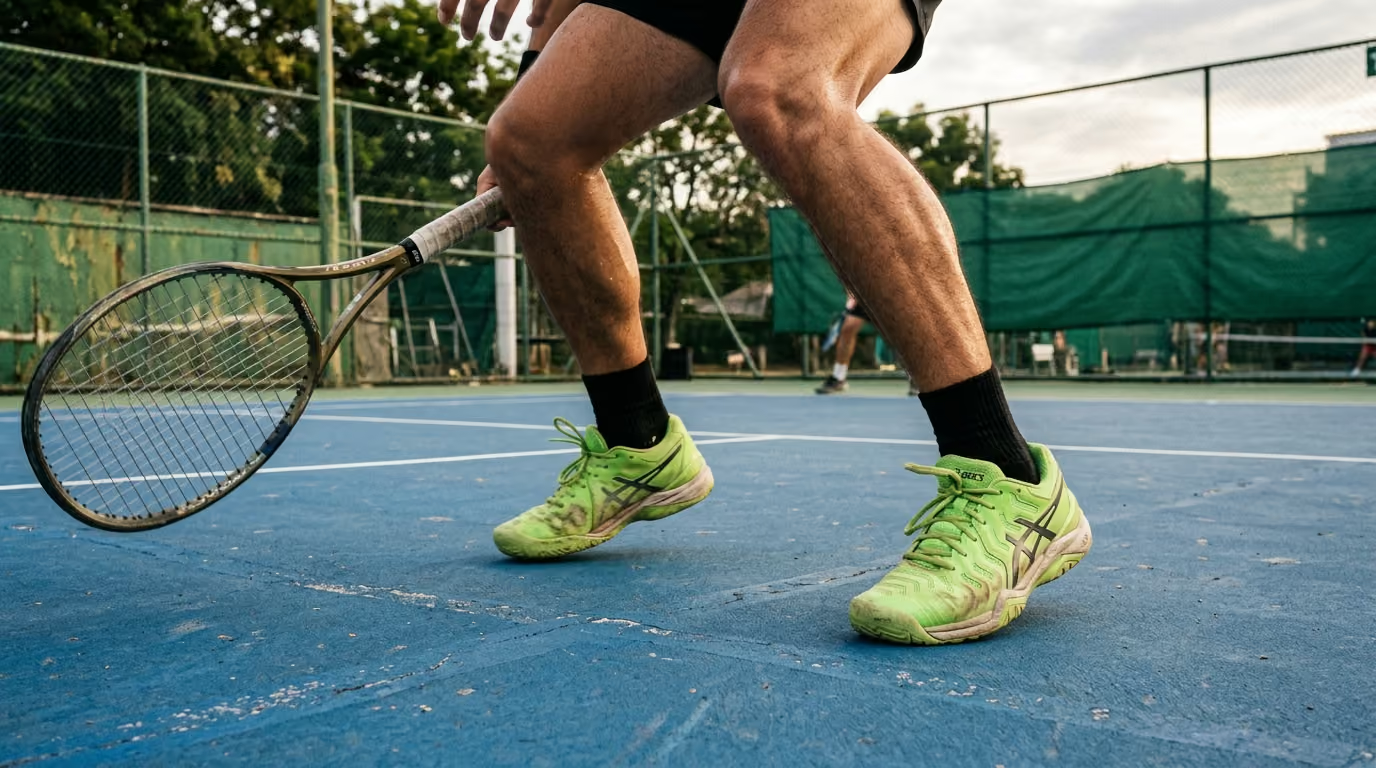
Adult racquet sports players can achieve peak performance and avoid injuries by implementing a structured training system that balances physical stress and recovery.




Many adult court athletes believe that training harder is the only way to improve. They hit the court several times a week, lift weights until they are exhausted, and play through nagging joint pain. This approach often leads to chronic fatigue, stagnant performance, and avoidable injuries. True physical preparation is not about training at your absolute limit all year. Instead, it requires a structured system to manage physical stress and recovery over time.
This guide provides a comprehensive framework for periodization. We will show you how to structure your training year, adapt your schedule to your busy life, and peak for important matches. You will learn to build a personal system that supports long term athletic development without copying the rigid routines of elite professional athletes.
Periodization for adult racquet sports players is a flexible system that adjusts training volume, intensity, and recovery based on personal goals and lifestyle constraints. Instead of following rigid professional schedules, it balances court time, strength work, and rest to build physical capacity while preventing chronic fatigue. This approach allows competitive and recreational players to peak for important events while protecting their long term health.
Periodization is the planned organization of training variables over a specific time. These variables include training volume, intensity, frequency, exercise selection, and recovery. By adjusting these factors, you can trigger positive physical changes while allowing your tissues to adapt. The ultimate goal is to build your physical capacity, peak for key competitions, and protect your long term health.
For adult players, a periodization plan must be highly flexible. Unlike young professionals, adult athletes must balance court time with family responsibilities, careers, and irregular sleep. Therefore, a successful plan is not a rigid calendar. It is a decision-making system that helps you adjust your daily activities based on your physical readiness and scheduling demands.
To understand this system, it helps to break down the training calendar into specific units of time:
There are three primary models of periodization. Linear periodization moves gradually from high volume and low intensity to low volume and high intensity. Undulating periodization varies volume and intensity more frequently, often on a daily or weekly basis. Finally, block periodization concentrates on a single physical quality for several weeks before moving to the next. Adult players can choose the model that best fits their schedule and personal physical needs.
To make these models work, you must manage your total physical load. This load is not limited to your formal workouts or matches. Your total load includes court time, strength training, work stress, family duties, and sleep quality. A long workday or a poor night of sleep reduces your ability to recover from a hard match. For this reason, your training plan should combine structured, preplanned workouts with flexible, real-time adjustments.
Sports science research supports the use of periodized training over unstructured training. A major meta-analysis published in the Journal of Strength and Conditioning Research evaluated periodized resistance training programs. The analysis found a clear benefit for periodized programs in developing maximal strength, showing a standard effect size of 0.31 over non-periodized routines. This benefit was especially pronounced in individuals who already had training experience. Interestingly, the research showed that periodization did not consistently alter muscle growth when total training volume was kept equal.
Another meta-analysis of seventeen studies compared linear and undulating periodization models. Researchers analyzed data from 510 participants to see which style produced better strength gains. The results showed that both models significantly improved upper-body and lower-body strength. No statistical difference was found between the effectiveness of the two formats. This means you do not need to stress over choosing a perfect model. Instead, you should choose the style that matches your personal schedule and keeps you consistent.
Tapering is another area where sports science offers clear, practical guidance. A taper is a planned reduction in training load before a major competition. Evidence shows that an effective taper reduces total training volume by 30 to 70 percent. During this time, training intensity should remain high or even increase slightly in very short sessions. Research suggests a taper should last between one and four weeks, depending on your fitness level and accumulated fatigue.
Age-related recovery kinetics are also crucial for adult players. A review of masters athletes indicated that older athletes can reach similar levels of physical fatigue as younger athletes. However, older athletes often require a longer recovery window after highly demanding exercise. This finding shows that you do not need to avoid intensity as you age. Instead, you need to space out your hardest sessions and prioritize recovery.
To build a healthy foundation, players should look to established health standards. The World Health Organization recommends that adults complete 150 to 300 minutes of moderate aerobic activity weekly. Alternatively, you can perform 75 to 150 minutes of vigorous aerobic activity. The guidelines also recommend performing full-body strength training at least two days per week. For adults aged 65 and older, the recommendations include balance and functional training on three or more days each week.
These public health guidelines provide an excellent physical baseline. However, they are not a complete preparation plan for competitive racquet sports. Playing a tennis match or a fast padel tournament requires specific lateral movement, braking strength, and repeat-sprint ability. To play these sports safely, you must build on the health guidelines with targeted strength and conditioning strategies.
To build an effective annual training framework, you must progress through distinct physical phases. This progression allows your body to adapt step by step. Rather than jumping straight into intense matches, you build a solid foundation first. Each phase serves a unique purpose in protecting your joints and improving your court movement.
Before picking up a racquet or lifting a weight, you must assess your current fitness status. Start by writing down your main competitive objectives for the year. Classify your events into major peaks, secondary events, and social or practice matches. This classification helps you decide when to reduce your training load and when to focus on building fitness.
Next, document your personal lifestyle constraints. Record your work hours, travel plans, sleep patterns, and injury history. Establish a physical baseline by tracking your resting heart rate and assessing your movement. You can check your baseline movement by performing bodyweight squats, single-leg step-downs, and lateral lunges. According to clinical guidance from the American College of Sports Medicine, physical progression should be gradual. Medical clearance and diagnostic testing are recommended before starting an intense program if you have a history of cardiovascular or joint issues.
The general preparation phase builds a physical baseline. This phase focuses on overall aerobic fitness, basic strength, joint mobility, and balance. During these weeks, your court work should remain at a moderate intensity. You should focus on stroke mechanics and rhythm rather than exhausting match play.
Away from the court, prioritize compound strength movements and low-intensity cardiovascular training. This conditioning helps prepare your tendons and ligaments for the high-impact demands of sport. A typical week during this phase includes two full-body strength sessions and two or three moderate court practices. Older players should also integrate functional balance work to support their athletic longevity on the court.
Specific preparation transitions your training toward the actual movement patterns of your sport. You will begin to perform short accelerations, lateral braking drills, and rapid changes of direction. Your strength training should become more dynamic, incorporating single-leg exercises and rotational core movements.
On the court, your drills should match the real-world pace of play. Focus on short, explosive movements with adequate recovery between repetitions. This approach trains your energy systems to recover quickly between points. Do not make the mistake of performing exhausting, random drills that ruin your technique. The goal of this phase is to build high-quality movement, not to induce extreme fatigue.
The precompetition phase prepares your mind and body for the stress of real matches. During this phase, you should introduce realistic point play and competitive scoring. Practice your pre-match warm-up routine and test your tournament nutrition and hydration plans.
Keep your training sessions highly specific but reduce the overall duration of your workouts. This ensures you do not accumulate excessive fatigue right before your event. Avoid introducing new shoes, new racquets, or unfamiliar exercises during this phase. Stick to what your body knows to minimize the risk of sudden injury.
During your competitive season, your primary training goal changes. You are no longer trying to build new physical fitness. Instead, your goal is to maintain your existing capabilities while staying fresh.
To achieve this, reduce your weekly training volume by cutting down on court hours and gym sets. However, maintain a high level of intensity during your brief workouts. Research suggests that resistance-trained players should maintain strength training during competition weeks. Performing a short, low-volume strength session four days before a match is highly effective for maintaining muscle activation.
After your primary tournament or league season ends, you enter the transition phase. This period is dedicated to physical and psychological recovery. Take a break from highly structured training and competitive matches to let your mind and body rest.
Keep moving by engaging in low-impact activities like walking, cycling, or swimming. Use this time to address any minor aches, joint stiffness, or muscular imbalances that developed during the season. When you are ready to return to serious play, rebuild your court time slowly. Never jump straight back into intense matches without a brief re-entry period.
While all racquet sports share some similarities, each sport places unique demands on your body. Understanding these differences allows you to tailor your training cycles. By targeting the specific stress of your sport, you can build a more effective preparation plan.
Tennis requires explosive coverage of a large court area. Players must perform long lateral slides, deep lunges, and rapid directional changes. The sport also involves high-velocity rotational forces during groundstrokes and intense vertical loading during serves. Because rallies can be long, tennis demands high levels of both aerobic and anaerobic fitness.
Your tennis training cycles should focus heavily on lower-body power and eccentric braking strength. You must train your calf muscles, Achilles tendons, and hip rotators to tolerate heavy deceleration. Rotational core strength and shoulder stability are also essential for protecting your lower back and rotator cuff. Be careful not to increase your serving volume and your weekly sprint volume at the exact same time.
Pickleball is played on a smaller court, which leads to shorter and faster movements. The game requires rapid reactions, quick lateral shuffles, and deep, low athletic stances. While a single game of pickleball may feel less exhausting than tennis, players often play multiple matches in a single day. This high density of play can cause significant cumulative strain on your lower joints.
A 2025 study of 237 older pickleball players highlighted these physical demands. The researchers found that 32.1 percent of the players reported an injury during the previous year. Lower-extremity injuries accounted for 57.9 percent of these cases, while muscle or tendon strains made up 61.8 percent. During the specific tournament studied, the rate of new injuries was 5.8 percent.
Another 2025 analysis of emergency department data estimated that there were 66,350 pickleball-related injuries between 2013 and 2022. This injury estimate in 2022 was approximately 22 times higher than the estimate in 2013. The analysis also revealed that players aged 60 to 79 had higher odds of suffering wrist injuries, hand fractures, and fall-related trauma.
These findings show that pickleball training cycles must prioritize balance, deceleration control, and fall prevention. Players should focus on lower-body strength to hold low stances without strain. Forearm, wrist, and shoulder conditioning are also critical for managing the quick paddle reactions required at the kitchen line. Never view pickleball as a low-impact sport that requires no physical preparation.
Padel is a fast-paced sport played within a glass enclosure. It combines explosive change-of-direction movements with wall rebounds and high-frequency overhead strokes. The continuous play and sudden movements require rapid transitions from defense to offense. This constant movement places unique demands on your coordination and cardiovascular system.
A review of nineteen scientific studies on padel players identified specific physical risks. The researchers noted that high action velocity and sudden directional changes may increase injury risk, especially for untrained players. A systematic review of padel injuries reported an incidence rate of approximately three injuries per 1,000 training hours. This rate rose to eight injuries per 1,000 match hours, with overall injury prevalence ranging from 40 to 95 percent across the literature.
The elbow was identified as the most frequently injured anatomical site in padel. This was followed closely by the knee, shoulder, and lower back, with tendon and muscle strains being the most common injury types. These statistics highlight the need for targeted joint care.
Padel training plans must include progressive exposure to overhead hitting to protect the shoulder and elbow. You should also incorporate forearm and wrist strengthening to absorb the vibration of ball contact. To prepare for the sudden turns and wall play, focus on rotational core strength and single-leg stability. Managing your weekly match density is critical for keeping tendon pain at bay.
To help you compare the distinct physical demands and focus areas of each sport, review the breakdown below:
For more information on preparing your body for these sports, explore our resources for court athletes.
Designing a weekly schedule requires balancing training stimulus with structured recovery. For most adult players, a strict Monday-to-Sunday routine is not always realistic. However, a structured weekly template can serve as a highly effective guide. Below are three practical weekly layouts designed for different phases of your training year.
This week focuses on building physical capacity, general strength, and joint tolerance. The on-court work is kept at a moderate intensity to allow you to focus on movement quality.
This week prepares your body for the physical speed and intensity of real tournament matches. The overall training volume is reduced, but the intensity remains high.
This week is designed to maximize physical freshness and mental focus. Your goal is to enter the competition with zero accumulated fatigue.
You do not need expensive technology or laboratory testing to track your training stress. Instead, you can use simple, subjective measures to monitor your physical workload. These tools help you decide when to push hard and when to rest.
One of the most effective methods for tracking load is the Session Rating of Perceived Exertion (RPE). To calculate your daily session load, use this simple formula:
Session Load = Session Duration (in minutes) x Session RPE (on a scale of 1 to 10).
For example, if you play tennis for 90 minutes and rate the intensity as a 7 out of 10, your total load score is 630 arbitrary units. Keep a simple training log to track this score over time. If you notice your weekly score rising too quickly, it is a sign to reduce your training volume. This tracking helps prevent overtraining and reduces your risk of injury.
To make practical adjustments, you can use a simple Traffic-Light System:
You feel rested, your joints are comfortable, and your sleep has been high quality. You can complete your scheduled court sessions and strength workouts at full intensity.
You are experiencing general muscle soreness, mild joint stiffness, or high stress from work. You should reduce your planned training volume by 20 to 40 percent. Replace high-impact match play with technical drills, or reduce the weight during your strength training.
You are experiencing acute joint pain, localized swelling, or severe physical exhaustion. Stop training immediately and focus on active rest. If your symptoms do not improve within a few days, consult a qualified healthcare provider.
Using these simple tools allows you to practice autoregulation. This means you adjust your daily training based on how your body actually feels, rather than blindly following a paper program. This responsive approach is key to staying healthy and enjoying your sport for years to come.
Many recreational and competitive players make avoidable mistakes when structuring their training. Recognizing these common errors can save you from chronic fatigue and joint issues. Here are the most frequent pitfalls to avoid:
Many players think that they must increase their training volume or intensity every single week. This continuous progression eventually leads to physical breakdown. True periodization requires planned rest weeks, where you reduce your total workload to let your tissues adapt.
Some older players believe that they should completely avoid fast, explosive movements. While you must progress carefully, retaining high-intensity work is crucial for maintaining muscle power and bone density. The key is to keep these explosive sessions short and allow plenty of rest between them.
Because the court is smaller, many players view pickleball as light recovery. However, the quick lateral movements, sudden stops, and deep lunges create significant physical load. Playing multiple games of pickleball can cause serious cumulative strain on your Achilles tendons and knees.
Many players stop all physical activity during the week before a tournament. This complete inactivity often leads to joint stiffness, poor timing, and a loss of confidence. To taper effectively, maintain your training intensity in very short, focused sessions while reducing your total volume.
When returning to play after a break, some athletes increase their court time, serving volume, and strength training all at once. This sudden surge in physical stress is a primary driver of tendon issues. To return safely, increase only one variable at a time while keeping the others stable. Learn more about protecting your joints with injury prevention for racquet sports.
To understand how periodization protects your body, you must look at how your tissues respond to exercise. Your muscles, tendons, and ligaments adapt to stress at different rates. While muscle tissue has a rich blood supply and heals quickly, tendons and ligaments have limited blood flow. This means your connective tissues require more time to recover and adapt to high-impact movements.
When you repeat the same movements day after day without adequate rest, your tendons experience micro-damage. Over time, this cumulative stress can lead to chronic tendinopathy, such as tennis elbow or Achilles tendon pain. Periodization addresses this issue by strategically cycling your training focus. By switching from high-impact court work to low-impact strength training, you give your connective tissues the time they need to rebuild.
Structured training also helps manage normal post-exercise muscle soreness and joint stiffness. I remember finishing a tough two hour padel match on a cold Tuesday night and waking up the next morning feeling like my lower back was locked in concrete. For a long time, I just accepted this as the price of playing hard in my forties. But once I started spending just ten minutes on targeted hip mobility before heading to the club, the stiffness almost completely vanished. It taught me that we do not have to accept pain as a default state of aging.
By using structured cycles, you ensure your body is fully prepared for the specific physical demands of match play. This proactive approach supports your long term athletic development. For more detailed information on how to support your body between sessions, check out our resources on recovery science.
While structured training can help manage normal fatigue and muscle soreness, you must listen to your body when serious symptoms arise. Pain is not a sign of physical weakness. Instead, it is important information about your tissue tolerance and recovery capacity. Trying to play through sharp or worsening pain can turn a minor irritation into a long term injury.
You should stop playing and seek a professional evaluation if you experience any of the following red flag symptoms:
A qualified physical therapist or sports medicine physician can help diagnose the source of your symptoms. They can provide a targeted rehabilitation plan and help you adjust your training loads. Working with a professional ensures you can safely return to the court and continue playing the sports you love.
Yes, you can absolutely apply these principles if you play multiple racquet sports. The key is to track your combined court hours as part of your total training load. If you plan a highly demanding tennis match on Saturday, keep your Friday pickleball session short and focused on light drilling rather than intense competitive play.
Do not try to make up for lost time by doubling your workouts when you return. If you miss a week of training, simply resume your program at a slightly lower volume and build back up over several days. Periodization is a flexible guide, not a rigid set of rules that cannot be adjusted.
For most recreational and club players, a transition phase of one to three weeks is ideal. This is long enough to let your joints recover and your mind rest, but short enough to prevent a significant loss of physical fitness. Focus on light, low-impact movements during this time to stay active.
No, you do not need any specialized technology to monitor your physical stress. Using the Session RPE formula is a highly effective, scientifically validated way to track your weekly workload. Your personal feelings of energy, sleep quality, and joint comfort are your best guides for adjusting your training.
Follow Evercourts for practical insights on tennis, pickleball and padel performance, movement, recovery and healthy ageing. Stay connected for new articles, research-led guidance and ideas to help you play well and keep playing for years.


Read practical guidance for better movement, smarter preparation and a game that keeps working for you.
explore the Blog