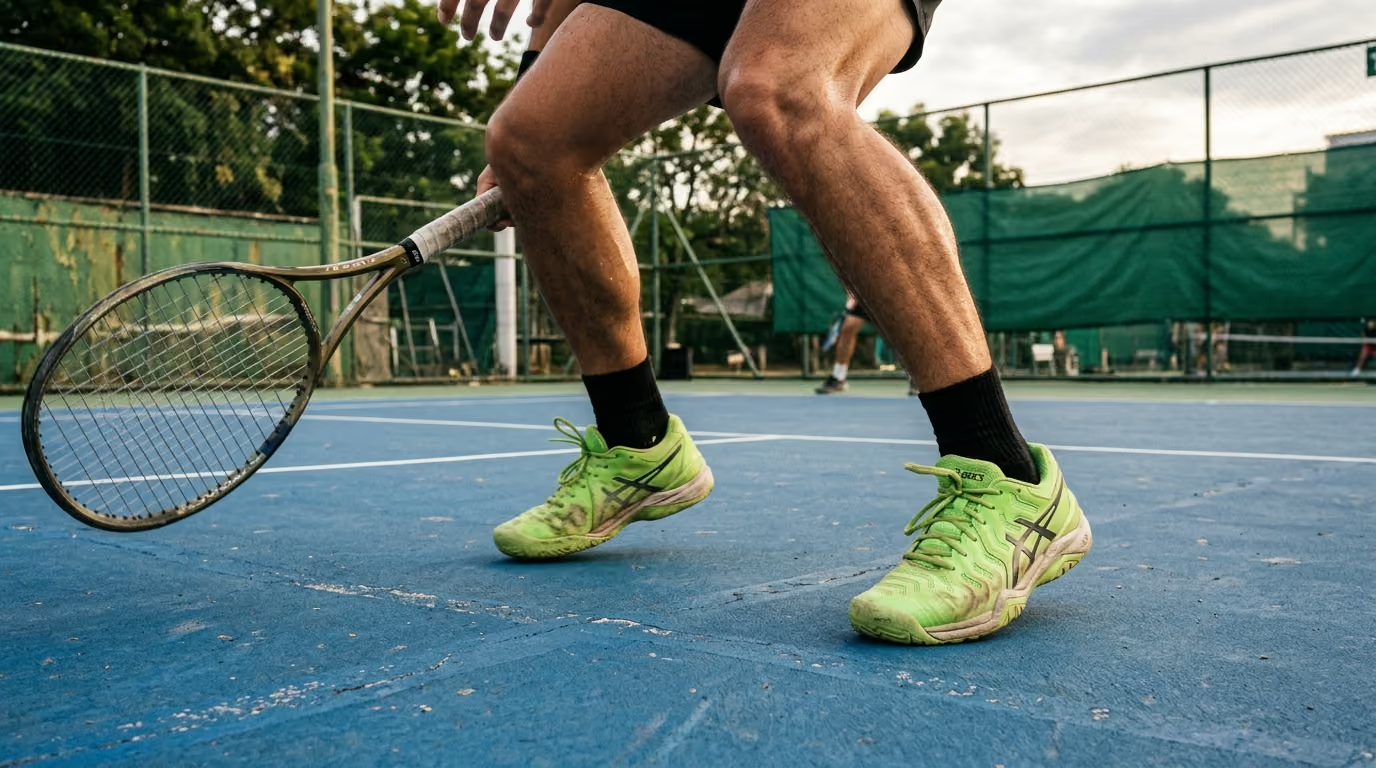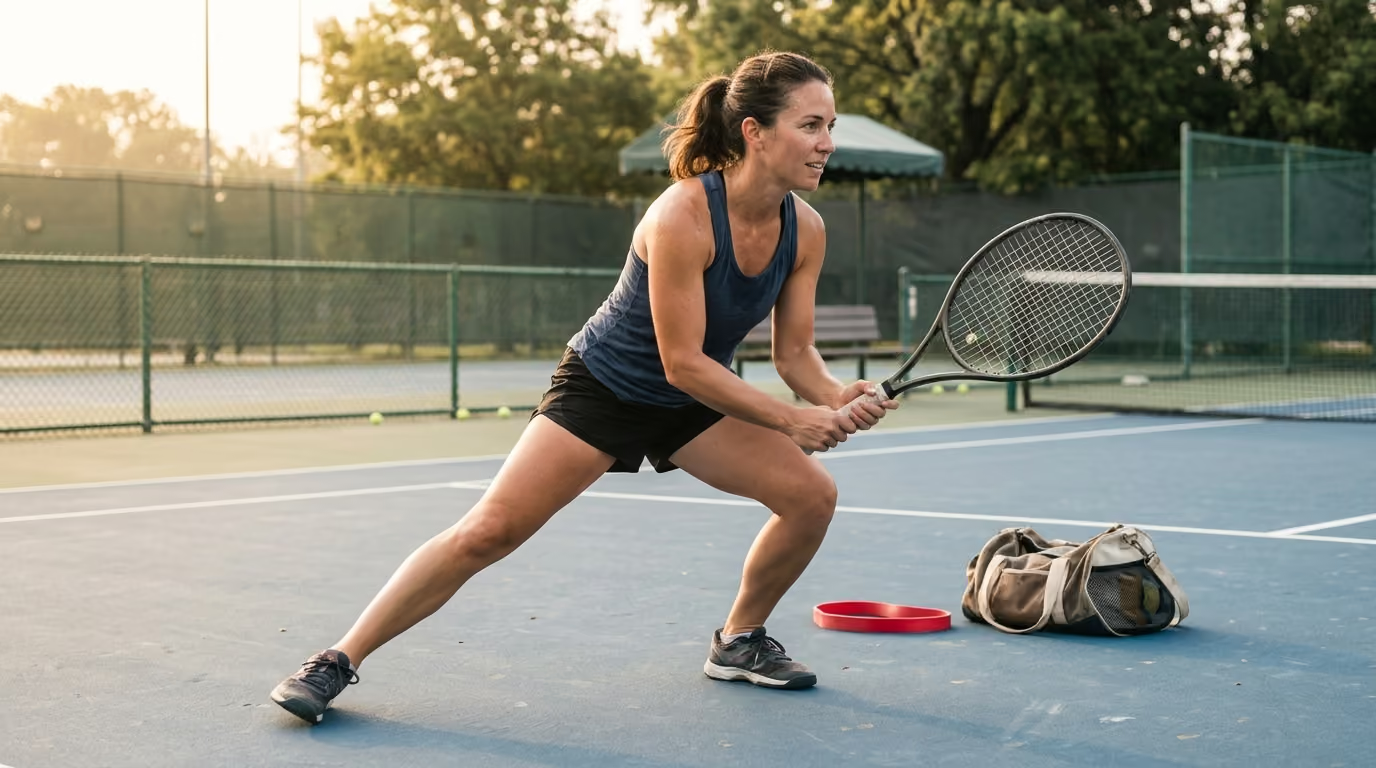

A complete racquet sports warm-up transitions the body from rest to high-intensity demands through a structured, progressive sequence that supports athletic longevity.




Imagine arriving at the court on a crisp morning. Your opponent is already waiting, spinning their racquet. You pull your equipment from your bag, take a few quick practice swings, and immediately start hitting groundstrokes. Within minutes, you notice a dull ache in your shoulder and stiffness in your lower back. This familiar scenario represents a common approach to starting a match. Many recreational players view a warm-up as a luxury or a chore, rather than an essential component of their performance.
An effective racquet sports warm-up transitions your body from rest to the high-intensity demands of court play through a structured, progressive sequence. By systematically raising your heart rate, activating key postural muscles, mobilising joints, and rehearsing explosive movements, you prepare your tissues for lateral braking and overhead rotation. This court-ready system ensures you perform at your best from the very first point while supporting your long-term athletic longevity.
Preparing your body properly does not require hours of tedious exercise. Instead, it requires a logical framework that targets the specific biomechanical demands of tennis, pickleball, and padel. By moving away from random, static stretching and adopting a structured approach, you can step onto the court with confidence. This guide outlines the science and practical application of a complete preparation system designed specifically for the modern court athlete.
To build an effective pre-play routine, you need an organising framework. The most useful and research-backed model is the RAMP system. Developed by sports scientists, RAMP stands for Raise, Activate, Mobilize, and Potentiate. This model systematically prepares your cardiovascular system, muscles, joints, and nervous system for intense physical activity. It replaces the outdated practice of sitting on the court floor and pulling on cold muscles.
The first phase, Raise, focus on increasing your core body temperature, heart rate, and respiration. As your temperature increases, blood flow to your muscles improves. This process delivers oxygen and vital nutrients to your working tissues. It also reduces the viscosity of your joint fluid, which allows your joints to move more smoothly. A simple jog or a series of low-intensity side shuffles serves this purpose perfectly.
The second phase, Activate, recruits the specific muscle groups that will support you during the match. In racquet sports, this means waking up your glutes, calves, trunk stabilizers, and rotator cuff. Activation exercises use low-intensity, targeted movements to improve neural drive to these areas. Rather than tiring the muscles, activation ensures they are ready to contract when you make a sudden change of direction.
The third phase, Mobilize, moves your joints through their required ranges of motion. This phase emphasizes dynamic mobility rather than static holding. You perform controlled movements that mimic the deep lunges and rotations you will use during play. Dynamic mobility keeps your muscles active while gently increasing your comfortable range of motion.
The final phase, Potentiate, prepares your nervous system for explosive actions. This phase uses short, high-intensity movements to trigger a phenomenon known as post-activation performance enhancement. By performing a few fast accelerations, jumps, or rapid shadow swings, you prime your brain to recruit muscle fibers quickly. This ensures you are fast to the ball on the very first point.
Current research supports the use of dynamic warm-ups over static stretching for explosive sports performance. A systematic review published in the Journal of Sports Medicine found that dynamic warm-ups improve force, power, and sprint times. Conversely, research indicates that holding long static stretches immediately before explosive movement can temporarily reduce muscle power. While static stretching has its place in a long-term flexibility routine, dynamic preparation is the logical choice before stepping onto the court.
Racquet sports place unique physical demands on the human body. Unlike running in a straight line, court sports require continuous acceleration, deceleration, and lateral change of direction. You must drop into a deep lunge to retrieve a low volley, rotate your torso to hit a groundstroke, and reach overhead to smash a high ball. Without specific preparation, these movements can place excessive stress on unprepared tissues.
The lower body must absorb immense force during play. Every time you split step, brake, or change direction, your muscles must contract eccentrically to slow your momentum. This requires high levels of strength and coordination from your calves, quadriceps, and glutes. Preparing these tissues requires dynamic movements that challenge your balance and eccentric control in multiple directions.
The trunk and hips serve as the bridge between your lower and upper body. Power in a groundstroke or serve does not originate in the arm. It starts in the ground, transfers through the legs, and is amplified by the rotation of the hips and torso. This kinetic chain requires excellent thoracic spine mobility and core stability. If your hips or mid-back are stiff, your body will transfer that stress to your lower back or shoulder.
We have observed this phenomenon across all age categories. I remember finishing a tough two hour padel match on a cold Tuesday night and waking up the next morning feeling like my lower back was locked in concrete. For a long time, I just accepted this as the price of playing hard in my forties. But once I started spending just ten minutes on targeted hip mobility before heading to the club, the stiffness almost completely vanished. It taught me that we do not have to accept pain as a default state of aging. This experience is why our team prioritises functional hip and spine movement. You can find more targeted hip and spine strategies in our mobility and movement resources.
The shoulder complex also faces significant repetitive stress. The rapid acceleration and deceleration of the racket during a serve or smash places high demands on the rotator cuff and scapular stabilizers. A proper warm-up must include movements that prepare the shoulder blade to move freely along the rib cage. This kinetic preparation helps distribute the forces of hitting across your entire upper body.
An effective warm-up must be systematic and easy to execute on or near the court. By breaking your preparation into four clear phases, you can ensure no key area is missed. The following exercises form the foundation of our court-ready preparation system.
The goal of this phase is to break a light sweat and increase your heart rate. Spend three to five minutes on these continuous movements.
This phase targets the muscles that protect your joints and stabilize your movement. Perform eight to ten repetitions of each exercise.
This phase uses dynamic movement to prepare your joints for deep, athletic positions. Perform five to eight controlled repetitions per side.
This final phase primes your nervous system for the fast, explosive movements of court play. Perform two to three sets of these high-intensity efforts.
We understand that court access and personal schedules vary. Some days you will have ample time to prepare, while other days you may arrive late and need to step onto the court quickly. This system is designed to be scalable. Use the following time-based versions to match your situation.
Use this routine when you are short on time, playing a casual practice match, or transitioning from a previous physical activity.
This is our recommended standard routine for most practice sessions and league matches. It provides a balanced approach to physical readiness.
For additional resources on designing structured exercise routines, you can read our strength and conditioning guidelines.
Use this comprehensive routine before tournament play, during cold weather, or when returning to play after a period of rest.
While tennis, pickleball, and padel share many movement characteristics, each sport places unique demands on your body. Modifying your warm-up to reflect these differences can improve your court performance. You can review more sport-specific articles in our court resources section.
Tennis is played on a large court, which requires longer sprint distances, deeper lunges, and high-velocity serving. Your physical preparation should focus on preparing the body for maximum deceleration forces and high-torque rotational movements.
Pickleball is played on a smaller court, which reduces sprinting distances but increases the frequency of rapid, short-step adjustments. The sport requires prolonged periods in a low, athletic stance near the non-volley zone, known as the kitchen.
Padel combines elements of tennis and squash. It features high walls, which require constant turning, twisting, and backing up to read rebound angles off the glass. It also features a high volume of overhead smashes and tray shots, known as bandejas.
Preparing for a strength training session in the gym requires a different approach than preparing for a match on court. While you still want to raise your body temperature and activate key muscles, your final movements should prepare you for lifting external loads. Aligning your warm-up with your specific gym workout will improve your lifting mechanics.
When your workout focuses on squats, deadlifts, or lunges, your warm-up should target hip, knee, and ankle mobility.
For workouts focusing on pressing, pulling, and overhead movements, your preparation should target the shoulder blades and thoracic spine.
If your session focuses on speed, medicine ball throws, or jump training, your warm-up must prime your central nervous system.
Even well-intentioned players can fall into habits that reduce the effectiveness of their preparation. Recognising these common pitfalls can help you refine your routine. We have outlined two of the most frequent errors below.
The first mistake is relying on static stretching as your primary warm-up method. Many players arrive at the court, place a foot on the net strap, and lean forward to stretch their hamstrings. While this may provide a temporary sensation of release, it does not raise your heart rate or prepare your muscles for explosive lateral movement. Static stretching is best performed after your match or during a dedicated flexibility session. Before play, your focus must remain on active, dynamic movement.
The second mistake is confusing a technical hitting session with a physical warm-up. Hitting mini-tennis or exchanging easy groundstrokes is an excellent way to find your rhythm and timing. However, it does not prepare your body for a sudden, maximal sprint to retrieve a drop shot. Stepping onto the court to hit without first raising your body temperature and activating your muscles can place unnecessary stress on cold joints. Complete your off-court physical preparation before you pick up your racquet to hit.
For more information on how to protect your body during training, you can read our proactive injury prevention protocols.
An effective preparation routine does more than improve your performance on court. It also plays a key role in supporting your recovery and long-term joint health. By preparing your tissues for the physical stress of play, you can manage the cumulative fatigue that often follows a demanding match.
When you raise your core body temperature, you reduce the stiffness of your muscles and connective tissues. Warm muscles are more compliant, which allows them to stretch and contract with less internal resistance. This reduction in muscle friction helps prevent the microscopic tissue damage that contributes to post-match soreness. Ensuring your tissues are warm and pliable before you play support a faster return to training.
A proper warm-up also improves your movement mechanics and coordination. When your stabilizing muscles are active, your joints can move through their natural pathways without compensation. This balanced movement distribution prevents overload on specific areas, such as the Achilles tendon or the patellar tendon. Over time, maintaining proper movement mechanics helps prevent chronic overuse issues.
Furthermore, gradual cardiovascular preparation helps manage your heart rate and breathing patterns during early play. Starting a match without a warm-up can cause a sudden spike in your heart rate, leading to early fatigue and shortness of breath. By raising your heart rate progressively, you allow your aerobic energy system to adjust smoothly. This cardiorespiratory preparation helps you sustain your physical energy throughout the entire match. Learn more about managing your physical well-being in our court-based player health research.
While mild stiffness and gradual warming are a normal part of physical preparation, you must pay attention to your body's signals. A warm-up should help you feel ready to play, not serve as a way to mask pain. Knowing when to step off the court and seek professional advice is essential for your long-term health.
If you experience sharp, localized pain during your warm-up, do not try to push through it. Normal physical preparation should gradually resolve general stiffness, but it will not resolve acute structural issues. If a specific movement, such as serving or lunging, produces a sharp or pinching sensation, stop the activity immediately. Continuing to play through acute pain can worsen an underlying injury.
You should also look for signs of joint swelling, locking, or instability. If you notice swelling in your knee, ankle, or elbow, or if a joint feels unstable during lateral movement, avoid playing. These symptoms can indicate a ligament or tendon issue that requires professional evaluation. A physical therapist or sports medicine physician can provide an accurate diagnosis and guide your recovery.
Finally, pay attention to persistent pain that does not improve with rest or a structured warm-up. If you experience a dull ache that remains constant for several days, or if your pain worsens after you play, consult a healthcare provider. They can assess your movement patterns, identify any structural concerns, and help you return to the court safely.
You should return to this preparation system whenever you notice changes in your physical readiness or court performance. If you find yourself starting matches slowly, feeling unusually stiff the morning after a game, or transitioning to a different racquet sport, use this guide to adjust your routine. Seasonal changes, such as moving from warm summer courts to cold winter conditions, are also excellent opportunities to update your preparation strategy.
Developing a consistent, structured warm-up is one of the most effective ways to support your athletic longevity. By dedicating just ten to fifteen minutes to systematic preparation, you can protect your joints, perform at your best, and continue playing the sports you love for years to come.
Follow Evercourts for practical insights on tennis, pickleball and padel performance, movement, recovery and healthy ageing. Stay connected for new articles, research-led guidance and ideas to help you play well and keep playing for years.


Read practical guidance for better movement, smarter preparation and a game that keeps working for you.
explore the Blog