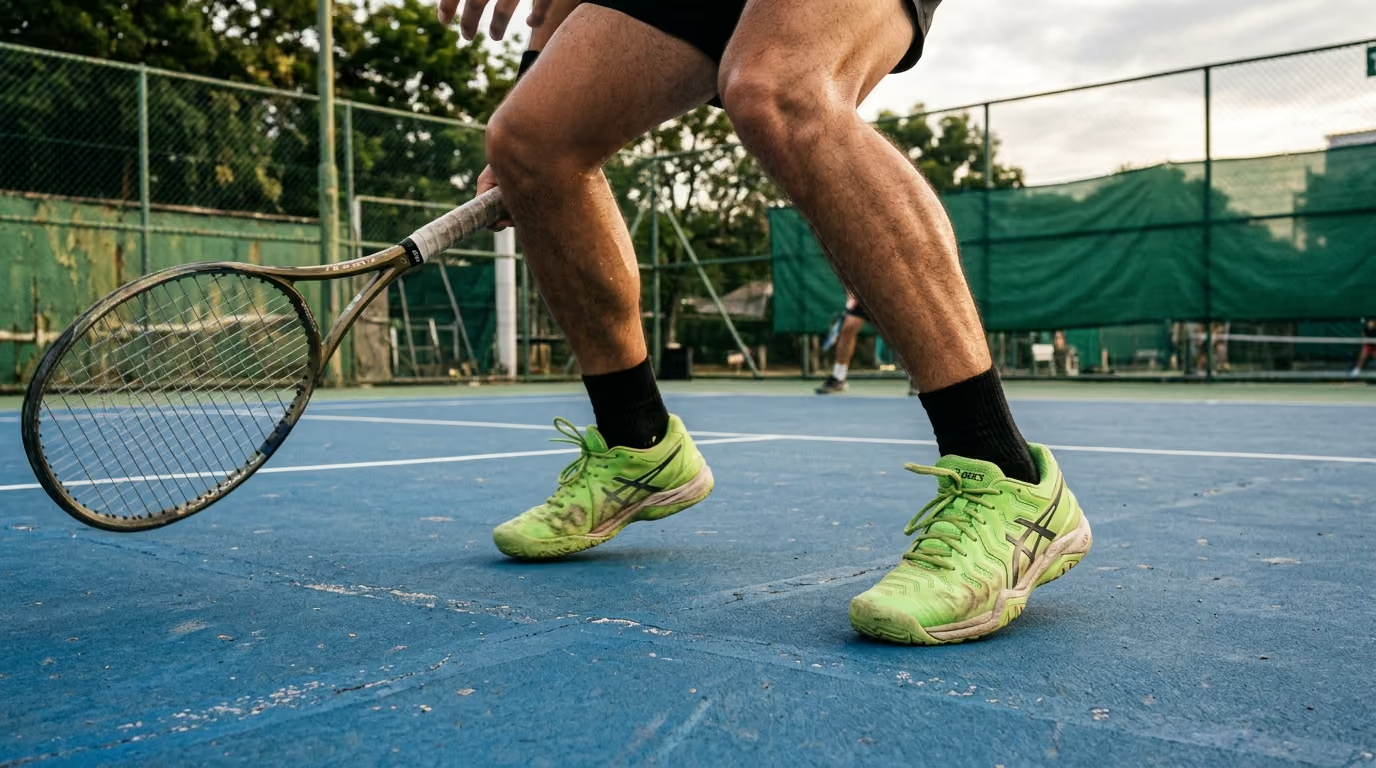
A structured racquet sports warm-up is essential for preparing the body for court play, reducing injury risk, and enhancing performance.




Many racquet sports players step onto the court and immediately hit hard groundstrokes or high-velocity serves. This abrupt start often leads to early fatigue, shoulder discomfort, or lower-body strains. A structured, progressive warm-up is the most reliable way to prepare your body for the physical demands of court play.
A proper racquet sports warm-up is a progressive, sport-specific sequence designed to raise core temperature, mobilize key joints, and activate the nervous system. Rather than relying on simple static stretches, it transitions the body from rest to competitive play through dynamic movement and gradual hitting drills. This systematic approach prepares your joints for sudden changes of direction while improving overall movement quality on the court.
A successful preparation routine respects the unique demands of tennis, pickleball, and padel. It builds physical readiness and acts as a foundation for athletic longevity. By dedicating a few minutes to movement preparation, you can protect your tissues and perform with greater confidence during matches.
For many years, static stretching was the default method before playing. Modern research has shifted our understanding of how to prepare for athletic activity. A systematic review of 15 cluster randomized trials analyzed structured warm-up intervention programs. The researchers found a pooled injury-rate reduction of 36 percent compared with standard or self-directed warm-ups. This study demonstrates the clear potential of structured physical preparation.
However, the evidence is not completely uniform. An earlier systematic review analyzed general warm-up routines across high-quality trials. Three of the studies showed a significant reduction in injury risk. Two of the studies did not show a statistically significant difference. The authors concluded that while the evidence is mixed, the balance of research strongly favors a structured warm-up.
We must also acknowledge the limitations of current sports science. A systematic review focusing on upper-body warm-ups found no high-quality studies directly examining injury-prevention outcomes. Dynamic and high-load upper-body warm-ups definitely improve performance metrics like throwing speed and power. But we cannot scientifically guarantee that they prevent conditions like tennis elbow or rotator cuff tears. We should view the warm-up as a rational preparation strategy rather than a guaranteed medical shield.
This scientific perspective aligns with the principles of injury prevention for court athletes. We want to use the best available evidence to guide our court routines. Our goal is to prepare the body's tissues for high-force activities without creating unnecessary fatigue.
A successful warm-up focuses on physical and mental readiness rather than conditioning. Physical readiness means your joints move freely through their full range. It means your nervous system responds quickly to ball trajectory and opponent movement. Mental readiness involves increased focus and spatial awareness.
We must distinguish this state of readiness from physical fatigue. A warm-up should never feel like an exhaustive workout. If you are breathing heavily, sweating profusely, or losing coordination, your routine is too intense. This balance is especially important for recreational players. Many players arrive at the court after a long day of work or with insufficient sleep.
Furthermore, a warm-up cannot solve the problems of an excessive training load. A systematic review of high-performance tennis players analyzed extrinsic injury risk factors. The researchers identified abrupt increases in training workload as the strongest predictor of injury. This is measured by the acute-to-chronic workload ratio. A sharp spike in playing hours will increase your risk, regardless of how well you warm up.
Your pre-play routine is just one component of a broader longevity strategy. Focus on consistent playing schedules and steady progress. Use your warm-up to prepare for the day's specific volume of play. This keeps your physical preparation aligned with your actual capacity.
Racquet sports place immense stress on the lower body. Players must execute rapid accelerations, sudden stops, and deep lunges. They must also perform lateral shuffles and quick split steps. Research on badminton injury patterns shows that lower-limb injuries account for 41 percent to 92 percent of all reported issues. Tennis injury reviews show a similar pattern, with the lower body being the most common site of injury.
Let's break down lower-body preparation into specific regions. The foot and ankle require careful attention. The court requires rapid push-offs and controlled landings. To prepare, begin with controlled ankle circles in both directions. Move into double-leg calf raises on a flat surface.
Gradually transition to single-leg calf raises to build stability. If your joint feels stable, perform light pogo hops on the spot. This dynamic loading prepares the calf-Achilles complex for the spring-like actions of the game. For players seeking mobility and movement resources, ankle stability is a primary foundation.
Next, address the knees and hips. Knee issues often stem from poor hip control or limited ankle mobility. Do not try to stretch the knee itself. Focus instead on movement control and alignment. Begin with shallow bodyweight squats, keeping your knees aligned with your toes.
Progress to reverse lunges and lateral lunges with a moderate range of motion. Focus on landing softly and sticking the position for a brief second. This teaches your thigh and gluteal muscles to decelerate your body weight. You can also include lateral walks with a light resistance band to activate the hip stabilizers.
The hamstrings and posterior chain are highly active during sprinting and recovery. Prepare these muscles with dynamic movements rather than static holds. Try walking hamstring sweeps. Step forward, flex your front foot, hinge at the hips, and sweep your arms down toward the ground. Keep your spine long and avoid rounding your back.
Finally, prepare the groin and adductors. Lateral movement demands strong, flexible adductor muscles. Perform lateral weight shifts in a wide stance. Shift your weight from side to side, keeping your chest up and your feet flat. This gently prepares the inner thigh muscles for sudden wide reaches.
Every stroke in racquet sports is a coordinated movement. Force starts in the feet, travels through the legs, and transfers through the core. It then moves into the shoulder, elbow, wrist, and racquet. This is known as the kinetic chain. Preparing only the arm ignores how the body actually produces power.
Start your upper-body preparation with the trunk and rotational chain. Standing trunk rotations are an excellent starting point. Keep your feet wide and let your arms swing freely. Rotate your hips and torso together. Avoid forcing rotation purely from the lower back.
Instead, let your back heel lift as you turn to each side. This rotation should feel smooth and distributed through the hips and upper back. You can also perform split-stance rotations. Step into a shallow lunge, hold your arms straight out, and rotate over your lead leg.
Next, focus on the shoulder girdle and scapular stabilizers. Perform arm circles, starting small and gradually increasing the size. Move into scapular shrugs and arm hugs. If you have a light resistance band, perform external rotations and band pull-aparts. This activates the rotator cuff, which stabilizes the shoulder joint during fast swings.
Address the elbow and wrist. Tennis elbow and wrist strains are common overuse concerns on the court. Perform wrist circles and gentle forearm flexor stretches. Gently pull your fingers back with your arm extended, then press your hand down. Hold each position for just a few seconds.
Finally, integrate these parts with shadow swings. Stand on the court without a ball. Rehearse slow forehands, backhands, and volleys. Focus on smooth hip rotation and a relaxed arm path. Gradually increase the speed of your shadow strokes to match the pace of play.
Here is a practical, step-by-step warm-up architecture. You can adapt this routine to any court surface or environment. It requires no specialized equipment, though a light resistance band is helpful. The entire sequence takes approximately 10 to 15 minutes.
Before you move, take one minute to evaluate your current physical state. Are you carrying any residual soreness from your last match? Do you feel stiff from sitting at a desk or in a car? Check the court conditions for moisture, wind, or extreme temperatures. Cold weather requires a longer warm-up, while hot weather demands careful pacing.
The goal here is to raise your core body temperature. Spend 3 to 5 minutes doing low-intensity, whole-body movements.
Perform 8 to 10 repetitions of each movement to open up your range of motion.
This phase wakes up your balance, coordination, and landing control.
Rehearse specific footwork patterns at moderate speed.
Do not start your hitting session with full-power shots.
While all racquet sports share common movement principles, each sport has unique physical demands. Understanding these differences allows you to customize your preparation. This ensures your warm-up is highly relevant to your chosen game.
Tennis is played on a large court. It requires long sprint distances, heavy lateral sliding, and high-velocity overhead serves. The lower extremities are the primary site of injury in tennis. However, lumbar spine and shoulder overuse are also common.
To prepare for tennis, prioritize split-step timing and lateral deceleration. Your shadow swings should include both open-stance and neutral-stance patterns. Give extra attention to the serve progression. Start with easy shoulder rolls and shadow service motions.
Move to mini-tennis before hitting from the baseline. Hit several volleys and overheads before you start serving. When you do serve, start at half-speed and focus on a smooth kinetic chain. This systematic approach is recommended by the United States Tennis Association.
Badminton is characterized by extreme speed, rapid vertical jumps, and deep, sudden lunges. Lower-body injuries represent up to 92 percent of reported issues in badminton. Ankle sprains are particularly common, alongside Achilles tendon issues.
Your badminton warm-up must focus heavily on the foot and ankle. Include double-leg and single-leg calf raises to prepare the Achilles tendon. Perform deep forward lunges with a rapid, powerful push-off back to the starting position.
The upper body requires quick wrist and forearm actions. Include active wrist circles and elbow mobility exercises. Avoid starting your session with hard, rear-court smashes. Instead, begin with gentle drives, drops, and clears to warm up the shoulder joint.
Squash is played in a confined, high-speed space. It involves repeated deep lunges into the corners, quick rotations, and rapid deceleration near walls. The physical load on the quadriceps, glutes, and hips is exceptionally high.
Recreational squash players must be particularly careful. The rapid pace of play can easily overwhelm cold muscles. Focus your squash warm-up on deep, controlled lunges in multiple directions.
Practice moving to each of the four corners of the court at submaximal speed. This movement prepares your joints for the specific angles of the squash court. It also helps you adjust to the temperature and bounce of the ball.
Pickleball is played on a smaller court, but it still demands rapid physical responses. The game requires short, frequent lateral steps, quick reactions at the non-volley line, and sudden reaching. Many older adults participate in pickleball, making healthy aging and longevity a key focus.
Do not assume the smaller court means you can skip your warm-up. The short reaction times place high demands on your knees, ankles, and lower back. Focus on lateral shuffles and quick, low ready positions.
Rehearse the transition from the baseline to the kitchen line. Spend several minutes playing soft shots to warm up your hand-eye coordination. Gradually transition to deeper drives, volleys, and overheads. This steady progression keeps your joints happy and prepares your reaction speed.
Padel combines elements of tennis and squash. It involves rapid changes of direction, play off the glass walls, and frequent overhead smash attempts. The shoulder and lower back are highly active during padel matches.
Your padel warm-up should emphasize thoracic rotation and overhead shoulder preparation. Include controlled side steps and rotational movements to prepare for ball rebounds off the walls.
Perform dynamic lunges to manage low, turning ball trajectories. Rehearse the transition between court positions with quick split steps. Spend time warming up the shoulder with shadow volleys and band work before hitting high-velocity overheads.
A universal warm-up routine does not exist. Your age, fitness level, and previous injuries should guide your physical preparation. Customizing your routine ensures it remains safe, effective, and achievable.
Youth players need a different approach than adults. Their routines should focus on movement variety, coordination, and enjoyment. Avoid long, rigid stretching sessions or high-intensity conditioning before play.
Focus instead on basic movement literacy. Include games that require skipping, chasing, and jumping. Teach proper landing mechanics by practicing soft, quiet landings from small hops.
Neuromuscular training programs for youth show meaningful injury reductions in sports research. However, these programs require consistent coaching quality and steady progression. If a young player experiences persistent joint pain or limping, they should stop playing immediately.
If you are returning to racquet sports after months or years of inactivity, proceed with caution. Your cardiovascular system and musculoskeletal tissues need time to readapt.
Begin with a longer general activation phase. Focus on walking or easy jogging to gently raise your heart rate. Keep your dynamic movements within a comfortable range of motion.
Do not attempt deep, explosive lunges or maximum-speed sprints on day one. Your primary goal is building movement confidence and control. Gradually increase the intensity of your warm-up over several weeks as your fitness improves.
Older recreational players can play racquet sports for many years. To support this longevity, modify your warm-up to protect your joint health. Focus heavily on balance, foot mobility, and thoracic spine rotation.
You may need extra time to feel completely ready to play. You can scale dynamic movements by reducing the speed or range of motion. Use a wall or net post for balance support during leg swings or lunges if needed.
Keep your movements controlled and deliberate. Avoid rapid, bouncy movements if you have known joint degeneration. A thorough, gentle warm-up helps maintain joint lubrication and improves court safety.
A history of injury is a strong predictor of future injury. If you have previously injured your ankle, knee, or shoulder, your warm-up must address this weakness.
Include targeted stabilization exercises recommended by your physical therapist. You may benefit from using a brace or taping strategy during play. Use your warm-up as a diagnostic check-in for your body.
If you feel localized pain, swelling, or instability during your warm-up, do not push through it. This is a clear sign that your tissues are not ready for competitive play. Adjust your session or seek professional guidance rather than risking further injury.
Even well-intentioned players can make errors during their warm-up. Recognizing these common pitfalls helps you refine your pre-match routine. It also protects your performance and joint health.
A structured warm-up does more than improve your performance today. It also supports your recovery and long-term athletic longevity. By preparing your tissues properly, you reduce the physiological stress of the match.
During a warm-up, your blood vessels dilate, increasing oxygen delivery to your muscles. This optimal blood flow helps prevent the rapid buildup of metabolic waste products during early play. It also ensures your muscles have the energy required for sustained court movement.
Warming up increases the temperature of your muscles and tendons. This temperature rise makes your connective tissues more pliable and resilient. Pliable tissues absorb force more efficiently, reducing micro-tears in the muscle fibers. This protection can lead to less muscle soreness in the days following a hard match.
For detailed recovery strategies, consult our resources on recovery science. Combining a solid warm-up with smart recovery techniques is the best way to maintain your playing schedule. It supports healthy aging and helps you enjoy your sport for years to come.
A warm-up is a valuable tool for self-assessment. It allows you to check in with your body and evaluate your physical readiness. Use the following five questions before every match to ensure you are safe to play:
While a structured warm-up is highly beneficial, it is not a cure for underlying injuries. You must distinguish normal muscle stiffness from clinical symptoms. Never use a warm-up to mask or push through physical pain.
You should consult a qualified healthcare provider if you experience any of the following signs:
A physical therapist or sports medicine specialist can help identify the root cause of your symptoms. They can provide an individualized exercise plan to address your specific needs. Your health and safety are essential to maintaining your court longevity.
To apply these movement principles to your next match, use this practical checklist this week:
Taking these structured steps will help keep you moving well on the Evercourts platform. Consistent preparation protects your joints and ensures you can enjoy your favorite racquet sports for years to come. For more details on our mission, visit the about Evercourts page.
Follow Evercourts for practical insights on tennis, pickleball and padel performance, movement, recovery and healthy ageing. Stay connected for new articles, research-led guidance and ideas to help you play well and keep playing for years.


Read practical guidance for better movement, smarter preparation and a game that keeps working for you.
explore the Blog