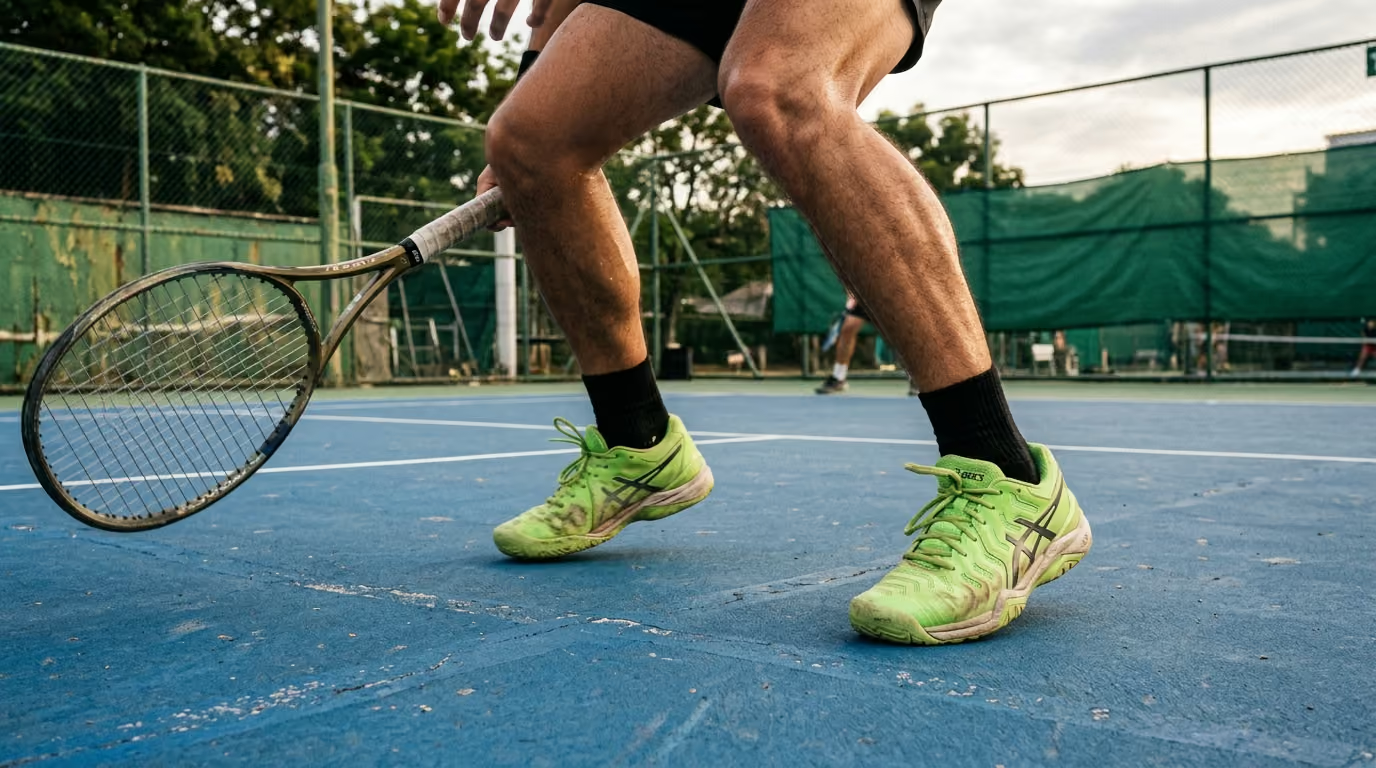
Returning to racquet sports after a break requires a structured process to gradually prepare your body for the unique demands of court movement.




How do you safely return to the court after a long break without risking a sudden setback? Many players assume that a few weeks away from tennis, pickleball, or padel simply means they will be slightly out of breath during their first match back. In reality, returning to high-velocity racquet sports requires a structured process that gradually prepares your joints, muscles, and cardiovascular system for the unique demands of court movement. This comprehensive guide details a practical, step-by-step strategy to rebuild your physical capacity, protect your tissues, and transition smoothly back to competitive play.
A return to the court after any layoff is not a single event. You do not simply get cleared to play and immediately resume your previous level of competition. Instead, returning to activity exists on a spectrum that moves from initial movement to full performance.
The sports medicine community uses a clear three-part framework to describe this journey. This framework consists of return to participation, return to sport, and return to performance. Understanding where you sit on this spectrum is the first step toward a successful return.
This is the baseline phase of the journey. At this stage, you are performing general exercise and court-adjacent movements. You may be doing light conditioning, basic mobility exercises, or simple gym work. You are not yet hitting balls or playing matches, but you are preparing your body to tolerate the physical environment of the court.
During this phase, you begin to reintroduce sport-specific movements and technical skills. You are back on the court hitting groundstrokes, practicing volleys, or performing controlled cooperative rallies. You are participating in the sport, but you are not yet playing at your full pre-break intensity. Your focus is on technical execution and volume tolerance rather than winning points.
This is the final phase of the continuum. Here, you are not only playing the sport, but you are also performing at your expected level of competition. You can tolerate the pressure of match play, rapid changes of direction, and back-to-back training sessions. You have regained your physical conditioning, tactical timing, and psychological confidence under competitive conditions.
According to consensus research on athletic recovery, transitioning safely through these phases requires a criterion-based approach. You should not move to the next step simply because a certain number of days have passed. Instead, you must demonstrate specific physical and functional markers before increasing your physical exposure. This ensures your tissues are fully prepared for the demands of the sport.
Racquet sports are highly demanding because they combine multiple loading systems. These systems do not detrain or recover at the same rate. When you take a break, some physical qualities decline faster than others.
Understanding these demands helps explain why a sudden return to competitive match play can lead to issues. Your cardiorespiratory system, skeletal muscles, and tendons all adapt to rest in distinct ways.
Tennis, pickleball, and padel require constant braking, lateral shuffling, and sudden lunging. These movements place immense stress on your lower extremities. For example, when you sprint to catch a short ball and stop suddenly, your muscles must perform a powerful eccentric contraction to slow you down.
Research shows that lower-limb injuries make up a large portion of overall racquet sport issues. In court sports like badminton and tennis, injuries to the ankle, knee, and Achilles tendon are particularly common. A systematic review published in 2024 found that lower-limb issues accounted for over half of all reported badminton injuries, with ankle sprains being the most frequent.
Tennis literature similarly highlights knee tendinopathy and acute ankle sprains as common risks for recreational players. When you take a break, your tendons lose some of their stiffness and elastic storage capacity. If you return to rapid lateral movement too quickly, these tissues can easily become overloaded.
The upper body experiences repeated high-velocity acceleration and deceleration during serves, overheads, and drives. Your shoulder joint must rotate at high speeds, while your forearm and wrist must stabilize the racquet upon ball impact.
For recreational players, chronic overuse issues are a primary concern. Research on tennis injuries indicates that lateral epicondylitis, commonly known as tennis elbow, is highly prevalent among recreational athletes. High-level players tend to experience more shoulder-related issues, such as internal impingement and rotator cuff irritation.
During a layoff, the muscles that stabilize the shoulder blade and rotator cuff can lose endurance. When you return to hitting, these stabilizing muscles fatigue quickly. This forces the smaller muscles of the forearm and elbow to work harder, increasing the risk of tendon irritation.
A powerful stroke is not generated by the arm alone. It begins in the legs, transfers through the pelvis and trunk, and finally moves through the shoulder and hand. This sequence is known as the kinetic chain.
Many strokes, especially the tennis serve and high overheads, require significant trunk rotation combined with spinal extension. If your hip mobility or thoracic spine flexibility has declined during a break, your body will compensate. This compensation often shifts excess force to the lower back or the shoulder joint.
Physical preparation should always focus on the whole body. A player may feel aerobically fit after a layoff but still lack the specific tissue tolerance needed for repeated rotational loading. Rebuilding this trunk and hip capacity is a vital step in injury prevention for court athletes.
Match play is not just a physical challenge. It requires rapid visual tracking, anticipation, decision-making, and emotional management under pressure. When you are fatigued, your ability to make split-second movement decisions declines.
During a match, you must track a fast-moving ball while positioning your feet and executing a stroke. If you return to competitive play too quickly, cognitive fatigue can cause your movement mechanics to break down. This breakdown often occurs late in a match, which is when many acute strains and sprains happen.
Furthermore, psychological readiness is a critical part of a safe return. If you do not trust a previously injured joint, you may move hesitantly or compensate by overloading other areas of your body. Rebuilding your confidence through gradual exposure is just as important as rebuilding your physical strength.
To design a safe return plan, you must understand the relationship between exposure and capacity. This framework allows you to monitor how your body reacts to the physical stress of playing.
By balancing these two elements, you can make informed decisions about when to progress and when to hold back. This prevents sudden spikes in training load that often lead to physical setbacks.
Exposure refers to the total volume and intensity of physical stress you place on your body during play. It is everything you ask your body to do on the court. Key elements of exposure include:
For example, playing sixty minutes of singles on a hard court represents a much higher exposure than playing sixty minutes of doubles on clay.
Capacity is your body's ability to tolerate that exposure without breakdown. It is the sum of your current physical and psychological traits. Your capacity is built from:
If your exposure exceeds your current capacity, your tissues will experience excessive fatigue, which can lead to structural overload.
To ensure your capacity is matching your exposure, you must monitor your body's response. A simple and effective way to do this is to assess how you feel during and after each session.
Ask yourself these practical questions:
According to clinical guidelines, mild muscular soreness is a normal response to new exercise. However, this soreness should settle within twenty-four hours. If you wake up the next morning with focal joint pain or stiffness, your exposure likely exceeded your capacity, and you should reduce the intensity of your next session.
Readiness is the decision that your body is prepared for the next level of physical exposure. It should not be based on a calendar date. Instead, it must combine objective physical markers with your subjective confidence.
You are ready to progress when you can complete a specific level of play without pain, demonstrate symmetrical movement control, and recover fully by the next day. Relying on "feeling good" on a rest day is not enough. You must actively demonstrate that your body can handle the physical workload before moving forward.
Not all breaks from the court are the same. A player returning from a work trip has different needs than a player returning from a severe illness or a joint sprain. Classifying your break allows you to tailor your return plan to your specific situation.
This is primarily a case of reduced recent exposure. Your tissues are healthy, but you have lost some of your sport-specific timing, footwork rhythm, and cardiovascular conditioning.
A detraining study published in 2021 showed that even a brief two-week break can lead to measurable declines in maximal aerobic capacity, stroke volume, and knee-extensor strength. While you do not need to worry about tissue healing, you still must rebuild your tolerance to high-volume court work.
Your first few sessions should focus on restoring footwork rhythm, lateral coordination, and cardiovascular efficiency. Avoid jumping directly into long, intense singles matches on consecutive days.
Returning to play after a systemic illness, such as a severe flu or respiratory infection, requires extreme caution. Sports medicine guidelines strongly recommend withholding strenuous exercise while you have active systemic symptoms.
If you attempt to train through a fever or body aches, you risk prolonging your illness or causing cardiorespiratory complications. Once your symptoms are entirely gone, you should follow a gradual progression back to activity.
Begin with low-intensity cardiovascular work, such as walking or easy cycling, and monitor your body's response. Do not resume intense court sessions until you can complete basic physical activity without disproportionate fatigue or shortness of breath.
Myocarditis is an inflammation of the heart muscle that can occur after certain viral infections. Exercising with active cardiac inflammation carries a serious risk of life-threatening arrhythmias.
If you have been diagnosed with myocarditis, you must follow strict medical guidelines. Clinical consensus statements recommend abstaining from competitive sports for three to six months after a myocarditis diagnosis.
Before returning to any racquet sports, you must undergo a comprehensive medical evaluation. This evaluation typically includes an electrocardiogram, an echocardiogram, and clinical biomarkers to ensure the heart muscle has fully recovered. Never attempt to self-manage your return if you suspect cardiac involvement.
Concussions can occur on the racquet court through falls, collisions with a doubles partner, or being struck by a fast-moving ball or racquet. Managing a head injury requires a highly structured, graduated return protocol.
International consensus guidelines recommend an initial period of twenty-four to forty-eight hours of physical and cognitive rest. After this initial rest, you can begin a stepped progression where each stage lasts at least twenty-four hours.
You must progress from light aerobic exercise to sport-specific drills, non-contact training, and finally full practice. If any cognitive or physical symptoms return at any stage, you must stop, rest, and return to the previous symptom-free level.
If you are returning after an injury to a non-racquet body part, such as a mild lower back strain or a shoulder issue from another activity, you must still be cautious. An injury in one area of the body can alter your overall movement mechanics.
For example, a lingering lower back issue can limit your ability to rotate your hips, which may cause you to overload your shoulder during a serve. An ankle sprain can cause you to guard that leg, shifting excess force to your opposite knee.
Ensure you have restored symmetrical range of motion and strength before returning to open match play. Working on your mobility and movement is an essential part of this transition.
To ensure a safe and organized return to the court, we recommend following a structured seven-stage progression. This protocol is designed to gradually increase physical demands, allowing your tissues to adapt safely.
Avoid the temptation to skip stages. You should only progress to the next step when you can complete the current stage with perfect movement quality and zero next-day discomfort.
Before you set foot on the court, you must clearly define your starting parameters. This preparation sets a realistic foundation for your return.
Consider these factors:
If you are recovering from a specific injury, establish your baseline criteria with a physical therapist. Ensure you have pain-free range of motion and adequate strength before beginning court work.
The goal of this stage is to reintroduce basic cardiovascular exercise and strength work without the complex, multi-directional demands of the court. This builds a foundational level of fitness.
Focus on these activities:
Keep your efforts submaximal. You are simply testing how your cardiovascular system and joints tolerate steady, predictable physical activity.
Now, you translate your general fitness into court-specific movement. During this stage, you do not use a ball or a racquet. Instead, you focus purely on footwork and deceleration control.
Practice these movements on the court:
This stage is vital for protecting your lower limbs. By practicing braking and recovery movements in a controlled manner, you prepare your tendons for the sudden stops of live play.
During this stage, you reintroduce the racquet and ball, but you keep your movement highly predictable. You should rely on a partner or a ball machine to feed you consistent, cooperative balls.
Follow this sequence:
Strictly manage your total court duration and stroke volume. Do not increase your hitting time, lateral movement, and serving volume all in the same session.
This stage introduces unpredictability. You are no longer hitting from a stationary position; you must now react to random ball placement and move dynamically across the court.
Incorporate these drills:
Pay close attention to your movement quality. If you find yourself lunging awkwardly, reaching excessively with your back, or protecting a joint, stop the drill and return to predictable hitting.
Before jumping into competitive leagues or tournaments, test your capacity in a friendly, low-pressure environment. Modify the match format to manage your physical load.
Try these modifications:
This stage helps rebuild your match endurance and tactical focus. It allows you to experience the emotional stress and fatigue of play without the demands of a high-stakes tournament.
You are now preparing for a complete return to play. Your sessions should closely mimic the intensity, duration, and format of your target competitive environment.
Focus on:
Ensure you can complete multiple high-intensity practice sessions with zero lingering joint pain or movement compensations before taking the final step.
You have reached the end of the continuum. You are cleared for unrestricted competitive play, but you should still manage your schedule carefully during the first few weeks.
Follow these guidelines:
Remember that regaining your absolute peak performance, timing, and confidence may take several weeks of consistent play. Be patient with your progress.
While the general principles of returning to play apply to all athletes, tennis, pickleball, and padel each place unique physical demands on your body. Tailoring your return to your specific sport ensures you address the most common areas of stress.
Tennis is characterized by high-velocity serves, wide lateral movements, and longer, more physically demanding matches. The larger court size requires significant sprinting and deceleration capacity.
When returning to tennis, pay close attention to your serving volume. The serve is a complex overhead movement that places extreme rotational force on your shoulder, elbow, abdominal muscles, and lower back. Start with a low number of submaximal serves and gradually increase both volume and intensity over several weeks.
Additionally, tennis requires excellent lateral recovery. You must frequently lunge wide to hit a forehand and then immediately push off that leg to recover to the center of the court. Ensure your hip mobility and single-leg strength are fully restored to manage these high-force lateral transitions.
Pickleball is played on a smaller court, which reduces long-distance sprinting but increases the frequency of rapid reactions, emergency stops, and low-squatting positions. It is a highly accessible sport, but its quick pace can surprise returning players.
The transition from the baseline to the non-volley zone, commonly known as the kitchen line, requires quick, short acceleration and sudden deceleration. This movement pattern places high eccentric demands on your calves and Achilles tendons. Rebuilding calf endurance and ankle stiffness is a critical preparation step.
Furthermore, pickleball players must spend significant time in a low, athletic stance to play balls near the ground. This position requires excellent knee flexion, hip strength, and lower back endurance. Ensure you can hold a comfortable squat position before returning to fast-paced play.
Emergency department data highlights that falls are a primary cause of injury in pickleball, especially among older adults. In fact, a study of emergency department visits found that falls accounted for over sixty-five percent of estimated pickleball injuries, with fractures being a common diagnosis. Rebuilding your balance, reactive footwork, and deceleration control is essential for safe, long-term play.
Padel is a fast-paced game played within an enclosed glass court, combining elements of tennis and squash. It involves rapid changes of direction, frequent overhead smashes, and reacting to balls bouncing off the walls.
In our experience, the constant rotation required to track balls off the glass can place a unique strain on your trunk and lower back. I remember finishing a tough two hour padel match on a cold Tuesday night and waking up the next morning feeling like my lower back was locked in concrete. For a long time, I just accepted this as the price of playing hard in my forties. But once I started spending just ten minutes on targeted hip mobility before heading to the club, the stiffness almost completely vanished. It taught me that we do not have to accept pain as a default state of aging. Focus on restoring your rotational hip and thoracic mobility to protect your spine.
Padel also features a high volume of overhead strokes, such as the bandeja and vibora. These shots require repeated, high-speed arm acceleration with the elbow slightly bent, which can stress your shoulder and elbow. Rebuilding your rotator cuff endurance and scapular control is crucial for managing these demanding overhead repetitions.
To support your return to the court, you should perform a parallel physical preparation program. Rebuilding your muscular strength and endurance in a controlled gym environment provides a safety buffer for your joints when you return to play.
Focus on these three essential areas to ensure your body is fully prepared for the physical demands of racquet sports.
Your lower body acts as the foundation for your movement and power generation. Strengthening the muscles that absorb and produce force is critical for joint protection.
Incorporate these exercises into your weekly routine:
Building this strength is essential for long-term strength and conditioning success on the court.
Your shoulder, elbow, and wrist must be able to withstand the repeated impact of hitting a ball. Focus on improving muscle endurance and joint stability.
Include these movements:
By strengthening these supporting muscles, you reduce the strain placed on your elbow joint during high-volume hitting sessions.
Power on the court comes from coordinated body movement. Your trunk acts as the link that transfers force from your lower body to your upper body.
Add these exercises to your preparation:
Coordinating these muscle groups ensures your kinetic chain functions smoothly, reducing the risk of localized tissue overload.
Even the most dedicated players can fall into common traps when returning after a break. Recognizing these pitfalls helps you avoid making the same errors in your own training.
This is a common misconception. While two weeks may seem short, detraining begins quickly, and your cardiorespiratory efficiency and muscular endurance can decline measurably.
Your stroke timing and movement coordination may also feel slightly off during your first session. Assuming you can immediately play a high-intensity, multi-set singles match can easily overload your unconditioned tissues. Treat your first week back as a gradual transition phase, even after a brief layoff.
Hitting balls from a stable, predictable position is vastly different from playing a competitive match. During a cooperative rally, you control your speed, balance, and positioning.
In a match, you must react to unpredictable shots, stop suddenly, and sprint hard, often when you are fatigued. Assuming that comfortable baseline hitting translates directly to match readiness is a common path to strain injuries. Always progress through open movement and practice sets before entering full competition.
Being free of pain is an important marker, but it is not the only indicator of readiness. Pain is a subjective signal, and its absence does not guarantee that your tissues have fully regained their original strength and endurance.
You must also demonstrate proper range of motion, symmetrical strength, and the ability to tolerate the specific volume of play without reacting poorly the next day. Relying solely on a lack of pain can cause you to progress too quickly, leading to chronic irritation.
Many players assume that transitioning to doubles play is a universal safety net because they have less court to cover. While doubles does reduce total running distance, it introduces other unique physical challenges.
Doubles play features rapid, close-range reactions, sudden changes of direction, and the risk of colliding with your partner. You must also make quick, awkward reaches for low volleys or overheads. Do not assume doubles is effortless; treat it as a specific physical exposure that still requires proper preparation.
Fitness trackers, smartwatches, and heart rate monitors provide useful data about your sleep, heart rate variability, and general activity levels. However, these devices cannot assess tissue healing or joint stability.
A high readiness score on a wearable device does not mean your Achilles tendon is ready for explosive lateral movement or that your rotator cuff can handle fifty serves. Use wearable data as a general guide for systemic recovery, but rely on physical performance markers to determine court readiness.
Allowing your body sufficient time to adapt to new physical demands is a vital part of a successful return-to-play plan. Managing the physiological aspects of recovery science is just as important as your training on the court.
Strenuous exercise place a significant demand on your central nervous system and metabolic pathways. When you return to play, your body requires extra rest to repair muscle tissue and restore energy stores.
Prioritizing quality sleep is the most effective recovery tool available. Aim for seven to nine hours of consistent sleep per night, especially on days when you have played. Sleep deprivation impairs tissue healing, reduces reaction times, and increases your susceptibility to fatigue-related issues.
Tendons, such as the Achilles and patellar tendons, have a lower blood supply than muscle tissue and take longer to adapt to training loads. When you load a tendon during play, it undergoes a process of degradation followed by synthesis and remodeling.
This remodeling process typically takes thirty-six to forty-eight hours to complete. If you play intensive racquet sports on consecutive days early in your return, you may disrupt this cycle, leading to chronic tendon irritation. Always schedule a rest or light activity day between your initial court sessions to allow your tendons to adapt.
Your total training load is a combination of all the physical stress you place on your body, both on and off the court. Keeping an eye on this overall load is crucial for supporting long-term player health.
A simple way to track this is to note your session duration and rate your physical effort on a scale from zero to ten. Multiplying these two numbers gives you a basic estimate of your session load. Avoid making sudden increases in this weekly total, and ensure you balance higher-intensity court days with lighter active recovery sessions.
While most players can manage their return to play independently, there are times when professional medical guidance is necessary. Recognizing specific physical warning signs ensures you seek appropriate care before an issue becomes chronic.
If you experience any of the following signs, stop playing immediately and consult a qualified healthcare professional:
As discussed, returning to play after a systemic viral illness requires careful monitoring. If you experience persistent fatigue, chest discomfort, or abnormal shortness of breath during light exercise after being sick, do not try to push through it. These can be warning signs of cardiac involvement, such as myocarditis, and require a formal cardiological evaluation.
If you have sustained a blow to the head, face, or neck during play and experience symptoms like headache, dizziness, light sensitivity, or cognitive fog, you must seek professional evaluation. Do not attempt to return to play without formal clearance from a healthcare provider who is experienced in managing sports concussions.
To apply the information in this guide to your own training this week, use this practical action plan. This checklist provides clear steps to guide your transition back to the court.
By following this methodical process, you can build your athletic longevity, protect your tissues, and continue enjoying the sports of tennis, pickleball, and padel for many years to come.
Follow Evercourts for practical insights on tennis, pickleball and padel performance, movement, recovery and healthy ageing. Stay connected for new articles, research-led guidance and ideas to help you play well and keep playing for years.


Read practical guidance for better movement, smarter preparation and a game that keeps working for you.
explore the Blog